IUGR(Intrauterine Growth Restriction)4th Year Medical Student PCM 34Present  17th October ,2011
1234567DefinitionClassificationCauseDiagnosisPreventionManagementLong term sequelaeContents
DefinitionFailure of normal fetal growth
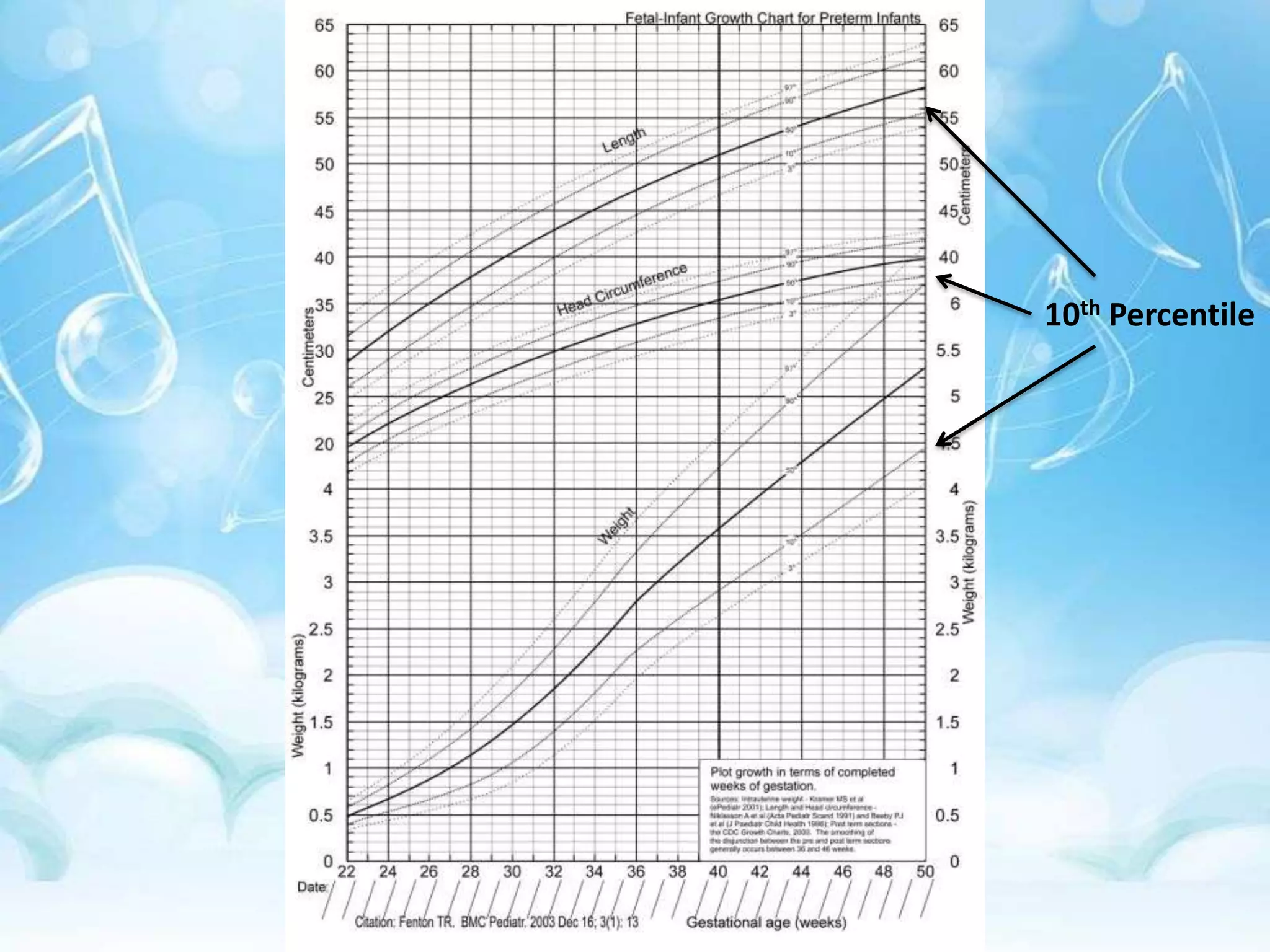
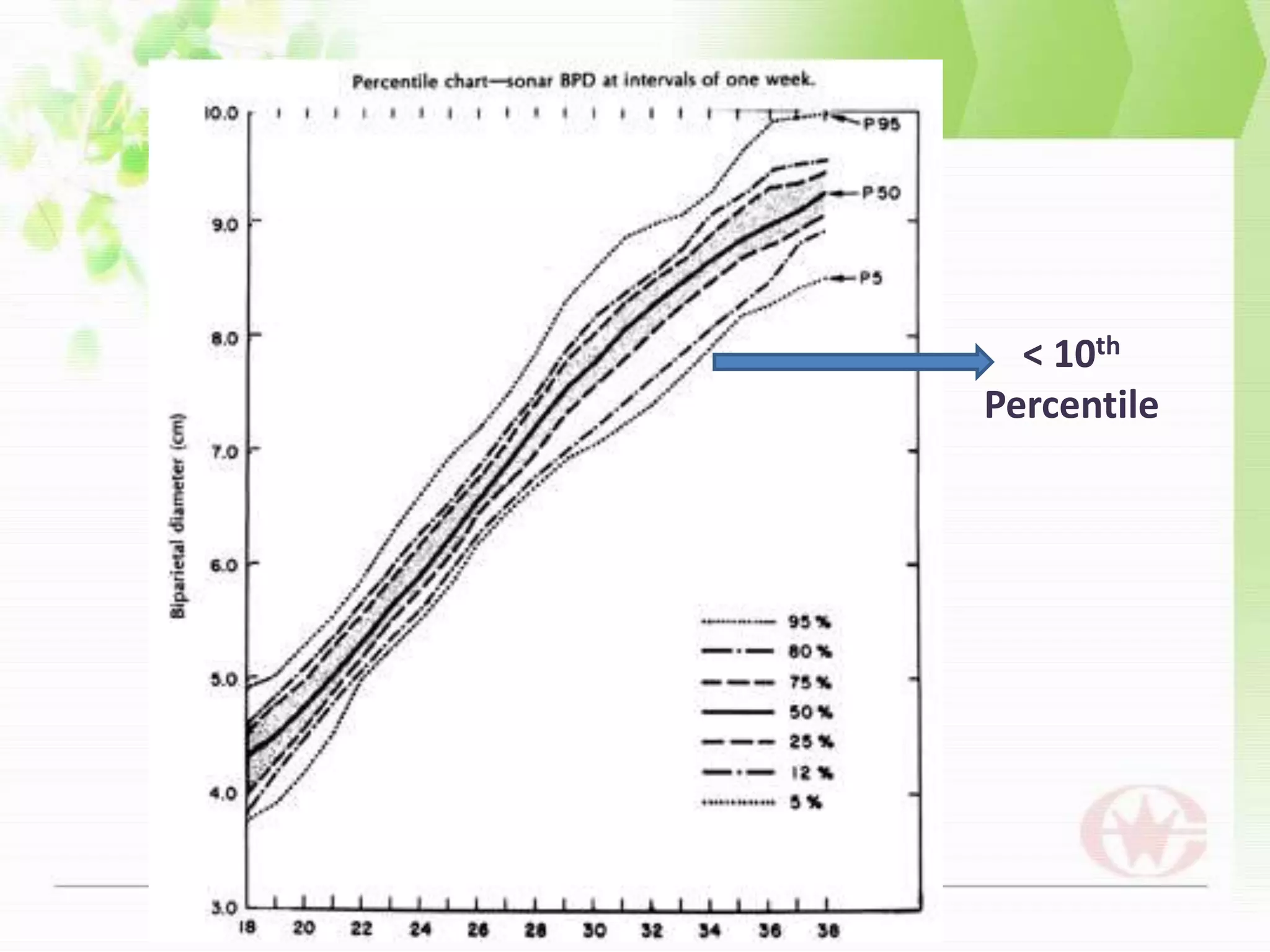
Most common definition “ fetus weighing below 10th percentile for GA”(SGA)Other definition
BW < -2SD for GA
BW < 3rd percentile for GA 10th Percentile
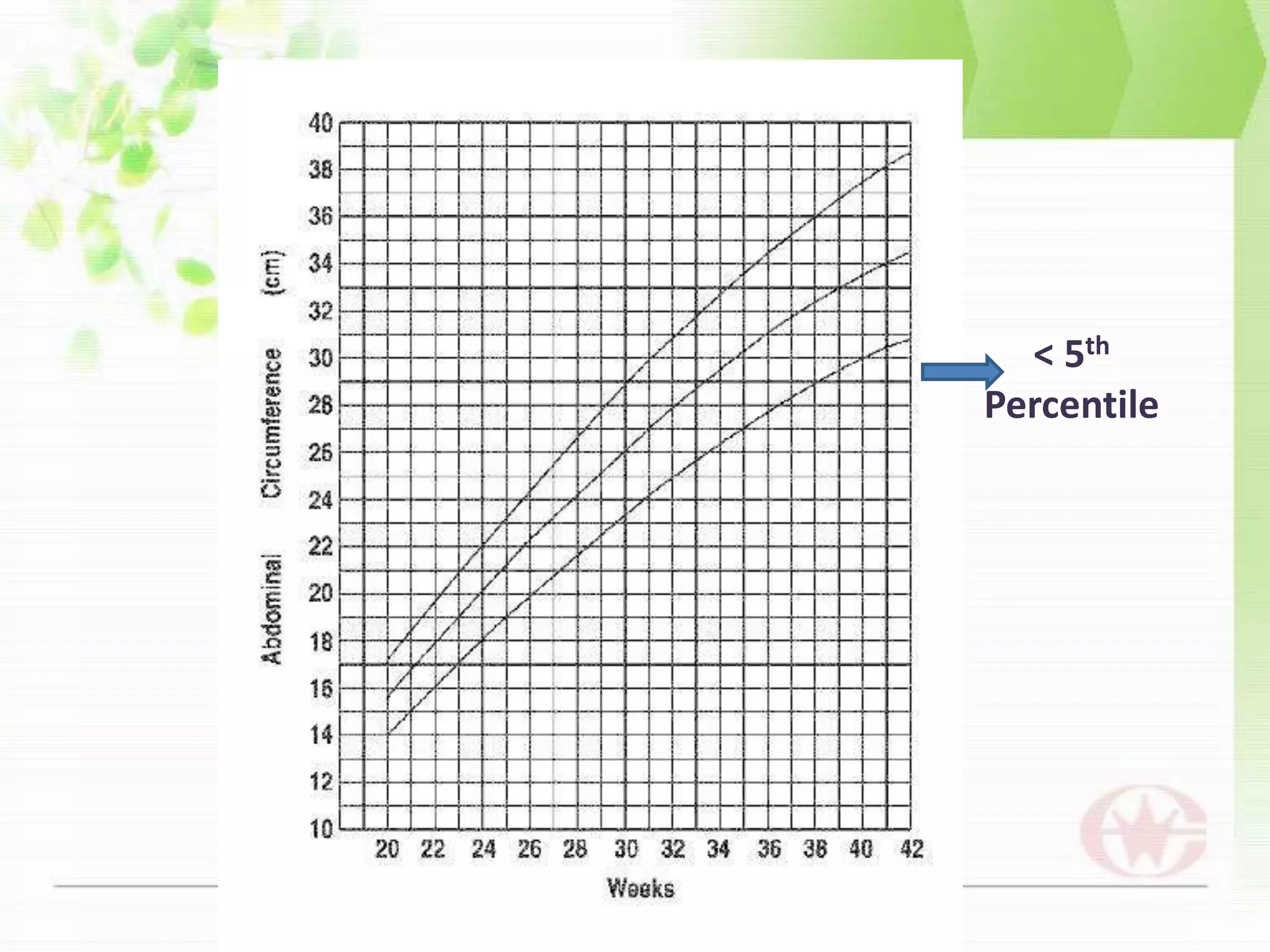
ClassificationCampbell and Thoms (1977) described the use of the sonographically determined head-to-abdomen circumference ratio (HC/AC) to differentiate growth-restricted fetuses.Symmetrical IUGR (type I)Asymetrical IUGR (type II)Combined type
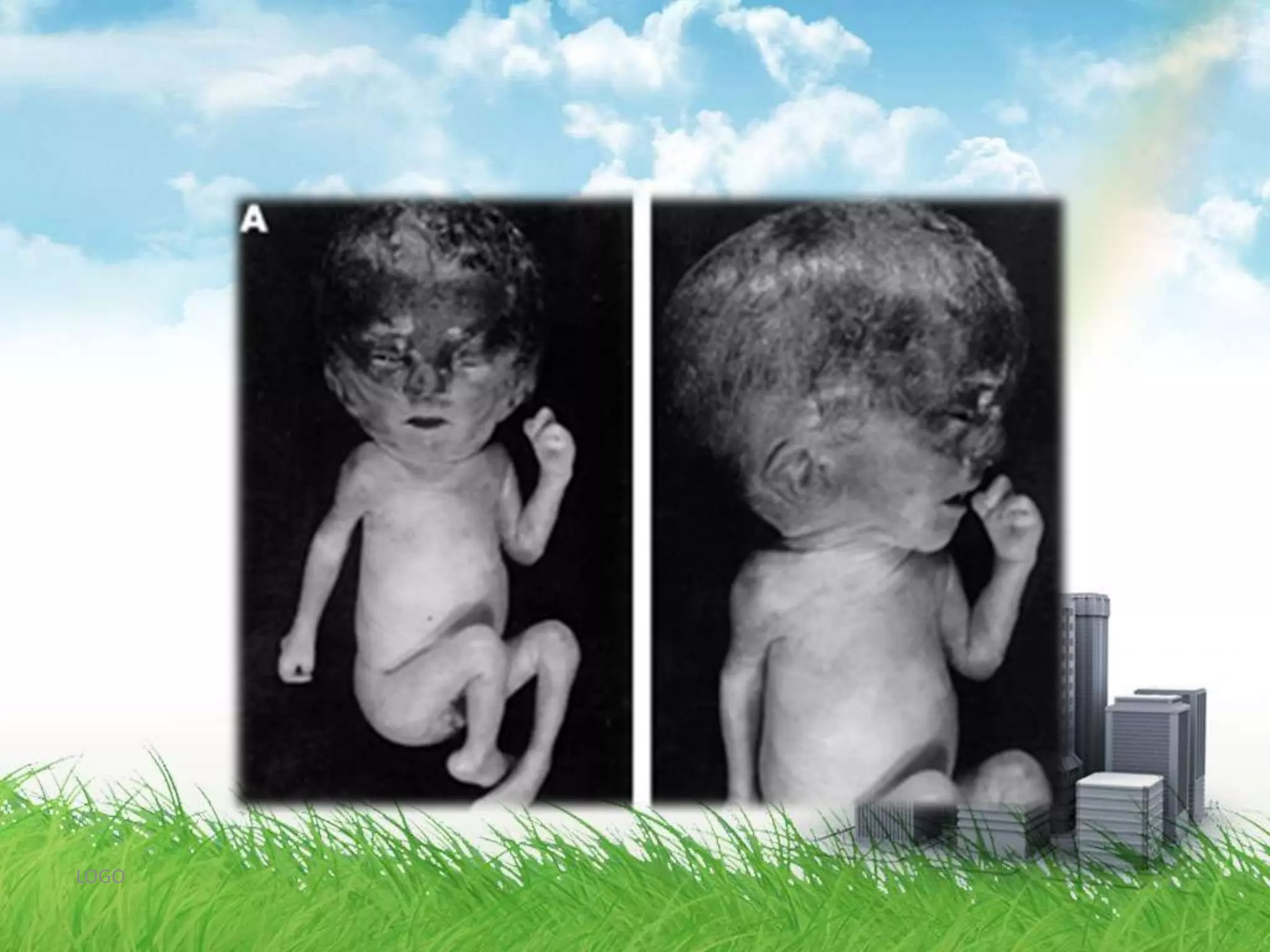
Classification1.Symmetrical growth restriction20 % of IUGR Infants proportional decrease in all organsHC/AC ratio is normalOccurs inearly pregnancy : cellular hyperplasiaIncrease risk for long term neurodevelopmental dysfunction
Classification1.Symmetrical growth restrictionIntrinsic factorChromosomal abnormalitiesCongenital anomaliesIntrauterine infectionLOGO
Classification1. Symmetrical growth restrictionAn early insult could result in a relative decrease in cell number and size.
chemical exposure
viral infection
cellular maldevelopment with aneuploidy
It may cause a proportionate reduction of both head and body size.LOGO
LOGO
Classification2.Asymmetrical growth restriction75 % of IUGR Infants 	Increase HC/AC ratio : decrease in abdominal size	Brain sparing effects	Occurs in late pregnancy : cellular hypertrophy	Risk for perinatal hypoxia, neonatal hypoglycemia	Good prognosis LOGO
Classification2.Asymmetrical growth restrictionExtrinsic factors : uteroplacental insufficiencyMaternal vascular disease: hypertensionMultiple gestationsPlacental diseaseAbruption, infarctsAbnormal cord insertion, hemangiomaLOGO
Classification2.Asymmetrical growth restrictionIt might follow a late pregnancy insult such as
placental insufficiency from hypertension
Resultant diminished glucose transfer and hepatic storage would primarily affect cell size and not number, and fetal abdominal circumference which reflects liver size would be reduced.LOGO
ClassificationSuch somatic growth restriction is proposed to result from preferential shunting of oxygen and nutrients to the brain, which allows normal brain and head growth, so-called brain sparing.
The fetal brain is normally relatively large and the liver relatively small. Accordingly, the ratio of brain weight to liver weight during the last 12 weeks, usually about 3 to 1, may be increased to 5 to 1 or more in severely growth-restricted infants.LOGO
LOGO
Classification3. Combine typeAsymmetricalsymmetrical
Symmetricalasymmetrical             More morbidities and mortalities                   More long term effectsLOGO

Classification3. Combine typeA fetus with asymmetrical IUGR might confront with cause of IUGR until cannot be compensated with brain sparing effect, may cause restriction of head circumference.
A fetus with symmetrical IUGR  how have complication with circulation in late gestational aged, may cause reduction of abdominal circumference.LOGO
CauseFetal causesMaternal causesPlacental causesLOGO
CauseFetal causesInfection
CMV, Rubella, Toxoplasmagondii – severe IUGR
Syphilis, Tuberculosis, Malaria, listeriosis
Herpes simplex, chicken pox
Chromosomal abnormality
Trisomy 18,13 –severe IUGR
Trisomy 21
Turner syndrome (45,XO), Klinefelter syndrome (47,XXY)LOGO
CauseFetal causesCongenital anomalies
Congenital Heart diseases
Anencephaly
Renal agenesis, osteogenesisimperfectaLOGO

IUGR boom&fnd latest