It's Time To Stop Using Lambda Architecture
Yaroslav Tkachenko
👋 Hi, I’m Yaroslav
Staff Data Engineer @ Shopify
I like moving things from
Batch to Streaming. A lot.
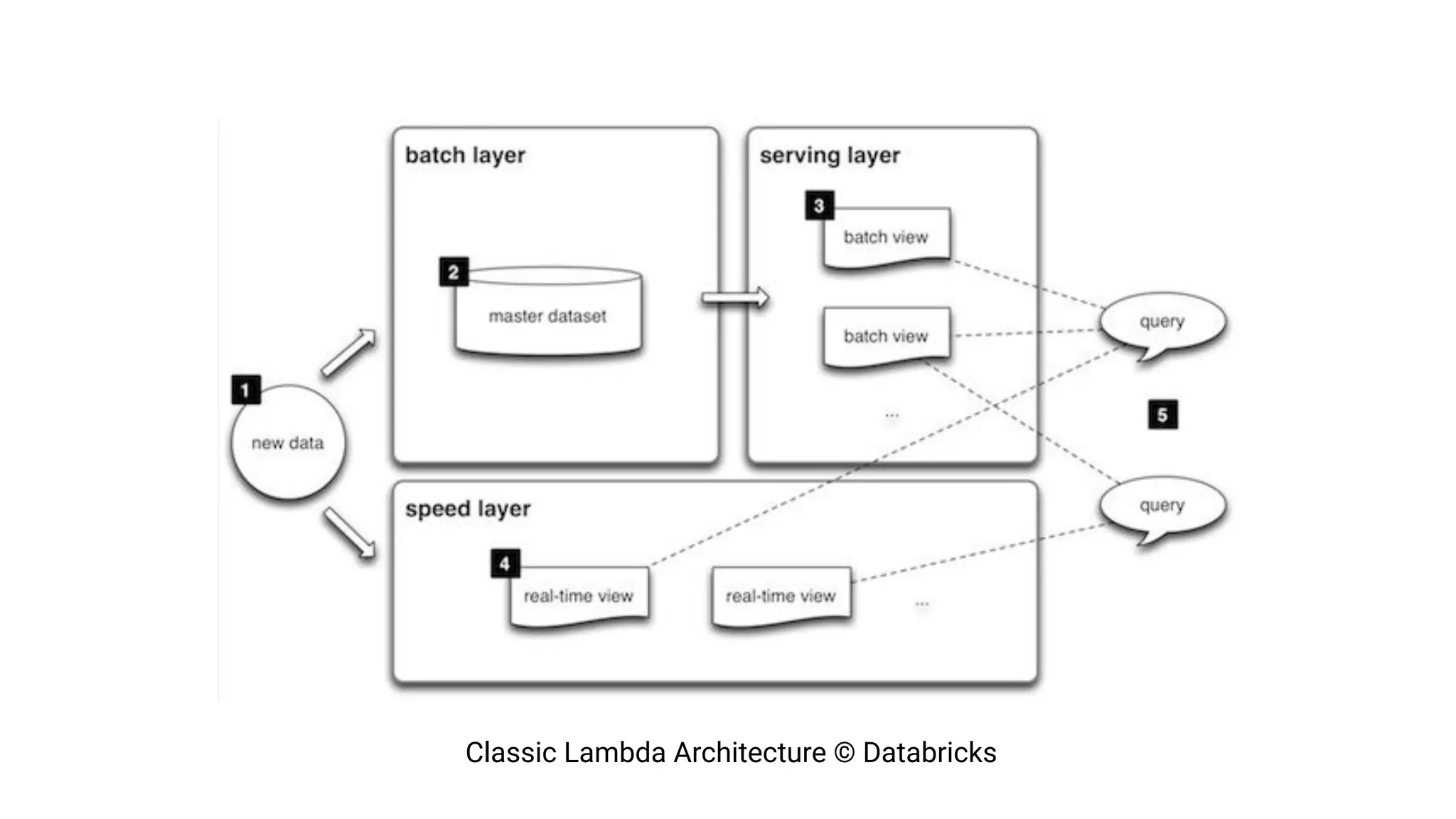
λ Architecture
Classic Lambda Architecture © Databricks
Other Lambda Incarnations
● “Let’s run a batch job to fix the data”
● “Let’s run a batch job to optimize file size”
● “Let’s run a batch job to reprocess everything”
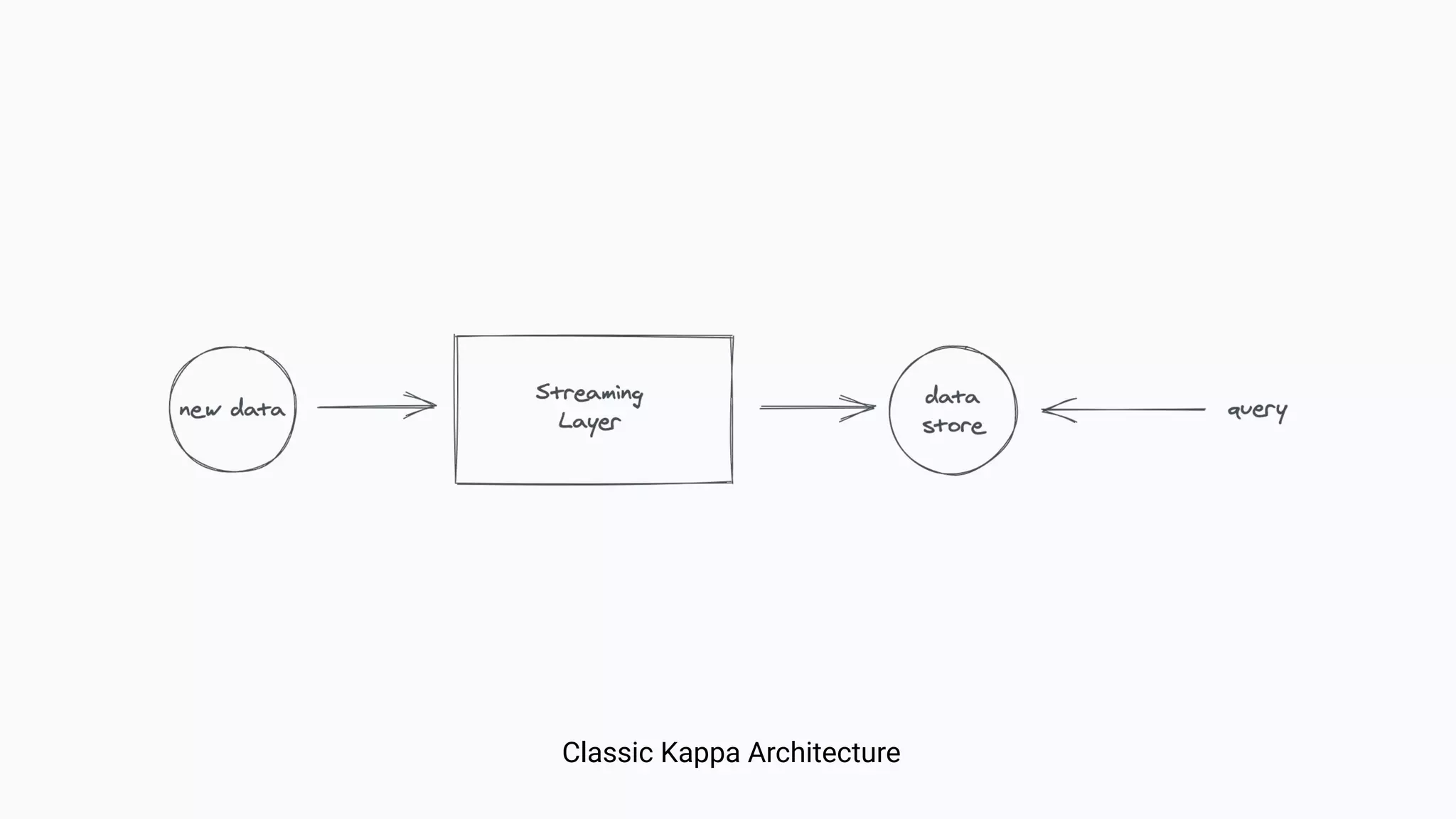
κ Architecture
Classic Kappa Architecture
Kappa Concerns
● Data availability / retention
● Data consistency
● Handling late-arriving data
● Data reprocessing & backfill
Before we continue...
…why do I like streaming so much?
Latency
● It’s actually not the main goal, but it’s a nice one!
● You have no idea how much latency is OK
Handling Late-Arriving Data: Batch
● How much time should we wait?
● How much time is OK to reprocess?
Handling Late-Arriving Data: Streaming
● Stateless transformations and sinks with updates: easy
● Stateful transformations:
○ Small state: easy
○ Large state: doable
● Sinks without updates: it depends
Operations and Observability: Batch
● “Yeah, it occasionally fails, we just wait 6 hours for a
retry run”
● “Oh, I disabled the wrong job and nobody noticed”
● “We don’t really have metrics for this job, but you can
monitor it with this UI”
Operations and Observability: Streaming
● Modern frameworks like Kafka Streams and Apache Flink
can be deployed with orchestration systems like
Kubernetes
● The same SLO and uptime expectations as with
applications serving traffic
● You can fully embrace CI/CD, observability and other
DevOps/SRE practices and mentality
κ Building Blocks
Core areas: The Log (Kafka), Streaming Framework (Flink or Kafka Streams), Sinks (e.g. Iceberg)
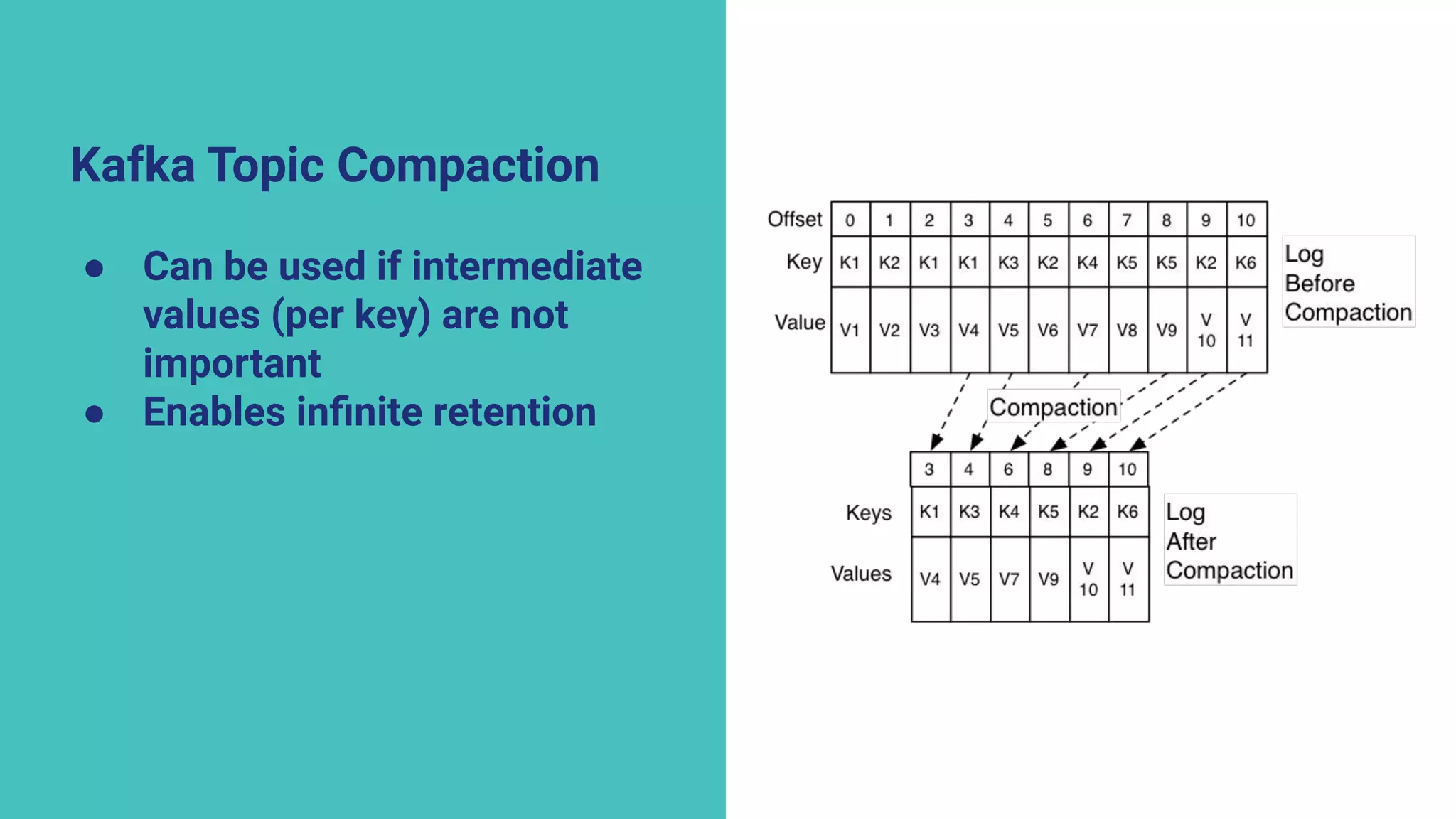
Kafka Topic Compaction
● Can be used if intermediate
values (per key) are not
important
● Enables infinite retention
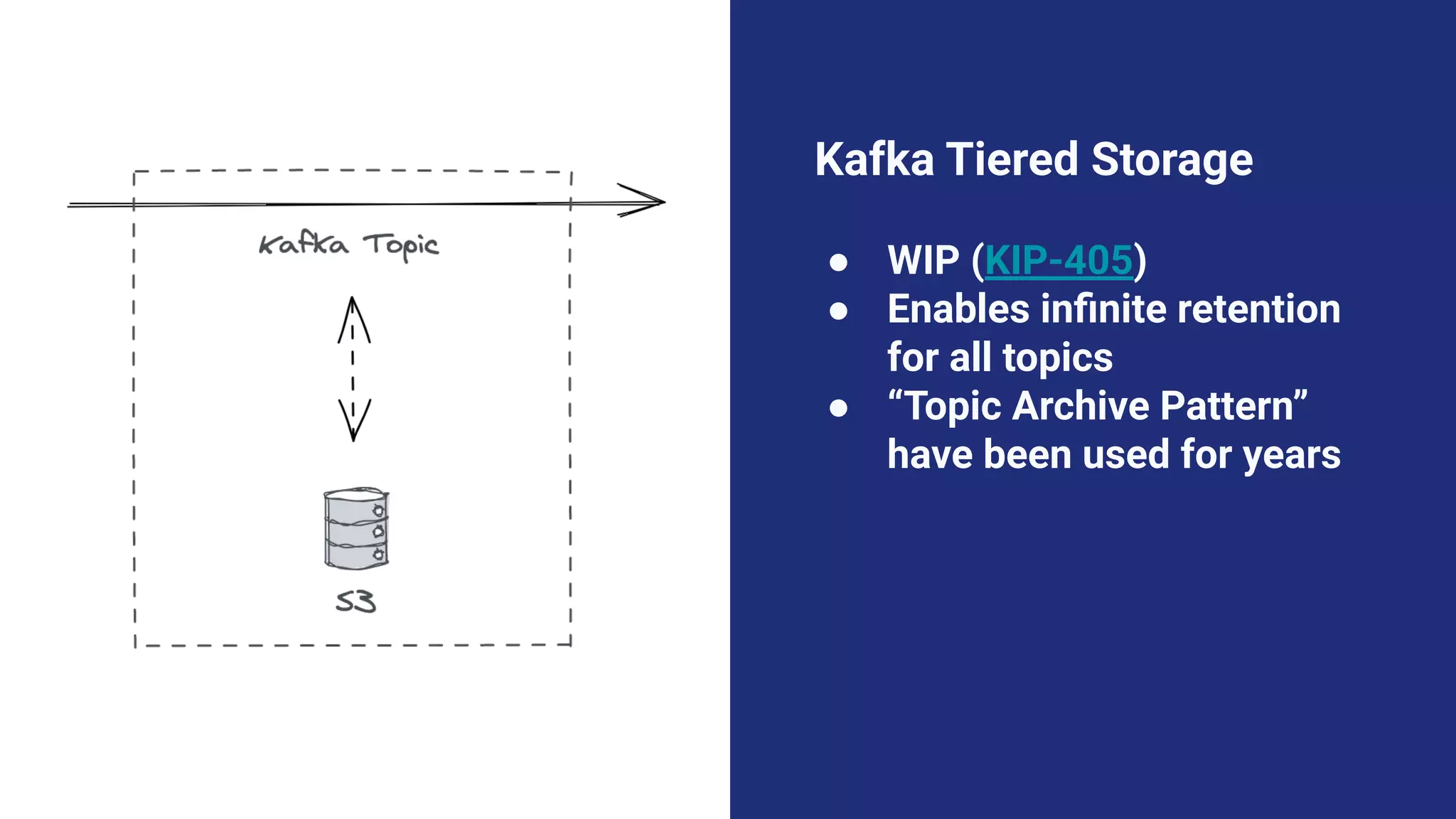
Kafka Tiered Storage
● WIP (KIP-405)
● Enables infinite retention
for all topics
● “Topic Archive Pattern”
have been used for years
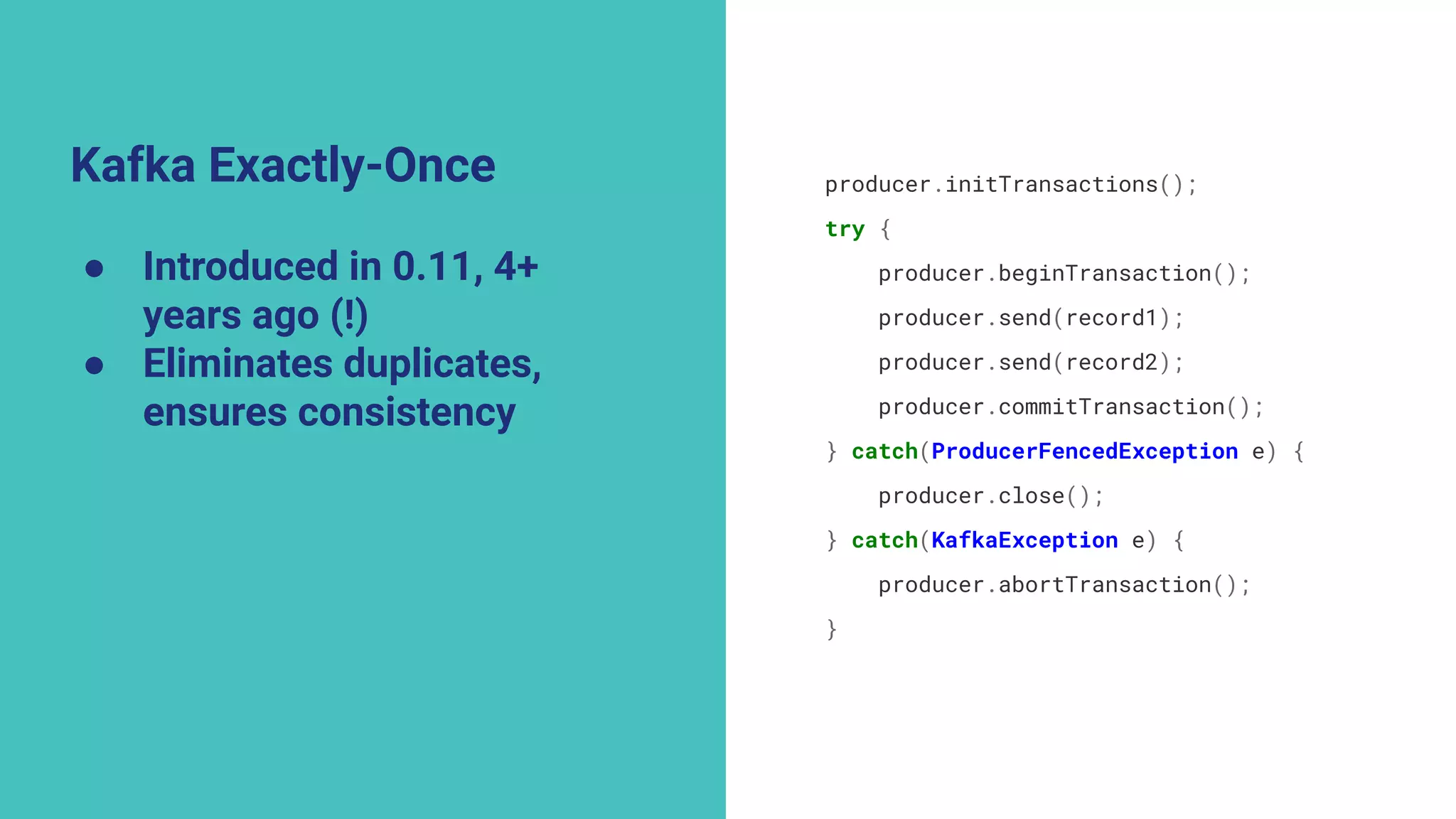
Kafka Exactly-Once
● Introduced in 0.11, 4+
years ago (!)
● Eliminates duplicates,
ensures consistency
producer.initTransactions();
try {
producer.beginTransaction();
producer.send(record1);
producer.send(record2);
producer.commitTransaction();
} catch(ProducerFencedException e) {
producer.close();
} catch(KafkaException e) {
producer.abortTransaction();
}
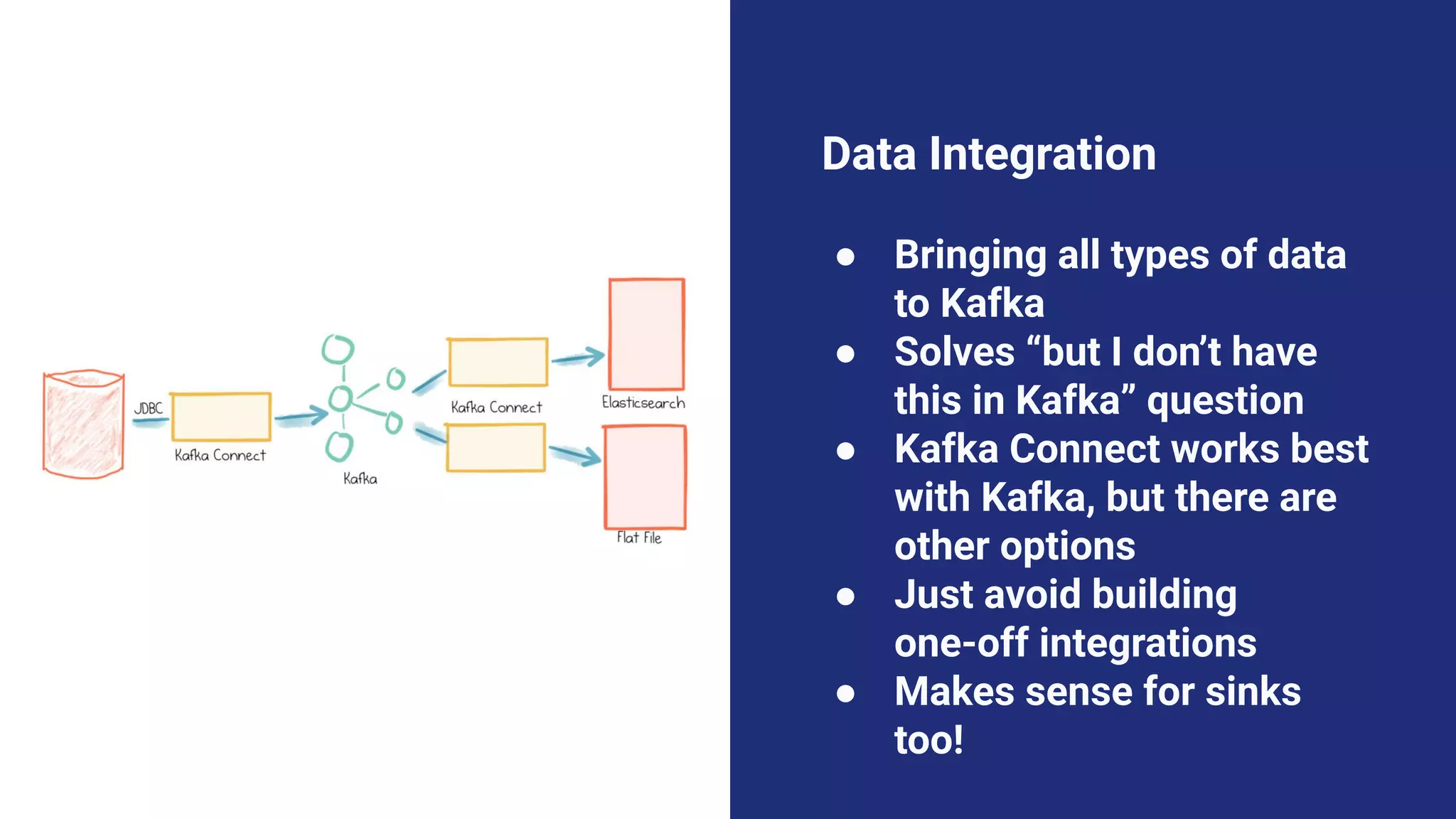
Data Integration
● Bringing all types of data
to Kafka
● Solves “but I don’t have
this in Kafka” question
● Kafka Connect works best
with Kafka, but there are
other options
● Just avoid building
one-off integrations
● Makes sense for sinks
too!
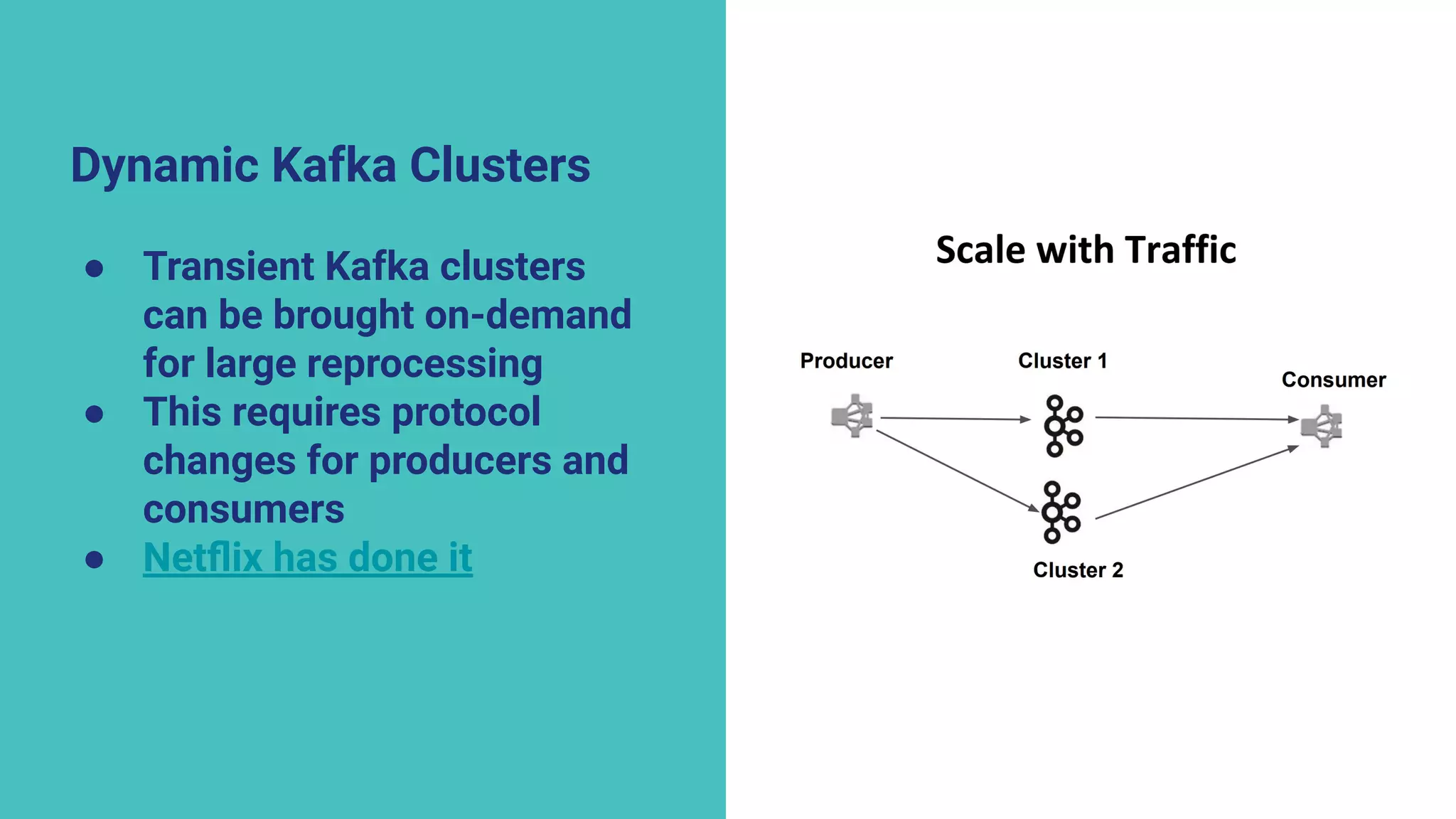
Dynamic Kafka Clusters
● Transient Kafka clusters
can be brought on-demand
for large reprocessing
● This requires protocol
changes for producers and
consumers
● Netflix has done it
Reliable and scalable state as a part of
your streaming engine is mandatory for
any complex κ use-case
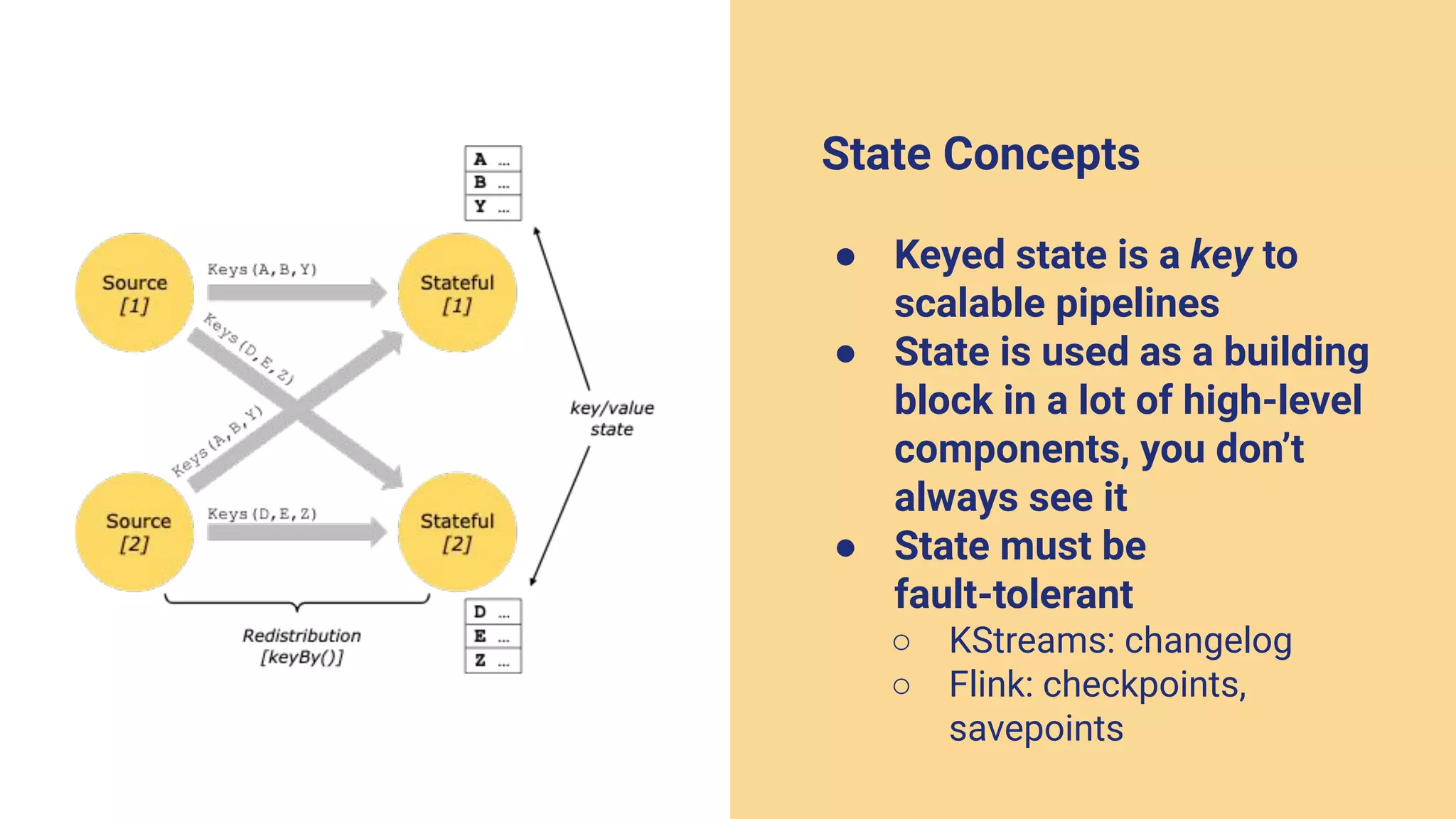
State Concepts
● Keyed state is a key to
scalable pipelines
● State is used as a building
block in a lot of high-level
components, you don’t
always see it
● State must be
fault-tolerant
○ KStreams: changelog
○ Flink: checkpoints,
savepoints
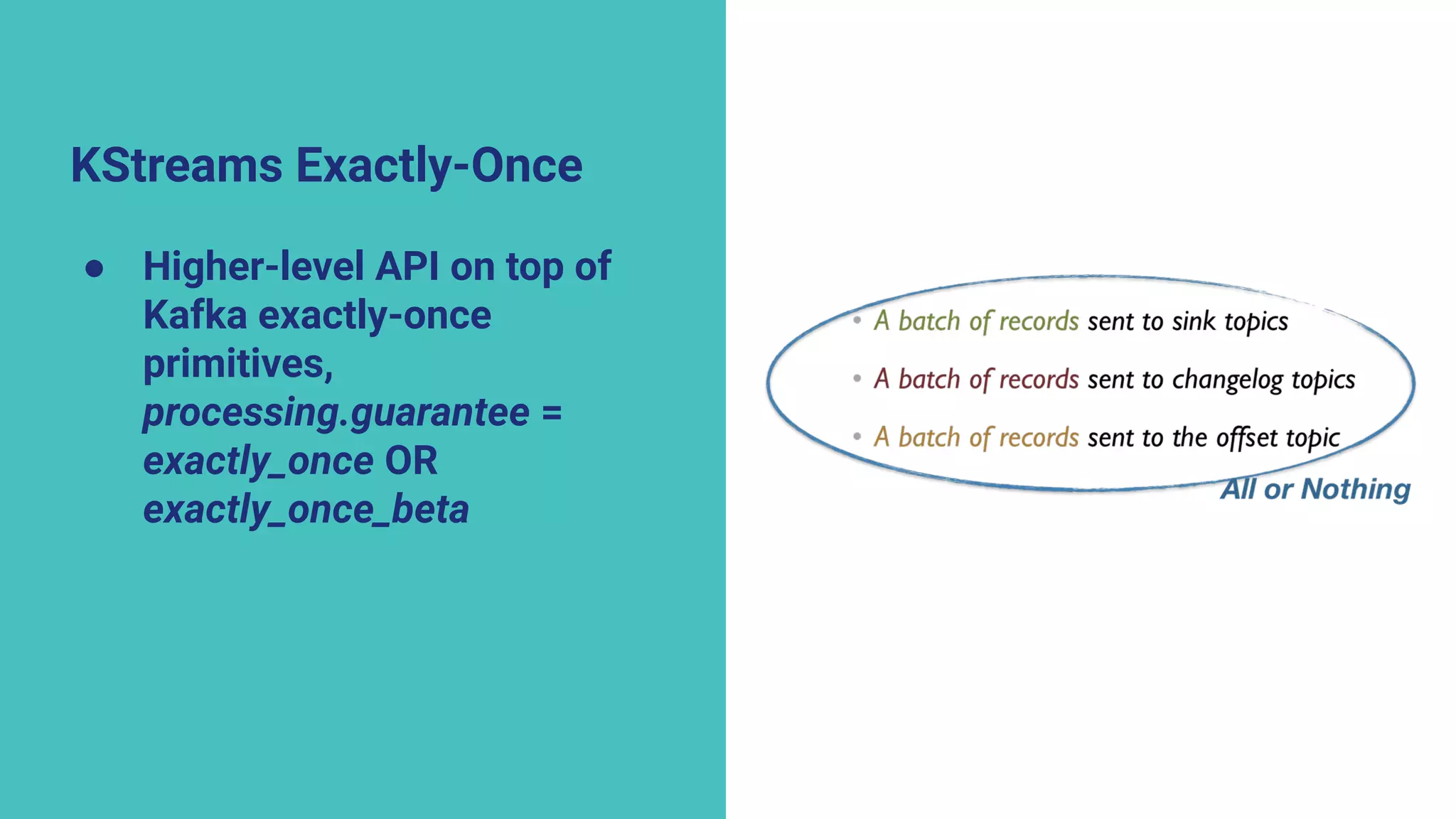
KStreams Exactly-Once
● Higher-level API on top of
Kafka exactly-once
primitives,
processing.guarantee =
exactly_once OR
exactly_once_beta
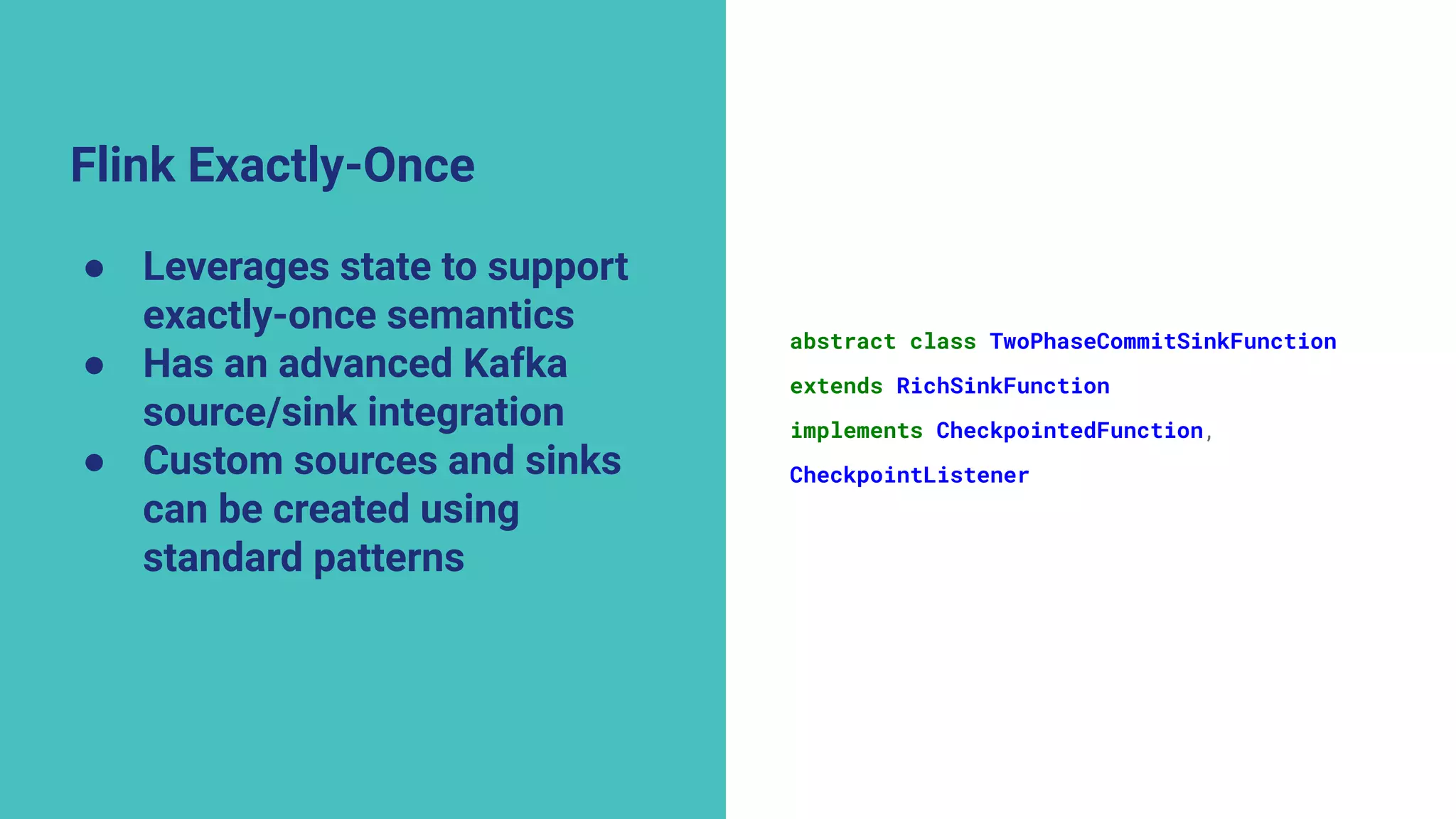
Flink Exactly-Once
● Leverages state to support
exactly-once semantics
● Has an advanced Kafka
source/sink integration
● Custom sources and sinks
can be created using
standard patterns
abstract class TwoPhaseCommitSinkFunction
extends RichSinkFunction
implements CheckpointedFunction,
CheckpointListener
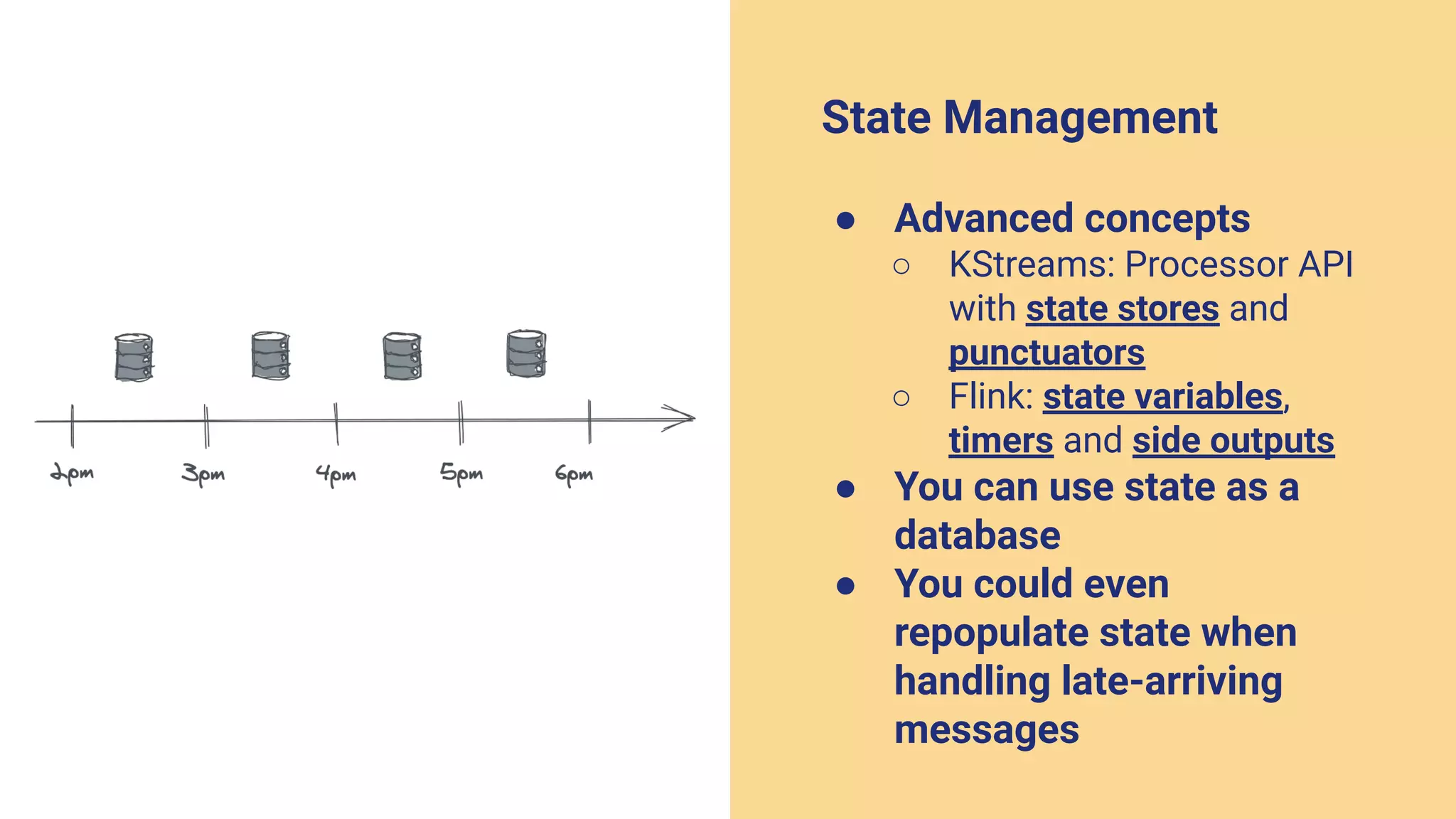
State Management
● Advanced concepts
○ KStreams: Processor API
with state stores and
punctuators
○ Flink: state variables,
timers and side outputs
● You can use state as a
database
● You could even
repopulate state when
handling late-arriving
messages
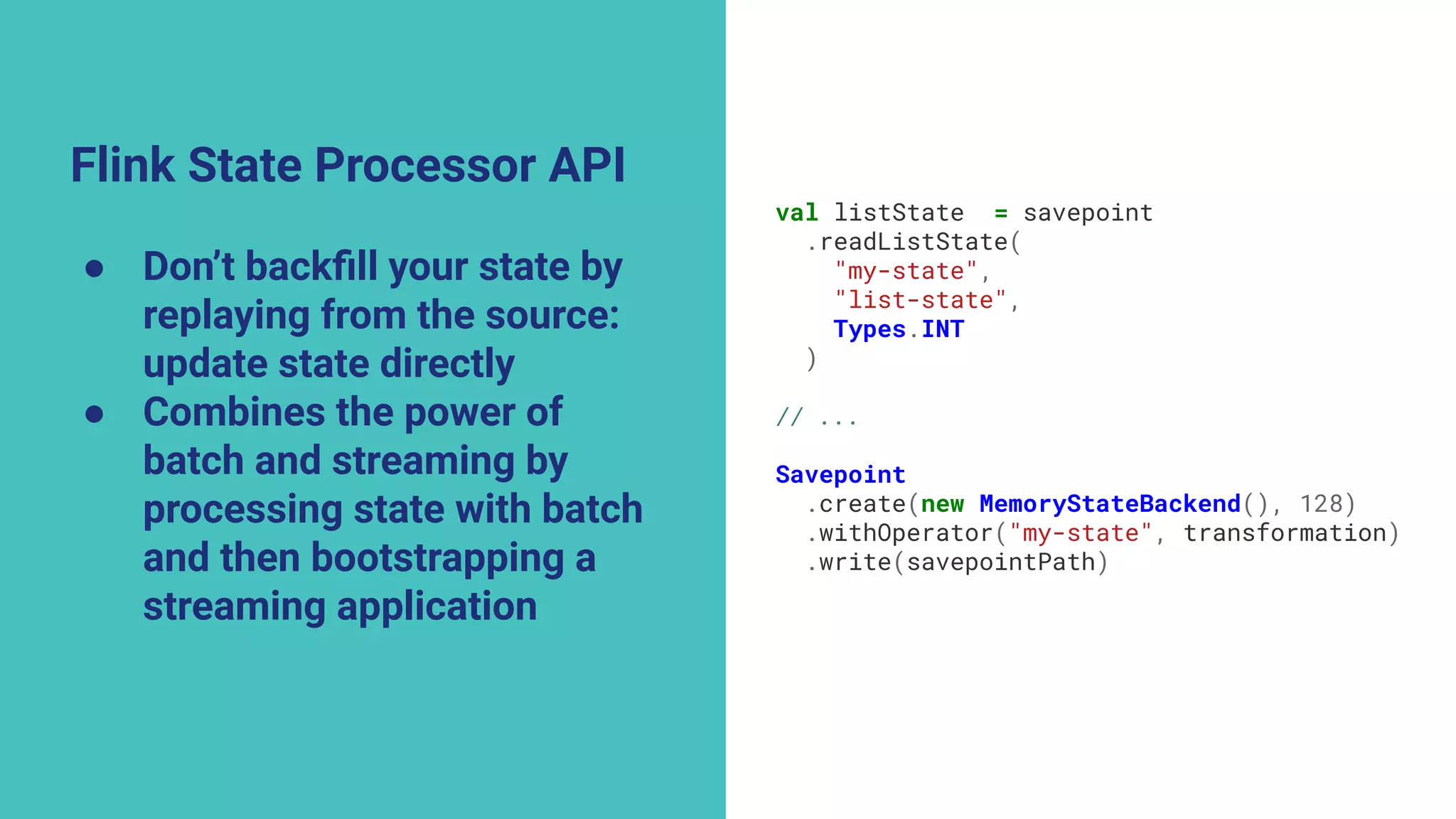
Flink State Processor API
● Don’t backfill your state by
replaying from the source:
update state directly
● Combines the power of
batch and streaming by
processing state with batch
and then bootstrapping a
streaming application
val listState = savepoint
.readListState(
"my-state",
"list-state",
Types.INT
)
// ...
Savepoint
.create(new MemoryStateBackend(), 128)
.withOperator("my-state", transformation)
.write(savepointPath)
Some data stores are better suited to be
used as data sinks for streaming
pipelines than others
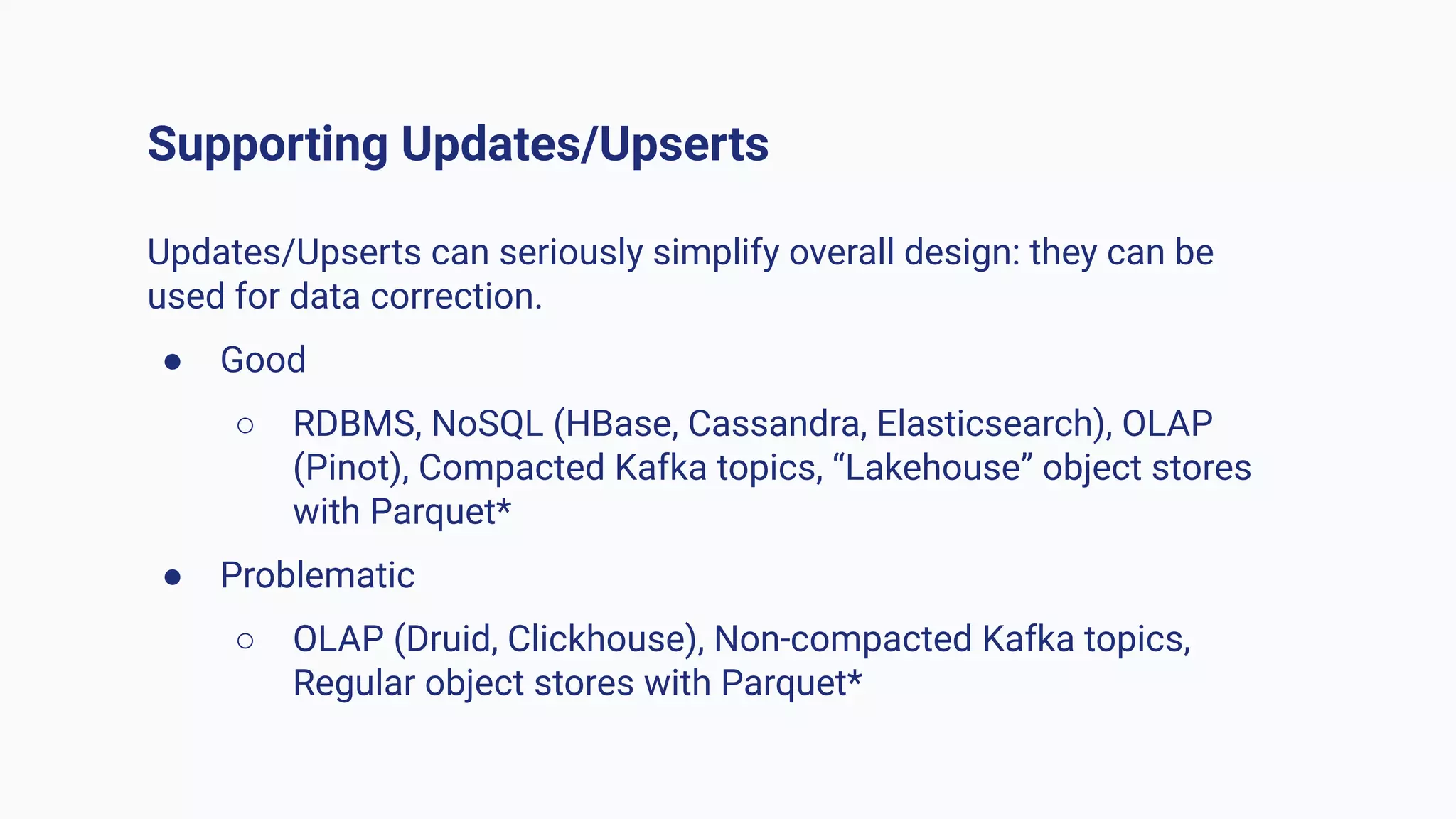
Supporting Updates/Upserts
Updates/Upserts can seriously simplify overall design: they can be
used for data correction.
● Good
○ RDBMS, NoSQL (HBase, Cassandra, Elasticsearch), OLAP
(Pinot), Compacted Kafka topics, “Lakehouse” object stores
with Parquet*
● Problematic
○ OLAP (Druid, Clickhouse), Non-compacted Kafka topics,
Regular object stores with Parquet*
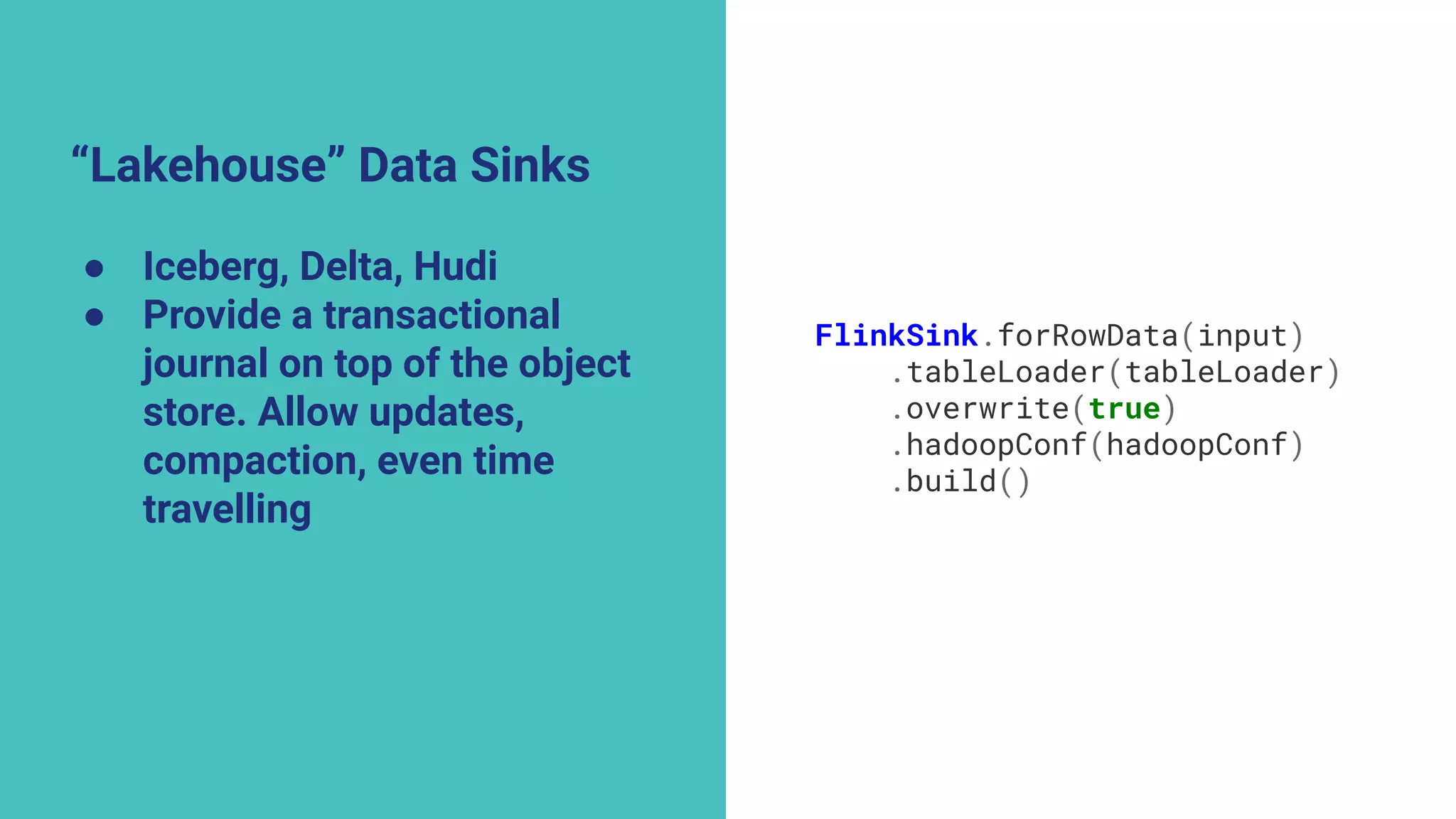
“Lakehouse” Data Sinks
● Iceberg, Delta, Hudi
● Provide a transactional
journal on top of the object
store. Allow updates,
compaction, even time
travelling
FlinkSink.forRowData(input)
.tableLoader(tableLoader)
.overwrite(true)
.hadoopConf(hadoopConf)
.build()
Addressing κ Concerns
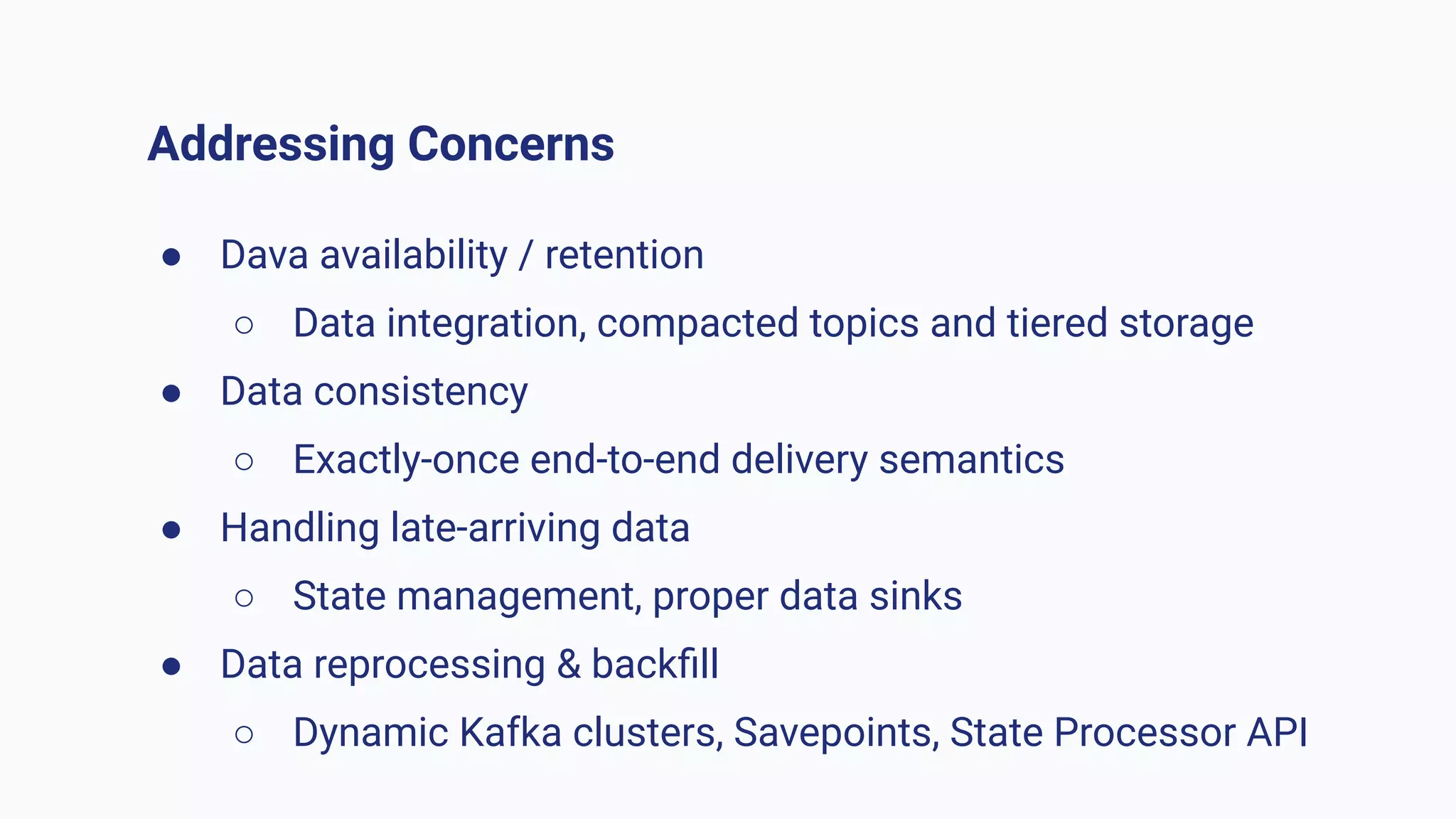
Addressing Concerns
● Dava availability / retention
○ Data integration, compacted topics and tiered storage
● Data consistency
○ Exactly-once end-to-end delivery semantics
● Handling late-arriving data
○ State management, proper data sinks
● Data reprocessing & backfill
○ Dynamic Kafka clusters, Savepoints, State Processor API
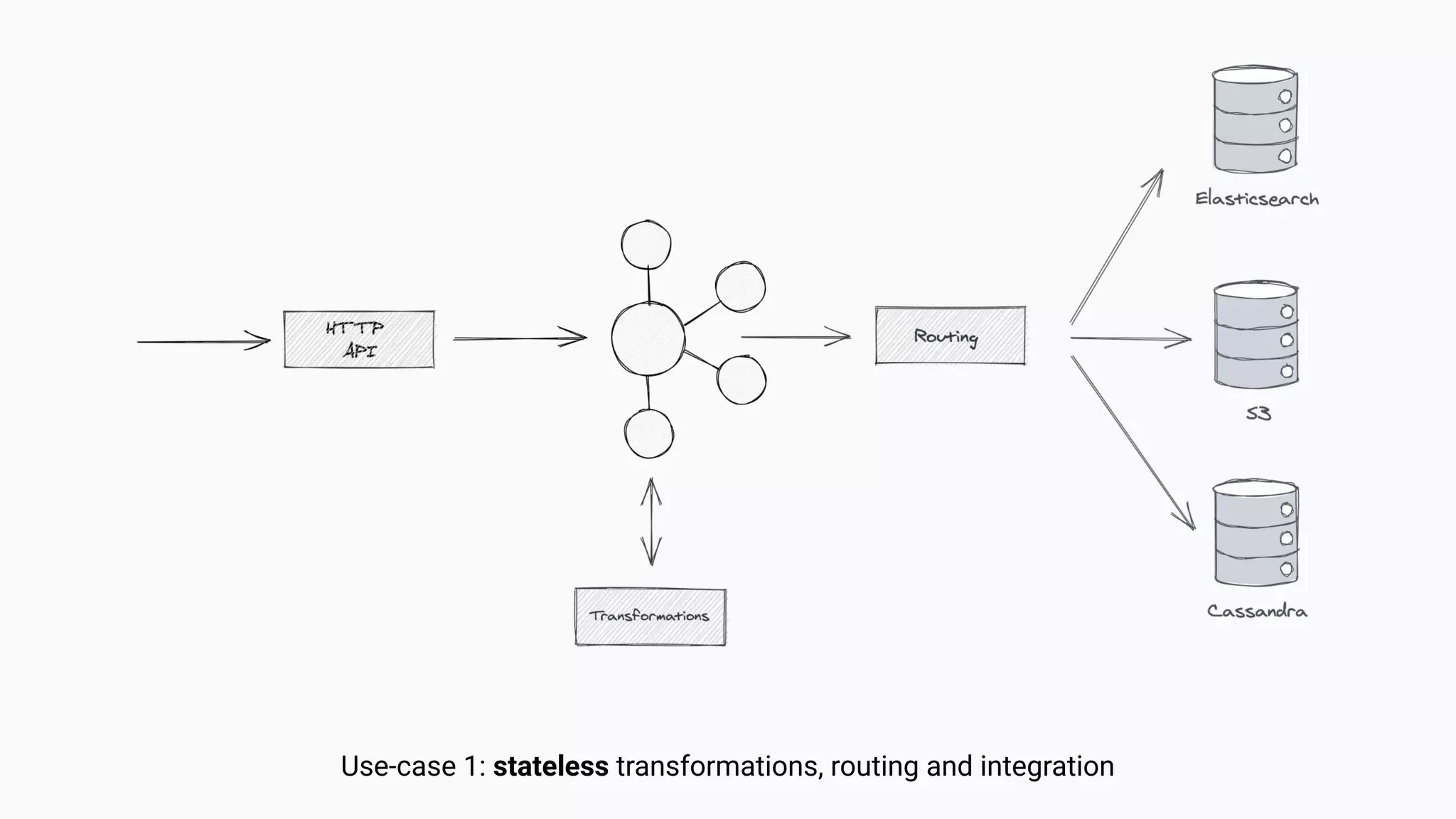
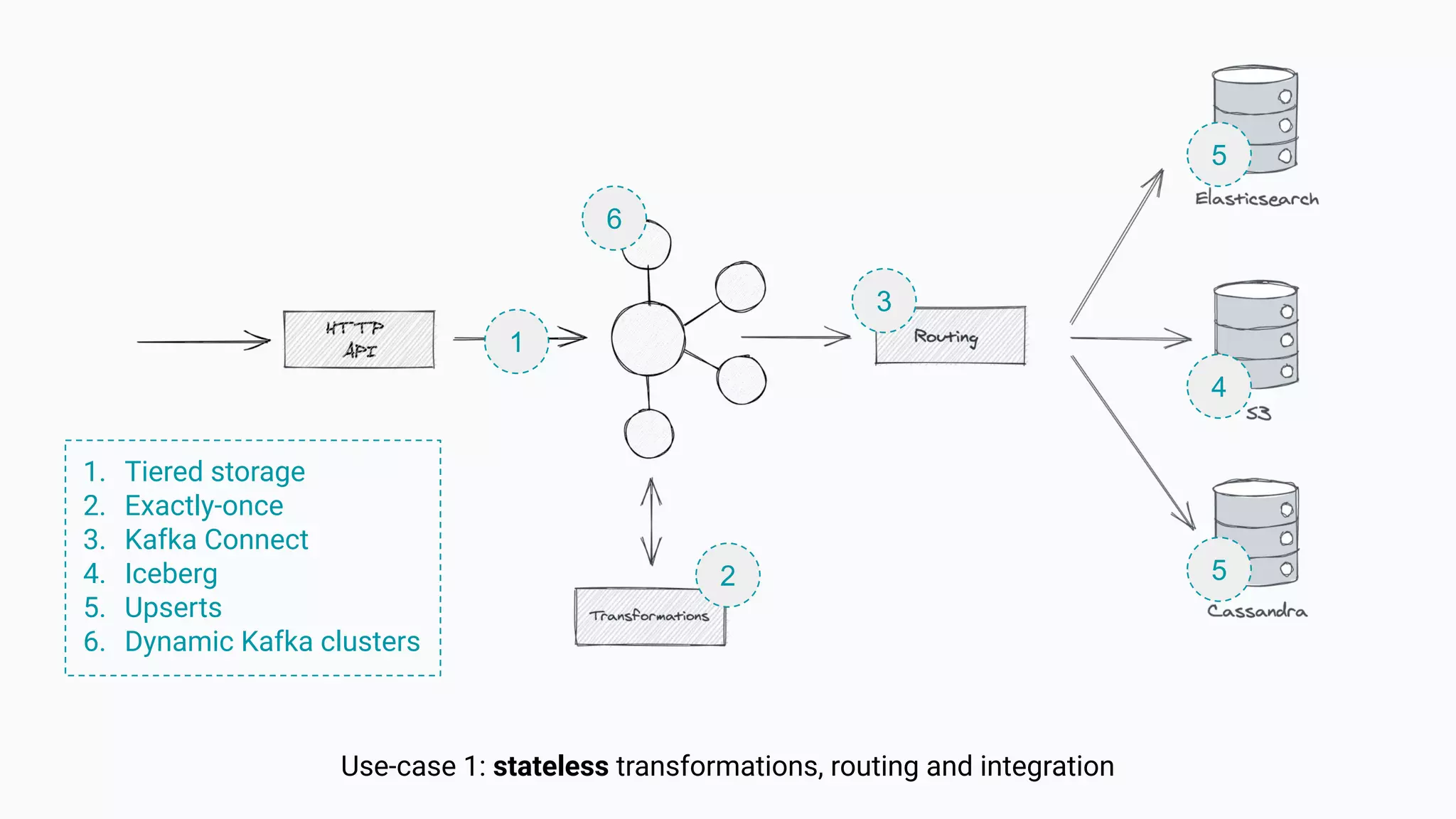
Use-case 1: stateless transformations, routing and integration
1. Tiered storage
2. Exactly-once
3. Kafka Connect
4. Iceberg
5. Upserts
6. Dynamic Kafka clusters
1
2
3
4
5
5
6
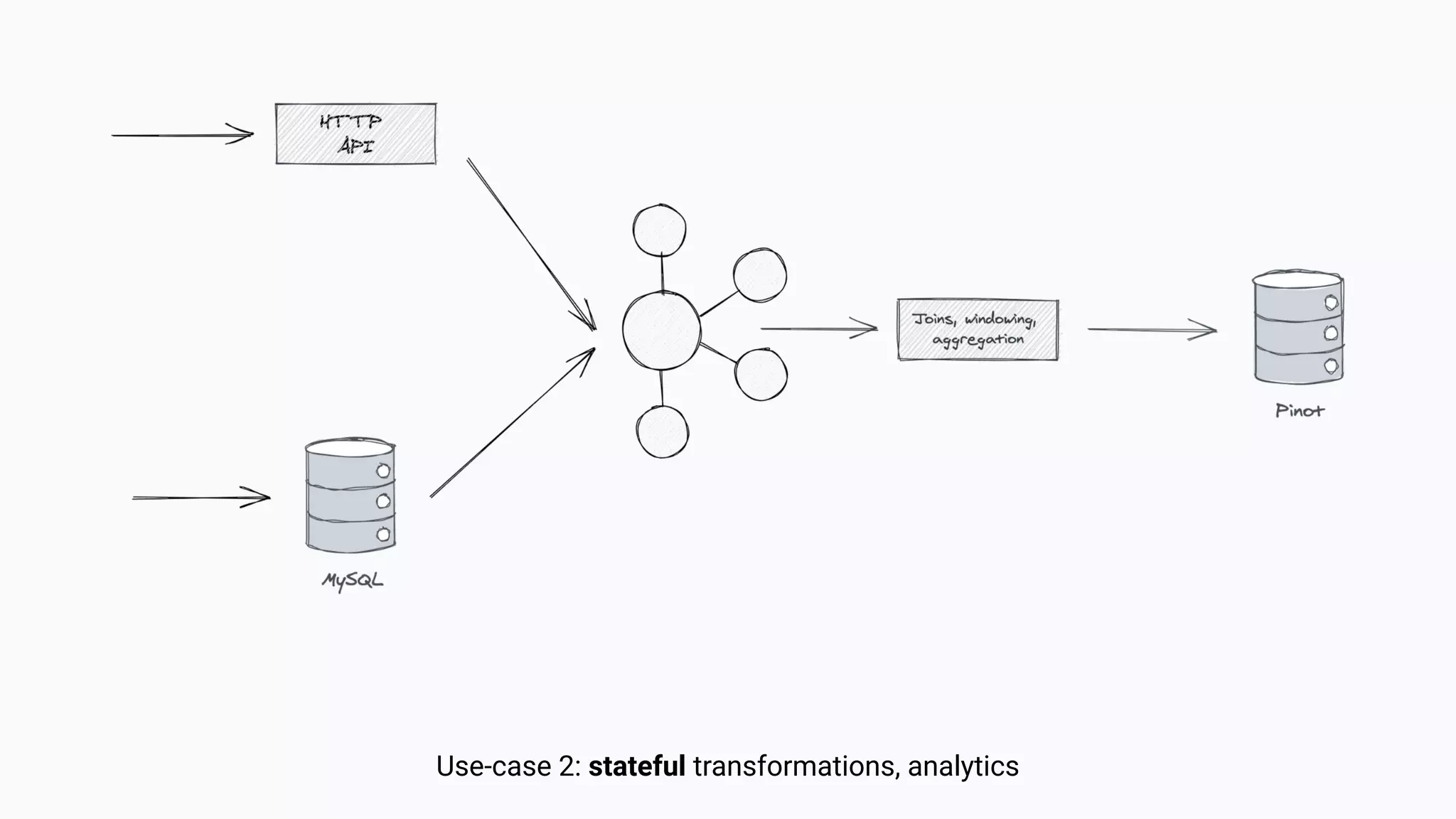
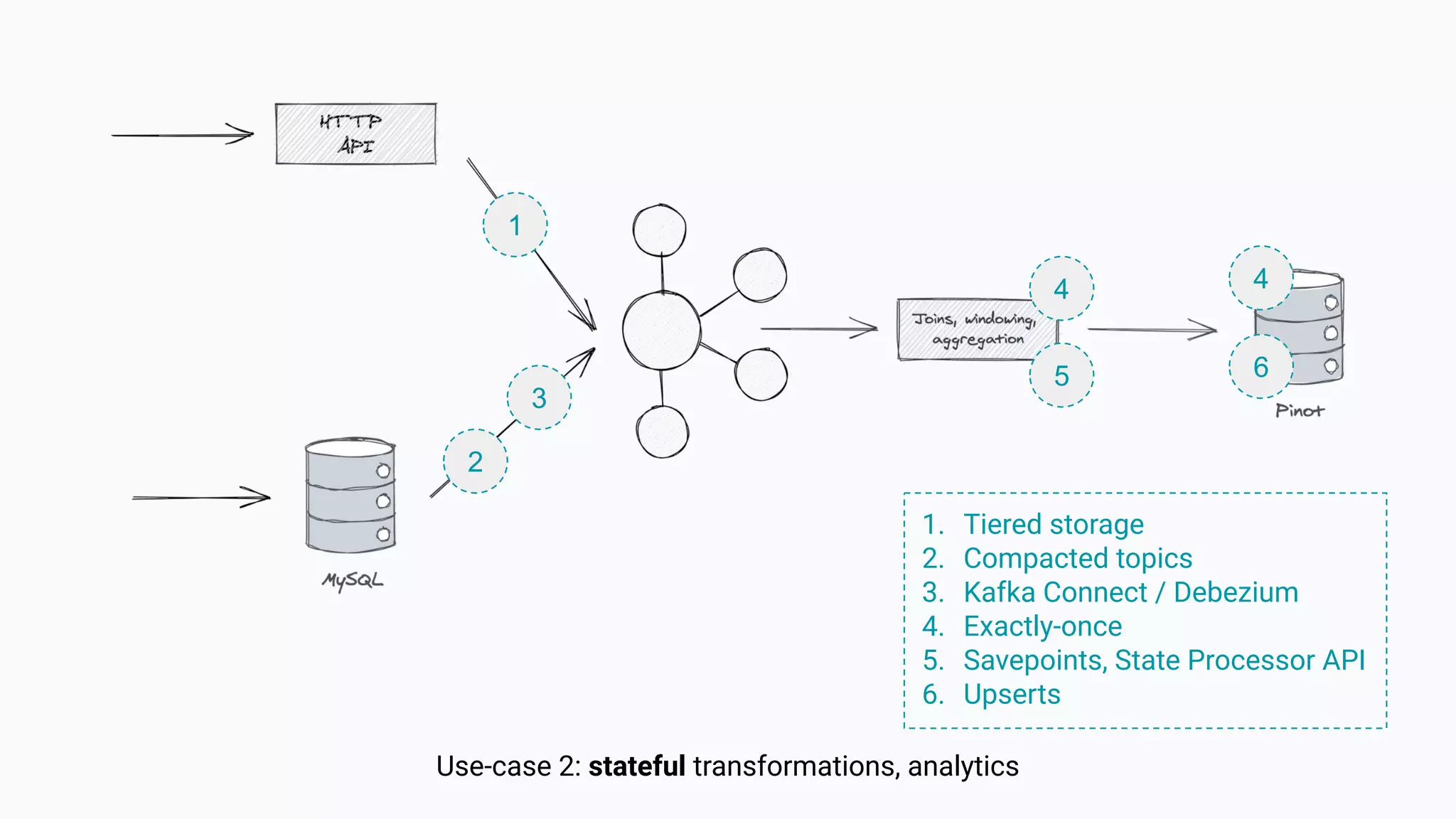
Use-case 2: stateful transformations, analytics
1. Tiered storage
2. Compacted topics
3. Kafka Connect / Debezium
4. Exactly-once
5. Savepoints, State Processor API
6. Upserts
1
2
4
5 6
4
3
Questions?
@sap1ens

It's Time To Stop Using Lambda Architecture | Yaroslav Tkachenko, Shopify

  • 1.
    It's Time ToStop Using Lambda Architecture Yaroslav Tkachenko
  • 2.
    👋 Hi, I’mYaroslav Staff Data Engineer @ Shopify I like moving things from Batch to Streaming. A lot.
  • 3.
  • 4.
  • 5.
    Other Lambda Incarnations ●“Let’s run a batch job to fix the data” ● “Let’s run a batch job to optimize file size” ● “Let’s run a batch job to reprocess everything”
  • 6.
  • 7.
  • 8.
    Kappa Concerns ● Dataavailability / retention ● Data consistency ● Handling late-arriving data ● Data reprocessing & backfill
  • 9.
  • 10.
    …why do Ilike streaming so much?
  • 11.
    Latency ● It’s actuallynot the main goal, but it’s a nice one! ● You have no idea how much latency is OK
  • 12.
    Handling Late-Arriving Data:Batch ● How much time should we wait? ● How much time is OK to reprocess?
  • 13.
    Handling Late-Arriving Data:Streaming ● Stateless transformations and sinks with updates: easy ● Stateful transformations: ○ Small state: easy ○ Large state: doable ● Sinks without updates: it depends
  • 14.
    Operations and Observability:Batch ● “Yeah, it occasionally fails, we just wait 6 hours for a retry run” ● “Oh, I disabled the wrong job and nobody noticed” ● “We don’t really have metrics for this job, but you can monitor it with this UI”
  • 15.
    Operations and Observability:Streaming ● Modern frameworks like Kafka Streams and Apache Flink can be deployed with orchestration systems like Kubernetes ● The same SLO and uptime expectations as with applications serving traffic ● You can fully embrace CI/CD, observability and other DevOps/SRE practices and mentality
  • 16.
  • 17.
    Core areas: TheLog (Kafka), Streaming Framework (Flink or Kafka Streams), Sinks (e.g. Iceberg)
  • 18.
    Kafka Topic Compaction ●Can be used if intermediate values (per key) are not important ● Enables infinite retention
  • 19.
    Kafka Tiered Storage ●WIP (KIP-405) ● Enables infinite retention for all topics ● “Topic Archive Pattern” have been used for years
  • 20.
    Kafka Exactly-Once ● Introducedin 0.11, 4+ years ago (!) ● Eliminates duplicates, ensures consistency producer.initTransactions(); try { producer.beginTransaction(); producer.send(record1); producer.send(record2); producer.commitTransaction(); } catch(ProducerFencedException e) { producer.close(); } catch(KafkaException e) { producer.abortTransaction(); }
  • 21.
    Data Integration ● Bringingall types of data to Kafka ● Solves “but I don’t have this in Kafka” question ● Kafka Connect works best with Kafka, but there are other options ● Just avoid building one-off integrations ● Makes sense for sinks too!
  • 22.
    Dynamic Kafka Clusters ●Transient Kafka clusters can be brought on-demand for large reprocessing ● This requires protocol changes for producers and consumers ● Netflix has done it
  • 23.
    Reliable and scalablestate as a part of your streaming engine is mandatory for any complex κ use-case
  • 24.
    State Concepts ● Keyedstate is a key to scalable pipelines ● State is used as a building block in a lot of high-level components, you don’t always see it ● State must be fault-tolerant ○ KStreams: changelog ○ Flink: checkpoints, savepoints
  • 25.
    KStreams Exactly-Once ● Higher-levelAPI on top of Kafka exactly-once primitives, processing.guarantee = exactly_once OR exactly_once_beta
  • 26.
    Flink Exactly-Once ● Leveragesstate to support exactly-once semantics ● Has an advanced Kafka source/sink integration ● Custom sources and sinks can be created using standard patterns abstract class TwoPhaseCommitSinkFunction extends RichSinkFunction implements CheckpointedFunction, CheckpointListener
  • 27.
    State Management ● Advancedconcepts ○ KStreams: Processor API with state stores and punctuators ○ Flink: state variables, timers and side outputs ● You can use state as a database ● You could even repopulate state when handling late-arriving messages
  • 28.
    Flink State ProcessorAPI ● Don’t backfill your state by replaying from the source: update state directly ● Combines the power of batch and streaming by processing state with batch and then bootstrapping a streaming application val listState = savepoint .readListState( "my-state", "list-state", Types.INT ) // ... Savepoint .create(new MemoryStateBackend(), 128) .withOperator("my-state", transformation) .write(savepointPath)
  • 29.
    Some data storesare better suited to be used as data sinks for streaming pipelines than others
  • 30.
    Supporting Updates/Upserts Updates/Upserts canseriously simplify overall design: they can be used for data correction. ● Good ○ RDBMS, NoSQL (HBase, Cassandra, Elasticsearch), OLAP (Pinot), Compacted Kafka topics, “Lakehouse” object stores with Parquet* ● Problematic ○ OLAP (Druid, Clickhouse), Non-compacted Kafka topics, Regular object stores with Parquet*
  • 31.
    “Lakehouse” Data Sinks ●Iceberg, Delta, Hudi ● Provide a transactional journal on top of the object store. Allow updates, compaction, even time travelling FlinkSink.forRowData(input) .tableLoader(tableLoader) .overwrite(true) .hadoopConf(hadoopConf) .build()
  • 32.
  • 33.
    Addressing Concerns ● Davaavailability / retention ○ Data integration, compacted topics and tiered storage ● Data consistency ○ Exactly-once end-to-end delivery semantics ● Handling late-arriving data ○ State management, proper data sinks ● Data reprocessing & backfill ○ Dynamic Kafka clusters, Savepoints, State Processor API
  • 34.
    Use-case 1: statelesstransformations, routing and integration
  • 35.
    Use-case 1: statelesstransformations, routing and integration 1. Tiered storage 2. Exactly-once 3. Kafka Connect 4. Iceberg 5. Upserts 6. Dynamic Kafka clusters 1 2 3 4 5 5 6
  • 36.
    Use-case 2: statefultransformations, analytics
  • 37.
    Use-case 2: statefultransformations, analytics 1. Tiered storage 2. Compacted topics 3. Kafka Connect / Debezium 4. Exactly-once 5. Savepoints, State Processor API 6. Upserts 1 2 4 5 6 4 3
  • 38.