Download to read offline
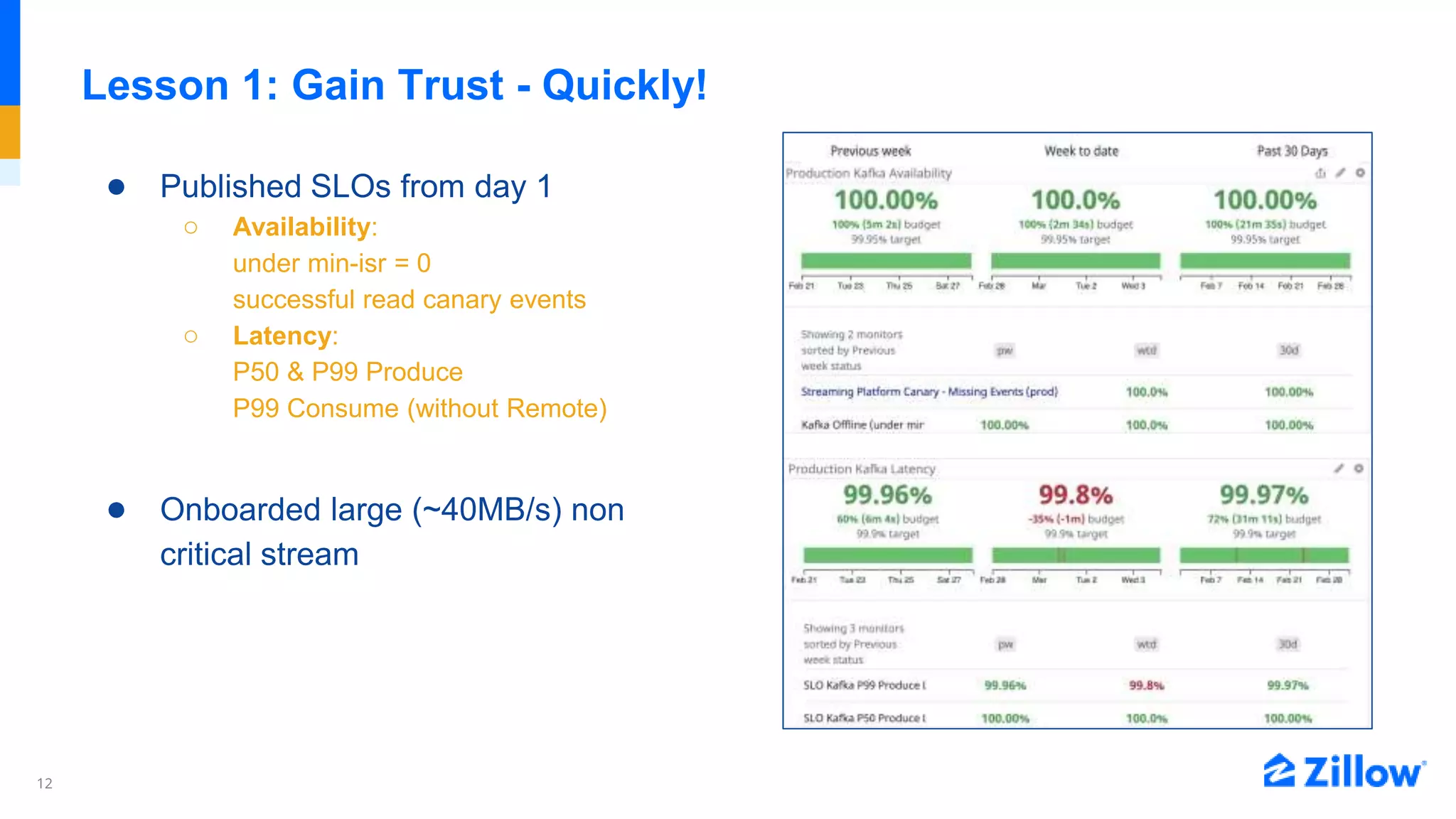
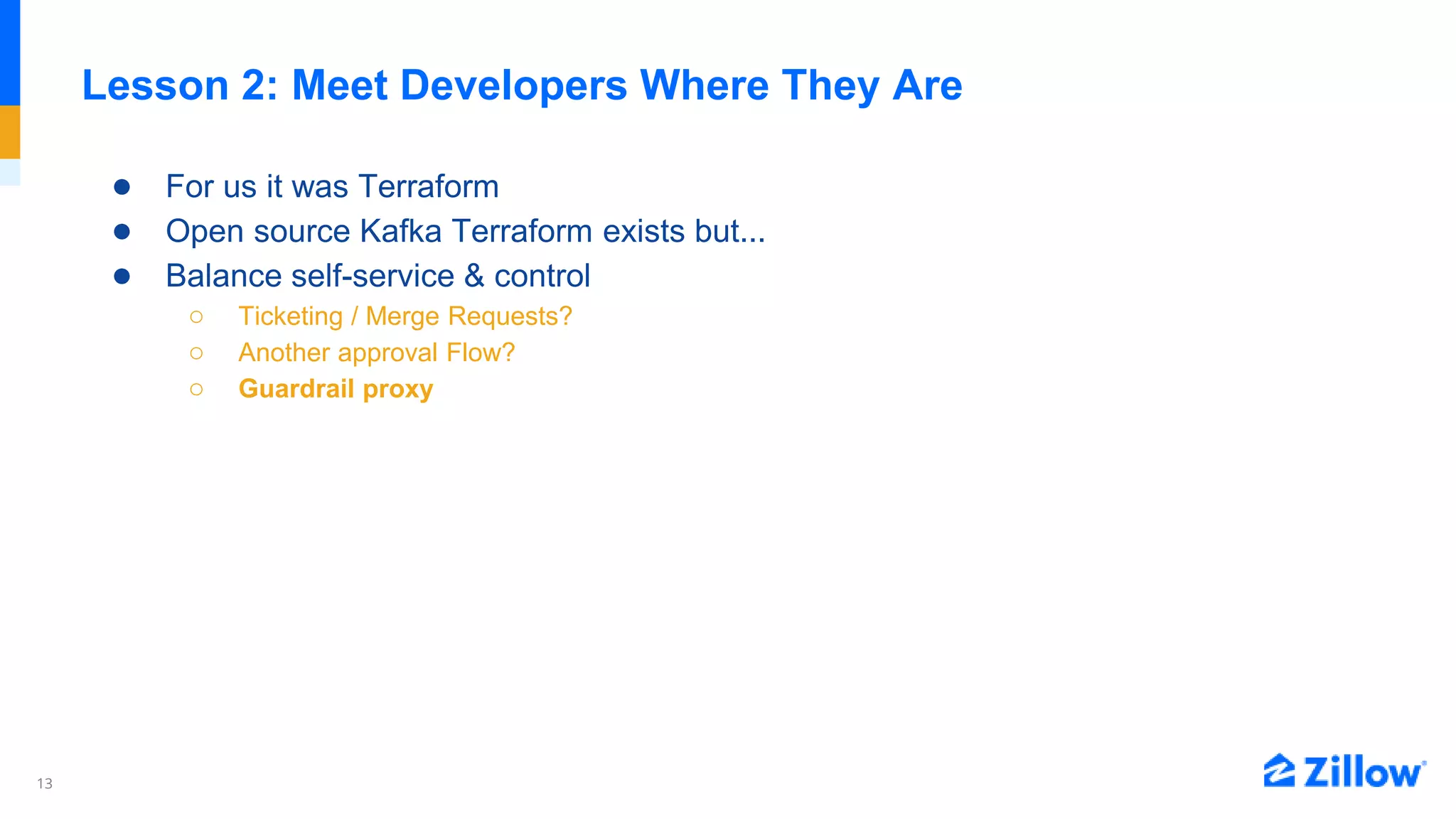
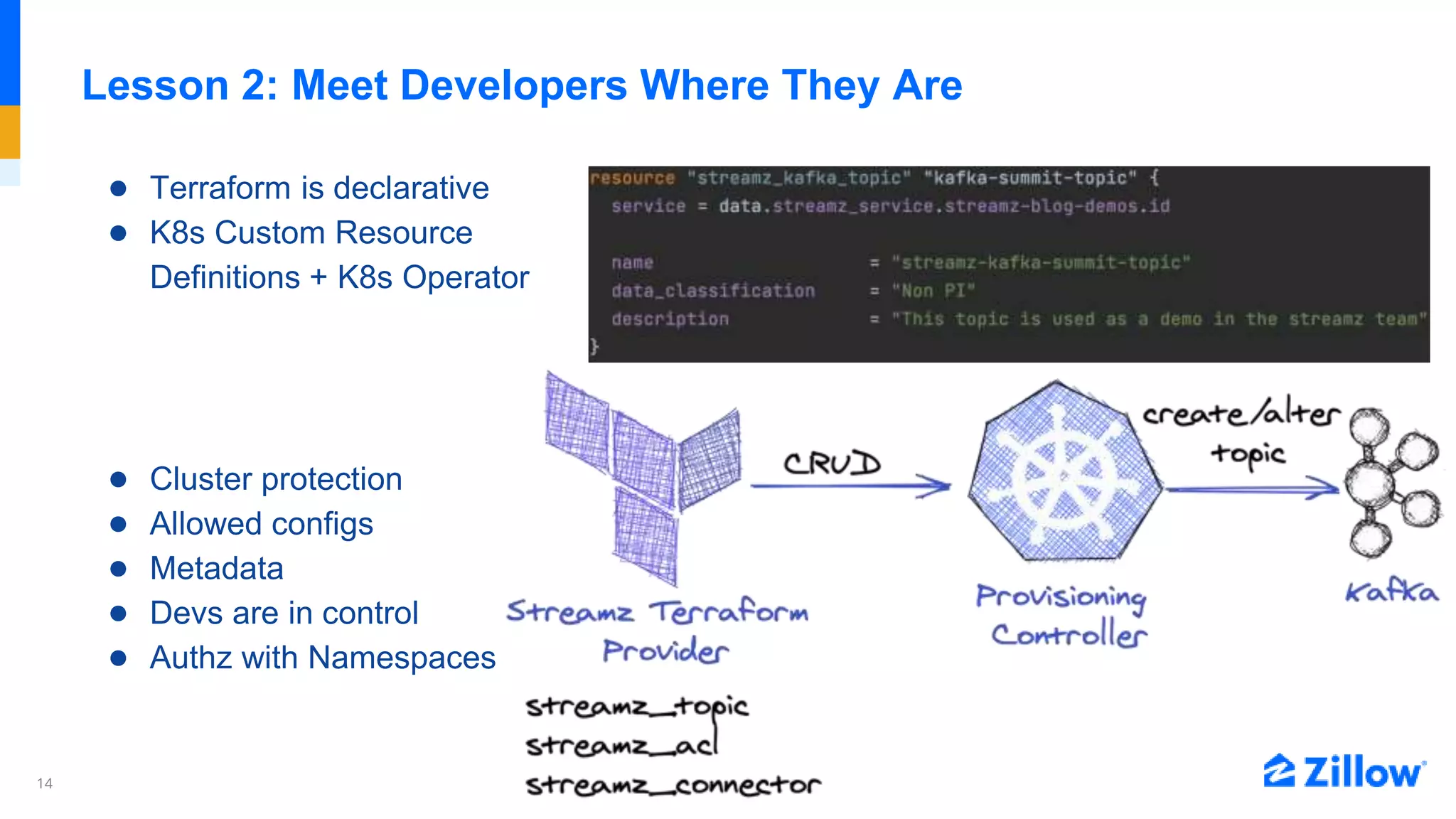
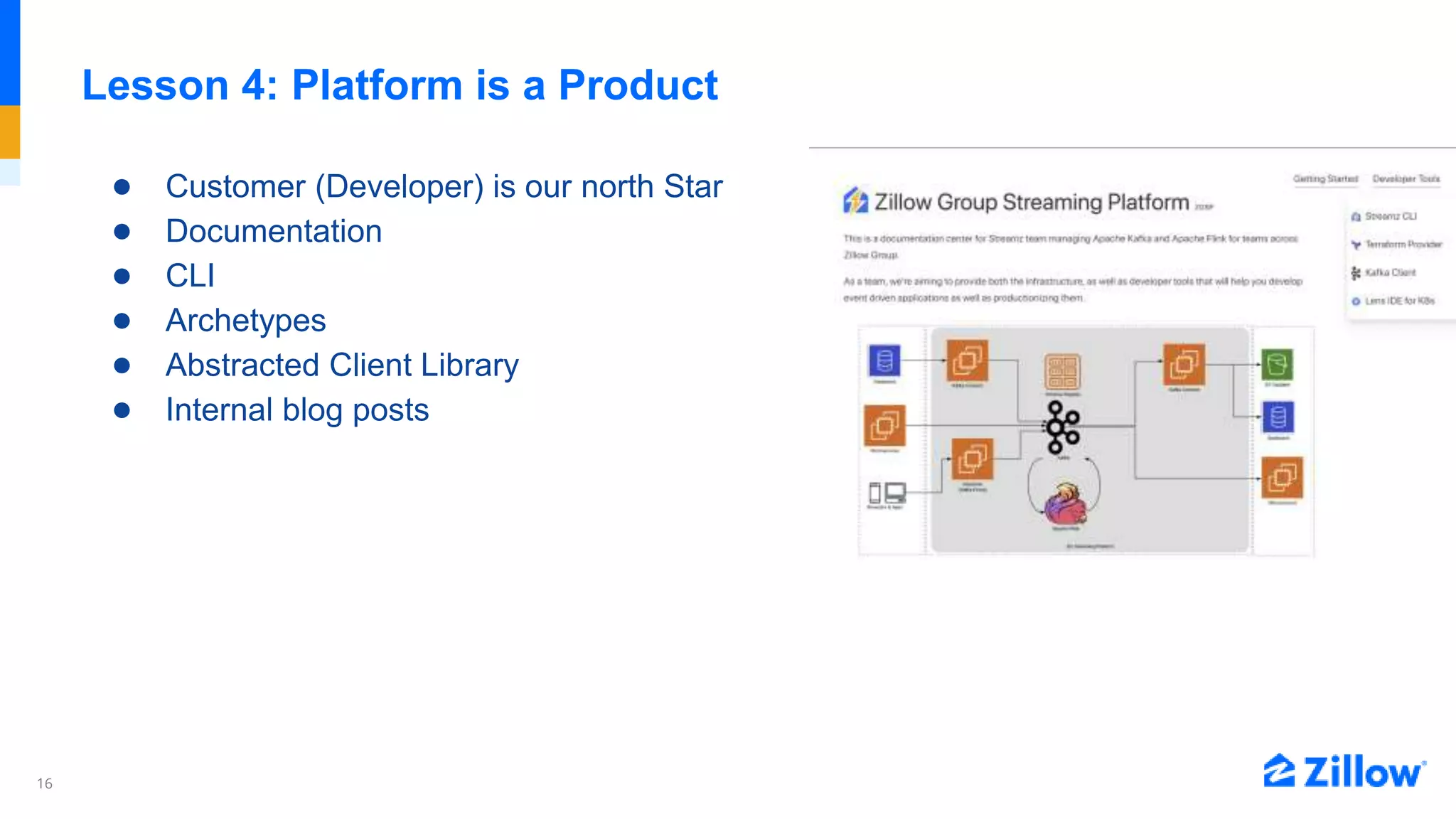
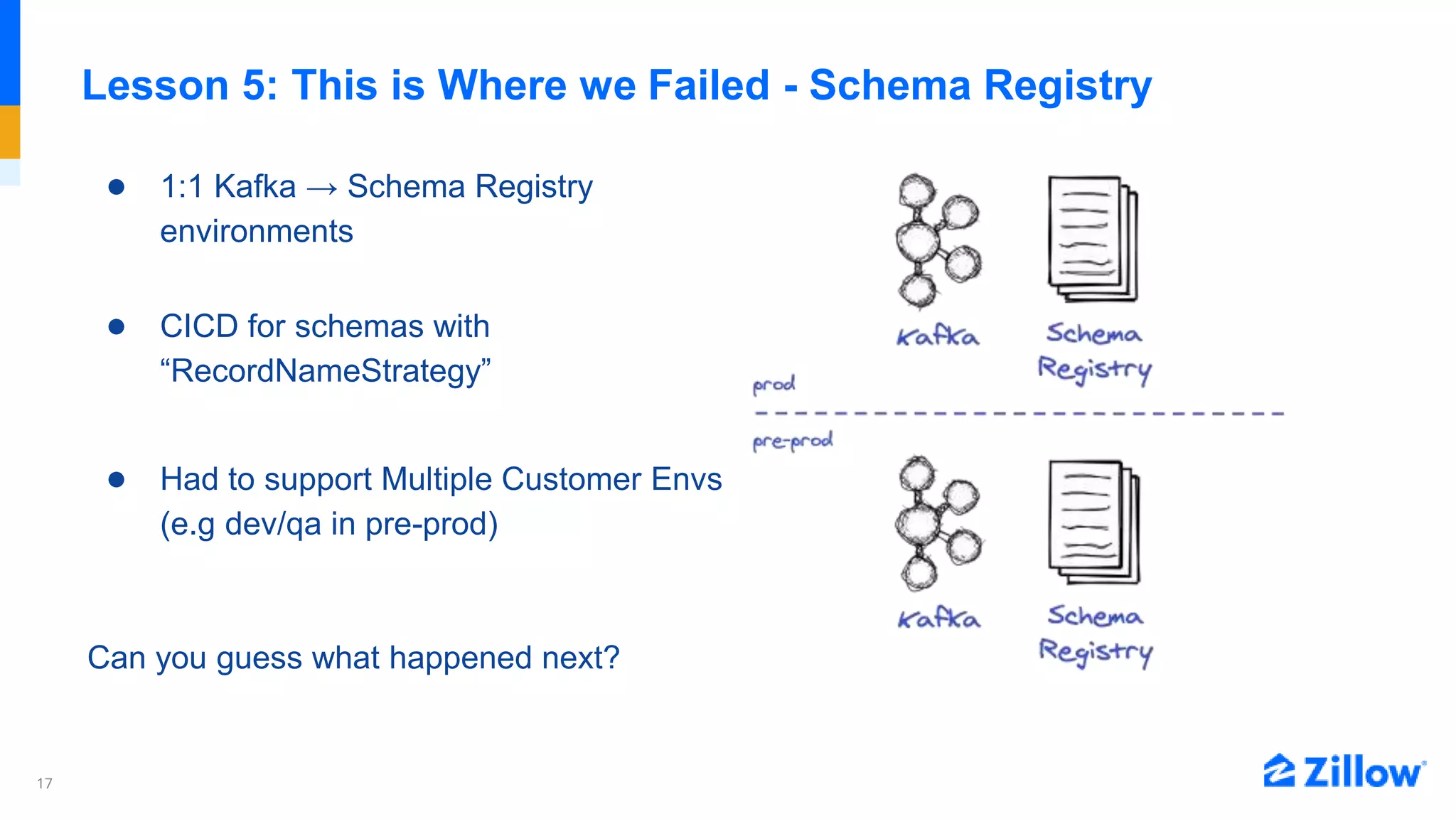
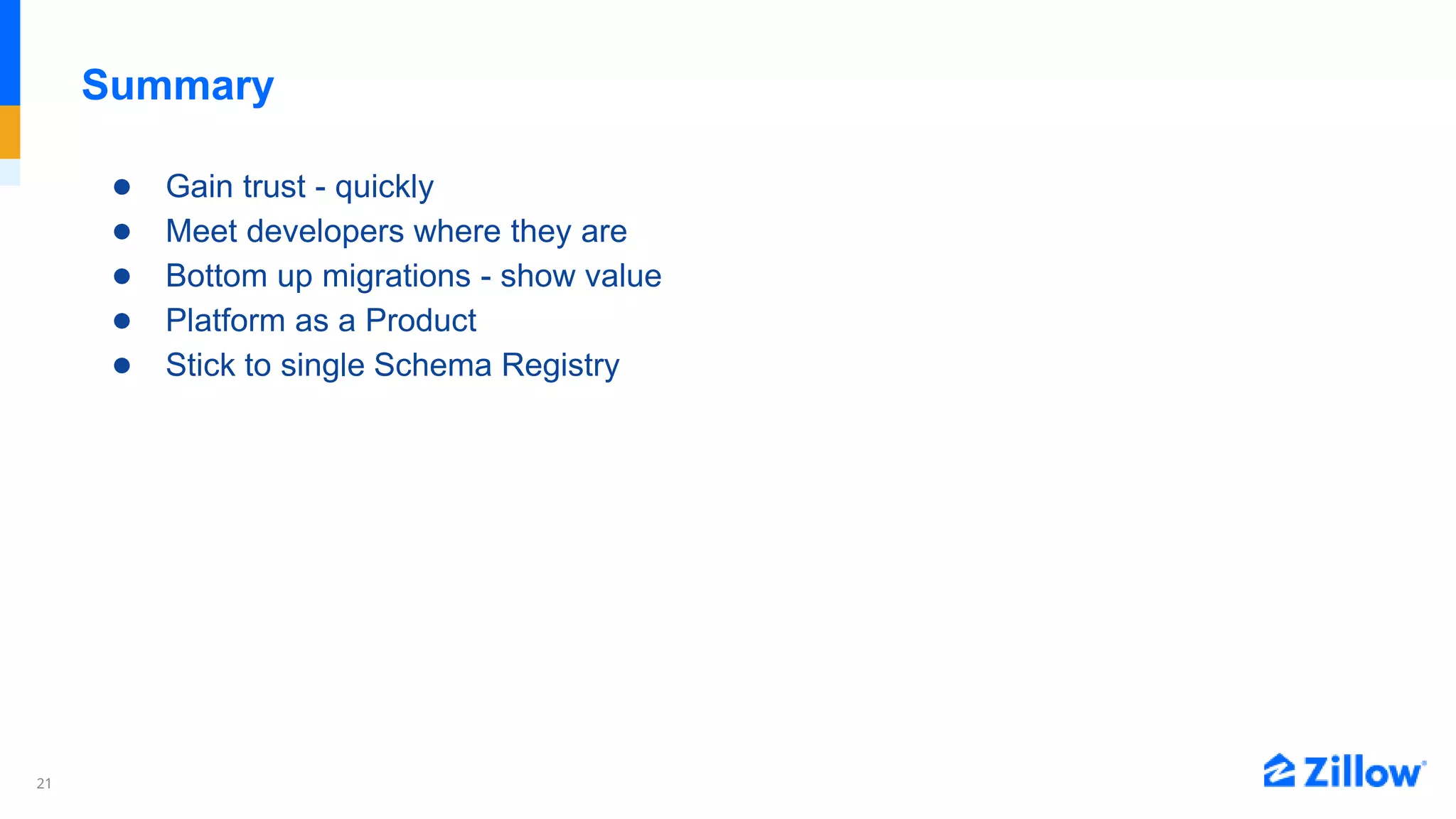


1. Zillow transitioned from using multiple messaging systems and data pipelines to using Kafka as their single streaming platform to unify their data infrastructure. 2. They took a bottom-up approach to gain trust from teams by publishing service level objectives, onboarding non-critical streams quickly, and meeting developers where they were with tools like Terraform. 3. An important lesson was to treat the platform as a product by providing documentation, libraries, and blog posts to make it easy for developers to use.
Zillow introduced Kafka to enhance collaboration and efficiency, impacting 50 teams within 8 months.
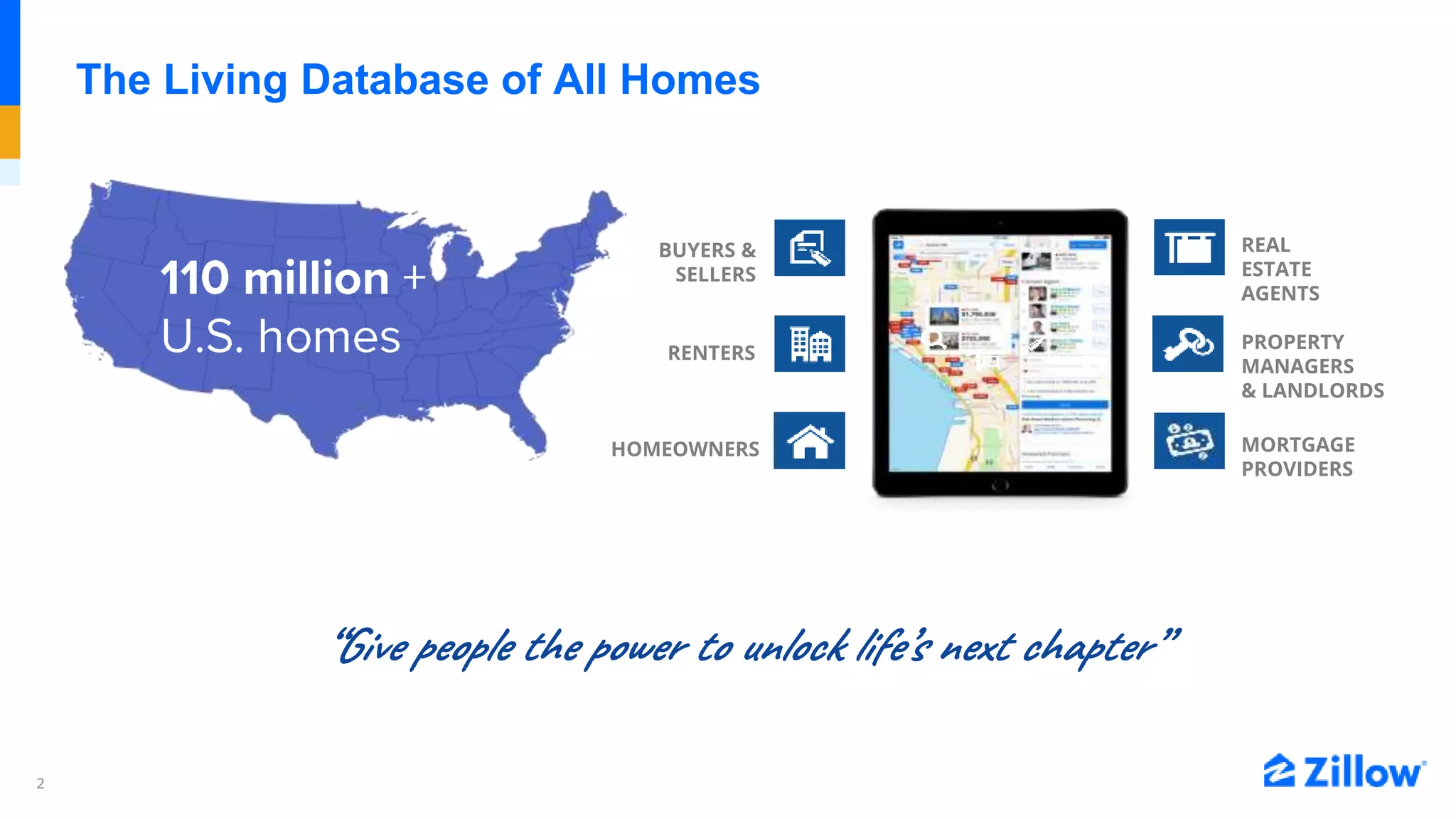
Focus on empowering various real estate stakeholders such as landlords, buyers, and agents in the housing market.
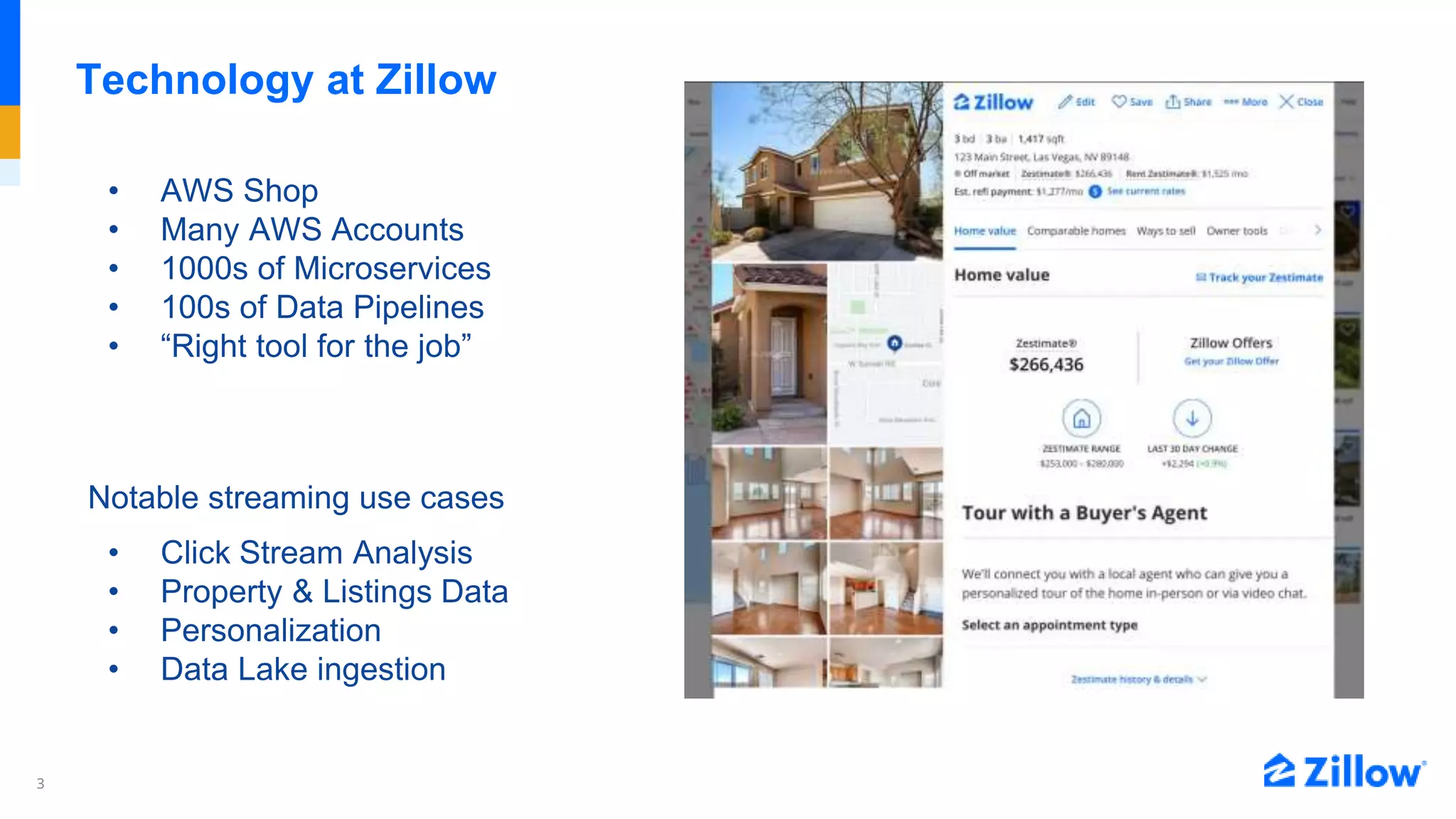
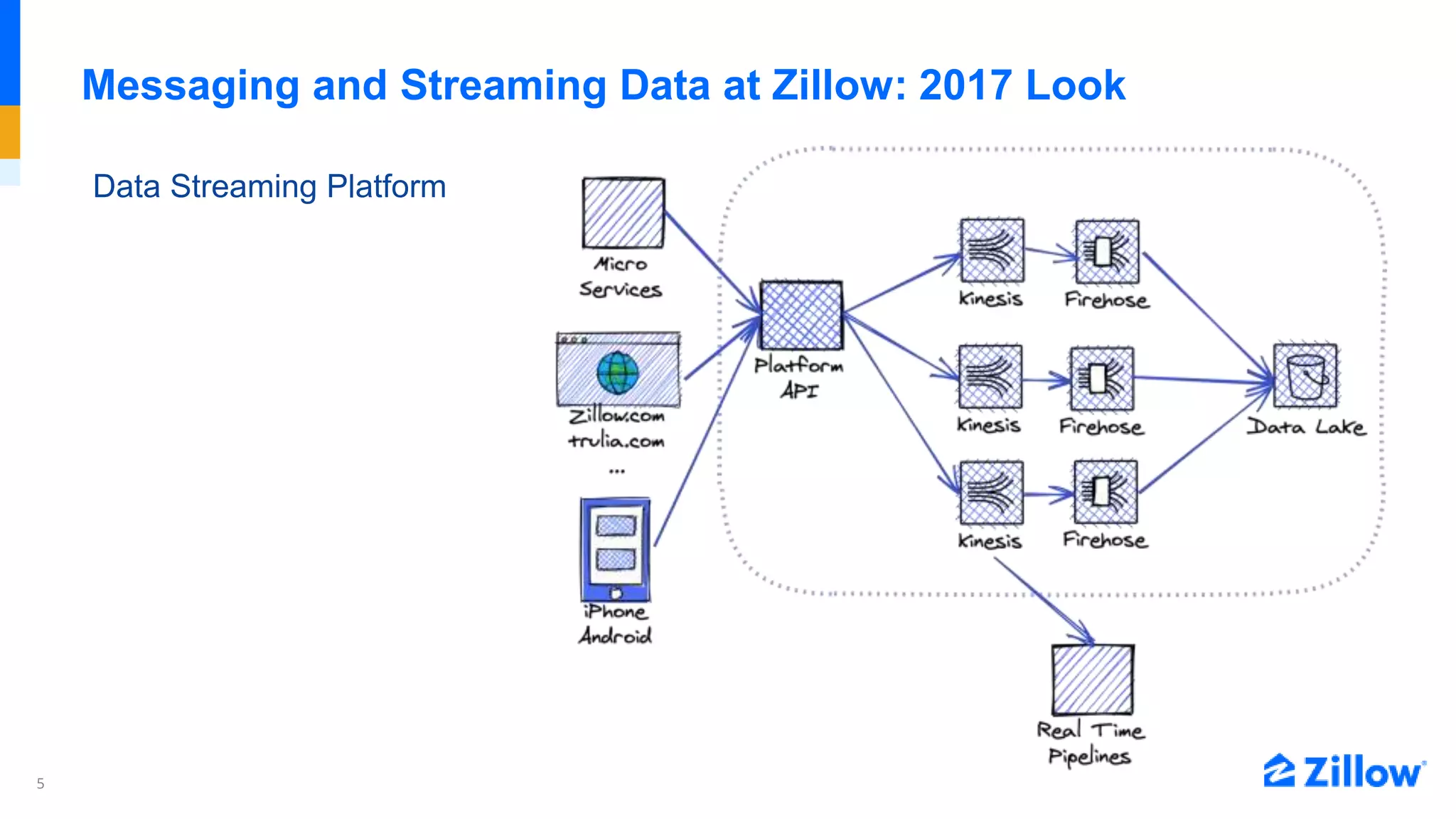
Zillow operates on AWS, utilizing numerous microservices and data pipelines for diverse streaming applications.
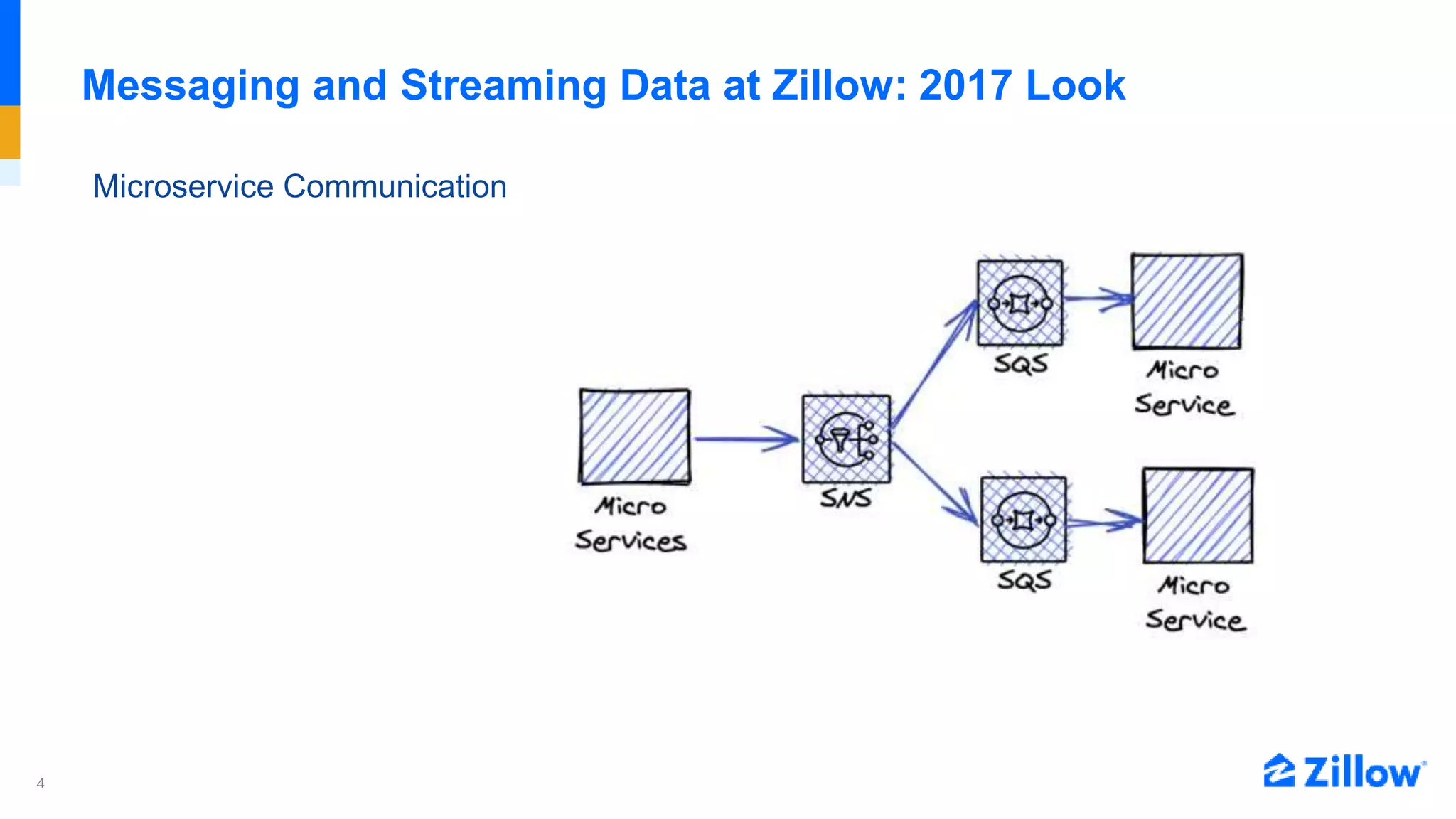
Insights into microservice communication and the existing data streaming platform at Zillow in 2017.
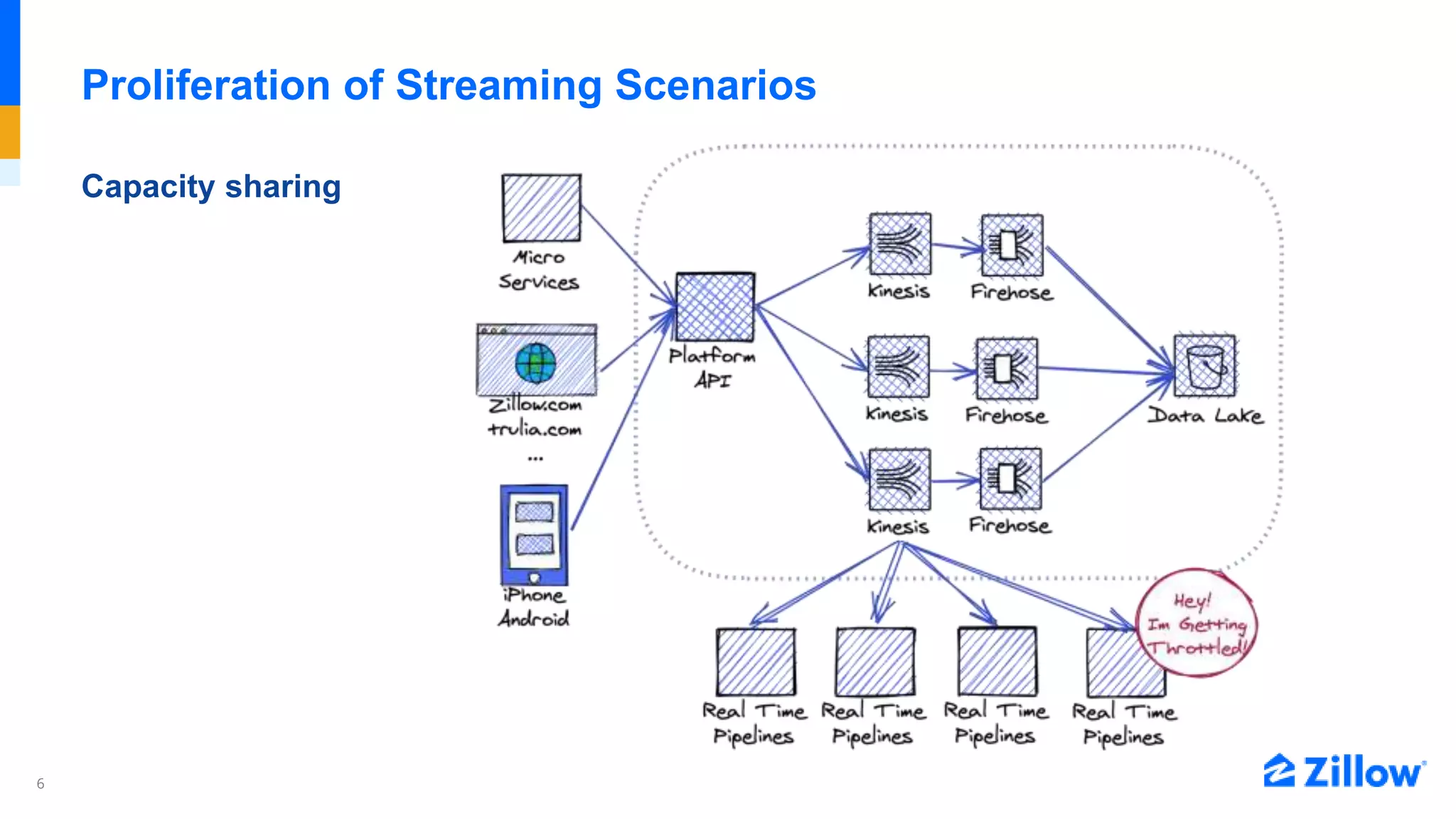
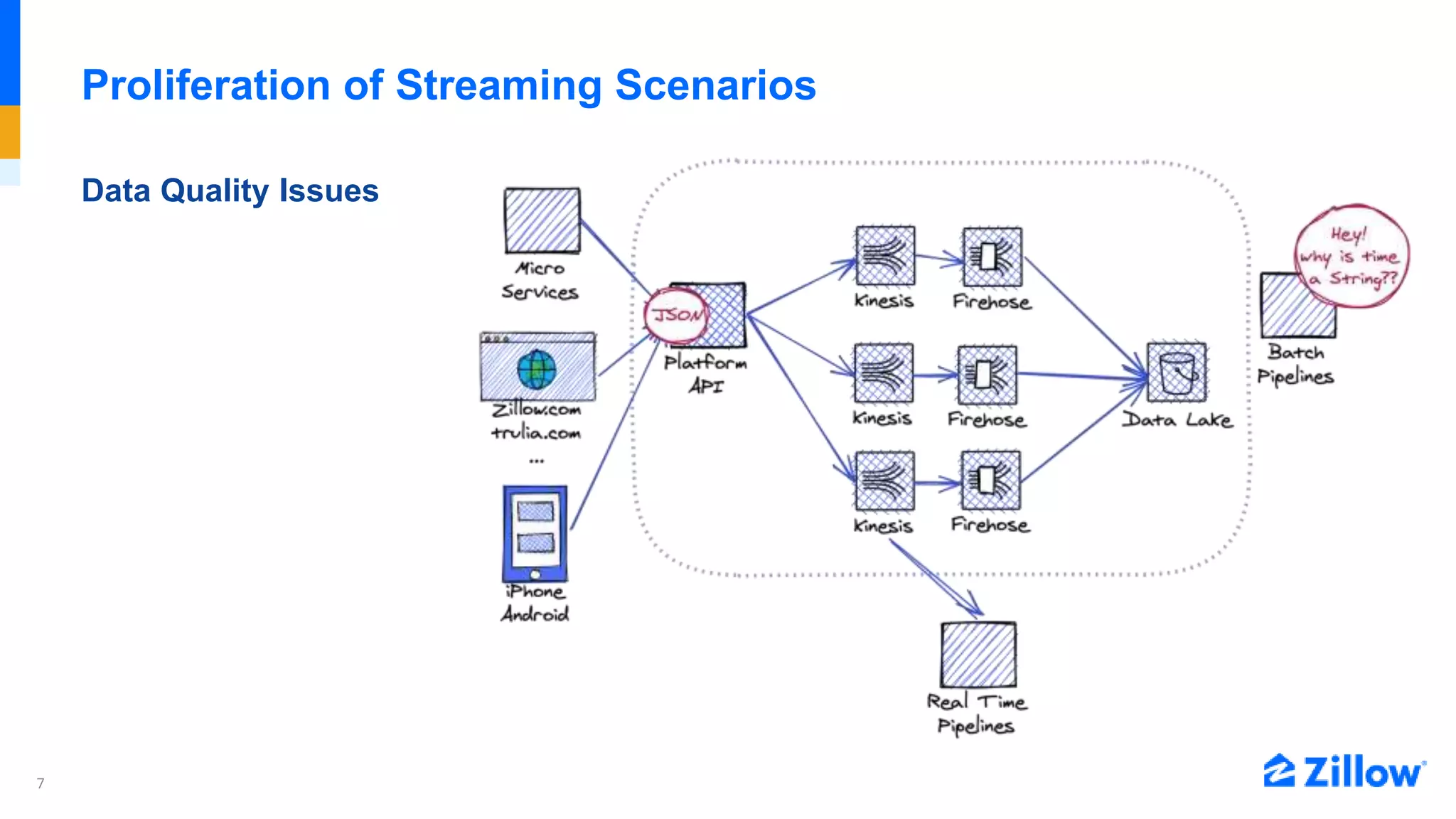
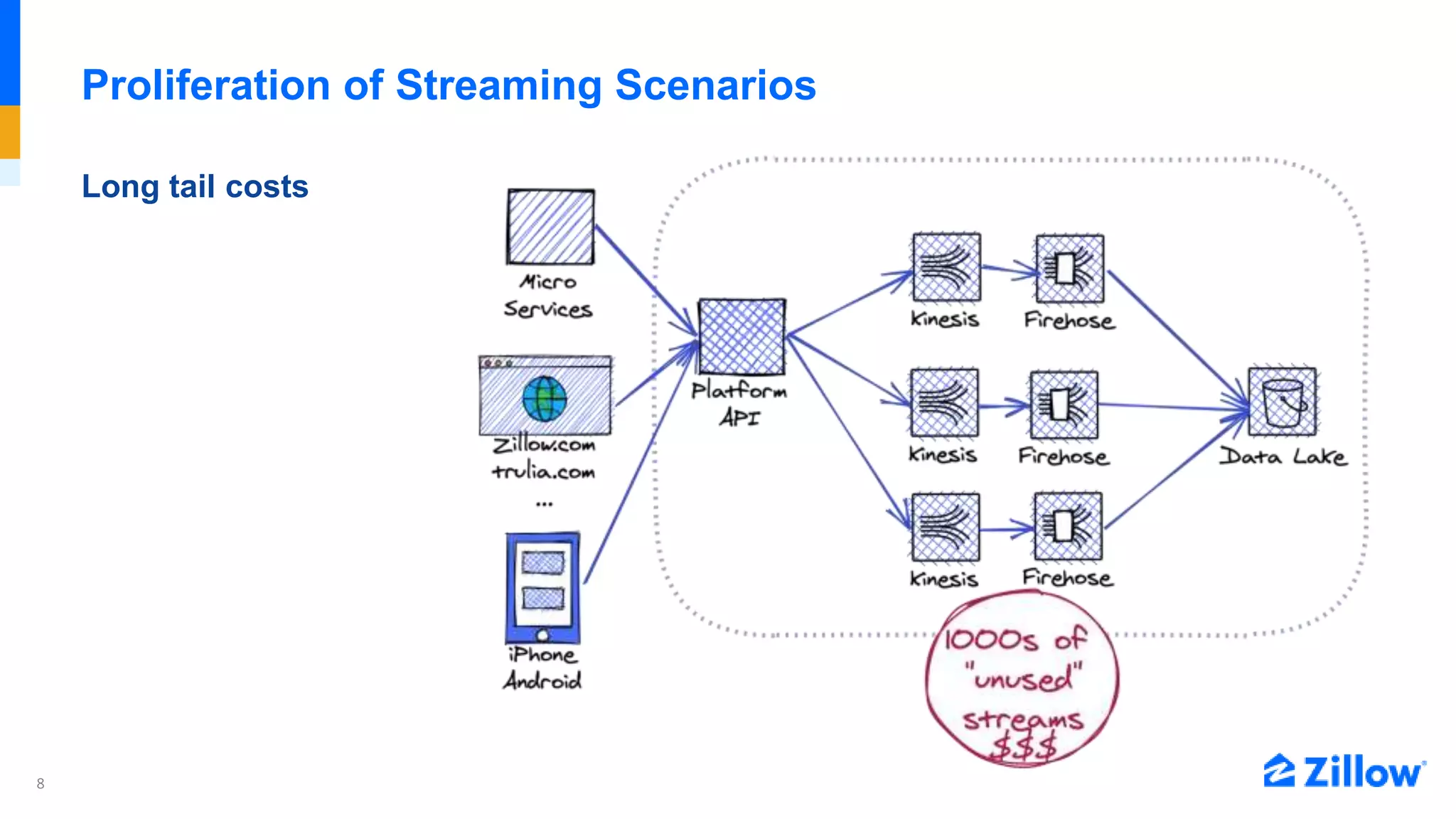
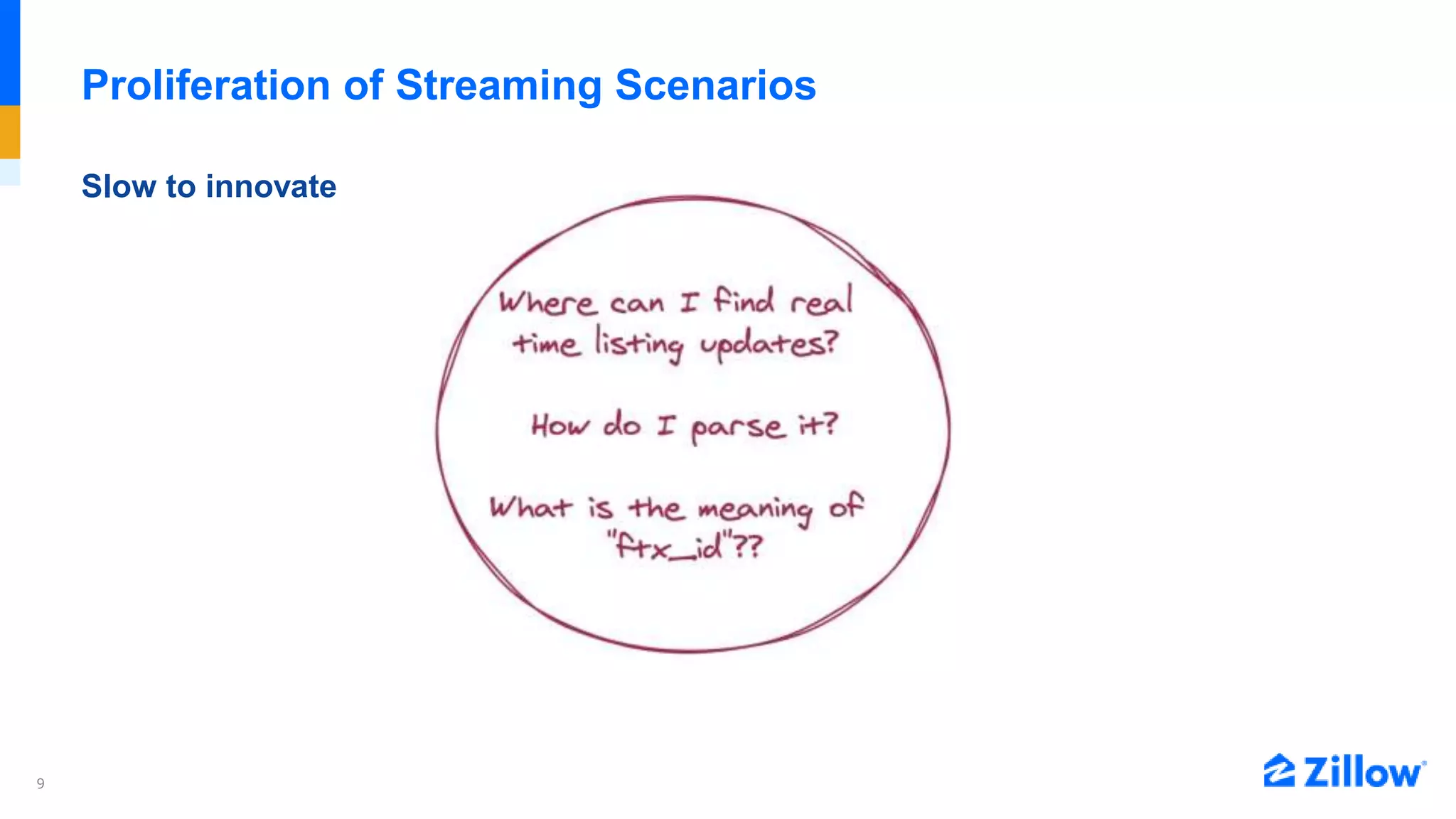
Confronting issues like capacity sharing, data quality, costs, and innovation speed in streaming applications.
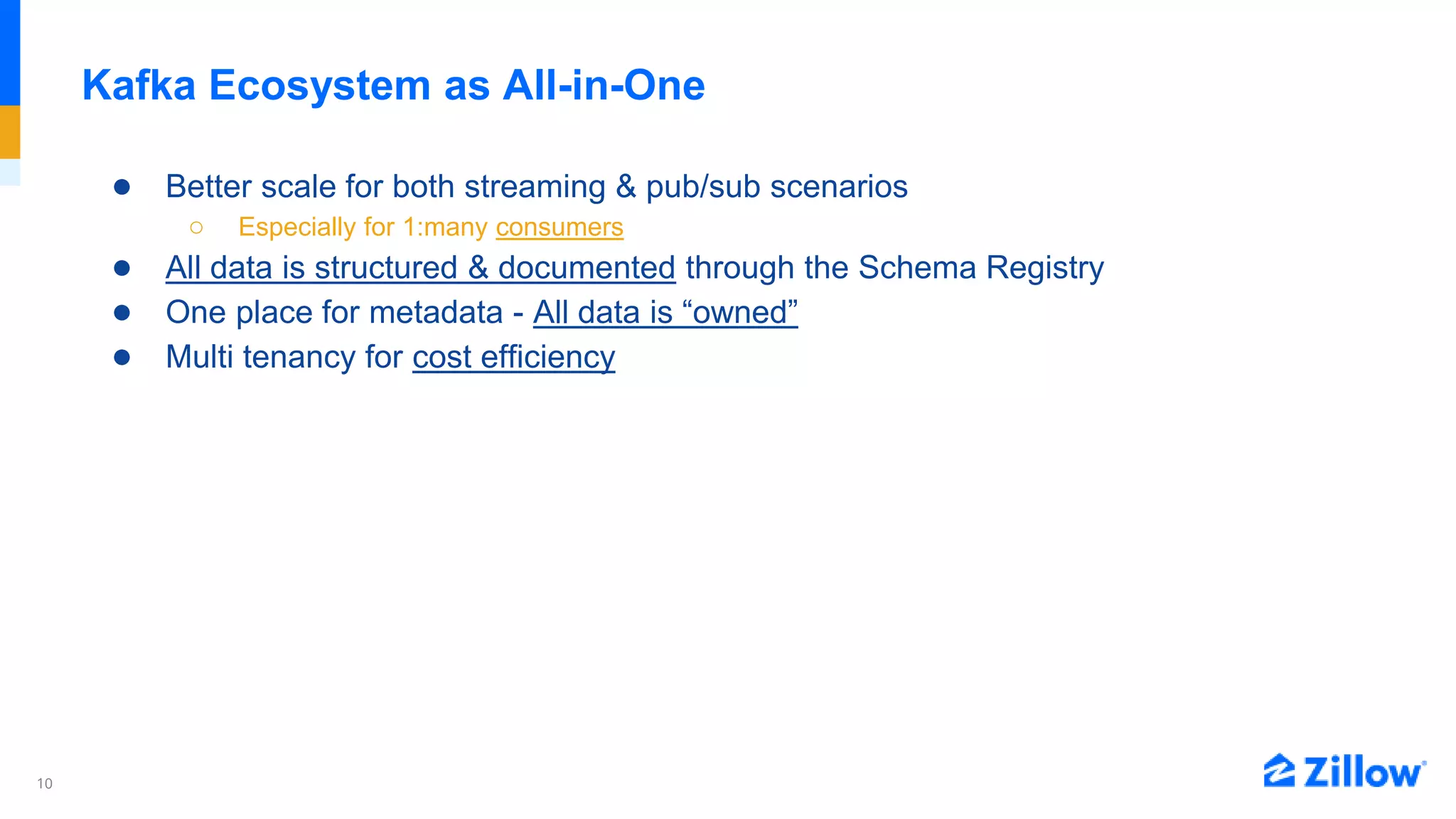
Kafka's scalability for streaming and pub/sub scenarios, with structured metadata management and multi-tenancy.
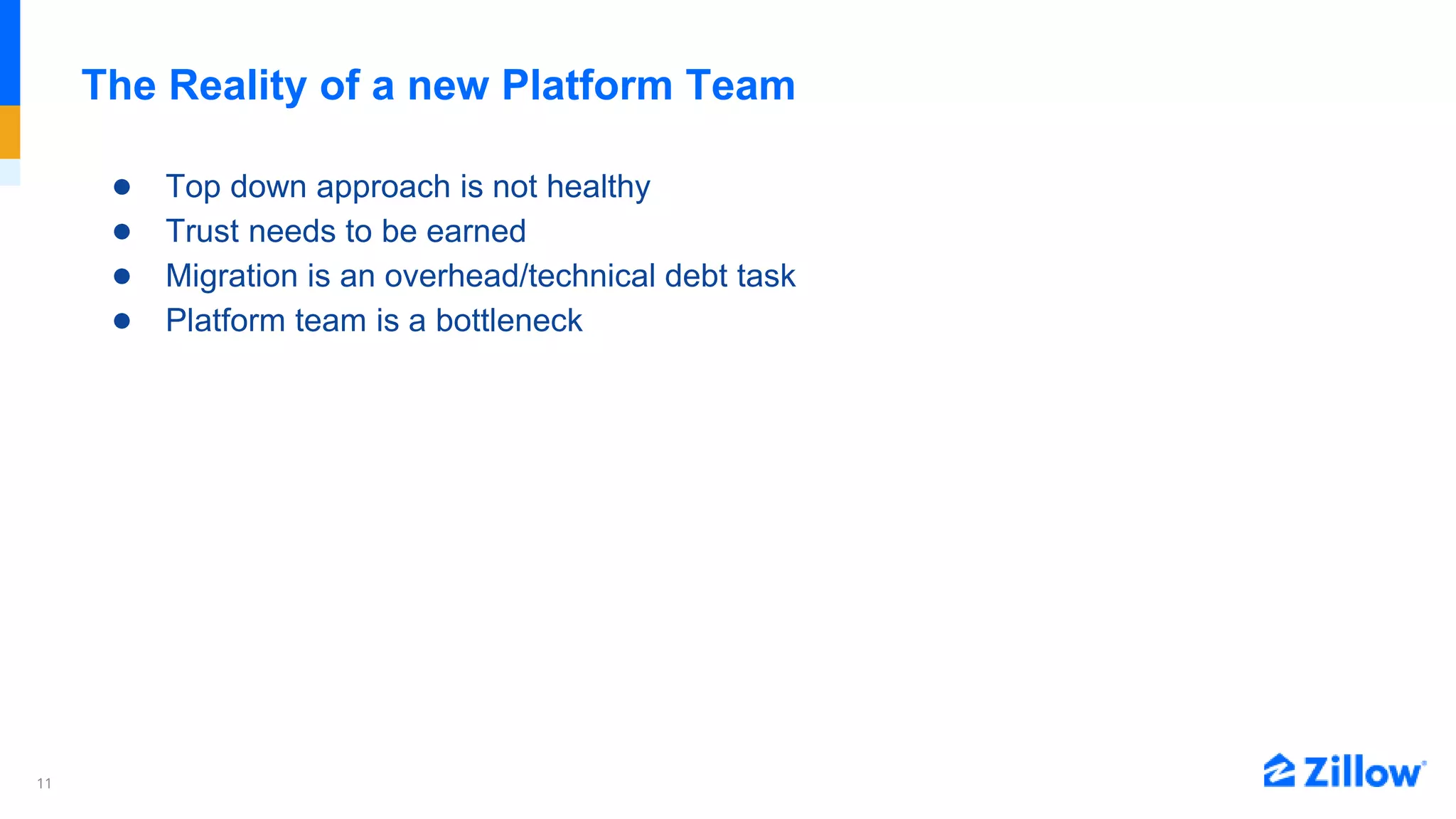
Recognizing the need for a healthy trust-building process and the migration challenges faced by the platform team.
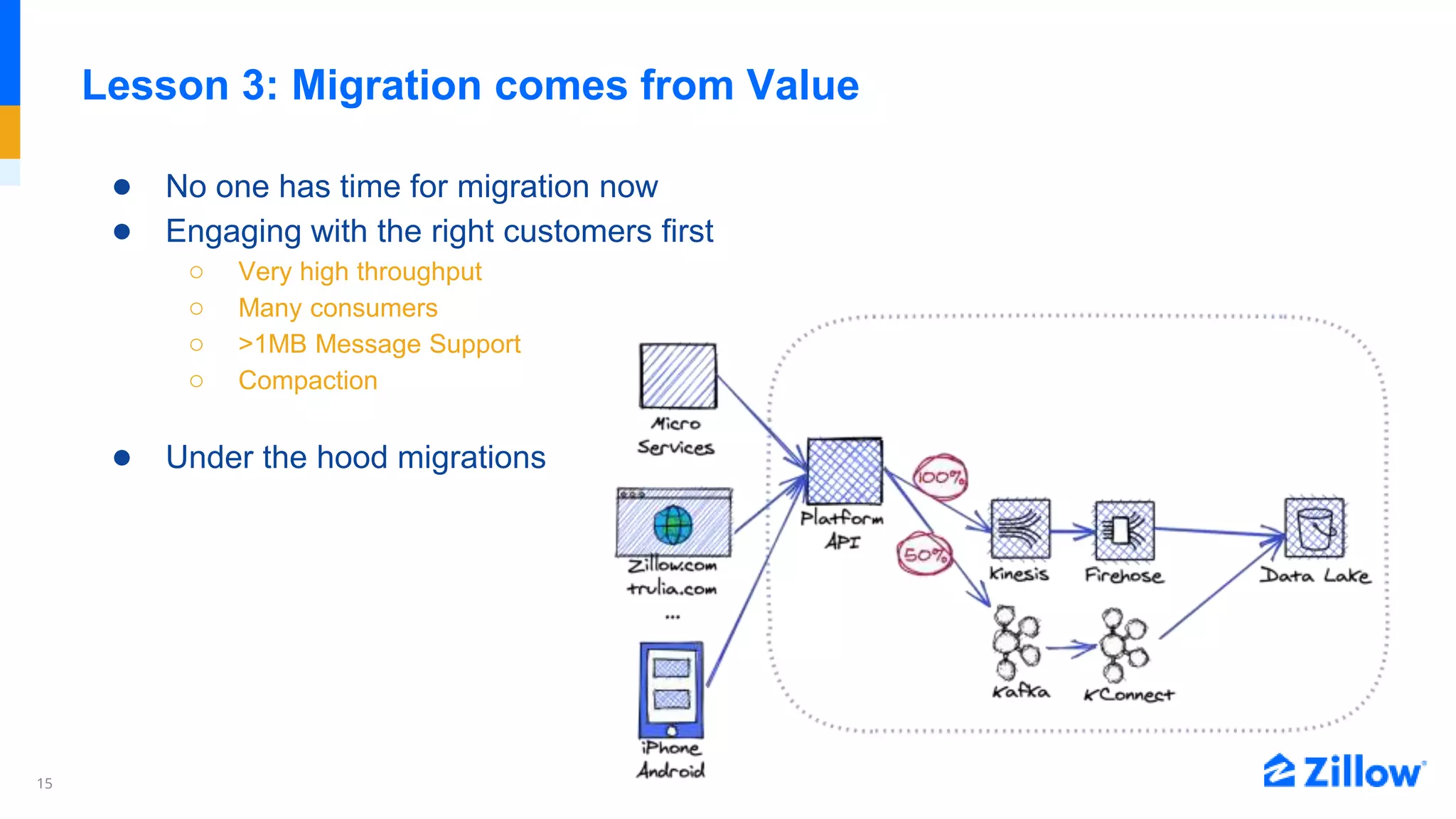
Lessons on establishing trust, adapting to developers' needs (like Terraform), and driving migration through value.
The importance of treating the platform as a product, creating documentation, and addressing schema registry challenges.
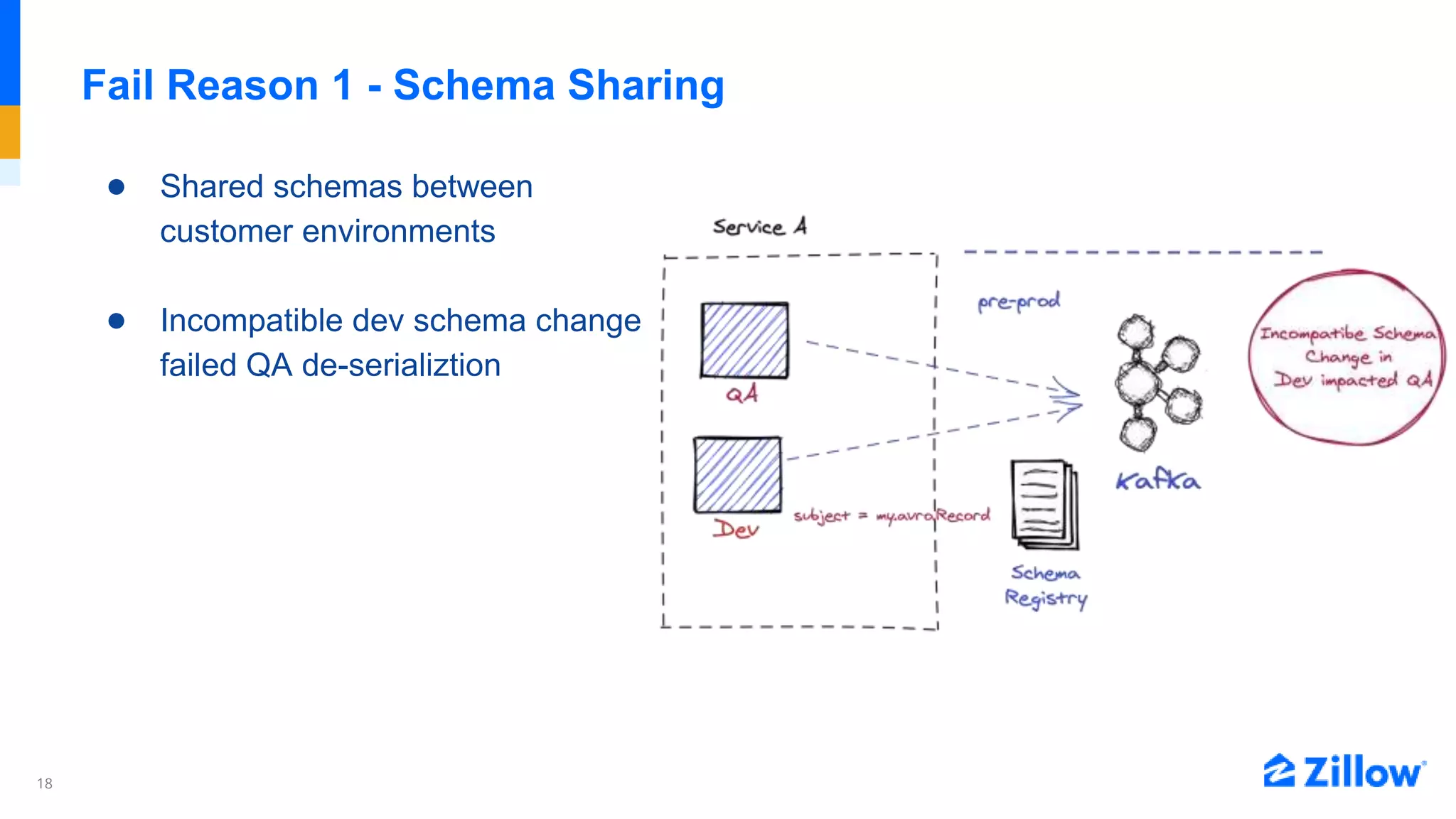
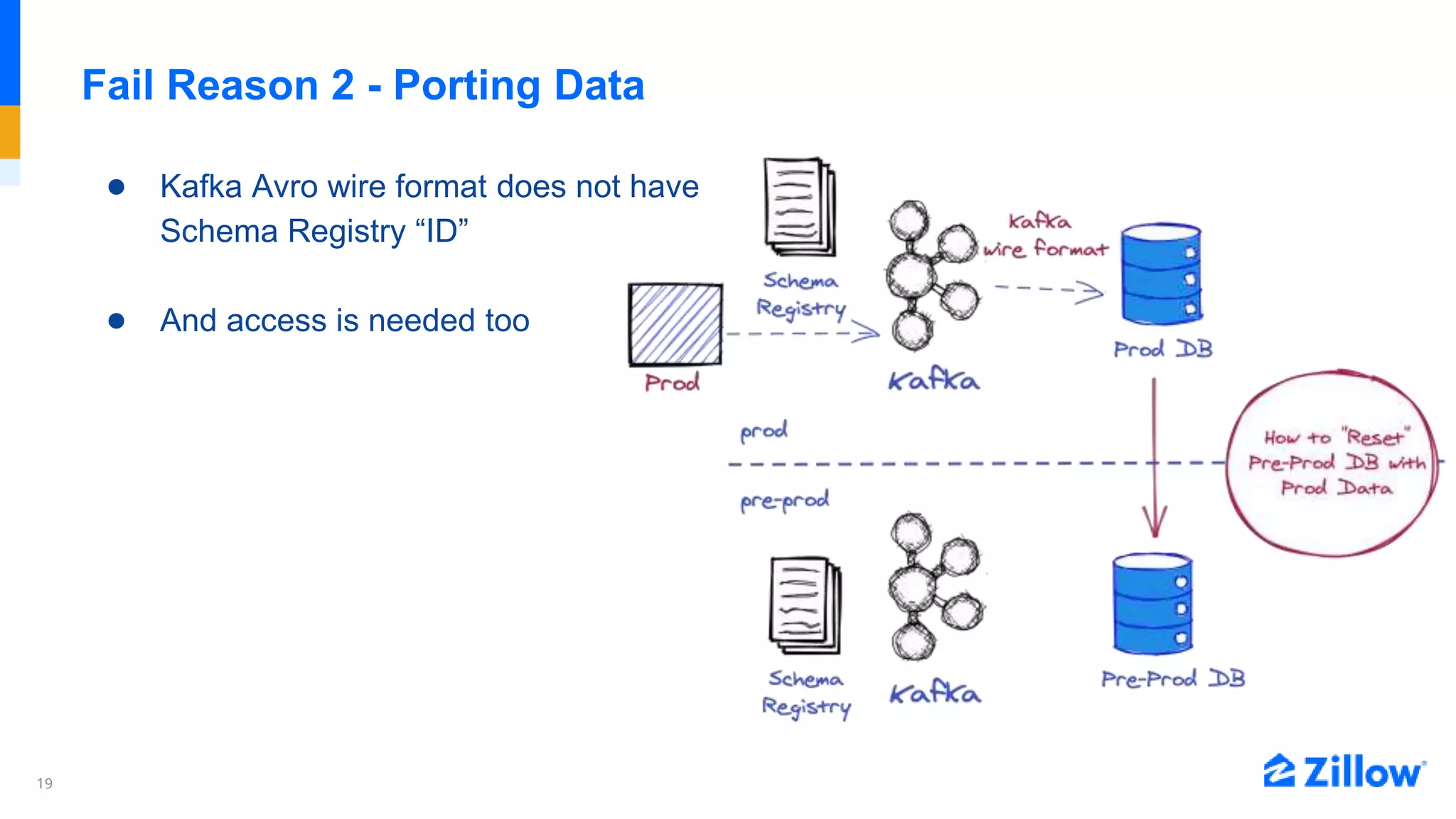
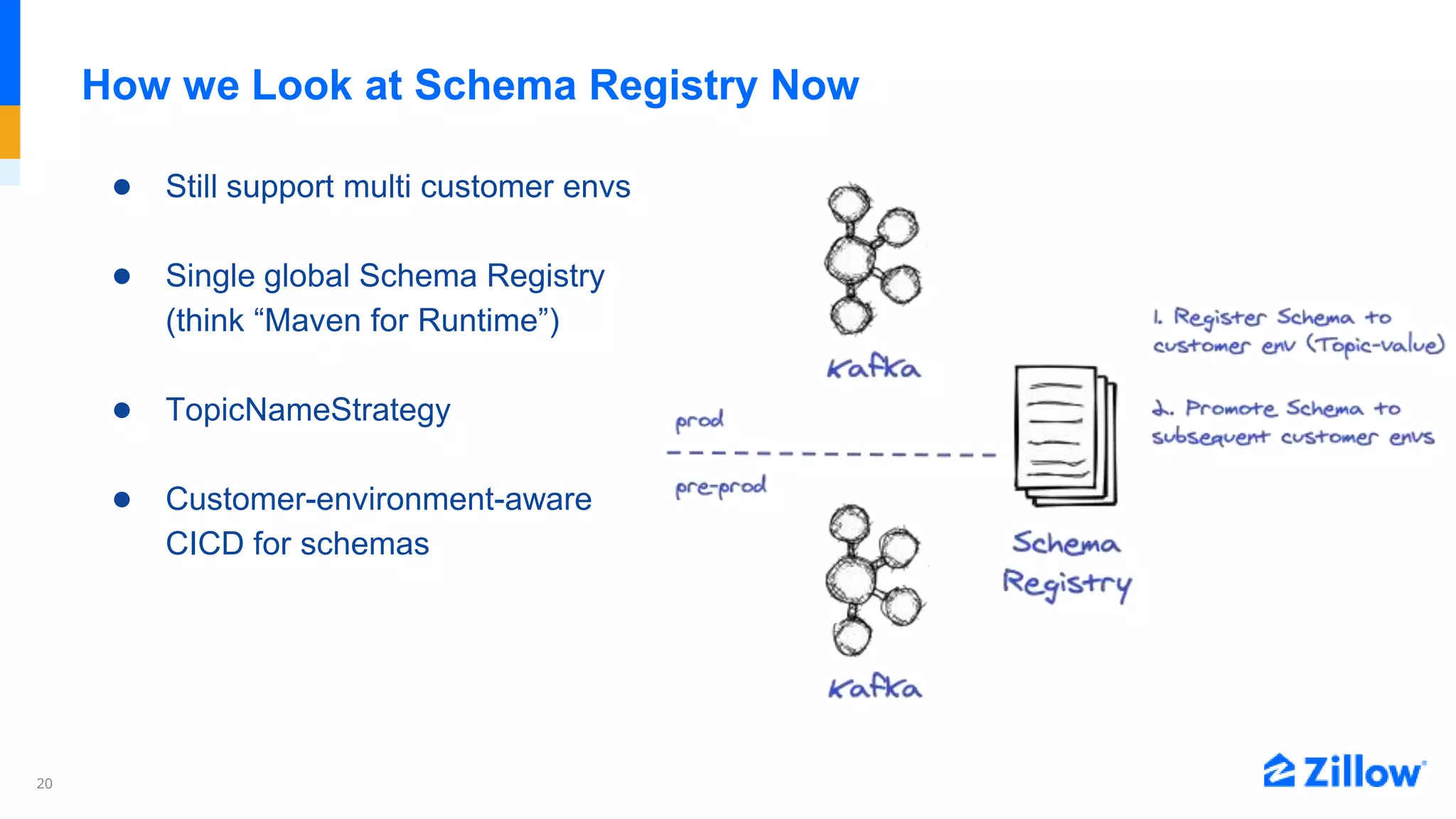
Identifying failures in schema sharing and data porting, and evolving to a single global schema registry approach.
Summarizing lessons learned: trust, developer focus, migration strategy, platform as a product, and schema registry.


![Vibe Coding vs. Spec-Driven Development [Free Meetup]](https://cdn.slidesharecdn.com/ss_thumbnails/vibecodingvsspecdrivendevelopment-251209105622-43f455e7-thumbnail.jpg?width=640&height=640&fit=bounds)


