Consumer Buying
Behavior
Outline
• Definition
• Need to analyze behavior
• Types
• Influencing factors
• Consumer buying process
Buying Behavior
• Definition :
 The decision process and acts of people involved
in buying and using products.
• How does the buyer make purchasing decision?
• What factors influence consumer purchases?
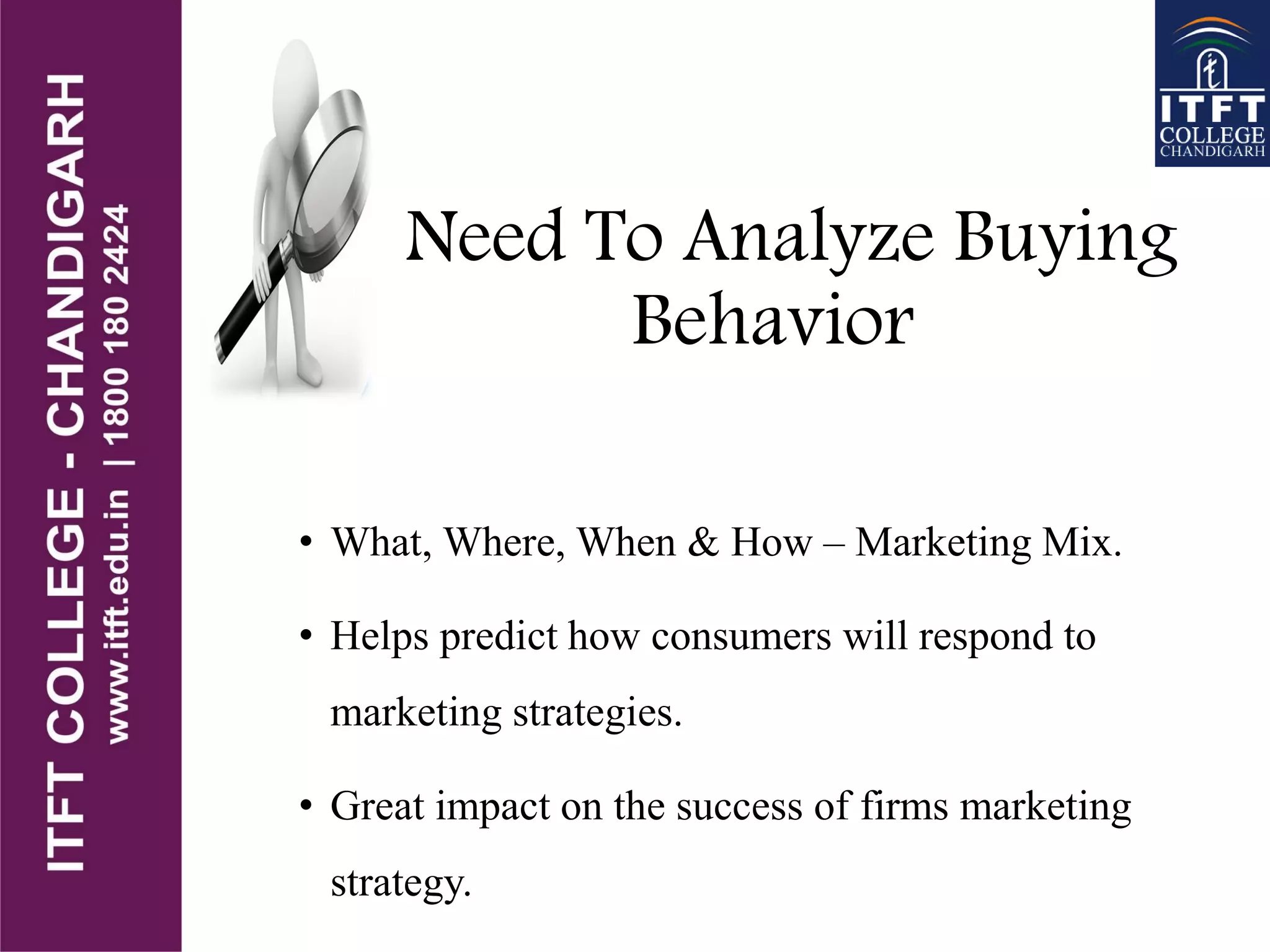
Need To Analyze Buying
Behavior
• What, Where, When & How – Marketing Mix.
• Helps predict how consumers will respond to
marketing strategies.
• Great impact on the success of firms marketing
strategy.
Types Of Consumer Buying
Behavior
• Routine Response/Programmed Behavior
• Limited Decision Making
• Extensive Decision Making
• Impulse Buying
Routine Response / Programmed
Behavior
• Frequently purchased low cost items.
• Low involvement required.
• Little search and decision effort
• Purchased almost automatically.
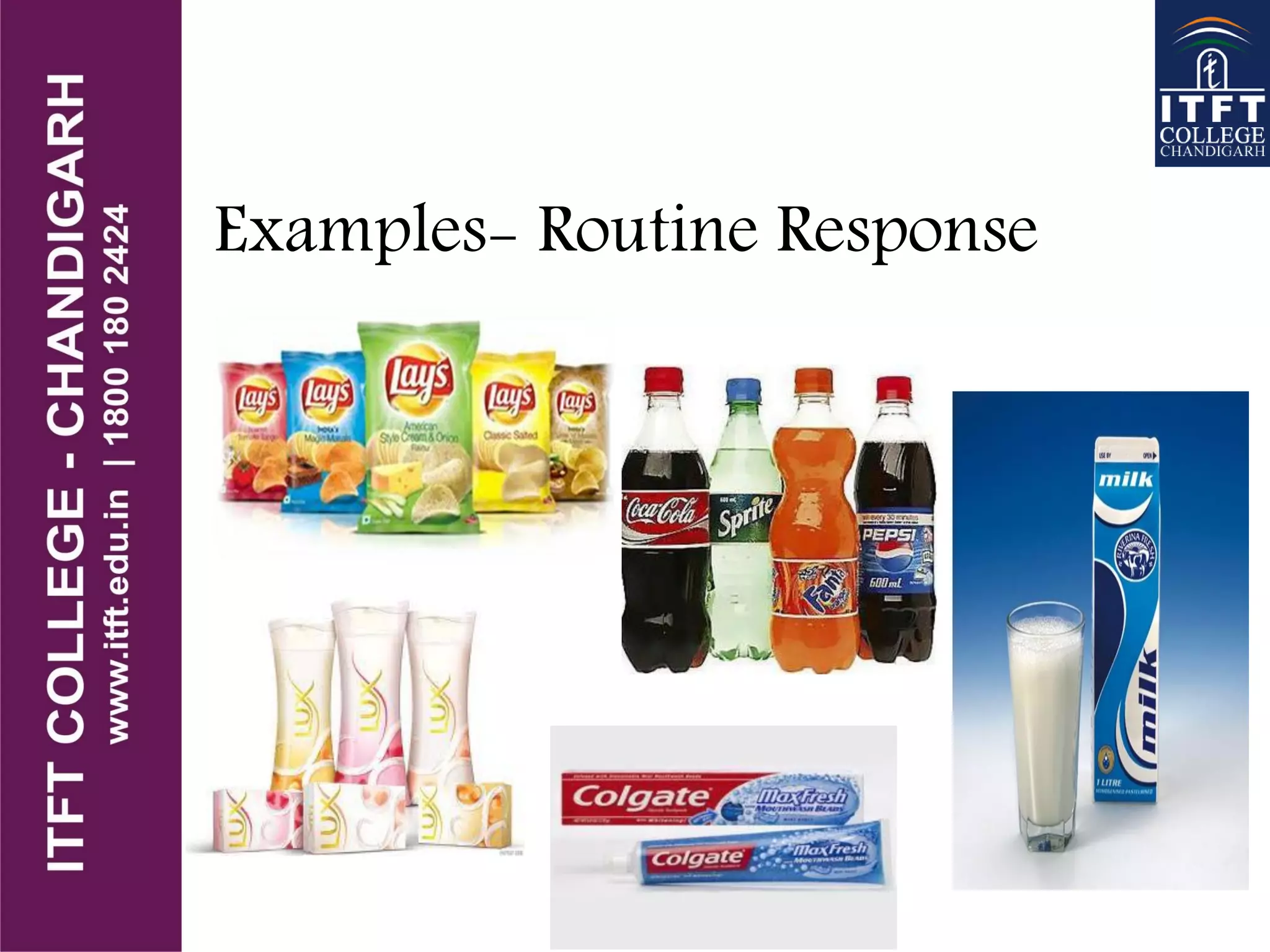
Examples- Routine Response
Limited Decision Making
• Occasional buying.
• When information is needed for a unfamiliar brand in a
familiar product category.
• Requires a moderate amount of time for information
gathering.
• Loyalty to a brand
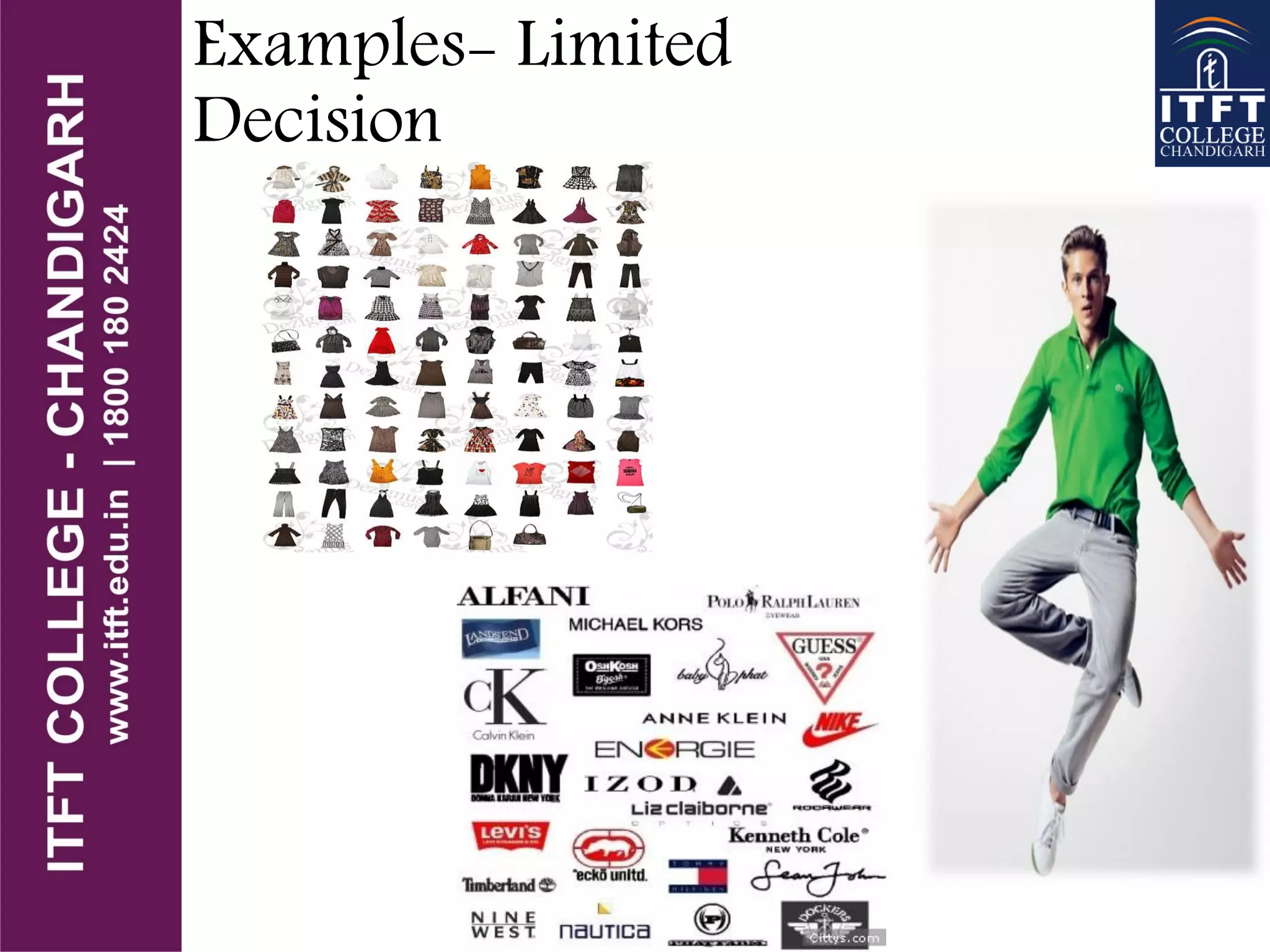
Examples- Limited
Decision
Extensive Decision Making
• Complex process- requires high involvement
• unfamiliar, expensive, infrequently bought products.
• High degree of economic/performance/psychological risk.
• Lot of time spent seeking information and deciding.
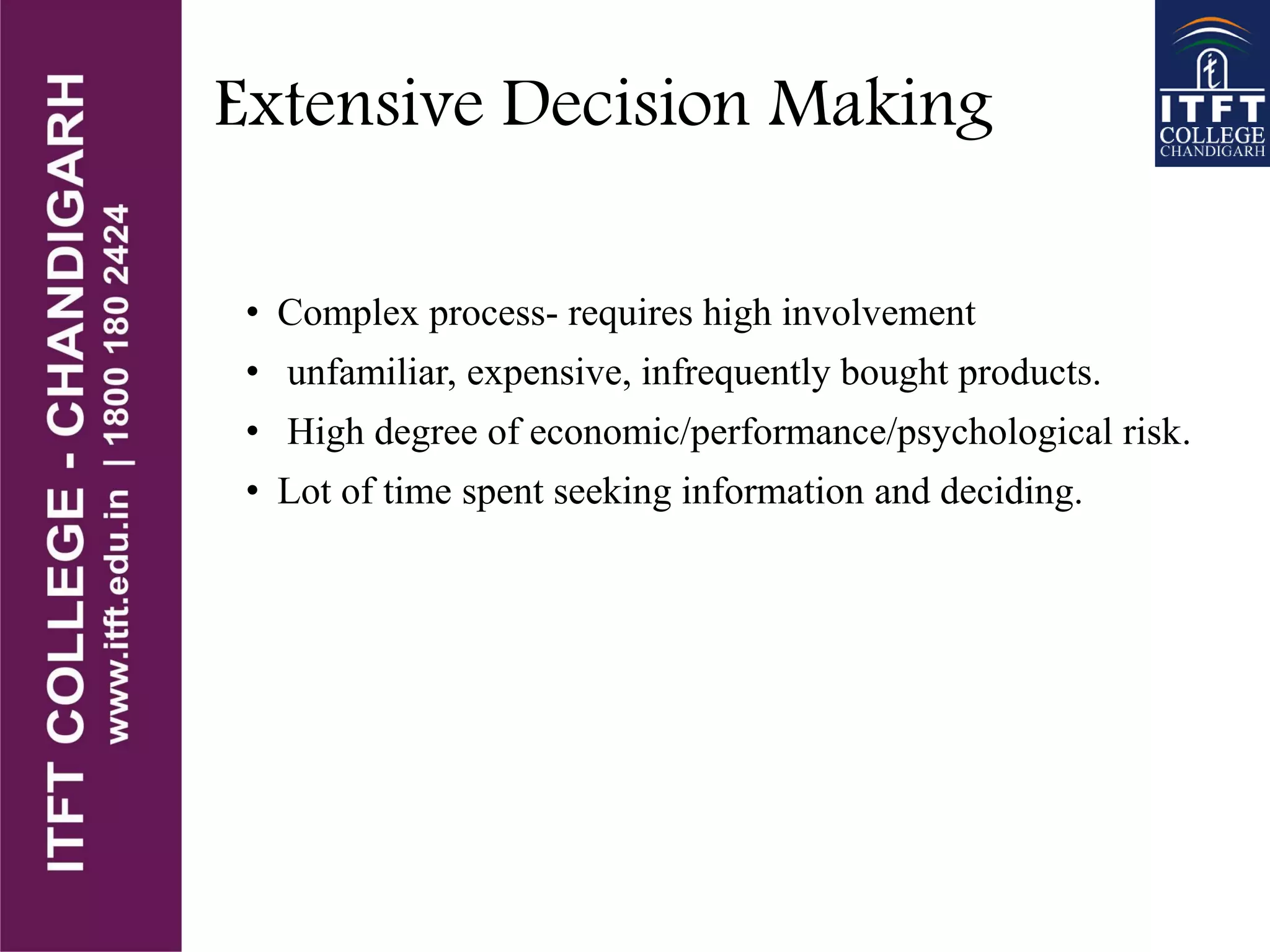
Examples- Extensive Decision
Impulse Buying
• Basis - purchase of the same product does not always elicit the
same Buying Behavior.
• Reason determines the extent of decision-making.
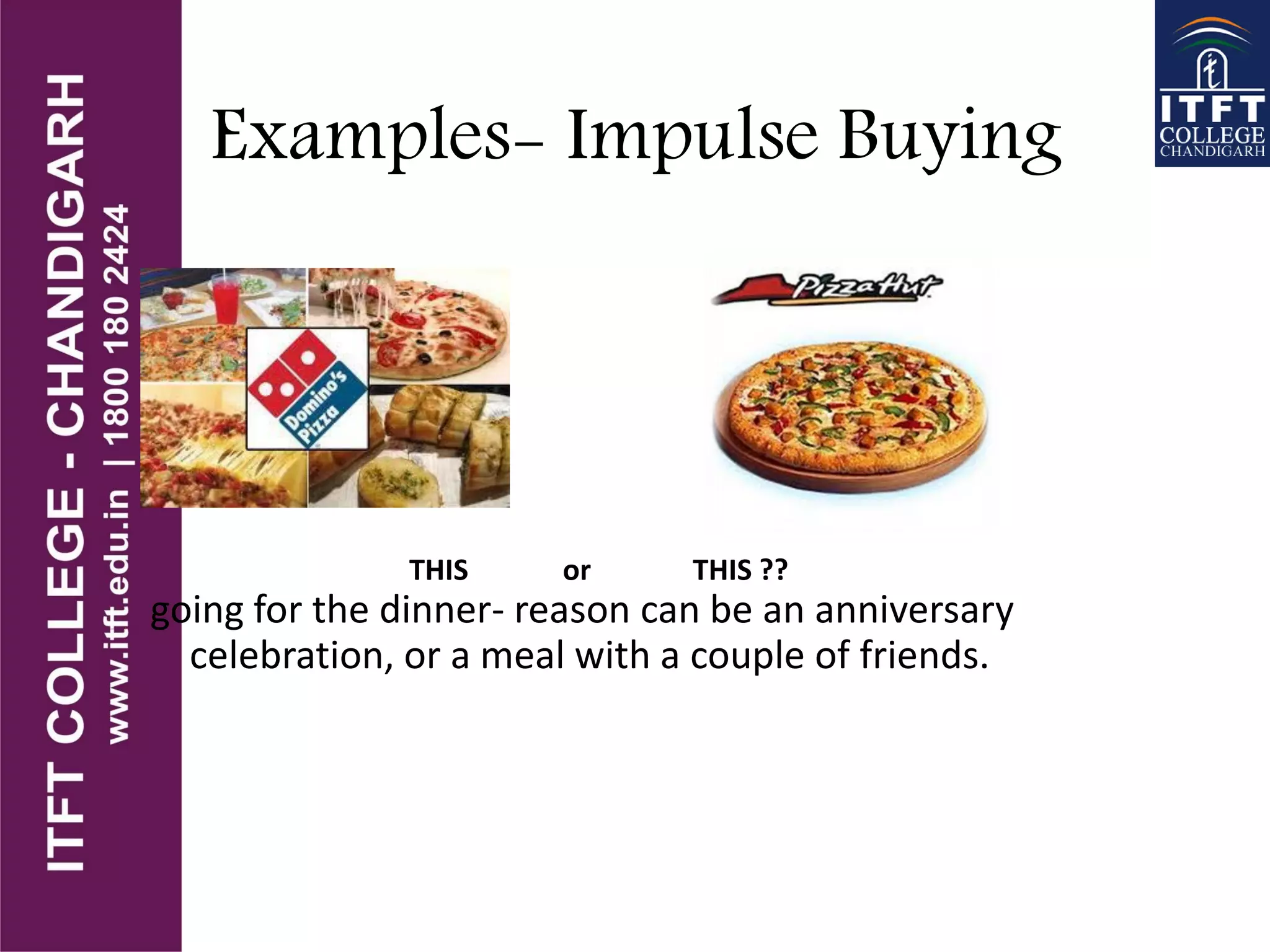
Examples- Impulse Buying
THIS or THIS ??
going for the dinner- reason can be an anniversary
celebration, or a meal with a couple of friends.
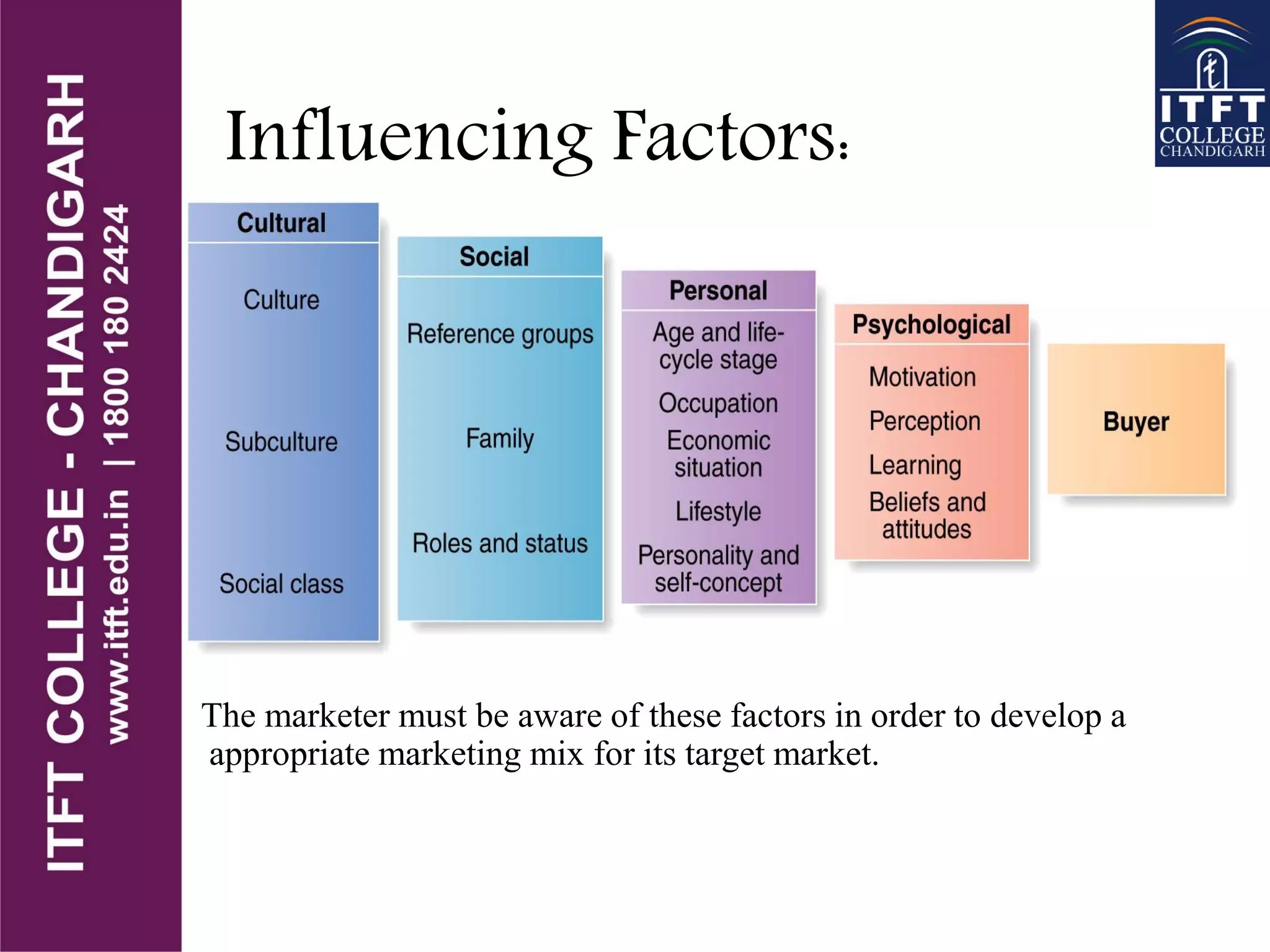
Influencing Factors:
The marketer must be aware of these factors in order to develop a
appropriate marketing mix for its target market.
Thank you

ITFT- Consumer behavior

  • 1.
  • 2.
    Outline • Definition • Needto analyze behavior • Types • Influencing factors • Consumer buying process
  • 3.
    Buying Behavior • Definition:  The decision process and acts of people involved in buying and using products. • How does the buyer make purchasing decision? • What factors influence consumer purchases?
  • 4.
    Need To AnalyzeBuying Behavior • What, Where, When & How – Marketing Mix. • Helps predict how consumers will respond to marketing strategies. • Great impact on the success of firms marketing strategy.
  • 5.
    Types Of ConsumerBuying Behavior • Routine Response/Programmed Behavior • Limited Decision Making • Extensive Decision Making • Impulse Buying
  • 6.
    Routine Response /Programmed Behavior • Frequently purchased low cost items. • Low involvement required. • Little search and decision effort • Purchased almost automatically.
  • 7.
  • 8.
    Limited Decision Making •Occasional buying. • When information is needed for a unfamiliar brand in a familiar product category. • Requires a moderate amount of time for information gathering. • Loyalty to a brand
  • 9.
  • 10.
    Extensive Decision Making •Complex process- requires high involvement • unfamiliar, expensive, infrequently bought products. • High degree of economic/performance/psychological risk. • Lot of time spent seeking information and deciding.
  • 11.
  • 12.
    Impulse Buying • Basis- purchase of the same product does not always elicit the same Buying Behavior. • Reason determines the extent of decision-making.
  • 13.
    Examples- Impulse Buying THISor THIS ?? going for the dinner- reason can be an anniversary celebration, or a meal with a couple of friends.
  • 14.
    Influencing Factors: The marketermust be aware of these factors in order to develop a appropriate marketing mix for its target market.
  • 15.