Eco Labels: How to Distinguish
the Green from the Greenwash


EcoPlum
Spring 2012
What makes a product “green”?
   Materials Used
   Manufacturing Process
   Worker Conditions
   Energy Efficiency
   Distribution
   Packaging
   Waste/Pollution
   Disposal
What is an Eco-Label?

 A “seal of approval” that is given by
 a government agency, a non-profit
 or an independent third party when
 a product or company meets certain
 predetermined environmental
 standards.
Eco-Labels
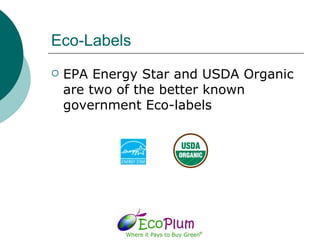
   EPA Energy Star and USDA Organic
    are two of the better known
    government Eco-labels
Eco-Labels

    There are over 400 Eco-Labels in
    the market. Regulation/oversight of
    eco-labels is minimal. Which ones
    are reputable?

   Government vs. NGO vs. Private
   Company wide vs. Product Level
   General vs. Industry Specific
How does one differentiate the green
from the greenwash?

   PRODUCT A:“WE             PRODUCT B:
    ARE GREEN!”                Certified by
       “Earth Friendly”       Government
       “Eco”                  Agency, third party
       “Natural”                 Disclosure and
                                   Transparency
                                  Standards
                                  Independent
                                   Verification
Which one would you buy?
   Product A      Product B

      Earth
     Friendly
Government vs. NGO vs. Private


   Energy Star (EPA, DOE)           EPEAT                        Cradle to Cradle
   US EPA                           USGBC                        UL Environment
        Green Vehicle Guide              LEED
        Design for Environment      GREEN SEAL
        WaterSense                  EWG
   USDA                                  Skin Deep/Campaign
        USDA Organic
        USDA BioPreferred
                                     Green America
   Canada                           Fair Trade USA
        EcoLogo
Company Wide vs. Product Specific
   Green America
   B-Corp
   Green Seal (2010)
   Fair Trade Certified


   Green Seal
   Cradle to Cradle
   Energy Star
   Dfe
   USDA BioPreferred
   USDA Organic
   LEED
   EPEAT
   More..
General vs. Industry Specific
(with hyperlinks to websites!)
   General                                            Clothing
        Cradle to Cradle                                     GOTS
        Green Seal                                    Buildings
        Green America                                        USGBC/LEED
        EcoLogo                                       Restaurants
        ULE                                                  Green Restaurant Association
        B-Corp                                        Cars
   Cleaning Products                                         EPA Green Vehicle Guide
        GreenSeal
        USDA BioPreferred
                                                       Agriculture/Food
        EPA Design for Environment
                                                              USDA Organic
                                                              Marine Stewardship Council
   Personal Care Products                                    American Humane Certified
        EWG Skin Deep/Compact for Safe Cosmetics             USDA Naturally Raised
   Appliances/Electronics                                    Fair Trade Certified (Coffee, Tea...)
        Energy Star                                   Carpets/Flooring
        EPEAT (Computers)                                    Green Label
   Wood/Paper Products                                       FloorScore
        FSC
        Rainforest Alliance
   Home Products
        WaterSense
What’s next?
   Consolidation
   Government Regulation
   More Educated Consumers
   Independent Ranking Entities
       http://www.greenerchoices.org
       http://www.globalecolabelling.net
       http://ecolabelling.org
Contact Me!
   Gia Machlin
   gia@ecoplum.com
   1-888-730-9990 x103
   www.ecoplum.com

Ecolabels Overview

  • 1.
    Eco Labels: Howto Distinguish the Green from the Greenwash EcoPlum Spring 2012
  • 2.
    What makes aproduct “green”?  Materials Used  Manufacturing Process  Worker Conditions  Energy Efficiency  Distribution  Packaging  Waste/Pollution  Disposal
  • 3.
    What is anEco-Label? A “seal of approval” that is given by a government agency, a non-profit or an independent third party when a product or company meets certain predetermined environmental standards.
  • 4.
    Eco-Labels  EPA Energy Star and USDA Organic are two of the better known government Eco-labels
  • 5.
    Eco-Labels There are over 400 Eco-Labels in the market. Regulation/oversight of eco-labels is minimal. Which ones are reputable?  Government vs. NGO vs. Private  Company wide vs. Product Level  General vs. Industry Specific
  • 6.
    How does onedifferentiate the green from the greenwash?  PRODUCT A:“WE  PRODUCT B: ARE GREEN!” Certified by  “Earth Friendly” Government  “Eco” Agency, third party  “Natural”  Disclosure and Transparency  Standards  Independent Verification
  • 7.
    Which one wouldyou buy?  Product A  Product B Earth Friendly
  • 8.
    Government vs. NGOvs. Private  Energy Star (EPA, DOE)  EPEAT  Cradle to Cradle  US EPA  USGBC  UL Environment  Green Vehicle Guide  LEED  Design for Environment  GREEN SEAL  WaterSense  EWG  USDA  Skin Deep/Campaign  USDA Organic  USDA BioPreferred  Green America  Canada  Fair Trade USA  EcoLogo
  • 9.
    Company Wide vs.Product Specific  Green America  B-Corp  Green Seal (2010)  Fair Trade Certified  Green Seal  Cradle to Cradle  Energy Star  Dfe  USDA BioPreferred  USDA Organic  LEED  EPEAT  More..
  • 10.
    General vs. IndustrySpecific (with hyperlinks to websites!)  General  Clothing  Cradle to Cradle  GOTS  Green Seal  Buildings  Green America  USGBC/LEED  EcoLogo  Restaurants  ULE  Green Restaurant Association  B-Corp  Cars  Cleaning Products  EPA Green Vehicle Guide  GreenSeal  USDA BioPreferred  Agriculture/Food  EPA Design for Environment  USDA Organic  Marine Stewardship Council  Personal Care Products  American Humane Certified  EWG Skin Deep/Compact for Safe Cosmetics  USDA Naturally Raised  Appliances/Electronics  Fair Trade Certified (Coffee, Tea...)  Energy Star  Carpets/Flooring  EPEAT (Computers)  Green Label  Wood/Paper Products  FloorScore  FSC  Rainforest Alliance  Home Products  WaterSense
  • 11.
    What’s next?  Consolidation  Government Regulation  More Educated Consumers  Independent Ranking Entities  http://www.greenerchoices.org  http://www.globalecolabelling.net  http://ecolabelling.org
  • 12.
    Contact Me!  Gia Machlin  gia@ecoplum.com  1-888-730-9990 x103  www.ecoplum.com

Editor's Notes

  • #3 There are many different factors that go into determining the environmental impact of a product. What is the product made of? Are the sources renewable? Are they recycled, pre or post consumer? Upcycled? Made of reclaimed materials? How is it made? How much energy and water are used to produce it? How much waste/pollution is created during the manufacturing process? How energy efficient is the product (appliances, electronics)? How far does the product need to travel to be distributed? By what means? How is it packaged? Is the packaging excessive? Can the packaging be reused? Recycled? Does the use of the product create waste/pollution? How will the product be ultimately disposed of? Landfill? Recycled? Reused? How long will the product last? Will the disposal of the product create a new environmental challenge?
  • #4 An Eco Label gives some assurances that the product has been through some kind of screening process. What makes a product “green”? Materials Used Manufacturing Process Worker Conditions Energy Efficiency Distribution Packaging Waste/Pollution Disposal There are many different factors that go into determining the environmental impact of a product. What is the product made of? Are the sources renewable? Are they recycled, pre or post consumer? Upcycled? Made of reclaimed materials? How is it made? How much energy and water are used to produce it? How much waste/pollution is created during the manufacturing process? How energy efficient is the product (appliances, electronics)? How far does the product need to travel to be distributed? By what means? How is it packaged? Is the packaging excessive? Can the packaging be reused? Recycled? Does the use of the product create waste/pollution? How will the product be ultimately disposed of? Landfill? Recycled? Reused? How long will the product last? Will the disposal of the product create a new environmental challenge?
  • #6 Some are more stringent than others. Some are more reputable. Many different types of Eco-Labels. Some of the things to look for in eco-labels: Self assessment vs. third party assessment? Credibility of organization granting certification/approval What are the fees? What does the organization do with this information? Can break down into these categories: Government vs. NGO vs. Private Company wide vs. Product Level General vs. Industry Specific
  • #8 Many products claim to be “earth friendly”, “eco,” and “natural.” These terms are not regulated (other than FTC Guidelines – go into this?) How do you know if the claim is real or just “greenwashing?’ Tell story about doggie waste bags and Poland Spring Eco-Bottle Would you be more likely to buy a product that has a picture of the earth on it, or one that has the Green Seal logo?