ABHYUDAY
A
To prosper in life
To grow.
Phases of Indian Economy
Pre-colonial period
British colonisation
Post Independence in 1947 to 1991
After Liberalization, Privatisation &
Globalisation
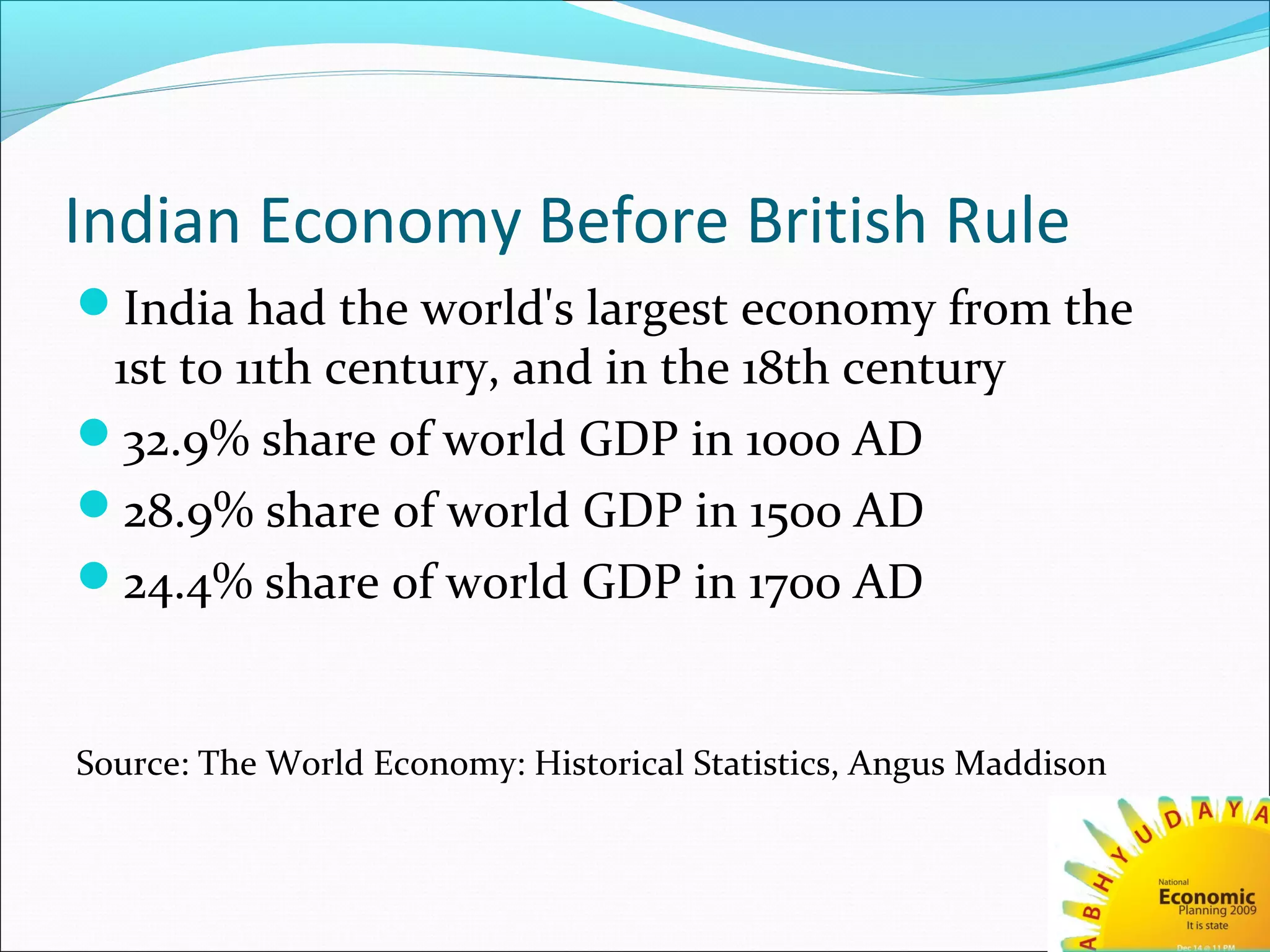
Indian Economy Before British Rule
India had the world's largest economy from the
1st to 11th century, and in the 18th century
32.9% share of world GDP in 1000 AD
28.9% share of world GDP in 1500 AD
24.4% share of world GDP in 1700 AD
Source: The World Economy: Historical Statistics, Angus Maddison
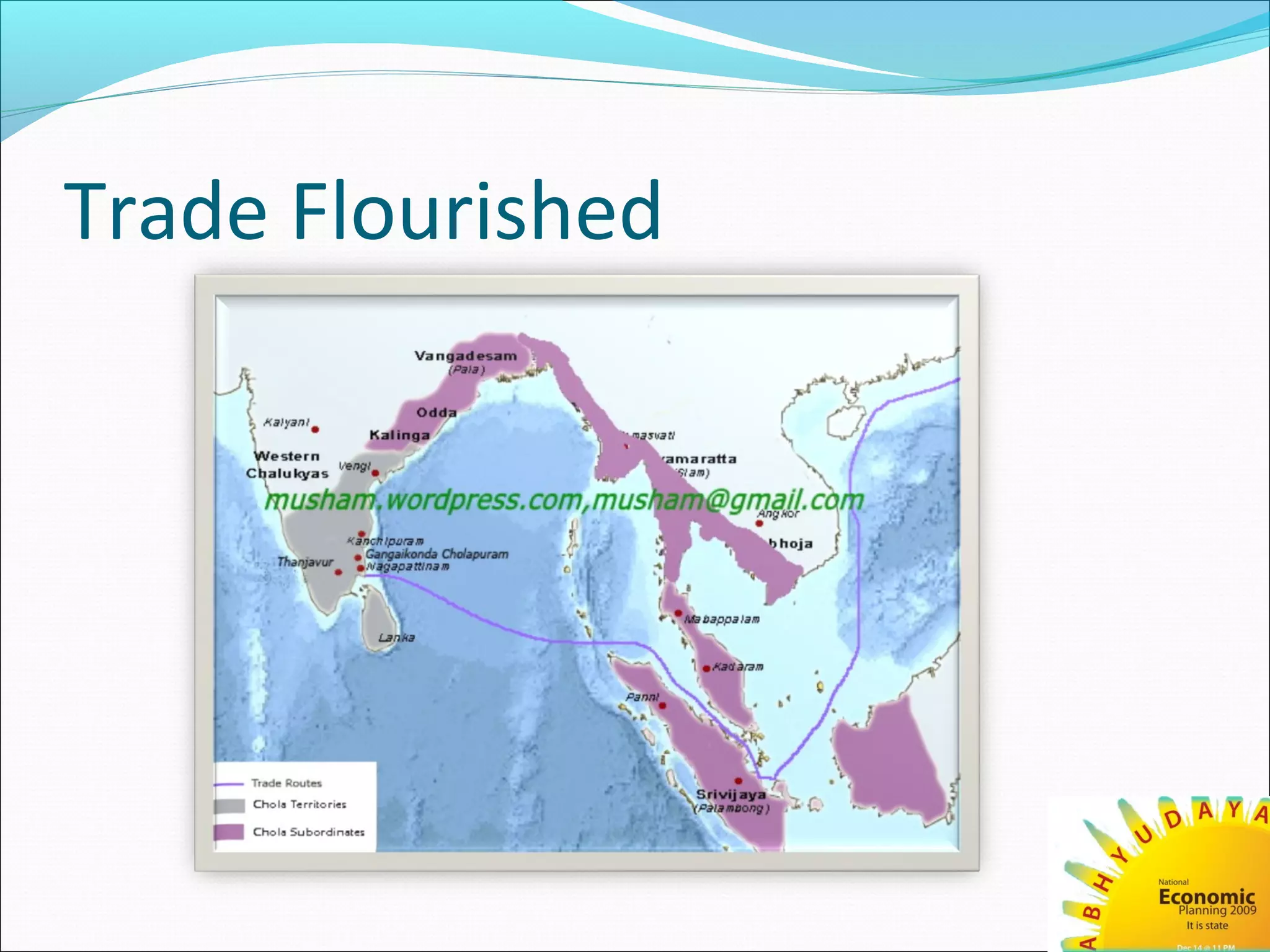
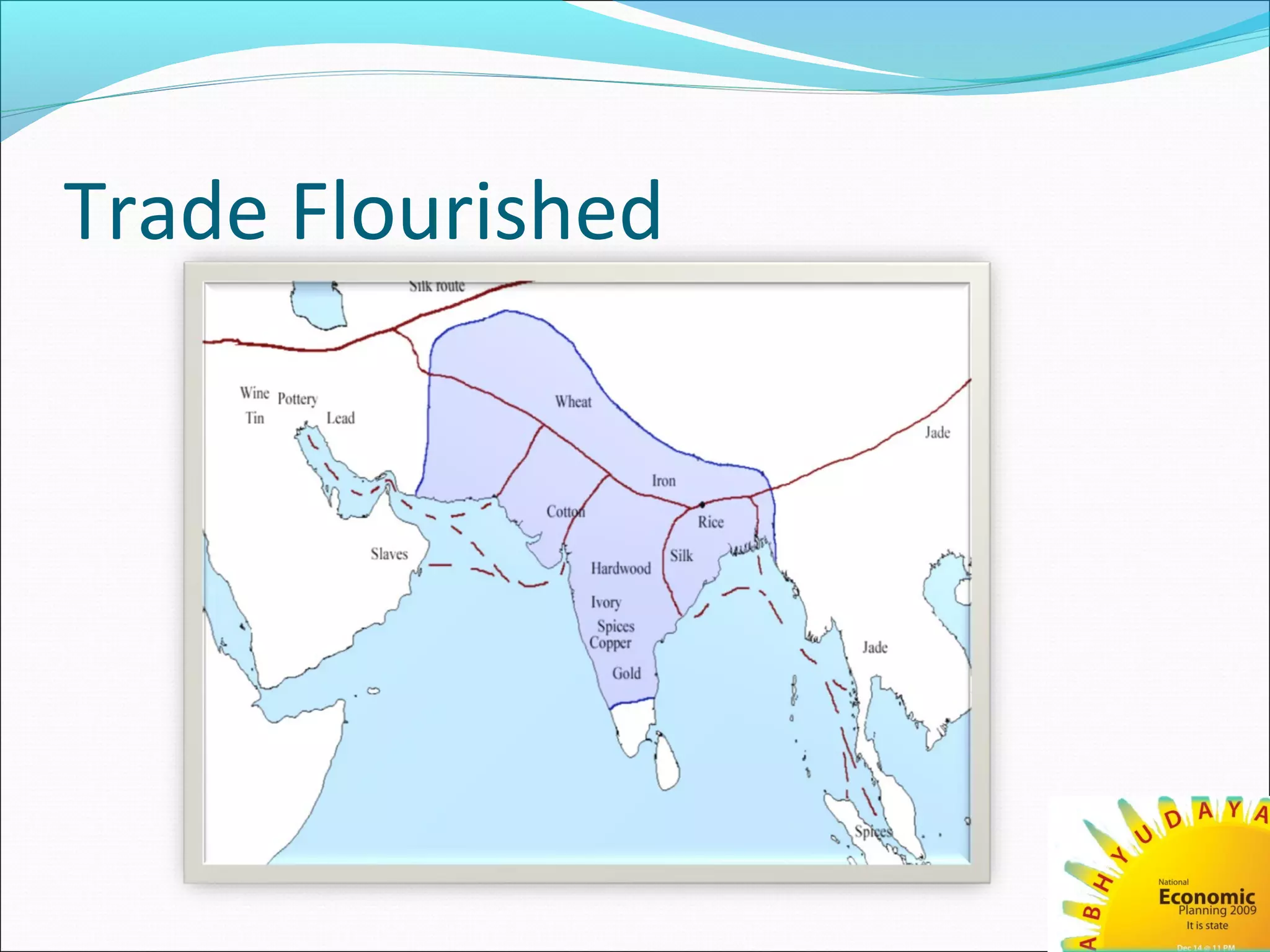
Trade Flourished
Trade Flourished
Economy during 16th
Century
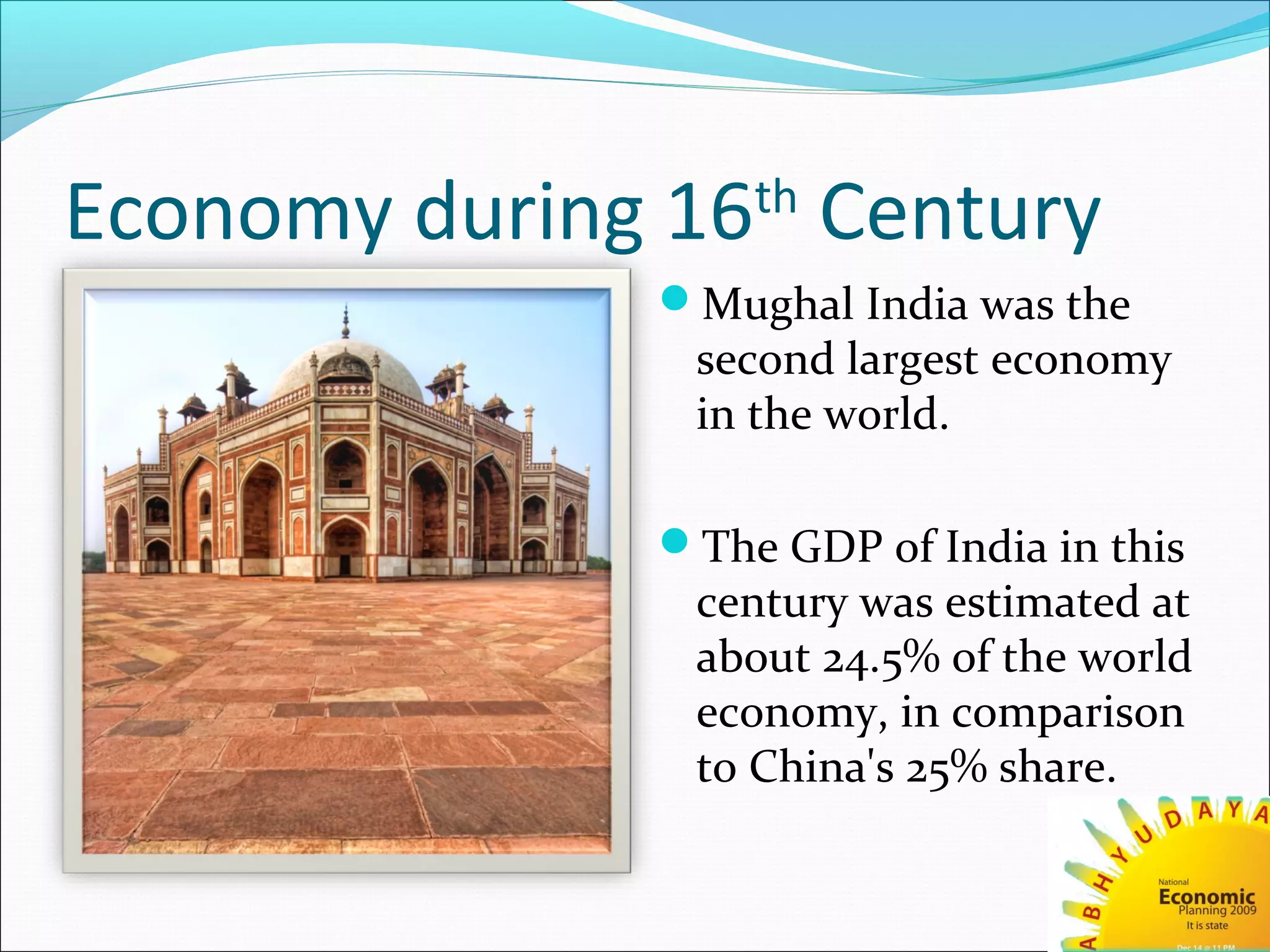
Mughal India was the
second largest economy
in the world.
The GDP of India in this
century was estimated at
about 24.5% of the world
economy, in comparison
to China's 25% share.
Economy during 17th
Century
The annual revenue of
Emperor Akbar's was
£17.5 million
Great Britain in 1800,
which totalled £16
million.
The GDP of Mughal
India was estimated at
about 22.6% of the
world economy.
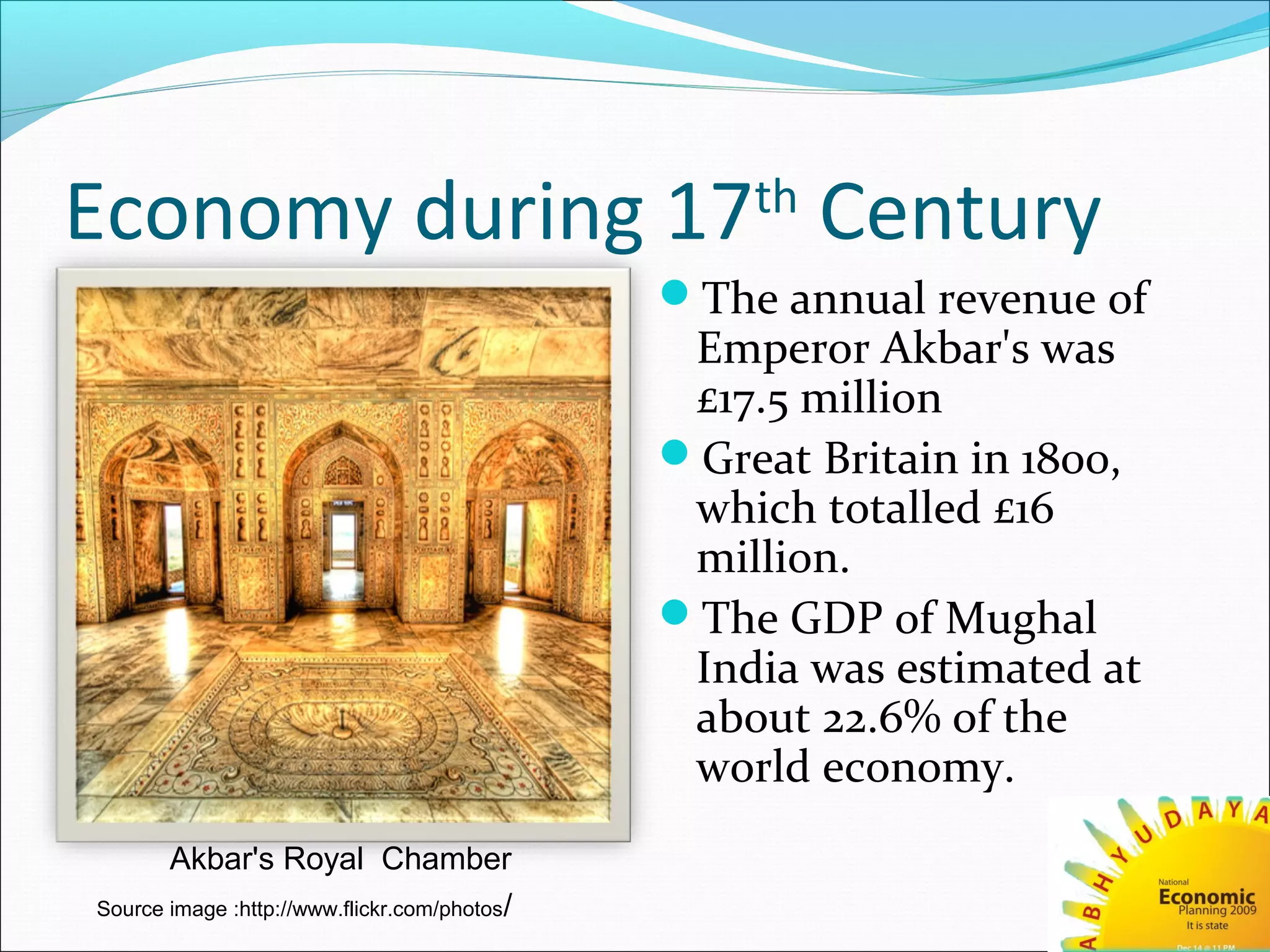
Akbar's Royal Chamber
Source image :http://www.flickr.com/photos/
Economy during 18th
Century
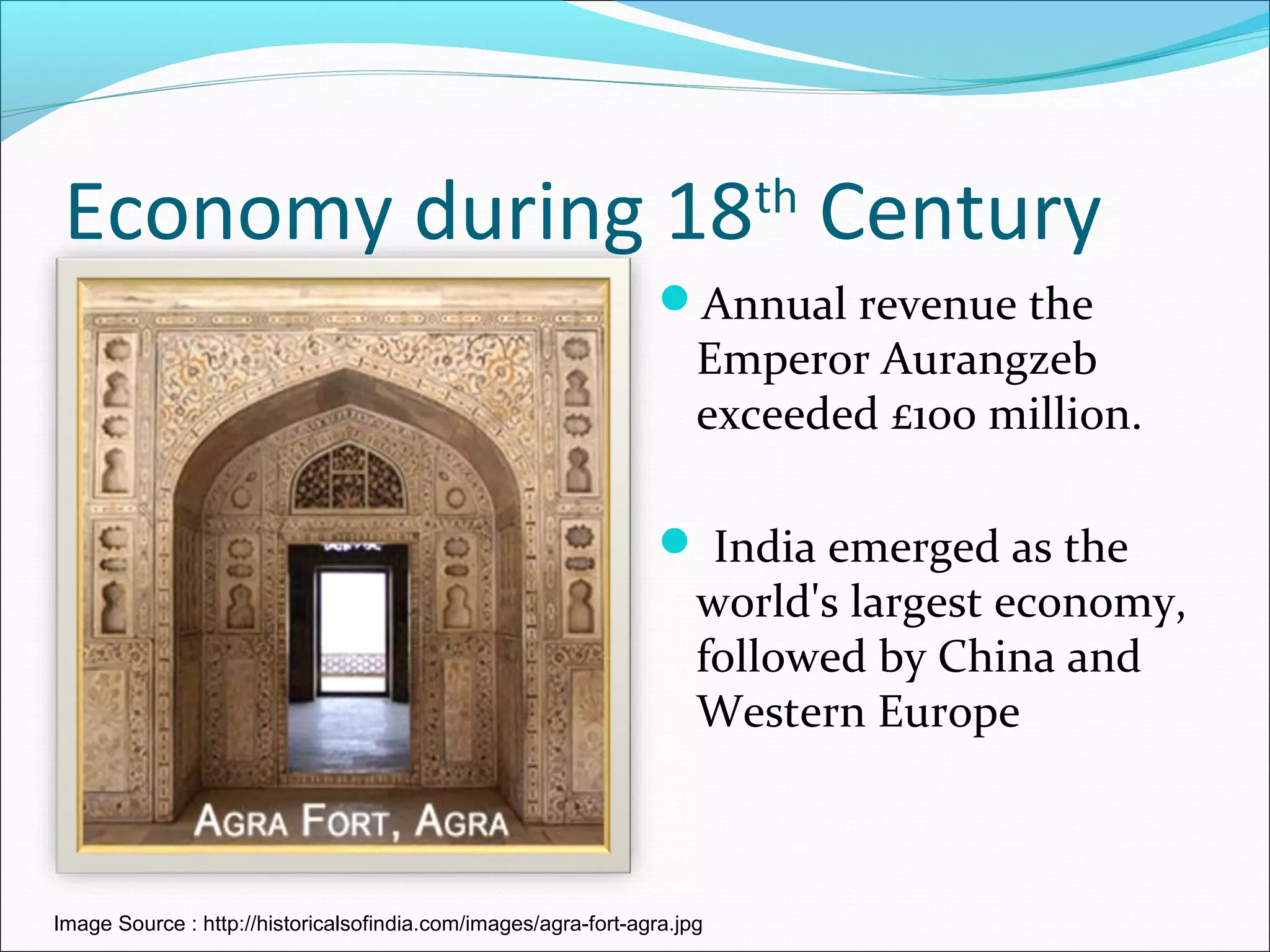
Annual revenue the
Emperor Aurangzeb
exceeded £100 million.
 India emerged as the
world's largest economy,
followed by China and
Western Europe
Image Source : http://historicalsofindia.com/images/agra-fort-agra.jpg
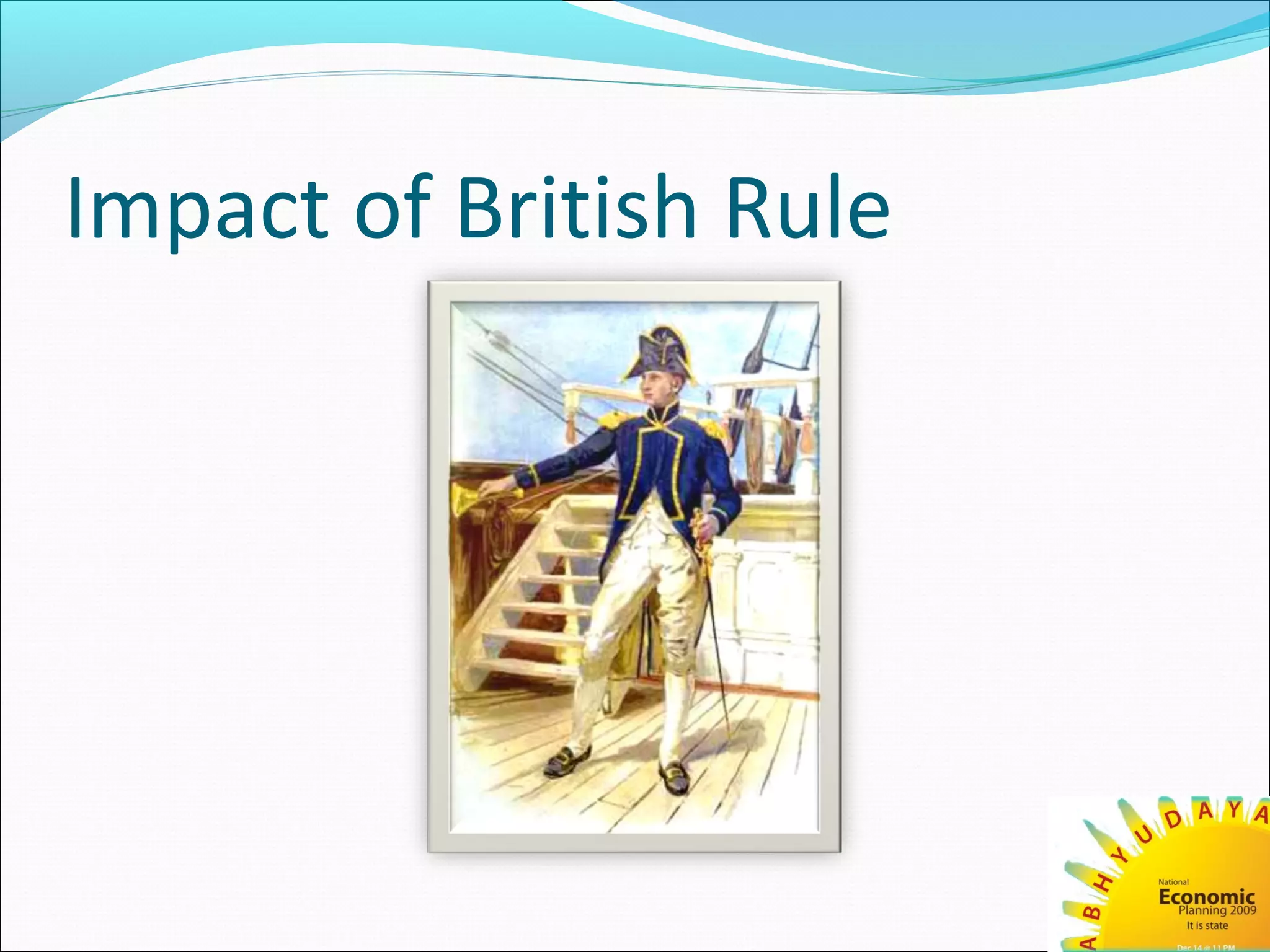
Impact of British Rule
India become a target market
India's colonisation by
the British coincided
with major changes in
the world economy.
Industrialisation, and
significant growth in
production and trade.
India had become
market for superior
finished European
goods.
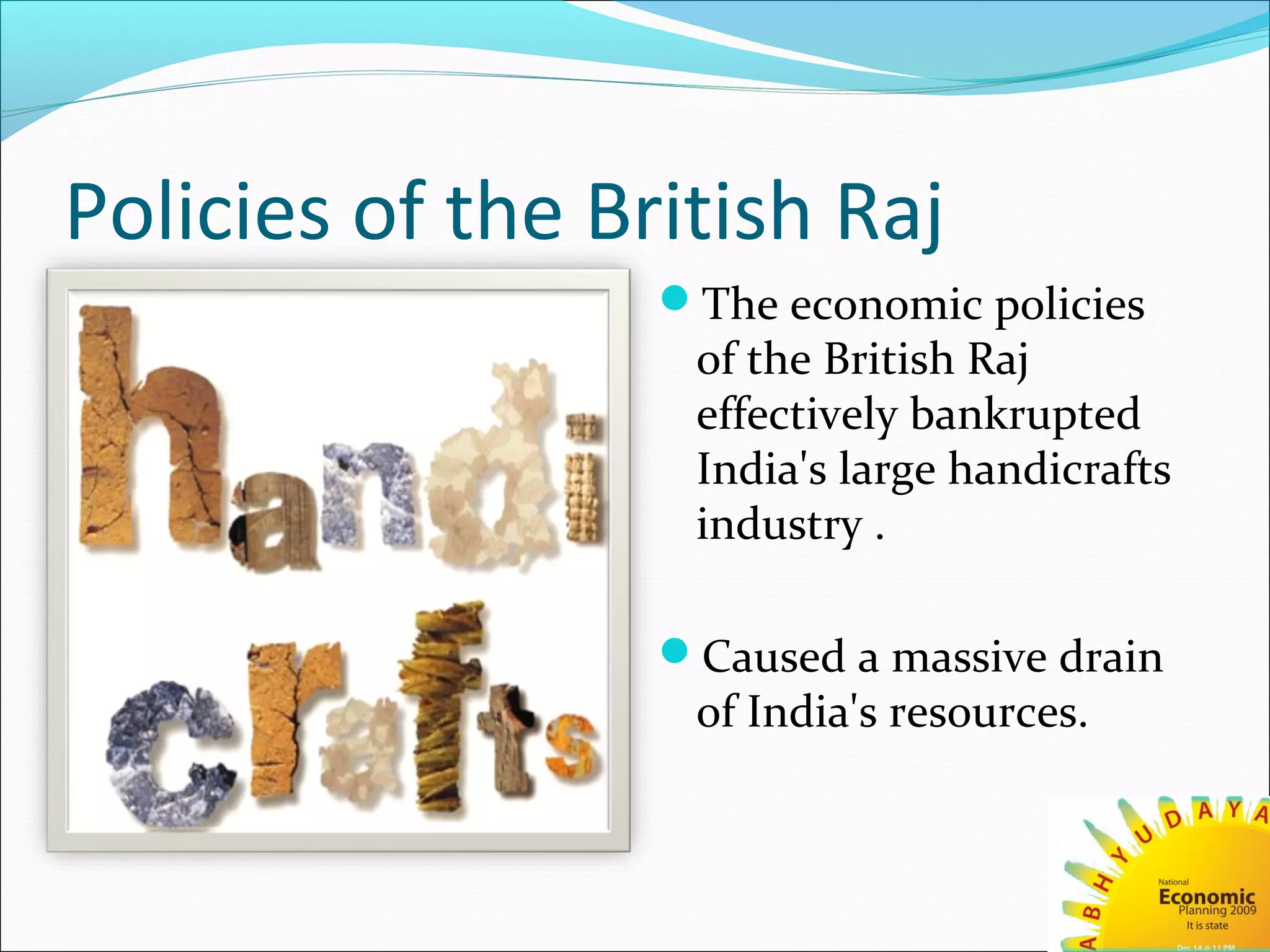
Policies of the British Raj
The economic policies
of the British Raj
effectively bankrupted
India's large handicrafts
industry .
Caused a massive drain
of India's resources.
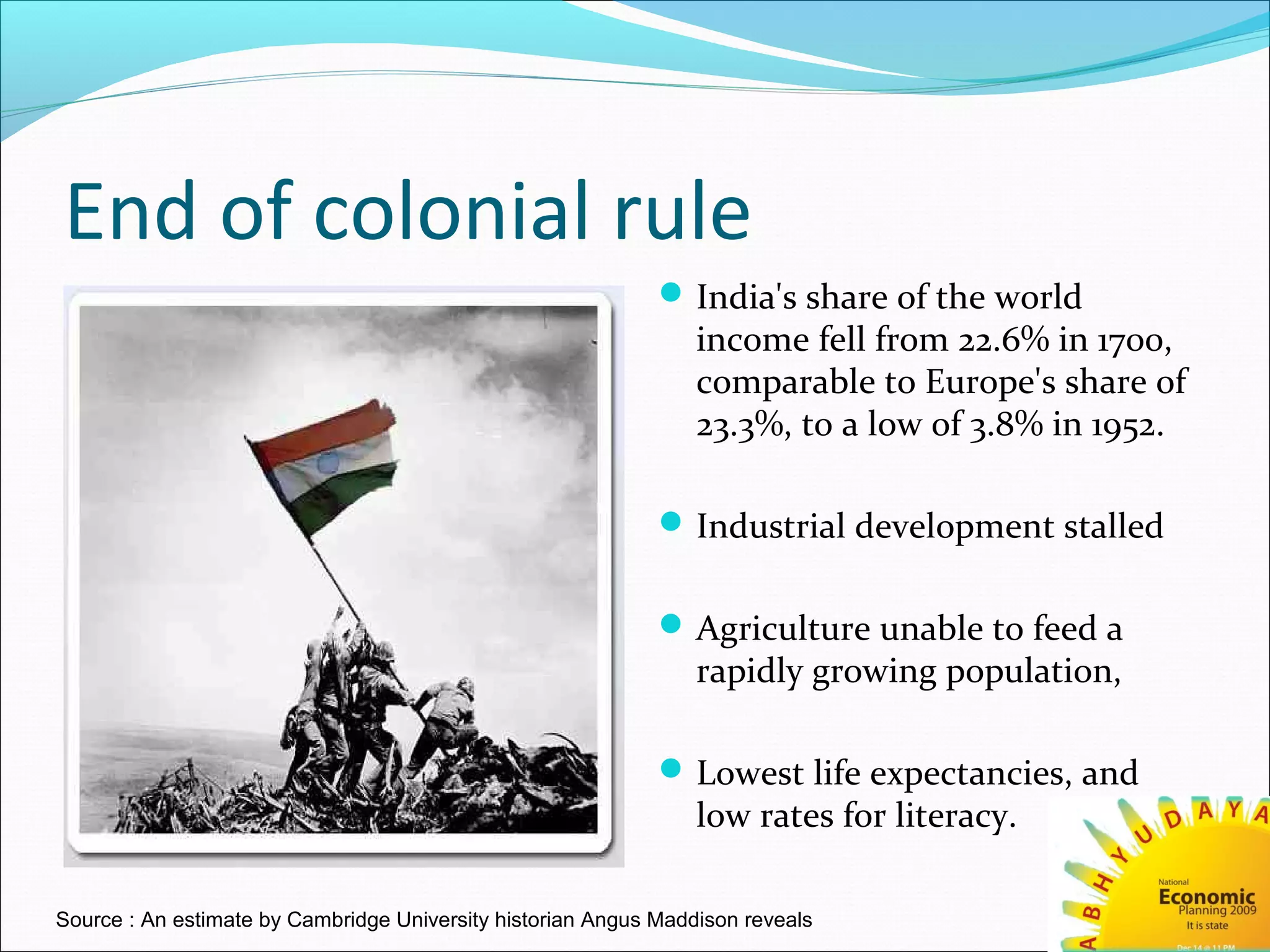
End of colonial rule
India's share of the world
income fell from 22.6% in 1700,
comparable to Europe's share of
23.3%, to a low of 3.8% in 1952.
Industrial development stalled
Agriculture unable to feed a
rapidly growing population,
Lowest life expectancies, and
low rates for literacy.
Source : An estimate by Cambridge University historian Angus Maddison reveals
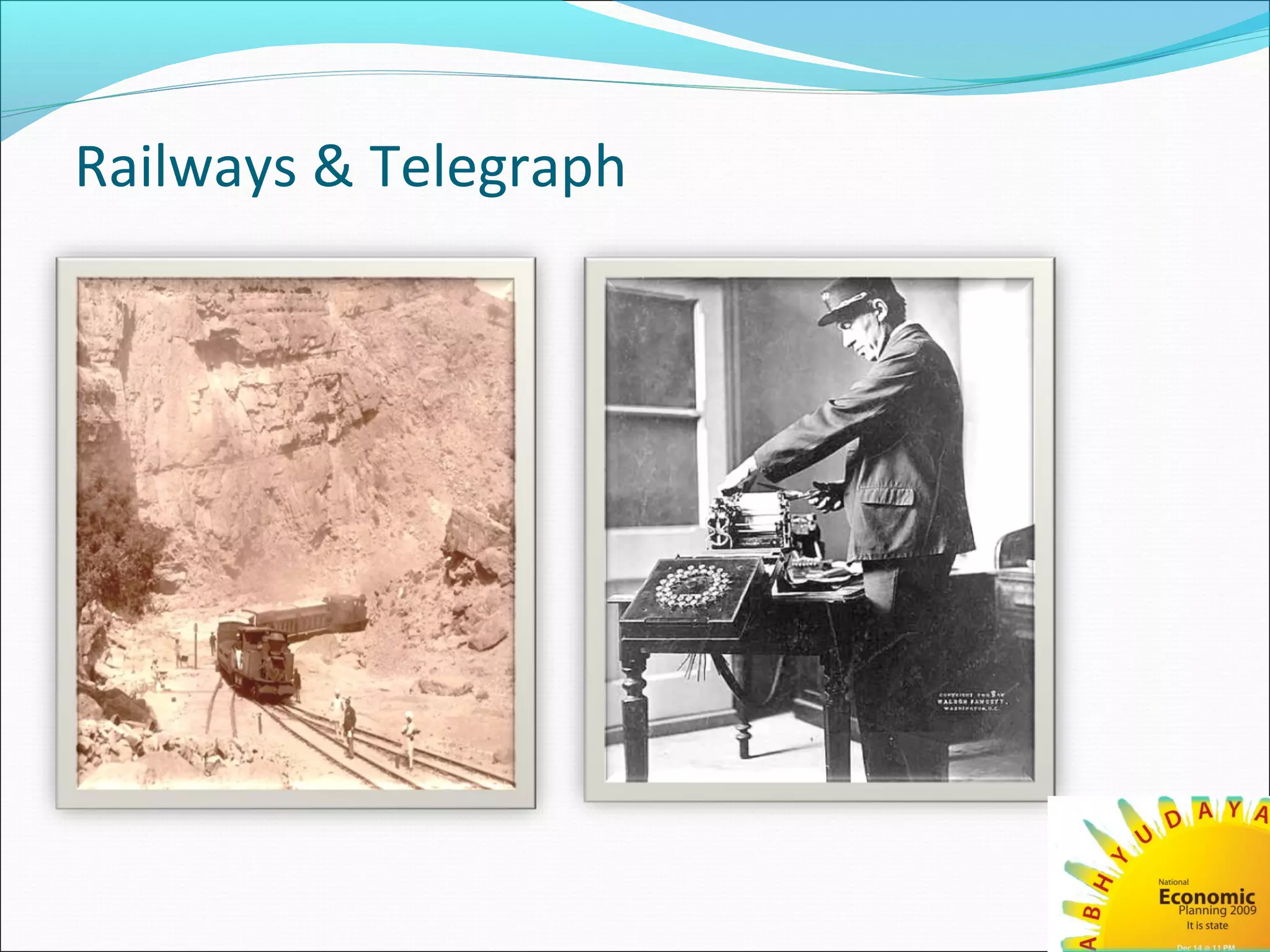
Development for accomplishing their trade &
exploit the Indian Market
Railways & Telegraph
Post
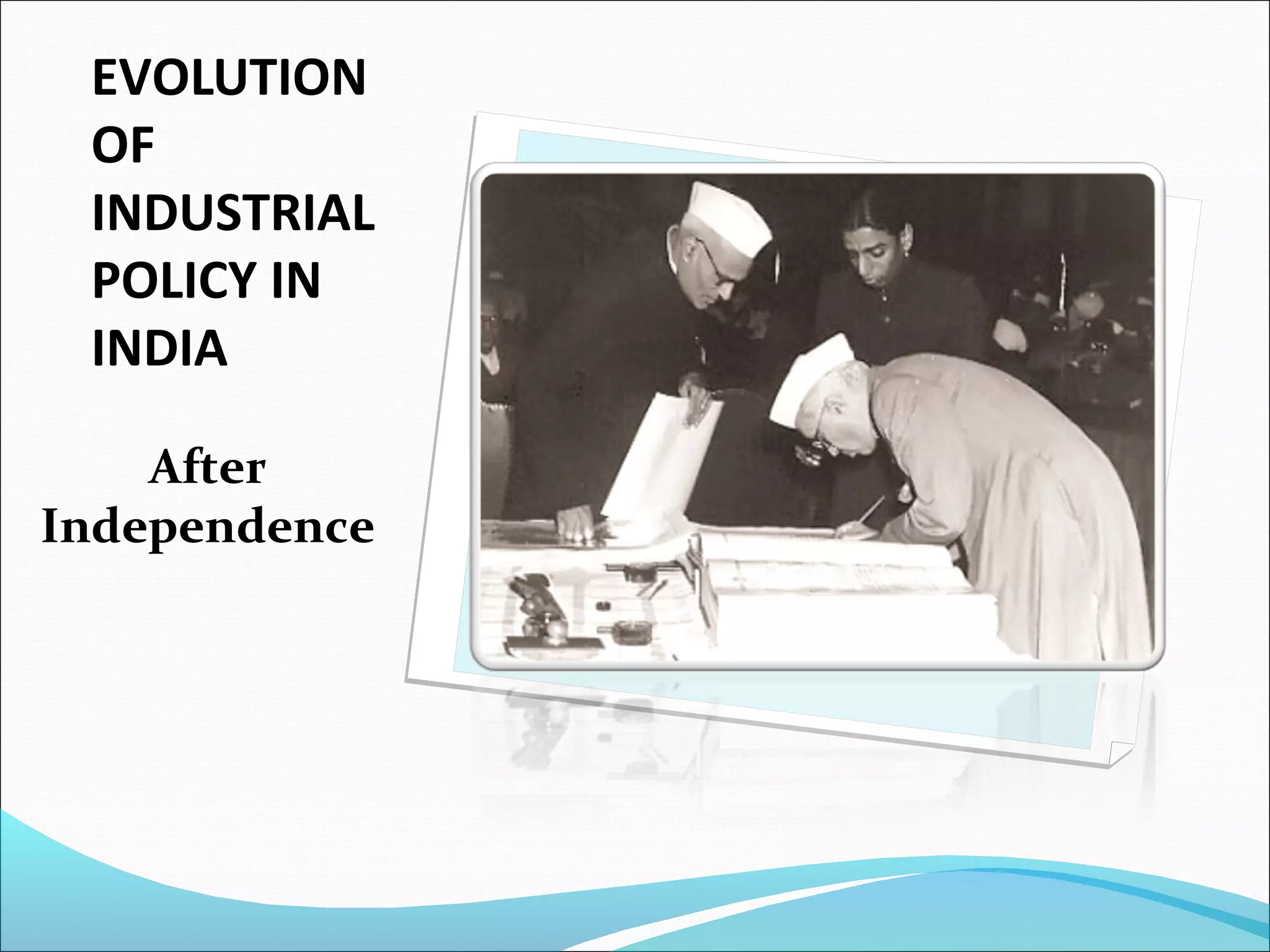
EVOLUTION
OF
INDUSTRIAL
POLICY IN
INDIA
After
Independence
Independence to 1991Independence to 1991
Influenced by the colonial experience which was seen by
Indian leaders as exploitative in nature.
 Policy tended towards protectionism.
Many industries were nationalization in the mid-1950s.
Licences, regulations and the accompanying red tape,
commonly referred to as Licence Raj.
Voice of the Industry
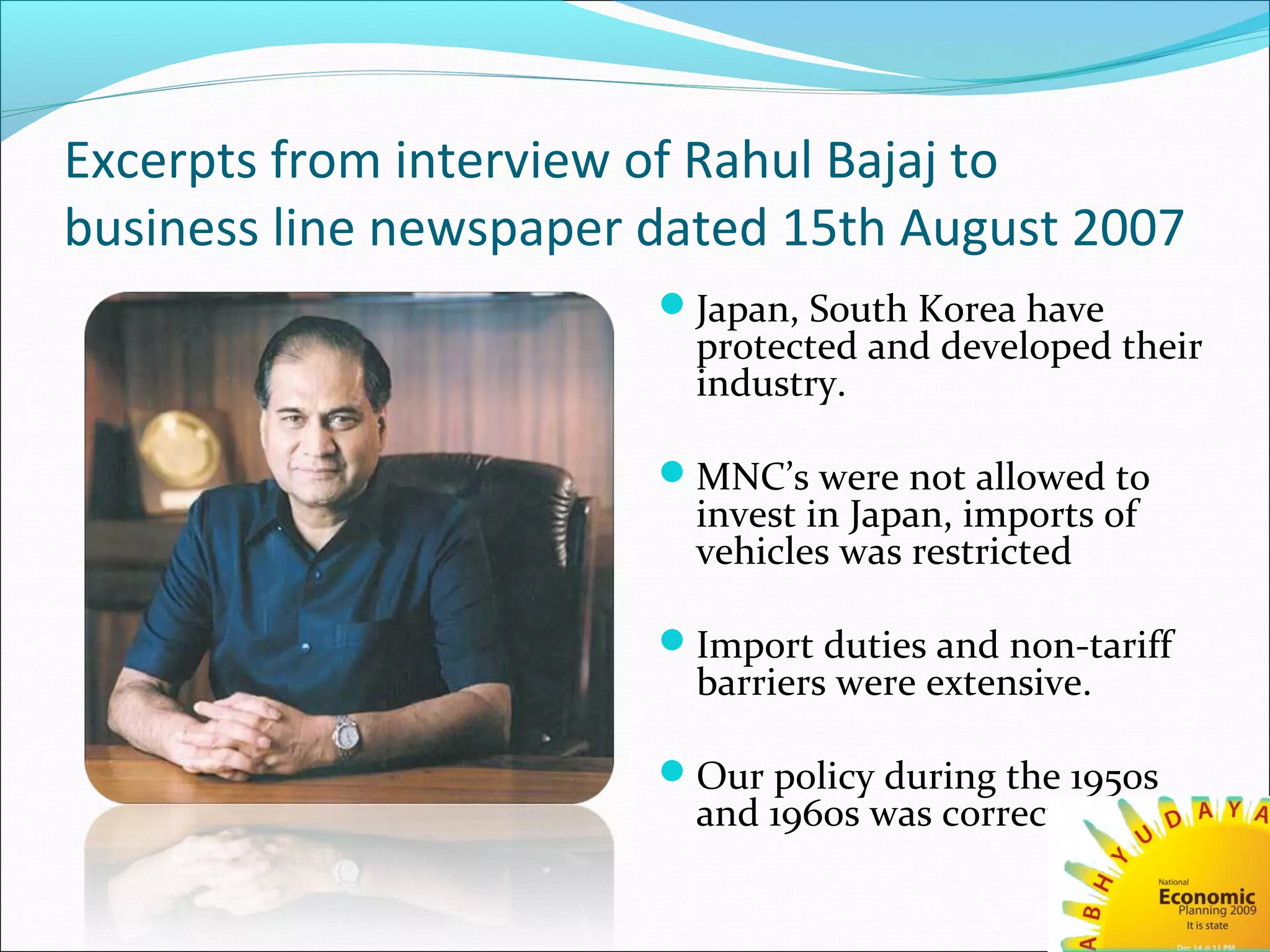
Excerpts from interview of Rahul Bajaj to
business line newspaper dated 15th August 2007
Japan, South Korea have
protected and developed their
industry.
MNC’s were not allowed to
invest in Japan, imports of
vehicles was restricted
Import duties and non-tariff
barriers were extensive.
Our policy during the 1950s
and 1960s was correct.
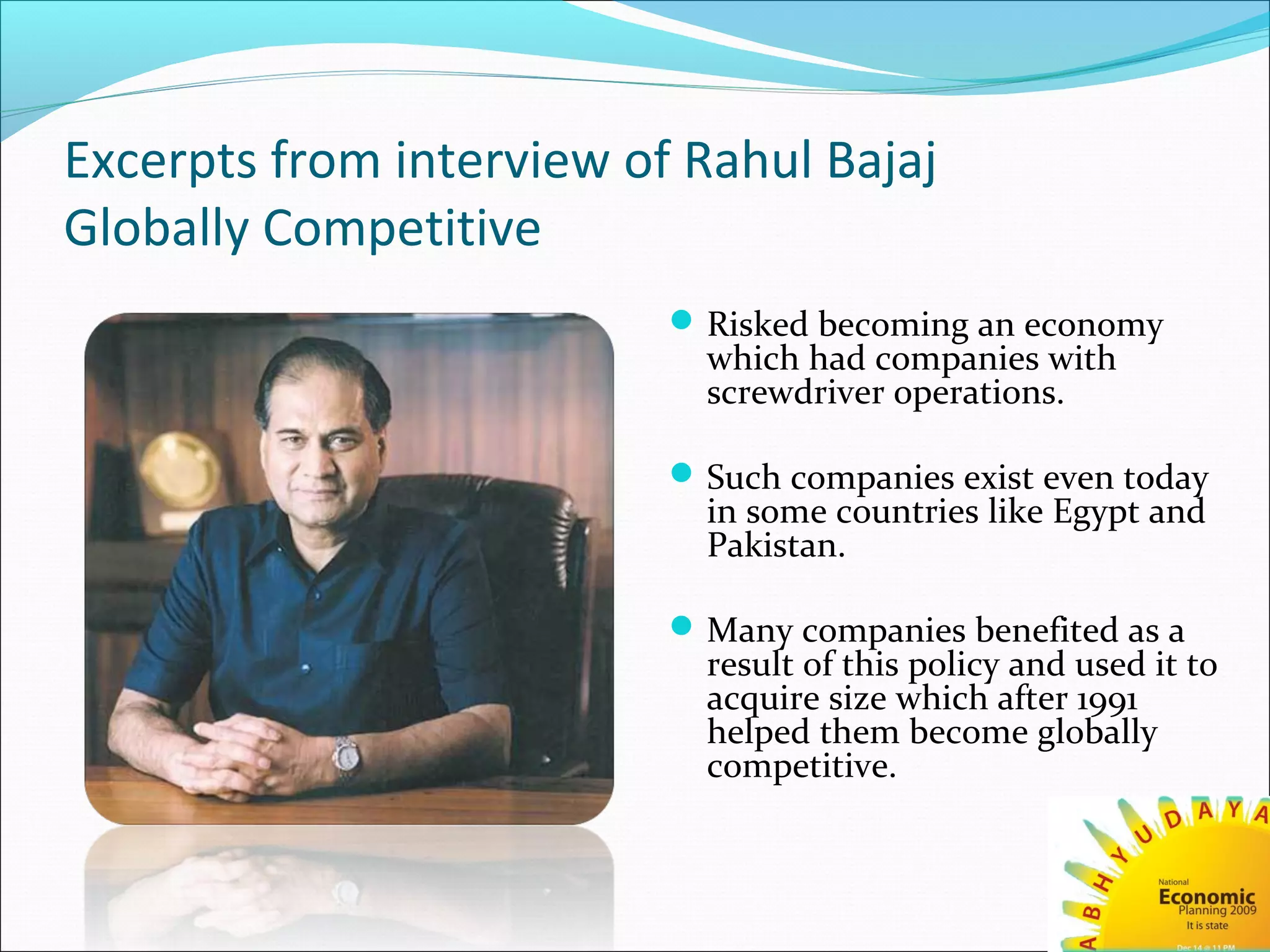
Excerpts from interview of Rahul Bajaj
Globally Competitive
Risked becoming an economy
which had companies with
screwdriver operations.
Such companies exist even today
in some countries like Egypt and
Pakistan.
Many companies benefited as a
result of this policy and used it to
acquire size which after 1991
helped them become globally
competitive.
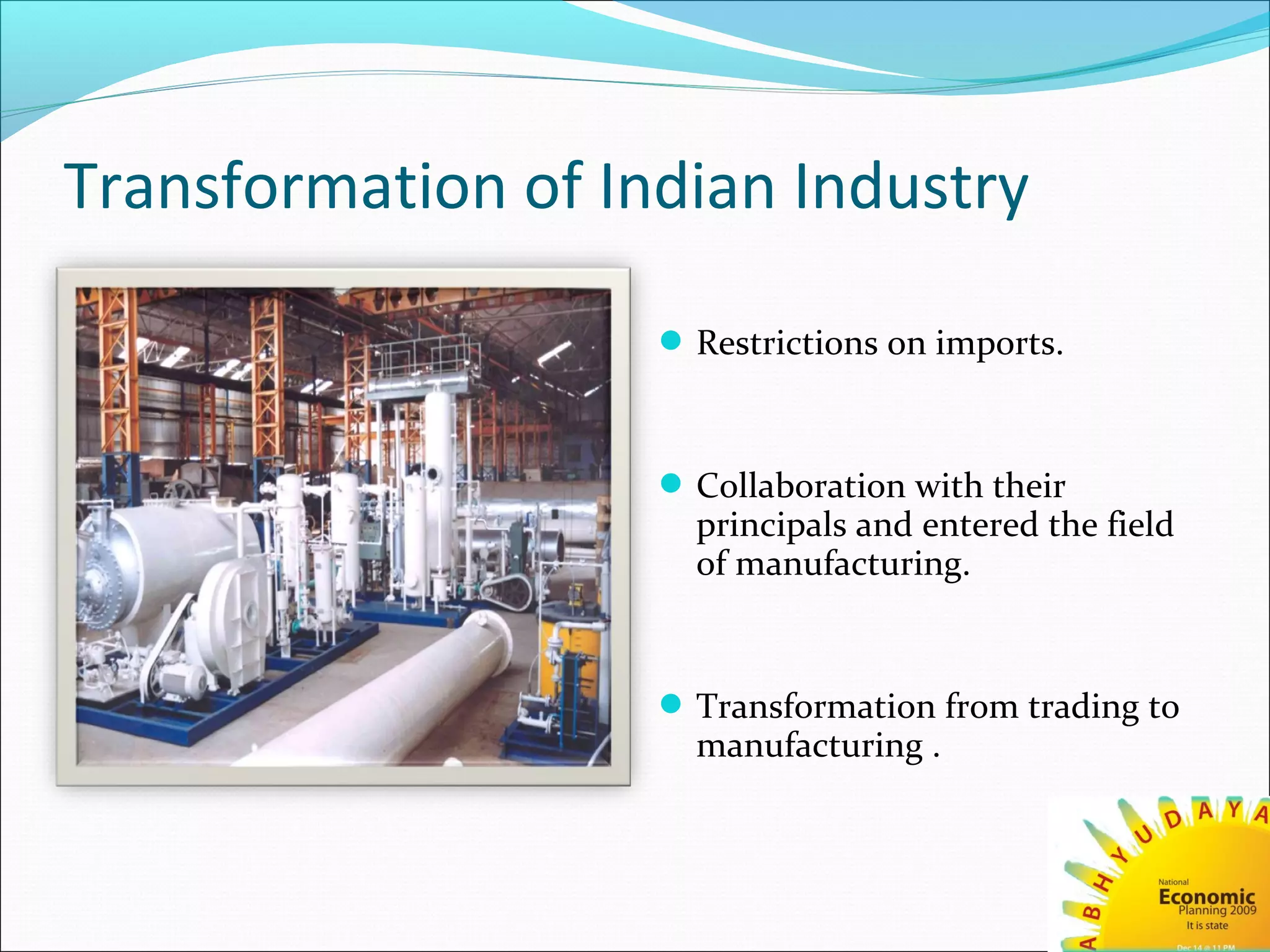
Transformation of Indian Industry
Restrictions on imports.
Collaboration with their
principals and entered the field
of manufacturing.
Transformation from trading to
manufacturing .
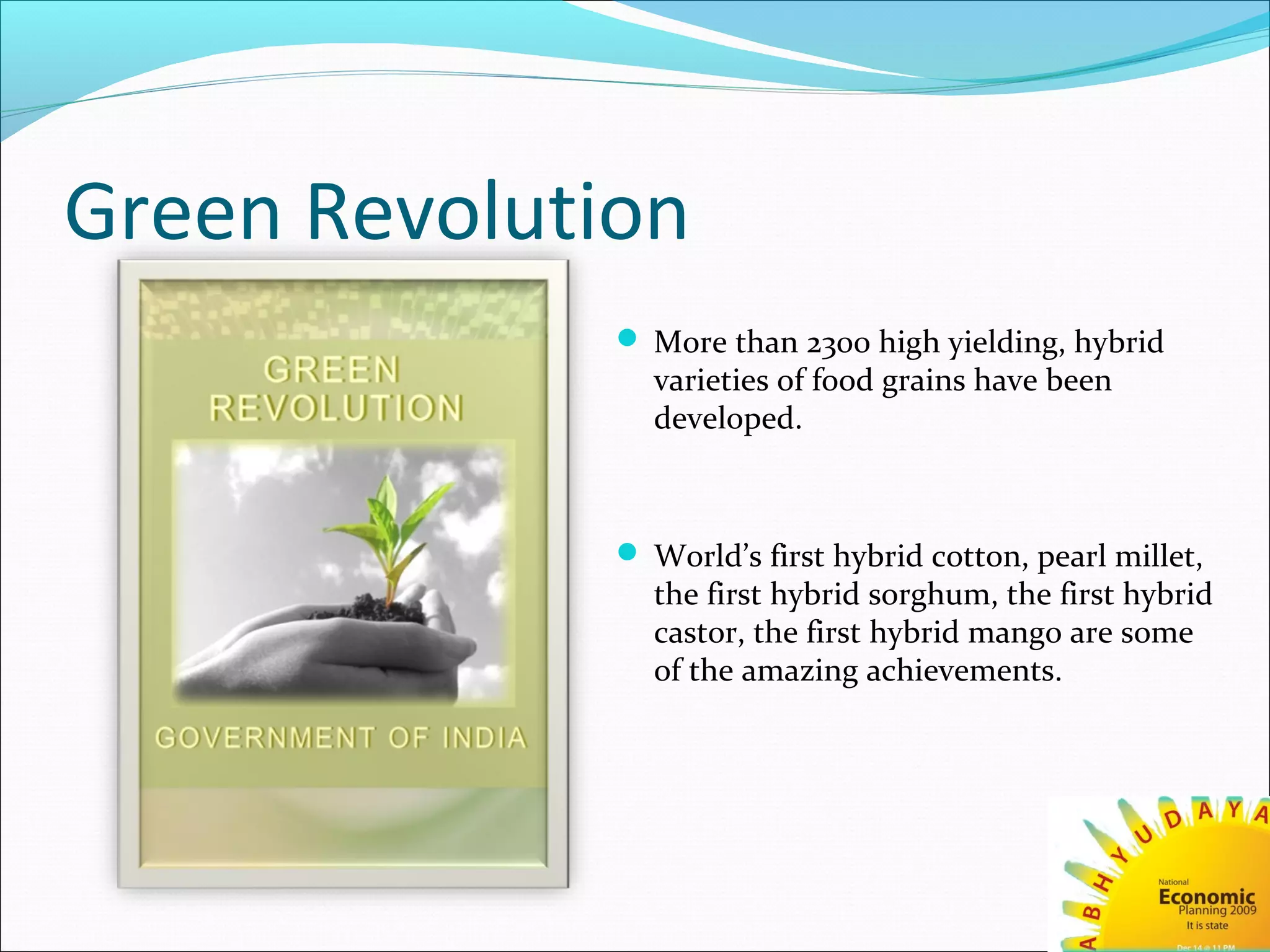
Green Revolution
 More than 2300 high yielding, hybrid
varieties of food grains have been
developed.
 World’s first hybrid cotton, pearl millet,
the first hybrid sorghum, the first hybrid
castor, the first hybrid mango are some
of the amazing achievements.
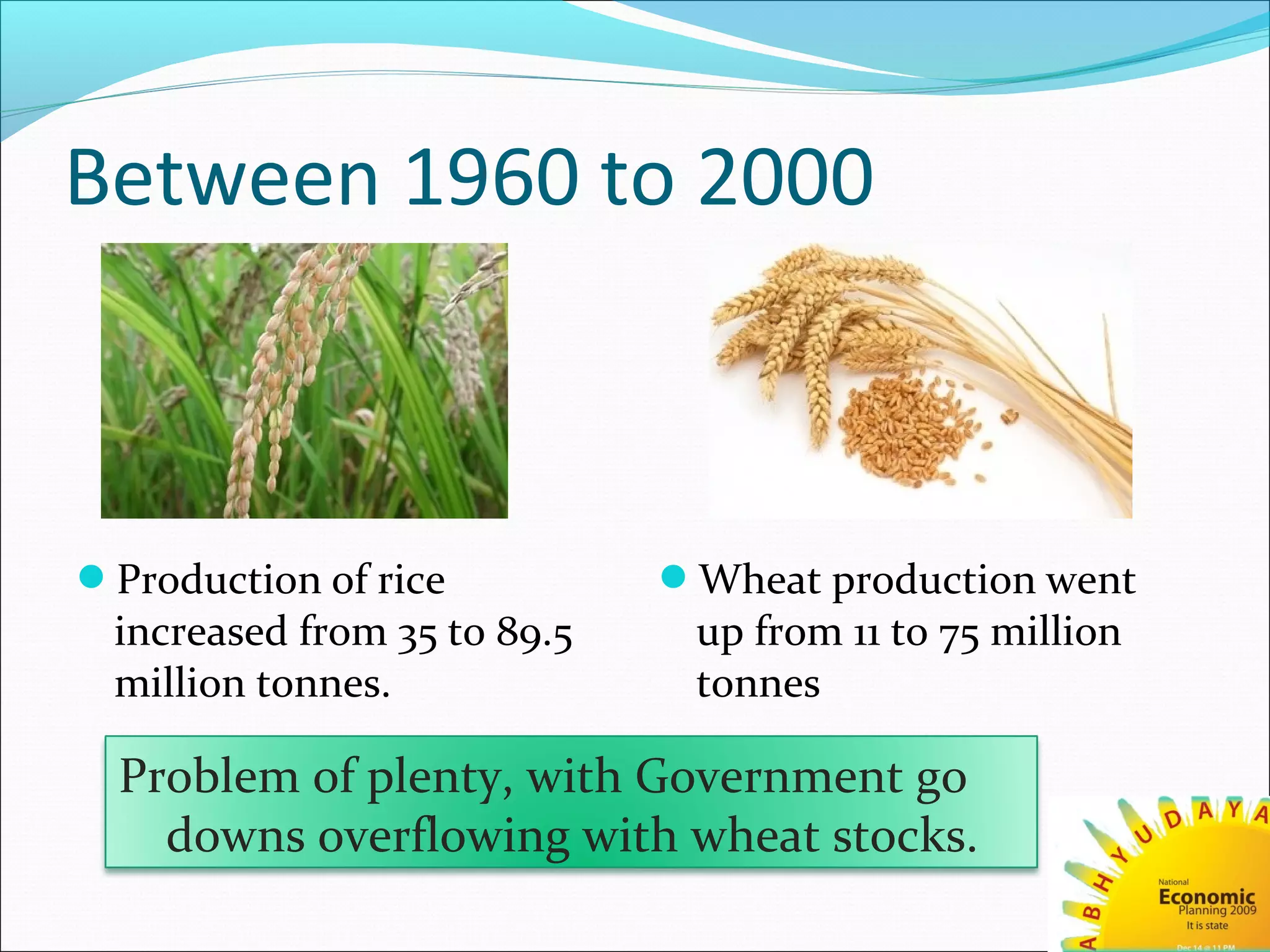
Between 1960 to 2000
Production of rice
increased from 35 to 89.5
million tonnes.
Wheat production went
up from 11 to 75 million
tonnes
Problem of plenty, with Government go
downs overflowing with wheat stocks.
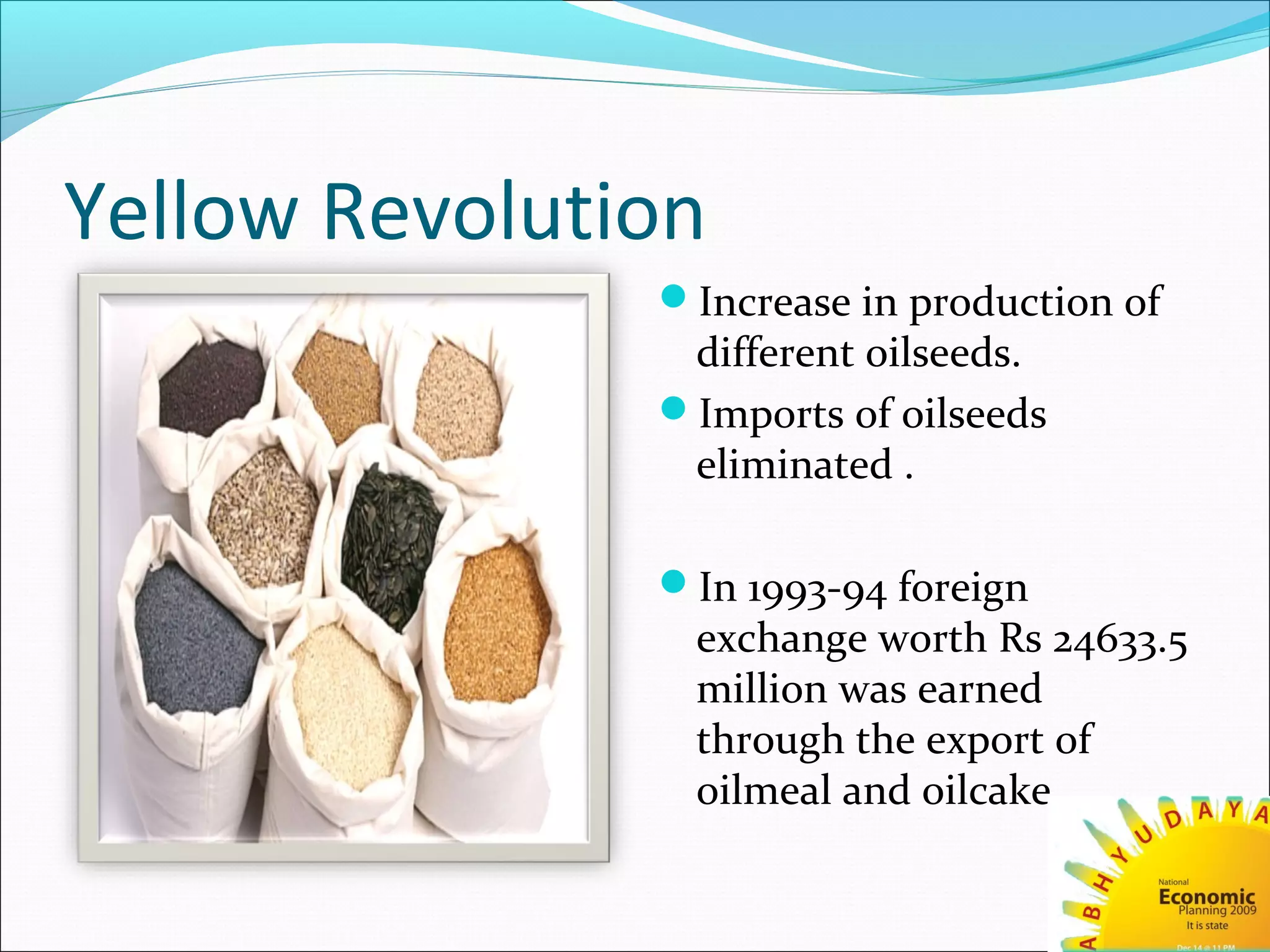
Yellow Revolution
Increase in production of
different oilseeds.
Imports of oilseeds
eliminated .
In 1993-94 foreign
exchange worth Rs 24633.5
million was earned
through the export of
oilmeal and oilcake.
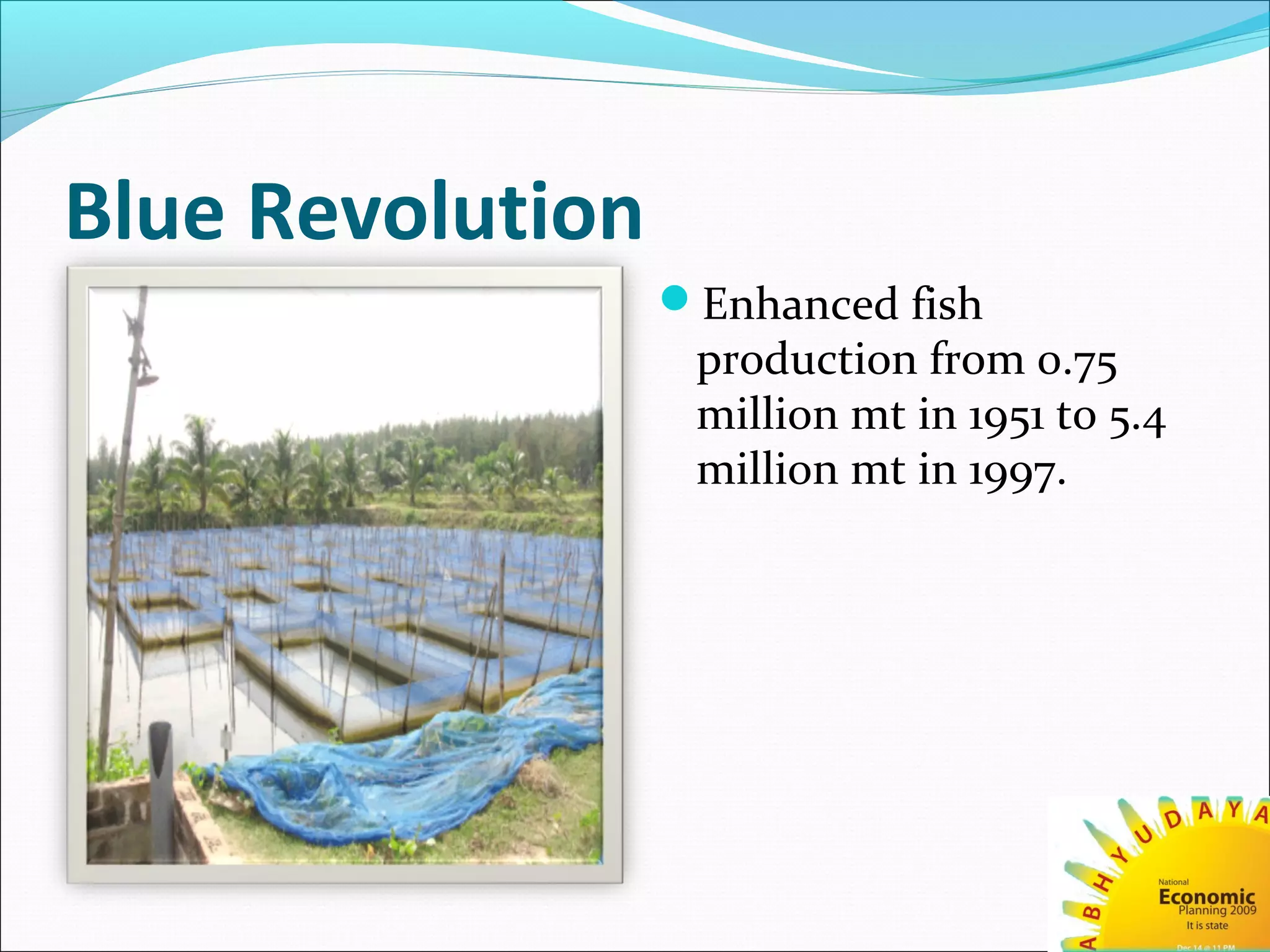
Blue Revolution
Enhanced fish
production from 0.75
million mt in 1951 to 5.4
million mt in 1997.
Function of a development bankFunction of a development bank
To provide the financial infrastructure necessary
for industry, the Government set up a number of
development banks.
• Industrial Finance Corporation of India (IFCI) (1948)
• Industrial Credit and Investment Corporation of India (ICICI) (1955)
• Industrial Development Bank of India (IDBI) (1964)
• Industrial Reconstruction Corporation of India (1971)
• Unit Trust of India (UTI) (1963)
• Life Insurance Corporation of India (LIC) (1956).
Training & Development SkillsTraining & Development Skills
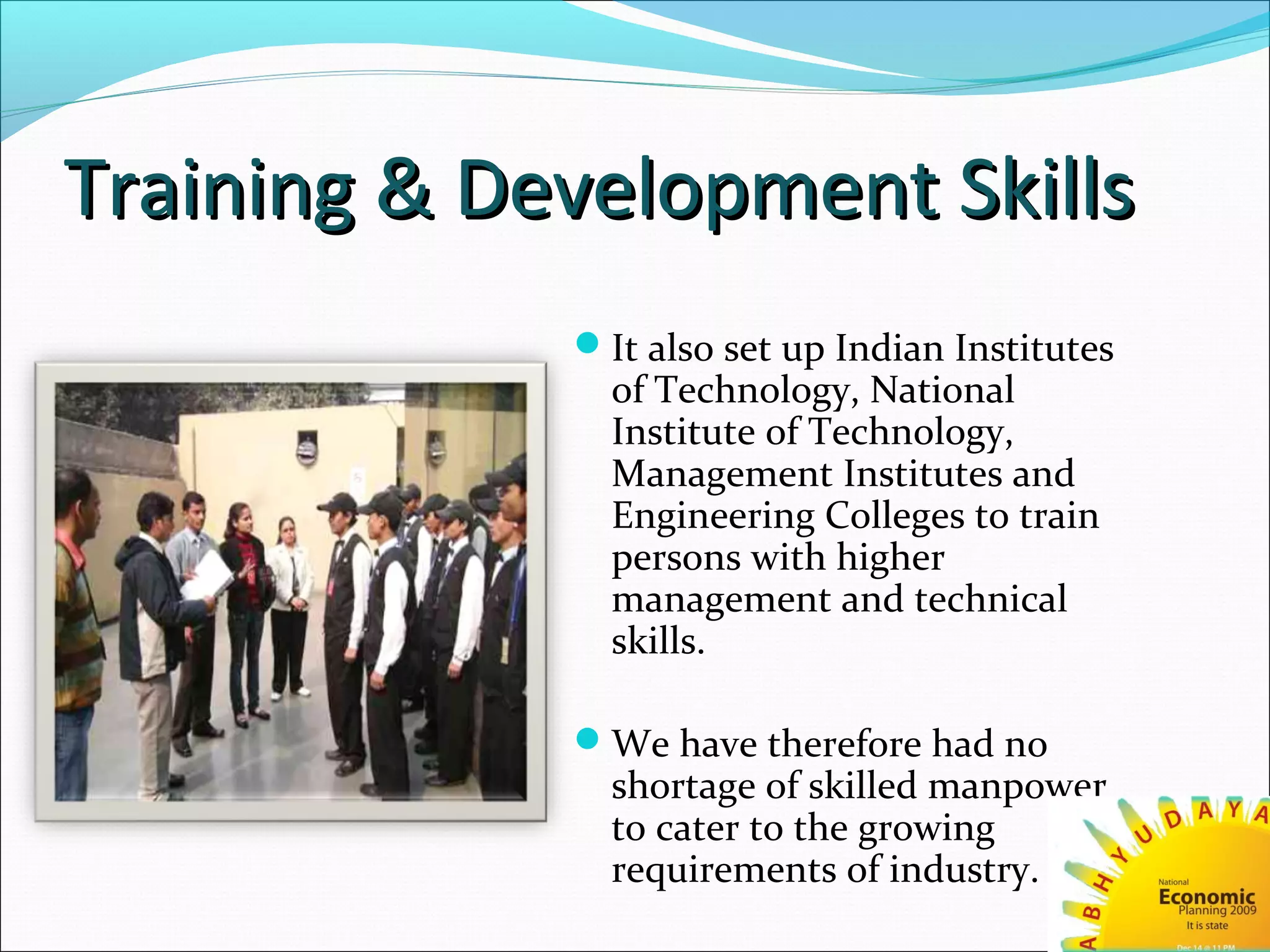
It also set up Indian Institutes
of Technology, National
Institute of Technology,
Management Institutes and
Engineering Colleges to train
persons with higher
management and technical
skills.
We have therefore had no
shortage of skilled manpower
to cater to the growing
requirements of industry.
BACKWARD AREA DEVELOPMENTBACKWARD AREA DEVELOPMENT
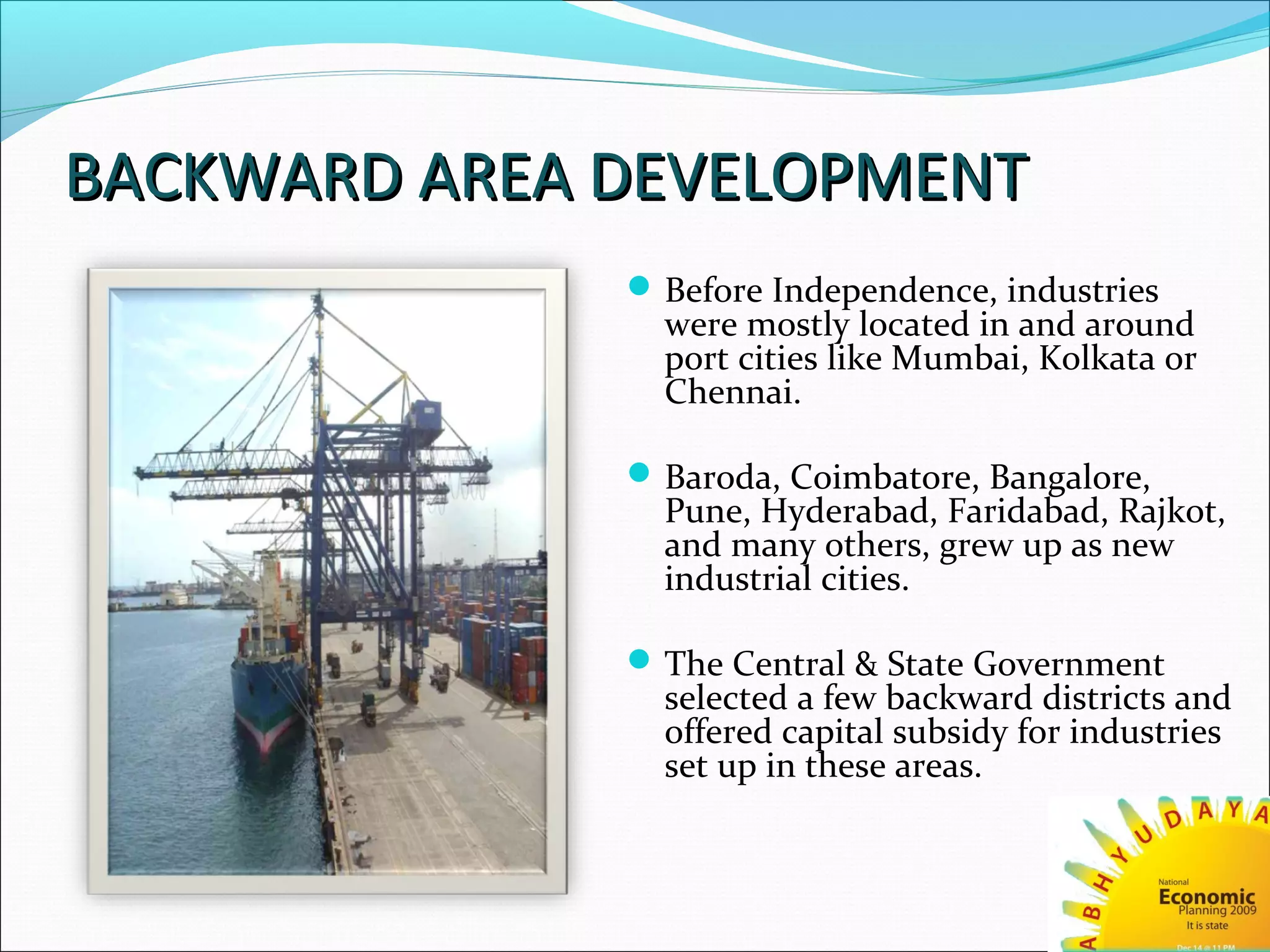
Before Independence, industries
were mostly located in and around
port cities like Mumbai, Kolkata or
Chennai.
Baroda, Coimbatore, Bangalore,
Pune, Hyderabad, Faridabad, Rajkot,
and many others, grew up as new
industrial cities.
The Central & State Government
selected a few backward districts and
offered capital subsidy for industries
set up in these areas.
SCIENTIFIC RESEARCHSCIENTIFIC RESEARCH
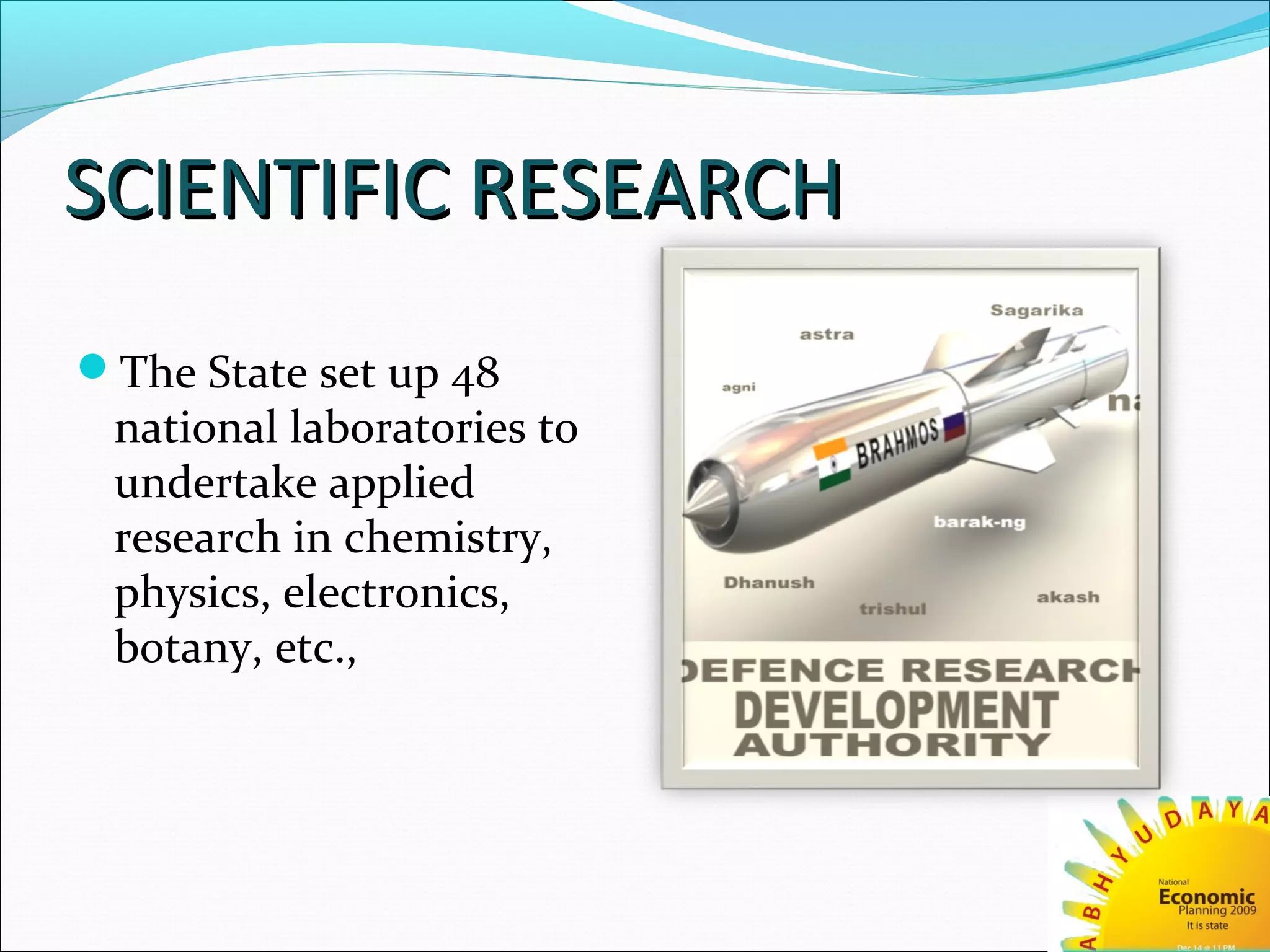
The State set up 48
national laboratories to
undertake applied
research in chemistry,
physics, electronics,
botany, etc.,
why India went for liberalisation?
What happened in 1991
India started having balance of payments
problems since 1985, and by the end of 1990, it
was in a serious economic crisis.
The government was close to default, its central
bank had refused new credit and foreign exchange
reserves had reduced to the point that India could
barely finance three weeks’ worth of imports.
Metamorphosis
controller to regulator
The catalyst required to transform the economy through badly
needed reforms to unshackle the economy.
Controls started to be dismantled, tariffs, duties and taxes
progressively lowered, state monopolies broken, the economy
was opened to trade and investment,.
private sector enterprise and competition were encouraged and
globalisation was slowly embraced.
TRAI
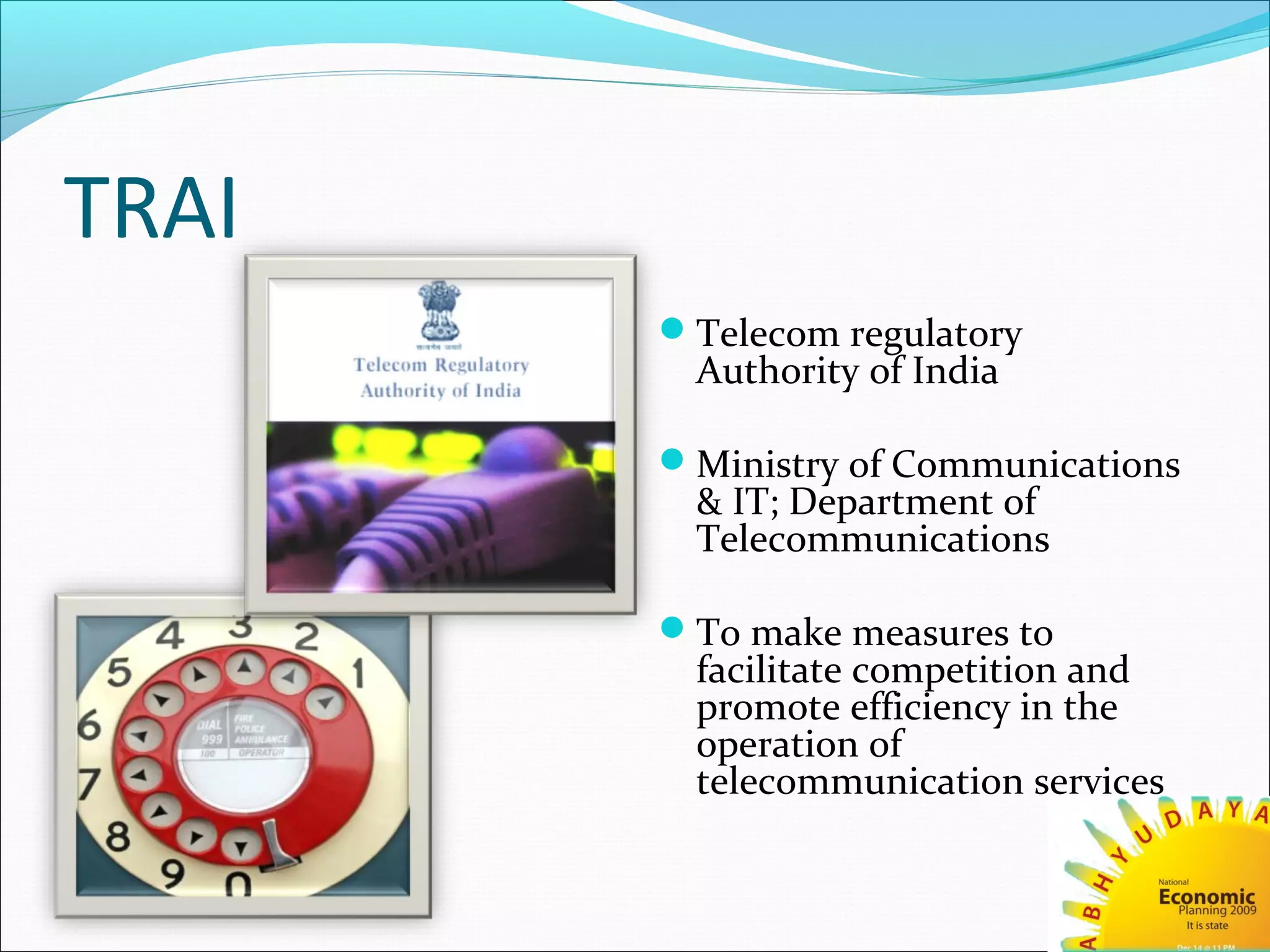
Telecom regulatory
Authority of India
Ministry of Communications
& IT; Department of
Telecommunications
To make measures to
facilitate competition and
promote efficiency in the
operation of
telecommunication services
SEBI
SEBI – Securities &
Exchange Board of India
Ministry of Finance;
Department of
Economic Affairs
To protect the interests
of investors in securities
IRDA
Insurance Regulatory
& Development
Authority
Ministry of Finance
To protect of the
interests of the policy
holders
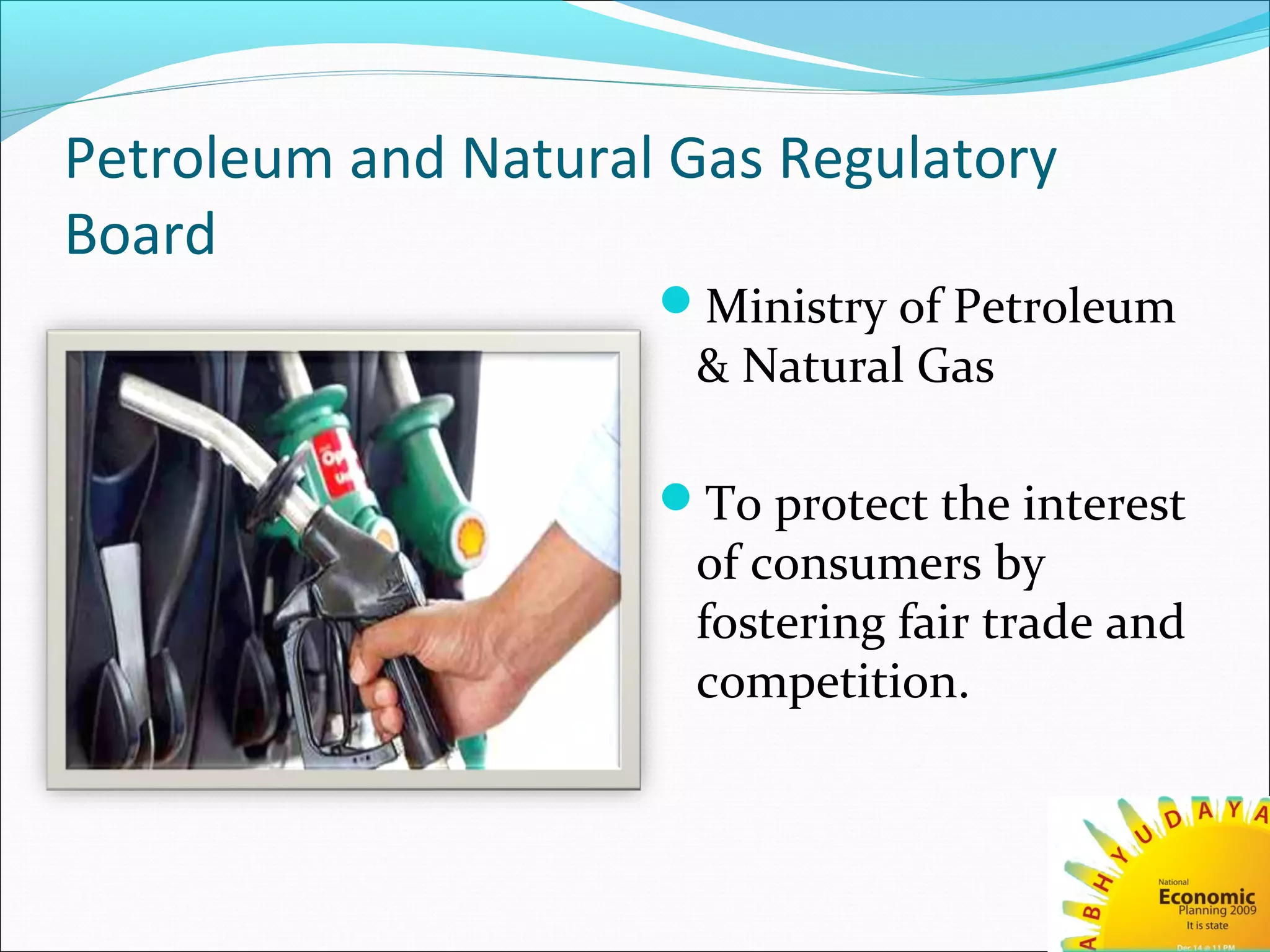
Petroleum and Natural Gas Regulatory
Board
Ministry of Petroleum
& Natural Gas
To protect the interest
of consumers by
fostering fair trade and
competition.
Why market should not be allowed to
have complete freedom
The motive of all business entities is to make profit and an
unbridled economy will lead to a huge problem where
people are treated as commodities.
The companies will swindle the people
The free market will not care for every section of the
society.
Why market should not be allowed to have complete freedom ?
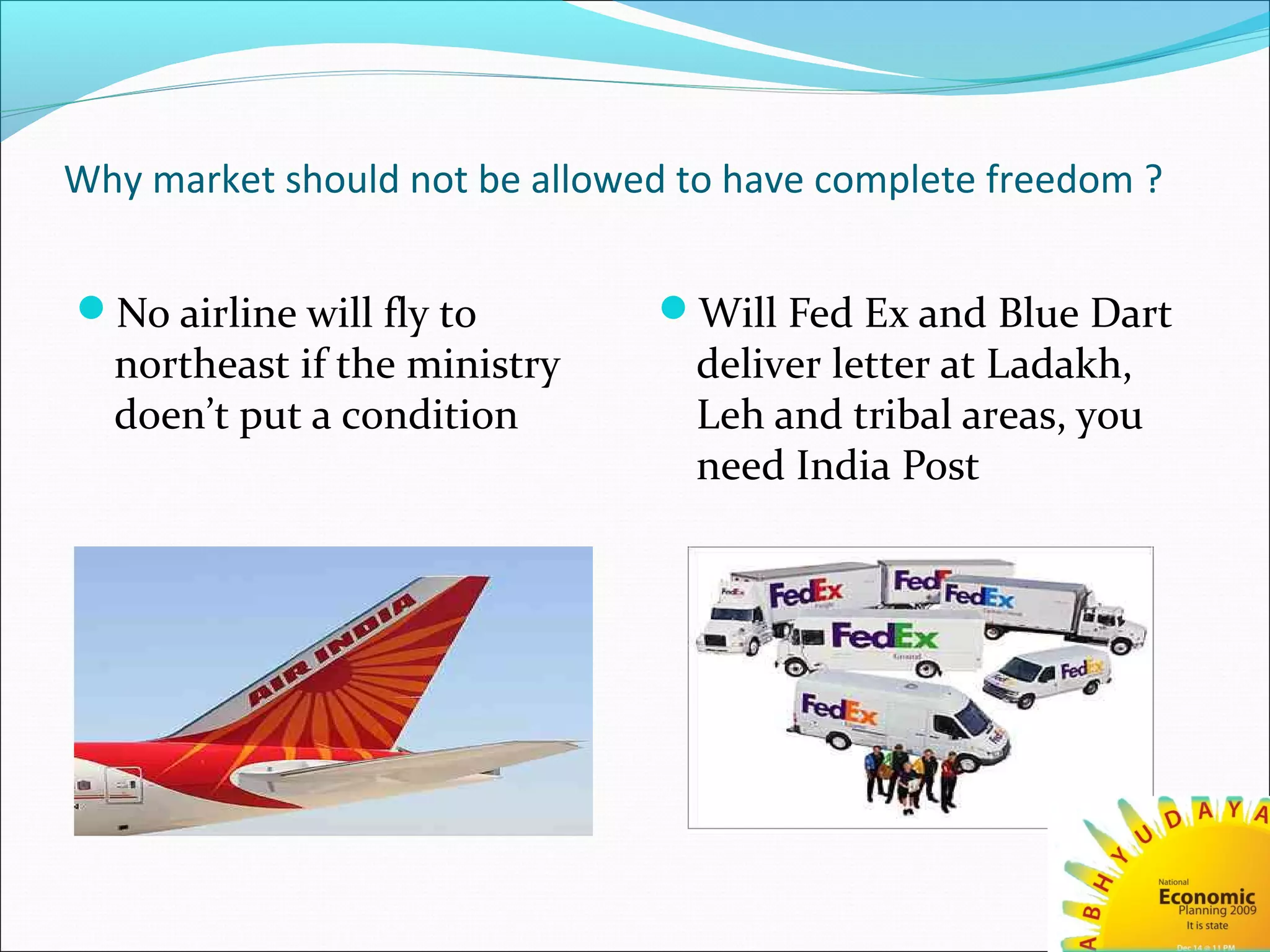
No airline will fly to
northeast if the ministry
doen’t put a condition
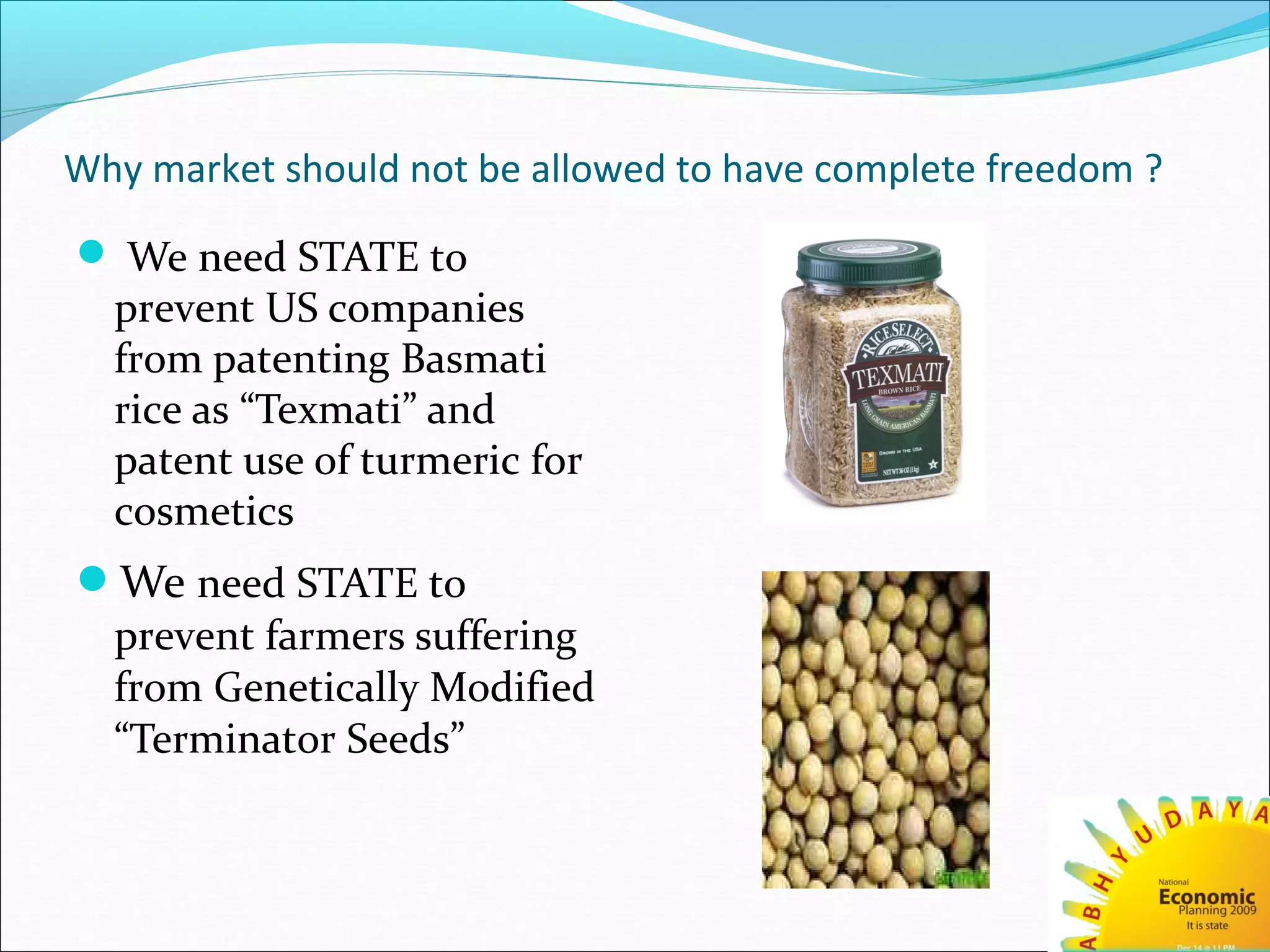
Will Fed Ex and Blue Dart
deliver letter at Ladakh,
Leh and tribal areas, you
need India Post
Why market should not be allowed to have complete freedom ?
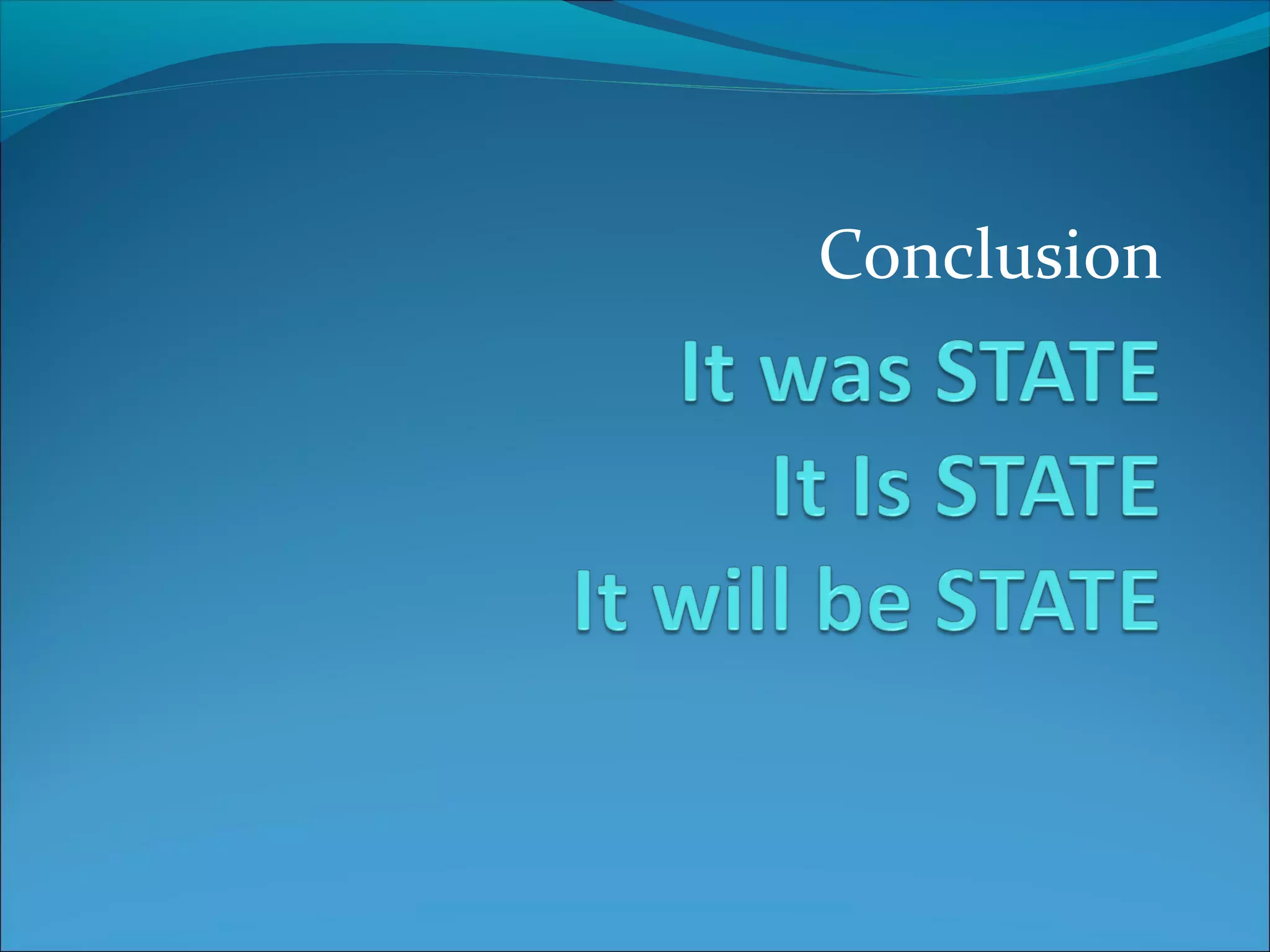
 We need STATE to
prevent US companies
from patenting Basmati
rice as “Texmati” and
patent use of turmeric for
cosmetics
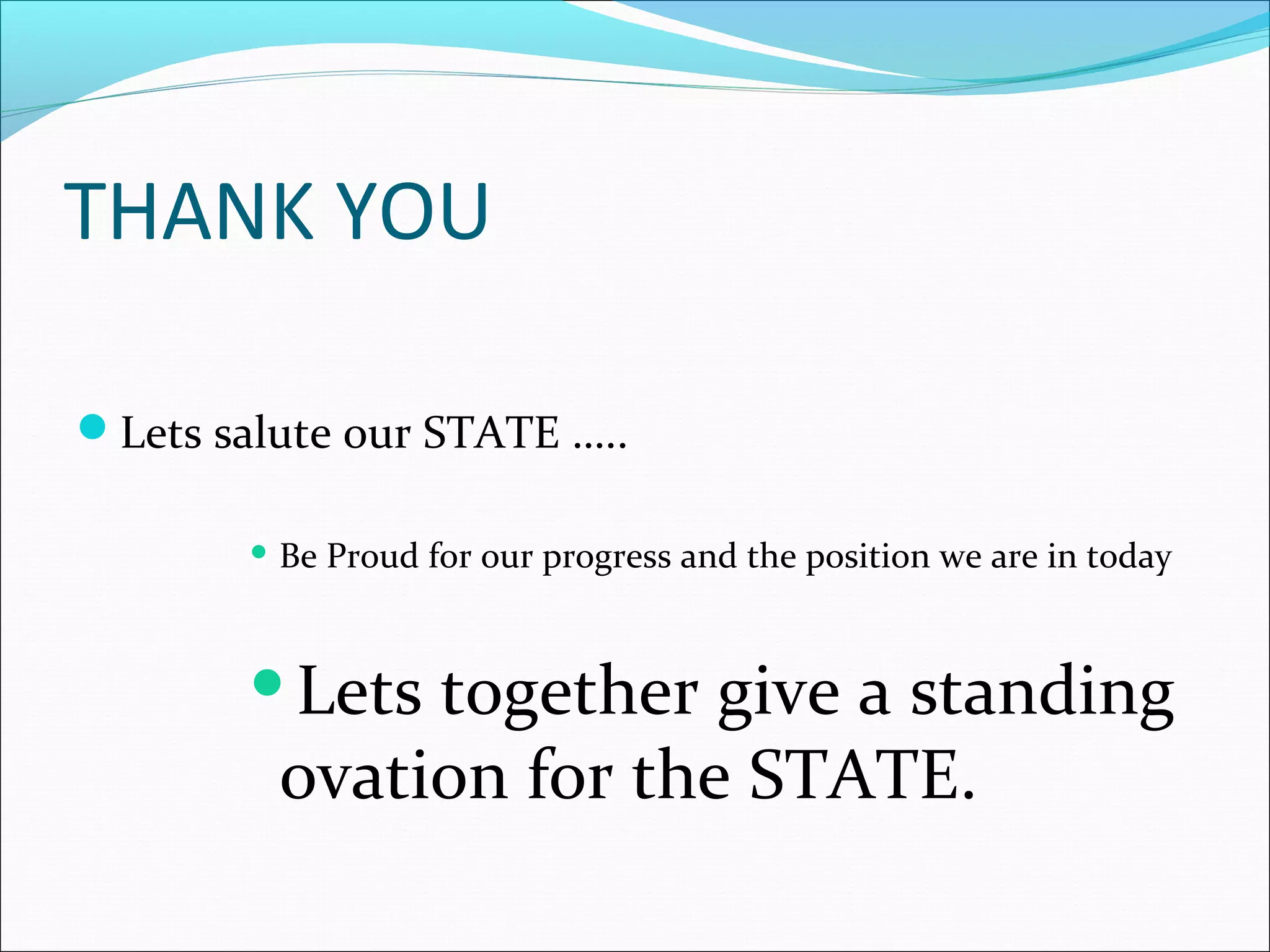
We need STATE to
prevent farmers suffering
from Genetically Modified
“Terminator Seeds”
Conclusion
THANK YOU
Lets salute our STATE …..
 Be Proud for our progress and the position we are in today
Lets together give a standing
ovation for the STATE.

Is It Market R State ?

  • 1.
  • 4.
    Phases of IndianEconomy Pre-colonial period British colonisation Post Independence in 1947 to 1991 After Liberalization, Privatisation & Globalisation
  • 5.
    Indian Economy BeforeBritish Rule India had the world's largest economy from the 1st to 11th century, and in the 18th century 32.9% share of world GDP in 1000 AD 28.9% share of world GDP in 1500 AD 24.4% share of world GDP in 1700 AD Source: The World Economy: Historical Statistics, Angus Maddison
  • 6.
  • 7.
  • 8.
    Economy during 16th Century MughalIndia was the second largest economy in the world. The GDP of India in this century was estimated at about 24.5% of the world economy, in comparison to China's 25% share.
  • 9.
    Economy during 17th Century Theannual revenue of Emperor Akbar's was £17.5 million Great Britain in 1800, which totalled £16 million. The GDP of Mughal India was estimated at about 22.6% of the world economy. Akbar's Royal Chamber Source image :http://www.flickr.com/photos/
  • 10.
    Economy during 18th Century Annualrevenue the Emperor Aurangzeb exceeded £100 million.  India emerged as the world's largest economy, followed by China and Western Europe Image Source : http://historicalsofindia.com/images/agra-fort-agra.jpg
  • 11.
  • 12.
    India become atarget market India's colonisation by the British coincided with major changes in the world economy. Industrialisation, and significant growth in production and trade. India had become market for superior finished European goods.
  • 13.
    Policies of theBritish Raj The economic policies of the British Raj effectively bankrupted India's large handicrafts industry . Caused a massive drain of India's resources.
  • 14.
    End of colonialrule India's share of the world income fell from 22.6% in 1700, comparable to Europe's share of 23.3%, to a low of 3.8% in 1952. Industrial development stalled Agriculture unable to feed a rapidly growing population, Lowest life expectancies, and low rates for literacy. Source : An estimate by Cambridge University historian Angus Maddison reveals
  • 15.
    Development for accomplishingtheir trade & exploit the Indian Market
  • 16.
  • 17.
  • 19.
  • 20.
    Independence to 1991Independenceto 1991 Influenced by the colonial experience which was seen by Indian leaders as exploitative in nature.  Policy tended towards protectionism. Many industries were nationalization in the mid-1950s. Licences, regulations and the accompanying red tape, commonly referred to as Licence Raj.
  • 21.
    Voice of theIndustry
  • 22.
    Excerpts from interviewof Rahul Bajaj to business line newspaper dated 15th August 2007 Japan, South Korea have protected and developed their industry. MNC’s were not allowed to invest in Japan, imports of vehicles was restricted Import duties and non-tariff barriers were extensive. Our policy during the 1950s and 1960s was correct.
  • 23.
    Excerpts from interviewof Rahul Bajaj Globally Competitive Risked becoming an economy which had companies with screwdriver operations. Such companies exist even today in some countries like Egypt and Pakistan. Many companies benefited as a result of this policy and used it to acquire size which after 1991 helped them become globally competitive.
  • 24.
    Transformation of IndianIndustry Restrictions on imports. Collaboration with their principals and entered the field of manufacturing. Transformation from trading to manufacturing .
  • 26.
    Green Revolution  Morethan 2300 high yielding, hybrid varieties of food grains have been developed.  World’s first hybrid cotton, pearl millet, the first hybrid sorghum, the first hybrid castor, the first hybrid mango are some of the amazing achievements.
  • 27.
    Between 1960 to2000 Production of rice increased from 35 to 89.5 million tonnes. Wheat production went up from 11 to 75 million tonnes Problem of plenty, with Government go downs overflowing with wheat stocks.
  • 28.
    Yellow Revolution Increase inproduction of different oilseeds. Imports of oilseeds eliminated . In 1993-94 foreign exchange worth Rs 24633.5 million was earned through the export of oilmeal and oilcake.
  • 29.
    Blue Revolution Enhanced fish productionfrom 0.75 million mt in 1951 to 5.4 million mt in 1997.
  • 31.
    Function of adevelopment bankFunction of a development bank To provide the financial infrastructure necessary for industry, the Government set up a number of development banks. • Industrial Finance Corporation of India (IFCI) (1948) • Industrial Credit and Investment Corporation of India (ICICI) (1955) • Industrial Development Bank of India (IDBI) (1964) • Industrial Reconstruction Corporation of India (1971) • Unit Trust of India (UTI) (1963) • Life Insurance Corporation of India (LIC) (1956).
  • 33.
    Training & DevelopmentSkillsTraining & Development Skills It also set up Indian Institutes of Technology, National Institute of Technology, Management Institutes and Engineering Colleges to train persons with higher management and technical skills. We have therefore had no shortage of skilled manpower to cater to the growing requirements of industry.
  • 34.
    BACKWARD AREA DEVELOPMENTBACKWARDAREA DEVELOPMENT Before Independence, industries were mostly located in and around port cities like Mumbai, Kolkata or Chennai. Baroda, Coimbatore, Bangalore, Pune, Hyderabad, Faridabad, Rajkot, and many others, grew up as new industrial cities. The Central & State Government selected a few backward districts and offered capital subsidy for industries set up in these areas.
  • 35.
    SCIENTIFIC RESEARCHSCIENTIFIC RESEARCH TheState set up 48 national laboratories to undertake applied research in chemistry, physics, electronics, botany, etc.,
  • 36.
    why India wentfor liberalisation?
  • 37.
    What happened in1991 India started having balance of payments problems since 1985, and by the end of 1990, it was in a serious economic crisis. The government was close to default, its central bank had refused new credit and foreign exchange reserves had reduced to the point that India could barely finance three weeks’ worth of imports.
  • 38.
    Metamorphosis controller to regulator Thecatalyst required to transform the economy through badly needed reforms to unshackle the economy. Controls started to be dismantled, tariffs, duties and taxes progressively lowered, state monopolies broken, the economy was opened to trade and investment,. private sector enterprise and competition were encouraged and globalisation was slowly embraced.
  • 39.
    TRAI Telecom regulatory Authority ofIndia Ministry of Communications & IT; Department of Telecommunications To make measures to facilitate competition and promote efficiency in the operation of telecommunication services
  • 40.
    SEBI SEBI – Securities& Exchange Board of India Ministry of Finance; Department of Economic Affairs To protect the interests of investors in securities
  • 41.
    IRDA Insurance Regulatory & Development Authority Ministryof Finance To protect of the interests of the policy holders
  • 42.
    Petroleum and NaturalGas Regulatory Board Ministry of Petroleum & Natural Gas To protect the interest of consumers by fostering fair trade and competition.
  • 43.
    Why market shouldnot be allowed to have complete freedom The motive of all business entities is to make profit and an unbridled economy will lead to a huge problem where people are treated as commodities. The companies will swindle the people The free market will not care for every section of the society.
  • 44.
    Why market shouldnot be allowed to have complete freedom ? No airline will fly to northeast if the ministry doen’t put a condition Will Fed Ex and Blue Dart deliver letter at Ladakh, Leh and tribal areas, you need India Post
  • 45.
    Why market shouldnot be allowed to have complete freedom ?  We need STATE to prevent US companies from patenting Basmati rice as “Texmati” and patent use of turmeric for cosmetics We need STATE to prevent farmers suffering from Genetically Modified “Terminator Seeds”
  • 46.
  • 47.
    THANK YOU Lets saluteour STATE …..  Be Proud for our progress and the position we are in today Lets together give a standing ovation for the STATE.