Equipment and
Facilities in Poultry
Production
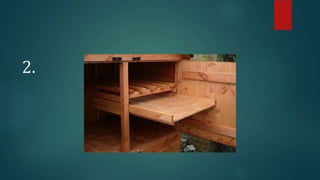
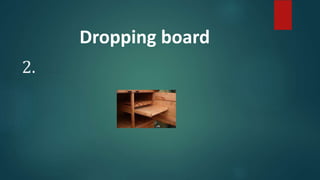
Dropping board- these fixtures should be
provided in the laying house to facilitate
collection of manure.
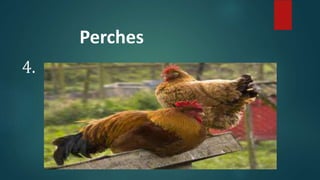
PERCHES- these are horizontal poles where birds can
sit and rest especially during night time. sufficient
perches should be constructed to prevent the birds
from crowding at night.
Nest - hens or layers lay their eggs in a nest. a
nest could be either open or close. the nest
should be built on a partition or end walls
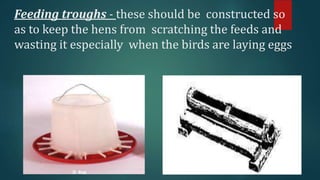
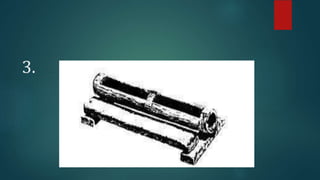
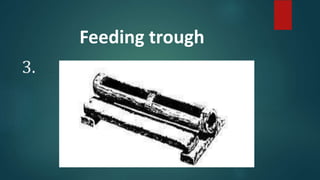
Feeding troughs - these should be constructed so
as to keep the hens from scratching the feeds and
wasting it especially when the birds are laying eggs
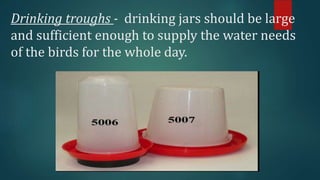
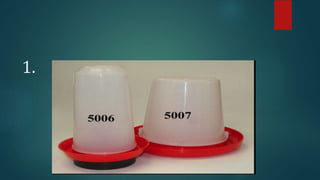
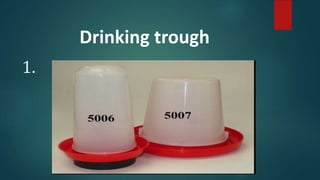
Drinking troughs - drinking jars should be large
and sufficient enough to supply the water needs
of the birds for the whole day.
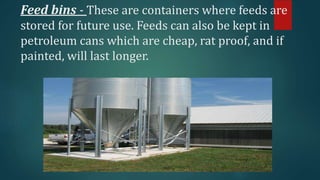
Feed bins - These are containers where feeds are
stored for future use. Feeds can also be kept in
petroleum cans which are cheap, rat proof, and if
painted, will last longer.
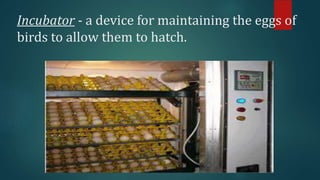
Incubator - a device for maintaining the eggs of
birds to allow them to hatch.
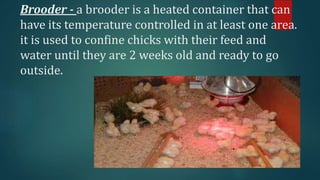
Brooder - a brooder is a heated container that can
have its temperature controlled in at least one area.
it is used to confine chicks with their feed and
water until they are 2 weeks old and ready to go
outside.
Equipment and Facilities
in Swine Production
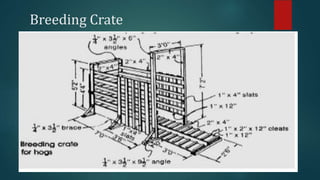
Breeding crate. this is used when breeding gilt
to a large boar or a large sow to a junior boar.
the construction of the breeding crate should be
durable enough to support the additional
weight of a boar. the gilt or sow in heat is
confined inside the crate before the boar is
allowed to enter for mating
Breeding Crate
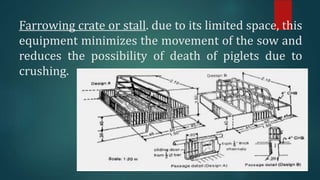
Farrowing crate or stall. due to its limited space, this
equipment minimizes the movement of the sow and
reduces the possibility of death of piglets due to
crushing.
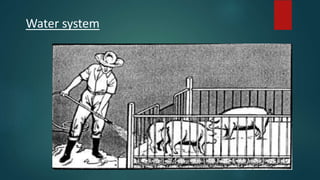
Water system. a pressurized water system with pipes
extending to the hog houses is the most desirable
type. a minimum pressure of five (5) kg per sq cm and
500 gallons an hour is necessary. this will eliminate
labor in fetching water
Water system
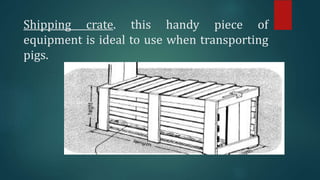
Shipping crate. this handy piece of
equipment is ideal to use when transporting
pigs.
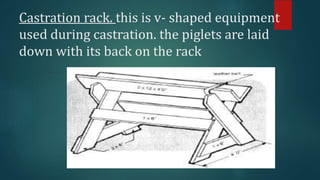
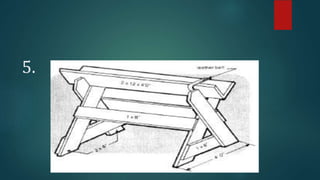
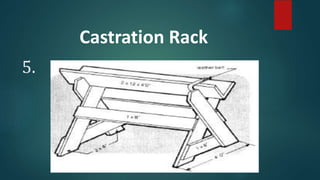
Castration rack. this is v- shaped equipment

used during castration. the piglets are laid
down with its back on the rack
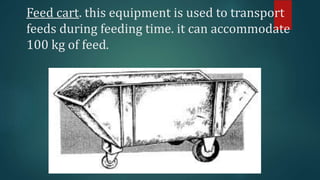
Feed cart. this equipment is used to transport
feeds during feeding time. it can accommodate
100 kg of feed.
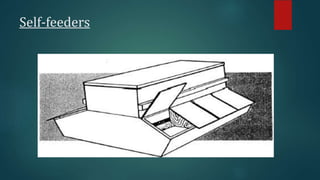
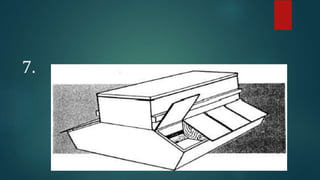
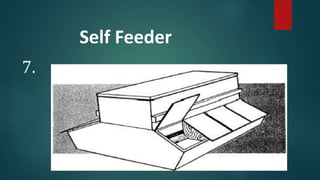
Self-feeders. Self feeders come in various types
but the built-in concrete feeder is preferred. A
self –feeder should be designed and
constructed so that feed wastage is minimized
and the rate of flow of the feed can be
regulated.
Self-feeders
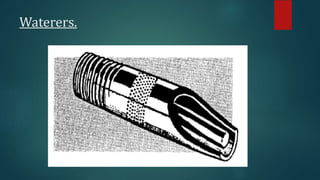
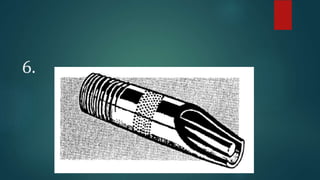
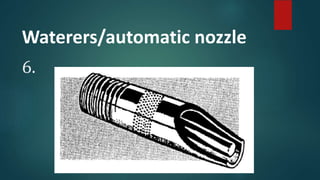
Waterers. Pigs will consume 2.0 to 2.5 pounds of water
per kg of dry feed. Automatic waterers are advantageous
.If the nozzle type waterers are used, they must be
placed 24 to 30 inches above the floor for sows and
growing pigs, one automatic cup or nozzle for each pig
pen is normally sufficient to supply the water needs of
the animals. Waterers should not be placed beside the
self-feeder or feeding trough. This practice will keep the
feeding area dry and clean.
Waterers.
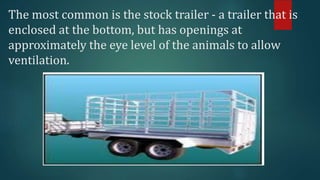
The most common is the stock trailer - a trailer that is
enclosed at the bottom, but has openings at
approximately the eye level of the animals to allow
ventilation.
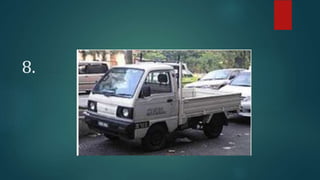
Pickup truck. It is a light motor vehicle with an open-top
rear cargo area (bed).
Get ¼ sheet of
paper……
Identify the following
pictures…..
1.
2.
3.
4.
5.
6.
7.
8.
9-10.
Bonus
Exchange with your
seatmates……
1.
Drinking trough
2.
Dropping board
3.
Feeding trough
4.
Perches
5.
Castration Rack
6.
Waterers/automatic nozzle
7.
Self Feeder
8.
Pick-up Truck
9-10.
Bonus

Poultry equipment and facilities

  • 1.
    Equipment and Facilities inPoultry Production
  • 2.
    Dropping board- thesefixtures should be provided in the laying house to facilitate collection of manure.
  • 3.
    PERCHES- these arehorizontal poles where birds can sit and rest especially during night time. sufficient perches should be constructed to prevent the birds from crowding at night.
  • 4.
    Nest - hensor layers lay their eggs in a nest. a nest could be either open or close. the nest should be built on a partition or end walls
  • 5.
    Feeding troughs -these should be constructed so as to keep the hens from scratching the feeds and wasting it especially when the birds are laying eggs
  • 6.
    Drinking troughs -drinking jars should be large and sufficient enough to supply the water needs of the birds for the whole day.
  • 7.
    Feed bins -These are containers where feeds are stored for future use. Feeds can also be kept in petroleum cans which are cheap, rat proof, and if painted, will last longer.
  • 8.
    Incubator - adevice for maintaining the eggs of birds to allow them to hatch.
  • 9.
    Brooder - abrooder is a heated container that can have its temperature controlled in at least one area. it is used to confine chicks with their feed and water until they are 2 weeks old and ready to go outside.
  • 10.
  • 11.
    Breeding crate. thisis used when breeding gilt to a large boar or a large sow to a junior boar. the construction of the breeding crate should be durable enough to support the additional weight of a boar. the gilt or sow in heat is confined inside the crate before the boar is allowed to enter for mating
  • 12.
  • 13.
    Farrowing crate orstall. due to its limited space, this equipment minimizes the movement of the sow and reduces the possibility of death of piglets due to crushing.
  • 14.
    Water system. apressurized water system with pipes extending to the hog houses is the most desirable type. a minimum pressure of five (5) kg per sq cm and 500 gallons an hour is necessary. this will eliminate labor in fetching water
  • 15.
  • 16.
    Shipping crate. thishandy piece of equipment is ideal to use when transporting pigs.
  • 17.
    Castration rack. thisis v- shaped equipment used during castration. the piglets are laid down with its back on the rack
  • 18.
    Feed cart. thisequipment is used to transport feeds during feeding time. it can accommodate 100 kg of feed.
  • 19.
    Self-feeders. Self feederscome in various types but the built-in concrete feeder is preferred. A self –feeder should be designed and constructed so that feed wastage is minimized and the rate of flow of the feed can be regulated.
  • 20.
  • 21.
    Waterers. Pigs willconsume 2.0 to 2.5 pounds of water per kg of dry feed. Automatic waterers are advantageous .If the nozzle type waterers are used, they must be placed 24 to 30 inches above the floor for sows and growing pigs, one automatic cup or nozzle for each pig pen is normally sufficient to supply the water needs of the animals. Waterers should not be placed beside the self-feeder or feeding trough. This practice will keep the feeding area dry and clean.
  • 22.
  • 23.
    The most commonis the stock trailer - a trailer that is enclosed at the bottom, but has openings at approximately the eye level of the animals to allow ventilation.
  • 24.
    Pickup truck. Itis a light motor vehicle with an open-top rear cargo area (bed).
  • 25.
    Get ¼ sheetof paper……
  • 26.
  • 27.
  • 28.
  • 29.
  • 30.
  • 31.
  • 32.
  • 33.
  • 34.
  • 35.
  • 36.
  • 37.
  • 38.
  • 39.
  • 40.
  • 41.
  • 42.
  • 43.
  • 44.
  • 45.