April 10, 2012
Defining Globalization
   Economic globalization is a “set of processes
  leading to the integration of economic activity in
  factor, intermediate, and final goods and services
  markets across geographical boundaries and the
  increased salience of cross-border value chains in
  international economic flows.”


         Source: Introduction to Aseem Prakash and Jeffrey Hart,
         eds., Globalization and Governance (Routledge:1999)
Value Chain
 Concept invented by Michael Porter
 A value chain is more comprehensive than a supply
 chain because it extends backward to R&D and
 innovation and forward to commercialization


                           Michael Porter
                           Harvard Business
                            School
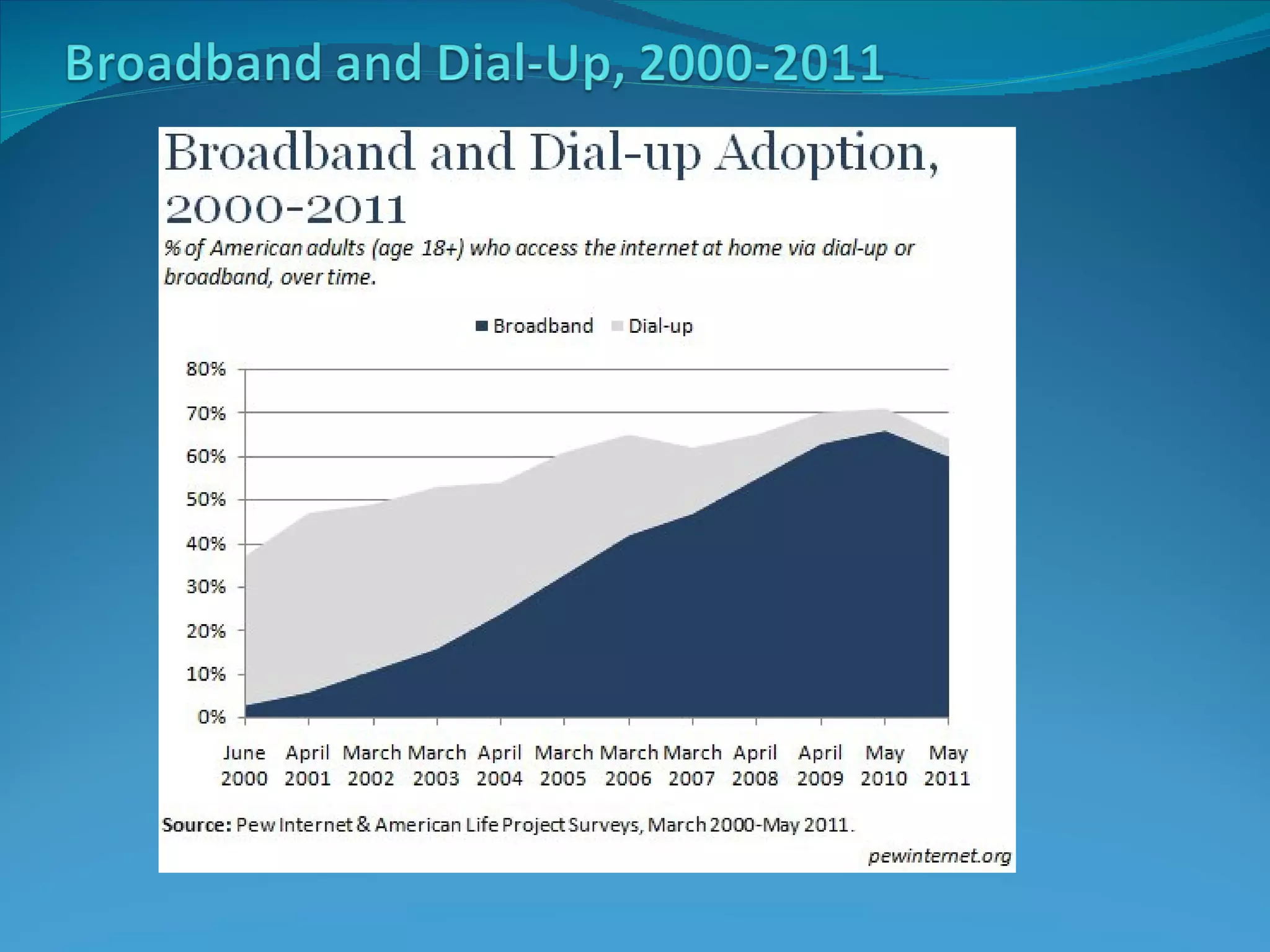
The Role of ICTs in Globalization
 Reduced time, cost, and effort to coordinate activities
  across great distances
 Similar to the impact of the introduction of new
  transportation and communications infrastructures in the
  past (telegraph, railroads, ocean shipping)
 BUT also continuing relevance of international regimes
  (e.g. WTO, World Bank, IMF, global monetary system)
Estimated users at the
end of 2011 = 2.2 billion
Broadband Penetration, June 2011
Other Ways of Thinking about
Globalization
 Deterritorialization, e.g. of
    diasporic communities
    MNCs
 Cultural Convergence
   leading toward a universal “sameness”
 Globalization as a Myth or Fad

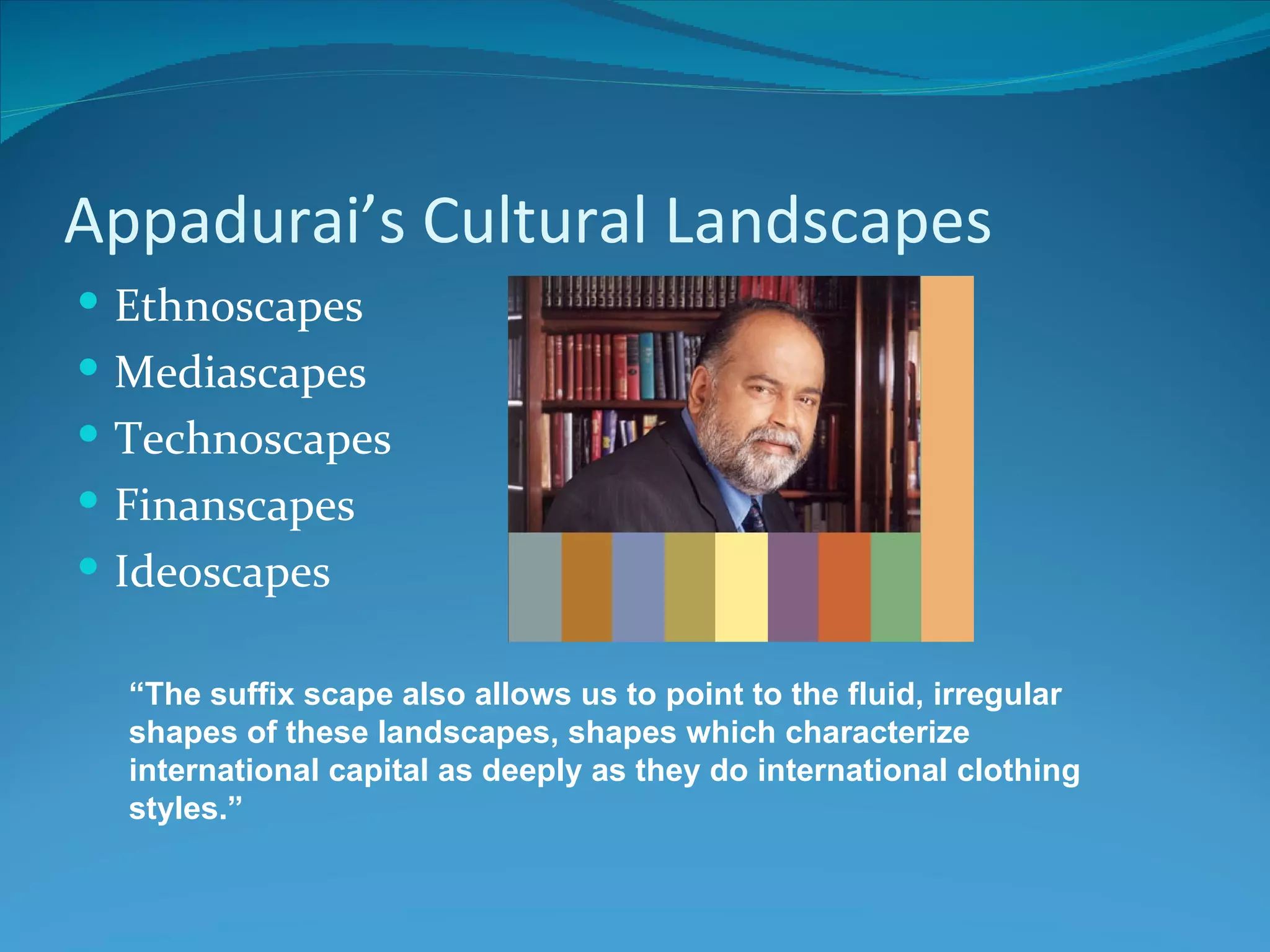
   See, for example, Arjun Appadurai, Modernity at Large.
Appadurai’s Cultural Landscapes
 Ethnoscapes
 Mediascapes
 Technoscapes
 Finanscapes
 Ideoscapes

  “The suffix scape also allows us to point to the fluid, irregular
  shapes of these landscapes, shapes which characterize
  international capital as deeply as they do international clothing
  styles.”
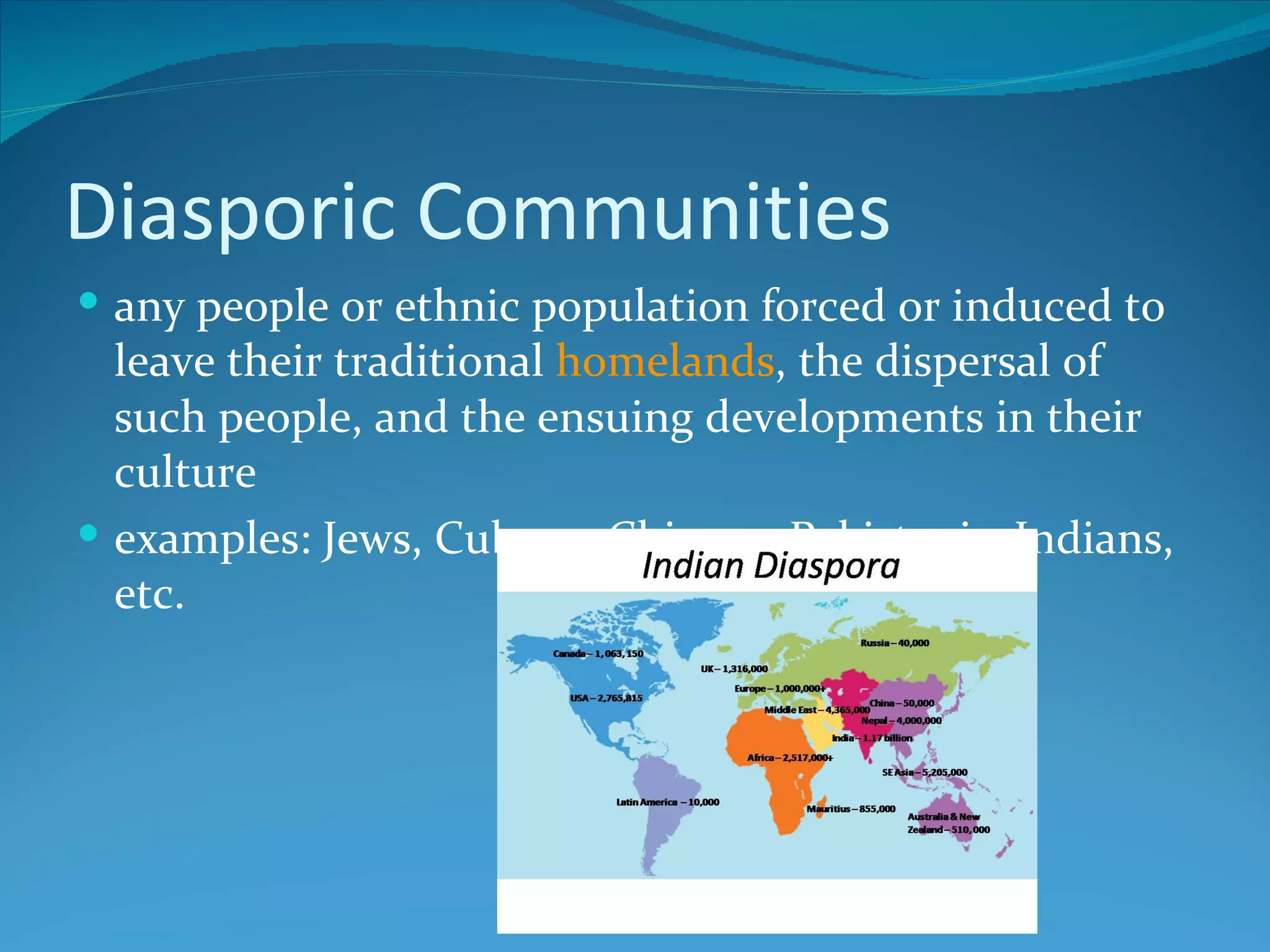
Diasporic Communities
 any people or ethnic population forced or induced to
  leave their traditional homelands, the dispersal of
  such people, and the ensuing developments in their
  culture
 examples: Jews, Cubans, Chinese, Pakistanis, Indians,
  etc.
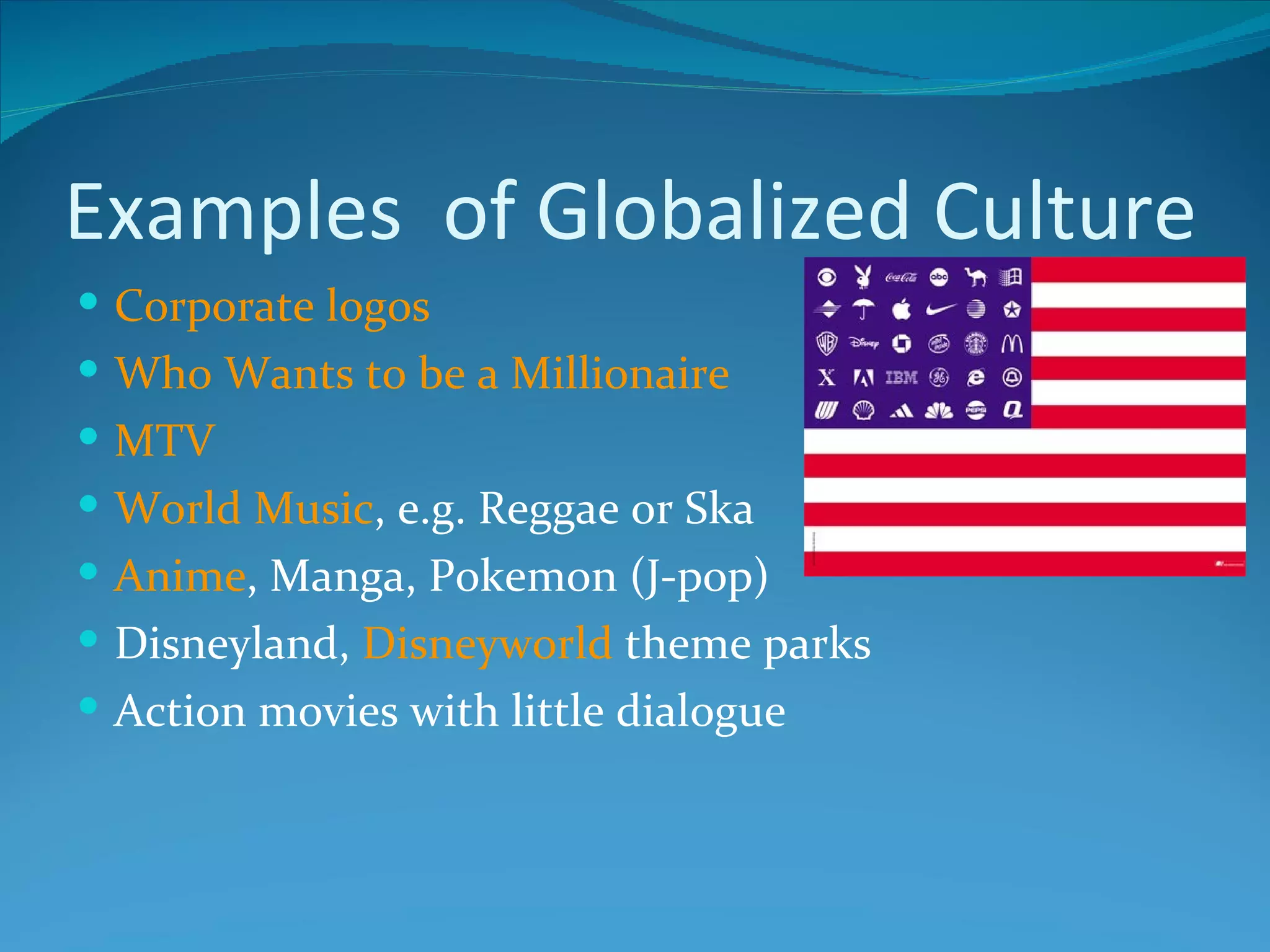
Examples of Globalized Culture
 Corporate logos
 Who Wants to be a Millionaire
 MTV
 World Music, e.g. Reggae or Ska
 Anime, Manga, Pokemon (J-pop)
 Disneyland, Disneyworld theme parks
 Action movies with little dialogue
Will Territorial Based Systems
Become Obsolete?
 No (short answer)
 Territorial-based systems may become less important
 relative to others but it is more likely that more
 complex relationships among governance systems at
 different levels of aggregation -- local, national,
 regional, etc. -- and nonterritorial governance systems
 will have to be established.
Coping Strategies: National
Governments
   Many coping strategies are still possible.
   Downsizing the state is not always desirable
    (e.g. the case of the formerly centrally
    planned economies).
   National governments are likely to play a
    role in reducing inequalities accentuated by
    globalization.
Theoretical approaches:
 Neoclassical (industrial policy is bad and
  counterproductive)
 Regulatory State (regulation necessary for markets to
  work properly, but industrial policy is still bad)
 Developmental State (industrial policy is useful for
  catching up)
 Competition State (industrial policy has to take
  globalization into account)
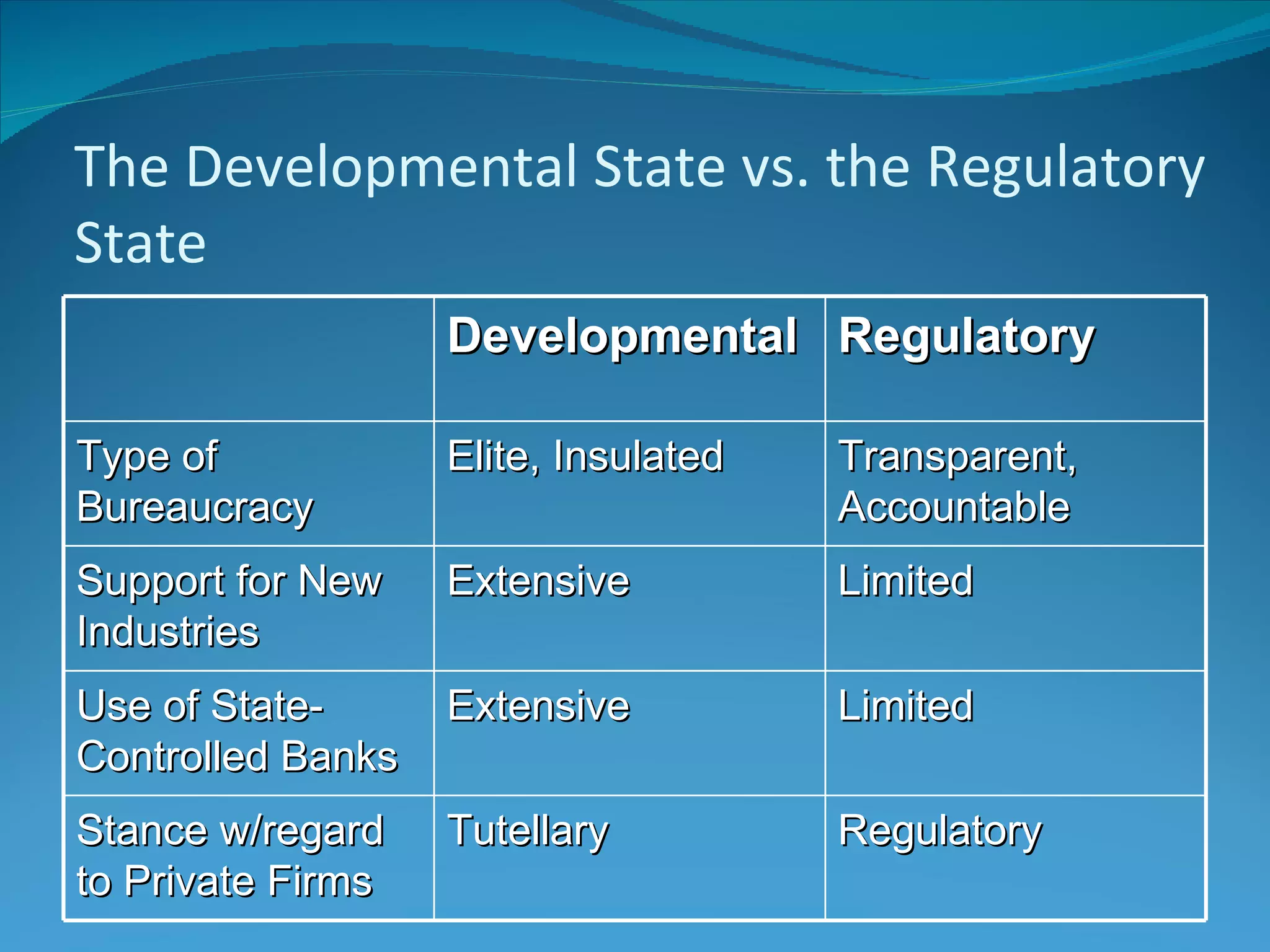
The Developmental State vs. the Regulatory
State
                   Developmental Regulatory

Type of            Elite, Insulated   Transparent,
Bureaucracy                           Accountable
Support for New    Extensive          Limited
Industries
Use of State-      Extensive          Limited
Controlled Banks
Stance w/regard    Tutellary          Regulatory
to Private Firms
Industrial Policies
 Includes a wide variety of policy instruments that are
 intended to advance the international
 competitiveness of “national champion” firms, such
 as:
   Investment subsidies
   Public R&D expenditures
   Science parks and free trade zones
   Export incentives
The Impact of Globalization on
National Economic Strategies
 Greater volatility in global financial markets
  requires changes in financial market regulations
  in all countries
 To remain internationally competitive, firms have
  adopted global production strategies
 Even regulatory states have to compete for inflows
  of foreign direct investment
 Developmental states cannot succeed with pure
  national champion strategies
Examples of Coping Strategies
 Promotion of inward FDI
 Raising the skills of the workers via education and
  training programs
 Scholarships and fellowships for college
 Increased spending on research and development
  (R&D)
 Regional development efforts
Example of GM in China
 2010 sales of 2.3 million vehicles in China
 World-class production facilities (joint venture with
  SAIC)
 Modified Buick as a chauffeur-driven luxury car
 Not competing with low-end national champions like
  Geely
Example of LG LCD Production
 Joint venture with Philips
 Only major competitors globally are
  Samsung and Sharp
 Production facilities use best materials
  and tools from global suppliers (e.g.
  Corning and Canon)
 Have to worry about China

Ipe19

  • 1.
  • 2.
    Defining Globalization Economic globalization is a “set of processes leading to the integration of economic activity in factor, intermediate, and final goods and services markets across geographical boundaries and the increased salience of cross-border value chains in international economic flows.” Source: Introduction to Aseem Prakash and Jeffrey Hart, eds., Globalization and Governance (Routledge:1999)
  • 3.
    Value Chain  Conceptinvented by Michael Porter  A value chain is more comprehensive than a supply chain because it extends backward to R&D and innovation and forward to commercialization Michael Porter Harvard Business School
  • 4.
    The Role ofICTs in Globalization  Reduced time, cost, and effort to coordinate activities across great distances  Similar to the impact of the introduction of new transportation and communications infrastructures in the past (telegraph, railroads, ocean shipping)  BUT also continuing relevance of international regimes (e.g. WTO, World Bank, IMF, global monetary system)
  • 5.
    Estimated users atthe end of 2011 = 2.2 billion
  • 8.
  • 11.
    Other Ways ofThinking about Globalization  Deterritorialization, e.g. of  diasporic communities  MNCs  Cultural Convergence  leading toward a universal “sameness”  Globalization as a Myth or Fad See, for example, Arjun Appadurai, Modernity at Large.
  • 12.
    Appadurai’s Cultural Landscapes Ethnoscapes  Mediascapes  Technoscapes  Finanscapes  Ideoscapes “The suffix scape also allows us to point to the fluid, irregular shapes of these landscapes, shapes which characterize international capital as deeply as they do international clothing styles.”
  • 13.
    Diasporic Communities  anypeople or ethnic population forced or induced to leave their traditional homelands, the dispersal of such people, and the ensuing developments in their culture  examples: Jews, Cubans, Chinese, Pakistanis, Indians, etc.
  • 14.
    Examples of GlobalizedCulture  Corporate logos  Who Wants to be a Millionaire  MTV  World Music, e.g. Reggae or Ska  Anime, Manga, Pokemon (J-pop)  Disneyland, Disneyworld theme parks  Action movies with little dialogue
  • 15.
    Will Territorial BasedSystems Become Obsolete?  No (short answer)  Territorial-based systems may become less important relative to others but it is more likely that more complex relationships among governance systems at different levels of aggregation -- local, national, regional, etc. -- and nonterritorial governance systems will have to be established.
  • 16.
    Coping Strategies: National Governments  Many coping strategies are still possible.  Downsizing the state is not always desirable (e.g. the case of the formerly centrally planned economies).  National governments are likely to play a role in reducing inequalities accentuated by globalization.
  • 17.
    Theoretical approaches:  Neoclassical(industrial policy is bad and counterproductive)  Regulatory State (regulation necessary for markets to work properly, but industrial policy is still bad)  Developmental State (industrial policy is useful for catching up)  Competition State (industrial policy has to take globalization into account)
  • 18.
    The Developmental Statevs. the Regulatory State Developmental Regulatory Type of Elite, Insulated Transparent, Bureaucracy Accountable Support for New Extensive Limited Industries Use of State- Extensive Limited Controlled Banks Stance w/regard Tutellary Regulatory to Private Firms
  • 19.
    Industrial Policies  Includesa wide variety of policy instruments that are intended to advance the international competitiveness of “national champion” firms, such as:  Investment subsidies  Public R&D expenditures  Science parks and free trade zones  Export incentives
  • 20.
    The Impact ofGlobalization on National Economic Strategies  Greater volatility in global financial markets requires changes in financial market regulations in all countries  To remain internationally competitive, firms have adopted global production strategies  Even regulatory states have to compete for inflows of foreign direct investment  Developmental states cannot succeed with pure national champion strategies
  • 21.
    Examples of CopingStrategies  Promotion of inward FDI  Raising the skills of the workers via education and training programs  Scholarships and fellowships for college  Increased spending on research and development (R&D)  Regional development efforts
  • 22.
    Example of GMin China  2010 sales of 2.3 million vehicles in China  World-class production facilities (joint venture with SAIC)  Modified Buick as a chauffeur-driven luxury car  Not competing with low-end national champions like Geely
  • 23.
    Example of LGLCD Production  Joint venture with Philips  Only major competitors globally are Samsung and Sharp  Production facilities use best materials and tools from global suppliers (e.g. Corning and Canon)  Have to worry about China