Use Your Mind to Change Your Brain Tools for Cultivating Happiness, Love and Wisdom Cassandra Vieten, PhD Director of Research, Institute of Noetic Sciences www.noetic.org Rick Hanson, Ph.D. The Wellspring Institute for Neuroscience and Contemplative Wisdom www.WiseBrain.org   www.RickHanson.net [email_address]
Topics Perspectives Self-directed  neuroplasticity Mindfulness Taking in the good Compassion
Perspectives
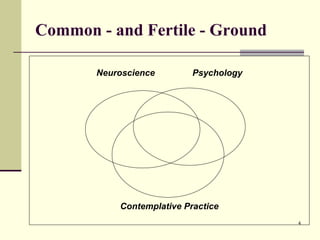
Common - and Fertile - Ground Neuroscience   Psychology Contemplative Practice
The history of science is rich in the example  of the fruitfulness of bringing  two sets of techniques, two sets of ideas,  developed in separate contexts  for the pursuit of new truth,  into touch with one another.   J. Robert Oppenheimer
Great questioning, great enlightenment;  little questioning, little enlightenment;  no questioning, no enlightenment. Dogen
We ask, “What is a thought?” We don't know,  yet we are thinking continually. Venerable Tenzin Palmo
Self-Directed Neuroplasticity
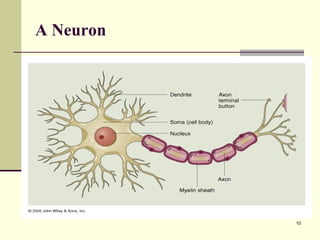
A Neuron
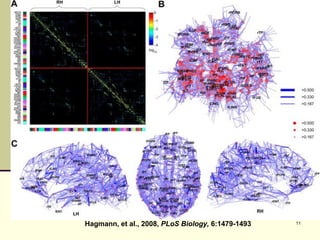
The Connectome - 2 Hagmann, et al., 2008,  PLoS Biology,  6:1479-1493
All cells have specialized functions. Brain cells have particular ways of processing information and communicating with each other. Nerve cells form complete circuits that carry and transform information.  Electrical signaling represents the language of mind, the means whereby nerve cells, the building blocks of the brain, communicate with one another over great distances. Nerve cells generate electricity as a means of producing messages.  All animals have some form of mental life that reflects the architecture of their nervous system.  Eric R. Kandel
The Mind/Brain System   “ Mind” = flow of information within the nervous system: Information is  represented  by the nervous system. Most mind is unconscious; awareness is an  aspect  of mind. The headquarters of the nervous system is the brain. In essence then, apart from hypothetical transcendental factors, the mind  is  what the brain  does .  Brain = necessary,  proximally  sufficient condition for mind:  The brain depends on the nervous system, other bodily systems, nature, and culture. As we’ll see, the brain also depends on the mind.  Therefore, the brain and mind are two aspects of one system, interdependently arising.
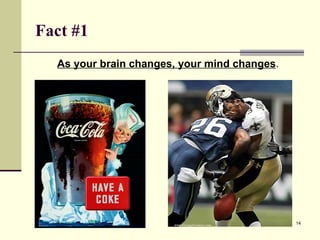
Fact #1   As your brain changes, your mind changes .
Ways That Brain Can Change Mind For better: Caffeine: more alertness; ibuprofen: less pain SSRIs: more serotonin in synapses Thicker insula: more self-awareness, empathy More left prefrontal activation: more happiness For worse: Injury; Phineas Gage Concussion, stroke, tumor, Alzheimer’s Intoxication; imbalances in neurotransmitters Cortisol-based shrinkage of hippocampus: less capacity for contextual memory
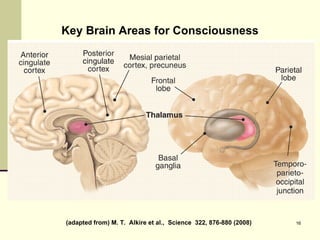
(adapted from) M. T.  Alkire et al.,  Science  322, 876-880 (2008)  Key Brain Areas for Consciousness
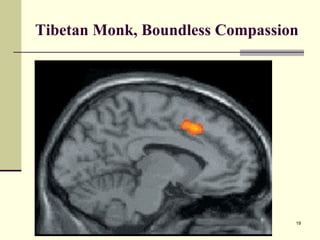
Fact #2   As your mind changes, your brain changes .  Immaterial mental activity maps to material neural activity. This produces  temporary  changes in your brain and  lasting  ones.  Temporary  changes include: Alterations in brainwaves (= changes in the firing patterns of synchronized neurons) Increased or decreased use of oxygen and glucose Ebbs and flows of neurochemicals
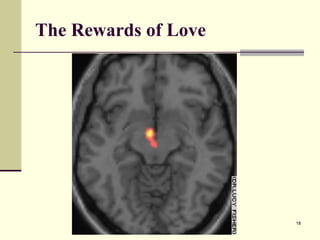
The Rewards of Love
Tibetan Monk, Boundless Compassion
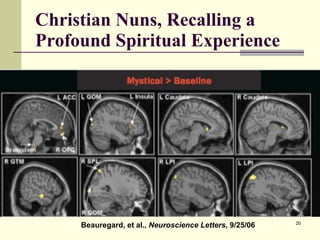
Christian Nuns, Recalling a Profound Spiritual Experience Beauregard, et al.,  Neuroscience Letters,  9/25/06
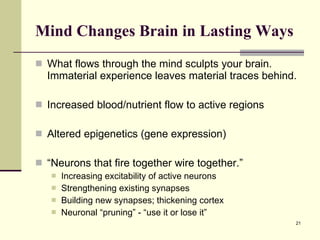
Mind Changes Brain in Lasting Ways   What flows through the mind sculpts your brain. Immaterial experience leaves material traces behind.  Increased blood/nutrient flow to active regions Altered epigenetics (gene expression) “ Neurons that fire together wire together.” Increasing excitability of active neurons Strengthening existing synapses Building new synapses; thickening cortex Neuronal “pruning” - “use it or lose it”
Honoring Experience   One’s experience  matters .  Both for how it feels in the moment and for the lasting residues it leaves behind, woven into the fabric of a person’s brain and being.
Fact #3 You can use your mind  to change your brain  to change your mind for the better . This is self-directed neuroplasticity. How to do this, in skillful ways?
The Power of Mindfulness
The Power of Mindfulness Moment to moment non-judgmental awareness of experience Bringing attention to what is typically automatic or unconscious Being rather than doing
The Power of Mindfulness Attention  is like a spotlight, illuminating what it rests upon. Because neuroplasticity is heightened for what’s in the field of focused awareness, attention is also like a vacuum cleaner, sucking its contents into the brain. Directing attention skillfully is therefore a fundamental way to shape the brain - and one’s life over time.
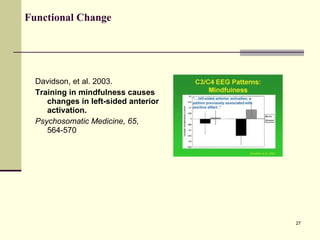
Functional  Change Davidson, et al. 2003.  Training in mindfulness causes changes in left-sided anterior activation. Psychosomatic Medicine, 65 , 564-570
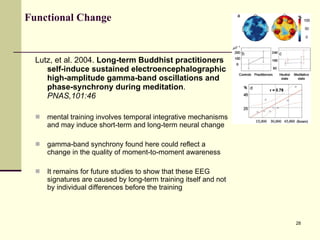
Functional  Change Lutz, et al. 2004.  Long-term Buddhist practitioners self-induce sustained electroencephalographic high-amplitude gamma-band oscillations and phase-synchrony during meditation .  PNAS,101:46 mental training involves temporal integrative mechanisms and may induce short-term and long-term neural change gamma-band synchrony found here could reflect a change in the quality of moment-to-moment awareness It remains for future studies to show that these EEG signatures are caused by long-term training itself and not by individual differences before the training
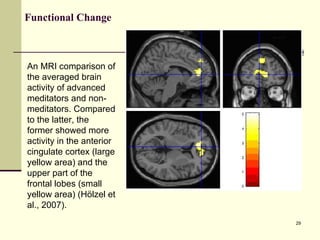
Functional  Change An MRI comparison of the averaged brain activity of advanced meditators and non-meditators. Compared to the latter, the former showed more activity in the anterior cingulate cortex (large yellow area) and the upper part of the frontal lobes (small yellow area) (Hölzel et al., 2007).
Structural Change Meditation can “sculpt the brain” (Jim Austen, 1998)
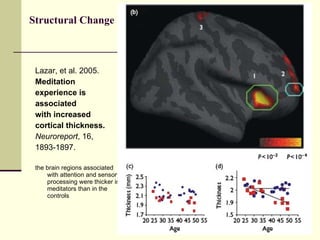
Structural Change Lazar, et al. 2005.  Meditation  experience is  associated with increased cortical thickness. Neuroreport , 16, 1893-1897. the brain regions associated with attention and sensory processing were thicker in meditators than in the controls
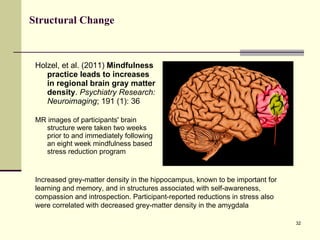
Structural Change Holzel, et al. (2011)  Mindfulness practice leads to increases in regional brain gray matter density .  Psychiatry Research: Neuroimaging ; 191 (1): 36 MR images of participants' brain structure were taken two weeks prior to and immediately following an eight week mindfulness based stress reduction program Increased grey-matter density in the hippocampus, known to be important for learning and memory, and in structures associated with self-awareness, compassion and introspection. Participant-reported reductions in stress also were correlated with decreased grey-matter density in the amygdala
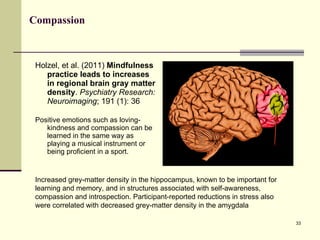
Compassion Holzel, et al. (2011)  Mindfulness practice leads to increases in regional brain gray matter density .  Psychiatry Research: Neuroimaging ; 191 (1): 36 Positive emotions such as loving-kindness and compassion can be learned in the same way as playing a musical instrument or being proficient in a sport. Increased grey-matter density in the hippocampus, known to be important for learning and memory, and in structures associated with self-awareness, compassion and introspection. Participant-reported reductions in stress also were correlated with decreased grey-matter density in the amygdala
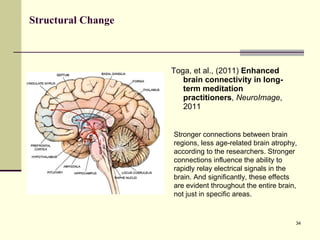
Structural Change Toga, et al., (2011)  Enhanced brain connectivity in long-term meditation practitioners ,  NeuroImage , 2011 Stronger connections between brain regions, less age-related brain atrophy, according to the researchers. Stronger connections influence the ability to rapidly relay electrical signals in the brain. And significantly, these effects are evident throughout the entire brain, not just in specific areas.
The education of attention  would be the education  par   excellence . William James
Know the mind. Shape the mind. Free the mind.
Taking in the Good
Just  having  positive experiences is not enough.  They pass through the brain like water through a sieve, while negative experiences are caught. We need to engage positive experiences actively to weave them into the brain.
How to Take in the Good 1. Look for positive  facts,  and let them become positive  experiences .  2. Savor the positive experience: Sustain it for 10-20-30 seconds. Feel it in your body and emotions.  Intensify it.  3. Sense and intend that the positive experience is  soaking  into your brain and body - registering deeply in emotional memory.
Kinds of “Good” to Take in Things are alright; nothing is wrong; there is no threat Feeling safe and strong The peace and relief of forgiveness The small pleasures of ordinary life The satisfaction of attaining goals or recognizing accomplishments - especially small, everyday ones Feeling grateful, contented, and fulfilled Being included, valued, liked, respected, loved by others The good feelings that come from being kind, fair, generous Feeling loving Recognizing your positive character traits Spiritual or existential realizations
Why It’s Good to Take in the Good Rights an unfair imbalance, given the negativity bias Gives oneself today the caring and support one should have received as a child, but perhaps didn’t get in full measure; an inherent, implicit benefit Increases positive resources, such as: Positive emotions Capacity to manage stress and negative experiences Can help bring in missing “supplies” (e.g., love, strength, worth) Can help painful, even traumatic experiences
If one going down into a river,  swollen and swiftly flowing,  is carried away by the current --  how can one help others across? The Buddha
The good life, as I conceive it, is a happy life.  I do not mean that if you are good you will be happy; I mean that if you are happy you will be good. Bertrand Russell
Benefits of Positive Emotions The benefits of positive emotions are a proxy for many of the benefits of TIG. Emotions organize the brain as a whole, so positive ones have far-reaching benefits, including: Promote exploratory, “approach” behaviors Lift mood; increase optimism, resilience Counteract trauma Strengthen immune and protect cardiovascular systems Overall: “broaden and build” Create positive cycles
Potential Synergies of TIG and MBSR Improved mindfulness from MBSR enhances TIG. TIG increases  general  resources for MBSR (e.g., heighten the PNS activation that promotes stable attention).  TIG increases  specific  factors of MBSR (e.g., self-acceptance, self-compassion, tolerance of negative affect) TIG heightens internalization of key MBSR experiences: The sense of stable mindfulness itself Confidence that awareness itself is not in pain, upset, etc. Presence of supportive others (e.g., MBSR groups) Peacefulness of realizing that experiences come and go
Compassion
Feeling Cared About As we evolved, we increasingly turned to and relied on others to feel safer and less threatened. Exile from the band was a death sentence in the Serengeti. Attachment: relying on the secure base The well-documented power of social support to buffer stress and aid recovery from painful experiences Methods: Recognize it’s kind to others to feel cared about yourself. Look for occasions to feel cared about and take them in. Deliberately bring to mind the experience of being cared about in challenging situations.  Be caring yourself.
The root of Buddhism is compassion, and the root of compassion is compassion for oneself.  Pema Chodren
Self-Compassion Compassion is the wish that a being not suffer, combined with sympathetic concern. Self-compassion simply applies that to oneself. It is not self-pity, complaining, or wallowing in pain. Studies show that self-compassion buffers stress and increases resilience and self-worth. Different than self-esteem. But self-compassion is hard for many people, due to feelings of unworthiness, self-criticism, or “internalized oppression.”  To encourage the neural substrates of self-compassion: Get the sense of being cared about by someone else. Bring to mind someone you naturally feel compassion for Sink into the experience of compassion in your body Then shift the compassion to yourself, perhaps with phrases like: “May I not suffer. May the pain of this moment pass.”
Self-Compassion Exercise based on Kristen Neff’s work
Three Doorways Give yourself kindness Remind yourself of your commonality with others Hold thoughts and emotions in mindful awareness
Beyond the Brain Gene expression – epigenetics Cell death and regeneration – telomeres Behavioral responses – neuroeconomics Spiritual well-being & awakening
Resources IONS Meditation Bibliography Rick’s website and book:  Buddha’s Brain Cassi’s books –  Living Deeply  and  Mindful Motherhood Rick and Cassi upcoming workshops
Great Books See  www.RickHanson.net  for other great books.  Austin, J. 2009.  Selfless Insight . MIT Press. Begley. S. 2007.  Train Your Mind, Change Your Brain . Ballantine. Carter, C. 2010.  Raising Happiness . Ballantine.  Hanson, R. (with R. Mendius). 2009.  Buddha’s Brain: The Practical Neuroscience of Happiness, Love, and Wisdom . New Harbinger. Johnson, S. 2005.  Mind Wide Open . Scribner.  Keltner, D. 2009.  Born to Be Good . Norton.  Kornfield, J. 2009.  The Wise Heart . Bantam.  LeDoux, J. 2003.  Synaptic Self . Penguin. Linden, D. 2008.  The Accidental Mind . Belknap.  Sapolsky, R. 2004.  Why Zebras Don’t Get Ulcers . Holt. Siegel, D. 2007.  The Mindful Brain . Norton. Thompson, E. 2007.  Mind in Life . Belknap.

Use Your Mind to Change Your Brain: Tools for Cultivating Happiness, Love and Wisdom - Rick Hanson, PhD

  • 1.
    Use Your Mindto Change Your Brain Tools for Cultivating Happiness, Love and Wisdom Cassandra Vieten, PhD Director of Research, Institute of Noetic Sciences www.noetic.org Rick Hanson, Ph.D. The Wellspring Institute for Neuroscience and Contemplative Wisdom www.WiseBrain.org www.RickHanson.net [email_address]
  • 2.
    Topics Perspectives Self-directed neuroplasticity Mindfulness Taking in the good Compassion
  • 3.
  • 4.
    Common - andFertile - Ground Neuroscience Psychology Contemplative Practice
  • 5.
    The history ofscience is rich in the example of the fruitfulness of bringing two sets of techniques, two sets of ideas, developed in separate contexts for the pursuit of new truth, into touch with one another. J. Robert Oppenheimer
  • 6.
    Great questioning, greatenlightenment; little questioning, little enlightenment; no questioning, no enlightenment. Dogen
  • 7.
    We ask, “Whatis a thought?” We don't know, yet we are thinking continually. Venerable Tenzin Palmo
  • 8.
  • 10.
  • 11.
    The Connectome -2 Hagmann, et al., 2008, PLoS Biology, 6:1479-1493
  • 12.
    All cells havespecialized functions. Brain cells have particular ways of processing information and communicating with each other. Nerve cells form complete circuits that carry and transform information. Electrical signaling represents the language of mind, the means whereby nerve cells, the building blocks of the brain, communicate with one another over great distances. Nerve cells generate electricity as a means of producing messages. All animals have some form of mental life that reflects the architecture of their nervous system. Eric R. Kandel
  • 13.
    The Mind/Brain System “ Mind” = flow of information within the nervous system: Information is represented by the nervous system. Most mind is unconscious; awareness is an aspect of mind. The headquarters of the nervous system is the brain. In essence then, apart from hypothetical transcendental factors, the mind is what the brain does . Brain = necessary, proximally sufficient condition for mind: The brain depends on the nervous system, other bodily systems, nature, and culture. As we’ll see, the brain also depends on the mind. Therefore, the brain and mind are two aspects of one system, interdependently arising.
  • 14.
    Fact #1 As your brain changes, your mind changes .
  • 15.
    Ways That BrainCan Change Mind For better: Caffeine: more alertness; ibuprofen: less pain SSRIs: more serotonin in synapses Thicker insula: more self-awareness, empathy More left prefrontal activation: more happiness For worse: Injury; Phineas Gage Concussion, stroke, tumor, Alzheimer’s Intoxication; imbalances in neurotransmitters Cortisol-based shrinkage of hippocampus: less capacity for contextual memory
  • 16.
    (adapted from) M.T. Alkire et al., Science 322, 876-880 (2008) Key Brain Areas for Consciousness
  • 17.
    Fact #2 As your mind changes, your brain changes . Immaterial mental activity maps to material neural activity. This produces temporary changes in your brain and lasting ones. Temporary changes include: Alterations in brainwaves (= changes in the firing patterns of synchronized neurons) Increased or decreased use of oxygen and glucose Ebbs and flows of neurochemicals
  • 18.
  • 19.
  • 20.
    Christian Nuns, Recallinga Profound Spiritual Experience Beauregard, et al., Neuroscience Letters, 9/25/06
  • 21.
    Mind Changes Brainin Lasting Ways What flows through the mind sculpts your brain. Immaterial experience leaves material traces behind. Increased blood/nutrient flow to active regions Altered epigenetics (gene expression) “ Neurons that fire together wire together.” Increasing excitability of active neurons Strengthening existing synapses Building new synapses; thickening cortex Neuronal “pruning” - “use it or lose it”
  • 22.
    Honoring Experience One’s experience matters . Both for how it feels in the moment and for the lasting residues it leaves behind, woven into the fabric of a person’s brain and being.
  • 23.
    Fact #3 Youcan use your mind to change your brain to change your mind for the better . This is self-directed neuroplasticity. How to do this, in skillful ways?
  • 24.
    The Power ofMindfulness
  • 25.
    The Power ofMindfulness Moment to moment non-judgmental awareness of experience Bringing attention to what is typically automatic or unconscious Being rather than doing
  • 26.
    The Power ofMindfulness Attention is like a spotlight, illuminating what it rests upon. Because neuroplasticity is heightened for what’s in the field of focused awareness, attention is also like a vacuum cleaner, sucking its contents into the brain. Directing attention skillfully is therefore a fundamental way to shape the brain - and one’s life over time.
  • 27.
    Functional ChangeDavidson, et al. 2003. Training in mindfulness causes changes in left-sided anterior activation. Psychosomatic Medicine, 65 , 564-570
  • 28.
    Functional ChangeLutz, et al. 2004. Long-term Buddhist practitioners self-induce sustained electroencephalographic high-amplitude gamma-band oscillations and phase-synchrony during meditation . PNAS,101:46 mental training involves temporal integrative mechanisms and may induce short-term and long-term neural change gamma-band synchrony found here could reflect a change in the quality of moment-to-moment awareness It remains for future studies to show that these EEG signatures are caused by long-term training itself and not by individual differences before the training
  • 29.
    Functional ChangeAn MRI comparison of the averaged brain activity of advanced meditators and non-meditators. Compared to the latter, the former showed more activity in the anterior cingulate cortex (large yellow area) and the upper part of the frontal lobes (small yellow area) (Hölzel et al., 2007).
  • 30.
    Structural Change Meditationcan “sculpt the brain” (Jim Austen, 1998)
  • 31.
    Structural Change Lazar,et al. 2005. Meditation experience is associated with increased cortical thickness. Neuroreport , 16, 1893-1897. the brain regions associated with attention and sensory processing were thicker in meditators than in the controls
  • 32.
    Structural Change Holzel,et al. (2011) Mindfulness practice leads to increases in regional brain gray matter density . Psychiatry Research: Neuroimaging ; 191 (1): 36 MR images of participants' brain structure were taken two weeks prior to and immediately following an eight week mindfulness based stress reduction program Increased grey-matter density in the hippocampus, known to be important for learning and memory, and in structures associated with self-awareness, compassion and introspection. Participant-reported reductions in stress also were correlated with decreased grey-matter density in the amygdala
  • 33.
    Compassion Holzel, etal. (2011) Mindfulness practice leads to increases in regional brain gray matter density . Psychiatry Research: Neuroimaging ; 191 (1): 36 Positive emotions such as loving-kindness and compassion can be learned in the same way as playing a musical instrument or being proficient in a sport. Increased grey-matter density in the hippocampus, known to be important for learning and memory, and in structures associated with self-awareness, compassion and introspection. Participant-reported reductions in stress also were correlated with decreased grey-matter density in the amygdala
  • 34.
    Structural Change Toga,et al., (2011) Enhanced brain connectivity in long-term meditation practitioners , NeuroImage , 2011 Stronger connections between brain regions, less age-related brain atrophy, according to the researchers. Stronger connections influence the ability to rapidly relay electrical signals in the brain. And significantly, these effects are evident throughout the entire brain, not just in specific areas.
  • 35.
    The education ofattention would be the education par excellence . William James
  • 36.
    Know the mind.Shape the mind. Free the mind.
  • 37.
  • 38.
    Just having positive experiences is not enough. They pass through the brain like water through a sieve, while negative experiences are caught. We need to engage positive experiences actively to weave them into the brain.
  • 39.
    How to Takein the Good 1. Look for positive facts, and let them become positive experiences . 2. Savor the positive experience: Sustain it for 10-20-30 seconds. Feel it in your body and emotions. Intensify it. 3. Sense and intend that the positive experience is soaking into your brain and body - registering deeply in emotional memory.
  • 40.
    Kinds of “Good”to Take in Things are alright; nothing is wrong; there is no threat Feeling safe and strong The peace and relief of forgiveness The small pleasures of ordinary life The satisfaction of attaining goals or recognizing accomplishments - especially small, everyday ones Feeling grateful, contented, and fulfilled Being included, valued, liked, respected, loved by others The good feelings that come from being kind, fair, generous Feeling loving Recognizing your positive character traits Spiritual or existential realizations
  • 41.
    Why It’s Goodto Take in the Good Rights an unfair imbalance, given the negativity bias Gives oneself today the caring and support one should have received as a child, but perhaps didn’t get in full measure; an inherent, implicit benefit Increases positive resources, such as: Positive emotions Capacity to manage stress and negative experiences Can help bring in missing “supplies” (e.g., love, strength, worth) Can help painful, even traumatic experiences
  • 42.
    If one goingdown into a river, swollen and swiftly flowing, is carried away by the current -- how can one help others across? The Buddha
  • 43.
    The good life,as I conceive it, is a happy life. I do not mean that if you are good you will be happy; I mean that if you are happy you will be good. Bertrand Russell
  • 44.
    Benefits of PositiveEmotions The benefits of positive emotions are a proxy for many of the benefits of TIG. Emotions organize the brain as a whole, so positive ones have far-reaching benefits, including: Promote exploratory, “approach” behaviors Lift mood; increase optimism, resilience Counteract trauma Strengthen immune and protect cardiovascular systems Overall: “broaden and build” Create positive cycles
  • 45.
    Potential Synergies ofTIG and MBSR Improved mindfulness from MBSR enhances TIG. TIG increases general resources for MBSR (e.g., heighten the PNS activation that promotes stable attention). TIG increases specific factors of MBSR (e.g., self-acceptance, self-compassion, tolerance of negative affect) TIG heightens internalization of key MBSR experiences: The sense of stable mindfulness itself Confidence that awareness itself is not in pain, upset, etc. Presence of supportive others (e.g., MBSR groups) Peacefulness of realizing that experiences come and go
  • 46.
  • 47.
    Feeling Cared AboutAs we evolved, we increasingly turned to and relied on others to feel safer and less threatened. Exile from the band was a death sentence in the Serengeti. Attachment: relying on the secure base The well-documented power of social support to buffer stress and aid recovery from painful experiences Methods: Recognize it’s kind to others to feel cared about yourself. Look for occasions to feel cared about and take them in. Deliberately bring to mind the experience of being cared about in challenging situations. Be caring yourself.
  • 48.
    The root ofBuddhism is compassion, and the root of compassion is compassion for oneself. Pema Chodren
  • 49.
    Self-Compassion Compassion isthe wish that a being not suffer, combined with sympathetic concern. Self-compassion simply applies that to oneself. It is not self-pity, complaining, or wallowing in pain. Studies show that self-compassion buffers stress and increases resilience and self-worth. Different than self-esteem. But self-compassion is hard for many people, due to feelings of unworthiness, self-criticism, or “internalized oppression.” To encourage the neural substrates of self-compassion: Get the sense of being cared about by someone else. Bring to mind someone you naturally feel compassion for Sink into the experience of compassion in your body Then shift the compassion to yourself, perhaps with phrases like: “May I not suffer. May the pain of this moment pass.”
  • 50.
    Self-Compassion Exercise basedon Kristen Neff’s work
  • 51.
    Three Doorways Giveyourself kindness Remind yourself of your commonality with others Hold thoughts and emotions in mindful awareness
  • 52.
    Beyond the BrainGene expression – epigenetics Cell death and regeneration – telomeres Behavioral responses – neuroeconomics Spiritual well-being & awakening
  • 53.
    Resources IONS MeditationBibliography Rick’s website and book: Buddha’s Brain Cassi’s books – Living Deeply and Mindful Motherhood Rick and Cassi upcoming workshops
  • 54.
    Great Books See www.RickHanson.net for other great books. Austin, J. 2009. Selfless Insight . MIT Press. Begley. S. 2007. Train Your Mind, Change Your Brain . Ballantine. Carter, C. 2010. Raising Happiness . Ballantine. Hanson, R. (with R. Mendius). 2009. Buddha’s Brain: The Practical Neuroscience of Happiness, Love, and Wisdom . New Harbinger. Johnson, S. 2005. Mind Wide Open . Scribner. Keltner, D. 2009. Born to Be Good . Norton. Kornfield, J. 2009. The Wise Heart . Bantam. LeDoux, J. 2003. Synaptic Self . Penguin. Linden, D. 2008. The Accidental Mind . Belknap. Sapolsky, R. 2004. Why Zebras Don’t Get Ulcers . Holt. Siegel, D. 2007. The Mindful Brain . Norton. Thompson, E. 2007. Mind in Life . Belknap.