INTRUGUMENTARY
SYSTEM
What is INTRUGUMENTARY
SYSTEM?
The integumentary system is the organ system
that protects the body from various kinds of damage,
such as loss of water or abrasion from outside.
The system comprises the skin and its appendages
(including hair, scales, feathers, hooves, and nails).
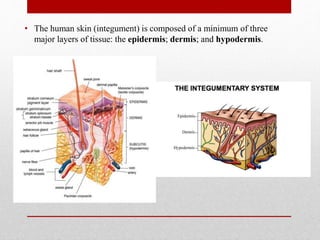
• The human skin (integument) is composed of a minimum of three
major layers of tissue: the epidermis; dermis; and hypodermis.
Epidermis
• This is the top layer of skin made up of epithelial cells. It does
not contain blood vessels. Its main function is protection,
absorption of nutrients, and homeostasis.
• The major cell of the epidermis is the keratinocyte, which
produces keratin. Keratin is a fibrous protein that aids in
protection.
• The protein keratin stiffens epidermal tissue to
form fingernails. Nails grow from a thin area called the nail
matrix; growth of nails is 1 mm per week on average.
The lunula is the crescent-shape area at the base of the nail,
this is a lighter color as it mixes with the matrix cells.
Dermis
• The dermis is the middle layer of skin, composed of dense
irregular connective tissue and areolar connective tissue such
as collagen with elastin arranged in a diffusely bundled and
woven pattern.
• The dermis has two layers. One is the papillary layer which is
the superficial layer and consists of the areolar connective
tissue. The other is the reticular layer which is the deep layer
of the dermis and consists of the dense irregular connective
tissue.
• These layers serve to give elasticity to the integument,
allowing stretching and conferring flexibility, while also
resisting distortions, wrinkling, and sagging
Hypodermis
• The hypodermis is the innermost and thickest layer of the skin.
It invaginates into the dermis and is attached to the latter,
immediately above it, by collagen and elastin fibres. It is
essentially composed of a type of cell specialised in
accumulating and storing fats, known as adipocytes.
Functions
-The integumentary system has multiple roles inhomeostasis. All body systems work
in an interconnected manner to maintain the internal conditions essential to the
function of the body. The skin has an important job of protecting the body and acts as
the body’s first line of defense against infection, temperature change, and other
challenges to homeostasis. Functions include:
• Protect the body’s internal living tissues and organs
• Protect against invasion by infectious organisms
• Protect the body from dehydration
• Protect the body against abrupt changes in temperature, maintain homeostasis
• Help excrete waste materials through perspiration
• Act as a receptor for touch, pressure, pain, heat, and cold (see Somatosensory
system)
• Protect the body against sunburns by secreting melanin
• Generate vitamin D through exposure to ultraviolet light
• Store water, fat, glucose, vitamin d
• Maintenance of the body form
• Formation of new cells from stratum germanium to repair minor injuries
• Protect from UV rays.
Clinical significance
-Possible diseases and injuries to the human integumentary
system include:
• Rash
• Blister
• Athlete's foot
• Infection
• Sunburn
• Skin cancer
• Albinism
• Acne
• Herpes
• Rubella
• Cancer
• Psoriasis
• Rabies
Reference:
• https://en.wikipedia.org/wiki/Integumentary_syst
em
• https://cyhsanatomy2.wikispaces.com/INTEGU
MENTARY+SYSTEM

Intrugumentary system

  • 1.
  • 2.
    What is INTRUGUMENTARY SYSTEM? Theintegumentary system is the organ system that protects the body from various kinds of damage, such as loss of water or abrasion from outside. The system comprises the skin and its appendages (including hair, scales, feathers, hooves, and nails).
  • 3.
    • The humanskin (integument) is composed of a minimum of three major layers of tissue: the epidermis; dermis; and hypodermis.
  • 4.
    Epidermis • This isthe top layer of skin made up of epithelial cells. It does not contain blood vessels. Its main function is protection, absorption of nutrients, and homeostasis. • The major cell of the epidermis is the keratinocyte, which produces keratin. Keratin is a fibrous protein that aids in protection. • The protein keratin stiffens epidermal tissue to form fingernails. Nails grow from a thin area called the nail matrix; growth of nails is 1 mm per week on average. The lunula is the crescent-shape area at the base of the nail, this is a lighter color as it mixes with the matrix cells.
  • 5.
    Dermis • The dermisis the middle layer of skin, composed of dense irregular connective tissue and areolar connective tissue such as collagen with elastin arranged in a diffusely bundled and woven pattern. • The dermis has two layers. One is the papillary layer which is the superficial layer and consists of the areolar connective tissue. The other is the reticular layer which is the deep layer of the dermis and consists of the dense irregular connective tissue. • These layers serve to give elasticity to the integument, allowing stretching and conferring flexibility, while also resisting distortions, wrinkling, and sagging
  • 6.
    Hypodermis • The hypodermisis the innermost and thickest layer of the skin. It invaginates into the dermis and is attached to the latter, immediately above it, by collagen and elastin fibres. It is essentially composed of a type of cell specialised in accumulating and storing fats, known as adipocytes.
  • 7.
    Functions -The integumentary systemhas multiple roles inhomeostasis. All body systems work in an interconnected manner to maintain the internal conditions essential to the function of the body. The skin has an important job of protecting the body and acts as the body’s first line of defense against infection, temperature change, and other challenges to homeostasis. Functions include: • Protect the body’s internal living tissues and organs • Protect against invasion by infectious organisms • Protect the body from dehydration • Protect the body against abrupt changes in temperature, maintain homeostasis • Help excrete waste materials through perspiration • Act as a receptor for touch, pressure, pain, heat, and cold (see Somatosensory system) • Protect the body against sunburns by secreting melanin • Generate vitamin D through exposure to ultraviolet light • Store water, fat, glucose, vitamin d • Maintenance of the body form • Formation of new cells from stratum germanium to repair minor injuries • Protect from UV rays.
  • 8.
    Clinical significance -Possible diseasesand injuries to the human integumentary system include: • Rash • Blister • Athlete's foot • Infection • Sunburn • Skin cancer • Albinism • Acne • Herpes • Rubella • Cancer • Psoriasis • Rabies
  • 9.