Ronan O’Brien
Overview
History
Types of Tourettes Syndrome
Characteristics
Genetics
Management & treatment
The Future
 Complex syndrome
 Movement disorder
 Neurological condition
 Neuro-psychatric condition
 Characterised by multiple motor tics and at least
one vocal
 Males affected 3 times more than females
 Broad spectrum of mild to severe involuntary and
chronic tics
 Tics usually start in childhood
 No cure
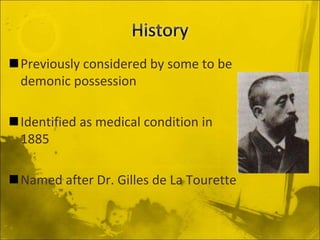
Previously considered by some to be
demonic possession
Identified as medical condition in
1885
Named after Dr. Gilles de La Tourette
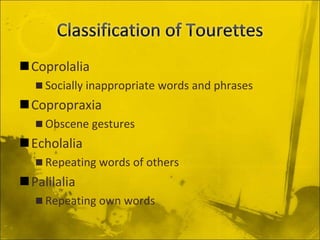
Coprolalia
 Socially inappropriate words and phrases
Copropraxia
 Obscene gestures
Echolalia
 Repeating words of others
Palilalia
 Repeating own words
Video
Interview with someone with Tourette
syndrome..
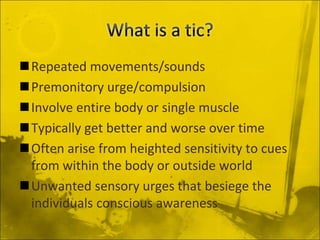
Repeated movements/sounds
Premonitory urge/compulsion
Involve entire body or single muscle
Typically get better and worse over time
Often arise from heighted sensitivity to cues
from within the body or outside world
Unwanted sensory urges that besiege the
individuals conscious awareness
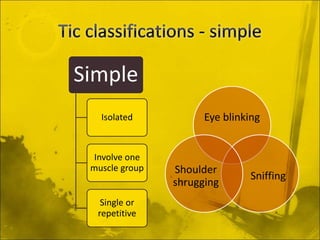
Simple
Isolated
Involve one
muscle group
Single or
repetitive
Eye blinking
Sniffing
Shoulder
shrugging
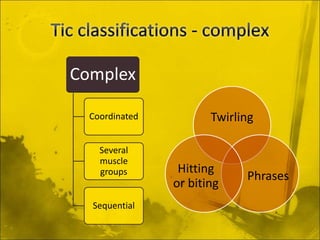
Complex
Coordinated
Several
muscle
groups
Sequential
Twirling
Phrases
Hitting
or biting
 “A feeling of pressure – a need that’s very hard to
describe, like something itches deep inside you –
but no one place you can describe; and the only
way you can relieve this need is by tics. It’s like
your brain itches, or your insides are being
tickled..”
 “The first one seems irresistible, calling for an
almost inevitable response.. the end of the tic is
the “feel” that is frequently accompanied by a
fleeting and incomplete sense of relief.”
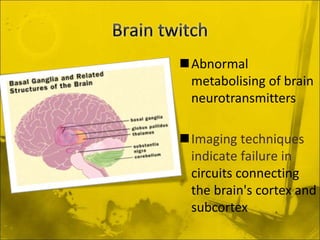
Abnormal
metabolising of brain
neurotransmitters
Imaging techniques
indicate failure in
circuits connecting
the brain's cortex and
subcortex
Prevalence not well established but research
suggests about 1/100 in population
Several genes thought responsible
Abnormalities in SLITRK1 implicated
50% chance of passing on genes to children
Not everyone who has TS has the genetic form
Early treatment
 Tics can provoke ridicule and rejection
Psychotherapy
 Cognitive Behavioural Therapy
Deep Brain Stimulation surgery
Tranquilisers
 Counteract dopamine over-activity by blocking
dopamine receptors
 Botulinum toxin (BTX) - injected into the muscles
Antidepressants
 Enhance serotonin's neurotransmission activities
Allergies / sensitivies
 Food, chemical and environmental allergens
 Allergens may trigger a release of serotonin which
causes decreased blood flow in the basal ganglia
Nicotine and cannabis to inhibit the release of
dopamine.
Magnesium deficiency
Feldenkrais method / osteopathy / massage
Meditation / relaxation techniques
The Future
Tourettes has come out of the dark ages
Increase in multi-displinary research
 Neuroimmunology
 Neurophysiology
 Epidemiology
Neuropathology
 Post-mortem brains from TS patients
New technologies / medication
 Neuro-imaging techniques
The End
Thank you 

Introduction to Tourette Syndrome

  • 1.
  • 2.
    Overview History Types of TourettesSyndrome Characteristics Genetics Management & treatment The Future
  • 3.
     Complex syndrome Movement disorder  Neurological condition  Neuro-psychatric condition  Characterised by multiple motor tics and at least one vocal  Males affected 3 times more than females  Broad spectrum of mild to severe involuntary and chronic tics  Tics usually start in childhood  No cure
  • 4.
    Previously considered bysome to be demonic possession Identified as medical condition in 1885 Named after Dr. Gilles de La Tourette
  • 5.
    Coprolalia  Socially inappropriatewords and phrases Copropraxia  Obscene gestures Echolalia  Repeating words of others Palilalia  Repeating own words
  • 6.
    Video Interview with someonewith Tourette syndrome..
  • 7.
    Repeated movements/sounds Premonitory urge/compulsion Involveentire body or single muscle Typically get better and worse over time Often arise from heighted sensitivity to cues from within the body or outside world Unwanted sensory urges that besiege the individuals conscious awareness
  • 8.
    Simple Isolated Involve one muscle group Singleor repetitive Eye blinking Sniffing Shoulder shrugging
  • 9.
  • 10.
     “A feelingof pressure – a need that’s very hard to describe, like something itches deep inside you – but no one place you can describe; and the only way you can relieve this need is by tics. It’s like your brain itches, or your insides are being tickled..”  “The first one seems irresistible, calling for an almost inevitable response.. the end of the tic is the “feel” that is frequently accompanied by a fleeting and incomplete sense of relief.”
  • 11.
    Abnormal metabolising of brain neurotransmitters Imagingtechniques indicate failure in circuits connecting the brain's cortex and subcortex
  • 12.
    Prevalence not wellestablished but research suggests about 1/100 in population Several genes thought responsible Abnormalities in SLITRK1 implicated 50% chance of passing on genes to children Not everyone who has TS has the genetic form
  • 13.
    Early treatment  Ticscan provoke ridicule and rejection Psychotherapy  Cognitive Behavioural Therapy Deep Brain Stimulation surgery Tranquilisers  Counteract dopamine over-activity by blocking dopamine receptors  Botulinum toxin (BTX) - injected into the muscles Antidepressants  Enhance serotonin's neurotransmission activities
  • 14.
    Allergies / sensitivies Food, chemical and environmental allergens  Allergens may trigger a release of serotonin which causes decreased blood flow in the basal ganglia Nicotine and cannabis to inhibit the release of dopamine. Magnesium deficiency Feldenkrais method / osteopathy / massage Meditation / relaxation techniques
  • 15.
    The Future Tourettes hascome out of the dark ages Increase in multi-displinary research  Neuroimmunology  Neurophysiology  Epidemiology Neuropathology  Post-mortem brains from TS patients New technologies / medication  Neuro-imaging techniques
  • 16.