University of Chakwal, Pakistan
DEPARTMENT OF ZOOLOGY
PRESENTED BY: MAHEEN ZAHRA
ROLL NO: 20M-UOC/ZOL-52
BS ZOOLOGY
SESSION 2020-2024
SUBJECT: ICHTHYOLOGY
SUBMITTED TO: DR SYEDA NADIAAHMAD
TOPIC: TILAPIA
• Introduction
• Life History
• Taxonomic Position
• Morphology
• Geographic distribution
• Sex Identification and Control
• Growth of Tilapia
• Nutrition, Temperature and pH
• Spawning, parental care and
Migration
• Importance
• Specialty and Recent Researches
• References
Table of Contents
• The name ‘tilapia’ was derived from the African Bushman word meaning ‘fish’.
• Tilapias are a diverse group of over 70 species of freshwater fish, belonging to
the Cichlidae family.
• Originating in Africa and the Middle East, it was brought for economic
purposes to Asia, southern Europe, and the United States during the 20th
century.
Introduction
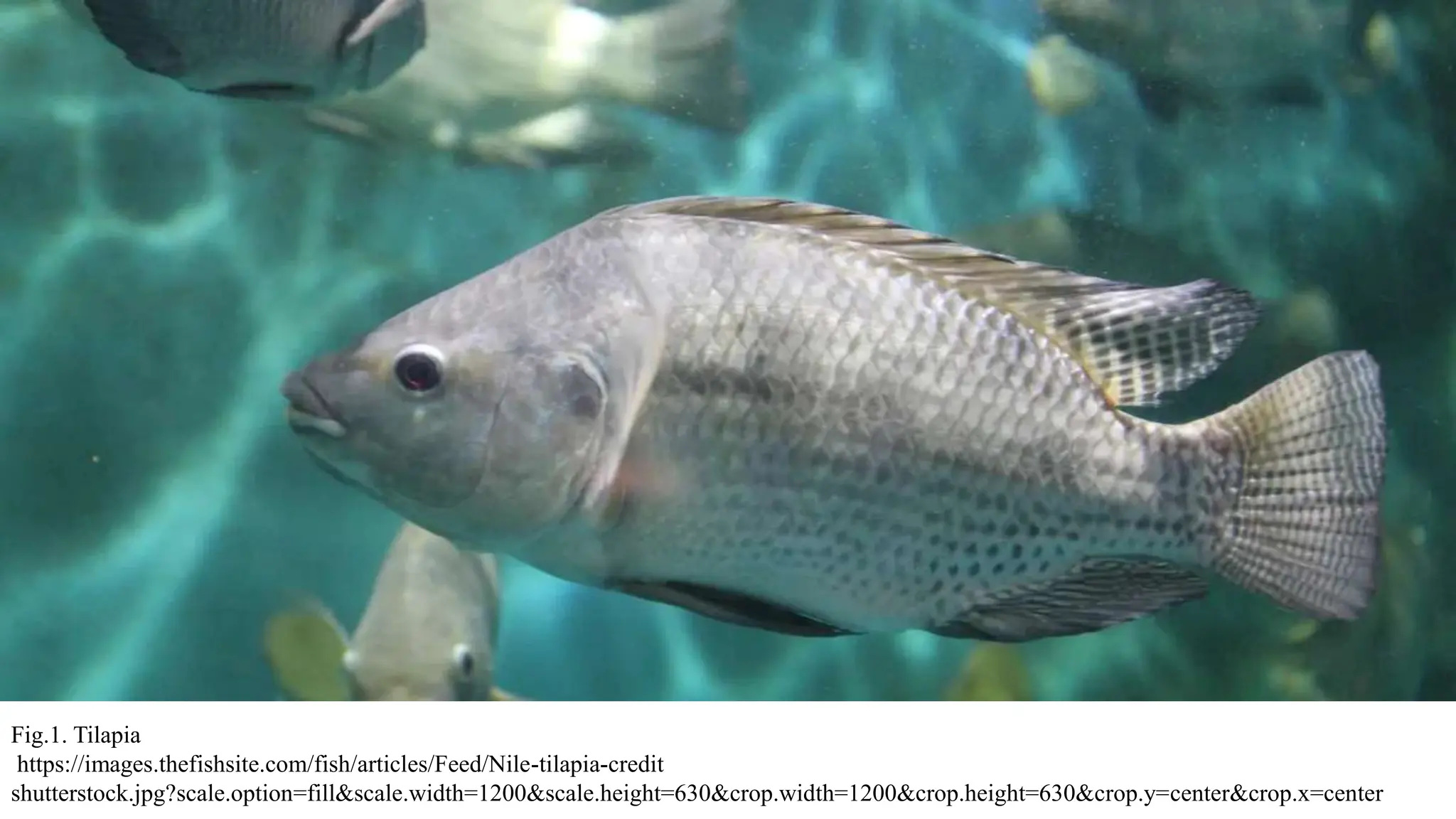
Fig.1. Tilapia
https://images.thefishsite.com/fish/articles/Feed/Nile-tilapia-credit
shutterstock.jpg?scale.option=fill&scale.width=1200&scale.height=630&crop.width=1200&crop.height=630&crop.y=center&crop.x=center
• Most tilapia species are herbivores.
• Tilapia are mouth brooders.
• Tilapia's fast growth, tolerance to environmental conditions, stress, disease
resistance, captivity, short generation time, low trophic levels, and acceptance of
artificial feeds make them ideal for developing countries(El-Sayed, 2006).
Life History
Taxonomic Position of the Tilapias
 The taxonomic classification of tilapia is still confusing and the subject of
continuous changes.
 The first classification includes five genera: Tilapia, and four others
 The second classification includes only one genus, Tilapia, with seven
subgenera or species(Charo-karisa, 2024).
Kingdom: Animalia
Phylum: Chordata
Class: Osteichthyes
Subclass: Actinopterygii
Order: Percomorpha
Suborder: Percoidea
Family: Cichlidae
• Tilapia is originally from the Middle East and Africa
• They are distributed throughout Africa, except the northern Atlas Mountains and
South-West Africa.
• They are found in South and Central America, southern India, Pakiatan, Sri Lanka,
and Israel (El-Sayed, 2006).
Geographic distribution
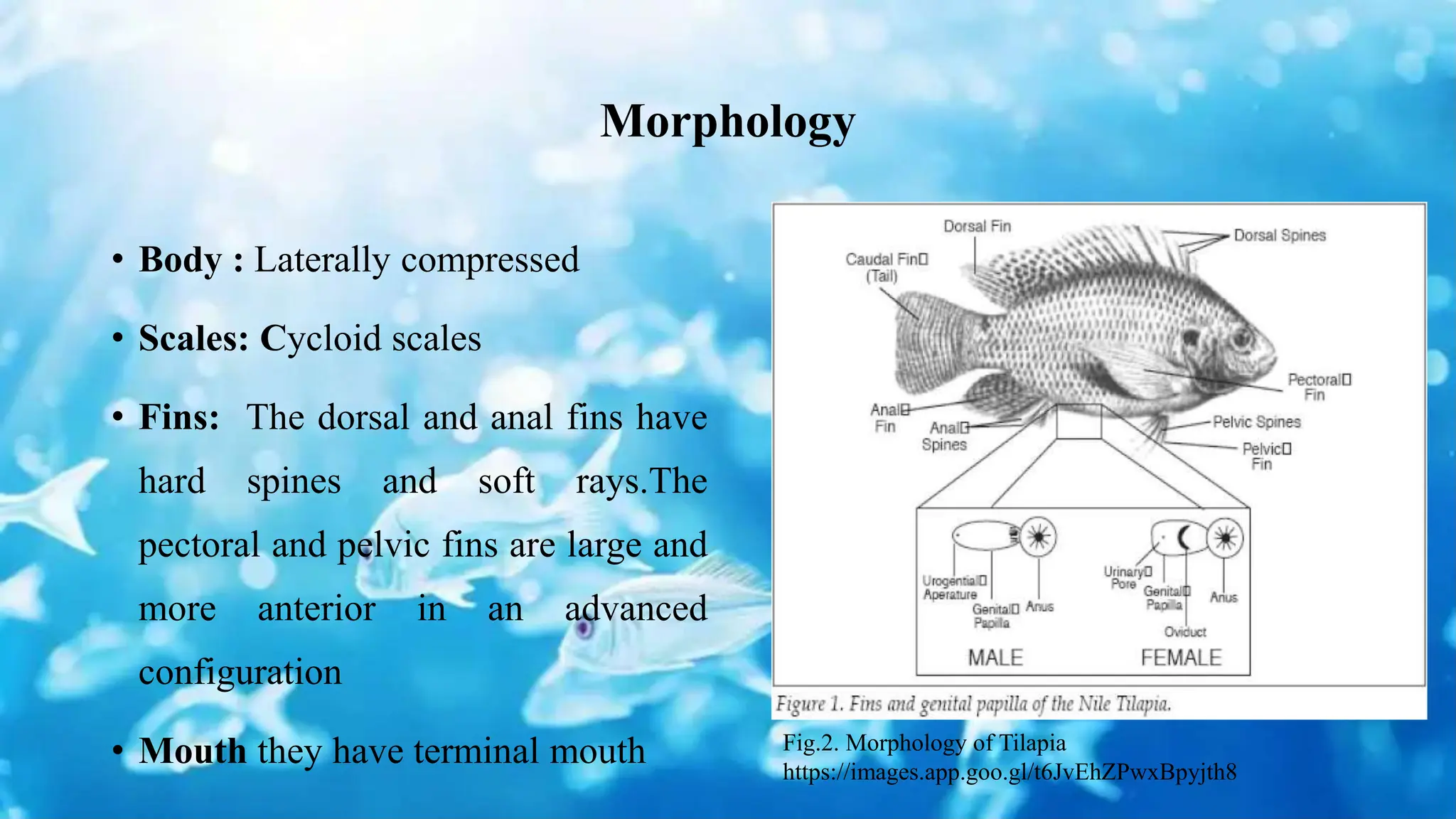
Morphology
• Body : Laterally compressed
• Scales: Cycloid scales
• Fins: The dorsal and anal fins have
hard spines and soft rays.The
pectoral and pelvic fins are large and
more anterior in an advanced
configuration
• Mouth they have terminal mouth Fig.2. Morphology of Tilapia
https://images.app.goo.gl/t6JvEhZPwxBpyjth8
• Sex identification of tilapia is relatively simple.
• The male has two openings just in front of anal fin.
• The large opening is the anus and the smaller opening at the tip is the urogenital
pore.
• The female has three openings.
• the anus, the genital pore, and the urinary pore. The genital papilla is usually
smaller in the female.
Sex Identification
• Tilapias are the second most farmed fish worldwide.
• Excessive reproduction during growout has been a major problem in tilapia
aquaculture and has been addressed by culturing monosex (all-male)
populations.
• The best way to obtain monosex populations is through control of sexual
development and produce genetically male tilapia(Chen, 2018).
Sex Control and Manipulation in Tilapia
• Growth of tilapia is dependent on stocking rates, food supply and
water quality.
• Males grow faster by 10-20 % than females.
• The growth of tilapia is directly related to the amount of food
available in the pond (Costa et al., 2022).
Growth of Tilapia
• Tilapia consumes a wide range of natural organisms as food, some species are
herbivorous and some are omnevorious.
• Tilapias are often considered filter feeders because they can feed on plankton.
• However, tilapia fish do not do this, like real filter feeder fish, using gill spines
such as silver carp.
• The protein required for maximum growth in tilapia (Forouhar Vajargah, 2021).
Nutritional behavior and nutritional needs
• The normal temperature for
reproduction and growth of fish
ranges from 20-35 oC(costa et al.,
2022).
• Tilapia can also tolerate temperatures
as low as 7-10 o C, but only for a
short time (Sifa et al., 2002).
• The pH value is below 6.5 or above
9-9.5 for a long period of time, the
rate of reproduction and growth of
aquatic organisms will decrease.
• Optimal growth and development it
is in the range of 7-8 (Costa et al.,
2022).
Temprature Tolerance and pH Value
• Mouth-brooding: The Nile Tilapia is a mouth-brooder.
• Nest building: The male establishes a territory and builds a round nest in the pond
bottom.
• Fertilization: The female enters the nest and lay the eggs. The eggs are fertilized
by male.
• Incubation: The female then collects and incubates the eggs in her mouth.
• Hatching: Eggs hatch in about five to seven days (Brummett, 1995).
Spawning and parental care
• Tilapia, although not highly migratory, some species exhibit migration movements,
driven by two main factors.
• Food availability: Tilapia may move to areas with more abundant food sources, such as
algae blooms or areas with higher plankton concentration.
• Reproduction:The Nile tilapia (Oreochromis niloticus), to move between freshwater and
brackish water environments.
• Fish species immigrate to new habitats, but factors triggering migration remain unclear
(Louca, 2009).
Migration
Importance
Excellent For Commercial Aquaculture
It Is Not an Allergic Fish
Tilapia Need Very Low Salt Levels
• Tilapias, herbivores or detritivores,
play a crucial role in the ecosystem
by circulating nutrient metabolites
for primary production and
supporting piscivores like fish,
reptiles, birds, and mammals (Lowe-
McConnell, 2000).
• Tilapia, a cichlid fish, is the second
most farmed fish globally.
• It has become the most domesticated
farmed fish, playing a key role in
rural aquaculture and improving the
welfare of poor farmers (Fitzsimmons
et al., 2011).
Ecological And Economic Importance
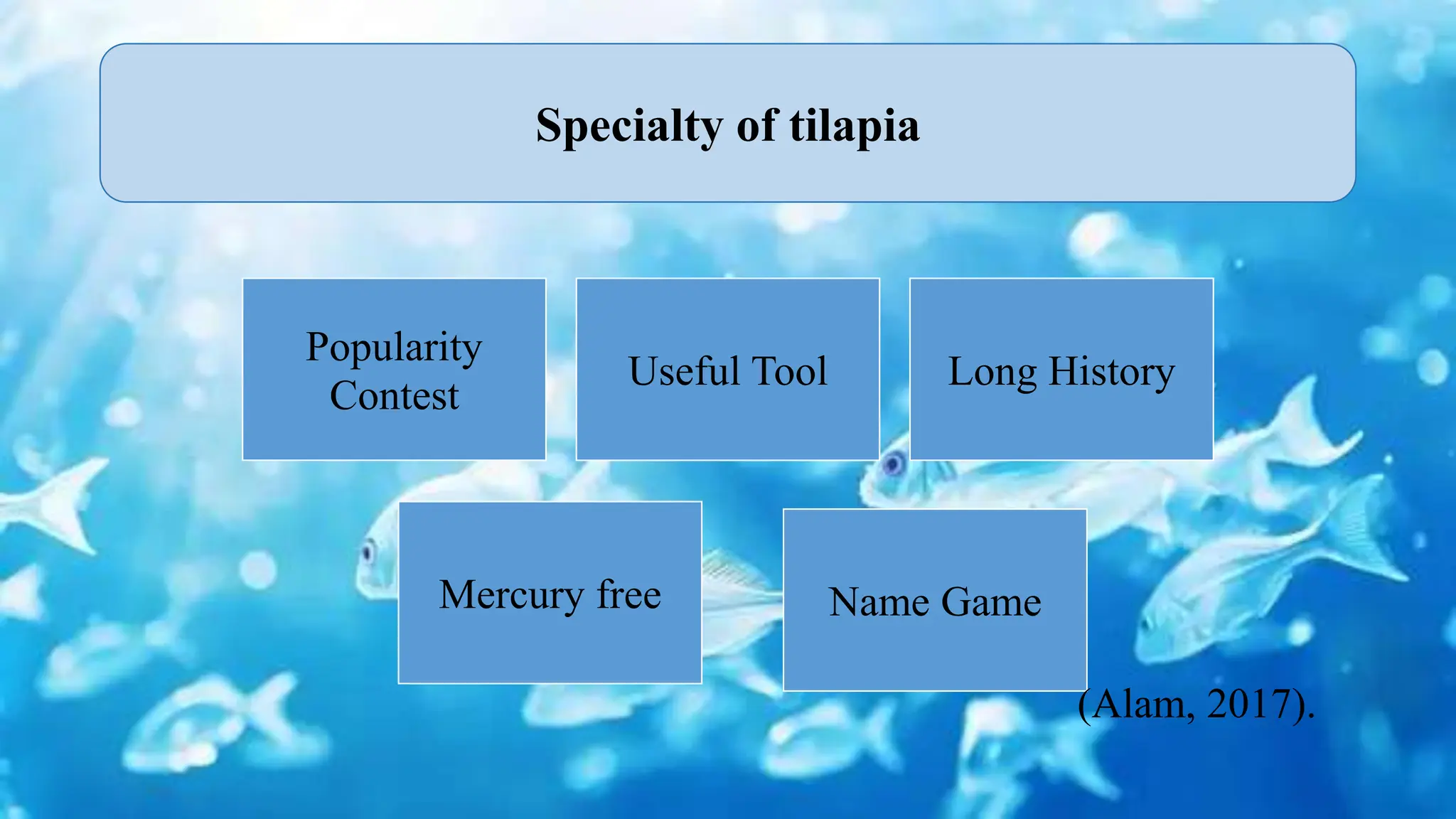
Specialty of tilapia
Popularity
Contest
Useful Tool Long History
Mercury free Name Game
(Alam, 2017).
Health Benefits of Tilapia
Heart health
Bone strength
Cancer prevention
Tilapia health risks (Jabeen Begum, 2023)
• Sexual differentiation and sex reversal in tilapia(Silva, 2023).
• The journey of Nile tilapia(El‐Sayed, 2023).
• Status of conventional and molecular breeding of salinity-tolerant
tilapia(Yue, 2024).
• Parasitic co-infections in tilapia culture(Islam, et al., 2024).
• Advances in the Effects of Dietary Macronutrients on the Gut Microbiota of
Tilapia(Ou, 2024).
Recent Researches
References
• Alam, L., Ahmed, M. F., Zolkaply, S. Z. B., & Mokhtar, M. 2017. RISK AND BENEFITS OF TILAPIA. TILAPIA AND
TROUT, 1.
• Brummett, R. E. (1995). Environmental regulation of sexual maturation and reproduction in tilapia. Reviews in Fisheries
Science, 3(3), 231-248.
• Chen, J., Fan, Z., Tan, D., Jiang, D., & Wang, D. (2018). A review of genetic advances related to sex control and
manipulation in tilapia. Journal of the World Aquaculture Society, 49(2), 277-291.
• Da Costa, D., Muhammad, F., & Warsito, B. (2022). ANALYSIS OF THE EFFECT OF WATER QUALITY ON THE
GROWTH OF NIRWANA tilapia (Oreochromis sp.) AT THE NATIONAL INSTITUTE OF FISHERIES AND
AQUACULTURE, MAUBARA, LIQUIÇA, TIMOR-LESTE (Doctoral dissertation, School of Postgraduate Studies).
• El-Sayed, A. F. M. (Ed.). (2006). Tilapia culture. CABI publishing.
• El‐Sayed, A. F. M., & Fitzsimmons, K. (2023). From Africa to the world—The journey of Nile tilapia. Reviews in
Aquaculture, 15, 6-21.
• Fitzsimmons, K., Martinez-Garcia, R., & Gonzalez-Alanis, P. (2011). Why tilapia is becoming the most important food fish
on the planet.
• Forouhar Vajargah, Mohammad. (2021). A review of the physiology and biology of Nile tilapia (Oreochromis niloticus).
Aquaculture Research. 10. 244-246. 10.15406/jamb.2021.10.00328.
• Lowe-McConnell, R.. (2000). The roles of tilapias in ecosystems. 10.1007/978-94-011-4008-9_5.

• Islam, S. I., Rodkhum, C., & Taweethavonsawat, P. (2024). An overview of parasitic co-infections in tilapia
culture. Aquaculture International, 32(1), 899-927.
• Louca, V., Lindsay, S. W., & Lucas, M. C. (2009). Factors triggering floodplain fish emigration: importance of fish
density and food availability. Ecology of Freshwater Fish, 18(1), 60-64.
• Medically Reviewed by Jabeen Begum, MD on August 03, 2023 Written by WebMD Editorial Contributor
• Ou, W., Guo, Z., Pan, Y., Huang, K., Ma, Y., & Qin, Z. (2024). Advances in the Effects of Dietary Macronutrients
on the Gut Microbiota of Tilapia (Oreochromis spp.). Microorganisms, 12(3), 543.
• Sifa, L., Chenhong, L., Dey, M., Gagalac, F., & Dunham, R. (2002). Cold tolerance of three strains of Nile tilapia,
Oreochromis niloticus, in China. Aquaculture, 213(1-4), 123-129.
• Silva, R. C., Britto, D. M. C., Santos, C. A., Giordani, S. C. O., & Pedreira, M. M. (2023). Sexual differentiation
and sex reversal in tilapia (Oreochromis niloticus) by hormone 17 α methyltestosterone similar to that used in
cultivation systems. Aquaculture, 574, 739624.
• Yue, G. H., Ma, K. Y., & Xia, J. H. (2024). Status of conventional and molecular breeding of salinity‐tolerant
tilapia. Reviews in Aquaculture, 16(1), 271-286.
Introduction to Tilapia and its meristic characters

Introduction to Tilapia and its meristic characters

  • 1.
  • 2.
    DEPARTMENT OF ZOOLOGY PRESENTEDBY: MAHEEN ZAHRA ROLL NO: 20M-UOC/ZOL-52 BS ZOOLOGY SESSION 2020-2024 SUBJECT: ICHTHYOLOGY SUBMITTED TO: DR SYEDA NADIAAHMAD TOPIC: TILAPIA
  • 3.
    • Introduction • LifeHistory • Taxonomic Position • Morphology • Geographic distribution • Sex Identification and Control • Growth of Tilapia • Nutrition, Temperature and pH • Spawning, parental care and Migration • Importance • Specialty and Recent Researches • References Table of Contents
  • 4.
    • The name‘tilapia’ was derived from the African Bushman word meaning ‘fish’. • Tilapias are a diverse group of over 70 species of freshwater fish, belonging to the Cichlidae family. • Originating in Africa and the Middle East, it was brought for economic purposes to Asia, southern Europe, and the United States during the 20th century. Introduction
  • 5.
  • 6.
    • Most tilapiaspecies are herbivores. • Tilapia are mouth brooders. • Tilapia's fast growth, tolerance to environmental conditions, stress, disease resistance, captivity, short generation time, low trophic levels, and acceptance of artificial feeds make them ideal for developing countries(El-Sayed, 2006). Life History
  • 7.
    Taxonomic Position ofthe Tilapias  The taxonomic classification of tilapia is still confusing and the subject of continuous changes.  The first classification includes five genera: Tilapia, and four others  The second classification includes only one genus, Tilapia, with seven subgenera or species(Charo-karisa, 2024).
  • 8.
    Kingdom: Animalia Phylum: Chordata Class:Osteichthyes Subclass: Actinopterygii Order: Percomorpha Suborder: Percoidea Family: Cichlidae
  • 9.
    • Tilapia isoriginally from the Middle East and Africa • They are distributed throughout Africa, except the northern Atlas Mountains and South-West Africa. • They are found in South and Central America, southern India, Pakiatan, Sri Lanka, and Israel (El-Sayed, 2006). Geographic distribution
  • 10.
    Morphology • Body :Laterally compressed • Scales: Cycloid scales • Fins: The dorsal and anal fins have hard spines and soft rays.The pectoral and pelvic fins are large and more anterior in an advanced configuration • Mouth they have terminal mouth Fig.2. Morphology of Tilapia https://images.app.goo.gl/t6JvEhZPwxBpyjth8
  • 11.
    • Sex identificationof tilapia is relatively simple. • The male has two openings just in front of anal fin. • The large opening is the anus and the smaller opening at the tip is the urogenital pore. • The female has three openings. • the anus, the genital pore, and the urinary pore. The genital papilla is usually smaller in the female. Sex Identification
  • 12.
    • Tilapias arethe second most farmed fish worldwide. • Excessive reproduction during growout has been a major problem in tilapia aquaculture and has been addressed by culturing monosex (all-male) populations. • The best way to obtain monosex populations is through control of sexual development and produce genetically male tilapia(Chen, 2018). Sex Control and Manipulation in Tilapia
  • 13.
    • Growth oftilapia is dependent on stocking rates, food supply and water quality. • Males grow faster by 10-20 % than females. • The growth of tilapia is directly related to the amount of food available in the pond (Costa et al., 2022). Growth of Tilapia
  • 14.
    • Tilapia consumesa wide range of natural organisms as food, some species are herbivorous and some are omnevorious. • Tilapias are often considered filter feeders because they can feed on plankton. • However, tilapia fish do not do this, like real filter feeder fish, using gill spines such as silver carp. • The protein required for maximum growth in tilapia (Forouhar Vajargah, 2021). Nutritional behavior and nutritional needs
  • 15.
    • The normaltemperature for reproduction and growth of fish ranges from 20-35 oC(costa et al., 2022). • Tilapia can also tolerate temperatures as low as 7-10 o C, but only for a short time (Sifa et al., 2002). • The pH value is below 6.5 or above 9-9.5 for a long period of time, the rate of reproduction and growth of aquatic organisms will decrease. • Optimal growth and development it is in the range of 7-8 (Costa et al., 2022). Temprature Tolerance and pH Value
  • 16.
    • Mouth-brooding: TheNile Tilapia is a mouth-brooder. • Nest building: The male establishes a territory and builds a round nest in the pond bottom. • Fertilization: The female enters the nest and lay the eggs. The eggs are fertilized by male. • Incubation: The female then collects and incubates the eggs in her mouth. • Hatching: Eggs hatch in about five to seven days (Brummett, 1995). Spawning and parental care
  • 17.
    • Tilapia, althoughnot highly migratory, some species exhibit migration movements, driven by two main factors. • Food availability: Tilapia may move to areas with more abundant food sources, such as algae blooms or areas with higher plankton concentration. • Reproduction:The Nile tilapia (Oreochromis niloticus), to move between freshwater and brackish water environments. • Fish species immigrate to new habitats, but factors triggering migration remain unclear (Louca, 2009). Migration
  • 18.
    Importance Excellent For CommercialAquaculture It Is Not an Allergic Fish Tilapia Need Very Low Salt Levels
  • 19.
    • Tilapias, herbivoresor detritivores, play a crucial role in the ecosystem by circulating nutrient metabolites for primary production and supporting piscivores like fish, reptiles, birds, and mammals (Lowe- McConnell, 2000). • Tilapia, a cichlid fish, is the second most farmed fish globally. • It has become the most domesticated farmed fish, playing a key role in rural aquaculture and improving the welfare of poor farmers (Fitzsimmons et al., 2011). Ecological And Economic Importance
  • 20.
    Specialty of tilapia Popularity Contest UsefulTool Long History Mercury free Name Game (Alam, 2017).
  • 21.
    Health Benefits ofTilapia Heart health Bone strength Cancer prevention Tilapia health risks (Jabeen Begum, 2023)
  • 22.
    • Sexual differentiationand sex reversal in tilapia(Silva, 2023). • The journey of Nile tilapia(El‐Sayed, 2023). • Status of conventional and molecular breeding of salinity-tolerant tilapia(Yue, 2024). • Parasitic co-infections in tilapia culture(Islam, et al., 2024). • Advances in the Effects of Dietary Macronutrients on the Gut Microbiota of Tilapia(Ou, 2024). Recent Researches
  • 23.
    References • Alam, L.,Ahmed, M. F., Zolkaply, S. Z. B., & Mokhtar, M. 2017. RISK AND BENEFITS OF TILAPIA. TILAPIA AND TROUT, 1. • Brummett, R. E. (1995). Environmental regulation of sexual maturation and reproduction in tilapia. Reviews in Fisheries Science, 3(3), 231-248. • Chen, J., Fan, Z., Tan, D., Jiang, D., & Wang, D. (2018). A review of genetic advances related to sex control and manipulation in tilapia. Journal of the World Aquaculture Society, 49(2), 277-291. • Da Costa, D., Muhammad, F., & Warsito, B. (2022). ANALYSIS OF THE EFFECT OF WATER QUALITY ON THE GROWTH OF NIRWANA tilapia (Oreochromis sp.) AT THE NATIONAL INSTITUTE OF FISHERIES AND AQUACULTURE, MAUBARA, LIQUIÇA, TIMOR-LESTE (Doctoral dissertation, School of Postgraduate Studies). • El-Sayed, A. F. M. (Ed.). (2006). Tilapia culture. CABI publishing. • El‐Sayed, A. F. M., & Fitzsimmons, K. (2023). From Africa to the world—The journey of Nile tilapia. Reviews in Aquaculture, 15, 6-21. • Fitzsimmons, K., Martinez-Garcia, R., & Gonzalez-Alanis, P. (2011). Why tilapia is becoming the most important food fish on the planet. • Forouhar Vajargah, Mohammad. (2021). A review of the physiology and biology of Nile tilapia (Oreochromis niloticus). Aquaculture Research. 10. 244-246. 10.15406/jamb.2021.10.00328.
  • 24.
    • Lowe-McConnell, R..(2000). The roles of tilapias in ecosystems. 10.1007/978-94-011-4008-9_5. • Islam, S. I., Rodkhum, C., & Taweethavonsawat, P. (2024). An overview of parasitic co-infections in tilapia culture. Aquaculture International, 32(1), 899-927. • Louca, V., Lindsay, S. W., & Lucas, M. C. (2009). Factors triggering floodplain fish emigration: importance of fish density and food availability. Ecology of Freshwater Fish, 18(1), 60-64. • Medically Reviewed by Jabeen Begum, MD on August 03, 2023 Written by WebMD Editorial Contributor • Ou, W., Guo, Z., Pan, Y., Huang, K., Ma, Y., & Qin, Z. (2024). Advances in the Effects of Dietary Macronutrients on the Gut Microbiota of Tilapia (Oreochromis spp.). Microorganisms, 12(3), 543. • Sifa, L., Chenhong, L., Dey, M., Gagalac, F., & Dunham, R. (2002). Cold tolerance of three strains of Nile tilapia, Oreochromis niloticus, in China. Aquaculture, 213(1-4), 123-129. • Silva, R. C., Britto, D. M. C., Santos, C. A., Giordani, S. C. O., & Pedreira, M. M. (2023). Sexual differentiation and sex reversal in tilapia (Oreochromis niloticus) by hormone 17 α methyltestosterone similar to that used in cultivation systems. Aquaculture, 574, 739624. • Yue, G. H., Ma, K. Y., & Xia, J. H. (2024). Status of conventional and molecular breeding of salinity‐tolerant tilapia. Reviews in Aquaculture, 16(1), 271-286.