A Seminar on
PRESENTED BY:
Mr. ABDUL MUNAFF
Asst. Professor
DEPARTMENT OF ELECTICAL & ELECTRONICS
ENGINEERING, SIET, VIJAYAPURA.
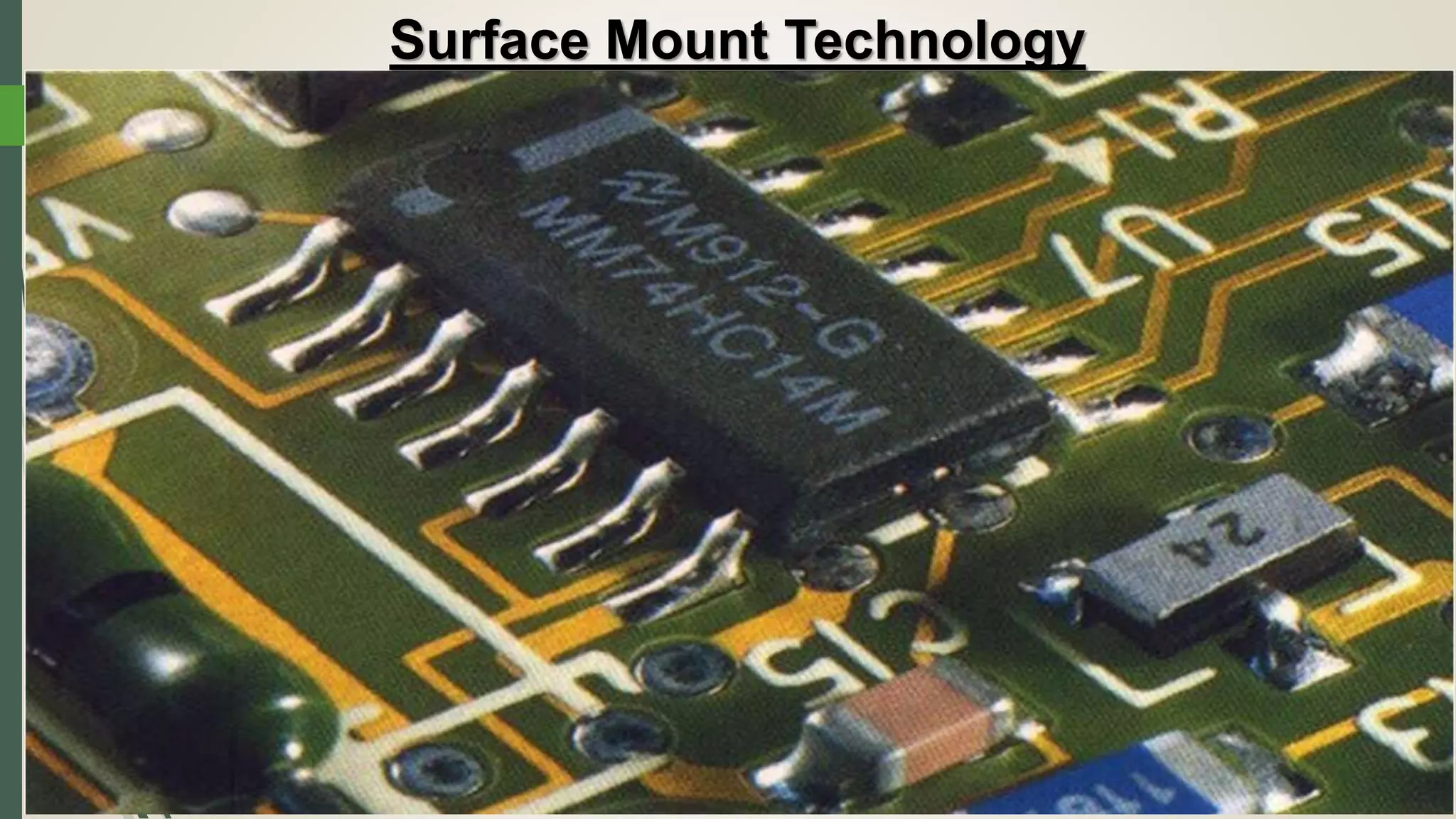
Surface Mount Technology
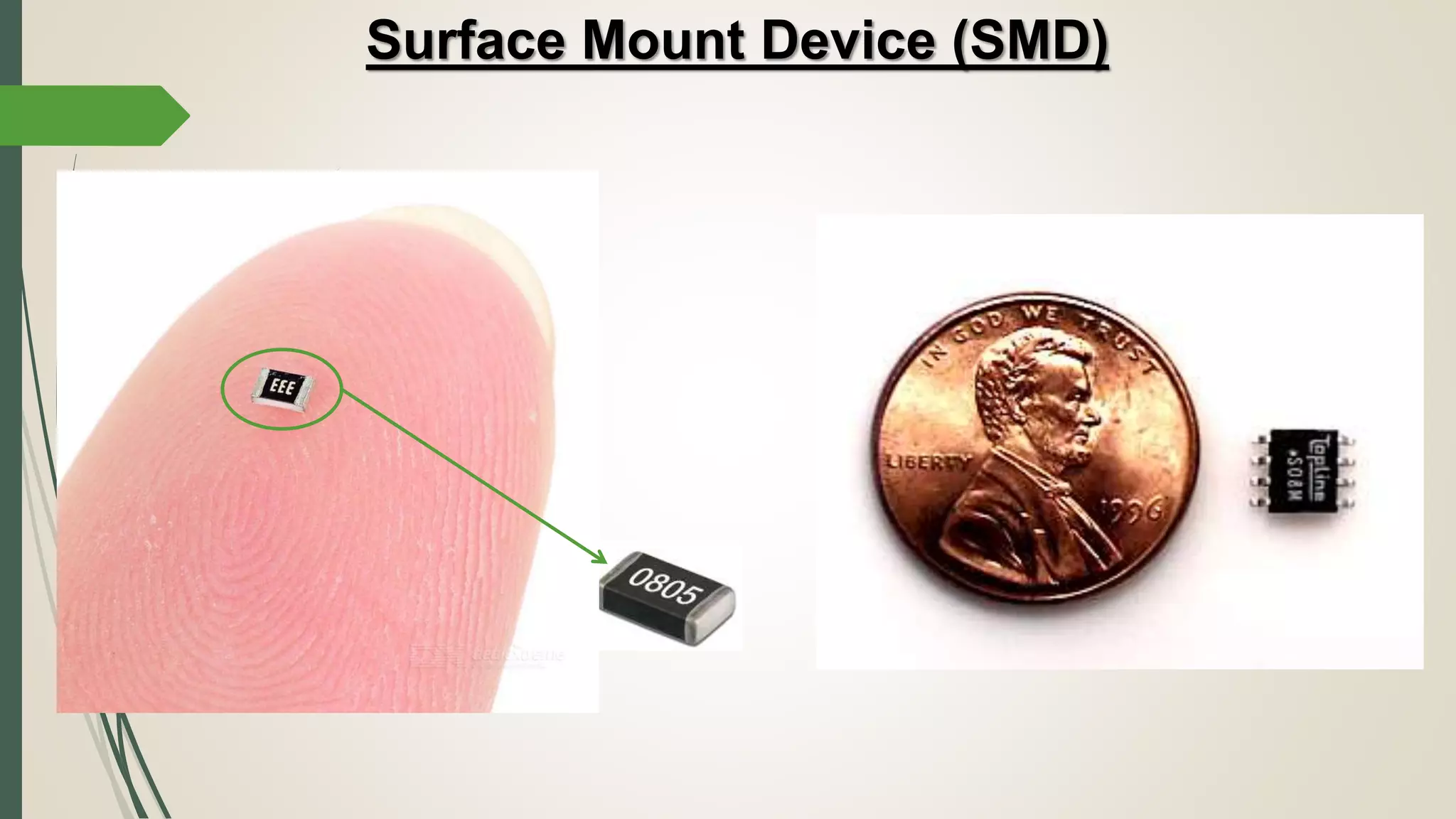
Surface Mount Device (SMD)
ORGANIZATION OF PRESENTATION
 Objective of this Seminar
 SMT Overview
 SMT V/S THROUGH HOLE
 Basic SMT process flow
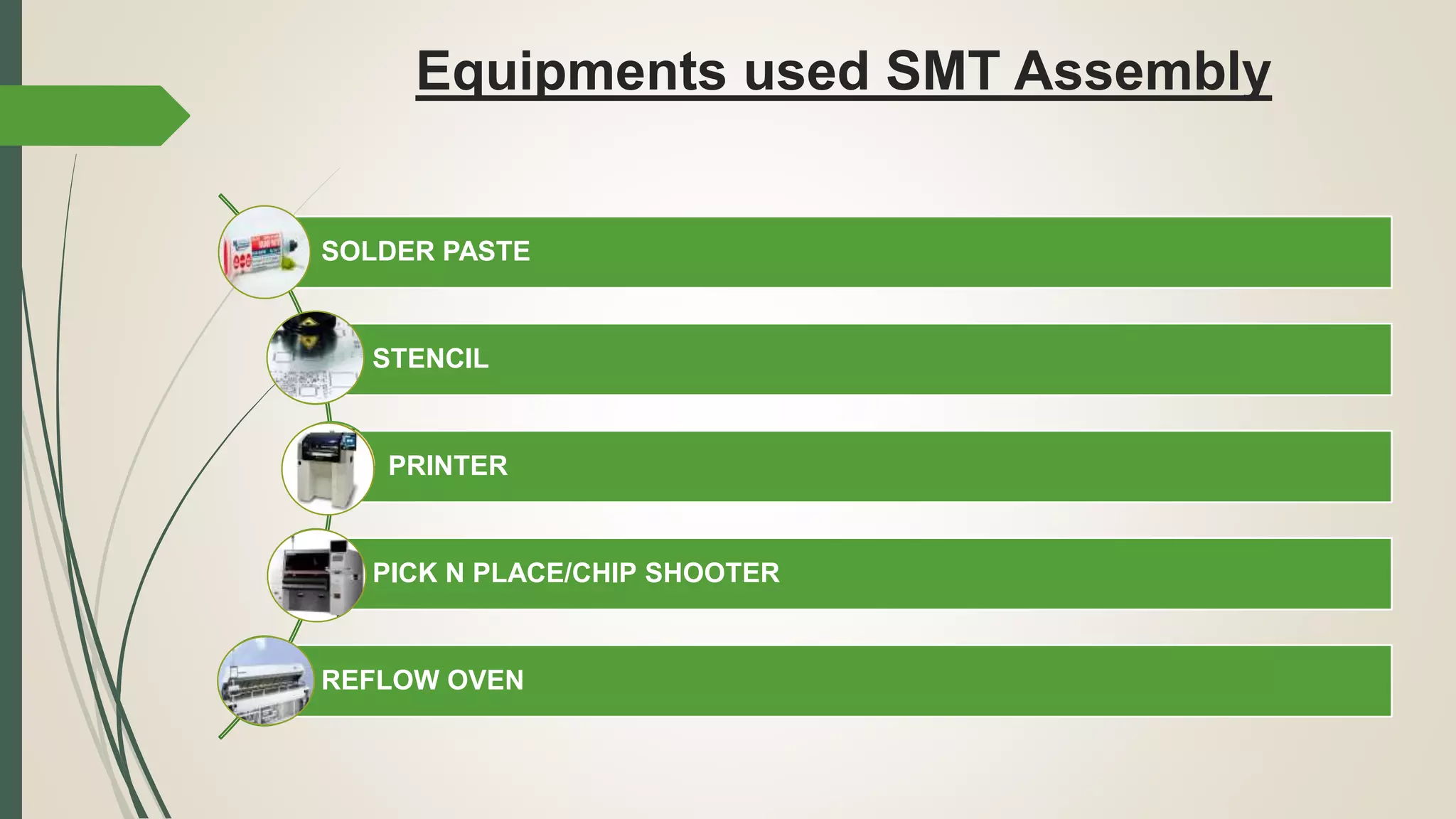
 Equipments used SMT Assembly
 Through Hole Assembly & Soldering
 ELECTROSTATIC DISCHARGE
 RoHS
 Outcome
Objective of this Seminar
 INSPIRING CREATIVE & INNOVATIVE MINDS
 KT (Knowledge Transfer)
 Technology Awareness
 yh
SMT Overview
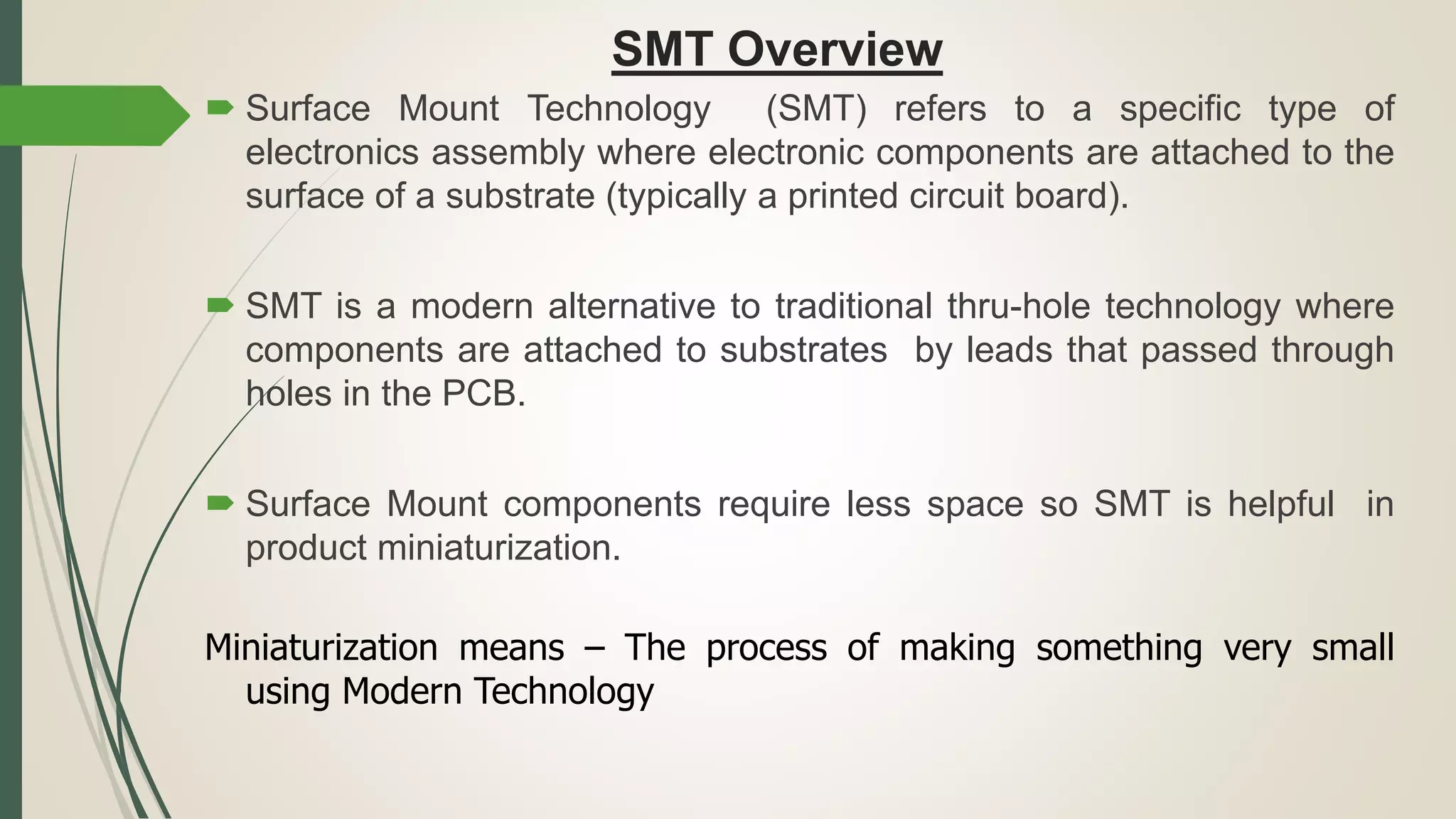
 Surface Mount Technology (SMT) refers to a specific type of
electronics assembly where electronic components are attached to the
surface of a substrate (typically a printed circuit board).
 SMT is a modern alternative to traditional thru-hole technology where
components are attached to substrates by leads that passed through

holes in the PCB.
 Surface Mount components require less space so SMT is helpful in
product miniaturization.
Miniaturization means – The process of making something very small
using Modern Technology
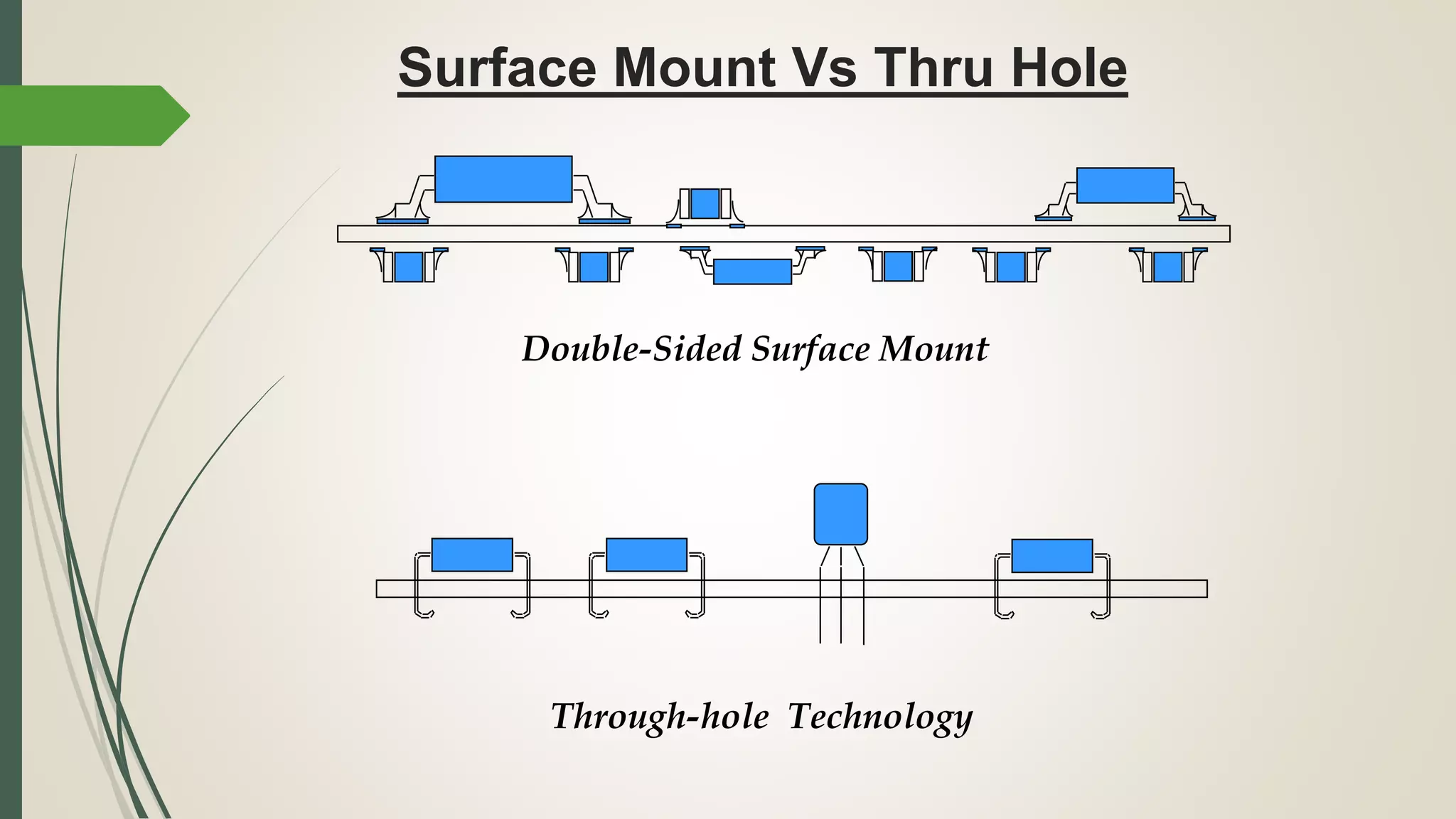
Surface Mount Vs Thru Hole
Double-Sided Surface Mount
Through-hole Technology
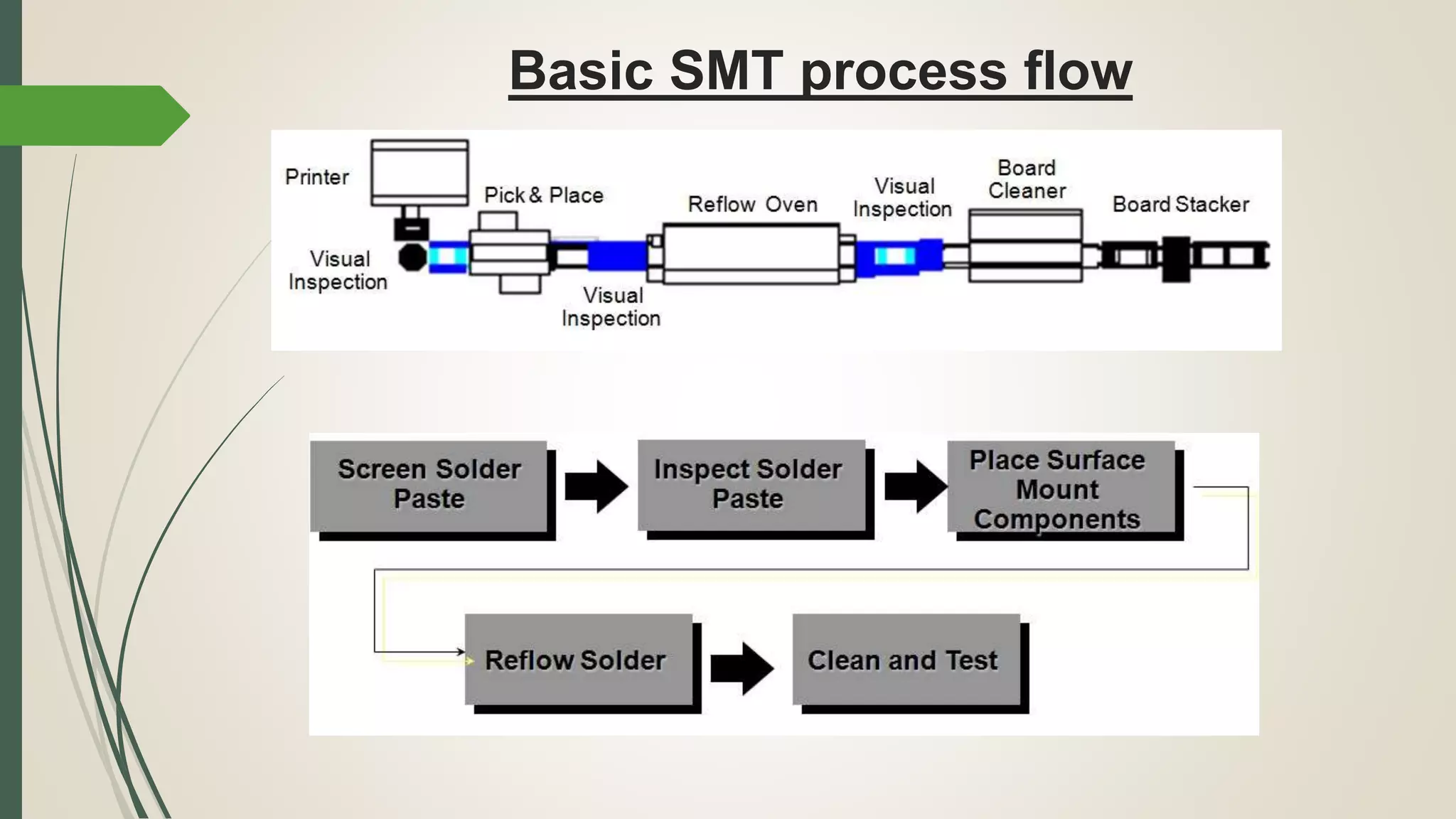
Basic SMT process flow
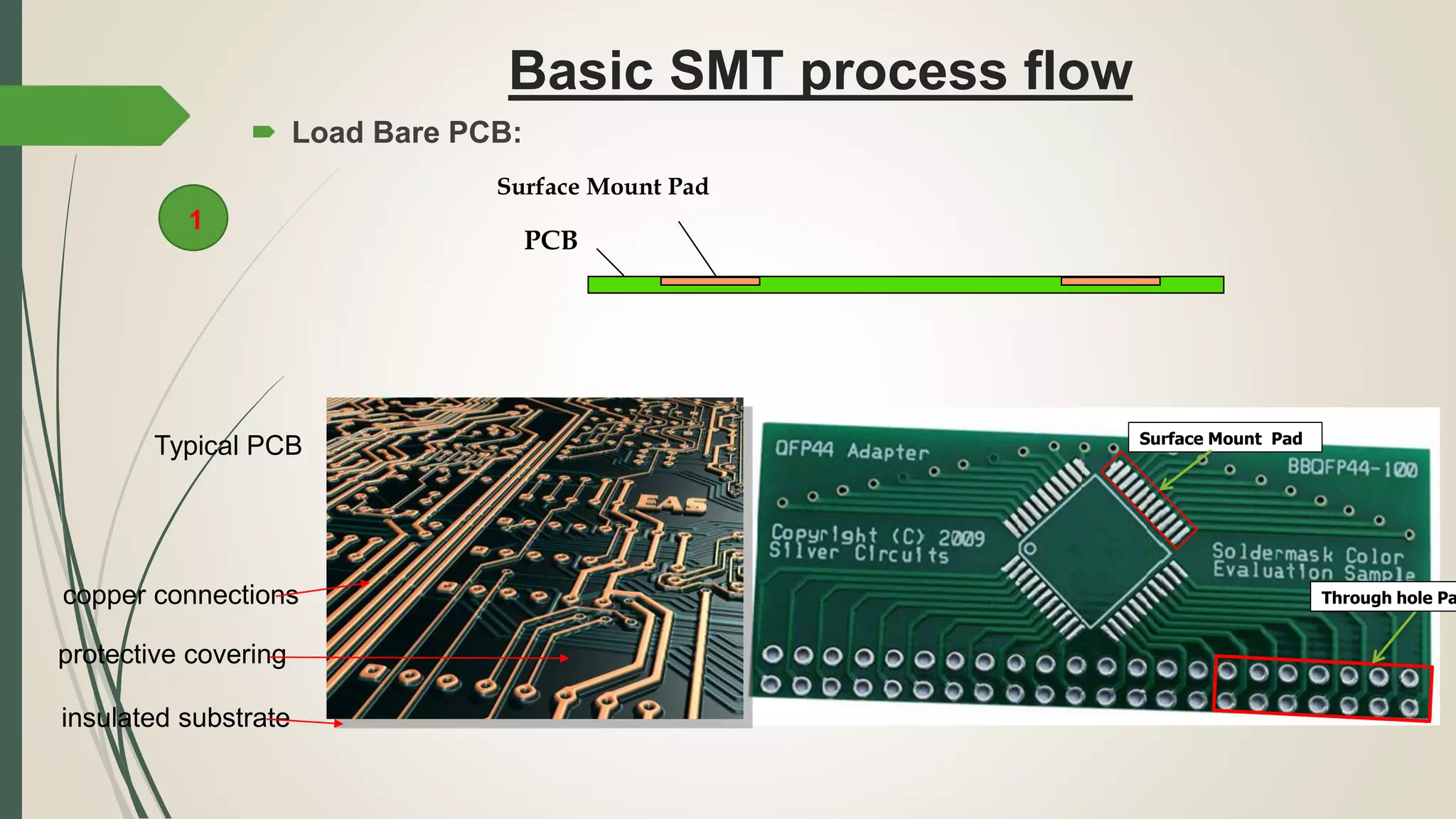
 Load Bare PCB:
Basic SMT process flow
PCB
Surface Mount Pad
Surface Mount Pad
Through hole Pa
1
Typical PCB
insulated substrate
copper connections
protective covering
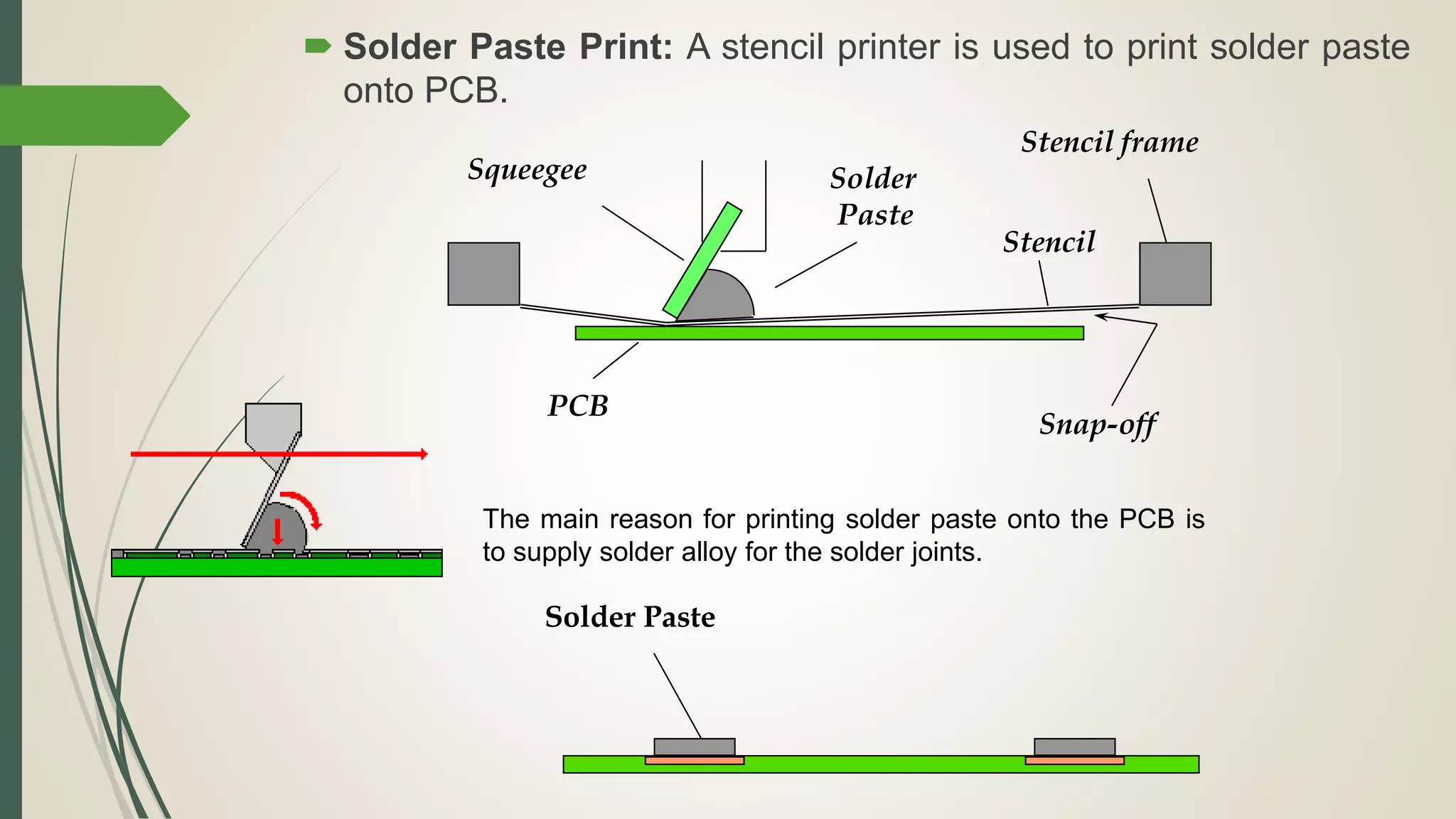
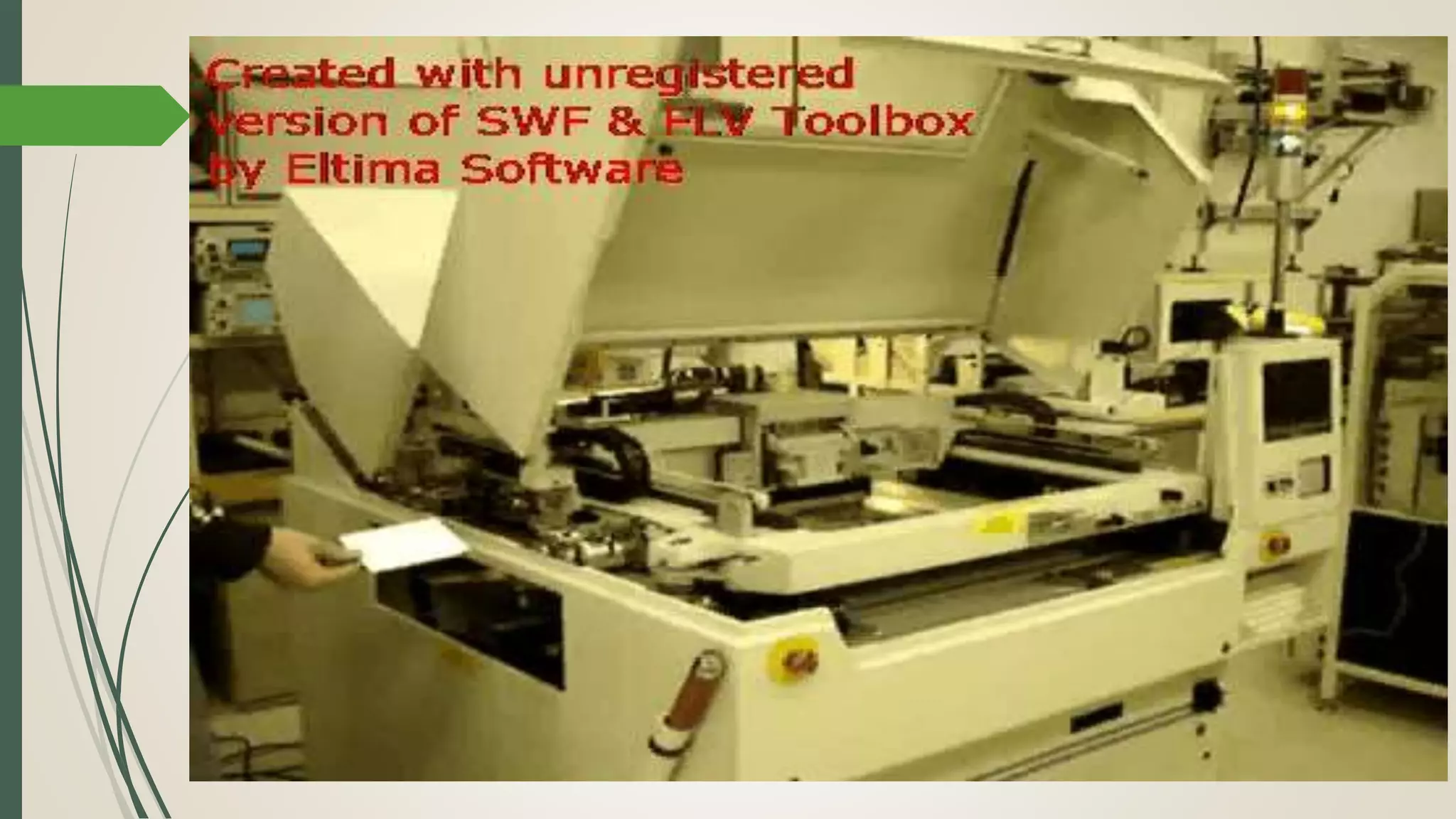
 Solder Paste Print: A stencil printer is used to print solder paste
onto PCB.
PCB
Stencil frame
Stencil
Squeegee Solder
Paste
Snap-off
The main reason for printing solder paste onto the PCB is
to supply solder alloy for the solder joints.
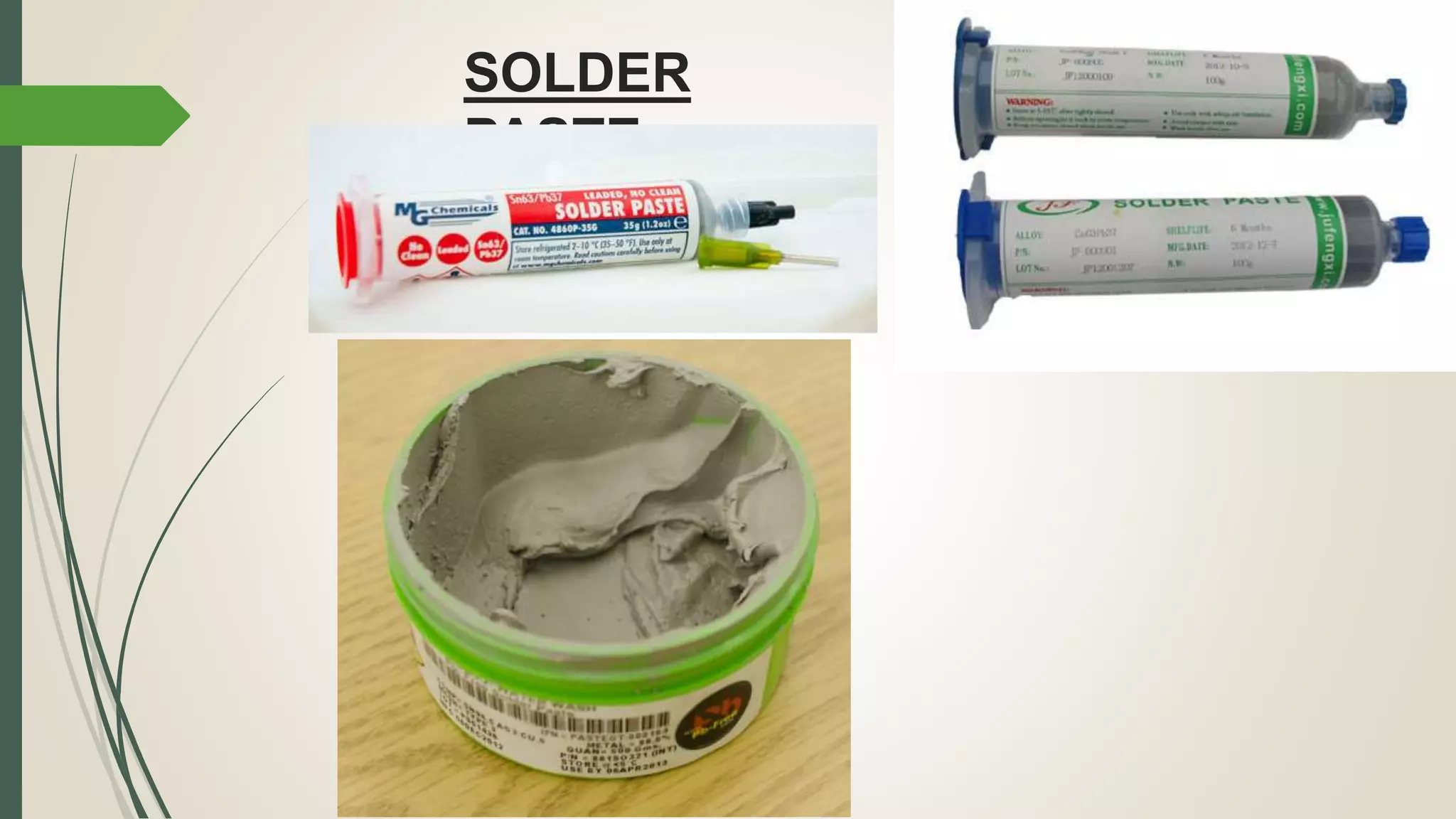
Solder Paste
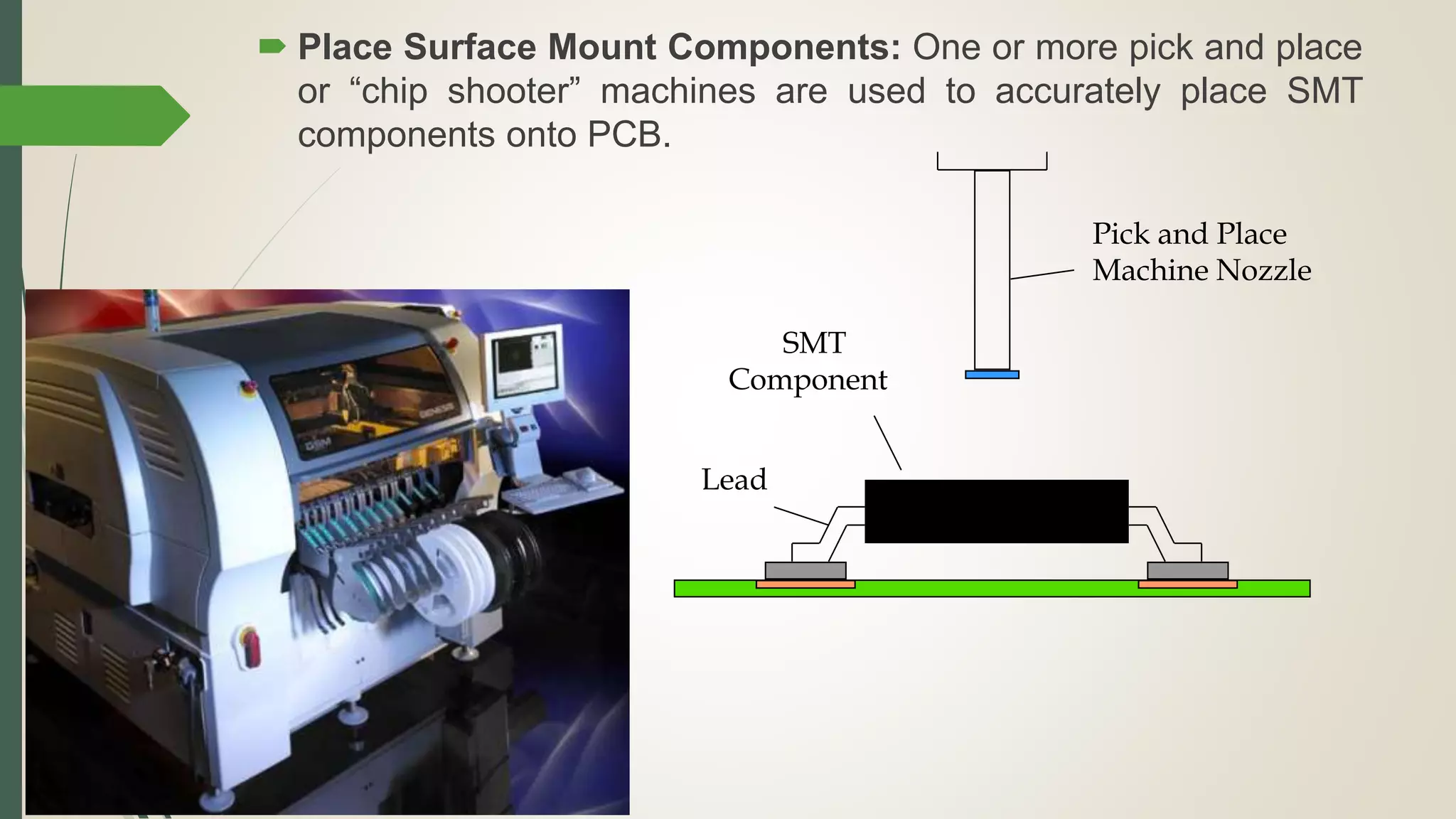
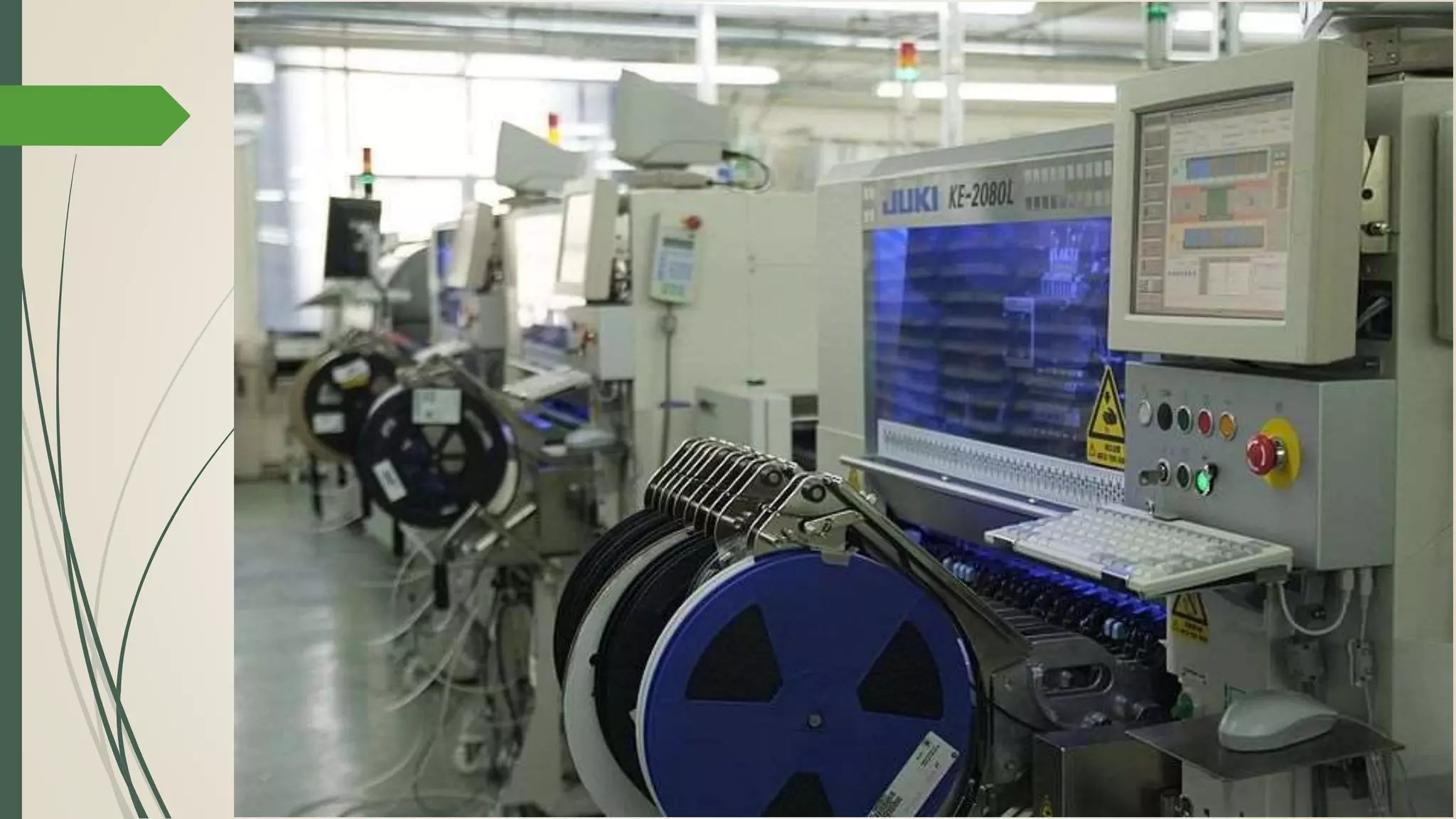
 Place Surface Mount Components: One or more pick and place
or “chip shooter” machines are used to accurately place SMT
components onto PCB.
SMT
Component
Lead
Pick and Place
Machine Nozzle
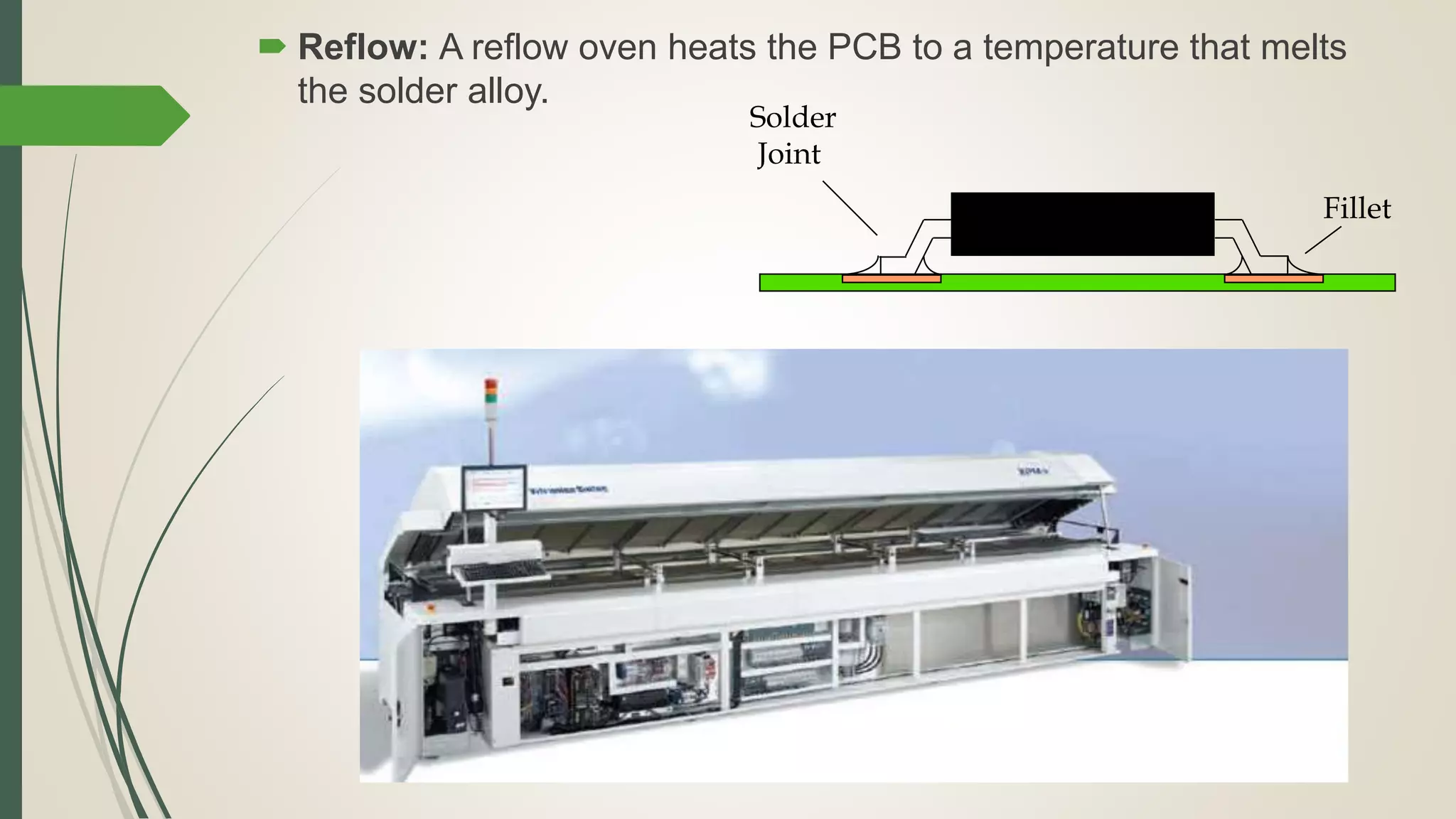
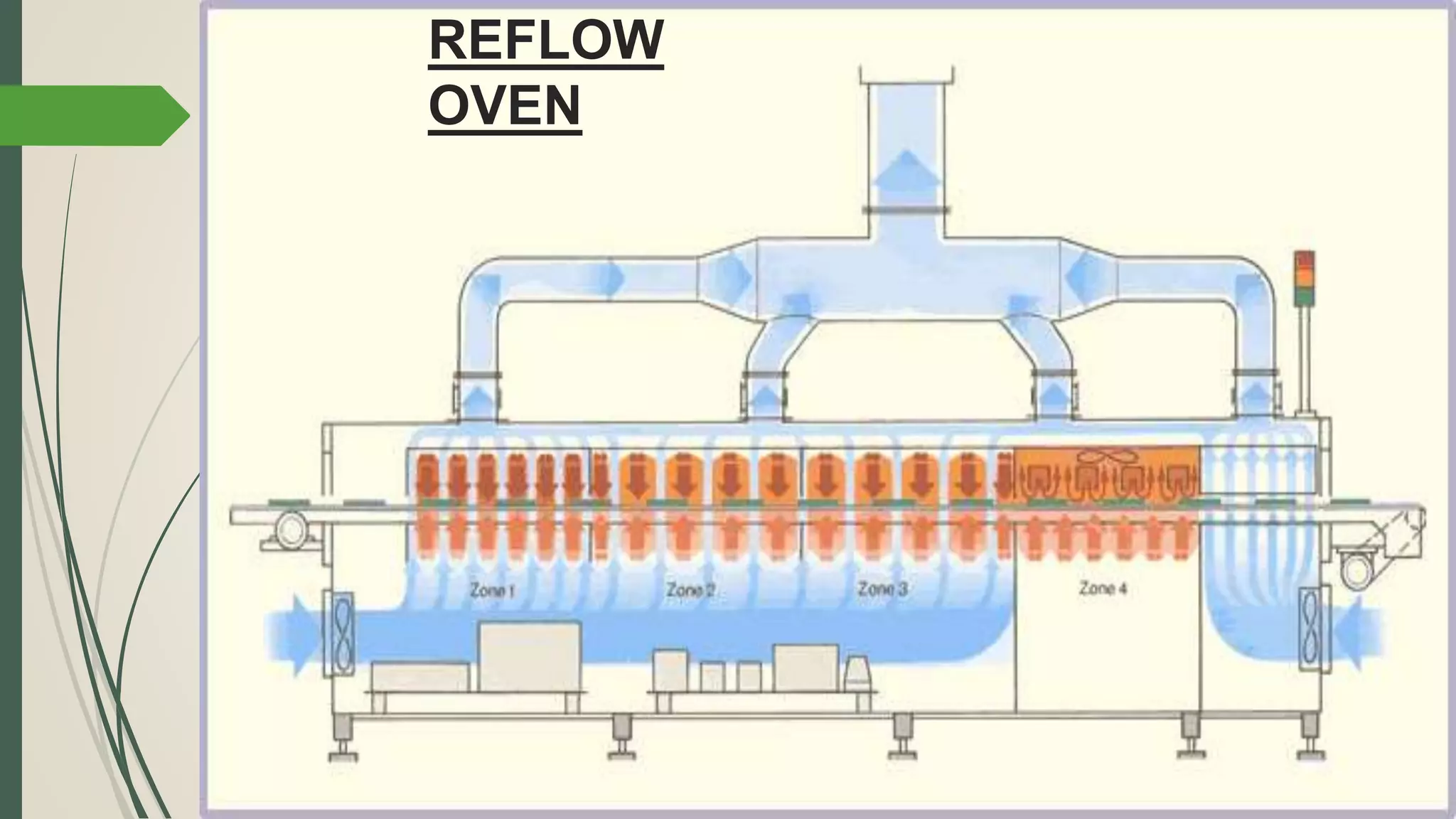
 Reflow: A reflow oven heats the PCB to a temperature that melts
the solder alloy.
Solder
Joint
Fillet
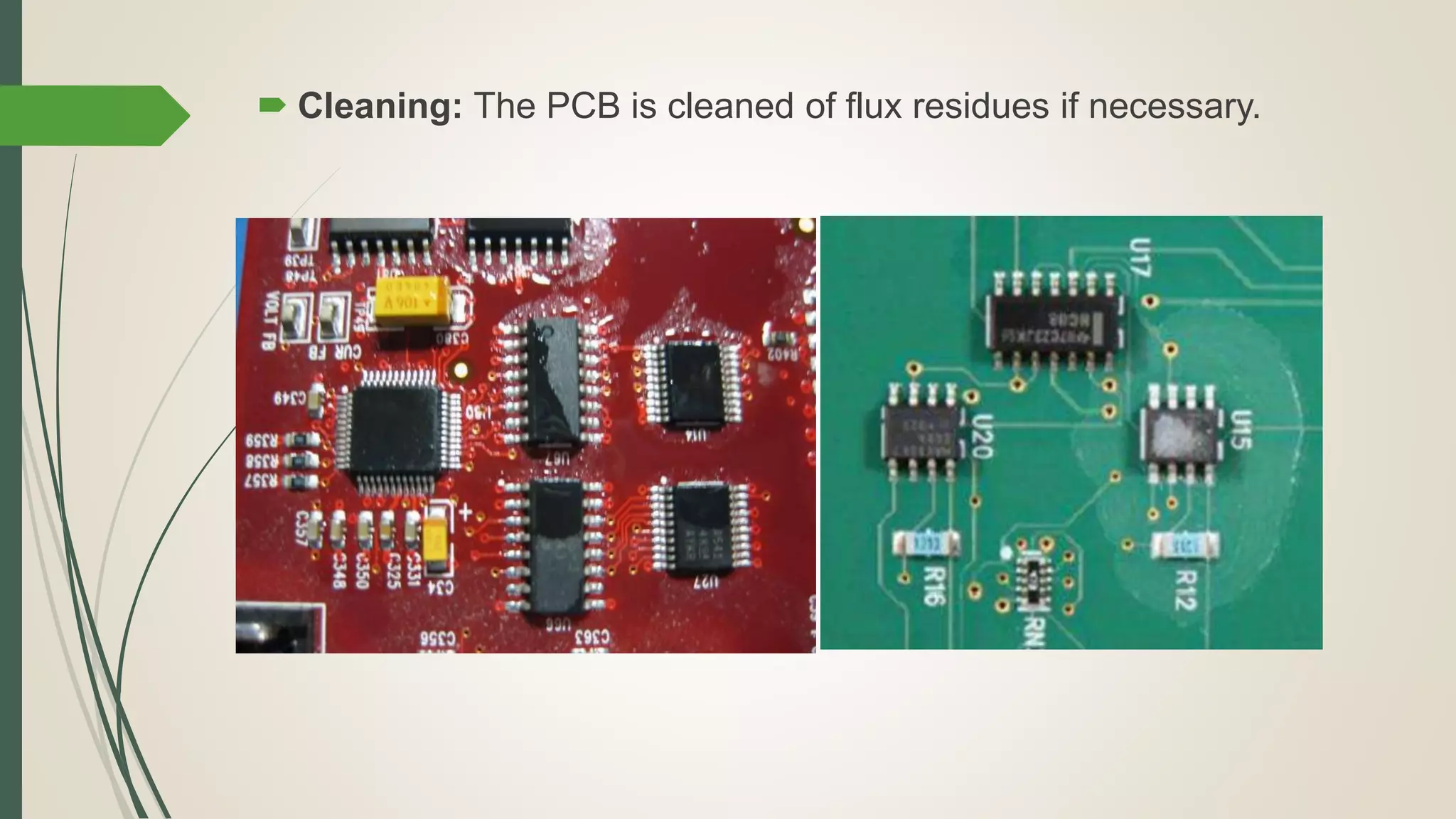
 Cleaning: The PCB is cleaned of flux residues if necessary.
Equipments used SMT Assembly
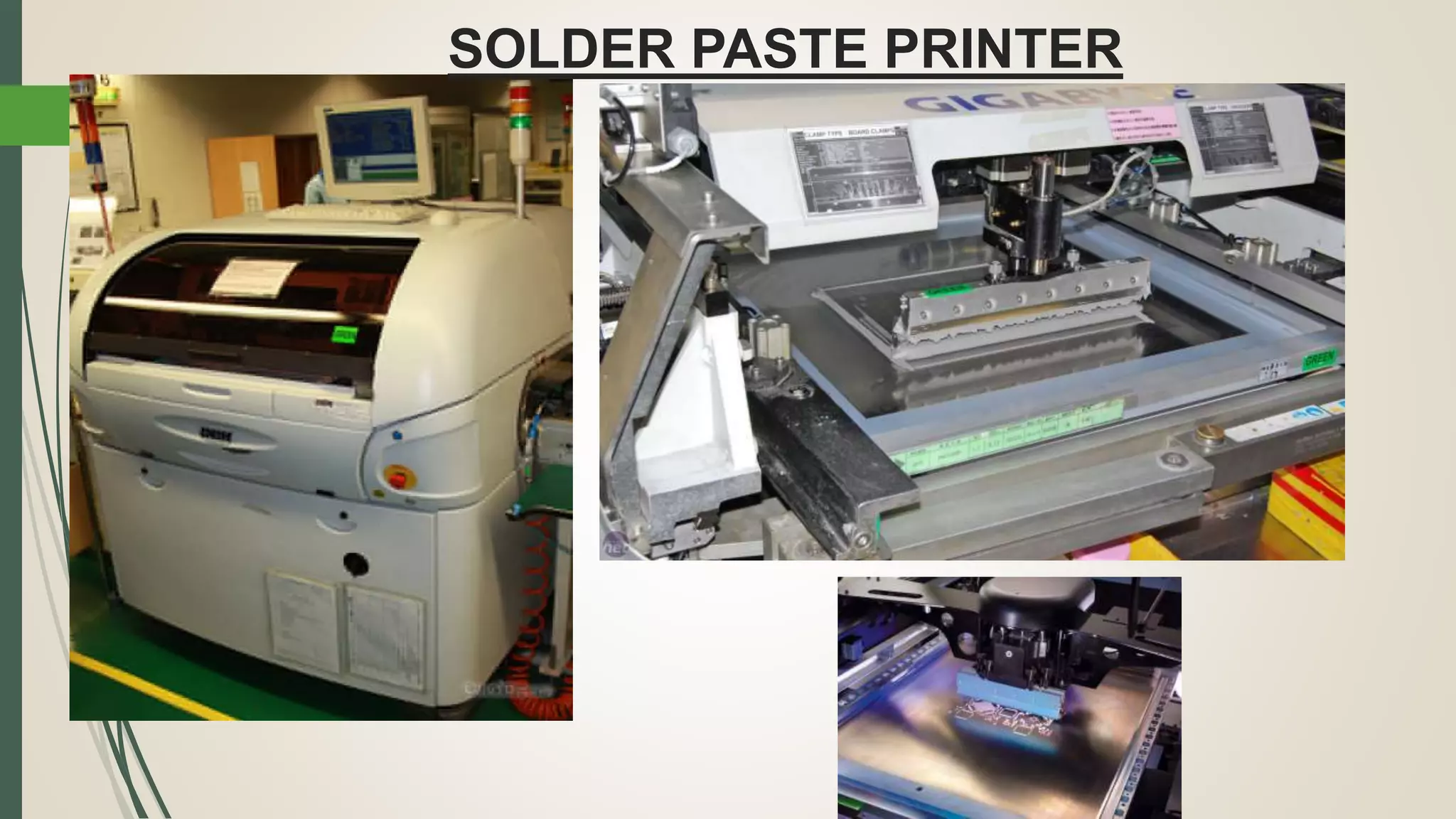
SOLDER PASTE
STENCIL
PRINTER
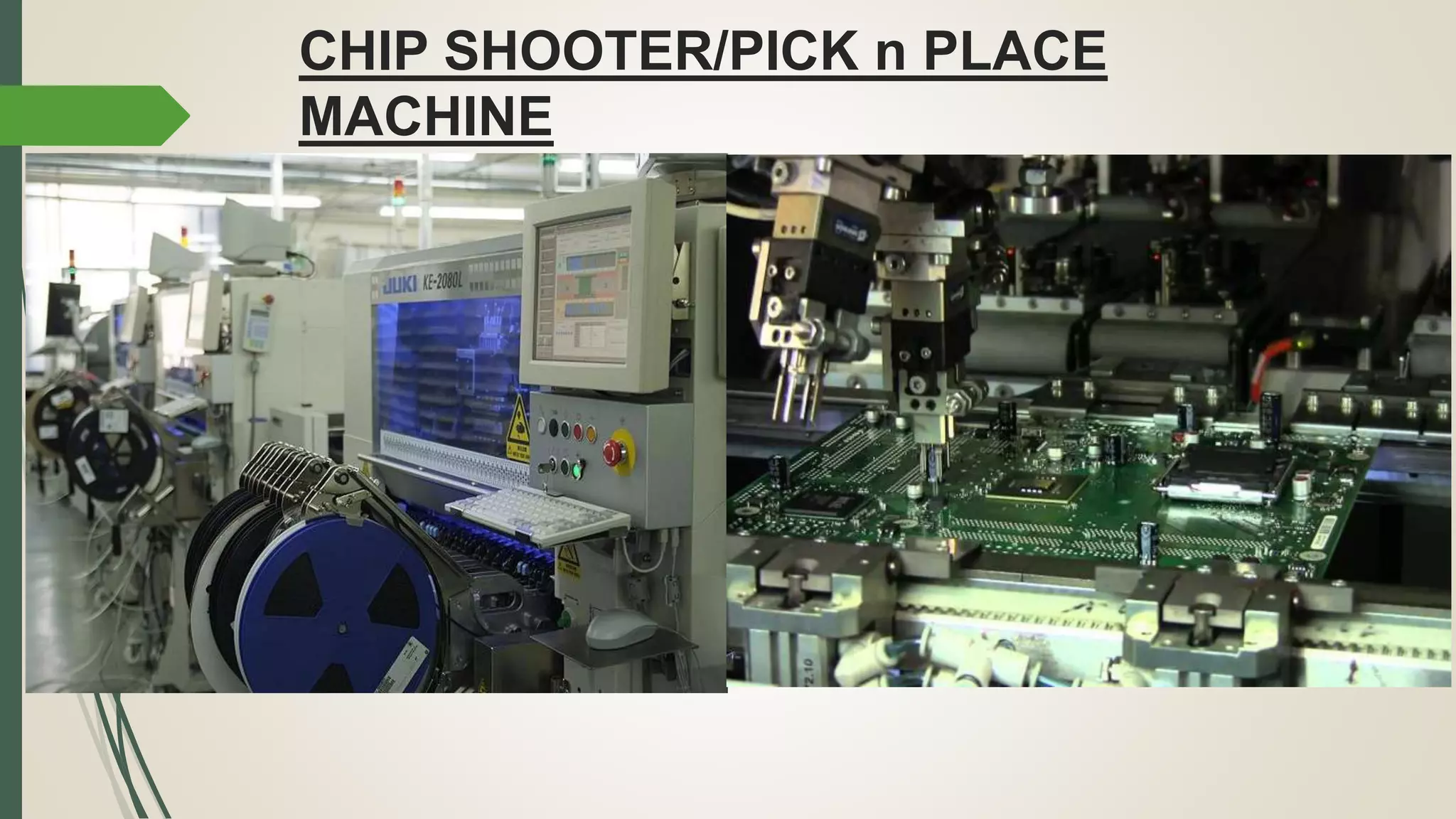
PICK N PLACE/CHIP SHOOTER
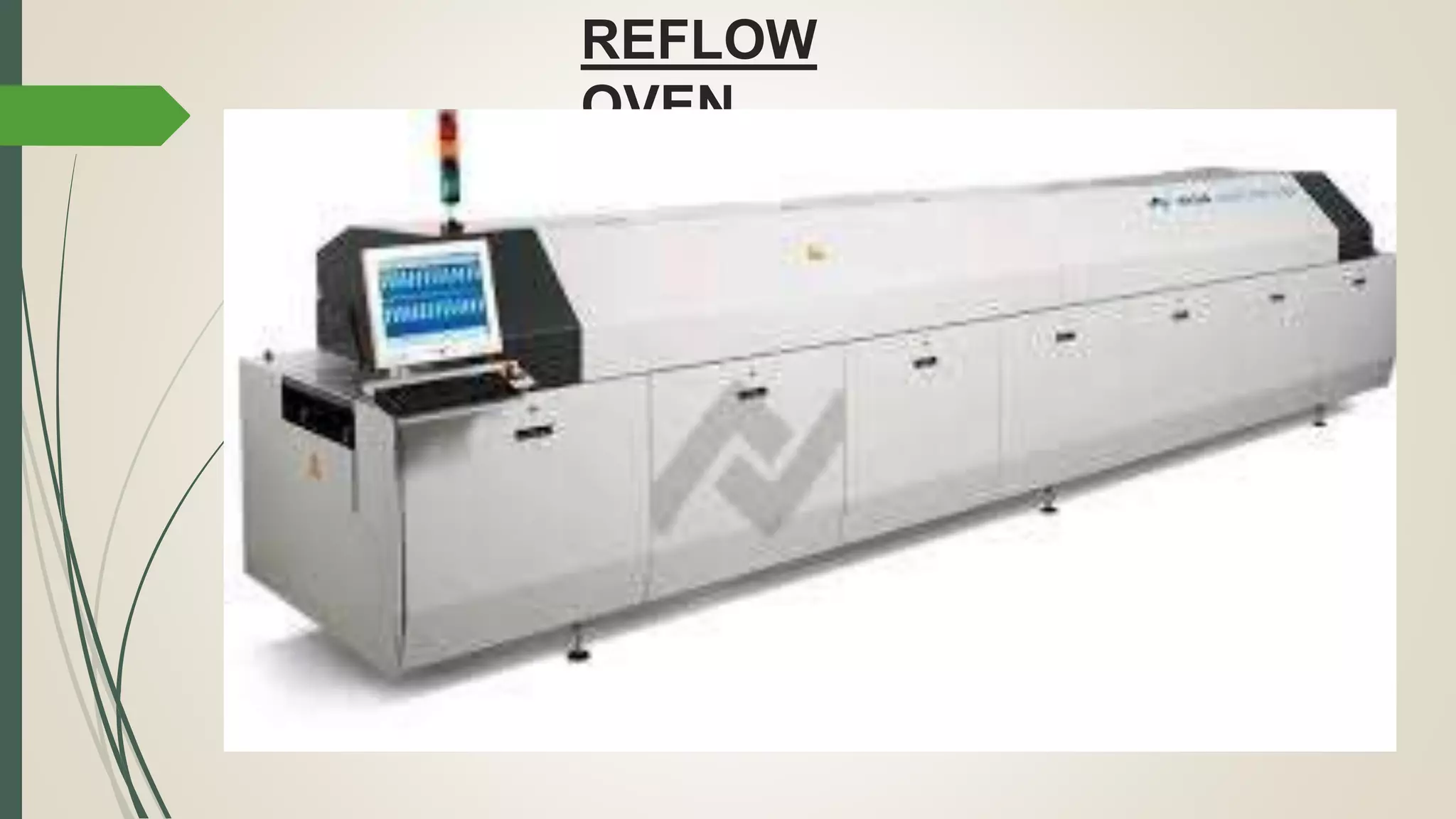
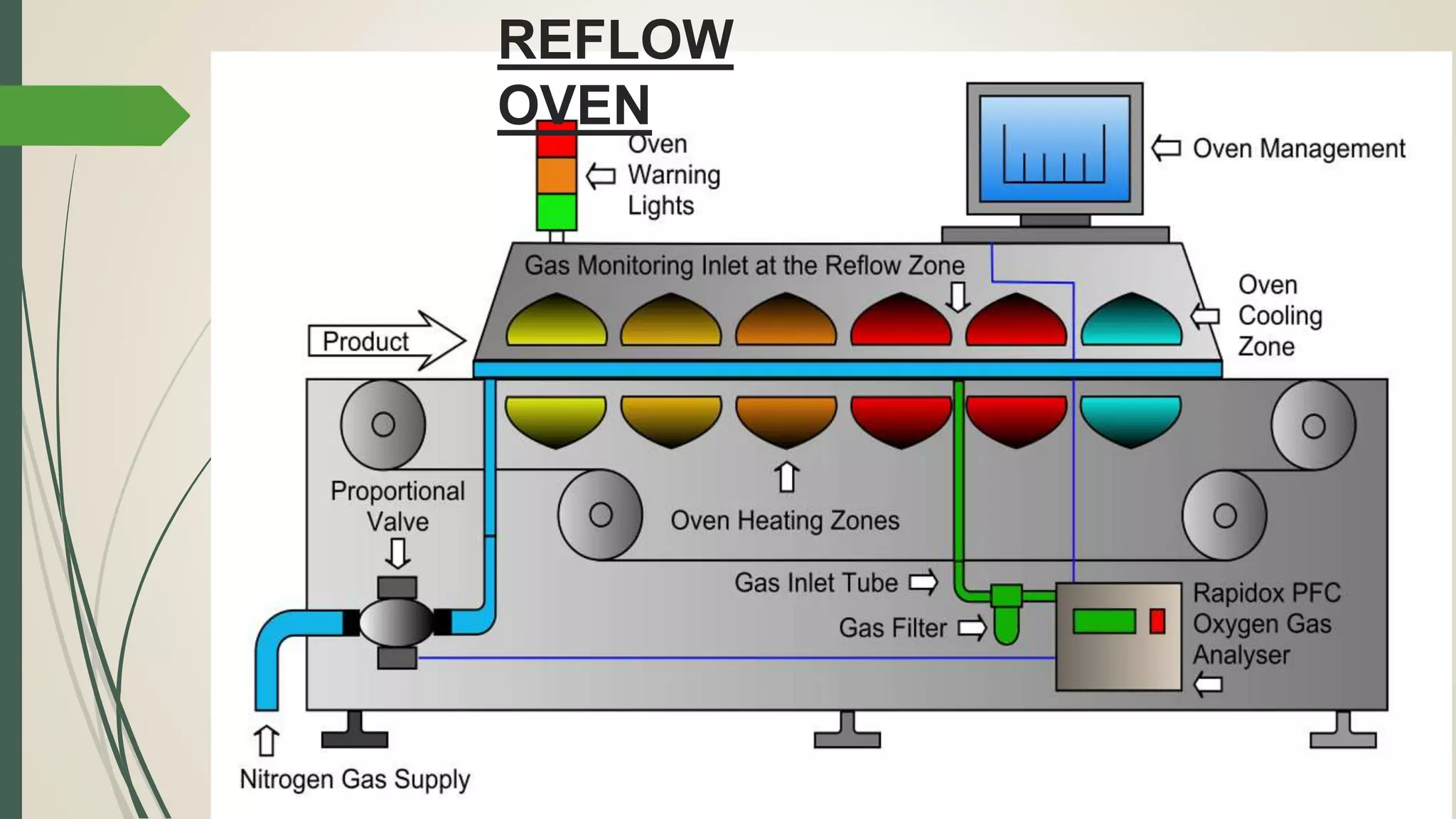
REFLOW OVEN
SOLDER
PASTE
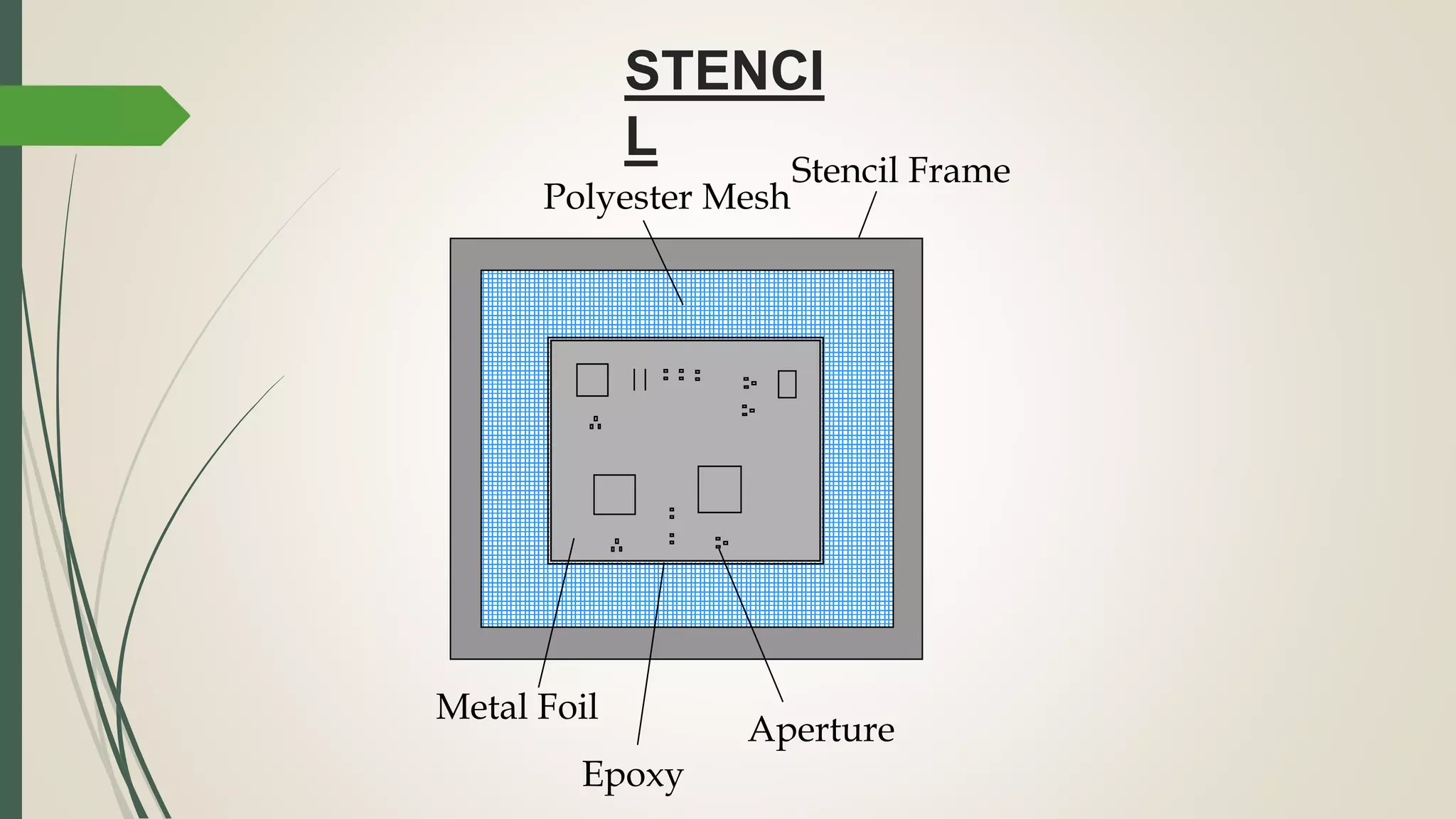
STENCI
L
Polyester Mesh
Stencil Frame
Metal Foil
Epoxy
Aperture
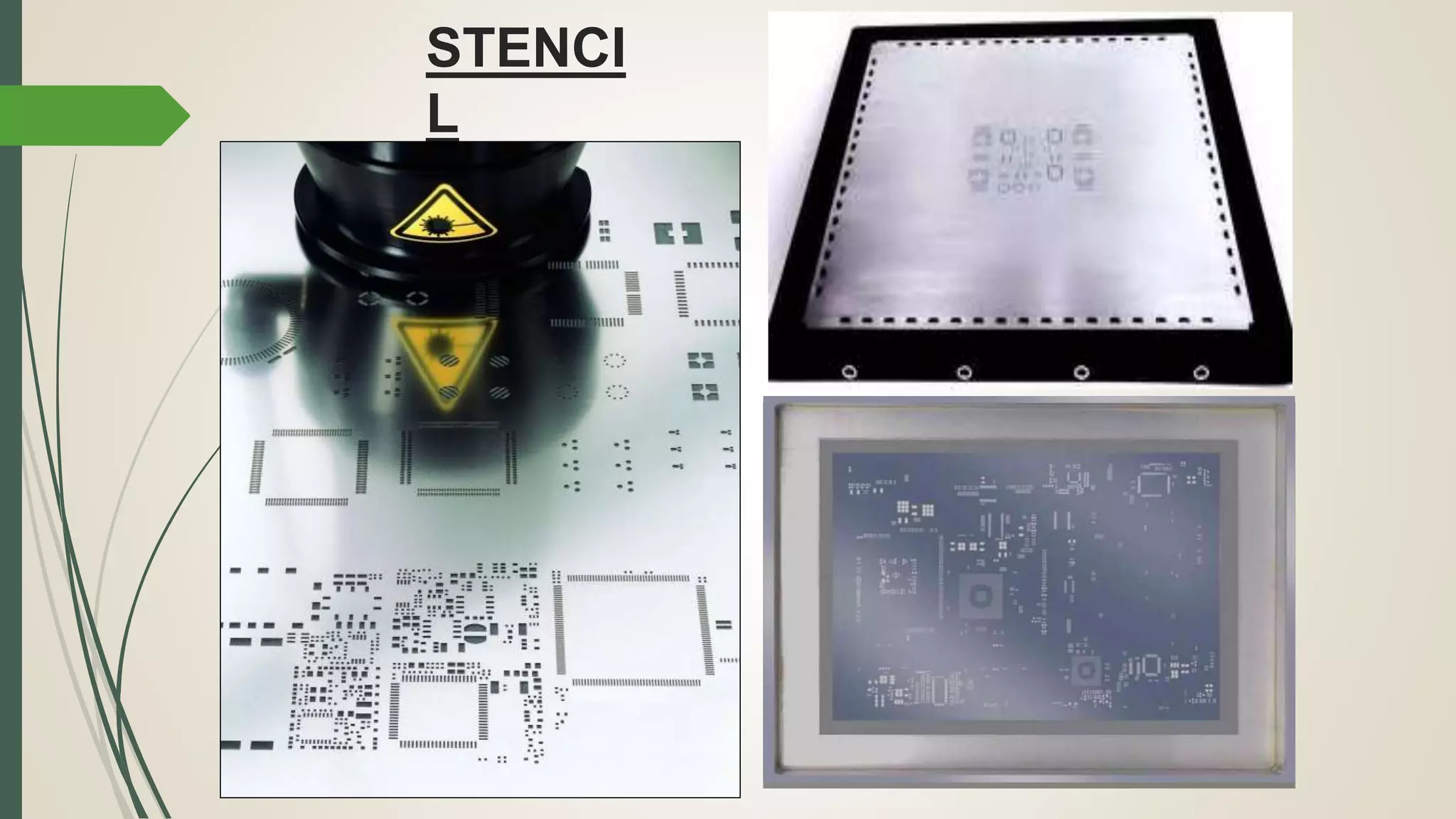
STENCI
L
SOLDER PASTE PRINTER
CHIP SHOOTER/PICK n PLACE
MACHINE
REFLOW
OVEN
REFLOW
OVEN
REFLOW
OVEN
Why Use Surface Mount Technology?
 Miniaturization of Products.
SMD’s have improved performance over through-hole
components due to their smaller size, shorter internal leads and smaller
board layouts.
 SMDs can be more cost effective than traditional through-hole
components due to the smaller board size, fewer board layers and
fewer holes.
 Smaller component size: Typical size (1206 - 0.12" × 0.06" ).
 Faster assembly: Some placement machines are capable of placing
more than 1,36,000 components per hour.
Types of SMD’s
Main disadvantages
The manufacturing processes for SMT are much more sophisticated
than through-hole, raising the initial cost and time of setting up of
production.
 Manual prototype assembly or component-level repair is more
difficult.
 SMDs cannot be used directly with breadboards.
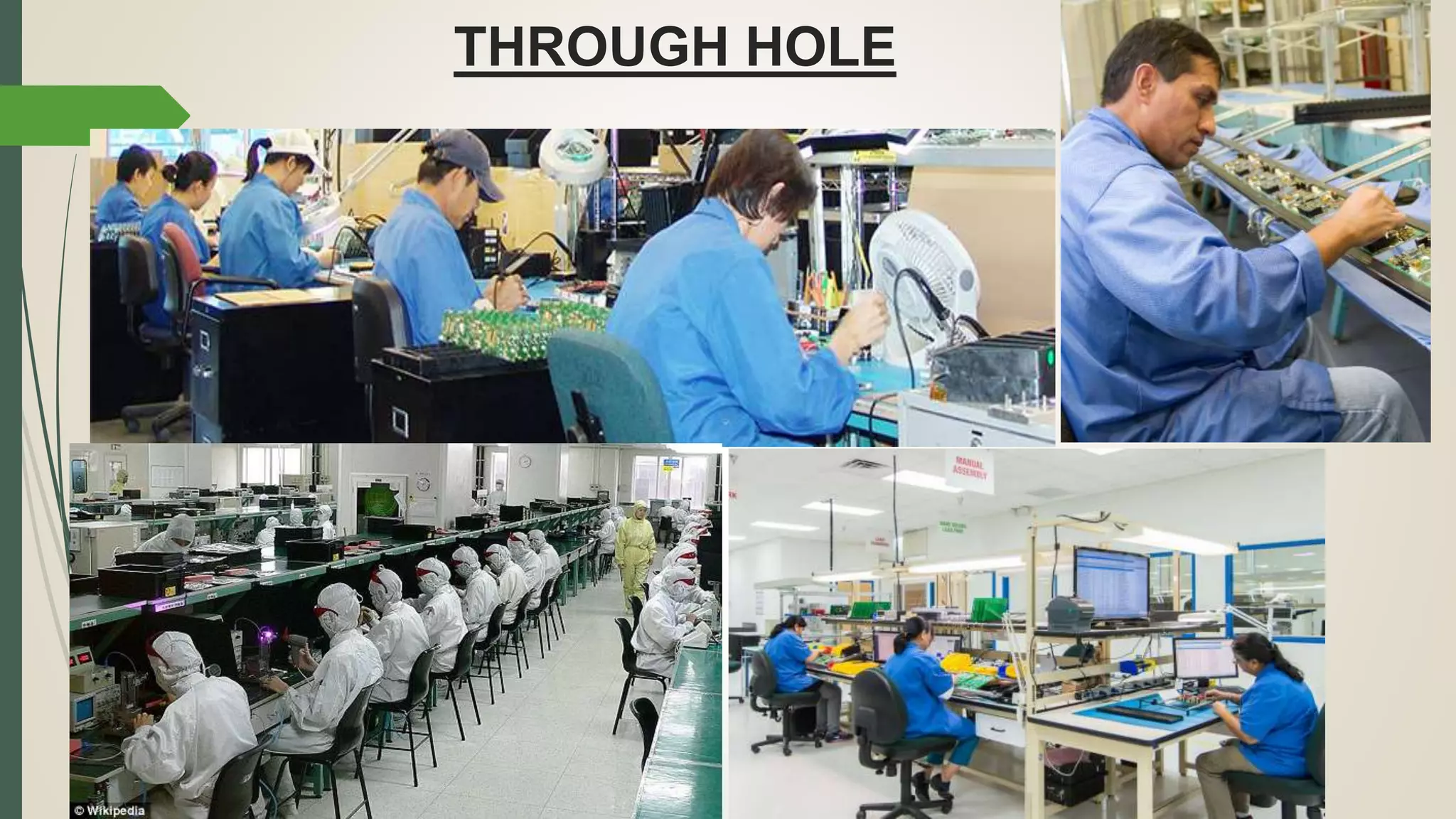
THROUGH HOLE
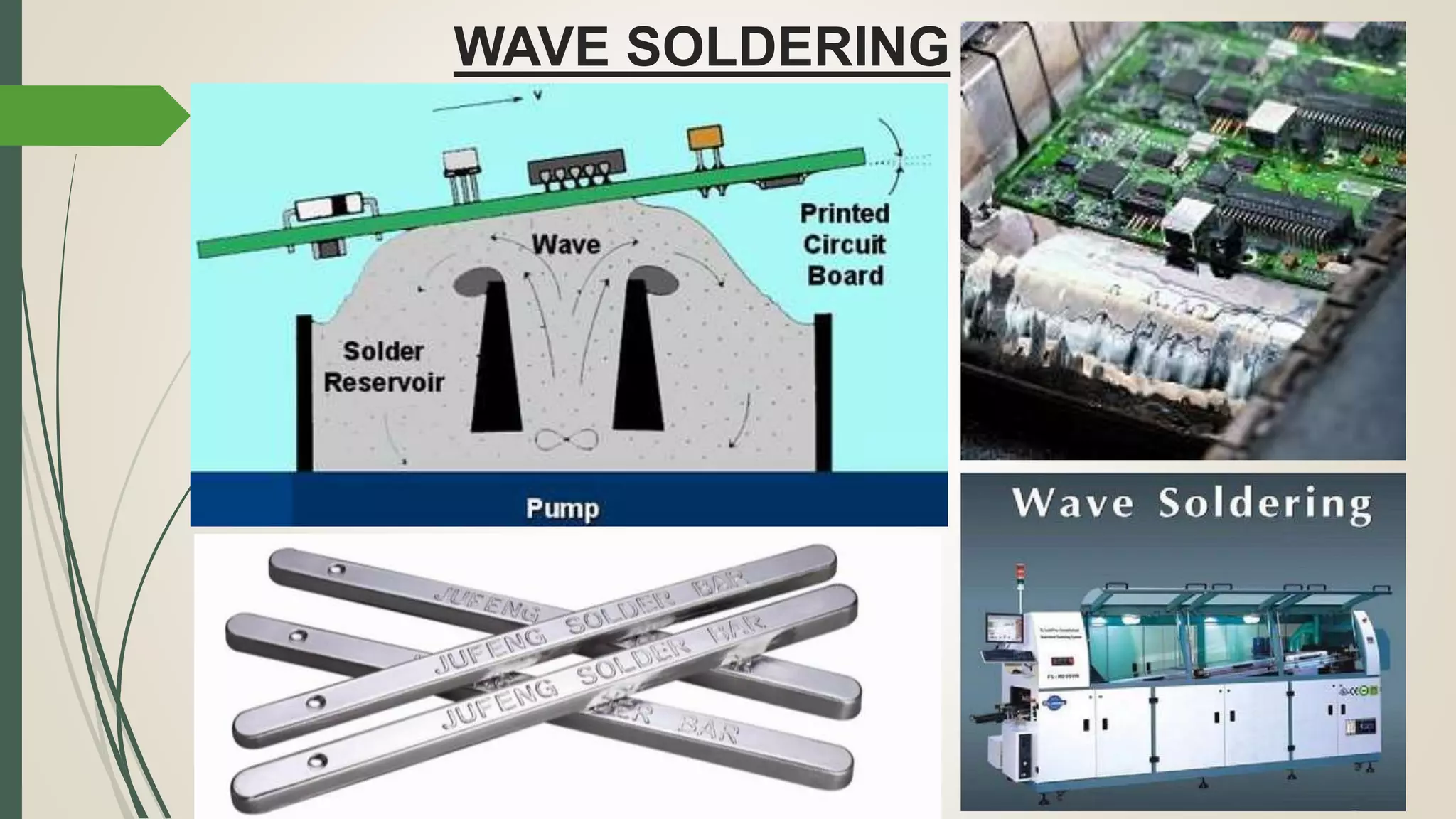
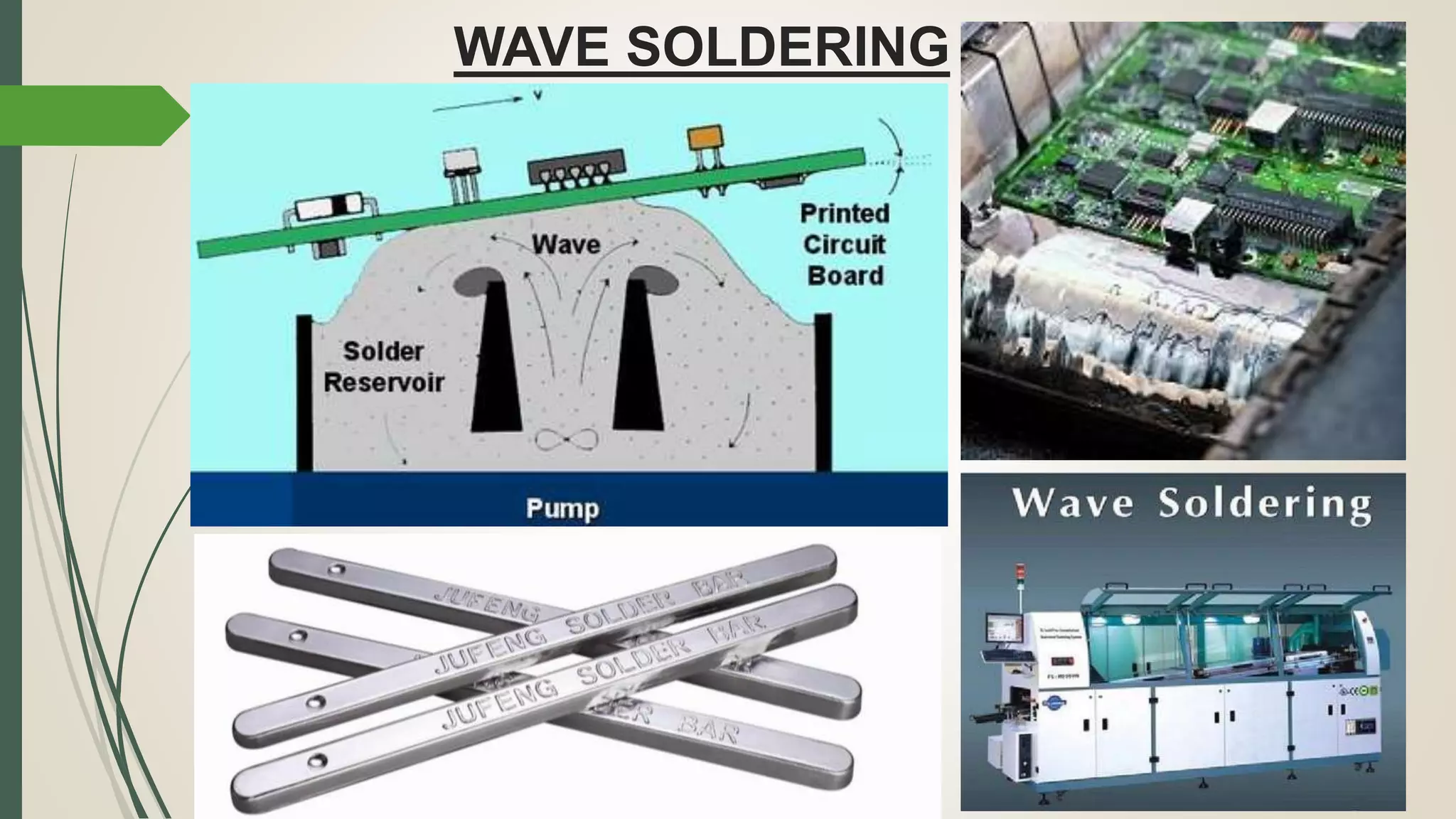
WAVE SOLDERING
WAVE SOLDERING
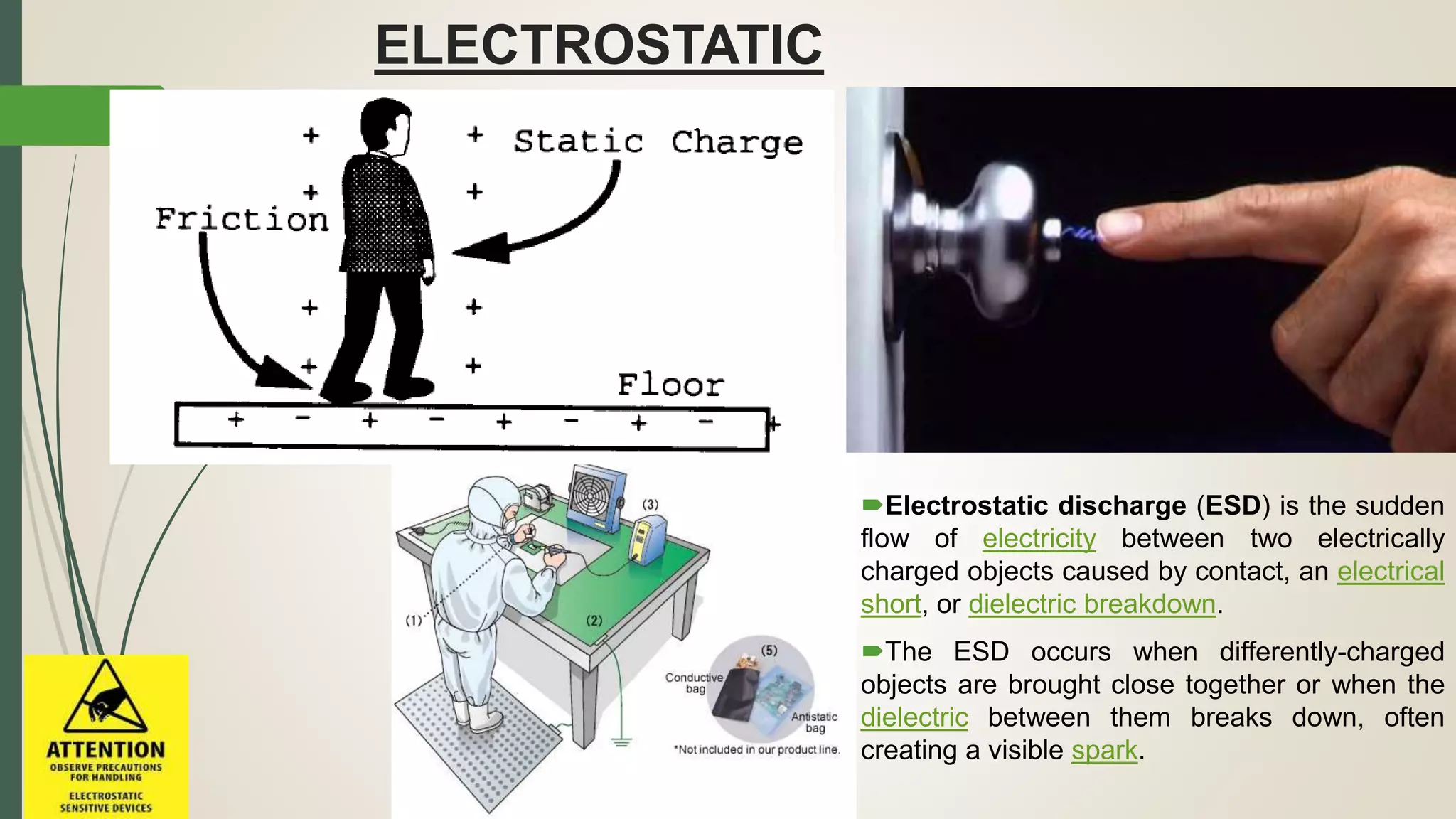
ELECTROSTATIC
DISCHARGE
Electrostatic discharge (ESD) is the sudden
flow of electricity between two electrically
charged objects caused by contact, an electrical
short, or dielectric breakdown.
The ESD occurs when differently-charged
objects are brought close together or when the
dielectric between them breaks down, often
creating a visible spark.
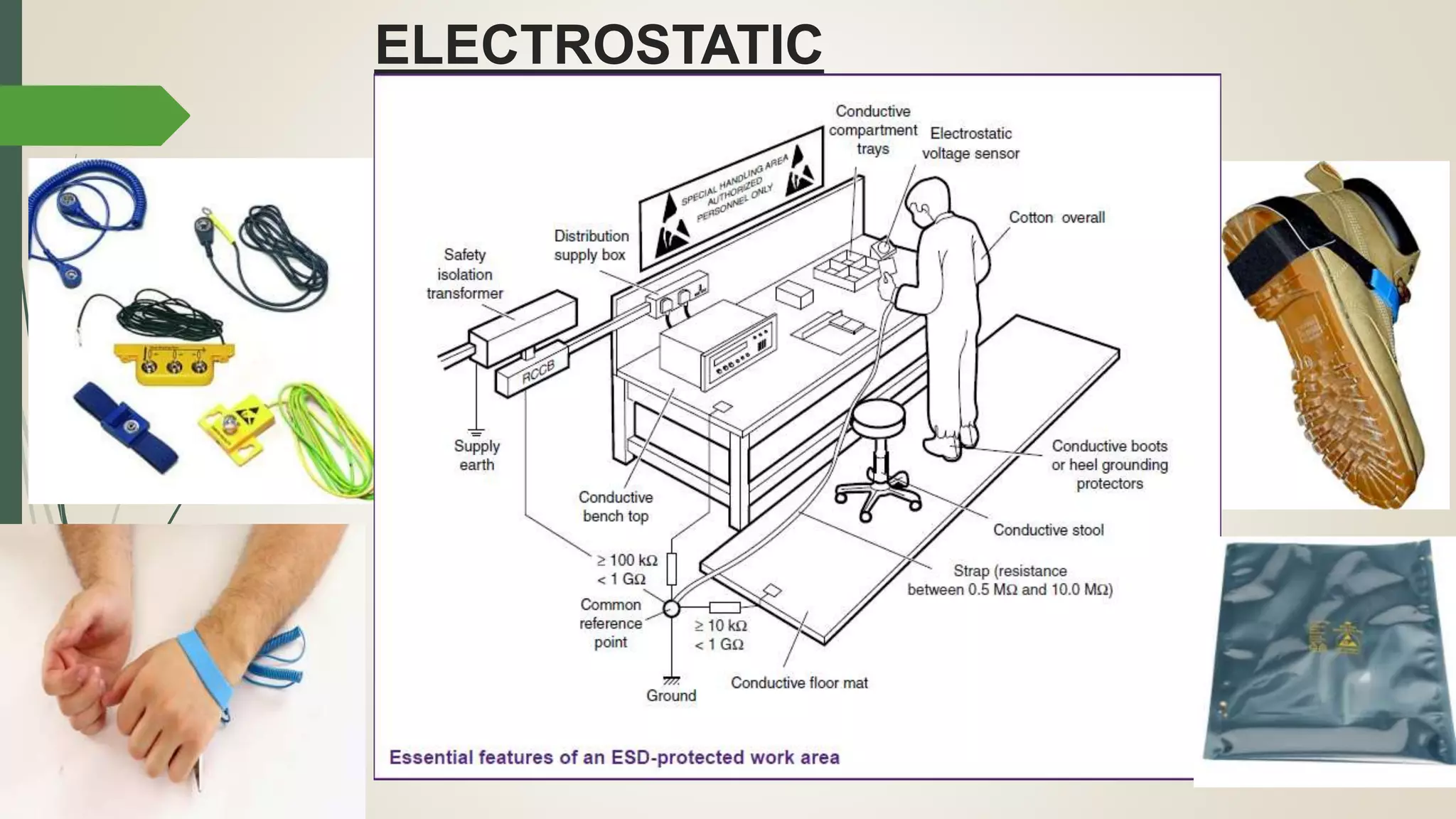
ELECTROSTATIC
DISCHARGE
Restriction of Hazardous Substances
(RoHS The Restriction of Hazardous Substances Directive 2002/95/EC,
(RoHS), short for Directive on the restriction of the use of certain
hazardous substances in electrical and electronic equipment, was
adopted in February 2003 by the European Union.
 This directive restricts (with exceptions) the use of six hazardous
materials in the manufacture of various types of electronic and
electrical equipment.
 It is closely linked with the Waste Electrical and Electronic
Equipment Directive (WEEE), which sets collection, recycling and
recovery targets for electrical goods and is part of a legislative
initiative to solve the problem of huge amounts of toxic electronic
waste.
Restriction of Hazardous Substances (RoHS)
Lead (Pb): < 1000 ppm
Mercury (Hg): < 100 ppm
Cadmium (Cd): < 100 ppm
Hexavalent Chromium: (Cr6+)) < 1000 ppm
Polybrominated Biphenyls (PBB): < 1000 ppm
Polybrominated Diphenyl Ethers (PBDE): < 1000 ppm
Bis(2-Ethylhexyl) phthalate (DEHP): < 1000 ppm
Benzyl Butyl Phthalate (BBP): < 1000 ppm
Dibutyl Phthalate (DBP): < 1000 ppm
Diisobutyl Phthalate (DIBP): < 1000 ppm
OUTCOME
 Identify Surface Mount Devices and Through Hole Devices.
 Usage of Presentation Tools.
 Electro Static Discharge (ESD)
 Handling PCBA’s
 Information on RoHS
Queries Session
 This is just an introduction to the Surface Mount Technology, It
doesn't end here – It’s a beginning.
 To be continued……
Outcome based Education
ASK – Attitude, Skill & Knowledge

Introduction to Surface Mount Technology

  • 1.
    A Seminar on PRESENTEDBY: Mr. ABDUL MUNAFF Asst. Professor DEPARTMENT OF ELECTICAL & ELECTRONICS ENGINEERING, SIET, VIJAYAPURA.
  • 2.
  • 3.
  • 4.
    ORGANIZATION OF PRESENTATION Objective of this Seminar  SMT Overview  SMT V/S THROUGH HOLE  Basic SMT process flow  Equipments used SMT Assembly  Through Hole Assembly & Soldering  ELECTROSTATIC DISCHARGE  RoHS  Outcome
  • 5.
    Objective of thisSeminar  INSPIRING CREATIVE & INNOVATIVE MINDS  KT (Knowledge Transfer)  Technology Awareness  yh
  • 6.
    SMT Overview  SurfaceMount Technology (SMT) refers to a specific type of electronics assembly where electronic components are attached to the surface of a substrate (typically a printed circuit board).  SMT is a modern alternative to traditional thru-hole technology where components are attached to substrates by leads that passed through holes in the PCB.  Surface Mount components require less space so SMT is helpful in product miniaturization. Miniaturization means – The process of making something very small using Modern Technology
  • 7.
    Surface Mount VsThru Hole Double-Sided Surface Mount Through-hole Technology
  • 8.
  • 9.
     Load BarePCB: Basic SMT process flow PCB Surface Mount Pad Surface Mount Pad Through hole Pa 1 Typical PCB insulated substrate copper connections protective covering
  • 10.
     Solder PastePrint: A stencil printer is used to print solder paste onto PCB. PCB Stencil frame Stencil Squeegee Solder Paste Snap-off The main reason for printing solder paste onto the PCB is to supply solder alloy for the solder joints. Solder Paste
  • 12.
     Place SurfaceMount Components: One or more pick and place or “chip shooter” machines are used to accurately place SMT components onto PCB. SMT Component Lead Pick and Place Machine Nozzle
  • 15.
     Reflow: Areflow oven heats the PCB to a temperature that melts the solder alloy. Solder Joint Fillet
  • 16.
     Cleaning: ThePCB is cleaned of flux residues if necessary.
  • 17.
    Equipments used SMTAssembly SOLDER PASTE STENCIL PRINTER PICK N PLACE/CHIP SHOOTER REFLOW OVEN
  • 18.
  • 19.
  • 20.
  • 21.
  • 22.
    CHIP SHOOTER/PICK nPLACE MACHINE
  • 23.
  • 24.
  • 25.
  • 26.
    Why Use SurfaceMount Technology?  Miniaturization of Products. SMD’s have improved performance over through-hole components due to their smaller size, shorter internal leads and smaller board layouts.  SMDs can be more cost effective than traditional through-hole components due to the smaller board size, fewer board layers and fewer holes.  Smaller component size: Typical size (1206 - 0.12" × 0.06" ).  Faster assembly: Some placement machines are capable of placing more than 1,36,000 components per hour. Types of SMD’s
  • 27.
    Main disadvantages The manufacturingprocesses for SMT are much more sophisticated than through-hole, raising the initial cost and time of setting up of production.  Manual prototype assembly or component-level repair is more difficult.  SMDs cannot be used directly with breadboards.
  • 28.
  • 29.
  • 30.
  • 31.
    ELECTROSTATIC DISCHARGE Electrostatic discharge (ESD)is the sudden flow of electricity between two electrically charged objects caused by contact, an electrical short, or dielectric breakdown. The ESD occurs when differently-charged objects are brought close together or when the dielectric between them breaks down, often creating a visible spark.
  • 32.
  • 33.
    Restriction of HazardousSubstances (RoHS The Restriction of Hazardous Substances Directive 2002/95/EC, (RoHS), short for Directive on the restriction of the use of certain hazardous substances in electrical and electronic equipment, was adopted in February 2003 by the European Union.  This directive restricts (with exceptions) the use of six hazardous materials in the manufacture of various types of electronic and electrical equipment.  It is closely linked with the Waste Electrical and Electronic Equipment Directive (WEEE), which sets collection, recycling and recovery targets for electrical goods and is part of a legislative initiative to solve the problem of huge amounts of toxic electronic waste.
  • 34.
    Restriction of HazardousSubstances (RoHS) Lead (Pb): < 1000 ppm Mercury (Hg): < 100 ppm Cadmium (Cd): < 100 ppm Hexavalent Chromium: (Cr6+)) < 1000 ppm Polybrominated Biphenyls (PBB): < 1000 ppm Polybrominated Diphenyl Ethers (PBDE): < 1000 ppm Bis(2-Ethylhexyl) phthalate (DEHP): < 1000 ppm Benzyl Butyl Phthalate (BBP): < 1000 ppm Dibutyl Phthalate (DBP): < 1000 ppm Diisobutyl Phthalate (DIBP): < 1000 ppm
  • 35.
    OUTCOME  Identify SurfaceMount Devices and Through Hole Devices.  Usage of Presentation Tools.  Electro Static Discharge (ESD)  Handling PCBA’s  Information on RoHS
  • 36.
    Queries Session  Thisis just an introduction to the Surface Mount Technology, It doesn't end here – It’s a beginning.  To be continued……
  • 38.
    Outcome based Education ASK– Attitude, Skill & Knowledge