
Semantic
Segmentation
Hello!
I am Frederick Apina
Machine Learning Engineer @ParrotAI
I am here because I love to give
presentations.
2
“When I think about strong
innovations in term of
automation, cognitive computing,
and artificial intelligence, they will
be coming a lot from Tanzania as
well.”
3
1.
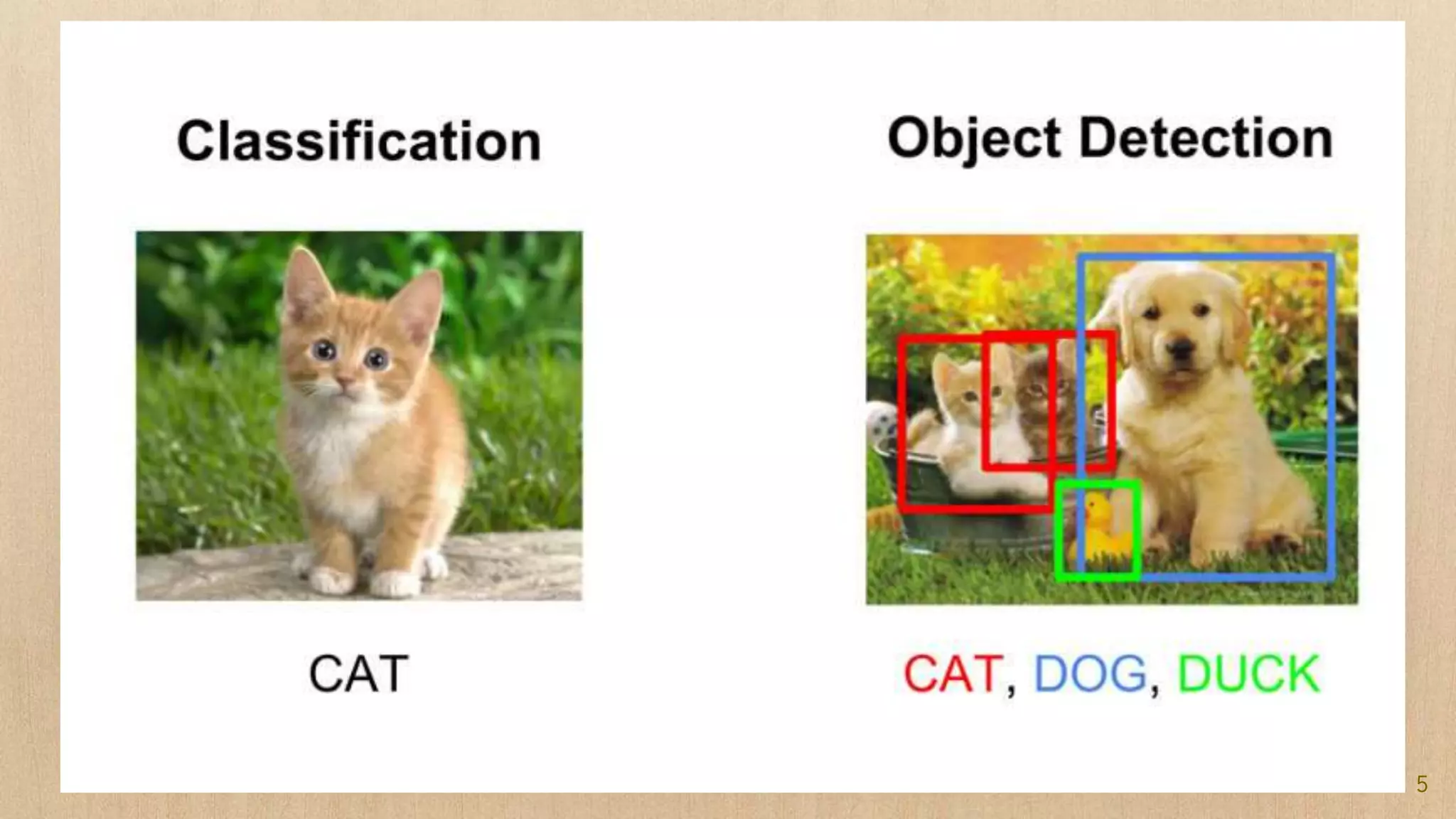
What is semantic
segmentation?
5
6
Limitations
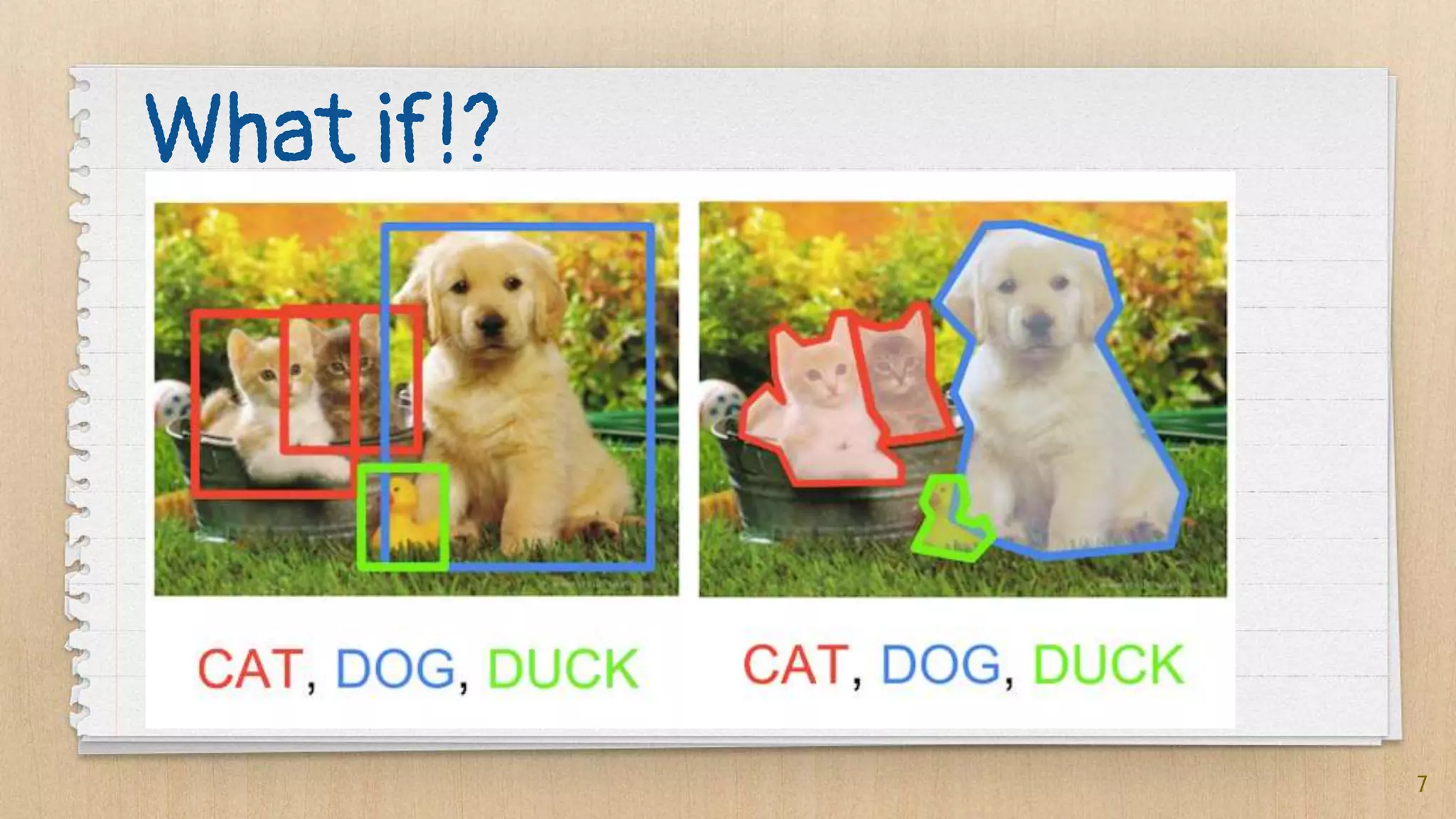
Still a bit rough since we’re only
drawing bounding boxes and don’t
really get an accurate idea of
object shape.
7
What if!?
8
Semantic Segmentation
Semantic Segmentation is to
label each pixel of an image with a
corresponding class of what is being
represented.
✗ commonly referred to as dense prediction.
2.
Applications of
Semantic
Segmentation
10
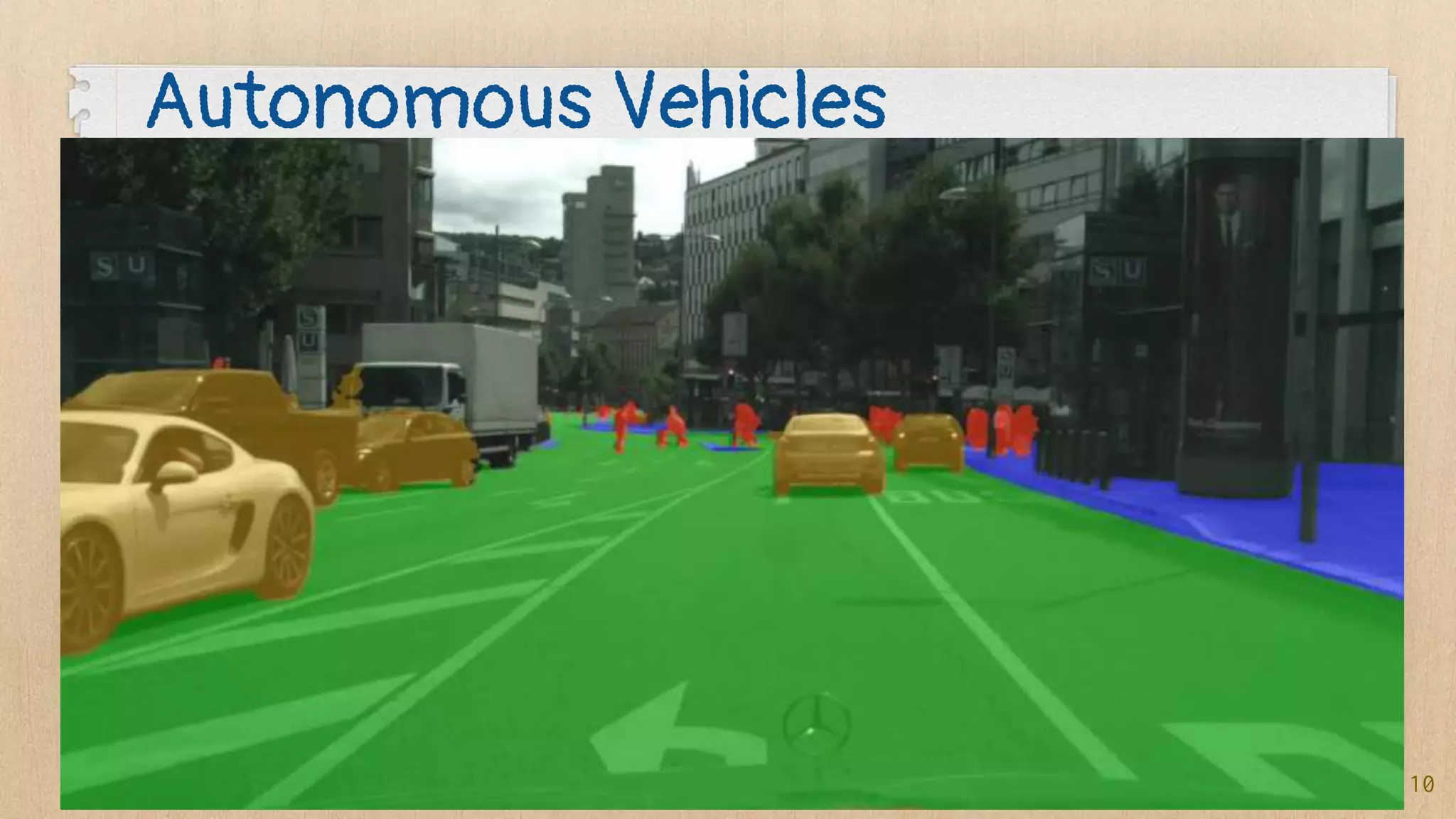
Autonomous Vehicles
11
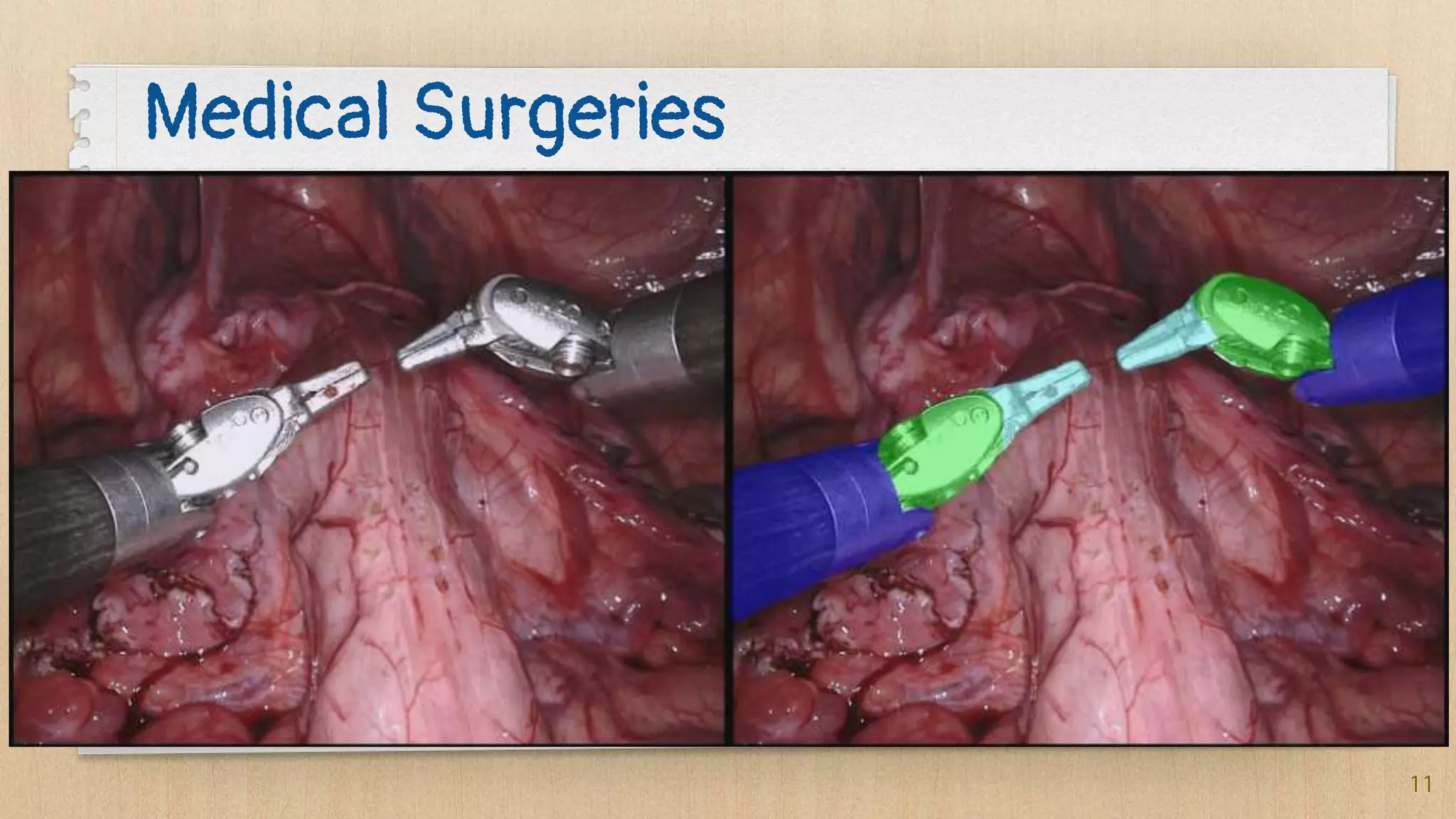
Medical Surgeries
12
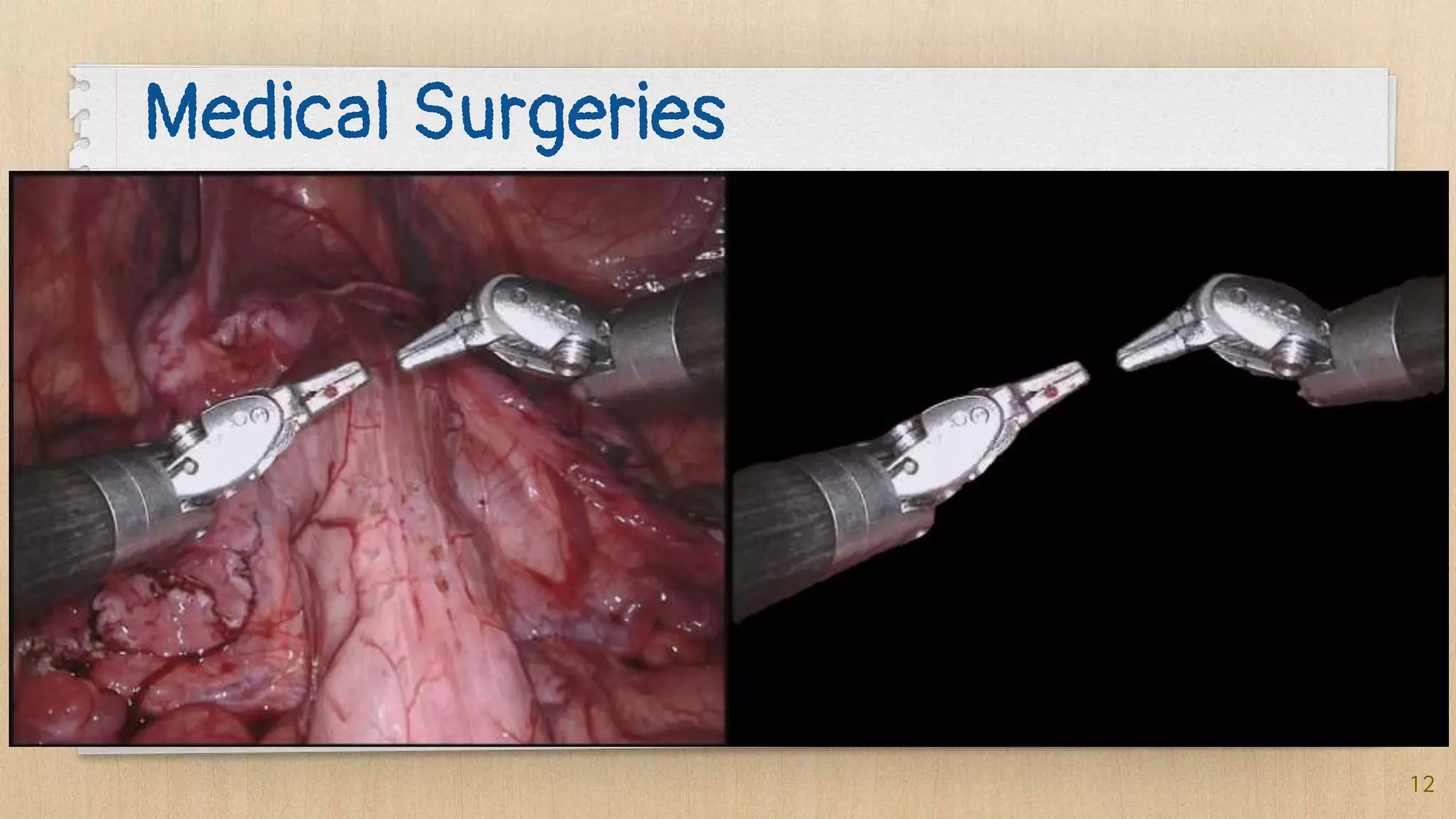
Medical Surgeries
13
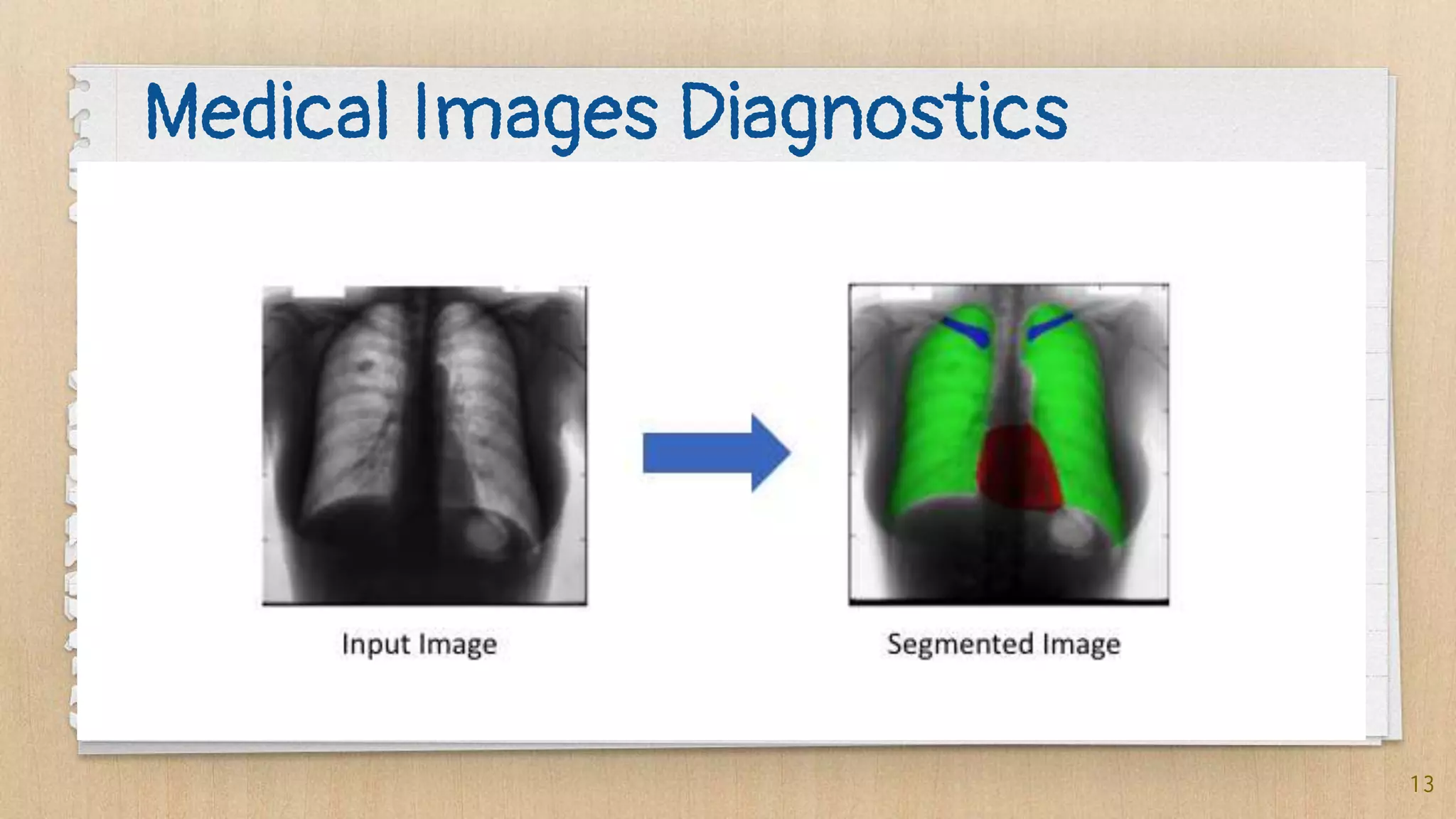
Medical Images Diagnostics
3.
Representing the
Task
15
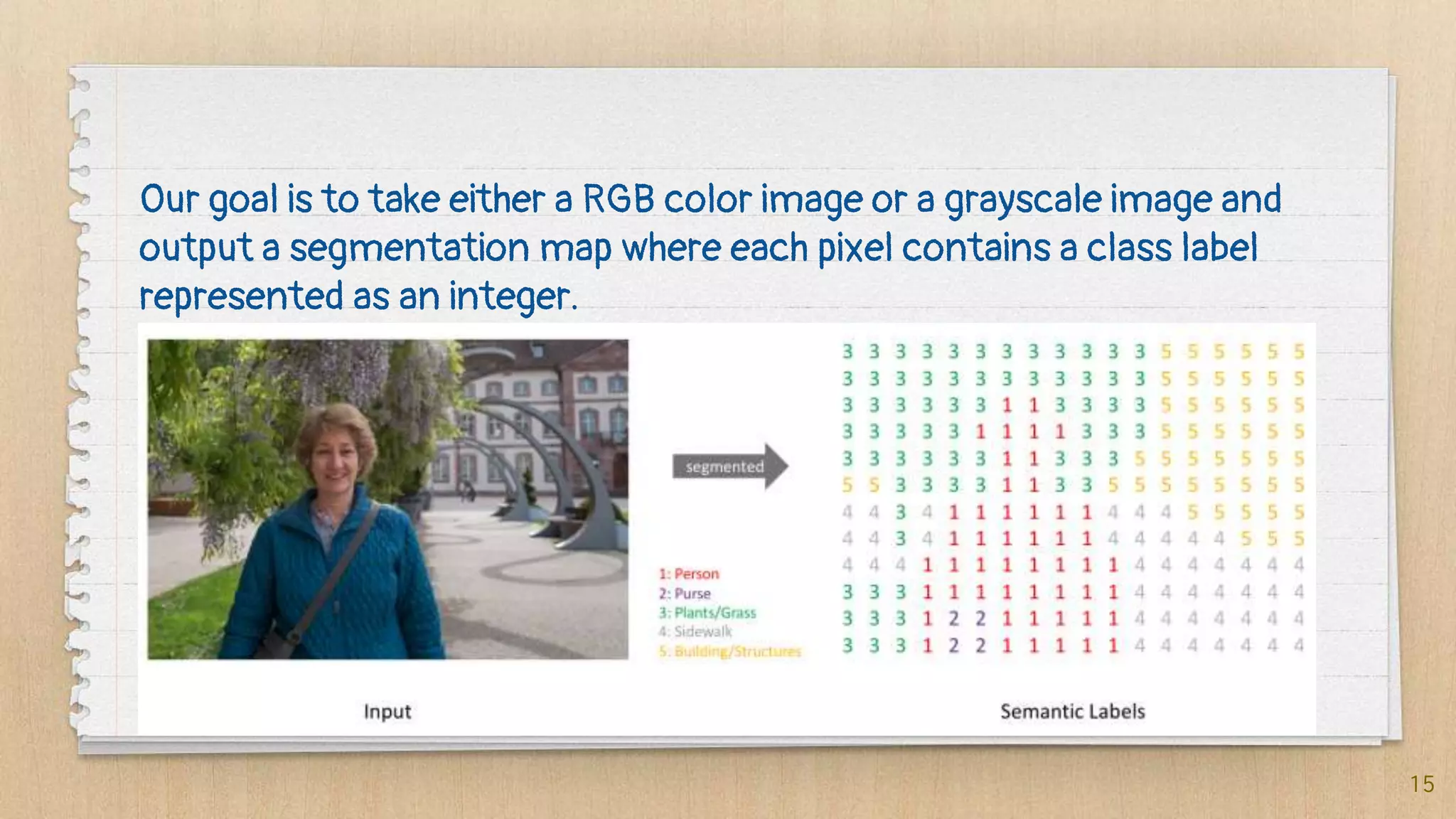
Our goal is to take either a RGB color image or a grayscale image and
output a segmentation map where each pixel contains a class label
represented as an integer.
16
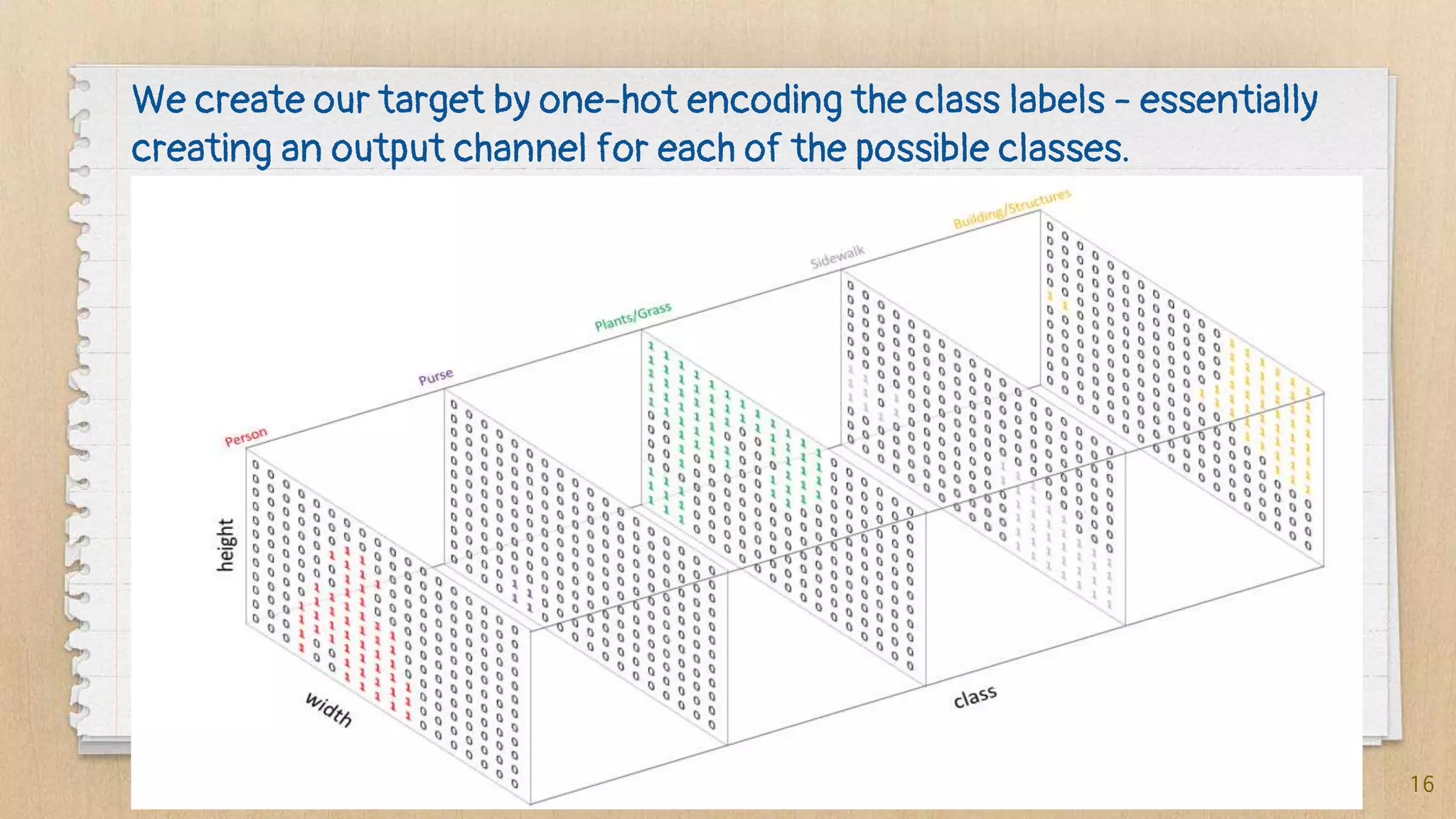
We create our target by one-hot encoding the class labels - essentially
creating an output channel for each of the possible classes.
17
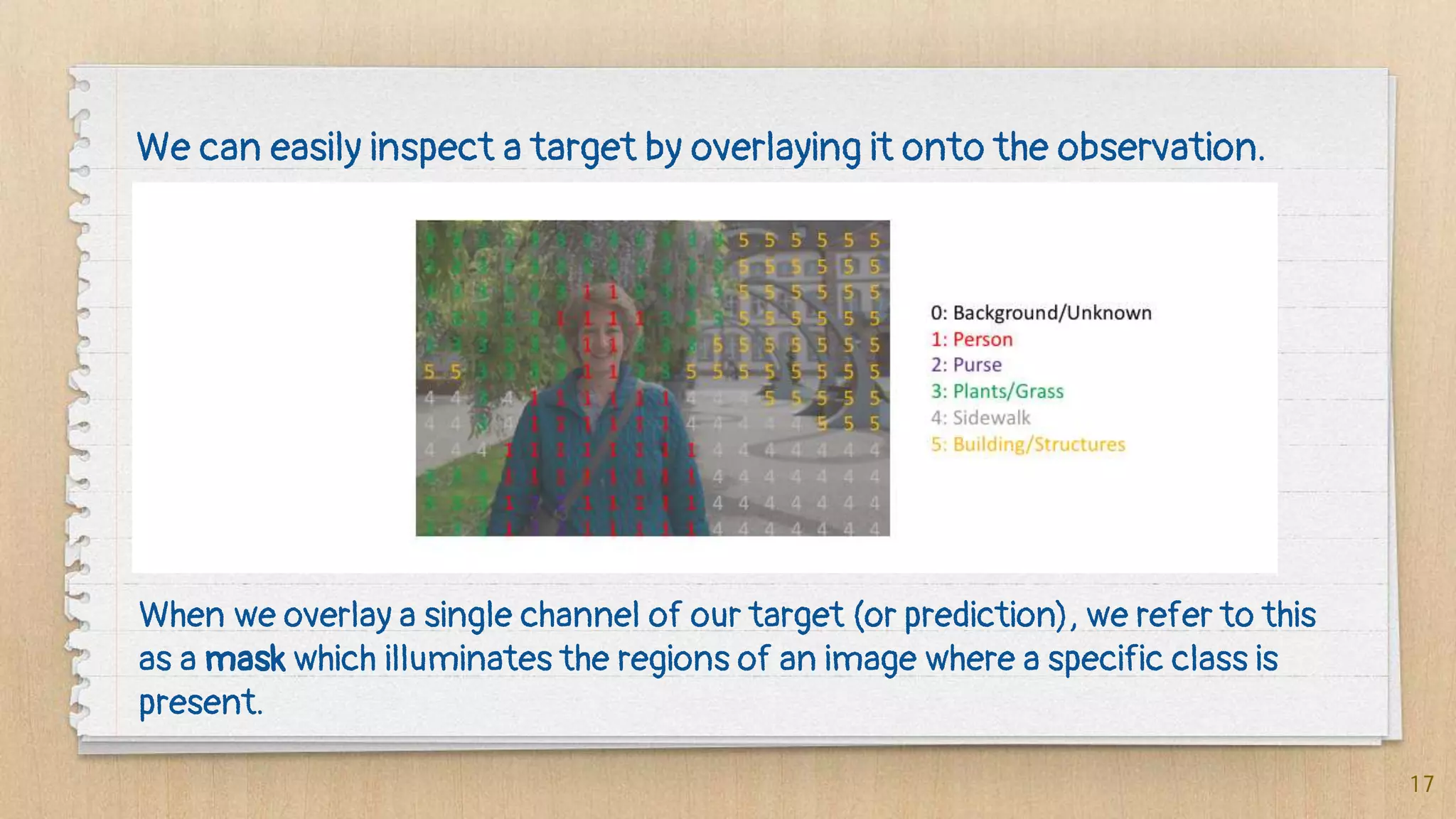
We can easily inspect a target by overlaying it onto the observation.
When we overlay a single channel of our target (or prediction), we refer to this
as a mask which illuminates the regions of an image where a specific class is
present.
3.
Constructing an
Architecture
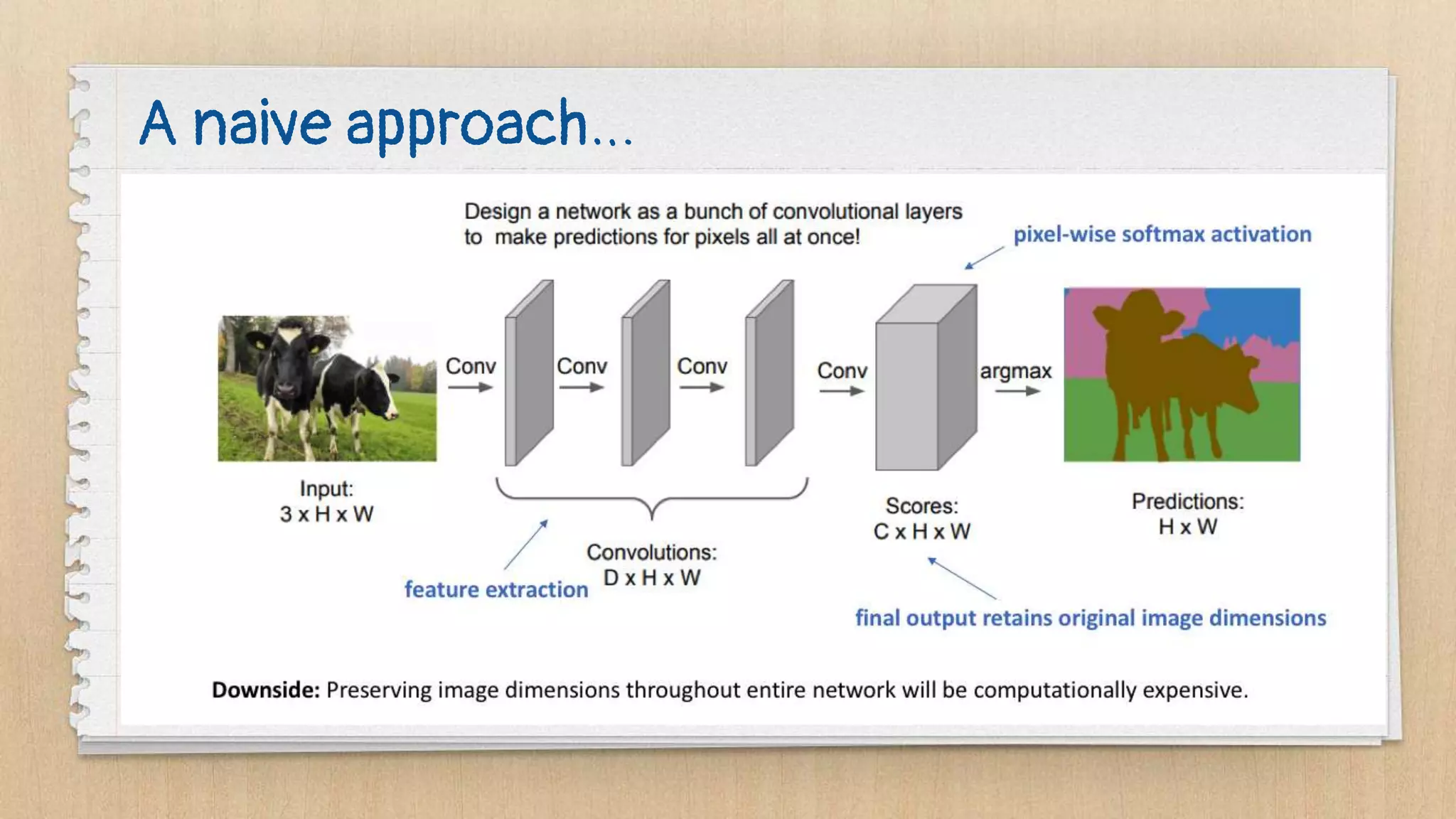
A naive approach…
20
✗ Recall that for deep convolutional networks,
earlier layers tend to learn low-level concepts
while later layers develop more high-level (and
specialized) feature mappings. In order to
maintain expressiveness, we typically need to
increase the number of feature maps (channels)
as we get deeper in the network.
21
Solution?
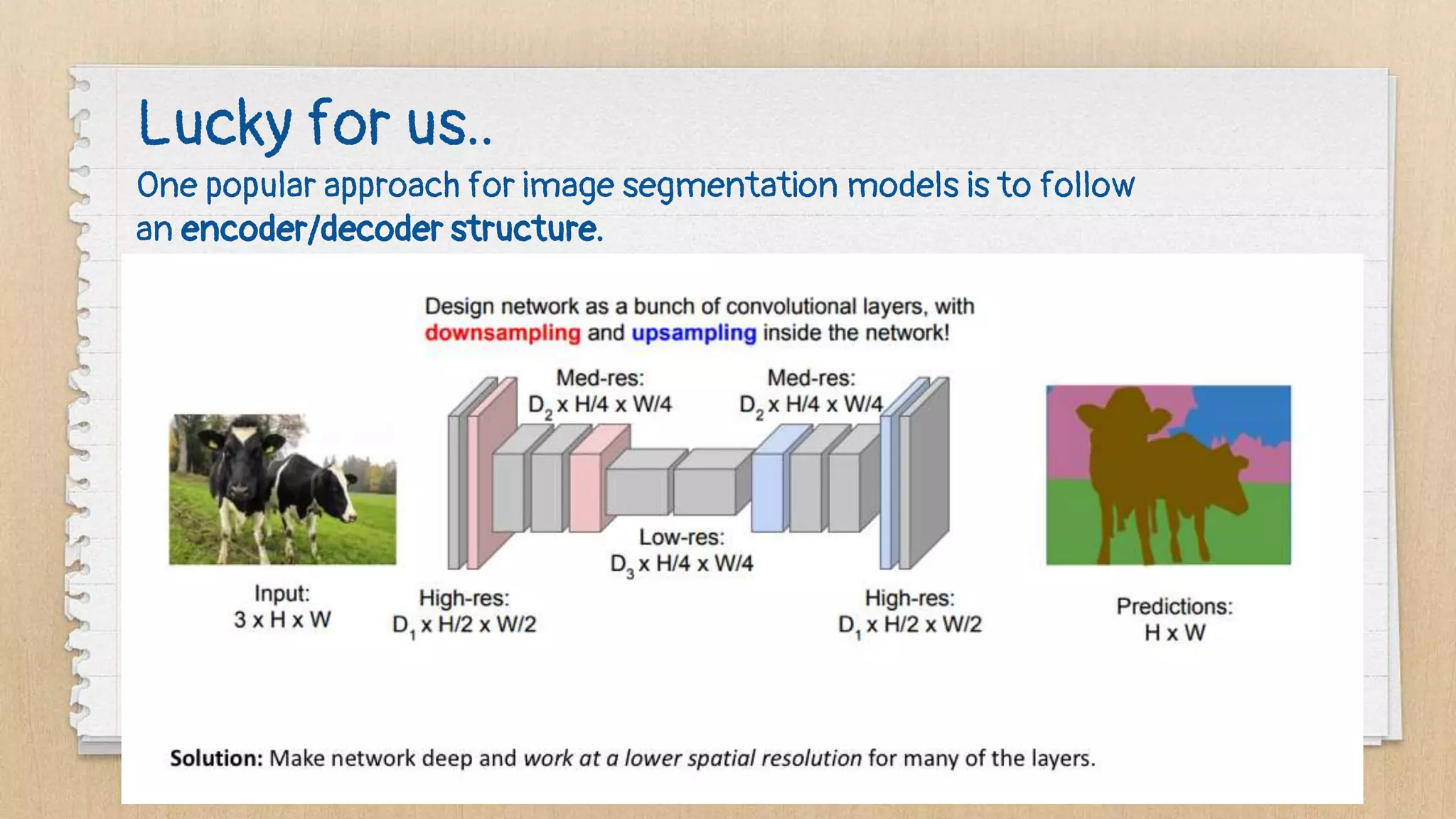
Lucky for us..
One popular approach for image segmentation models is to follow
an encoder/decoder structure.
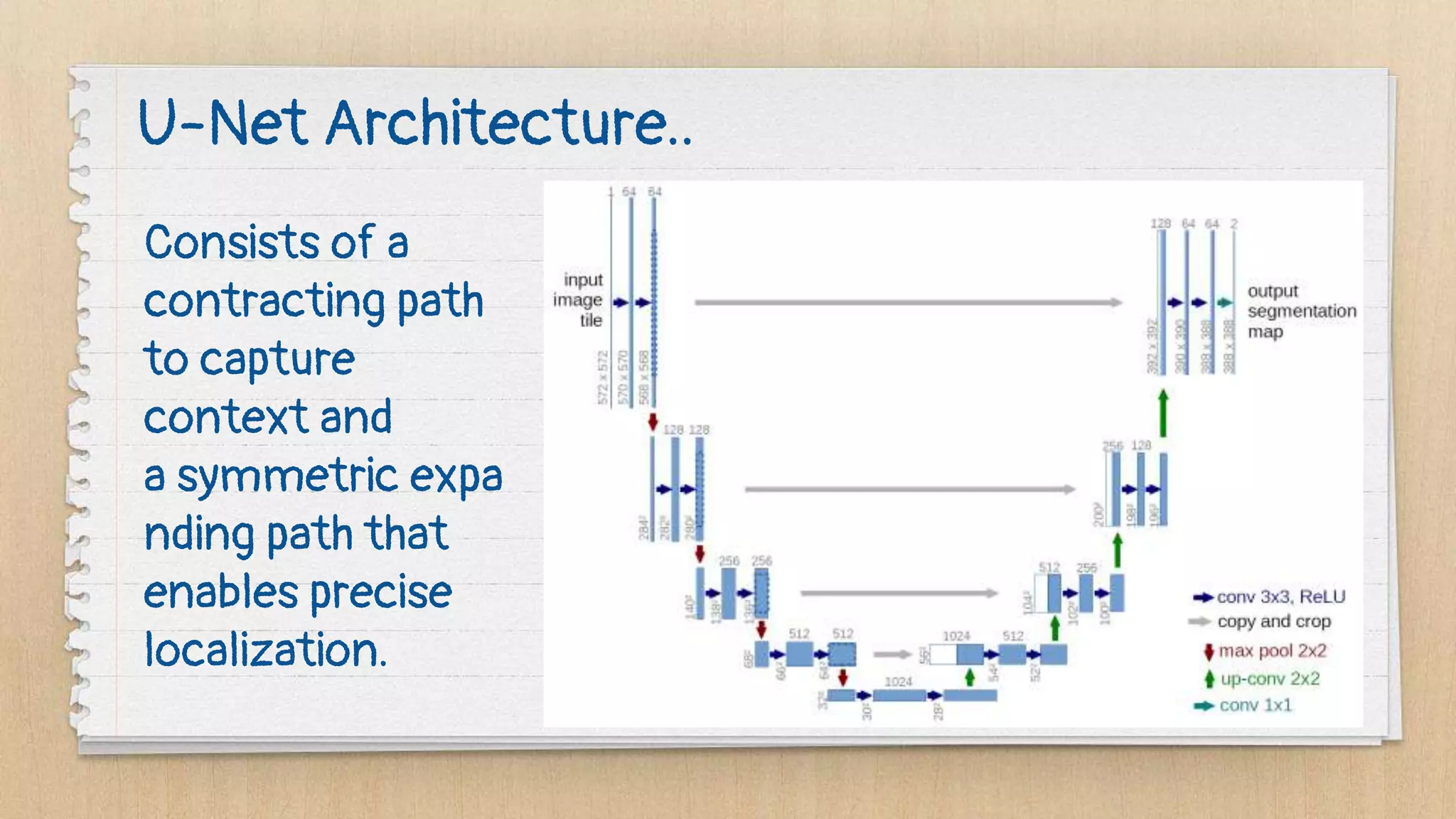
U-Net Architecture..
Consists of a
contracting path
to capture
context and
a symmetric expa
nding path that
enables precise
localization.
Advanced U-Net variants
The standard U-Net model consists of a series of
convolution operations for each "block" in the architecture.
Proposed: swap out the basic stacked convolution blocks in
favor of residual blocks. This residual block introduces short skip
connections (within the block) alongside the existing long skip
connections (between the corresponding feature maps of
encoder and decoder modules) found in the standard U-Net
structure.
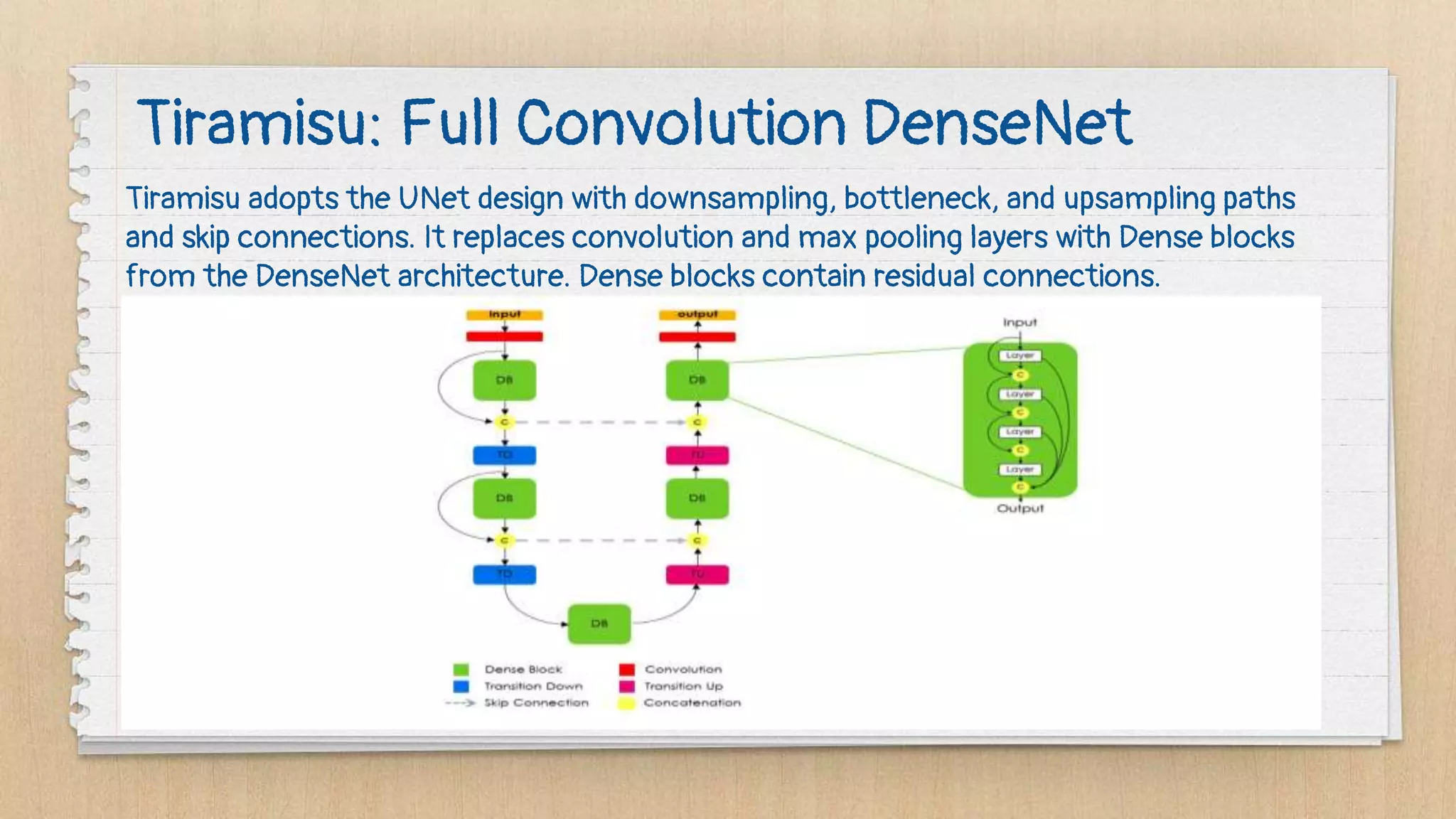
Tiramisu: Full Convolution DenseNet
Tiramisu adopts the UNet design with downsampling, bottleneck, and upsampling paths
and skip connections. It replaces convolution and max pooling layers with Dense blocks
from the DenseNet architecture. Dense blocks contain residual connections.
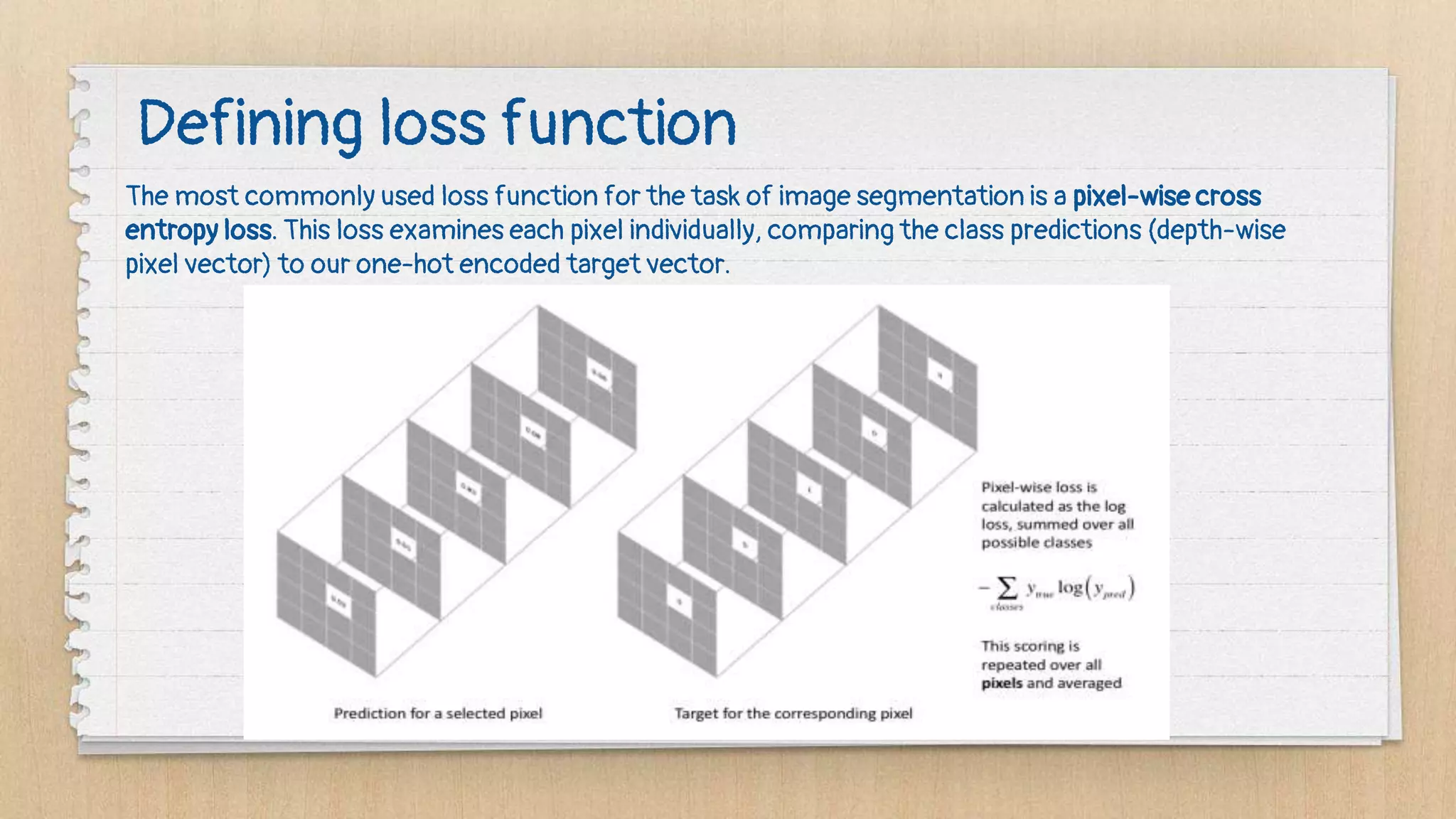
Defining loss function
The most commonly used loss function for the task of image segmentation is a pixel-wise cross
entropy loss. This loss examines each pixel individually, comparing the class predictions (depth-wise
pixel vector) to our one-hot encoded target vector.
Deep Learning is an continuously-growing and a
relatively new concept, the vast amount of
resources can be a touch overwhelming for those
either looking to get into the field, or those
already engraved in it. A good way of cooping is to
get a good general knowledge of machine learning
and then find a good structured path to follow (be
a project or research).
27
Conclusion
28
Thanks!
Any questions?
You can find me at:
✗ Fred@parrotai.co.tz

Introduction to Segmentation in Computer vision

  • 1.
  • 2.
    Hello! I am FrederickApina Machine Learning Engineer @ParrotAI I am here because I love to give presentations. 2
  • 3.
    “When I thinkabout strong innovations in term of automation, cognitive computing, and artificial intelligence, they will be coming a lot from Tanzania as well.” 3
  • 4.
  • 5.
  • 6.
    6 Limitations Still a bitrough since we’re only drawing bounding boxes and don’t really get an accurate idea of object shape.
  • 7.
  • 8.
    8 Semantic Segmentation Semantic Segmentationis to label each pixel of an image with a corresponding class of what is being represented. ✗ commonly referred to as dense prediction.
  • 9.
  • 10.
  • 11.
  • 12.
  • 13.
  • 14.
  • 15.
    15 Our goal isto take either a RGB color image or a grayscale image and output a segmentation map where each pixel contains a class label represented as an integer.
  • 16.
    16 We create ourtarget by one-hot encoding the class labels - essentially creating an output channel for each of the possible classes.
  • 17.
    17 We can easilyinspect a target by overlaying it onto the observation. When we overlay a single channel of our target (or prediction), we refer to this as a mask which illuminates the regions of an image where a specific class is present.
  • 18.
  • 19.
  • 20.
    20 ✗ Recall thatfor deep convolutional networks, earlier layers tend to learn low-level concepts while later layers develop more high-level (and specialized) feature mappings. In order to maintain expressiveness, we typically need to increase the number of feature maps (channels) as we get deeper in the network.
  • 21.
  • 22.
    Lucky for us.. Onepopular approach for image segmentation models is to follow an encoder/decoder structure.
  • 23.
    U-Net Architecture.. Consists ofa contracting path to capture context and a symmetric expa nding path that enables precise localization.
  • 24.
    Advanced U-Net variants Thestandard U-Net model consists of a series of convolution operations for each "block" in the architecture. Proposed: swap out the basic stacked convolution blocks in favor of residual blocks. This residual block introduces short skip connections (within the block) alongside the existing long skip connections (between the corresponding feature maps of encoder and decoder modules) found in the standard U-Net structure.
  • 25.
    Tiramisu: Full ConvolutionDenseNet Tiramisu adopts the UNet design with downsampling, bottleneck, and upsampling paths and skip connections. It replaces convolution and max pooling layers with Dense blocks from the DenseNet architecture. Dense blocks contain residual connections.
  • 26.
    Defining loss function Themost commonly used loss function for the task of image segmentation is a pixel-wise cross entropy loss. This loss examines each pixel individually, comparing the class predictions (depth-wise pixel vector) to our one-hot encoded target vector.
  • 27.
    Deep Learning isan continuously-growing and a relatively new concept, the vast amount of resources can be a touch overwhelming for those either looking to get into the field, or those already engraved in it. A good way of cooping is to get a good general knowledge of machine learning and then find a good structured path to follow (be a project or research). 27 Conclusion
  • 28.
    28 Thanks! Any questions? You canfind me at: ✗ Fred@parrotai.co.tz