Downloaded 499 times
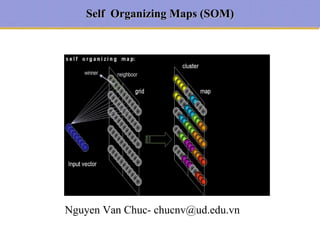

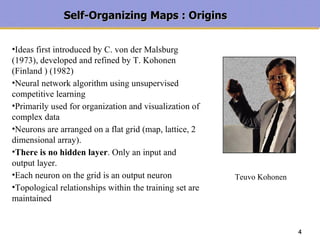

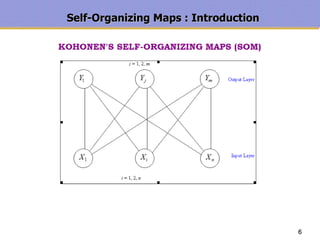
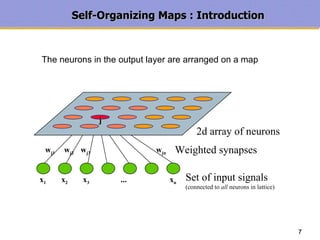
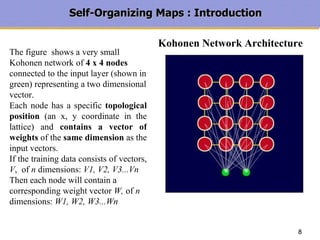
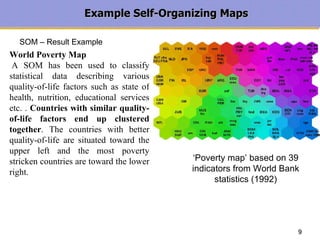
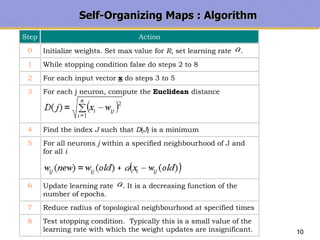
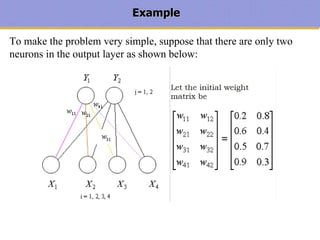
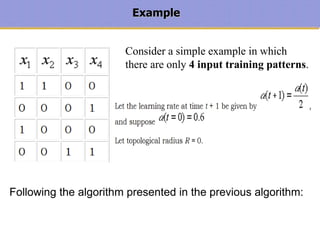
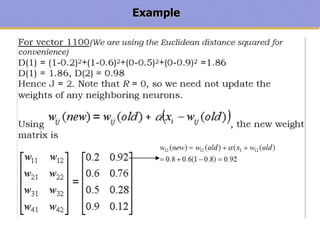
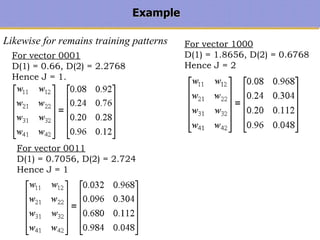
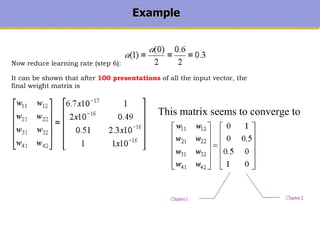
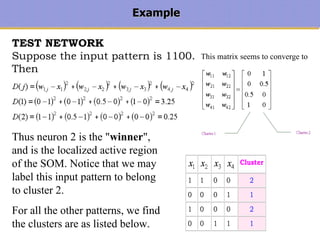

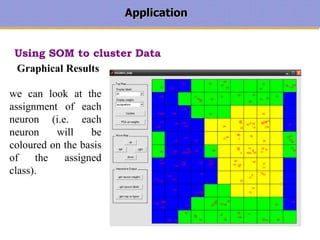


Self-Organizing Maps (SOM) are a type of neural network that can be used for clustering and visualizing complex, high-dimensional data. SOM reduces dimensionality while preserving topological relationships. It arranges nodes on a grid such that similar input vectors are mapped to nearby nodes. During training, the best matching node and its neighbors are adjusted to better match the input. This results in a 2D map where similar data clusters together. For example, a SOM was used to cluster countries based on quality of life indicators, grouping those with similar living standards. SOM can be useful for applications like data mining, pattern recognition, and more.


