INTRODUCTION TO
METALWORKS
LORLIE T. BUSMENTE
WHAT IS METALWORKING?
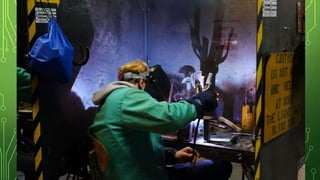
•Metalworking is the process of
forming and shaping metals to
create useful tools, objects,
equipment parts, and
structures.
THE HISTORY OF METALWORKING
•For thousands of years, precious
metals have been worked into
objects and valued by ancient
civilizations, from Pharaohs in
Egypt to Mayans in North America.
Metalworking has been a way for civilizations to
communicate status, religious beliefs, and
symbolism through artifacts and a practical way to
build tools and structures. It has been practiced by
artisans, blacksmiths, alchemists, contractors, and
more around the world, all of whom specialize in
different aspects of metalworking. Many ancient
metalsmithing techniques are still used today, from
soldering to welding.
•Metallic ores have been extracted from the earth for
thousands of years, placing great importance on
metalworkers as the source of extricating metals. For
example, you can remove iron from mineral-rich sand
and mine precious metals like silver from the earth. In
modern times, metals have become even more critical
to humanity and advancements in technology and
transportation. Metalworking is all around us, from
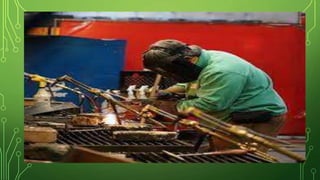
the fabrication of electronics to automobiles.
METALWORKING TECHNIQUES
•Metalworking techniques
create everything from
small decorative objects to
large-scale structures.
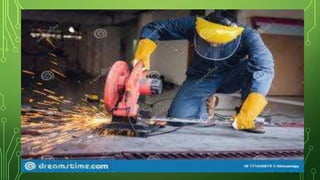
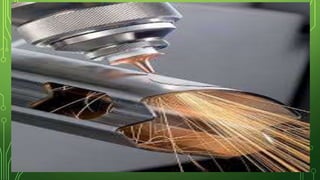
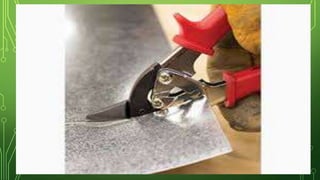
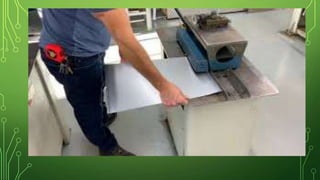
CUTTING
•Cutting removes material from
metal using milling, routing,
turning, and technologies like
CNC (computer numerical
control) machines.
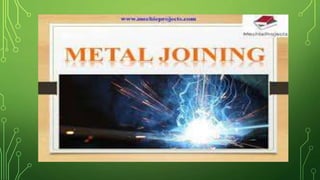
JOINING
•Joining is the process of
combining several pieces of
metal with heat through
welding or soldering.
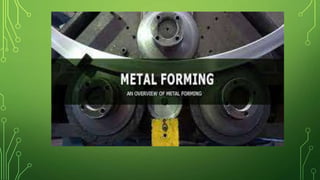
FORMING
•Forming is the process of re-
shaping and fabricating metal
objects without adding or removing
any material. This process is
possible through a combination of
heat and pressure.
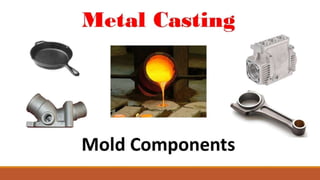
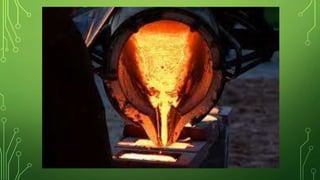
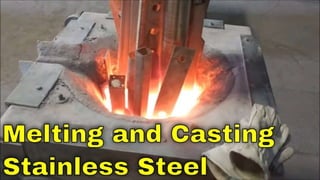
CASTING
•Metal casting is a metalworking
process that can be traced back
to around 4000 BCE, and it is still
used for making sculptures,
tools, and jewelry.
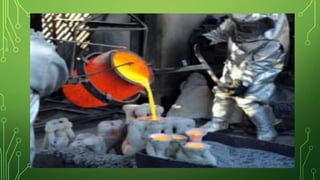
•The common methods
for casting metal are
lost wax casting and
sand casting.
•Lost wax casting involves
carving or shaping your
piece in wax, creating a
plaster mold around it,
then burning out the wax.
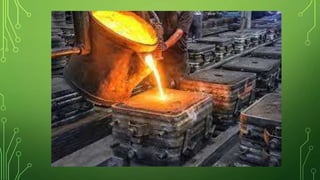
•Sand casting uses sand as the
mold material. Sand is combined
with a bonding agent, such as
clay, and is gated. Then, molten
metal is flowed into the mold to
create a solid object.
CUTTING PROCESSES
& TECHNIQUES
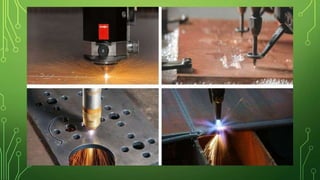
•Metals must be cut and separated
throughout the metalworking
process to build structures, make
tools, and more.
MILLING
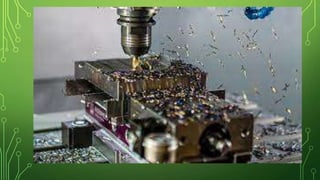
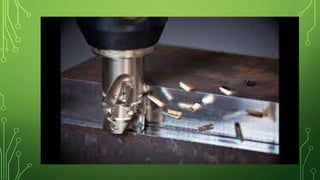
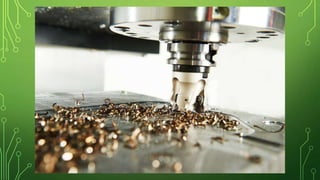
•Milling is the process of
removing precise
amounts of material
from a greater piece.
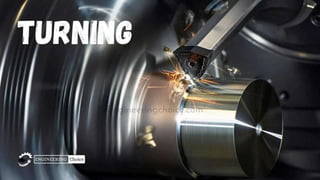
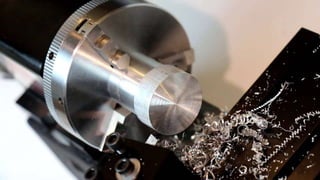
TURNING
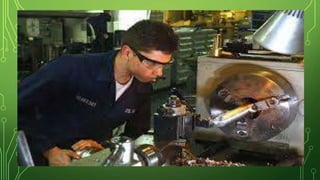
•Turning is a machining process
in which a cutting tool moves
linearly while the workpiece
rotates, strategically removing
material from the piece.
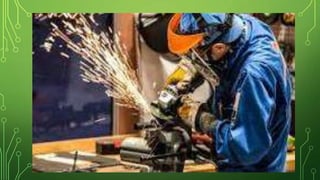
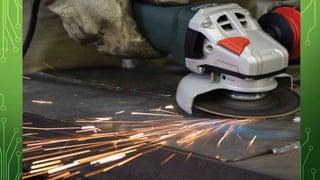
GRINDING
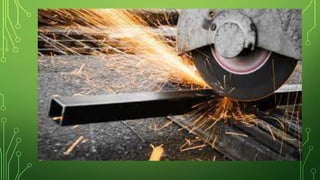
•Grinding uses an abrasive
process to remove material
from the workpiece, typically
in the finishing stages of
metalworking.
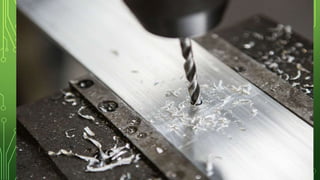
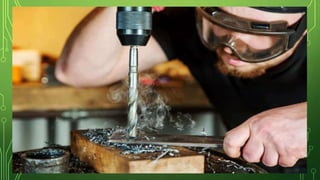
DRILLING
•Drilling creates holes in
metal using a drill press,
handheld drill, or CNC
machine.
JOINING PROCESSES &
TECHNIQUES
•Joining metals utilized heat
and pressure in order to
create a larger piece or build
a structure.
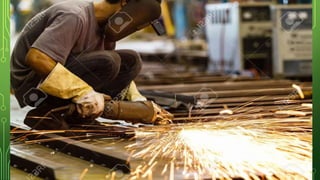
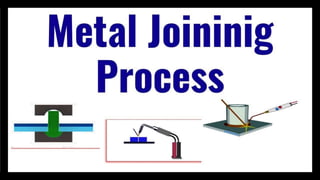
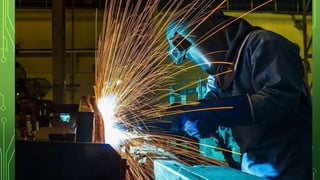
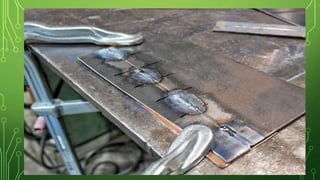
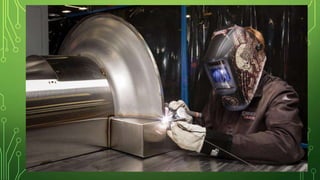
WELDING
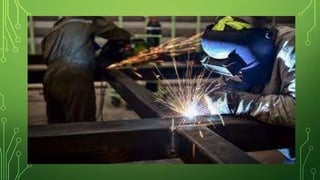
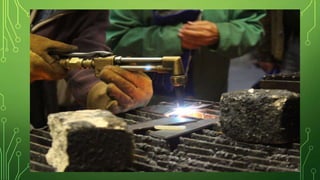
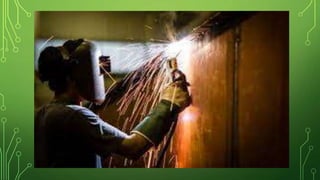
•Welding metal is a
fabrication process that
joins materials through
pressure and heat.
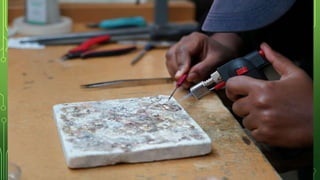
SOLDERING
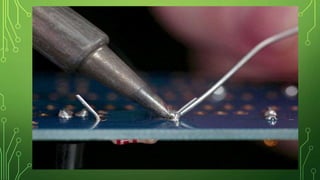
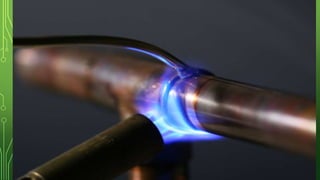
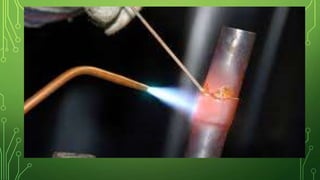
•Soldering is another method for
joining metals by melting a filler
metal on top of the metals being
joined to make a reliable
electrical bridge.
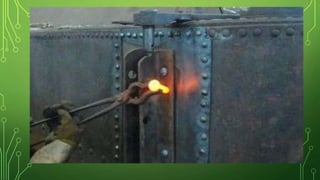
RIVETING
•Rivets are permanent
mechanical fasteners that can
create kinetic joints in a
workpiece or reinforce the
structural integrity of a larger
object.
FORMING PROCESSES &
TECHNIQUES
•Reshaping and manipulating
the shape of metal can be
done when the material is
hot or cold.
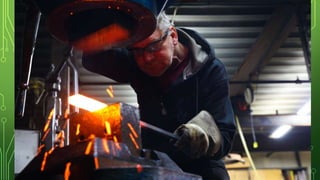
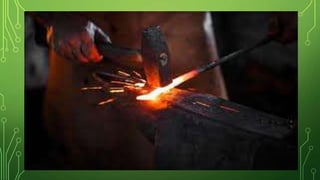
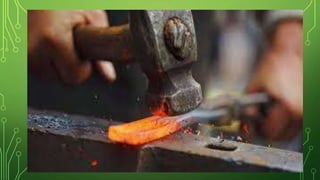
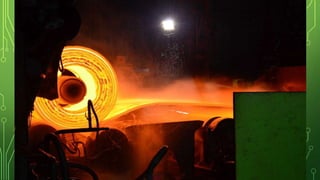
FORGING
•Forging is one of the
oldest metalworking
processes used to form
and shape metal.
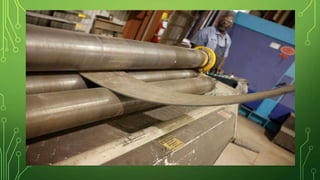
ROLL FORMING
•Roll forming is a process that
involves the continuous
bending of a long strip of sheet
metal through a roll forming
mill at room temperature.
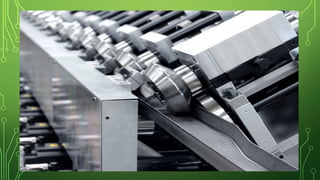
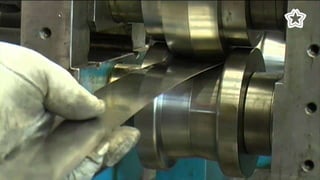
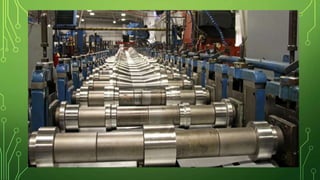
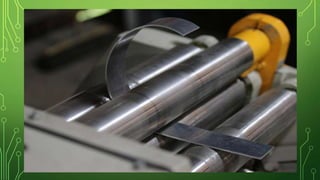
ROLLING
•Rolling is a metal forming
process in which metal stock is
passed through a rolling mill to
reduce the thickness or to
make the thickness uniform.
• ASSESSMENT:
• 1. It is the metal forming process in which metal stock is passed
through a rolling mill to reduce the thickness or to make the thickness
uniform.
•2. It is one of the oldest metalworking processes used to form and shape
metal.
•3. a process that involves the continuous bending of a long strip of sheet
metal through a roll forming mill at room temperature.
• 4. It is a permanent mechanical fasteners that can create kinetic joints in
a workpiece or reinforce the structural integrity of a larger object.
5. It is another method for joining metals by melting a filler
metal on top of the metals being joined to make a reliable
electrical bridge.

INTRODUCTION TO METALWORKS.pptx MA - TLE

  • 1.
  • 3.
    WHAT IS METALWORKING? •Metalworkingis the process of forming and shaping metals to create useful tools, objects, equipment parts, and structures.
  • 7.
    THE HISTORY OFMETALWORKING •For thousands of years, precious metals have been worked into objects and valued by ancient civilizations, from Pharaohs in Egypt to Mayans in North America.
  • 8.
    Metalworking has beena way for civilizations to communicate status, religious beliefs, and symbolism through artifacts and a practical way to build tools and structures. It has been practiced by artisans, blacksmiths, alchemists, contractors, and more around the world, all of whom specialize in different aspects of metalworking. Many ancient metalsmithing techniques are still used today, from soldering to welding.
  • 9.
    •Metallic ores havebeen extracted from the earth for thousands of years, placing great importance on metalworkers as the source of extricating metals. For example, you can remove iron from mineral-rich sand and mine precious metals like silver from the earth. In modern times, metals have become even more critical to humanity and advancements in technology and transportation. Metalworking is all around us, from the fabrication of electronics to automobiles.
  • 11.
    METALWORKING TECHNIQUES •Metalworking techniques createeverything from small decorative objects to large-scale structures.
  • 12.
    CUTTING •Cutting removes materialfrom metal using milling, routing, turning, and technologies like CNC (computer numerical control) machines.
  • 17.
    JOINING •Joining is theprocess of combining several pieces of metal with heat through welding or soldering.
  • 22.
    FORMING •Forming is theprocess of re- shaping and fabricating metal objects without adding or removing any material. This process is possible through a combination of heat and pressure.
  • 28.
    CASTING •Metal casting isa metalworking process that can be traced back to around 4000 BCE, and it is still used for making sculptures, tools, and jewelry.
  • 33.
    •The common methods forcasting metal are lost wax casting and sand casting.
  • 34.
    •Lost wax castinginvolves carving or shaping your piece in wax, creating a plaster mold around it, then burning out the wax.
  • 35.
    •Sand casting usessand as the mold material. Sand is combined with a bonding agent, such as clay, and is gated. Then, molten metal is flowed into the mold to create a solid object.
  • 37.
    CUTTING PROCESSES & TECHNIQUES •Metalsmust be cut and separated throughout the metalworking process to build structures, make tools, and more.
  • 40.
    MILLING •Milling is theprocess of removing precise amounts of material from a greater piece.
  • 44.
    TURNING •Turning is amachining process in which a cutting tool moves linearly while the workpiece rotates, strategically removing material from the piece.
  • 47.
    GRINDING •Grinding uses anabrasive process to remove material from the workpiece, typically in the finishing stages of metalworking.
  • 50.
    DRILLING •Drilling creates holesin metal using a drill press, handheld drill, or CNC machine.
  • 55.
    JOINING PROCESSES & TECHNIQUES •Joiningmetals utilized heat and pressure in order to create a larger piece or build a structure.
  • 56.
    WELDING •Welding metal isa fabrication process that joins materials through pressure and heat.
  • 60.
    SOLDERING •Soldering is anothermethod for joining metals by melting a filler metal on top of the metals being joined to make a reliable electrical bridge.
  • 64.
    RIVETING •Rivets are permanent mechanicalfasteners that can create kinetic joints in a workpiece or reinforce the structural integrity of a larger object.
  • 67.
    FORMING PROCESSES & TECHNIQUES •Reshapingand manipulating the shape of metal can be done when the material is hot or cold.
  • 68.
    FORGING •Forging is oneof the oldest metalworking processes used to form and shape metal.
  • 71.
    ROLL FORMING •Roll formingis a process that involves the continuous bending of a long strip of sheet metal through a roll forming mill at room temperature.
  • 75.
    ROLLING •Rolling is ametal forming process in which metal stock is passed through a rolling mill to reduce the thickness or to make the thickness uniform.
  • 79.
    • ASSESSMENT: • 1.It is the metal forming process in which metal stock is passed through a rolling mill to reduce the thickness or to make the thickness uniform. •2. It is one of the oldest metalworking processes used to form and shape metal. •3. a process that involves the continuous bending of a long strip of sheet metal through a roll forming mill at room temperature.
  • 80.
    • 4. Itis a permanent mechanical fasteners that can create kinetic joints in a workpiece or reinforce the structural integrity of a larger object. 5. It is another method for joining metals by melting a filler metal on top of the metals being joined to make a reliable electrical bridge.