EASWARI ENGINEERING COLLEGE
DEPARTMENT OF MANAGEMENT STUDIES
LOGISTICS MANAGEMENT
AUTONOMOUS SYLLABUS (REGULATION 2019)
UNIT-1 (INTRODUCTION)
PREPARED BY: S.PURUSHOTHAMAN/A.P-MBA
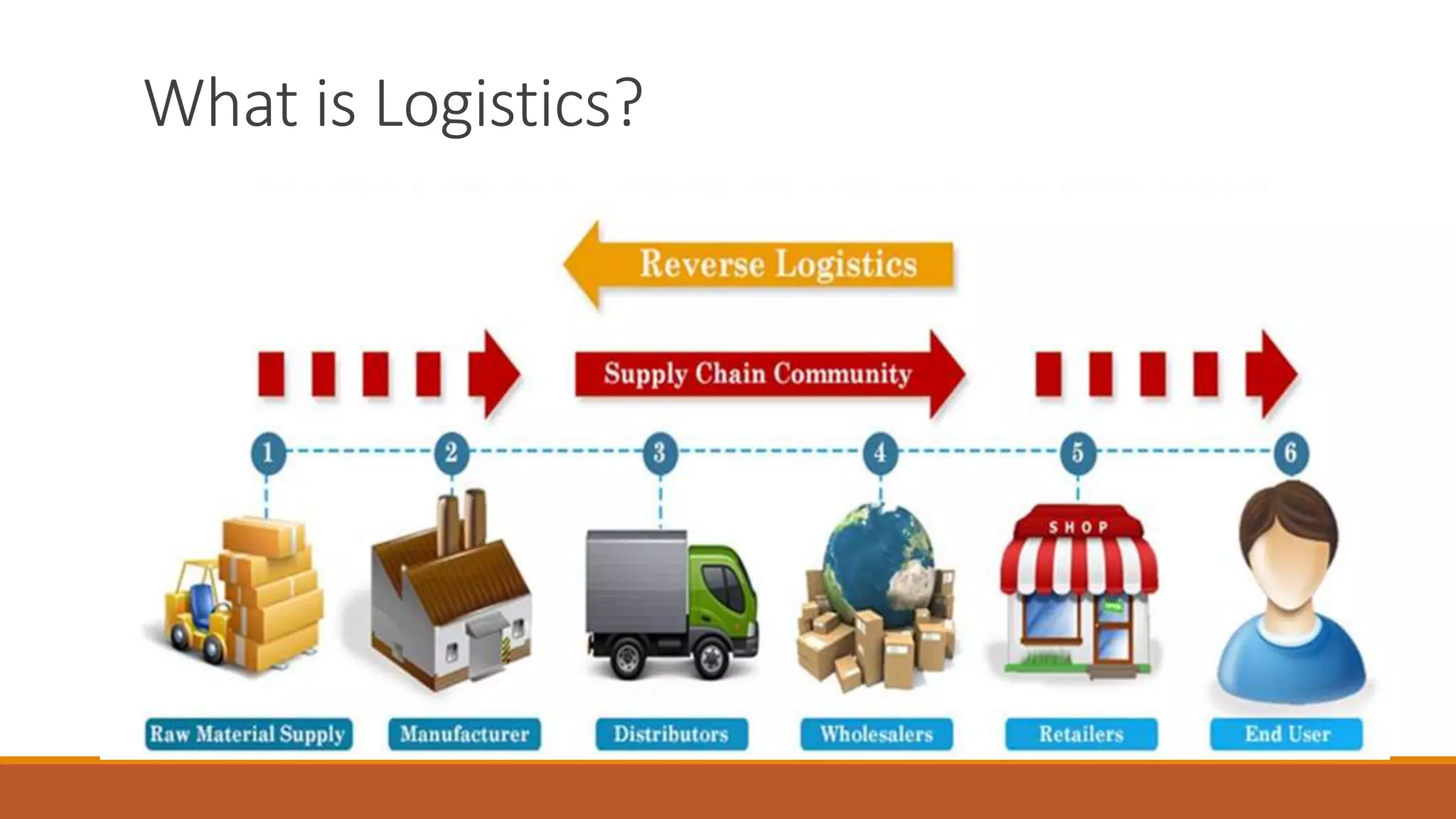
What is Logistics?
Definition –Logistics Management
American Council of Logistics Management defines logistics as “the process of planning,
implementing and controlling the efficient, cost effective flow and storage of raw materials, in
process inventory, finished goods and related information from point of origin to point of
consumption for the purpose of conforming customer’s requirements”.
Philip Kotler defines logistics as “planning, implementing, and controlling the physical flows of
materials and finished goods from point of origin to point of use to meet the customer’s need at
the profit”
Donald J Bowersox defines “Logistics is concerned with getting products and services where they are
needed and when they are desired.”
Scope of Logistics
1.Value adding process
2.Penetrating new markets, increasing market shares and profits.
3.Reverse Logistics channels are important for the firm
4.Globalization and Internationalization of industries depend on logistics performance
Functions of Logistics
Order processing- Customer places orders
Inventory Planning- maintain stock level (Demand Vs Supply), JIT
Warehousing- storage of finished goods
Packaging- Protecting goods for safe delivery
Material Handling- Equipment's used for loading and unloading
Transportation- Greater choices- Air, Water, Road and Rail
Factors Impacting Logistics
Scanning the External and Internal Environment
1.Nature of products- perishable products
2.Facility locations- ease of supplies
3.Availability of infrastructure- roads, ports, telecommunication and tech support
4.Modes of transportation available- Cargo service, movement of goods, customer location
5.Government policies- Taxes & Tariffs
Objectives of Logistics
1.Reduction of Inventory
2.Economy of freight
3.Reliability and consistency in delivery performance
4.Minimum damage to products
5.Quicker and faster response
6.Use of technology support for better customer service
Value chain
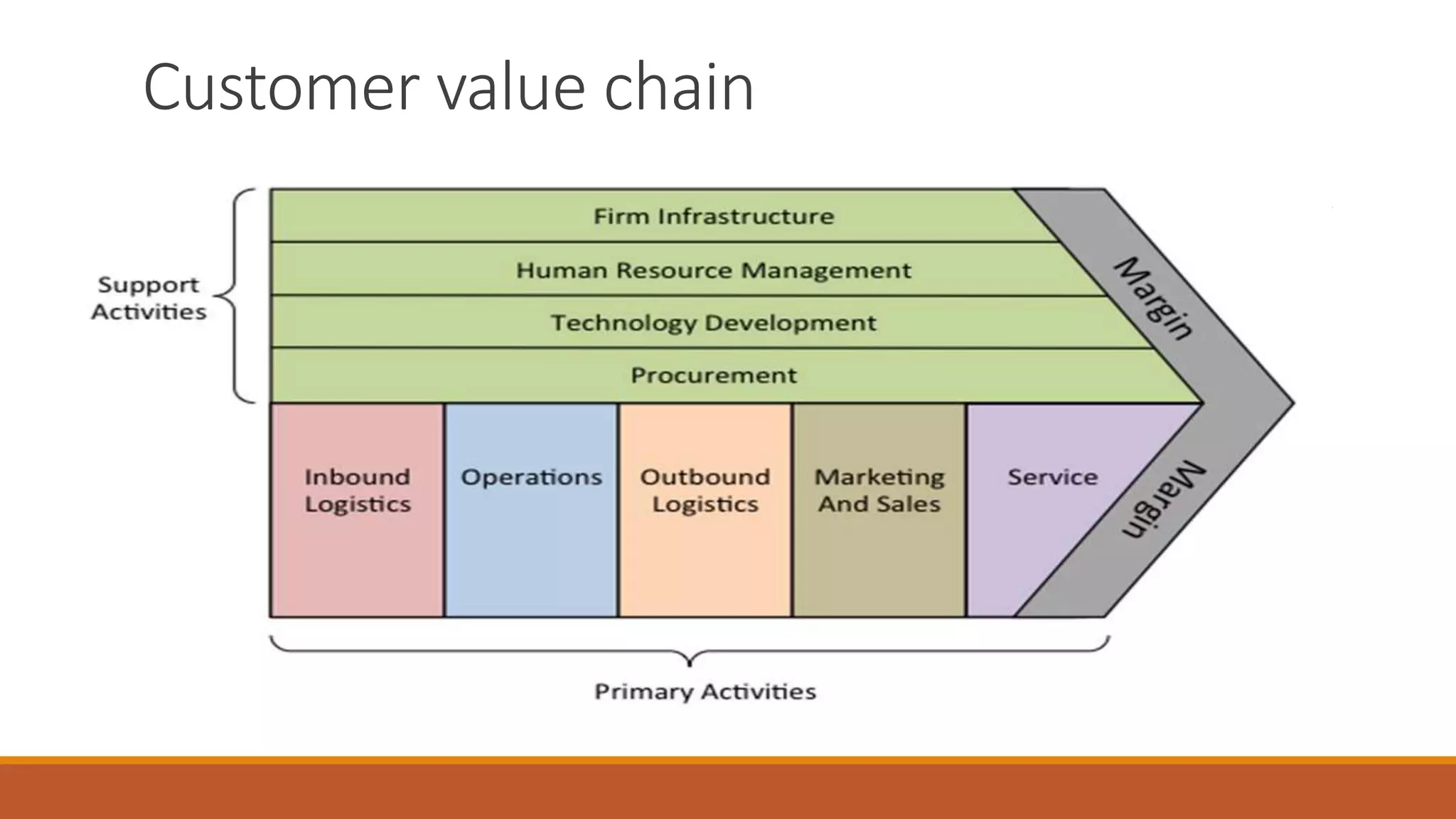
According to Porter “A value chain is a set of activities that an organization carries out to create
value for its customers”. Value chain analysis was developed by Michael porter in the year 1985.
Porter’s value chain focuses on systems, and how inputs are changed into the outputs purchased
by consumers. Using this viewpoint, porter described a chain of activities common to all
businesses, and he divided them into primary and support activities.
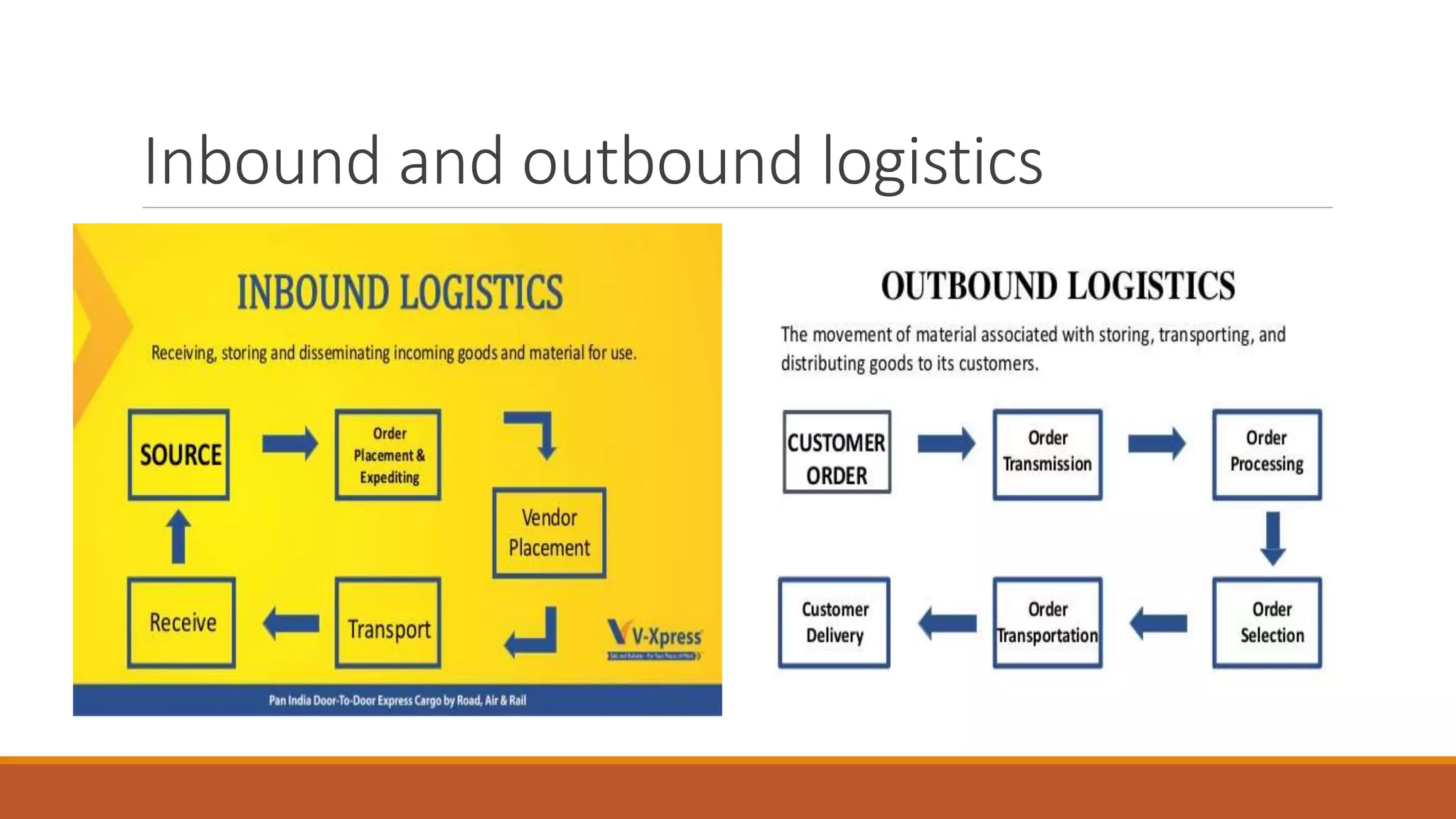
*Inbound logistics: it is related to receiving, storing and distributing inputs internally. (within the
firm)
*Outbound logistics : these activities deliver product to your customer and they may be internal
or external to your organization. (point of origin to Point of consumption)
Inbound and outbound logistics
Customer value chain
Value added logistics services
Value-added logistics indicates “providing professional services and processes that extend beyond
standard receiving, storing and shipping of the client's products”.
*Value added services
1. Customer focused services (Delivering directly to stores or homes)
2. Promotional focused services (Point of sale / Displays)
3. Manufacturing focused services (Customized & unique products, specialist)
4. Time focused services (JIT / speed of service)
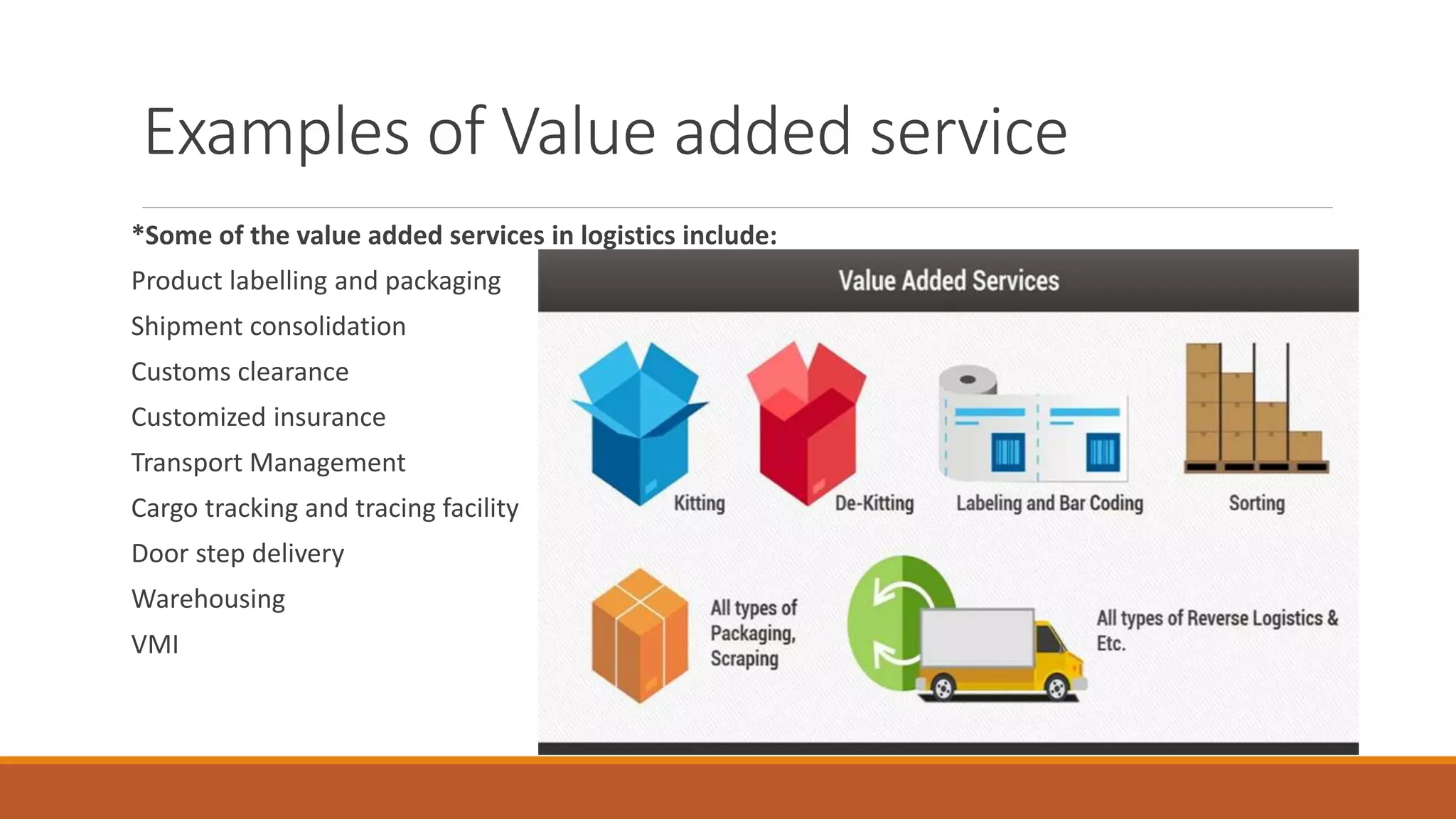
Examples of Value added service
*Some of the value added services in logistics include:
Product labelling and packaging
Shipment consolidation
Customs clearance
Customized insurance
Transport Management
Cargo tracking and tracing facility
Door step delivery
Warehousing
VMI
Role of Logistics in Competitive Strategy
1. Cost Leadership
2. Differentiation
3. Collaboration
4. Diversification
5. Outsourcing
*Development of business success based on Logistical competency
Stage1: Cost-effectiveness
Stage2: Market access
Stage3: Market Extension
Stage4: Market Creation
Customer service phases and attributes
Customer service refers to “the entire process of filling the customers’ orders. This process
includes the receipt of the order, managing the payment, picking and packing the goods,
shipping the packages, delivering the packages, providing customer service for the end user and
handling the possible return of goods.”
Customer service is a process for providing significant value-added benefits to the supply
chain in a cost effective way. Therefore three fundamental dimensions of customer service
were identified, they are Availability, Performance and Reliability.
Logistics Involve 3 Phases in customer services (Time and place)
1. Pre-Transaction Phase
2. Transaction Phase
3. Post-Transaction Phase
Service phase and Attributes
Pre-transaction Phase
1. Customer service policy statement in written form
2.Organization building
3.Structuring the service
4.Customer education
5.System design
Service Phase and Attributes
Transaction Phase
1.Order fulfillment reliability
2.Delivery consistency
3.Order convenience
4. Order postponement
5.Product substitute
Service phase and Attributes
Post Transaction Phase
1. Order status information
2.Customer complaints, claims and returns
3.Product installation, commissioning and technical snags
4.Customer education and training
THANK YOU
References:1. Bowersox Donald J, Logistics Management – The Integrated Supply Chain Process, Tata McGraw Hill,3rd edition
2016. 2) Ronald H. Ballou, Business Logistics and Supply Chain Management, Pearson Education, 5thEdition, 2007.
3.S.L.Ganapathi and S.K.Nandi, Logistics Management, Oxford University Press.

Introduction to Logistics Management

  • 1.
    EASWARI ENGINEERING COLLEGE DEPARTMENTOF MANAGEMENT STUDIES LOGISTICS MANAGEMENT AUTONOMOUS SYLLABUS (REGULATION 2019) UNIT-1 (INTRODUCTION) PREPARED BY: S.PURUSHOTHAMAN/A.P-MBA
  • 2.
  • 3.
    Definition –Logistics Management AmericanCouncil of Logistics Management defines logistics as “the process of planning, implementing and controlling the efficient, cost effective flow and storage of raw materials, in process inventory, finished goods and related information from point of origin to point of consumption for the purpose of conforming customer’s requirements”. Philip Kotler defines logistics as “planning, implementing, and controlling the physical flows of materials and finished goods from point of origin to point of use to meet the customer’s need at the profit” Donald J Bowersox defines “Logistics is concerned with getting products and services where they are needed and when they are desired.”
  • 4.
    Scope of Logistics 1.Valueadding process 2.Penetrating new markets, increasing market shares and profits. 3.Reverse Logistics channels are important for the firm 4.Globalization and Internationalization of industries depend on logistics performance
  • 5.
    Functions of Logistics Orderprocessing- Customer places orders Inventory Planning- maintain stock level (Demand Vs Supply), JIT Warehousing- storage of finished goods Packaging- Protecting goods for safe delivery Material Handling- Equipment's used for loading and unloading Transportation- Greater choices- Air, Water, Road and Rail
  • 6.
    Factors Impacting Logistics Scanningthe External and Internal Environment 1.Nature of products- perishable products 2.Facility locations- ease of supplies 3.Availability of infrastructure- roads, ports, telecommunication and tech support 4.Modes of transportation available- Cargo service, movement of goods, customer location 5.Government policies- Taxes & Tariffs
  • 7.
    Objectives of Logistics 1.Reductionof Inventory 2.Economy of freight 3.Reliability and consistency in delivery performance 4.Minimum damage to products 5.Quicker and faster response 6.Use of technology support for better customer service
  • 8.
    Value chain According toPorter “A value chain is a set of activities that an organization carries out to create value for its customers”. Value chain analysis was developed by Michael porter in the year 1985. Porter’s value chain focuses on systems, and how inputs are changed into the outputs purchased by consumers. Using this viewpoint, porter described a chain of activities common to all businesses, and he divided them into primary and support activities. *Inbound logistics: it is related to receiving, storing and distributing inputs internally. (within the firm) *Outbound logistics : these activities deliver product to your customer and they may be internal or external to your organization. (point of origin to Point of consumption)
  • 9.
  • 10.
  • 11.
    Value added logisticsservices Value-added logistics indicates “providing professional services and processes that extend beyond standard receiving, storing and shipping of the client's products”. *Value added services 1. Customer focused services (Delivering directly to stores or homes) 2. Promotional focused services (Point of sale / Displays) 3. Manufacturing focused services (Customized & unique products, specialist) 4. Time focused services (JIT / speed of service)
  • 12.
    Examples of Valueadded service *Some of the value added services in logistics include: Product labelling and packaging Shipment consolidation Customs clearance Customized insurance Transport Management Cargo tracking and tracing facility Door step delivery Warehousing VMI
  • 13.
    Role of Logisticsin Competitive Strategy 1. Cost Leadership 2. Differentiation 3. Collaboration 4. Diversification 5. Outsourcing *Development of business success based on Logistical competency Stage1: Cost-effectiveness Stage2: Market access Stage3: Market Extension Stage4: Market Creation
  • 14.
    Customer service phasesand attributes Customer service refers to “the entire process of filling the customers’ orders. This process includes the receipt of the order, managing the payment, picking and packing the goods, shipping the packages, delivering the packages, providing customer service for the end user and handling the possible return of goods.” Customer service is a process for providing significant value-added benefits to the supply chain in a cost effective way. Therefore three fundamental dimensions of customer service were identified, they are Availability, Performance and Reliability. Logistics Involve 3 Phases in customer services (Time and place) 1. Pre-Transaction Phase 2. Transaction Phase 3. Post-Transaction Phase
  • 15.
    Service phase andAttributes Pre-transaction Phase 1. Customer service policy statement in written form 2.Organization building 3.Structuring the service 4.Customer education 5.System design
  • 16.
    Service Phase andAttributes Transaction Phase 1.Order fulfillment reliability 2.Delivery consistency 3.Order convenience 4. Order postponement 5.Product substitute
  • 17.
    Service phase andAttributes Post Transaction Phase 1. Order status information 2.Customer complaints, claims and returns 3.Product installation, commissioning and technical snags 4.Customer education and training
  • 18.
    THANK YOU References:1. BowersoxDonald J, Logistics Management – The Integrated Supply Chain Process, Tata McGraw Hill,3rd edition 2016. 2) Ronald H. Ballou, Business Logistics and Supply Chain Management, Pearson Education, 5thEdition, 2007. 3.S.L.Ganapathi and S.K.Nandi, Logistics Management, Oxford University Press.