What is Java
 Java is a programming language and a platform.
 Java is a high level, robust, secured and object-oriented
programming language.
 Platform: Any hardware or software environment in
which a program runs, is known as a platform. Since Java
has its own runtime environment (JRE) and API, it is
called platform.
 class Simple
 {
 public static void main(String args[])
 {
 System.out.println("Hello Java");
 }
 }
 Where it is used?
 According to Sun, 3 billion devices run java. There are
many devices where java is currently used. Some of them
are as follows:
 Desktop Applications such as acrobat reader, media
player, antivirus etc.
 Web Applications such as irctc.co.in, javatpoint.com etc.
 Enterprise Applications such as banking applications.
 Mobile
 Embedded System
 Smart Card
 Robotics
 Games etc.
Types of Java Applications
 Standalone Application: desktop application or window-
based application.
 Web Application: An application that runs on the server
side and creates dynamic page, is called web
application.
 Enterprise Application: An application that is
distributed in nature, such as banking applications etc.
 Mobile Application: An application that is created for
mobile devices. Currently Android and Java ME are used
for creating mobile applications.
Understanding first java program
 Class keyword is used to declare a class in java.
 public keyword is an access modifier which represents
visibility, it means it is visible to all.
 static is a keyword, if we declare any method as static,
it is known as static method. The core advantage of
static method is that there is no need to create object
to invoke the static method. The main method is
executed by the JVM, so it doesn't require to create
object to invoke the main method. So it saves memory.
 void is the return type of the method, it means it
doesn't return any value.
 main represents startup of the program.
 String[] args is used for command line argument. We
will learn it later.
 System.out.println() is used print statement. We will
learn about the internal working of System.out.println
statement later.
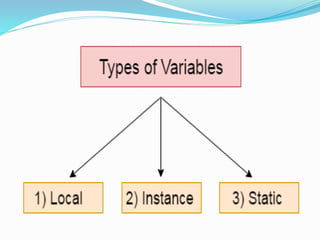
Types of Variable
 There are three types of variables in java:
 local variable
 instance variable
 static variable
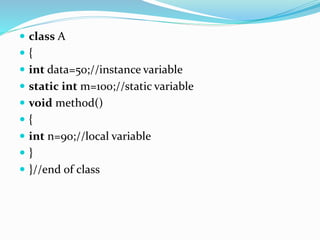
 class A
 {
 int data=50;//instance variable
 static int m=100;//static variable
 void method()
 {
 int n=90;//local variable
 }
 }//end of class
Introduction to java

Introduction to java

  • 2.
    What is Java Java is a programming language and a platform.  Java is a high level, robust, secured and object-oriented programming language.  Platform: Any hardware or software environment in which a program runs, is known as a platform. Since Java has its own runtime environment (JRE) and API, it is called platform.
  • 3.
     class Simple {  public static void main(String args[])  {  System.out.println("Hello Java");  }  }
  • 4.
     Where itis used?  According to Sun, 3 billion devices run java. There are many devices where java is currently used. Some of them are as follows:  Desktop Applications such as acrobat reader, media player, antivirus etc.  Web Applications such as irctc.co.in, javatpoint.com etc.  Enterprise Applications such as banking applications.  Mobile  Embedded System  Smart Card  Robotics  Games etc.
  • 5.
    Types of JavaApplications  Standalone Application: desktop application or window- based application.  Web Application: An application that runs on the server side and creates dynamic page, is called web application.  Enterprise Application: An application that is distributed in nature, such as banking applications etc.  Mobile Application: An application that is created for mobile devices. Currently Android and Java ME are used for creating mobile applications.
  • 6.
    Understanding first javaprogram  Class keyword is used to declare a class in java.  public keyword is an access modifier which represents visibility, it means it is visible to all.  static is a keyword, if we declare any method as static, it is known as static method. The core advantage of static method is that there is no need to create object to invoke the static method. The main method is executed by the JVM, so it doesn't require to create object to invoke the main method. So it saves memory.
  • 7.
     void isthe return type of the method, it means it doesn't return any value.  main represents startup of the program.  String[] args is used for command line argument. We will learn it later.  System.out.println() is used print statement. We will learn about the internal working of System.out.println statement later.
  • 8.
    Types of Variable There are three types of variables in java:  local variable  instance variable  static variable
  • 10.
     class A {  int data=50;//instance variable  static int m=100;//static variable  void method()  {  int n=90;//local variable  }  }//end of class