A Short Course
On
Introduction to Internet of
Things (IoT)
Vignesh Govindraj
Research Engineer, Tellercomm, Bengaluru
Mithileysh Sathiyanarayanan
Research Scientist, Red Sift, London, UK
Session 1
Introduction
IoT – Why should we care?
• Cutting edge technology
50 Billion connected devices by 2025.
“What was the last piece of technology you purchased that didn't have Wi-Fi
or Bluetooth built in? Probably your original iPod.
• We are Engineers !!!
A look back at the history
Chronology
• 1990
The first Internet connected toaster is born.
Developed by John Roomkey.
• 1999
The term IoT was coined by Kevin Ashton.
• 2000
LG announces its first Internet connected
refrigerator plans.
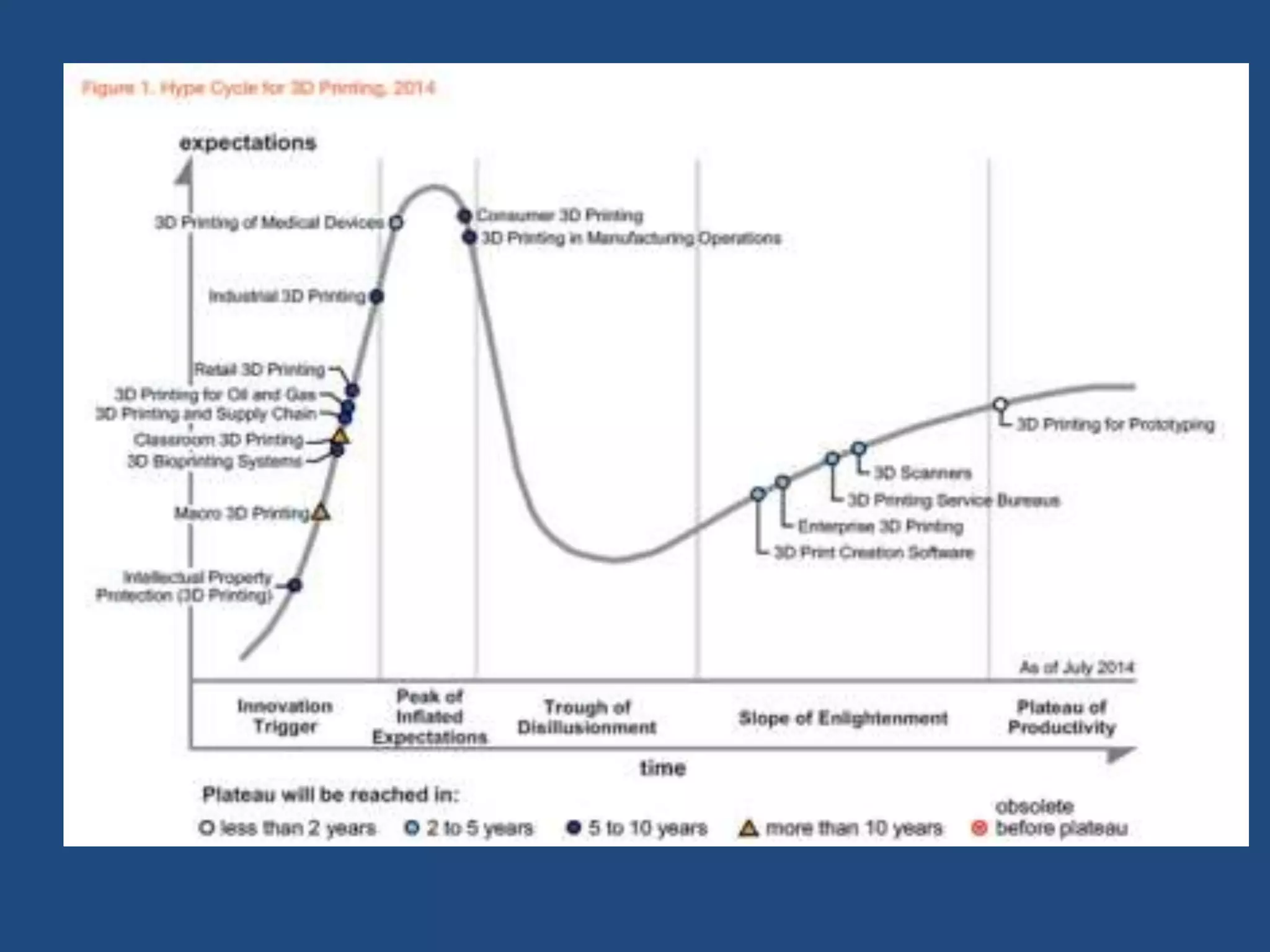
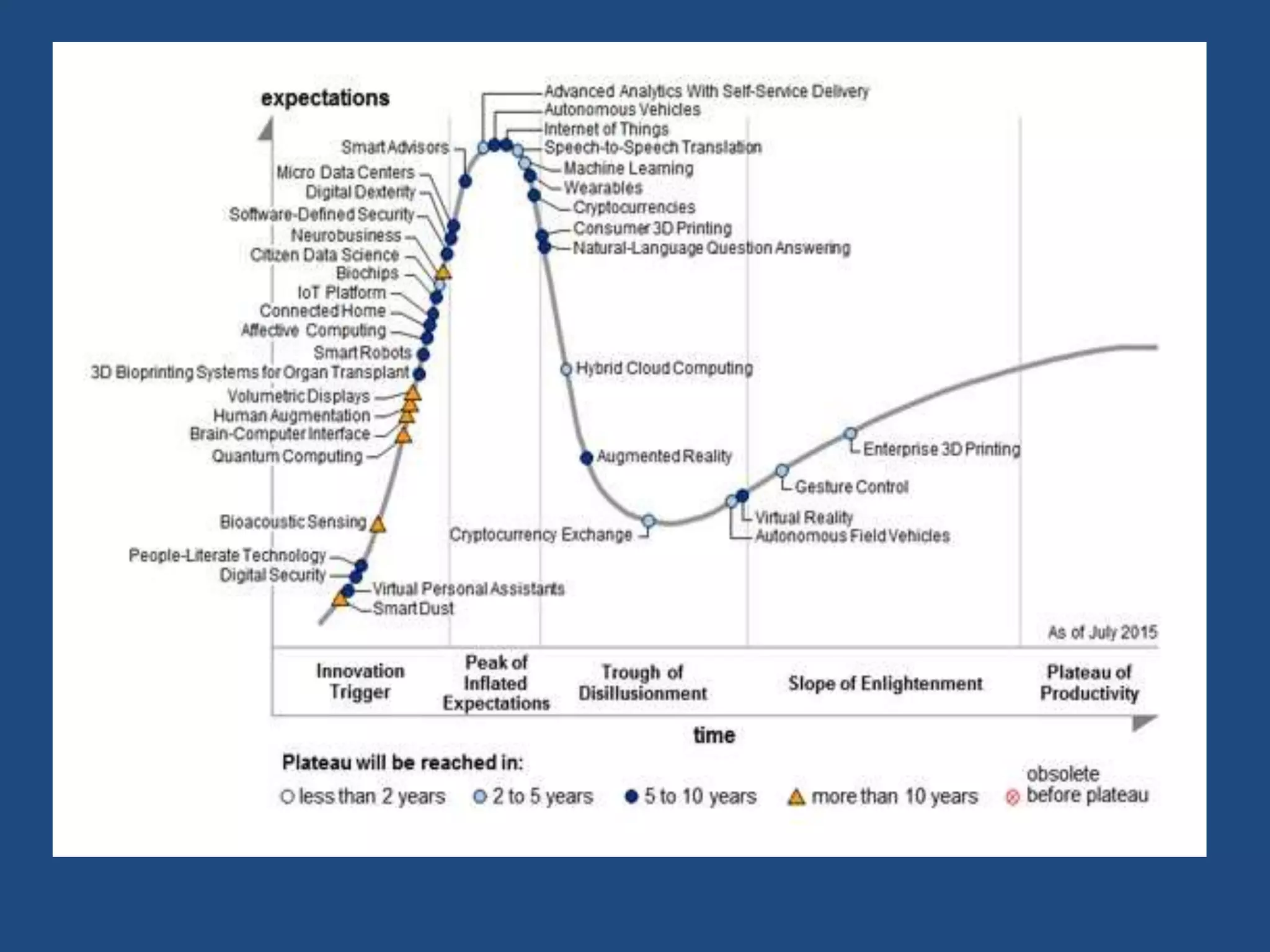
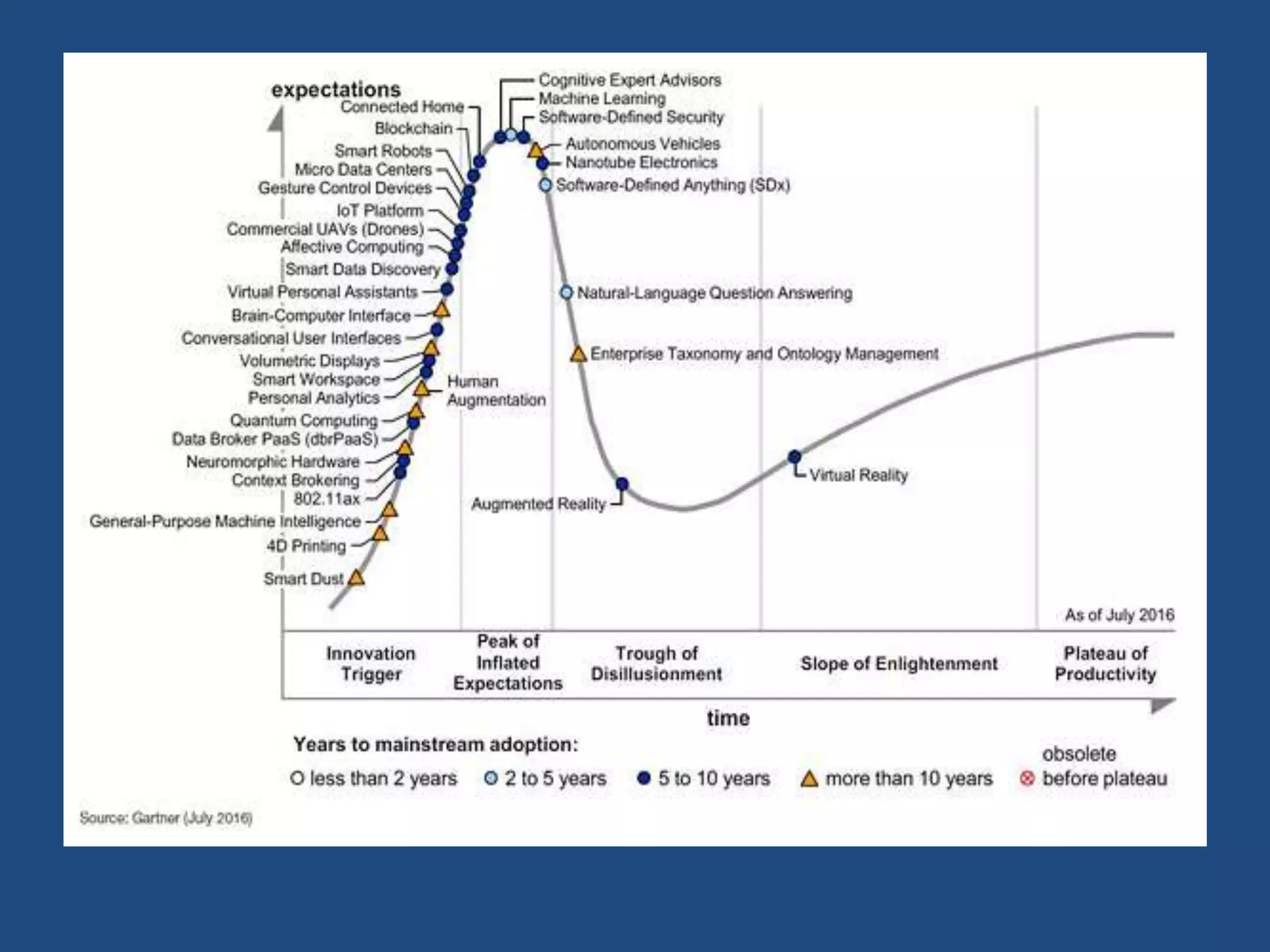
Why is the Internet of Things a newly
popular topic today?
• video
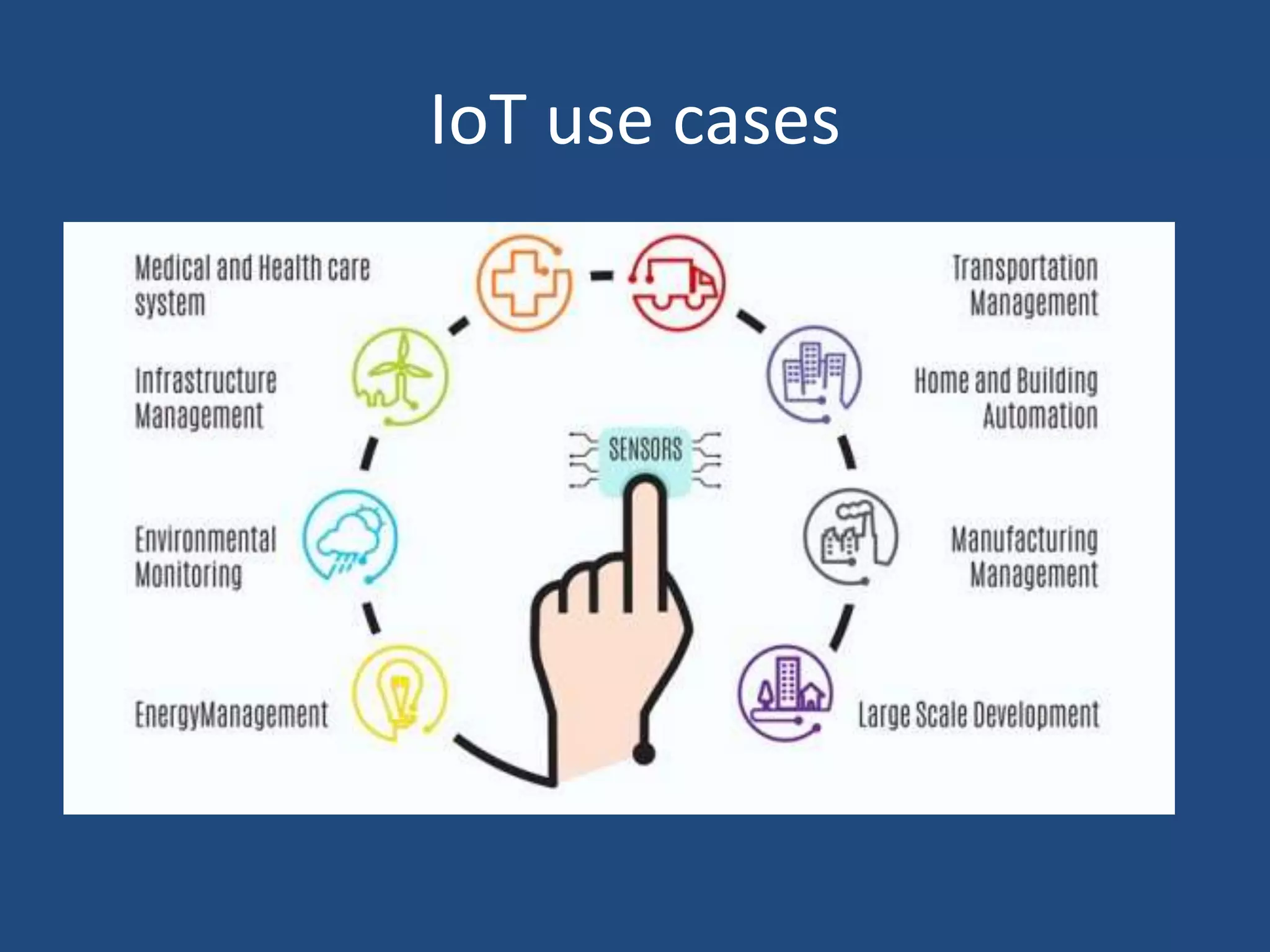
IoT use cases
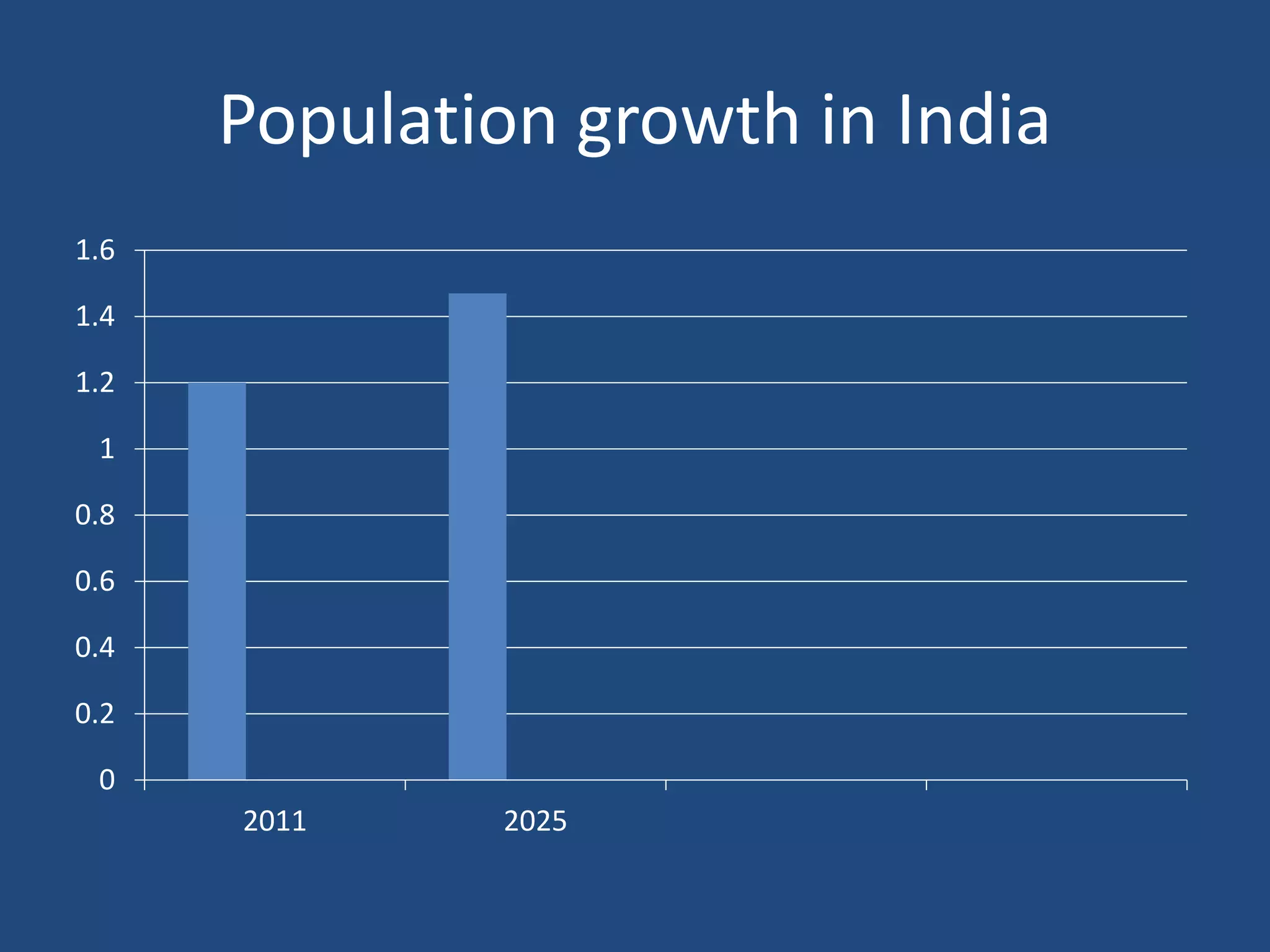
Population growth in India
0
0.2
0.4
0.6
0.8
1
1.2
1.4
1.6
2011 2025
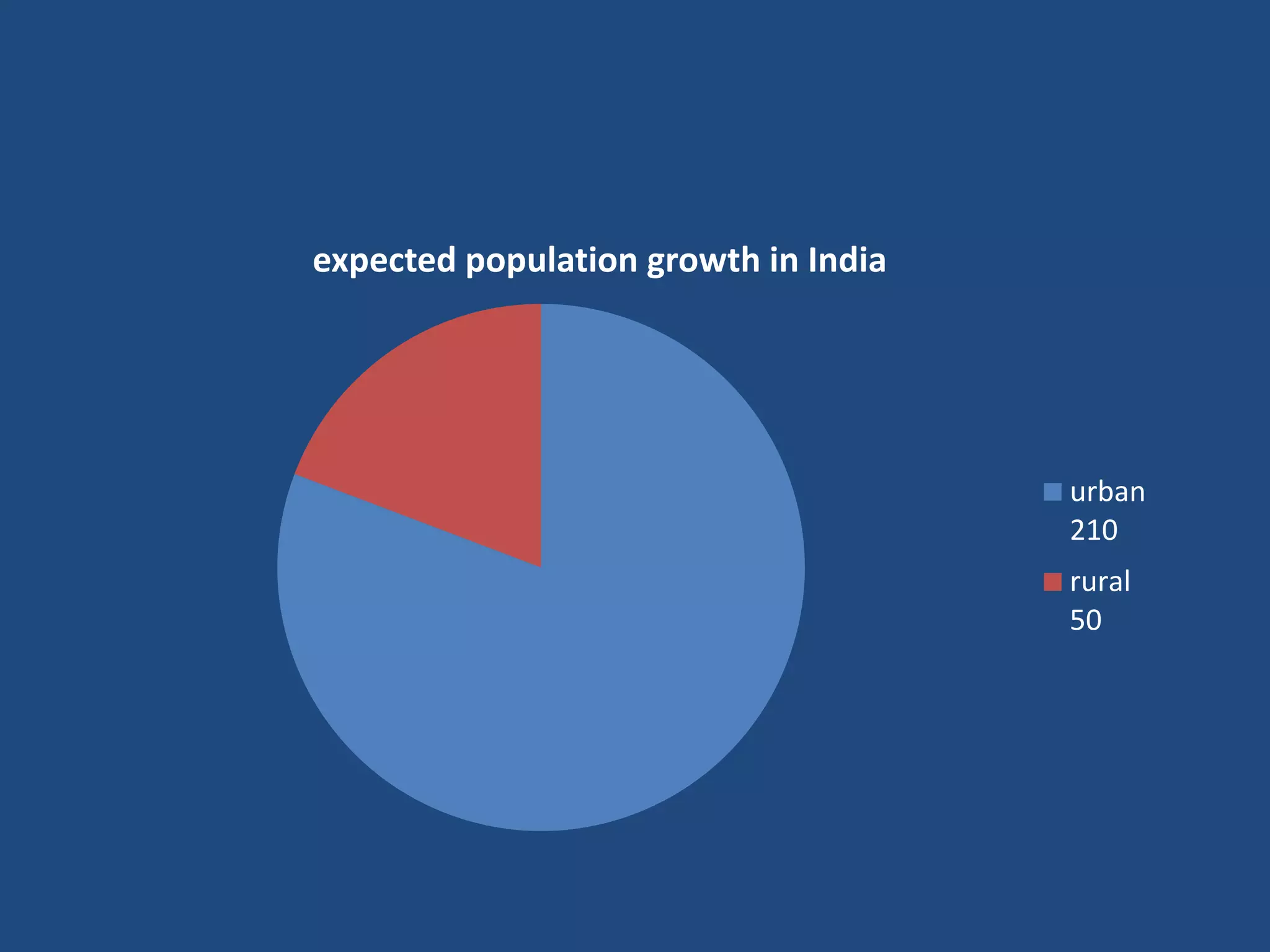
expected population growth in India
urban
210
rural
50
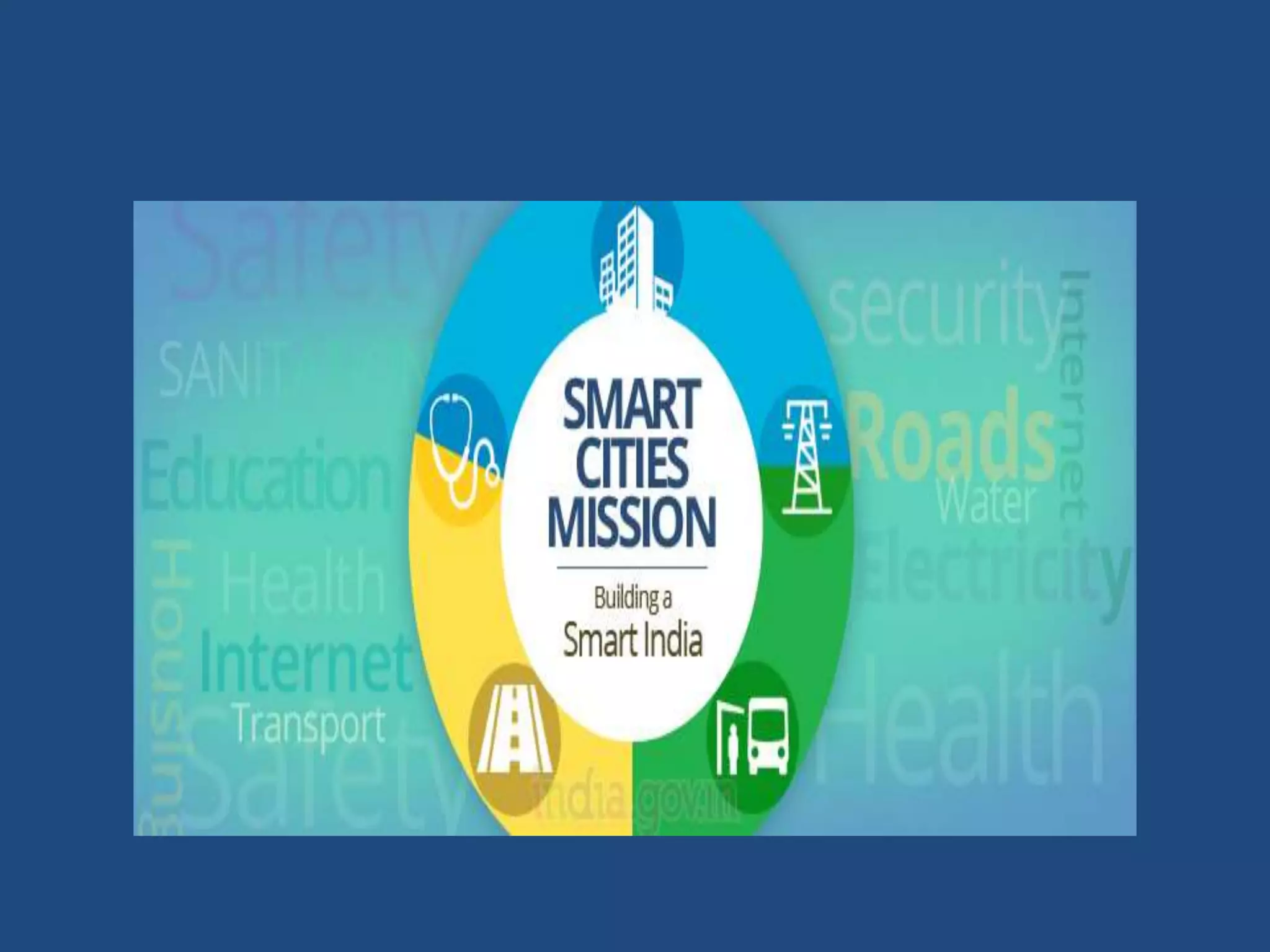
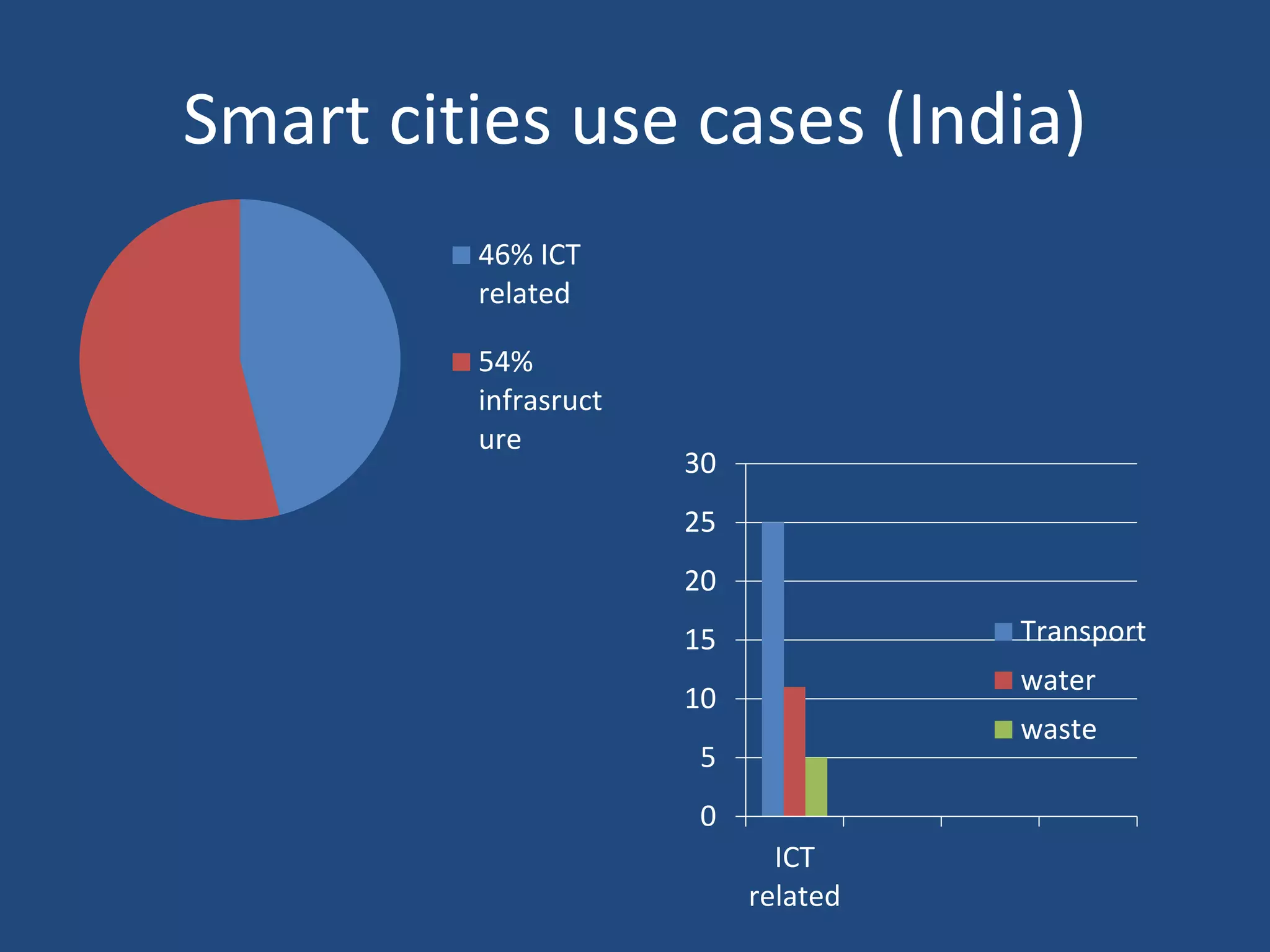
Smart cities use cases (India)
46% ICT
related
54%
infrasruct
ure
0
5
10
15
20
25
30
ICT
related
Transport
water
waste
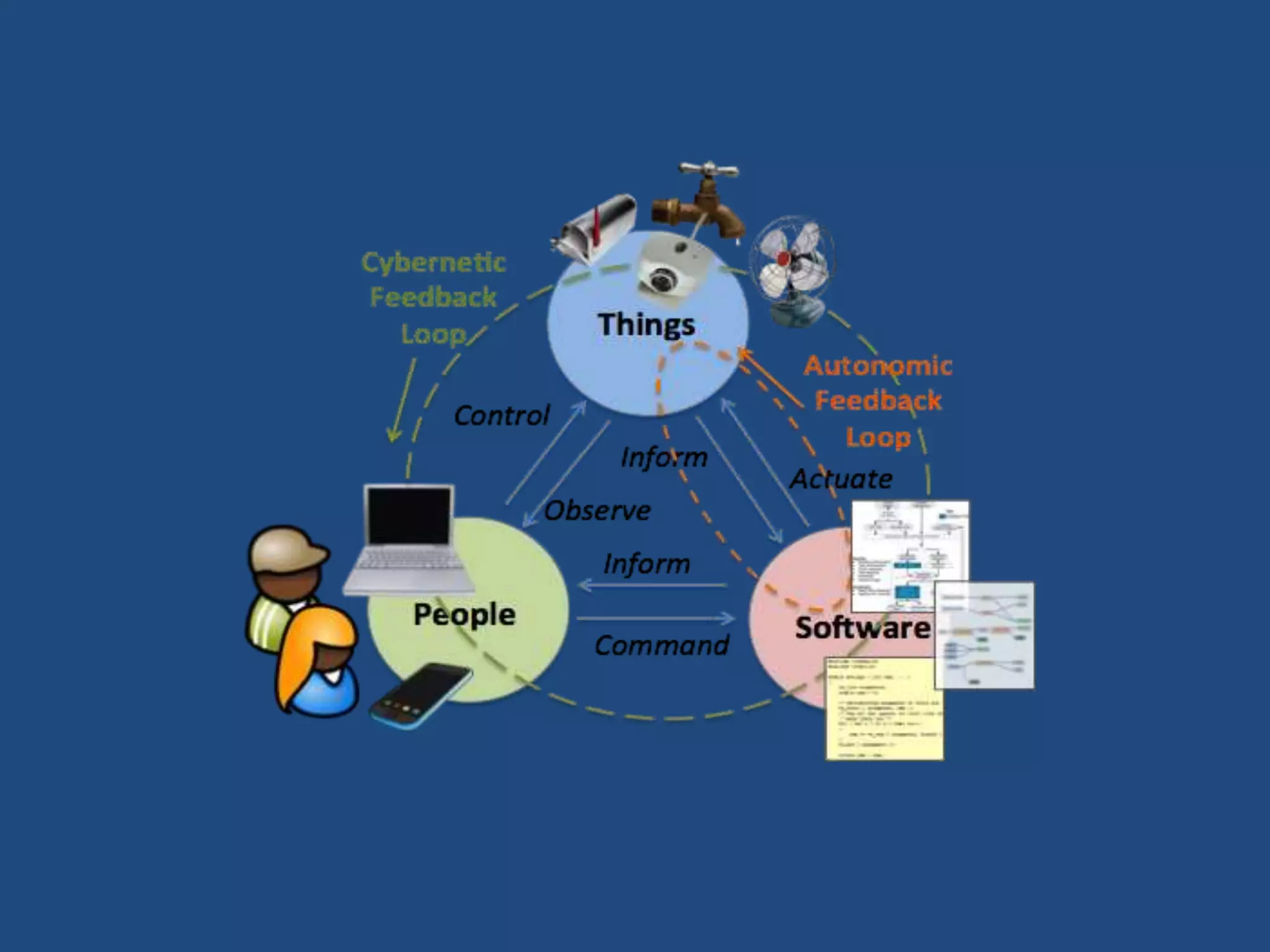
Cybernetics
• Short clip
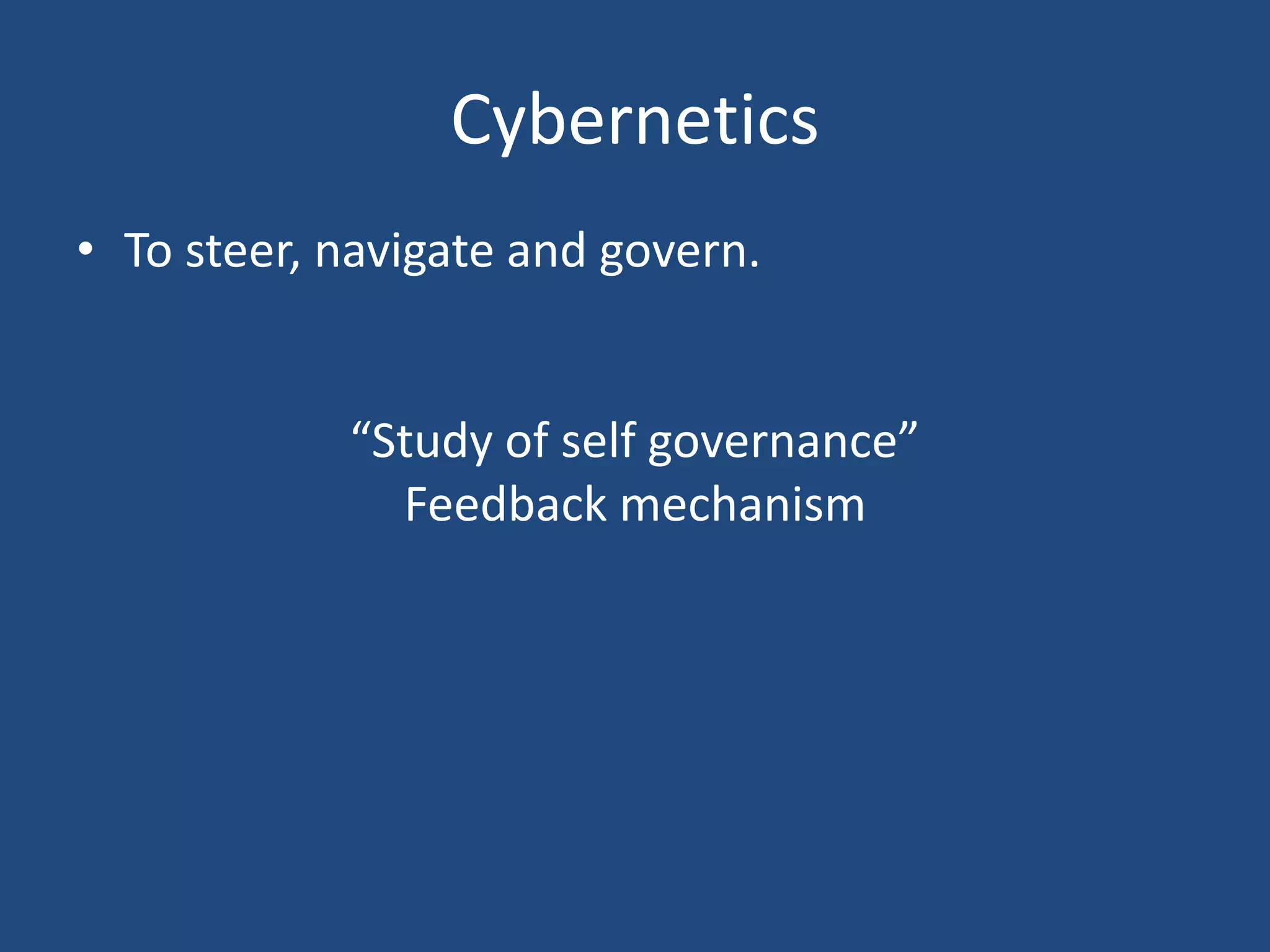
Cybernetics
• To steer, navigate and govern.
“Study of self governance”
Feedback mechanism
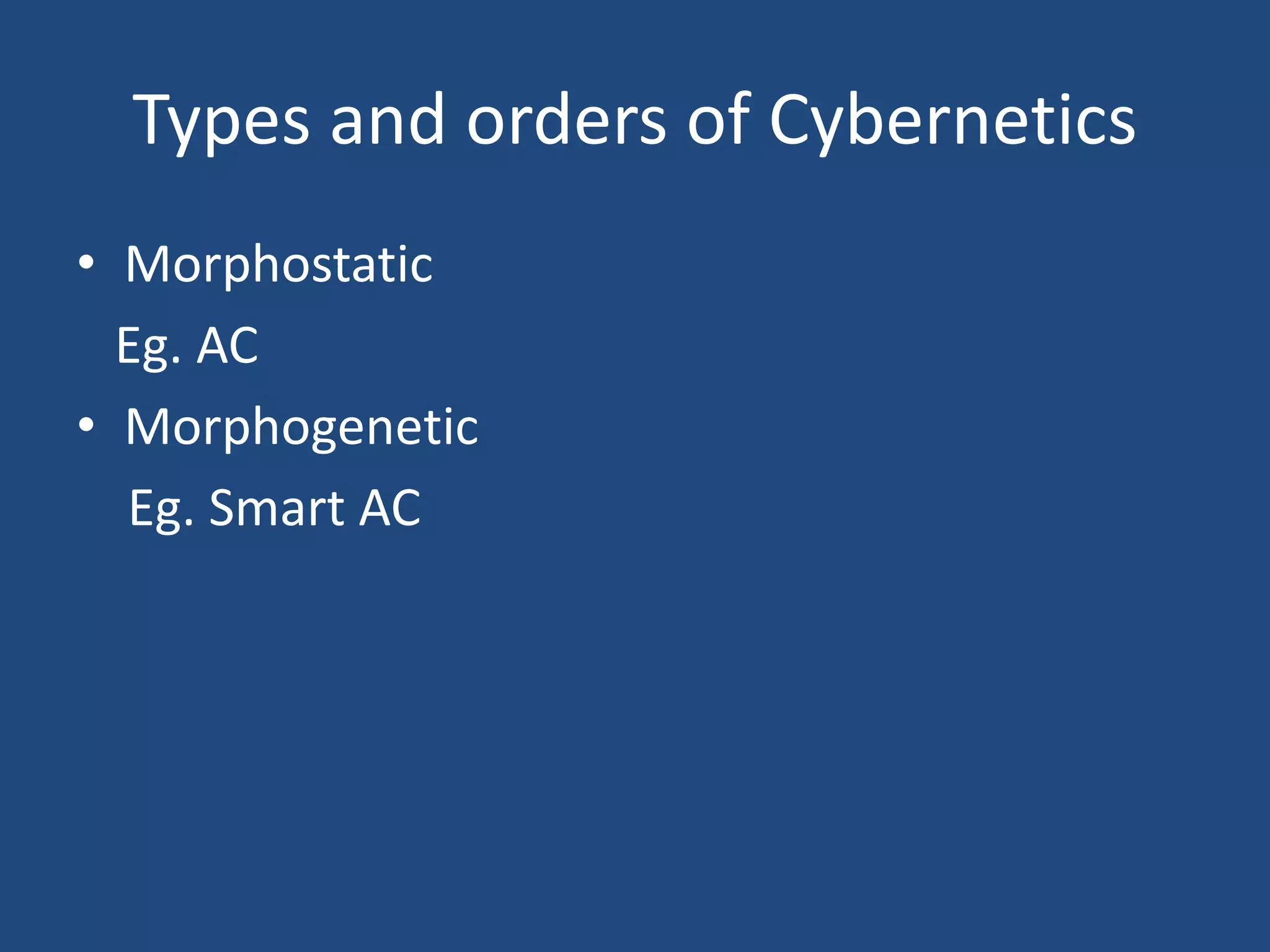
Types and orders of Cybernetics
• Morphostatic
Eg. AC
• Morphogenetic
Eg. Smart AC
Holarchy
“Part of a system but whole on self”
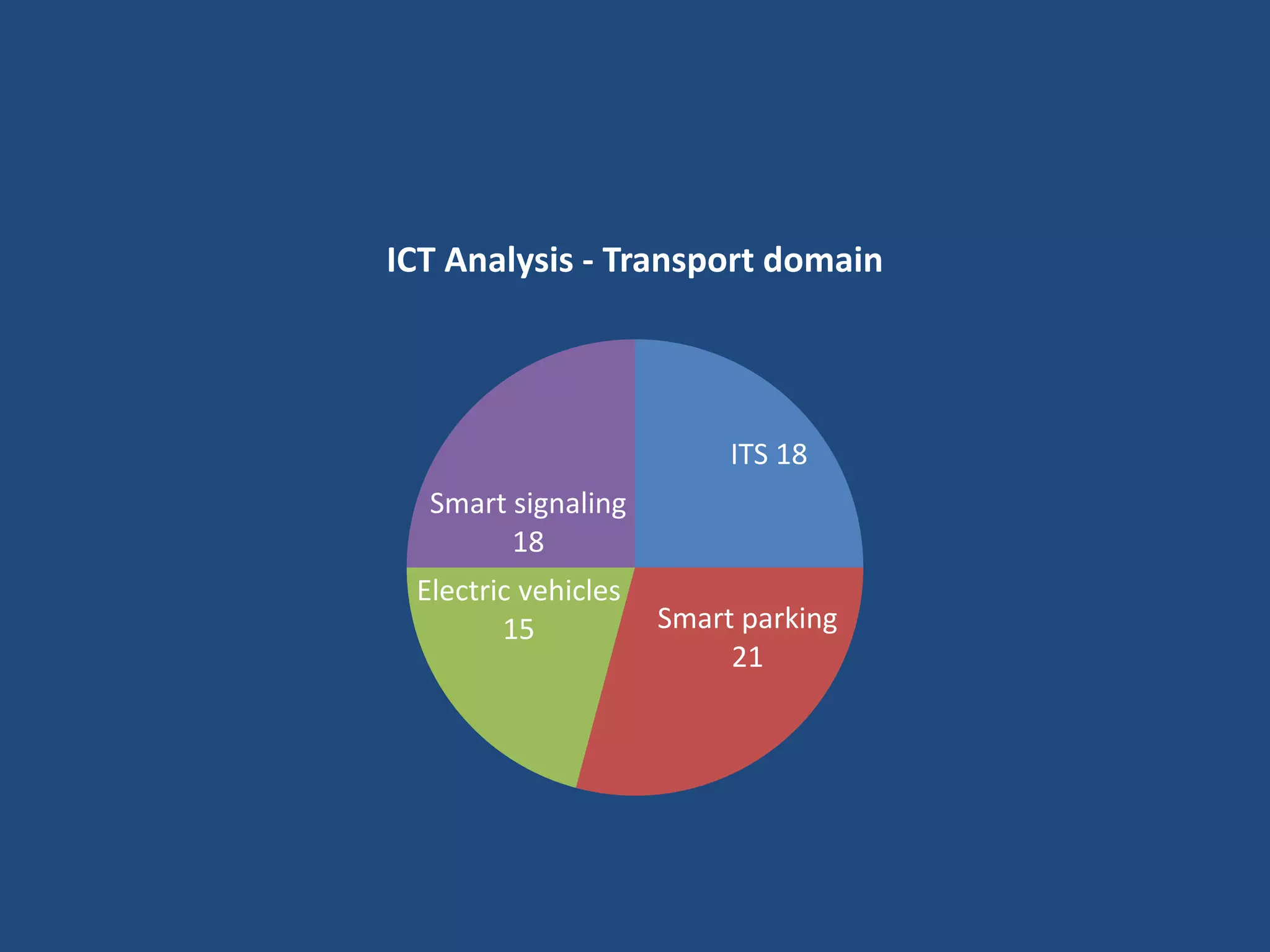
ITS 18
Smart parking
21
Electric vehicles
15
Smart signaling
18
ICT Analysis - Transport domain
What’s next ?
You either see the future coming or chase it
after it occurs.
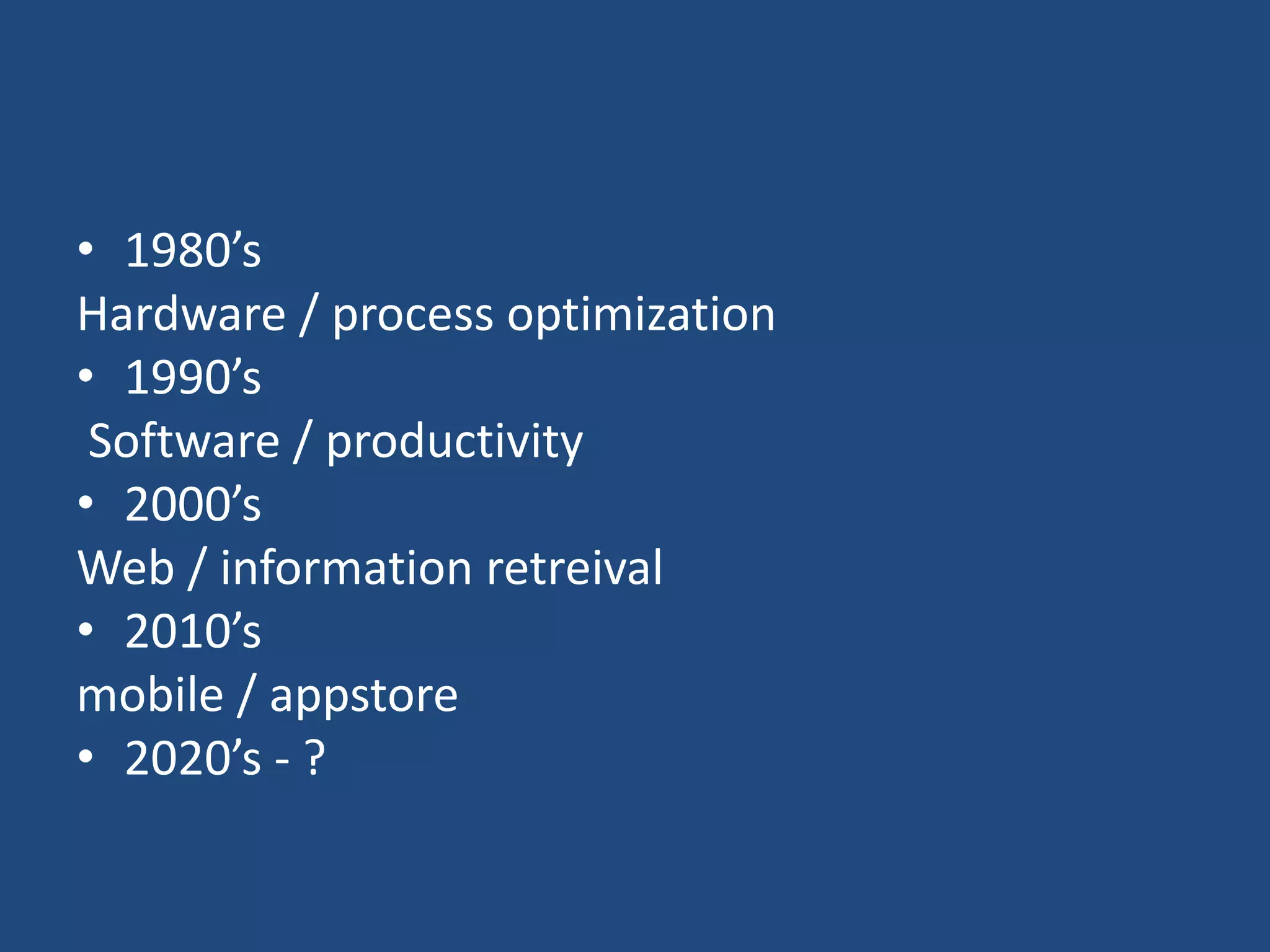
• 1980’s
Hardware / process optimization
• 1990’s
Software / productivity
• 2000’s
Web / information retreival
• 2010’s
mobile / appstore
• 2020’s - ?
Session II
Designing the Internet of Things
What is IoT ?
Internet of Things
Inter-network of Things
Thing in IoT is defined as
“An embedded computing device that transmits
and receives information over a network”
Thing in IoT should posses 3cs
Ingredients of a Thing
• Connect
• Compute
• Communicate
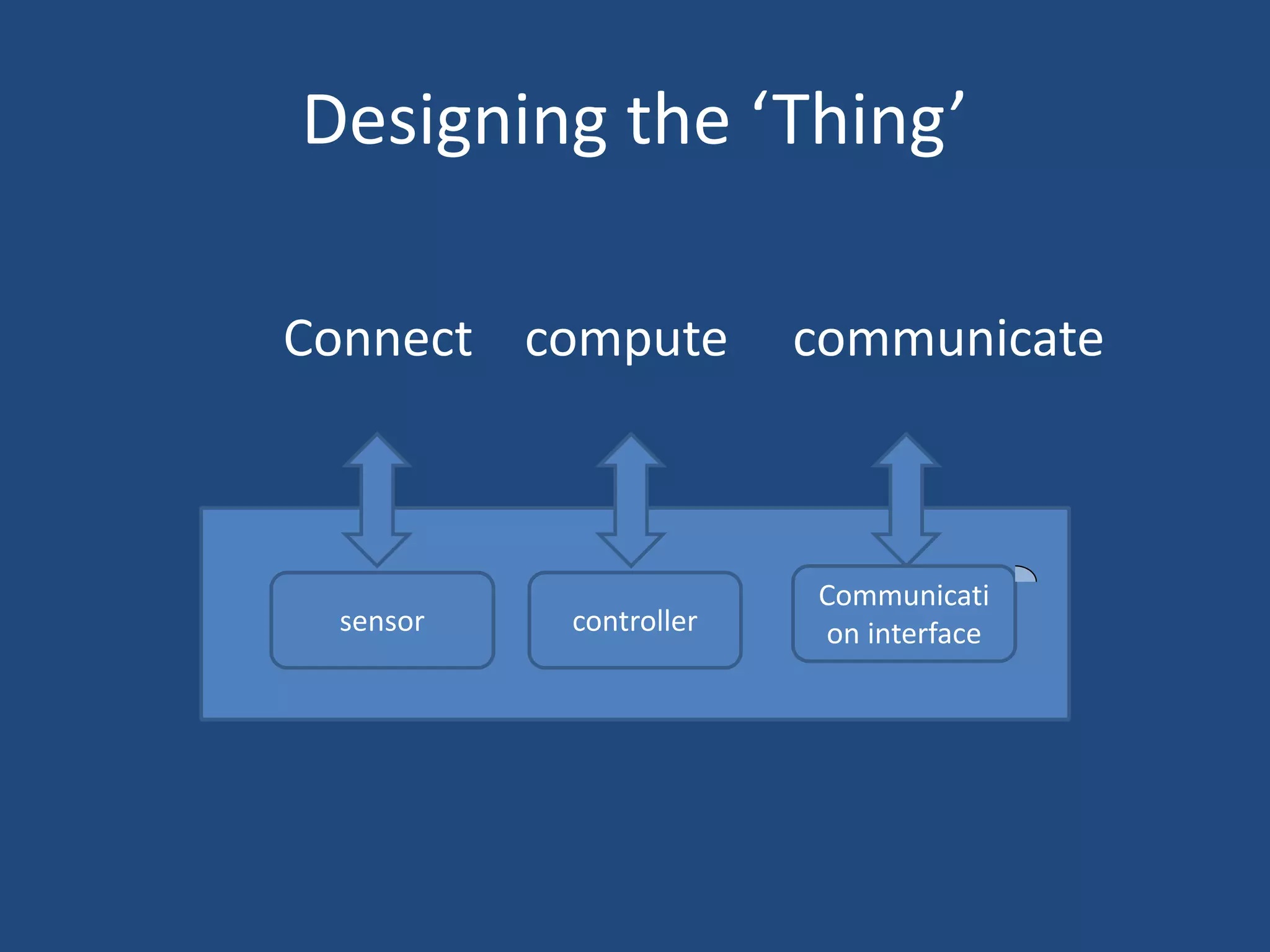
Designing the ‘Thing’
Connect compute communicate
sensor controller
Communicati
on interface
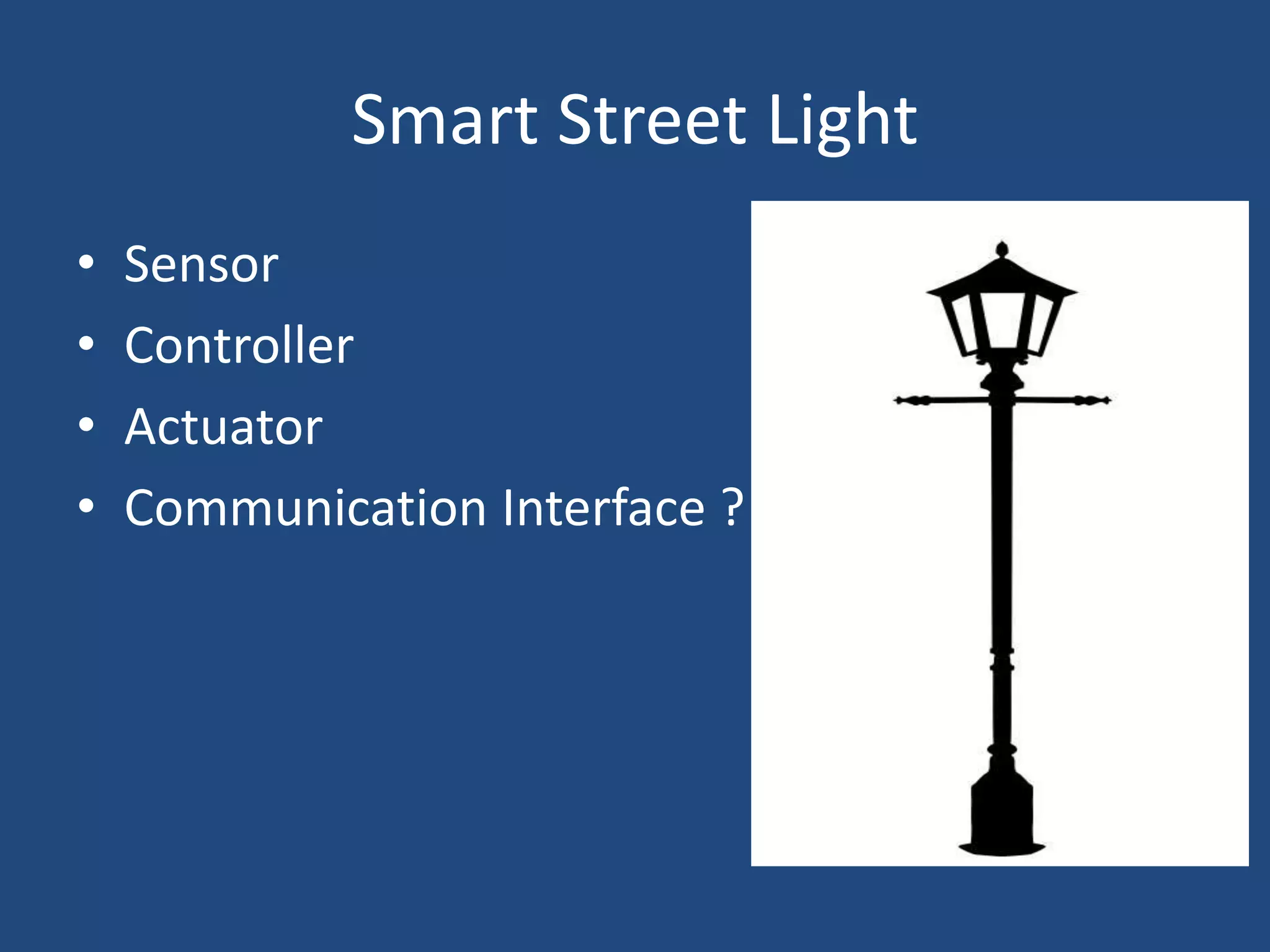
Smart Street Light
• Sensor
• Controller
• Actuator
• Communication Interface ?
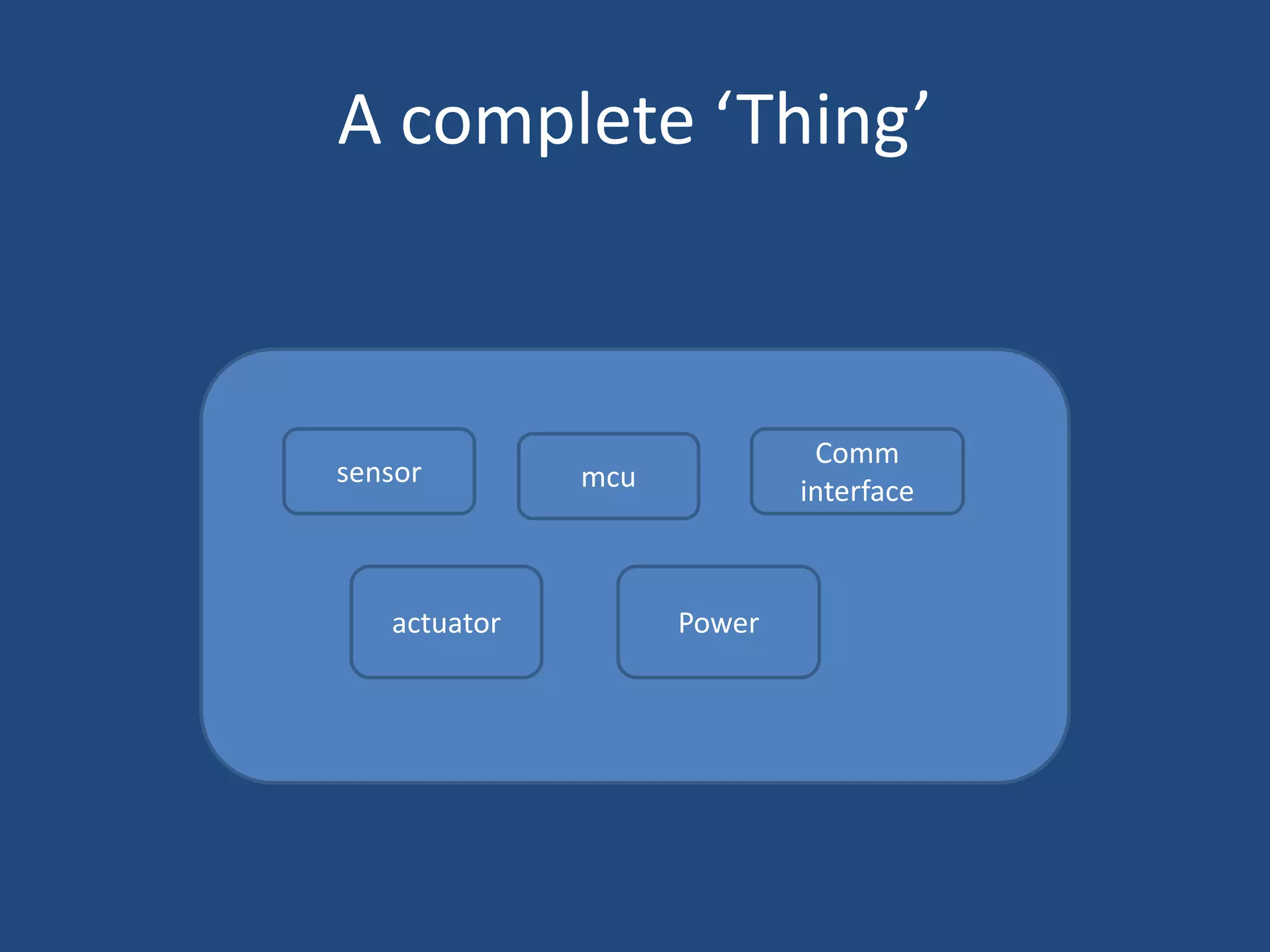
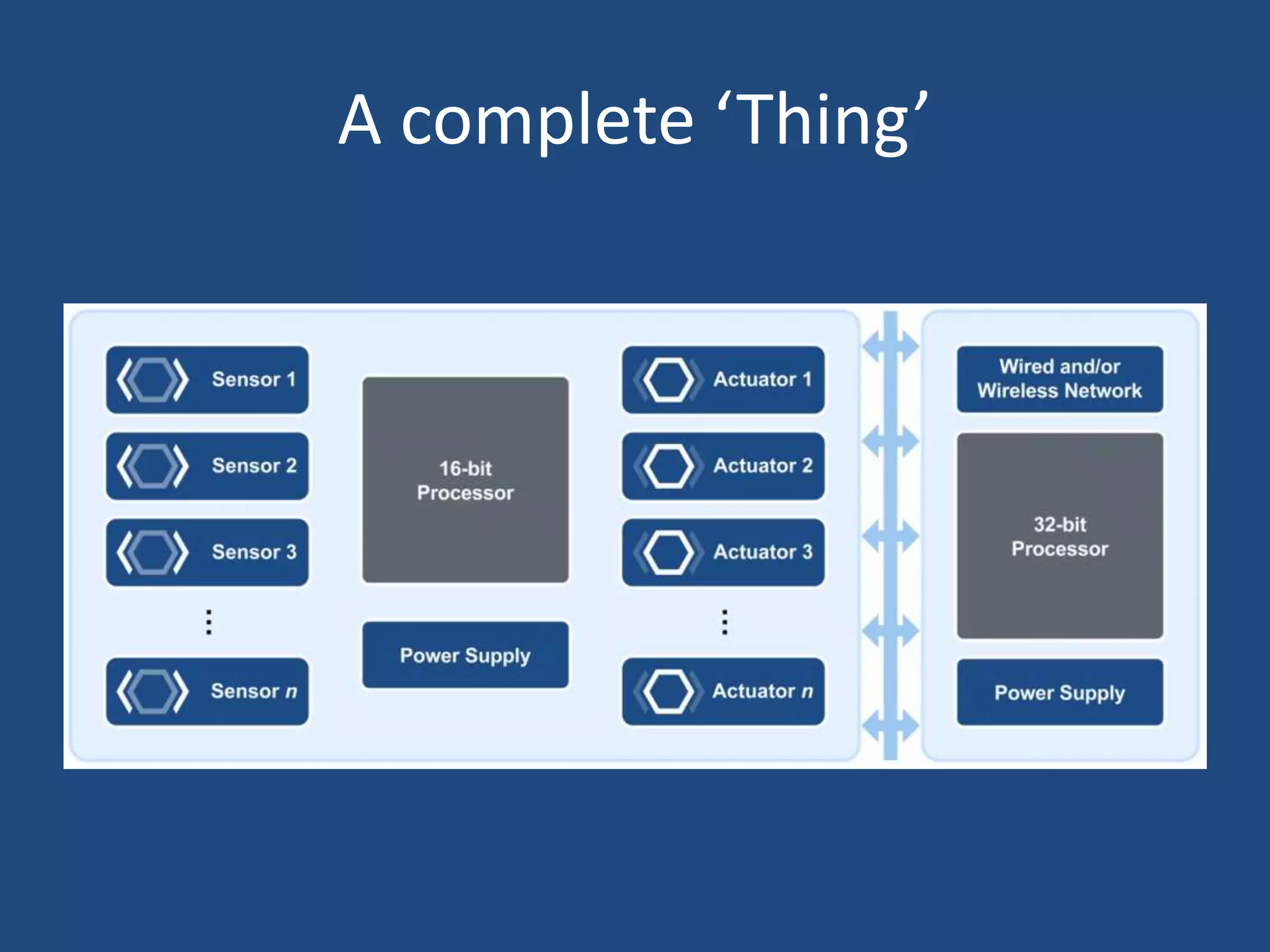
A complete ‘Thing’
sensor mcu
Comm
interface
actuator Power
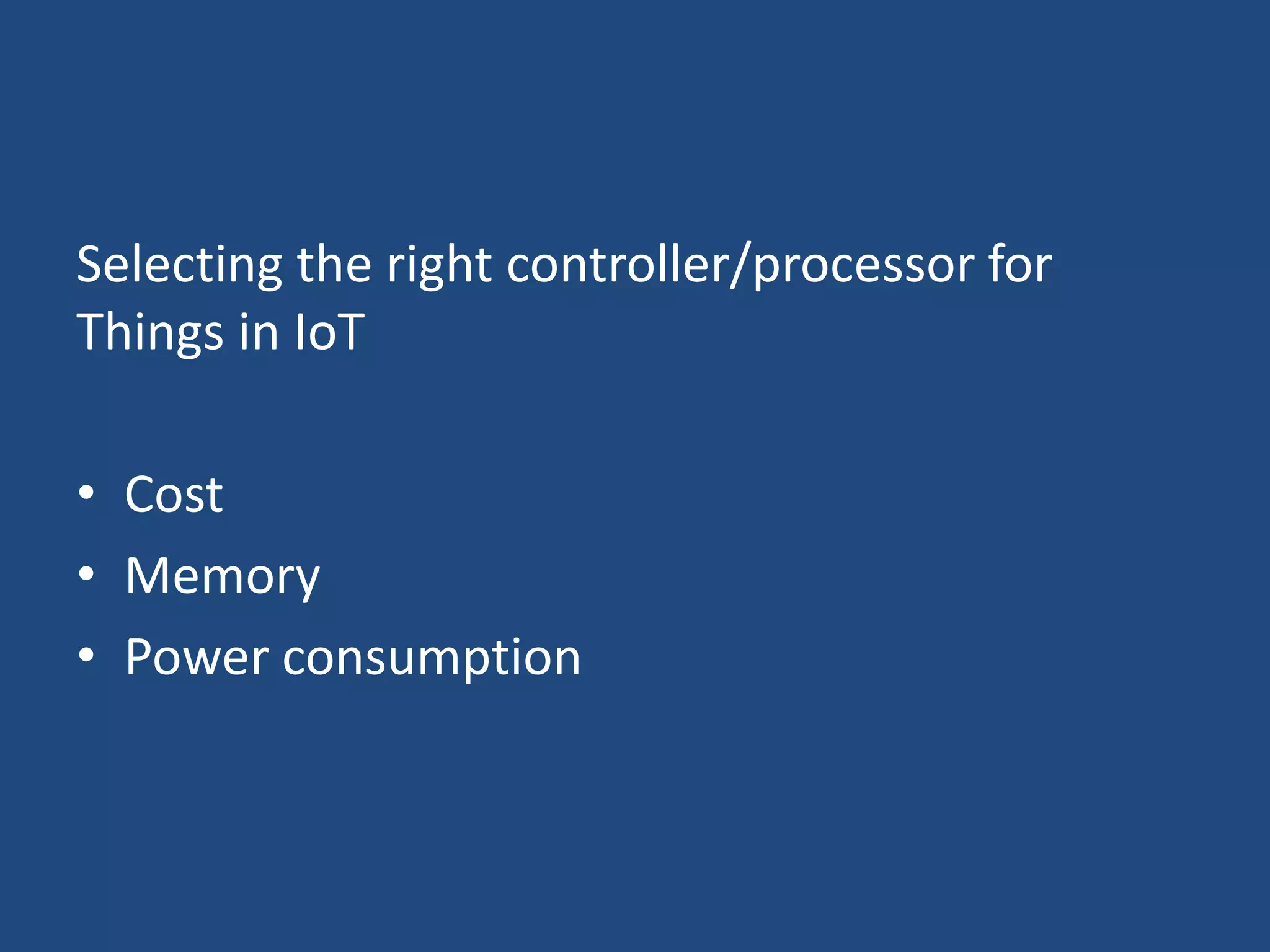
Selecting the right controller/processor for
Things in IoT
• Cost
• Memory
• Power consumption
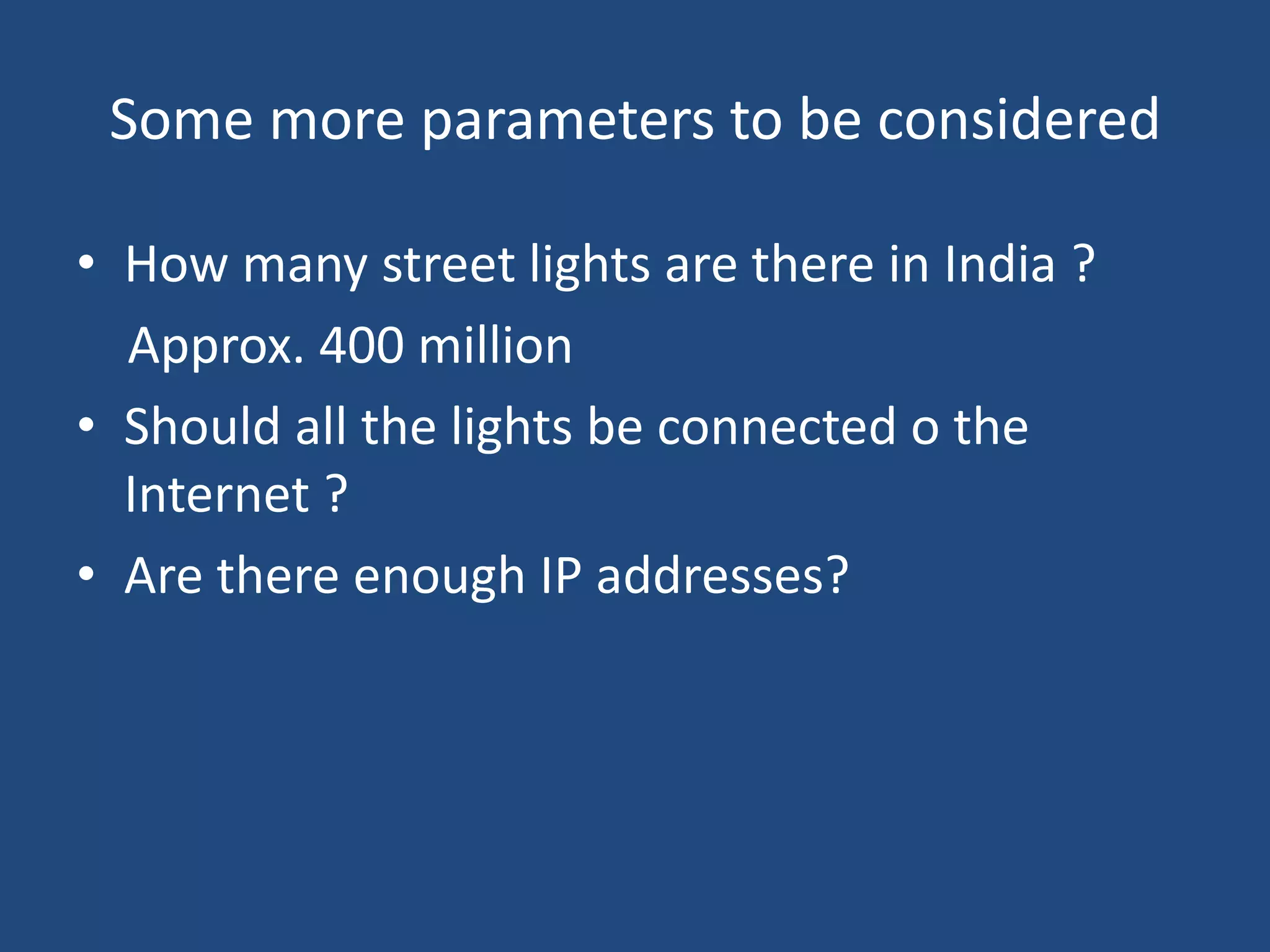
Some more parameters to be considered
• How many street lights are there in India ?
Approx. 400 million
• Should all the lights be connected o the
Internet ?
• Are there enough IP addresses?
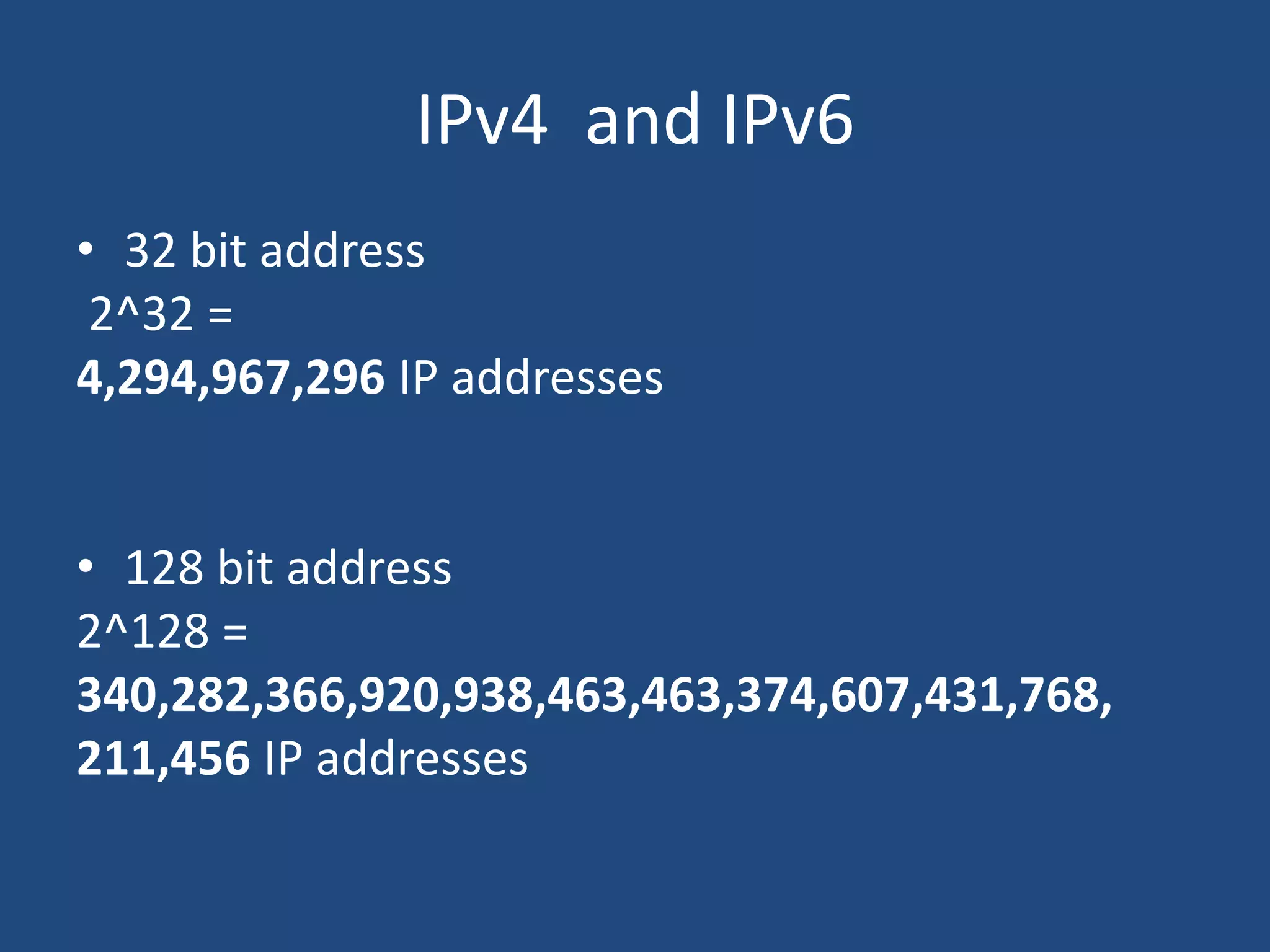
IPv4 and IPv6
• 32 bit address
2^32 =
4,294,967,296 IP addresses
• 128 bit address
2^128 =
340,282,366,920,938,463,463,374,607,431,768,
211,456 IP addresses
A complete ‘Thing’
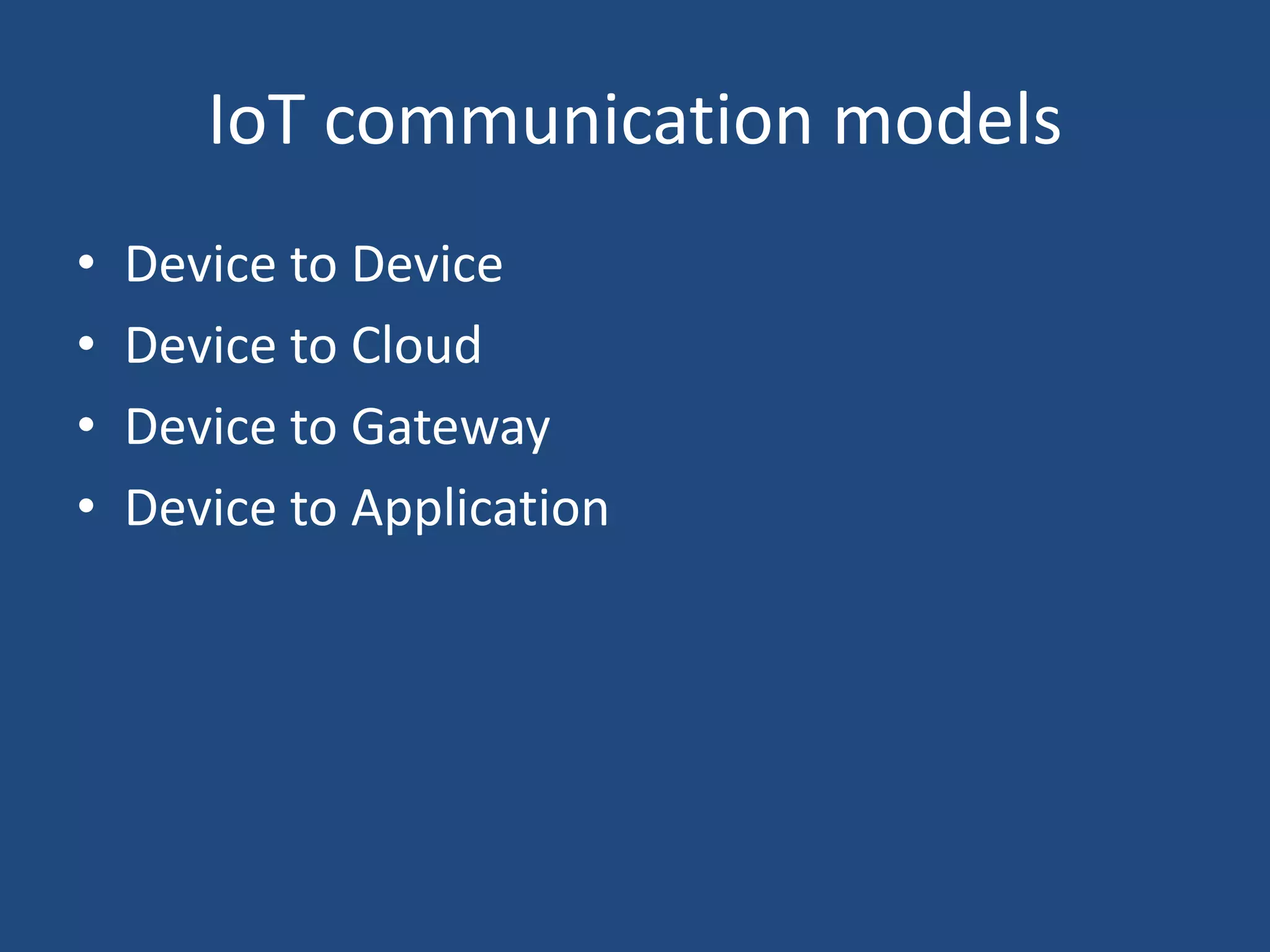
IoT communication models
• Device to Device
• Device to Cloud
• Device to Gateway
• Device to Application
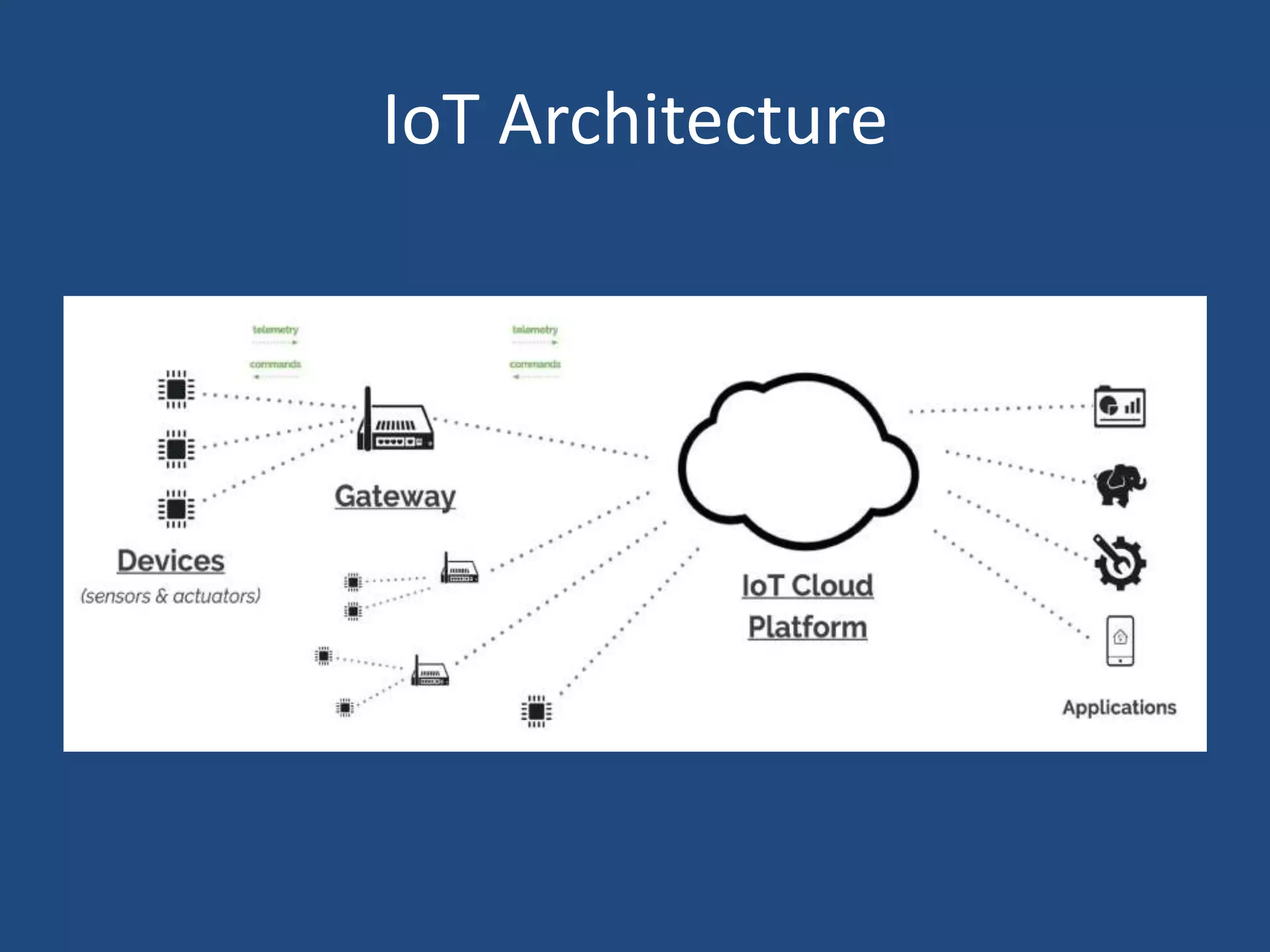
IoT Architecture
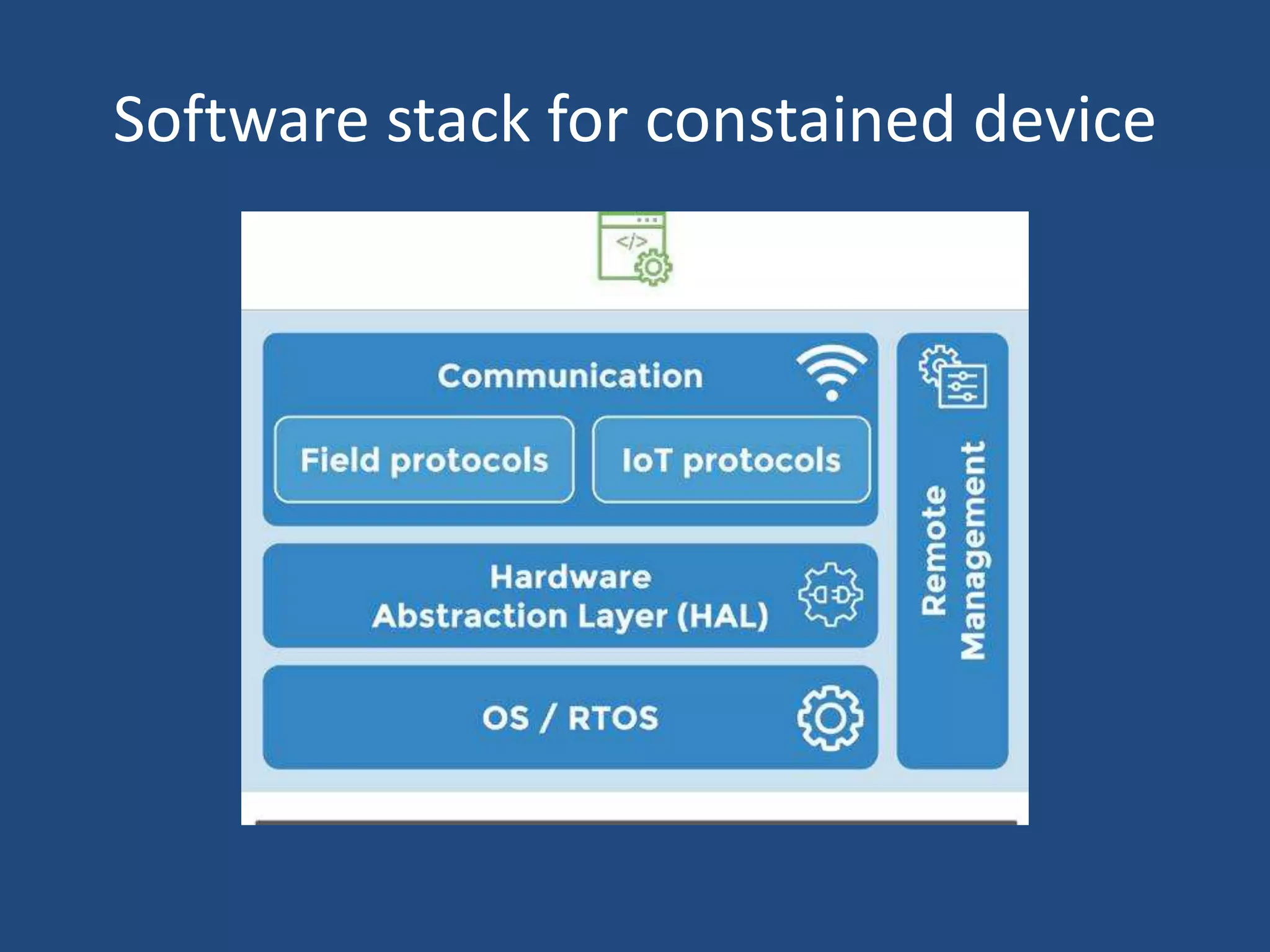
Software stack for constained device
Designing the “Thing” - Software
The software for IoT device must be
• Scalable
• Modular
• Connected
• Reliable
So why not Linux ?
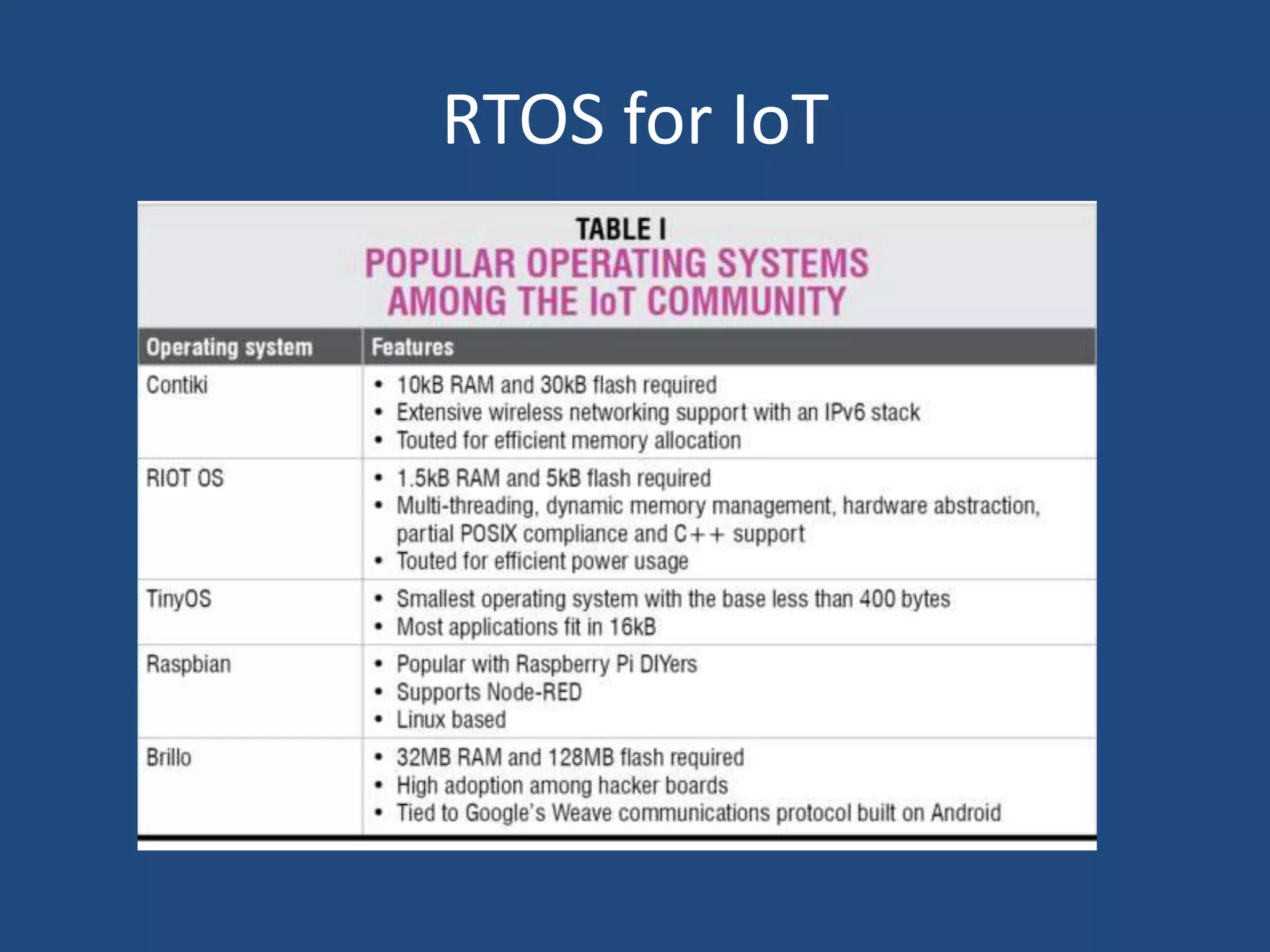
RTOS for IoT
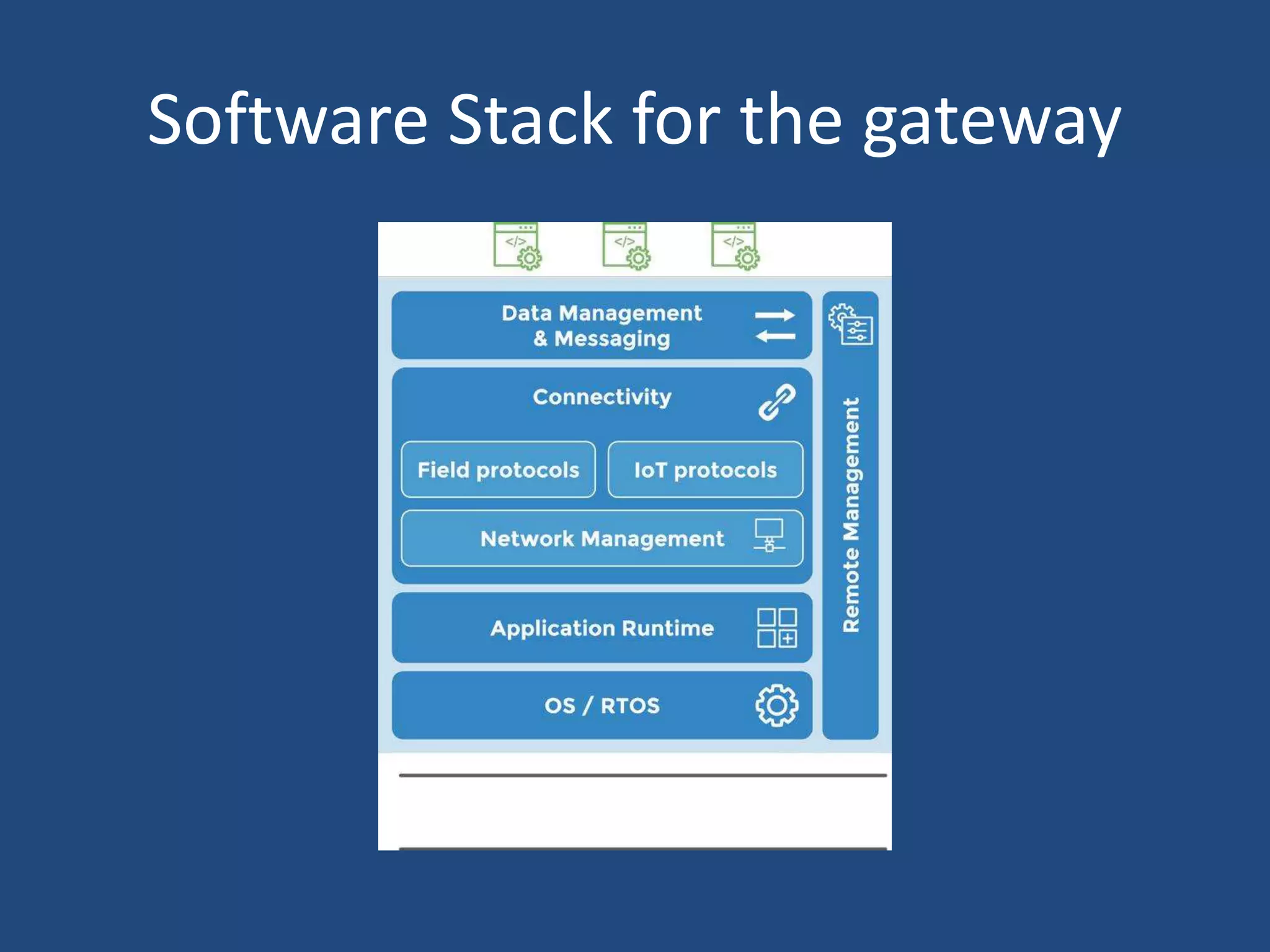
Software Stack for the gateway
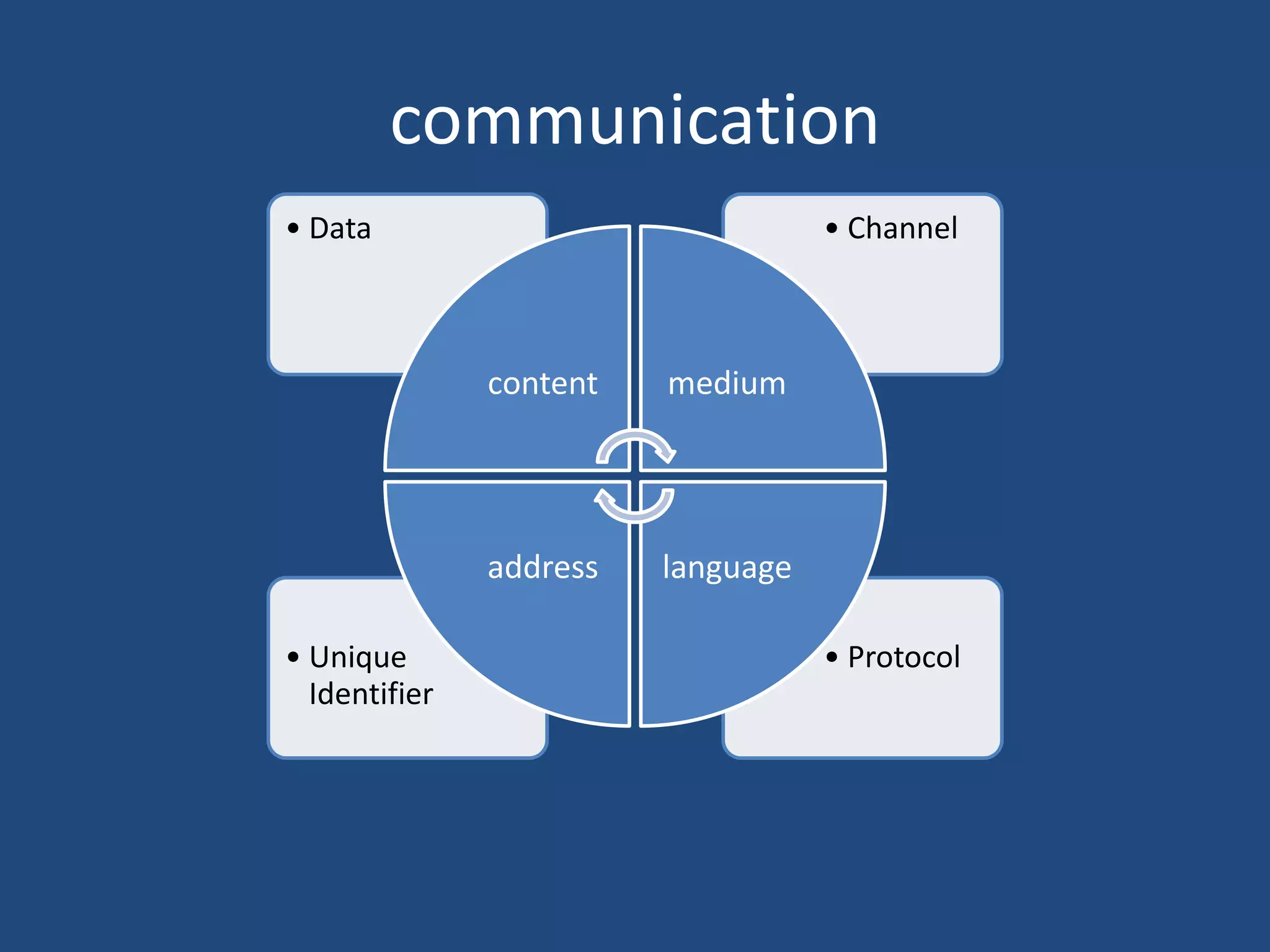
communication
• Protocol• Unique
Identifier
• Channel• Data
content medium
languageaddress
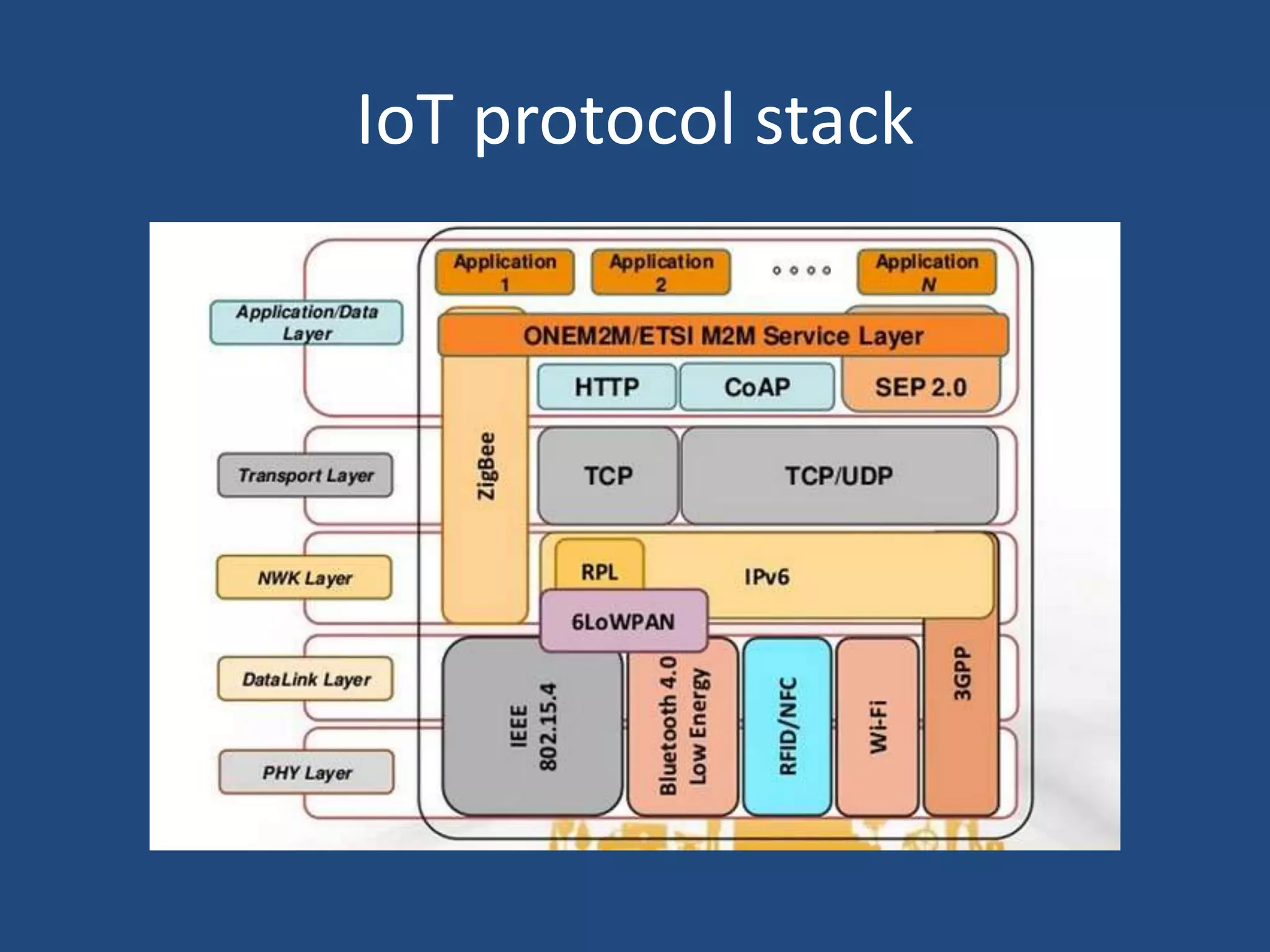
IoT protocol stack
IoT Protocols
1. Bluetooth
• Standard: Bluetooth 4.2 core specification
• Frequency: 2.4GHz (ISM)
• Range: 50-150m (Smart/BLE)
• Data Rates: 1Mbps (Smart/BLE)
IoT Protocols
2. Zigbee
• Standard: ZigBee 3.0 based on IEEE802.15.4
• Frequency: 2.4GHz
• Range: 10-100m
• Data Rates: 250kbps
IoT Protocols
3. Z-Wave
• Standard: Z-Wave Alliance ZAD12837 / ITU-T
G.9959
• Frequency: 900MHz (ISM)
• Range: 30m
• Data Rates: 9.6/40/100kbit/s
• 16 bit address space
IoT Protocols
4. 6LowPAN
• Standard: RFC6282
• Frequency: (adapted and used over a variety
of other networking media including
Bluetooth Smart (2.4GHz) or ZigBee or low-
power RF (sub-1GHz)
• Range: N/A
• Data Rates: N/A
IoT Protocols
5. Thread
• Standard: Thread, based on IEEE802.15.4 and
6LowPAN
• Frequency: 2.4GHz (ISM)
• Range: N/A
• Data Rates: N/A
• Supports a mesh network of upto 250 nodes
IoT Protocols
6. WiFi
• Standard: Based on 802.11n (most common
usage in homes today)
• Frequencies: 2.4GHz and 5GHz bands
• Range: Approximately 50m
• Data Rates: 600 Mbps maximum, but 150-200Mbps is
more typical, depending on channel frequency used and
number of antennas (latest 802.11-ac standard should
offer 500Mbps to 1Gbps)
IoT Protocols
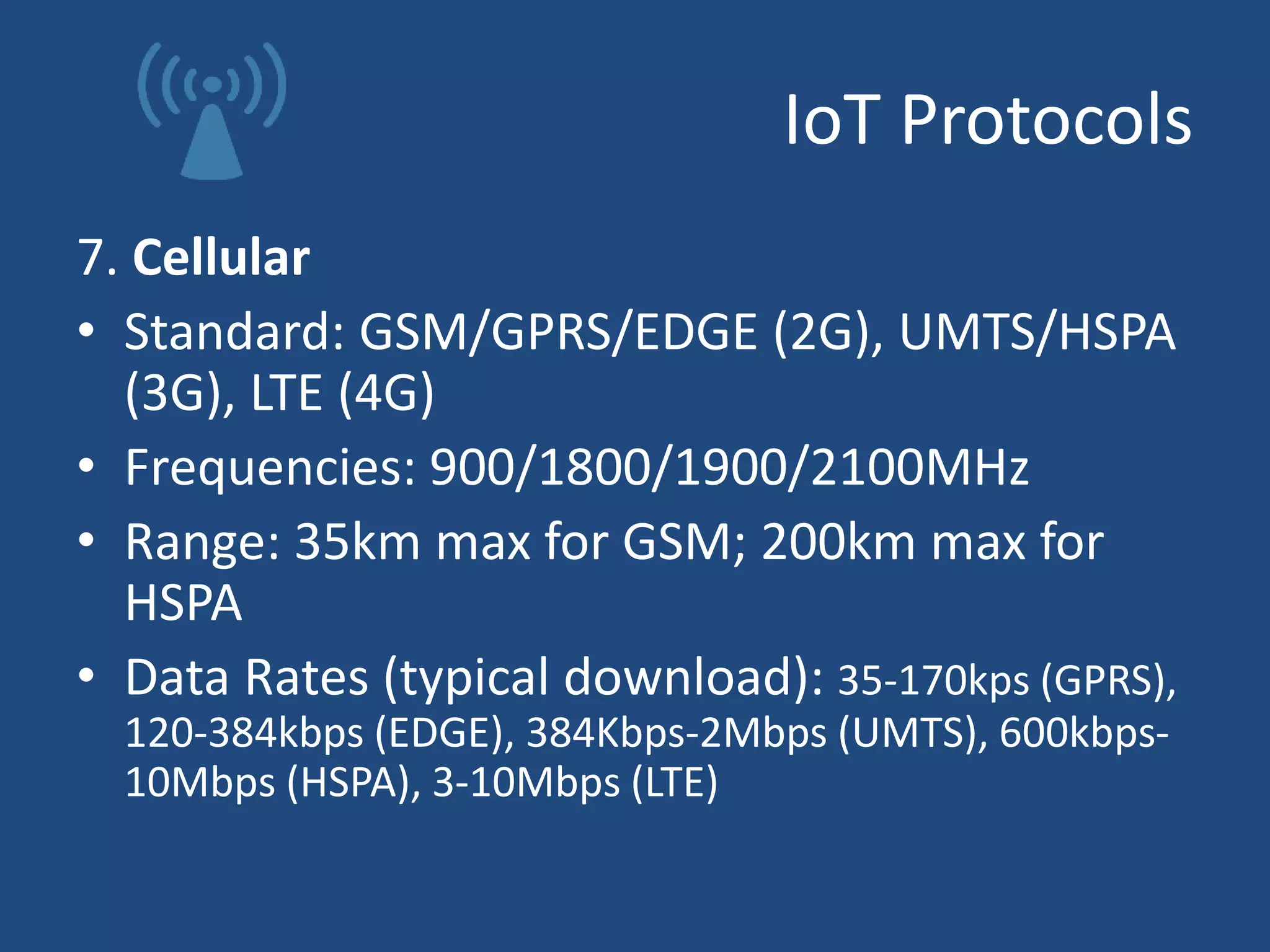
7. Cellular
• Standard: GSM/GPRS/EDGE (2G), UMTS/HSPA
(3G), LTE (4G)
• Frequencies: 900/1800/1900/2100MHz
• Range: 35km max for GSM; 200km max for
HSPA
• Data Rates (typical download): 35-170kps (GPRS),
120-384kbps (EDGE), 384Kbps-2Mbps (UMTS), 600kbps-
10Mbps (HSPA), 3-10Mbps (LTE)
IoT Protocols
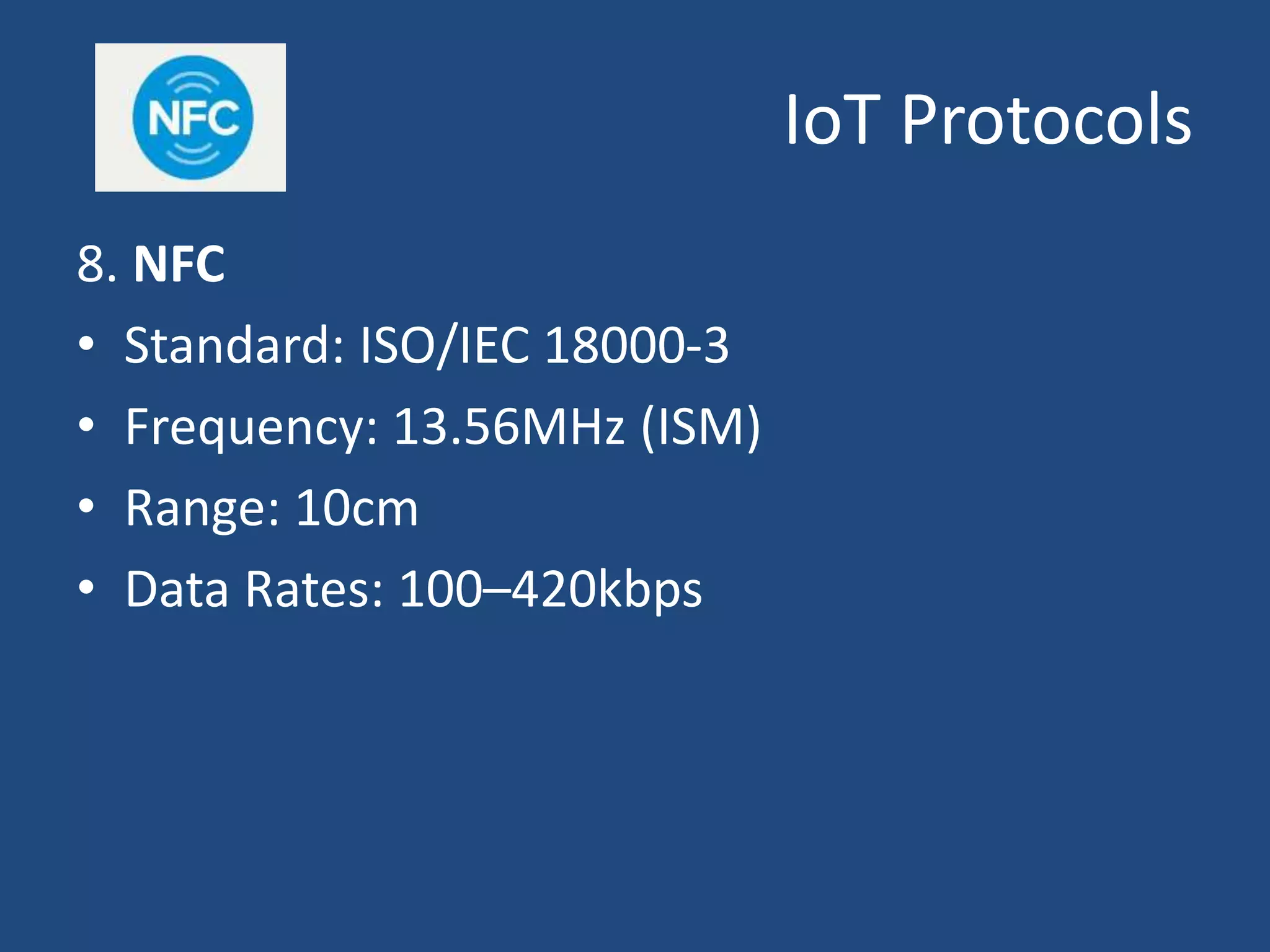
8. NFC
• Standard: ISO/IEC 18000-3
• Frequency: 13.56MHz (ISM)
• Range: 10cm
• Data Rates: 100–420kbps
IoT Protocols
9. Sigfox
• Standard: Sigfox
• Frequency: 900MHz
• Range: 30-50km (rural environments), 3-10km
(urban environments)
• Data Rates: 10-1000bps
IoT Protocols
10. LoRaWAN
• Standard: LoRaWAN
• Frequency: Various
• Range: 2-5km (urban environment), 15km
(suburban environment)
• Data Rates: 0.3-50 kbps.
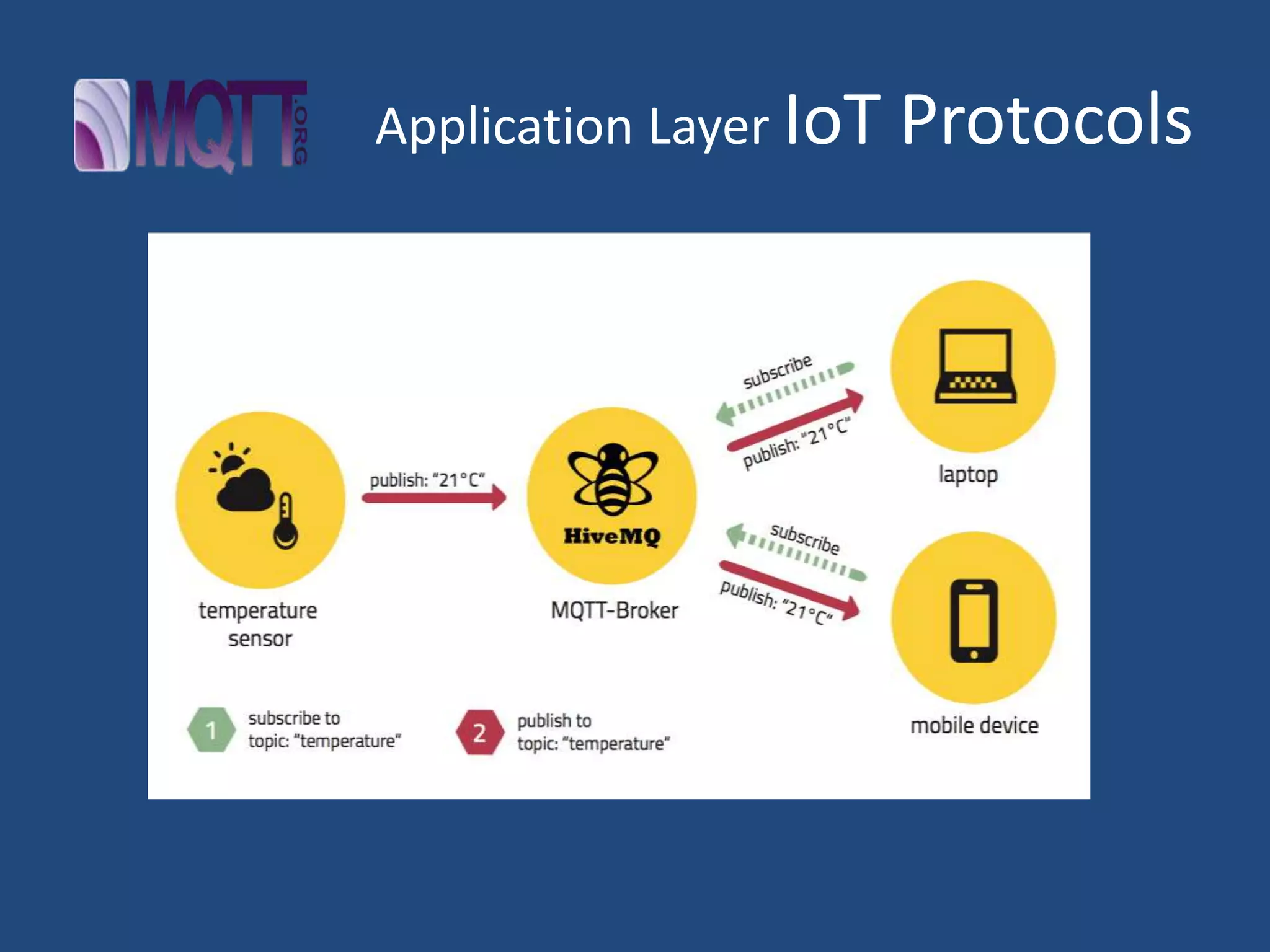
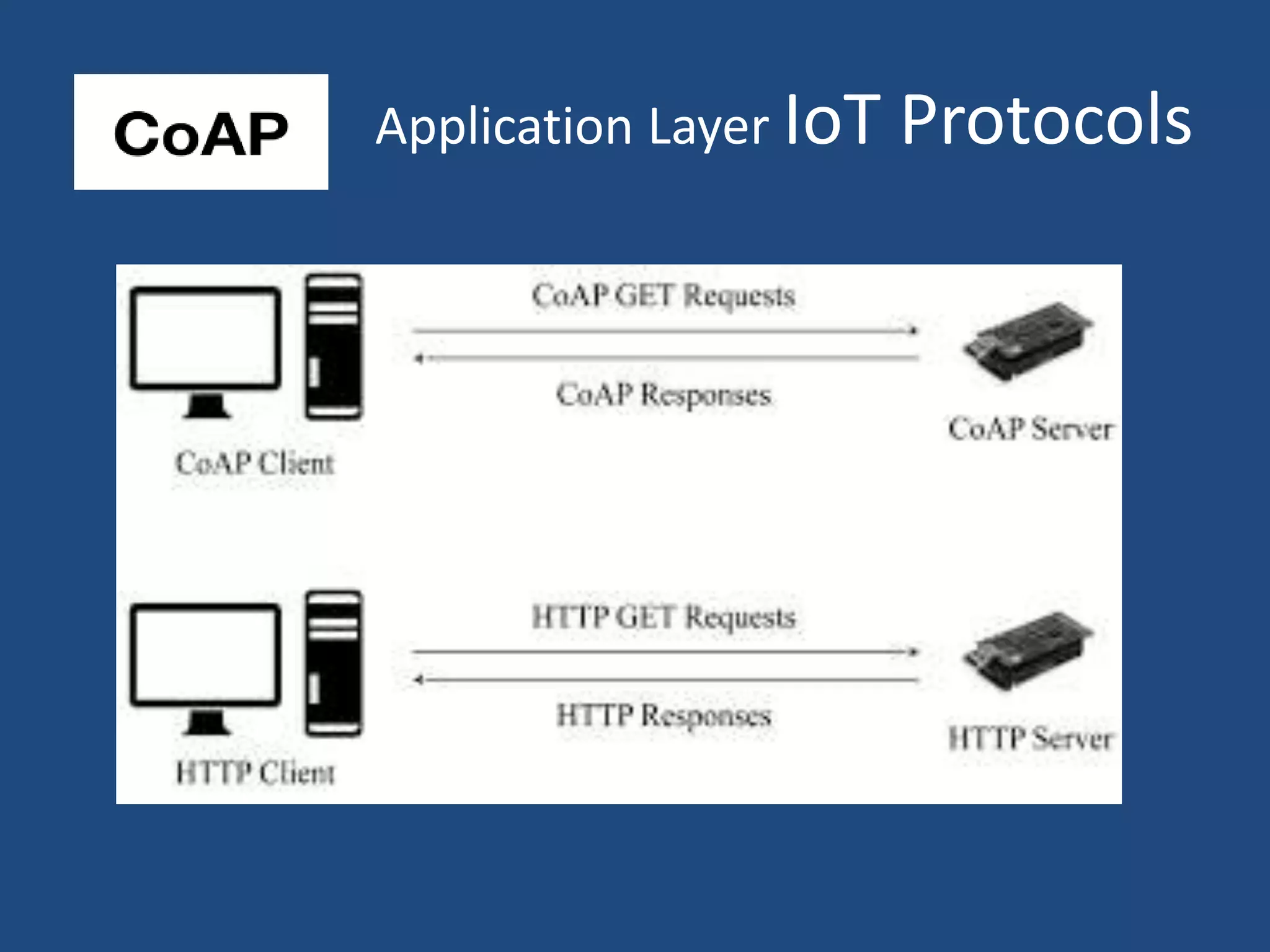
Application Layer IoT Protocols
Data
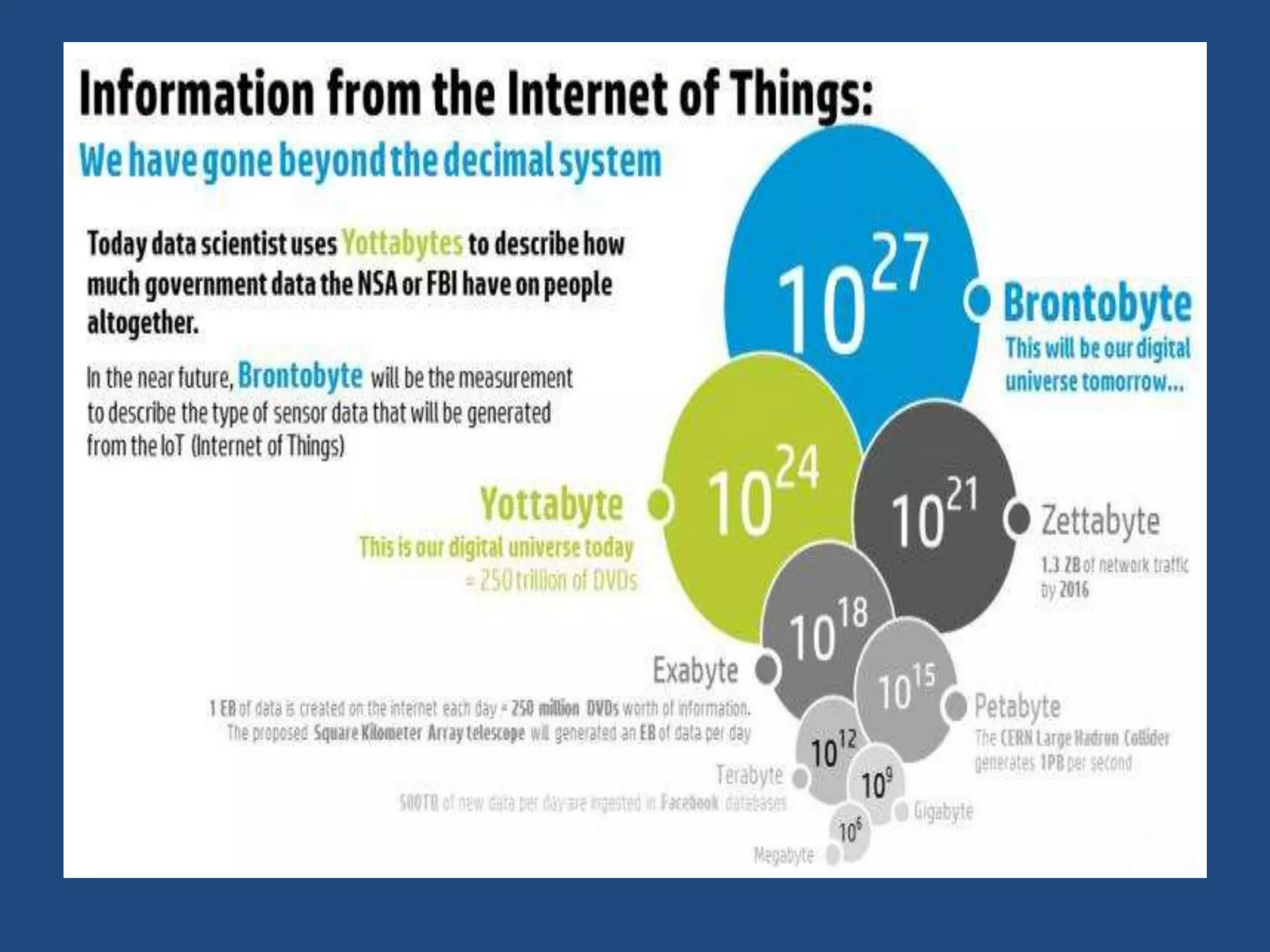
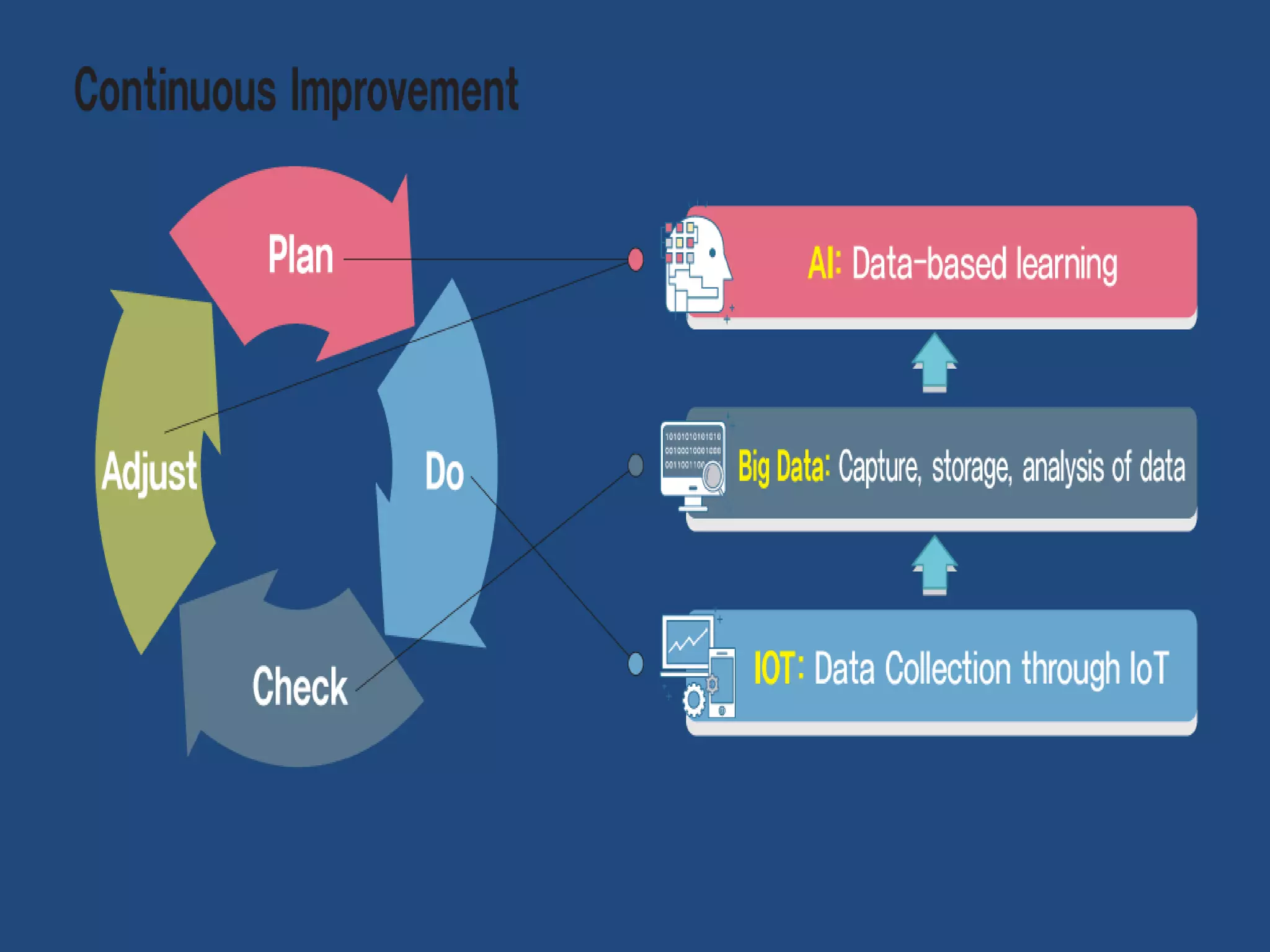
• 44 billion TB data generated by 2020
This is where data management and analysis
becomes important.
Four components of IoT from data perspective
• Device
• Communication
• Software Backend
• Application Software
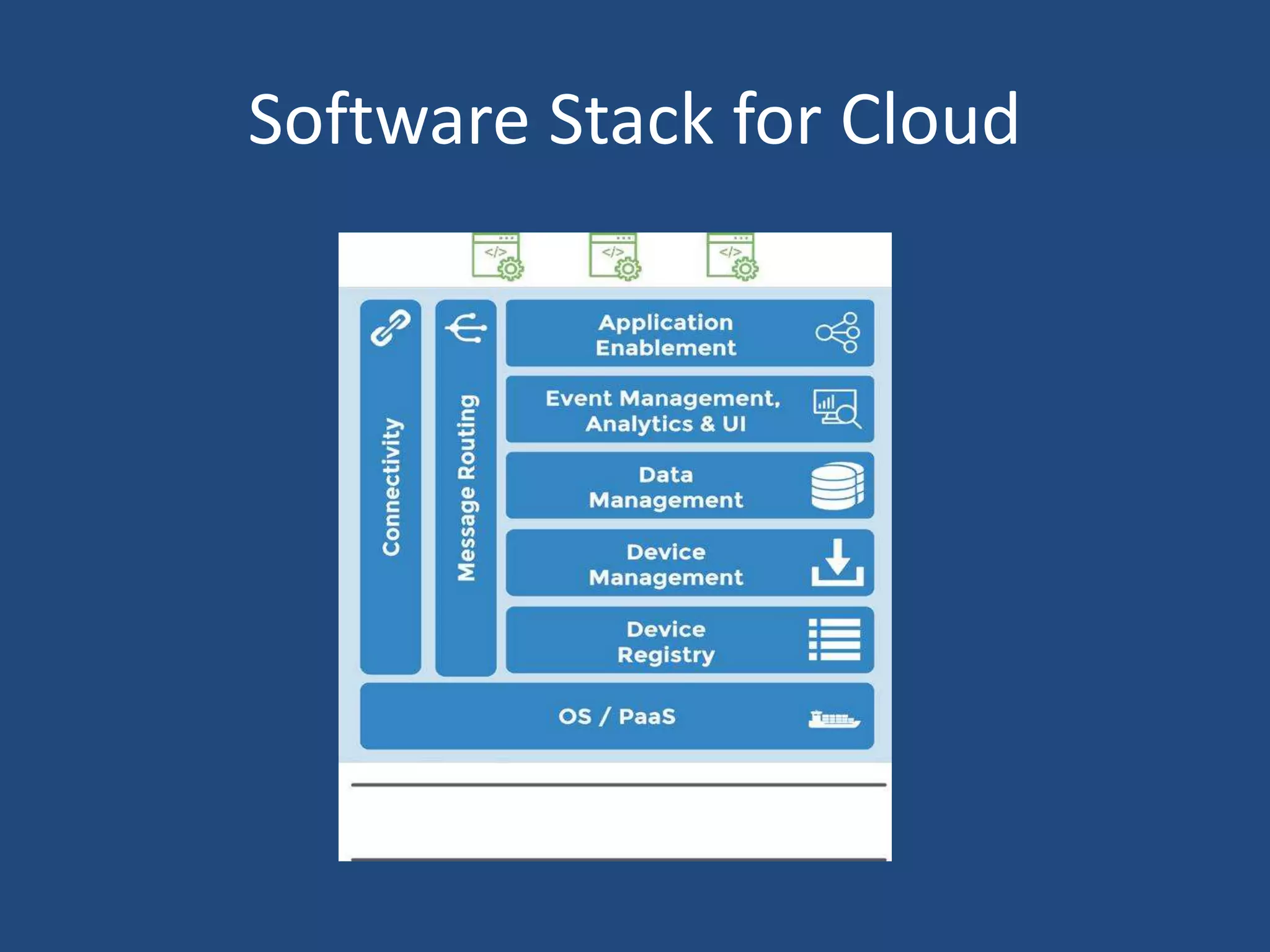
Software Stack for Cloud
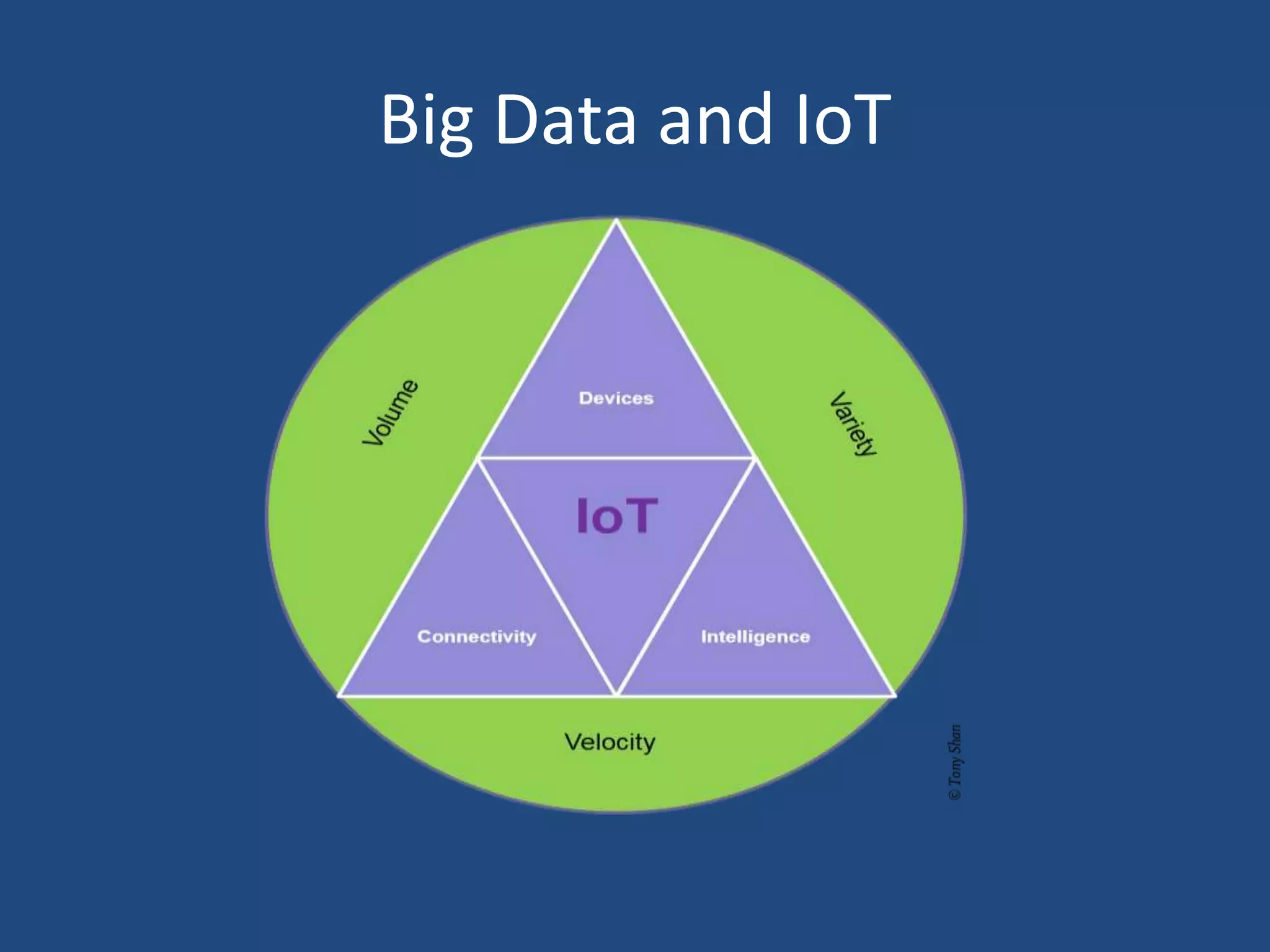
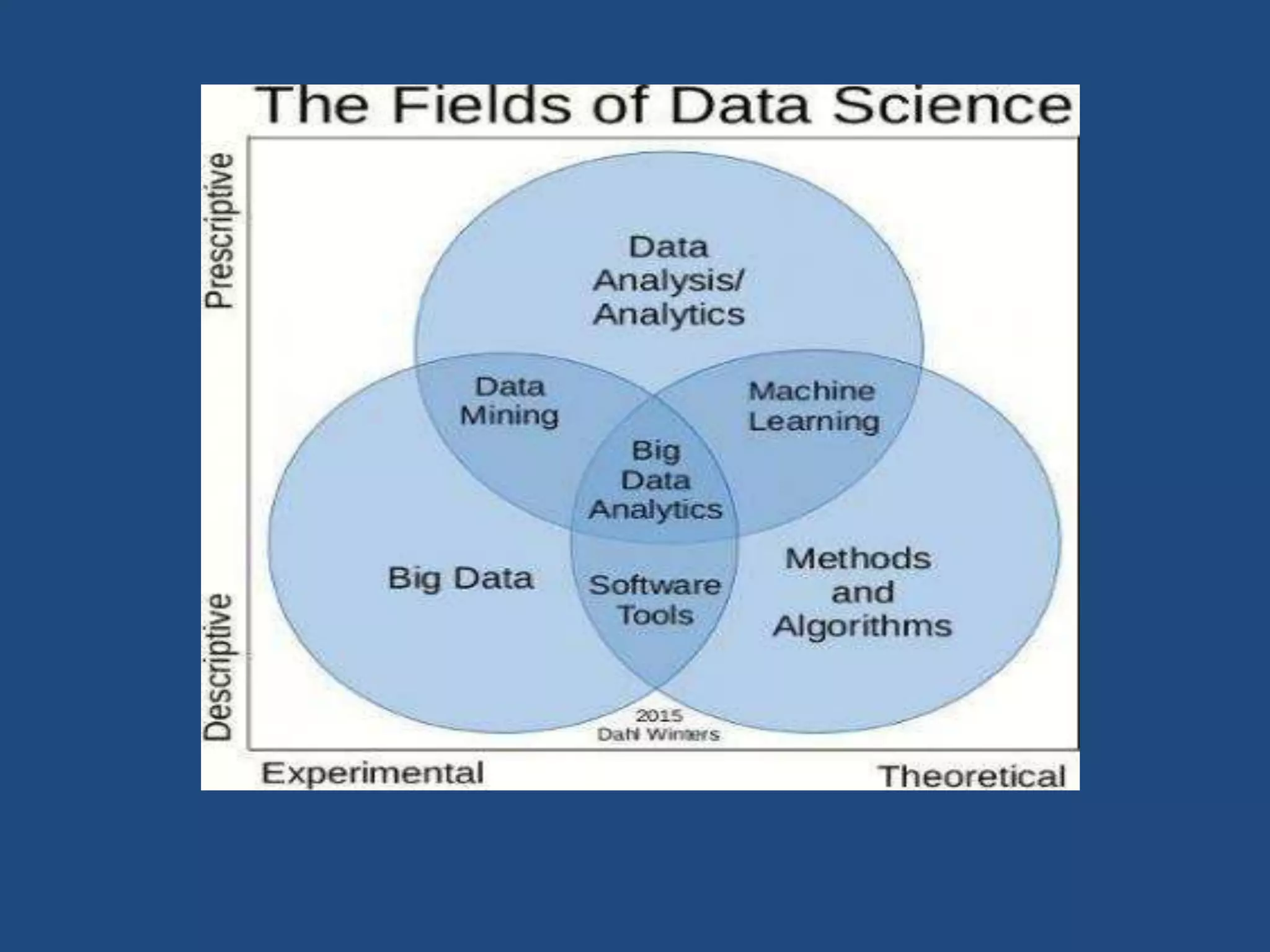
Big Data and IoT
Issues raised by the IoT
• Security
• Privacy
• Interoperability and standards
• Legal, regulatory and Rights
Internet of Threat
Security perspective
The Internet of Things is going to destroy Us all
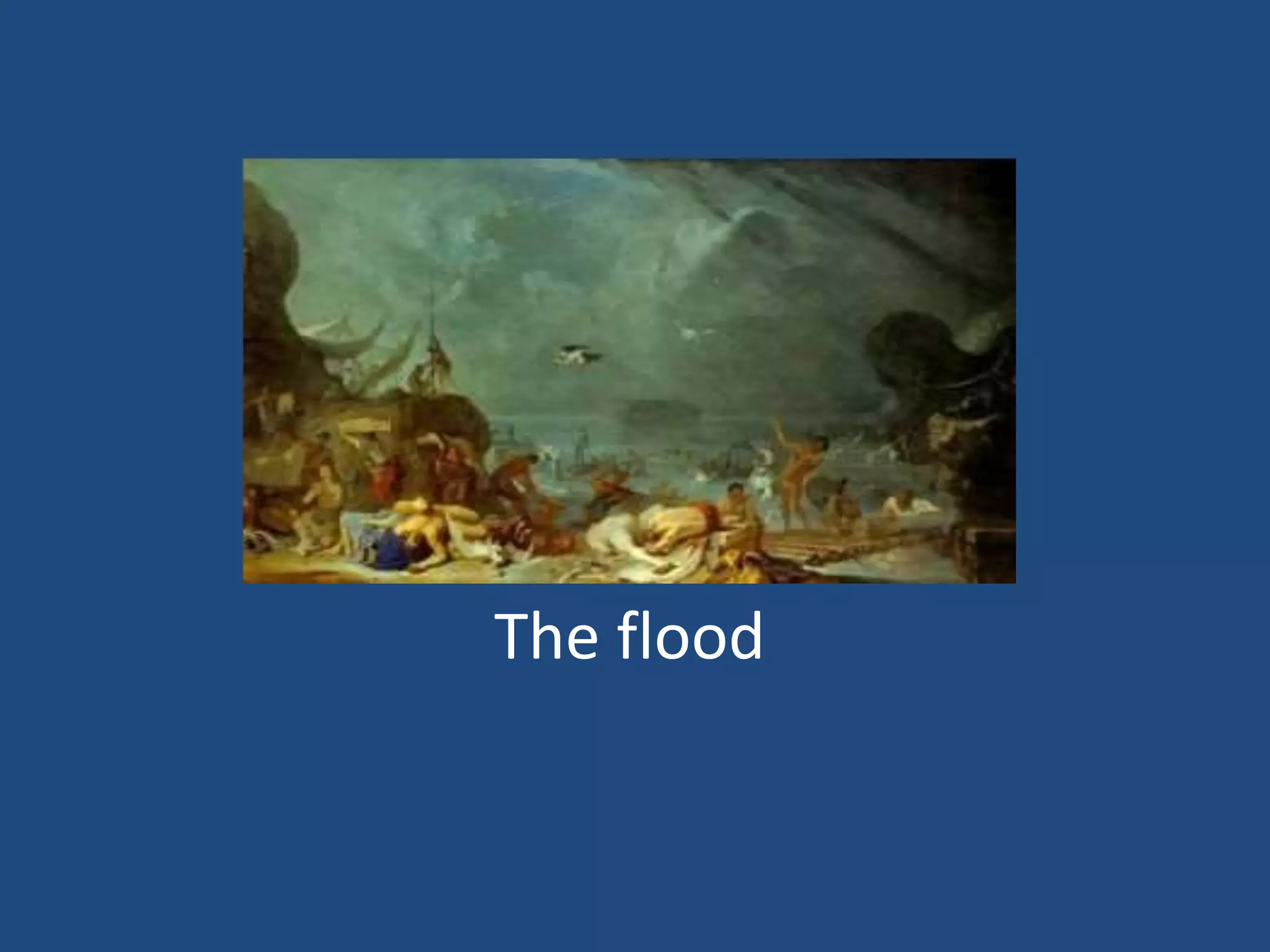
The flood
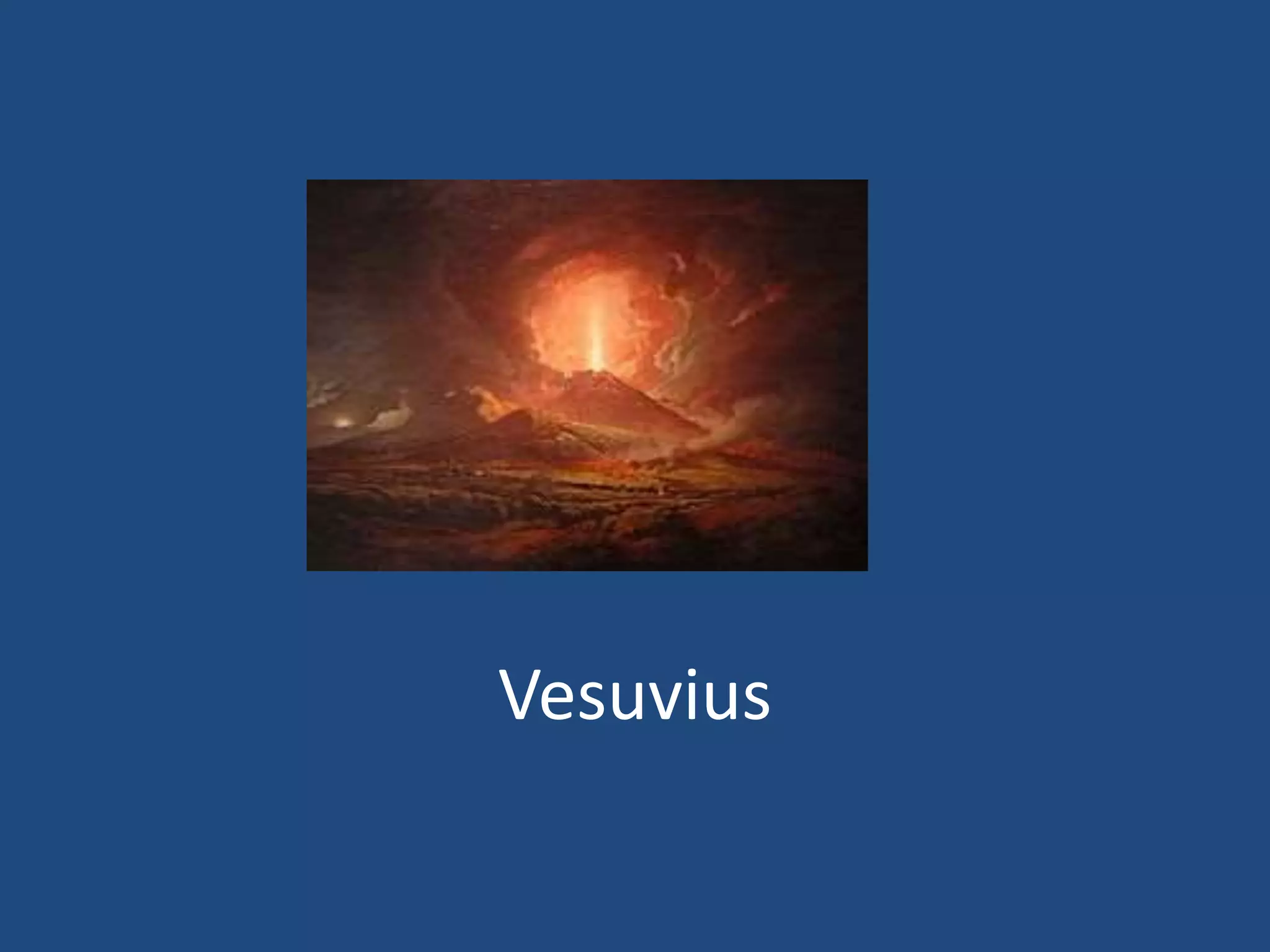
Vesuvius
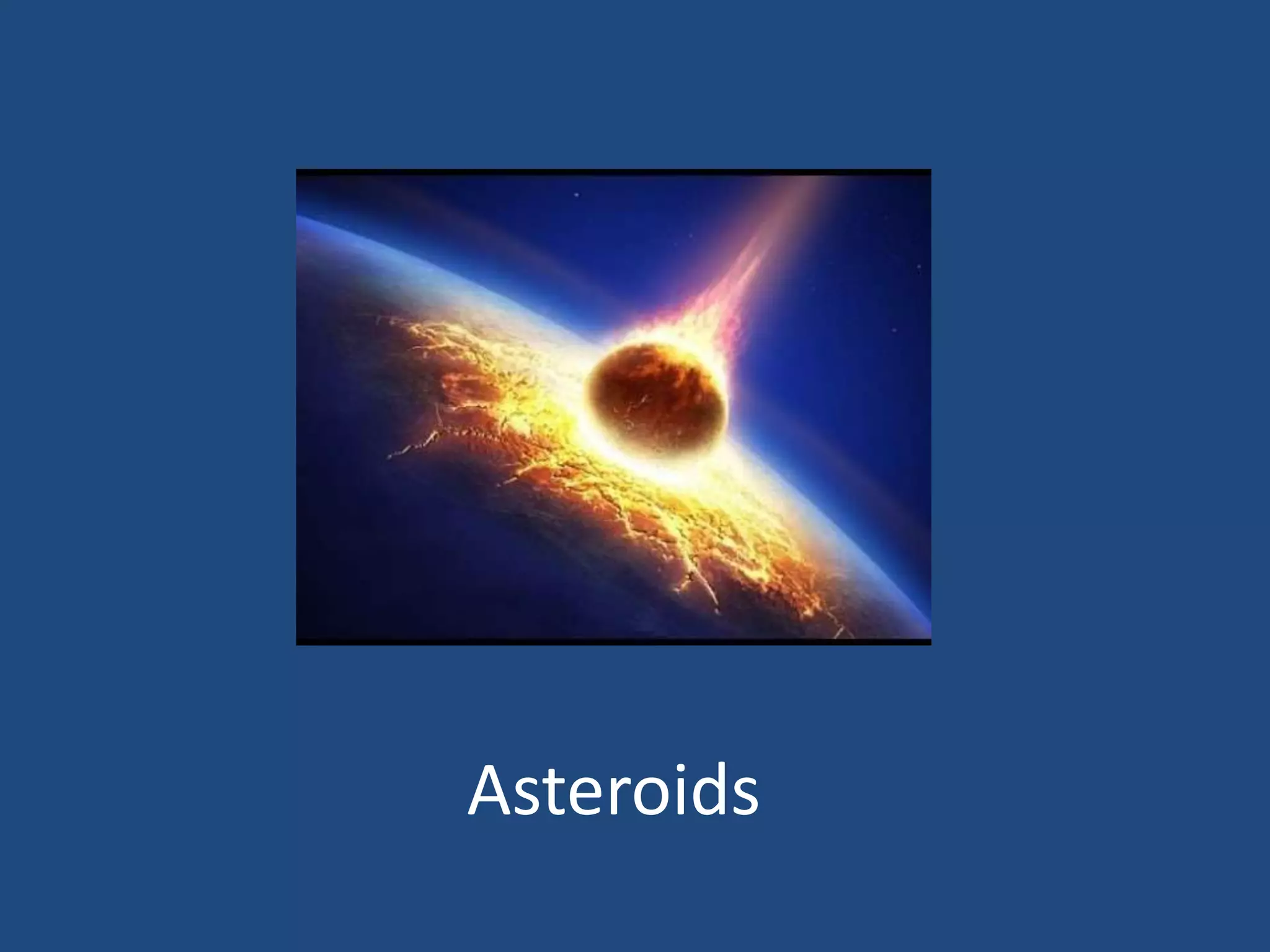
Asteroids
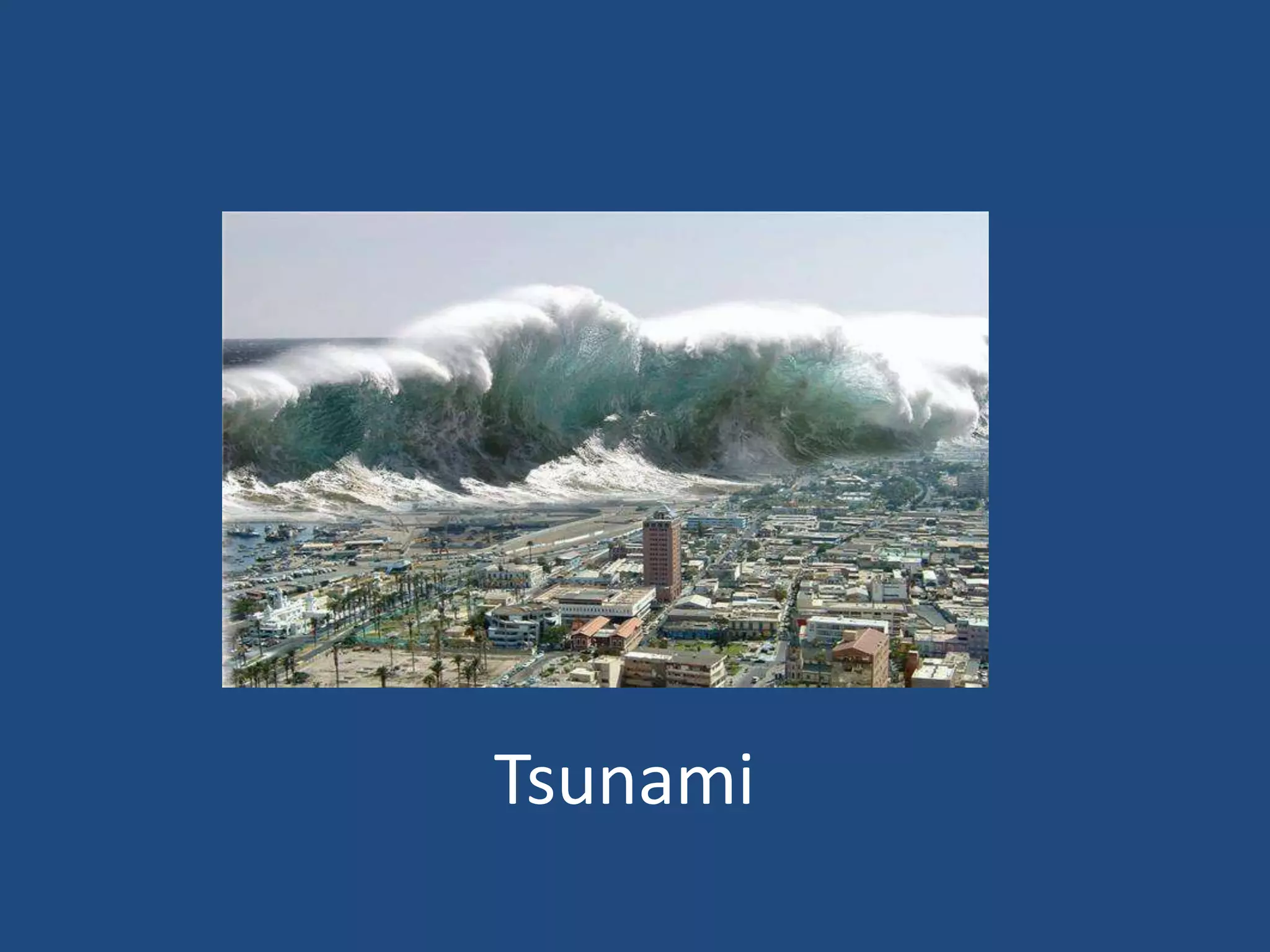
Tsunami
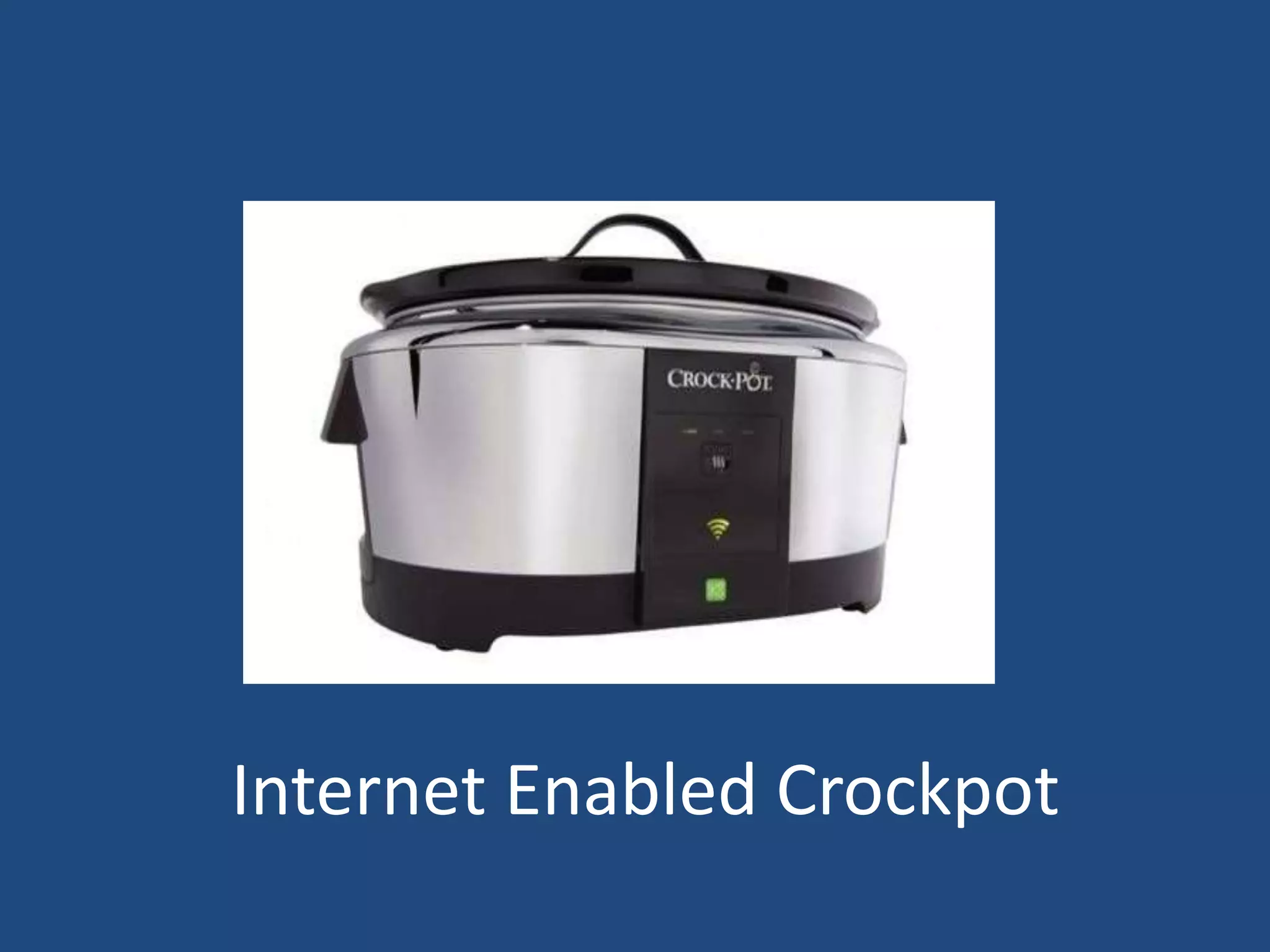
Internet Enabled Crockpot
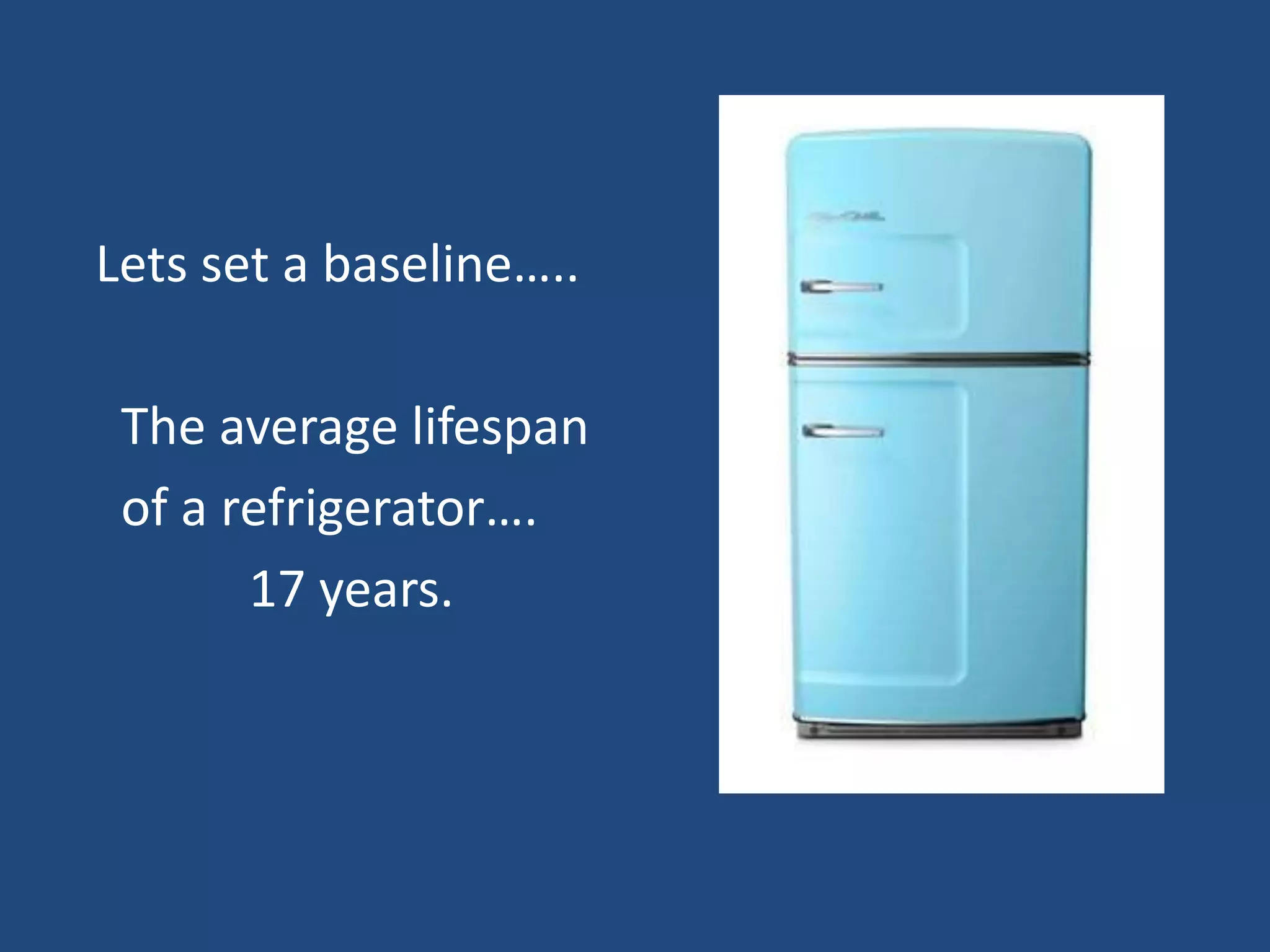
Lets set a baseline…..
The average lifespan
of a refrigerator….
17 years.
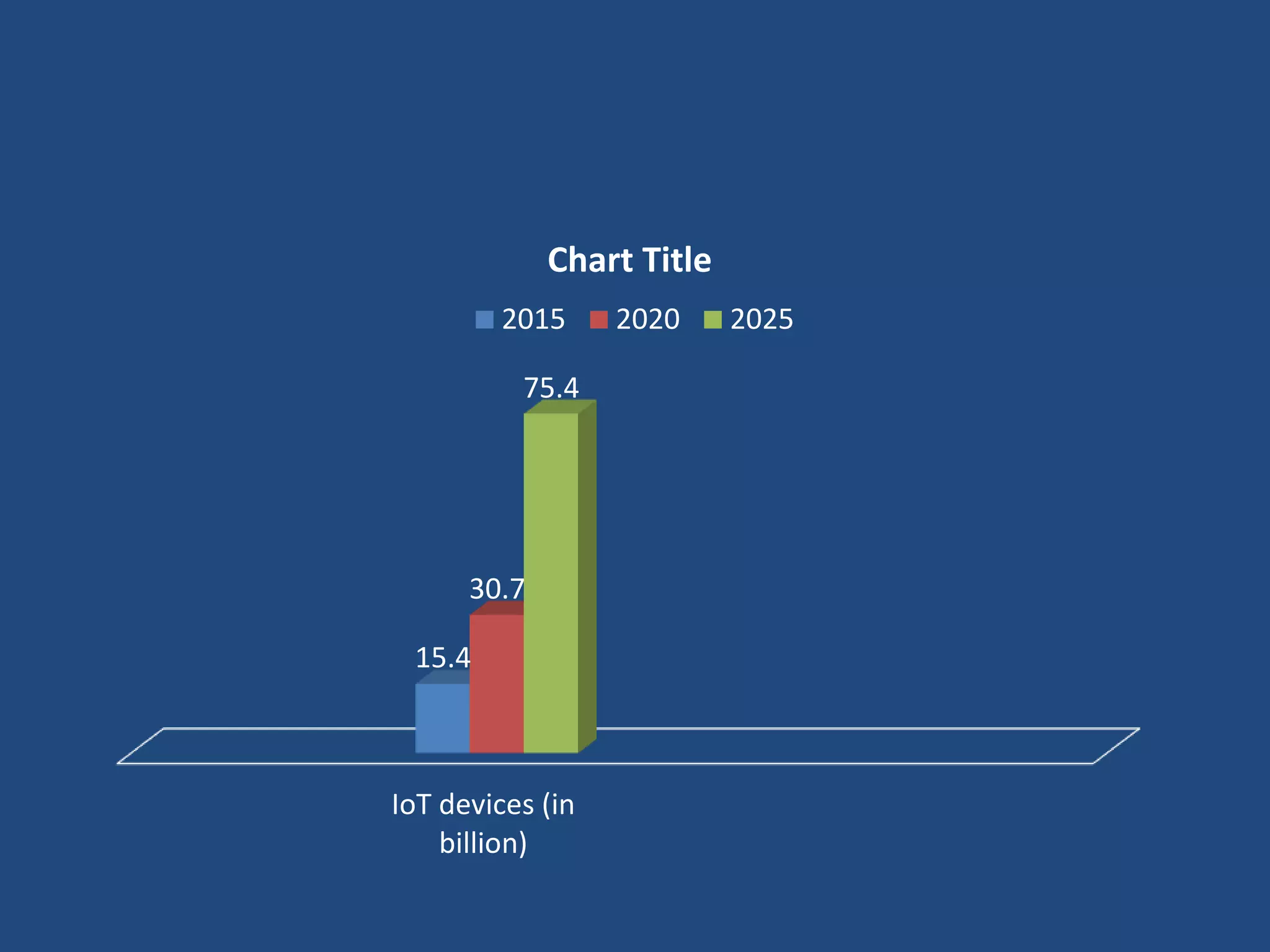
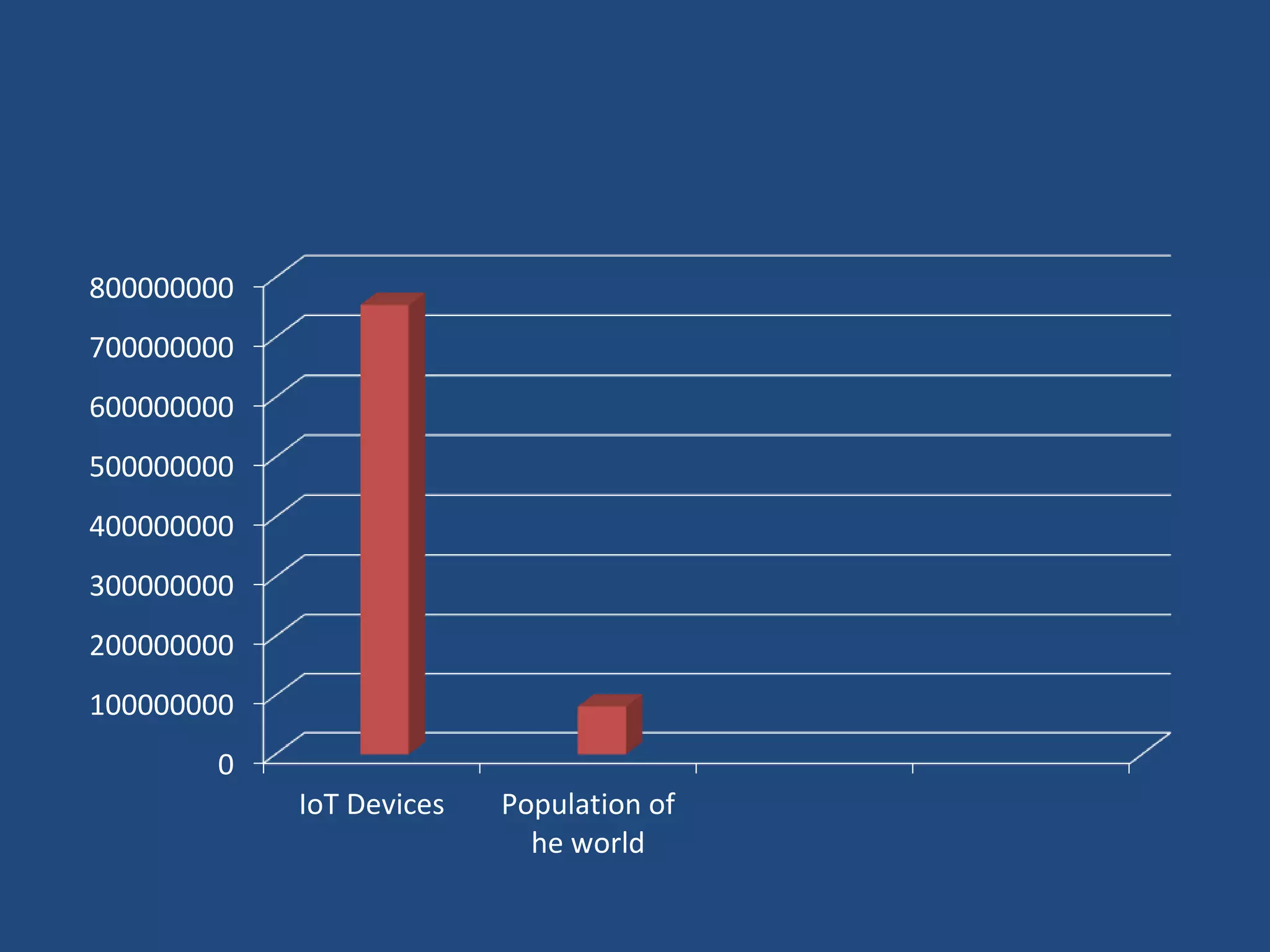
IHS forecasts that IoT market will grow from an
installed base of 15.4 billion devices in 2015 to
30.7 billion devices in 2020 and 75.4 billion in
2025.
IoT devices (in
billion)
15.4
30.7
75.4
Chart Title
2015 2020 2025
0
100000000
200000000
300000000
400000000
500000000
600000000
700000000
800000000
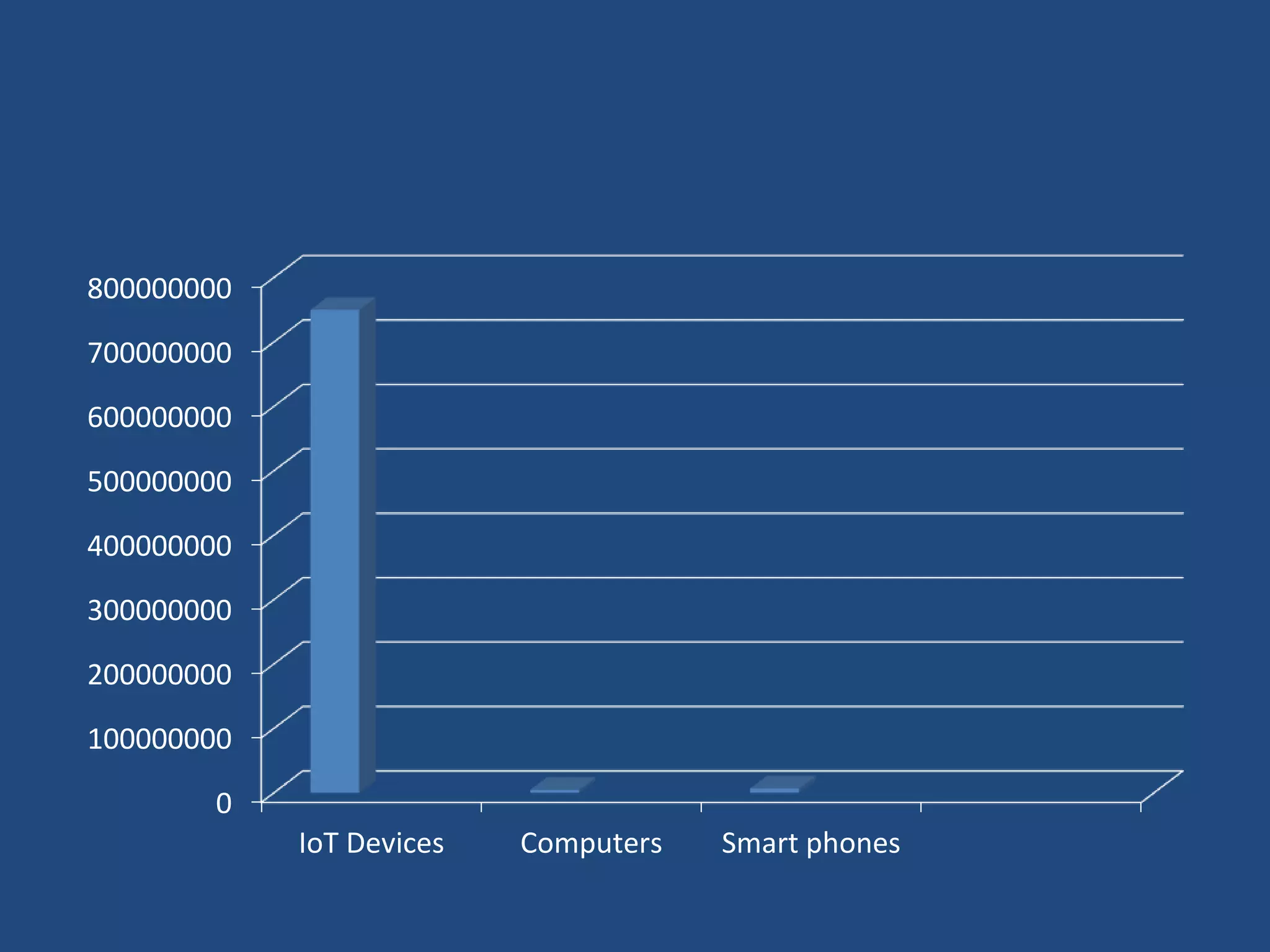
IoT Devices Computers Smart phones
0
100000000
200000000
300000000
400000000
500000000
600000000
700000000
800000000
IoT Devices Population of
he world

Introduction to Internet of Things (IoT)