World Health
Organization Integrated
Management of
Childhood Illness (IMCI)
Sarah Ashley,
MD 14
October 2015
Goals for
today
• Identify key causes of childhood
mortality
• Explain the meaning and purpose of
integrated case management
• Describe the major steps in the IMCI
strategy
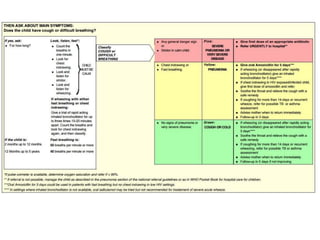
• Introduce use of IMCI tools including
chart booklet, wall posters and case
management sheets
The State of Child Health Today
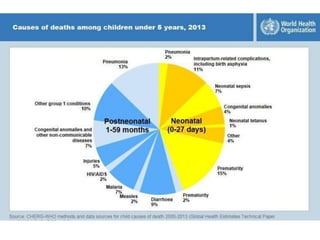
5.9 million children under age five died in
2015, nearly 16 000 every day
83% of deaths in children under age five
are caused by infectious, neonatal or
nutritional conditions
The large majority of these deaths are
from preventable causes!
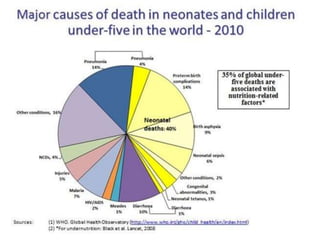
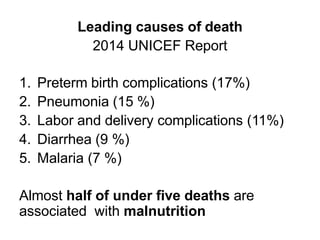
Leading causes of death
2014 UNICEF Report
1. Preterm birth complications (17%)
2. Pneumonia (15 %)
3. Labor and delivery complications (11%)
4. Diarrhea (9 %)
5. Malaria (7 %)
Almost half of under five deaths are
associated with malnutrition
Factors associated with mortality:
- Poorest households
- Rural areas
- Low rates of maternal education
Mortality also varies by country depending on
the prevalence of HIV and malaria
Children die from more than one condition at
once
Geographical distribution
Half of under-five deaths occur in five
countries:
India (21%)
Nigeria (13%)
Pakistan
Democratic Republic of the
Congo China
Progress Made:
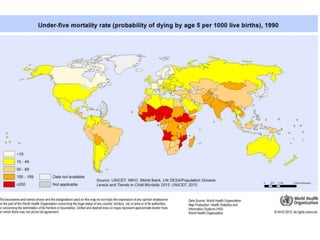
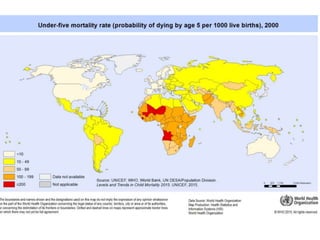
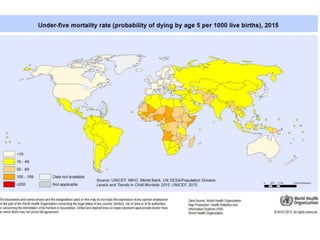
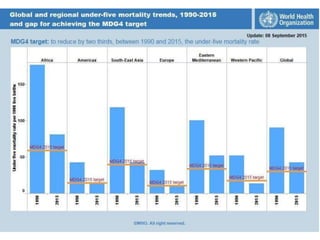
Under-five deaths worldwide have
declined:
12.7 (12.6, 13.0) million in 1990
5.9 (5.7, 6.4) million in 2015
19,000 fewer children dying every day
48 million children under five saved since
2000
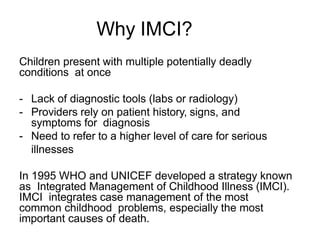
Why IMCI?
Children present with multiple potentially deadly
conditions at once
- Lack of diagnostic tools (labs or radiology)
- Providers rely on patient history, signs, and
symptoms for diagnosis
- Need to refer to a higher level of care for serious
illnesses
In 1995 WHO and UNICEF developed a strategy known
as Integrated Management of Childhood Illness (IMCI).
IMCI integrates case management of the most
common childhood problems, especially the most
important causes of death.
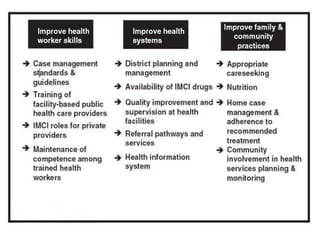
The IMCI Process
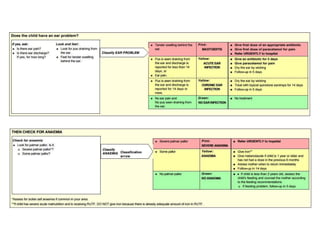
- List of conditions to check in children
an infants
- Assess and treat children for all
conditions that are present
- Standardized algorithms guide
management and decision to transfer to
higher care
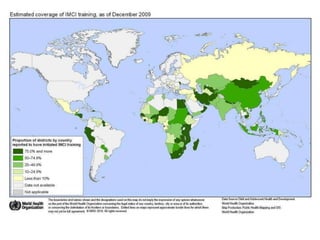
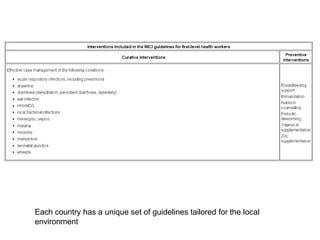
Each country has a unique set of guidelines tailored for the local
environment
Who can use IMCI?
The IMCI process can be used by all
doctors, nurses and other health
professionals who see young infants and
children less than five years old.
It is a case management process for a first-
level facility, such as a clinic, health center
or an outpatient department of a hospital.
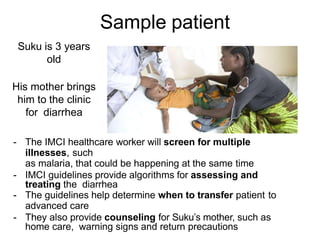
Sample patient
- The IMCI healthcare worker will screen for multiple
illnesses, such
as malaria, that could be happening at the same time
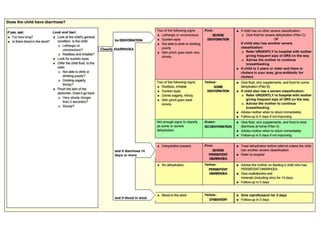
- IMCI guidelines provide algorithms for assessing and
treating the diarrhea
- The guidelines help determine when to transfer patient to
advanced care
- They also provide counseling for Suku’s mother, such as
home care, warning signs and return precautions
Suku is 3 years
old
His mother brings
him to the clinic
for diarrhea
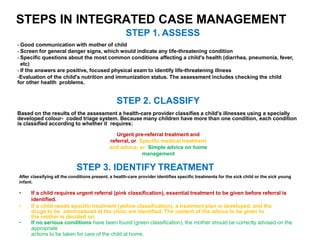
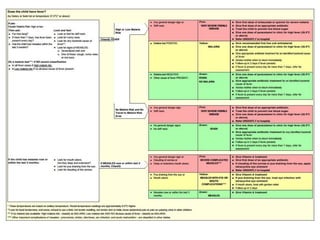
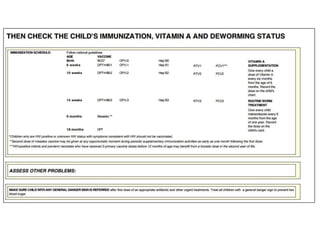
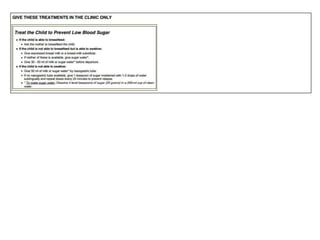
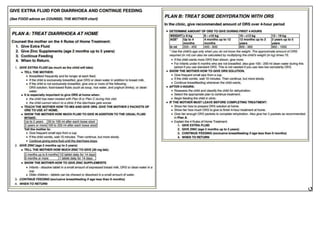
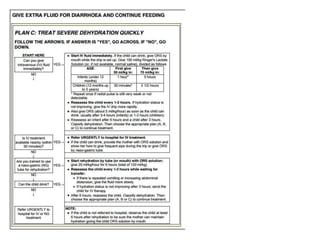
STEPS IN INTEGRATED CASE MANAGEMENT
STEP 1. ASSESS
- Good communication with mother of child
- Screen for general danger signs, which would indicate any life-threatening condition
- Specific questions about the most common conditions affecting a child's health (diarrhea, pneumonia, fever,
etc)
- If the answers are positive, focused physical exam to identify life-threatening illness
-Evaluation of the child's nutrition and immunization status. The assessment includes checking the child
for other health problems.
STEP 2. CLASSIFY
Based on the results of the assessment a health-care provider classifies a child's illnesses using a specially
developed colour- coded triage system. Because many children have more than one condition, each condition
is classified according to whether it requires:
Urgent pre-referral treatment and
referral, or Specific medical treatment
and advice, or Simple advice on home
management
STEP 3. IDENTIFY TREATMENT
After classifying all the conditions present, a health-care provider identifies specific treatments for the sick child or the sick young
infant.
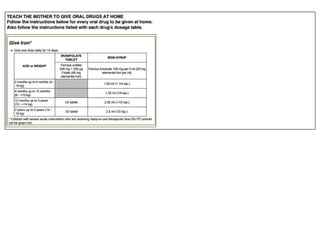
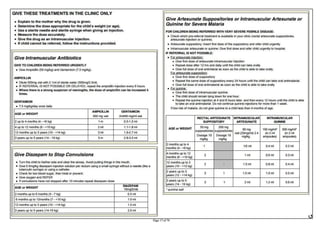
• If a child requires urgent referral (pink classification), essential treatment to be given before referral is
identified.
• If a child needs specific treatment (yellow classification), a treatment plan is developed, and the
drugs to be administered at the clinic are identified. The content of the advice to be given to
the mother is decided on.
• If no serious conditions have been found (green classification), the mother should be correctly advised on the
appropriate
actions to be taken for care of the child at home.
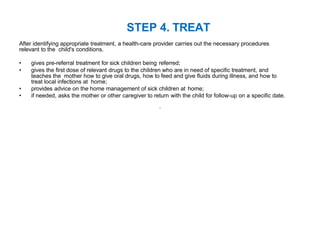
STEP 4. TREAT
After identifying appropriate treatment, a health-care provider carries out the necessary procedures
relevant to the child's conditions.
• gives pre-referral treatment for sick children being referred;
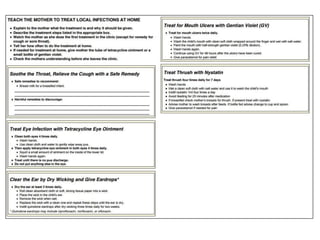
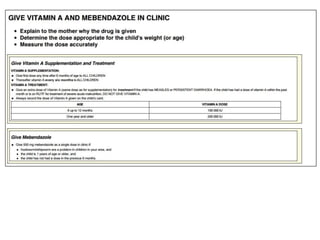
• gives the first dose of relevant drugs to the children who are in need of specific treatment, and
teaches the mother how to give oral drugs, how to feed and give fluids during illness, and how to
treat local infections at home;
• provides advice on the home management of sick children at home;
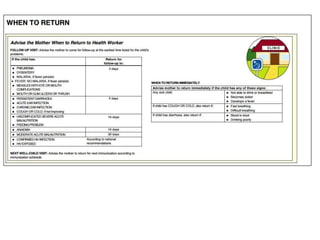
• if needed, asks the mother or other caregiver to return with the child for follow-up on a specific date.
.
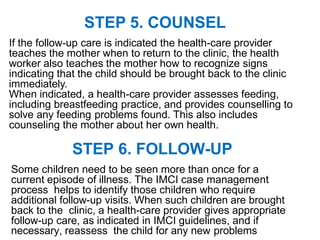
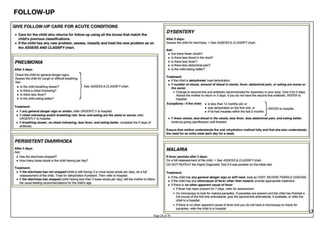
STEP 6. FOLLOW-UP
Some children need to be seen more than once for a
current episode of illness. The IMCI case management
process helps to identify those children who require
additional follow-up visits. When such children are brought
back to the clinic, a health-care provider gives appropriate
follow-up care, as indicated in IMCI guidelines, and if
necessary, reassess the child for any new problems
STEP 5. COUNSEL
If the follow-up care is indicated the health-care provider
teaches the mother when to return to the clinic, the health
worker also teaches the mother how to recognize signs
indicating that the child should be brought back to the clinic
immediately.
When indicated, a health-care provider assesses feeding,
including breastfeeding practice, and provides counselling to
solve any feeding problems found. This also includes
counseling the mother about her own health.
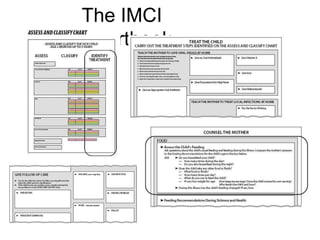
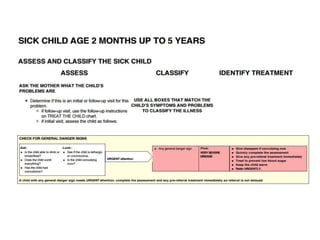
The IMCI
Chartbook
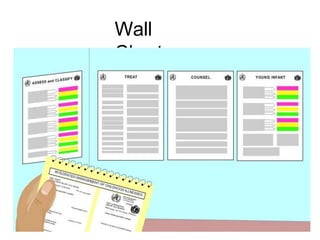
Wall
Charts
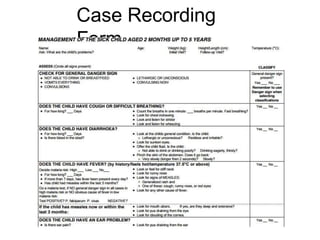
Case Recording
Form
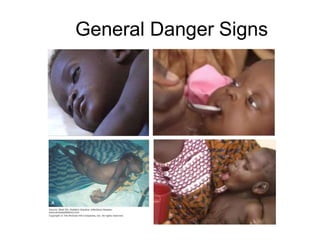
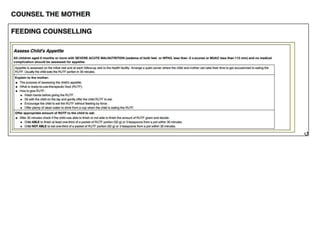
General Danger Signs
Lung
Sounds
Stridor
https://youtu.be/oeoAze-
CHng
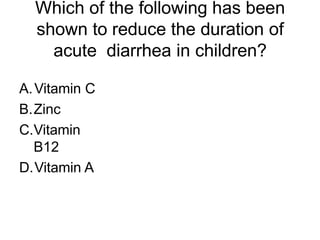
Which of the following has been
shown to reduce the duration of
acute diarrhea in children?
A.Vitamin C
B.Zinc
C.Vitamin
B12
D.Vitamin A
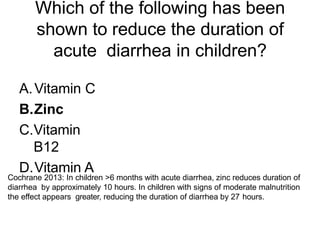
Which of the following has been
shown to reduce the duration of
acute diarrhea in children?
A.Vitamin C
B.Zinc
C.Vitamin
B12
D.Vitamin A
Cochrane 2013: In children >6 months with acute diarrhea, zinc reduces duration of
diarrhea by approximately 10 hours. In children with signs of moderate malnutrition
the effect appears greater, reducing the duration of diarrhea by 27 hours.
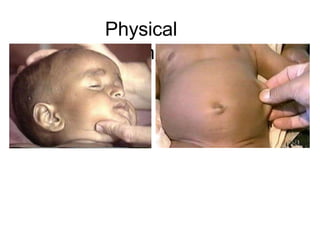
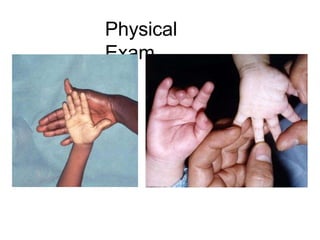
Physical
Exam
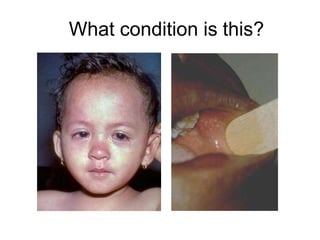
What condition is this?
Which of the following
decreases mortality in children
with measles?
A.Vitamin C
B.Zinc
C.Vitamin
B12
D.Vitamin A
Which of the following
decreases mortality in children
with measles?
A.Vitamin C
B.Zinc
C.Vitamin
B12
D.Vitamin A
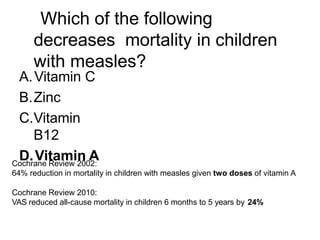
Cochrane Review 2002:
64% reduction in mortality in children with measles given two doses of vitamin A
Cochrane Review 2010:
VAS reduced all-cause mortality in children 6 months to 5 years by 24%
Physical
Exam
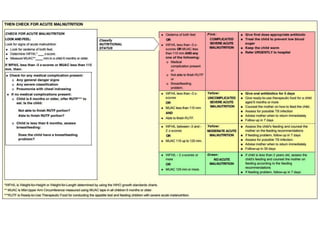
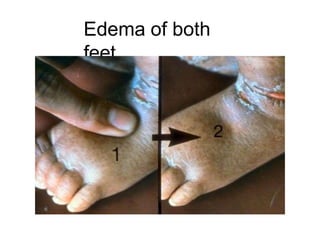
Edema of both
feet
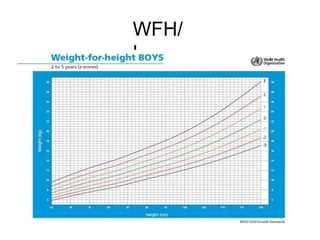
WFH/
L
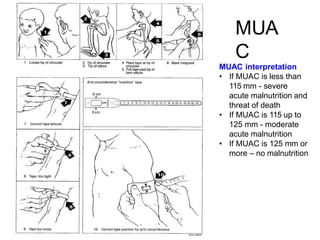
MUA
C
MUAC interpretation
• If MUAC is less than
115 mm - severe
acute malnutrition and
threat of death
• If MUAC is 115 up to
125 mm - moderate
acute malnutrition
• If MUAC is 125 mm or
more – no malnutrition
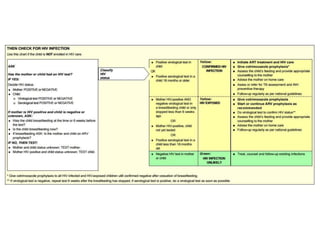
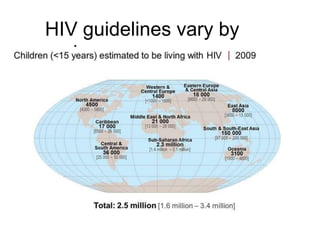
HIV guidelines vary by
region
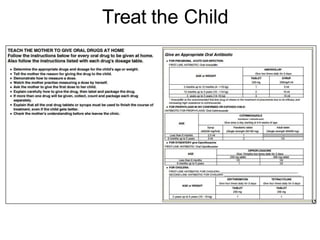
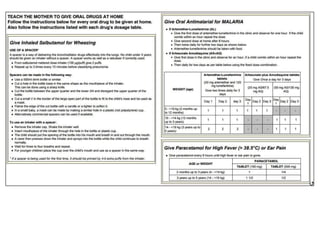
Treat the Child
Online Training
http://www.icatt-impactt.org/
Contact
:
Sarah Ashley
ashleysa14@ecu.e
du

Introduction who integrated management_of_childhood_illness-converted

  • 1.
    World Health Organization Integrated Managementof Childhood Illness (IMCI) Sarah Ashley, MD 14 October 2015
  • 2.
    Goals for today • Identifykey causes of childhood mortality • Explain the meaning and purpose of integrated case management • Describe the major steps in the IMCI strategy • Introduce use of IMCI tools including chart booklet, wall posters and case management sheets
  • 3.
    The State ofChild Health Today 5.9 million children under age five died in 2015, nearly 16 000 every day 83% of deaths in children under age five are caused by infectious, neonatal or nutritional conditions The large majority of these deaths are from preventable causes!
  • 6.
    Leading causes ofdeath 2014 UNICEF Report 1. Preterm birth complications (17%) 2. Pneumonia (15 %) 3. Labor and delivery complications (11%) 4. Diarrhea (9 %) 5. Malaria (7 %) Almost half of under five deaths are associated with malnutrition
  • 7.
    Factors associated withmortality: - Poorest households - Rural areas - Low rates of maternal education Mortality also varies by country depending on the prevalence of HIV and malaria Children die from more than one condition at once
  • 8.
    Geographical distribution Half ofunder-five deaths occur in five countries: India (21%) Nigeria (13%) Pakistan Democratic Republic of the Congo China
  • 9.
    Progress Made: Under-five deathsworldwide have declined: 12.7 (12.6, 13.0) million in 1990 5.9 (5.7, 6.4) million in 2015 19,000 fewer children dying every day 48 million children under five saved since 2000
  • 14.
    Why IMCI? Children presentwith multiple potentially deadly conditions at once - Lack of diagnostic tools (labs or radiology) - Providers rely on patient history, signs, and symptoms for diagnosis - Need to refer to a higher level of care for serious illnesses In 1995 WHO and UNICEF developed a strategy known as Integrated Management of Childhood Illness (IMCI). IMCI integrates case management of the most common childhood problems, especially the most important causes of death.
  • 17.
    The IMCI Process -List of conditions to check in children an infants - Assess and treat children for all conditions that are present - Standardized algorithms guide management and decision to transfer to higher care
  • 18.
    Each country hasa unique set of guidelines tailored for the local environment
  • 19.
    Who can useIMCI? The IMCI process can be used by all doctors, nurses and other health professionals who see young infants and children less than five years old. It is a case management process for a first- level facility, such as a clinic, health center or an outpatient department of a hospital.
  • 20.
    Sample patient - TheIMCI healthcare worker will screen for multiple illnesses, such as malaria, that could be happening at the same time - IMCI guidelines provide algorithms for assessing and treating the diarrhea - The guidelines help determine when to transfer patient to advanced care - They also provide counseling for Suku’s mother, such as home care, warning signs and return precautions Suku is 3 years old His mother brings him to the clinic for diarrhea
  • 21.
    STEPS IN INTEGRATEDCASE MANAGEMENT STEP 1. ASSESS - Good communication with mother of child - Screen for general danger signs, which would indicate any life-threatening condition - Specific questions about the most common conditions affecting a child's health (diarrhea, pneumonia, fever, etc) - If the answers are positive, focused physical exam to identify life-threatening illness -Evaluation of the child's nutrition and immunization status. The assessment includes checking the child for other health problems. STEP 2. CLASSIFY Based on the results of the assessment a health-care provider classifies a child's illnesses using a specially developed colour- coded triage system. Because many children have more than one condition, each condition is classified according to whether it requires: Urgent pre-referral treatment and referral, or Specific medical treatment and advice, or Simple advice on home management STEP 3. IDENTIFY TREATMENT After classifying all the conditions present, a health-care provider identifies specific treatments for the sick child or the sick young infant. • If a child requires urgent referral (pink classification), essential treatment to be given before referral is identified. • If a child needs specific treatment (yellow classification), a treatment plan is developed, and the drugs to be administered at the clinic are identified. The content of the advice to be given to the mother is decided on. • If no serious conditions have been found (green classification), the mother should be correctly advised on the appropriate actions to be taken for care of the child at home.
  • 22.
    STEP 4. TREAT Afteridentifying appropriate treatment, a health-care provider carries out the necessary procedures relevant to the child's conditions. • gives pre-referral treatment for sick children being referred; • gives the first dose of relevant drugs to the children who are in need of specific treatment, and teaches the mother how to give oral drugs, how to feed and give fluids during illness, and how to treat local infections at home; • provides advice on the home management of sick children at home; • if needed, asks the mother or other caregiver to return with the child for follow-up on a specific date. .
  • 23.
    STEP 6. FOLLOW-UP Somechildren need to be seen more than once for a current episode of illness. The IMCI case management process helps to identify those children who require additional follow-up visits. When such children are brought back to the clinic, a health-care provider gives appropriate follow-up care, as indicated in IMCI guidelines, and if necessary, reassess the child for any new problems STEP 5. COUNSEL If the follow-up care is indicated the health-care provider teaches the mother when to return to the clinic, the health worker also teaches the mother how to recognize signs indicating that the child should be brought back to the clinic immediately. When indicated, a health-care provider assesses feeding, including breastfeeding practice, and provides counselling to solve any feeding problems found. This also includes counseling the mother about her own health.
  • 24.
  • 25.
  • 26.
  • 28.
  • 30.
  • 31.
    Which of thefollowing has been shown to reduce the duration of acute diarrhea in children? A.Vitamin C B.Zinc C.Vitamin B12 D.Vitamin A
  • 32.
    Which of thefollowing has been shown to reduce the duration of acute diarrhea in children? A.Vitamin C B.Zinc C.Vitamin B12 D.Vitamin A Cochrane 2013: In children >6 months with acute diarrhea, zinc reduces duration of diarrhea by approximately 10 hours. In children with signs of moderate malnutrition the effect appears greater, reducing the duration of diarrhea by 27 hours.
  • 34.
  • 35.
  • 36.
    Which of thefollowing decreases mortality in children with measles? A.Vitamin C B.Zinc C.Vitamin B12 D.Vitamin A
  • 37.
    Which of thefollowing decreases mortality in children with measles? A.Vitamin C B.Zinc C.Vitamin B12 D.Vitamin A Cochrane Review 2002: 64% reduction in mortality in children with measles given two doses of vitamin A Cochrane Review 2010: VAS reduced all-cause mortality in children 6 months to 5 years by 24%
  • 40.
  • 42.
  • 43.
  • 44.
    MUA C MUAC interpretation • IfMUAC is less than 115 mm - severe acute malnutrition and threat of death • If MUAC is 115 up to 125 mm - moderate acute malnutrition • If MUAC is 125 mm or more – no malnutrition
  • 46.
  • 48.
  • 60.
  • 61.