Mr. M. B. DANGE
         A8 -1202
Agenda
 What is Artillery?


 Basics of Artillery Guns


 Basics of Artillery Projectile
What is Artillery?
Artillery –
Engines of War that operate by projection of munitions far beyond
the range of effect of personal weapons.

Typically : Artillery is more advance version of Rifle

Artillery consist of
    GUN :
      Is a Weapon Used to throw a projectile at a very long distance.

    Projectile :
      Solid Projectile : It is made of Metal
      Hollow projectile : It is hollow to take explosives
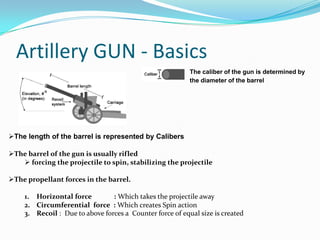
Artillery GUN - Basics
                                                          The caliber of the gun is determined by
                                                          the diameter of the barrel


The length of the barrel is represented by Calibers

The barrel of the gun is usually rifled
    forcing the projectile to spin, stabilizing the projectile

The propellant forces in the barrel.

    1. Horizontal force         : Which takes the projectile away
    2. Circumferential force : Which creates Spin action
    3. Recoil : Due to above forces a Counter force of equal size is created
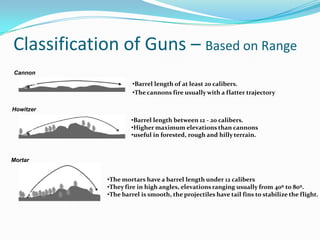
Classification of Guns – Based on Range
Cannon
                     •Barrel length of at least 20 calibers.
                     •The cannons fire usually with a flatter trajectory

Howitzer
                    •Barrel length between 12 - 20 calibers.
                    •Higher maximum elevations than cannons
                    •useful in forested, rough and hilly terrain.


Mortar


            •The mortars have a barrel length under 12 calibers
            •They fire in high angles, elevations ranging usually from 40º to 80º.
            •The barrel is smooth, the projectiles have tail fins to stabilize the flight.
Classification of Guns – Based on Usage
 1.   Anti personal Guns (AP Guns)
 2.   Anti Tank Guns (AT Guns)
 3.   Recoilless Guns
 4.   Anti Aircraft Guns (AA Guns)
 5.   Tank Guns – Which are mounted of tanks
 6.   Missiles - Rocket technology


We will try to further understand Anti Personal Gun Only
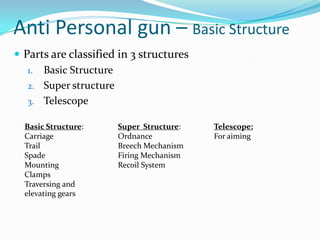
Anti Personal gun – Basic Structure
 Parts are classified in 3 structures
   1. Basic Structure
   2. Super structure
   3. Telescope

  Basic Structure:    Super Structure:   Telescope:
  Carriage            Ordnance           For aiming
  Trail               Breech Mechanism
  Spade               Firing Mechanism
  Mounting            Recoil System
  Clamps
  Traversing and
  elevating gears
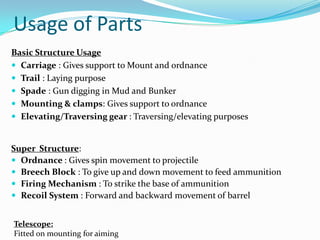
Usage of Parts
Basic Structure Usage
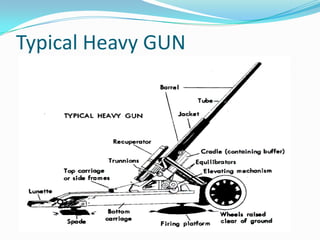
 Carriage : Gives support to Mount and ordnance
 Trail : Laying purpose
 Spade : Gun digging in Mud and Bunker
 Mounting & clamps: Gives support to ordnance
 Elevating/Traversing gear : Traversing/elevating purposes


Super Structure:
 Ordnance : Gives spin movement to projectile
 Breech Block : To give up and down movement to feed ammunition
 Firing Mechanism : To strike the base of ammunition
 Recoil System : Forward and backward movement of barrel


Telescope:
Fitted on mounting for aiming
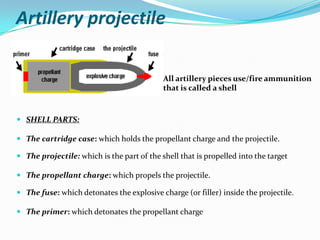
Artillery projectile

                                            All artillery pieces use/fire ammunition
                                            that is called a shell


 SHELL PARTS:

 The cartridge case: which holds the propellant charge and the projectile.

 The projectile: which is the part of the shell that is propelled into the target

 The propellant charge: which propels the projectile.

 The fuse: which detonates the explosive charge (or filler) inside the projectile.

 The primer: which detonates the propellant charge
What effect Ammunition cause
Fragmentation Effect
Blast Effect
Projectile fragmentation

The explosive filler blow up

The detonating wave converts the explosive filler to gases

Exerts extremely high pressure on the inner surface of the
projectile.

The projectile breaks apart

The shear and cleavage sends fragments/splinters flying with
high velocity in (roughly) three separate fans..
Artillery projectile blast effect
 The different possible damage (or effect)
    pressure, splinter, shock, concussion and psychological.


 The blast effect depends on
    The shape, structure and the caliber of the projectile
    The kinetic energy of the projectile
    The blast of the explosive filler (causing a pressure wave)
    The splinters that fan out from the body of the projectile,
    The volume of sound of the blast
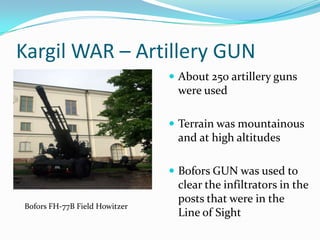
Kargil WAR – Artillery GUN
                                About 250 artillery guns
                                were used

                                Terrain was mountainous
                                and at high altitudes

                                Bofors GUN was used to
                                clear the infiltrators in the
                                posts that were in the
Bofors FH-77B Field Howitzer
                                Line of Sight
 BACKUP
Indian Army – Key Artillery
TOWED Artillery:
   Indian Ordnance Factories 105 mm Light Field Gun
   D-30 122 mm Towed Artillery Howitzer [2A18]
   M-46 130 mm Towed Artillery Field Gun [M1954]
   Haubits Bofors FH77B Towed Artillery Howitzer


Rocket Launchers:
   BM-21 Grad 122mm Multi Barrel Rocket Launcher
   BM-30 Smerch 9A52-2T 300mm Multi Barrel Rocket
    Launcher
   Pinaka 214mm Multi Barrel Rocket Launcher
Typical Heavy GUN

Introduction to guns-Dange

  • 1.
    Mr. M. B.DANGE A8 -1202
  • 2.
    Agenda  What isArtillery?  Basics of Artillery Guns  Basics of Artillery Projectile
  • 3.
    What is Artillery? Artillery– Engines of War that operate by projection of munitions far beyond the range of effect of personal weapons. Typically : Artillery is more advance version of Rifle Artillery consist of  GUN :  Is a Weapon Used to throw a projectile at a very long distance.  Projectile :  Solid Projectile : It is made of Metal  Hollow projectile : It is hollow to take explosives
  • 4.
    Artillery GUN -Basics The caliber of the gun is determined by the diameter of the barrel The length of the barrel is represented by Calibers The barrel of the gun is usually rifled  forcing the projectile to spin, stabilizing the projectile The propellant forces in the barrel. 1. Horizontal force : Which takes the projectile away 2. Circumferential force : Which creates Spin action 3. Recoil : Due to above forces a Counter force of equal size is created
  • 5.
    Classification of Guns– Based on Range Cannon •Barrel length of at least 20 calibers. •The cannons fire usually with a flatter trajectory Howitzer •Barrel length between 12 - 20 calibers. •Higher maximum elevations than cannons •useful in forested, rough and hilly terrain. Mortar •The mortars have a barrel length under 12 calibers •They fire in high angles, elevations ranging usually from 40º to 80º. •The barrel is smooth, the projectiles have tail fins to stabilize the flight.
  • 6.
    Classification of Guns– Based on Usage 1. Anti personal Guns (AP Guns) 2. Anti Tank Guns (AT Guns) 3. Recoilless Guns 4. Anti Aircraft Guns (AA Guns) 5. Tank Guns – Which are mounted of tanks 6. Missiles - Rocket technology We will try to further understand Anti Personal Gun Only
  • 7.
    Anti Personal gun– Basic Structure  Parts are classified in 3 structures 1. Basic Structure 2. Super structure 3. Telescope Basic Structure: Super Structure: Telescope: Carriage Ordnance For aiming Trail Breech Mechanism Spade Firing Mechanism Mounting Recoil System Clamps Traversing and elevating gears
  • 8.
    Usage of Parts BasicStructure Usage  Carriage : Gives support to Mount and ordnance  Trail : Laying purpose  Spade : Gun digging in Mud and Bunker  Mounting & clamps: Gives support to ordnance  Elevating/Traversing gear : Traversing/elevating purposes Super Structure:  Ordnance : Gives spin movement to projectile  Breech Block : To give up and down movement to feed ammunition  Firing Mechanism : To strike the base of ammunition  Recoil System : Forward and backward movement of barrel Telescope: Fitted on mounting for aiming
  • 9.
    Artillery projectile All artillery pieces use/fire ammunition that is called a shell  SHELL PARTS:  The cartridge case: which holds the propellant charge and the projectile.  The projectile: which is the part of the shell that is propelled into the target  The propellant charge: which propels the projectile.  The fuse: which detonates the explosive charge (or filler) inside the projectile.  The primer: which detonates the propellant charge
  • 10.
    What effect Ammunitioncause Fragmentation Effect Blast Effect
  • 11.
    Projectile fragmentation The explosivefiller blow up The detonating wave converts the explosive filler to gases Exerts extremely high pressure on the inner surface of the projectile. The projectile breaks apart The shear and cleavage sends fragments/splinters flying with high velocity in (roughly) three separate fans..
  • 12.
    Artillery projectile blasteffect  The different possible damage (or effect)  pressure, splinter, shock, concussion and psychological.  The blast effect depends on  The shape, structure and the caliber of the projectile  The kinetic energy of the projectile  The blast of the explosive filler (causing a pressure wave)  The splinters that fan out from the body of the projectile,  The volume of sound of the blast
  • 13.
    Kargil WAR –Artillery GUN  About 250 artillery guns were used  Terrain was mountainous and at high altitudes  Bofors GUN was used to clear the infiltrators in the posts that were in the Bofors FH-77B Field Howitzer Line of Sight
  • 14.
  • 15.
    Indian Army –Key Artillery TOWED Artillery:  Indian Ordnance Factories 105 mm Light Field Gun  D-30 122 mm Towed Artillery Howitzer [2A18]  M-46 130 mm Towed Artillery Field Gun [M1954]  Haubits Bofors FH77B Towed Artillery Howitzer Rocket Launchers:  BM-21 Grad 122mm Multi Barrel Rocket Launcher  BM-30 Smerch 9A52-2T 300mm Multi Barrel Rocket Launcher  Pinaka 214mm Multi Barrel Rocket Launcher
  • 16.