
Introduction to Futures Studies
By:
Vahid Shamekhi
Aug 2014
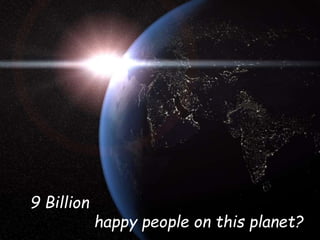
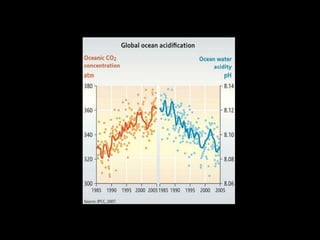
9 Billion
happy people on this planet?
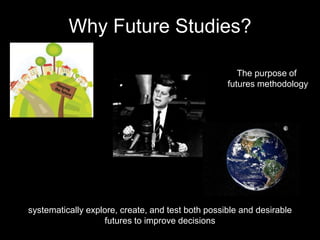
Why Future Studies?
systematically explore, create, and test both possible and desirable
futures to improve decisions
The purpose of
futures methodology
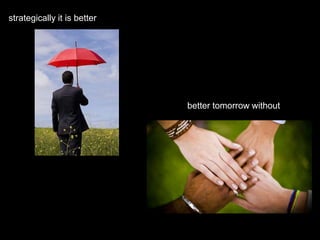
strategically it is better
better tomorrow without
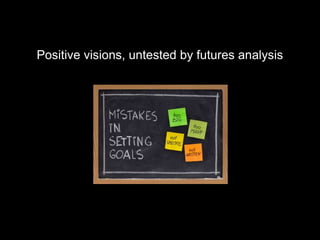
Positive visions, untested by futures analysis
• If no general agreement exists about an
organization's or nation's future direction, then
how can one know what is useful or useless?
• The lack of vision promotes aimlessness and
apathy
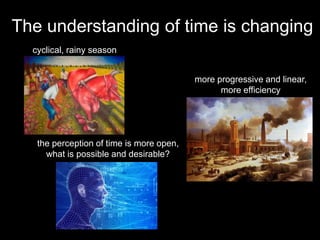
The understanding of time is changing
the perception of time is more open,
what is possible and desirable?
cyclical, rainy season
more progressive and linear,
more efficiency
identify what you don't know,
but need to know, to make more intelligent
decisions.
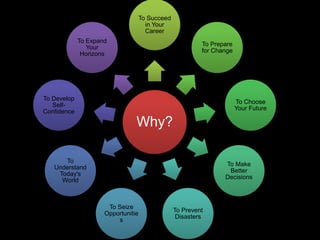
Why?
To Succeed
in Your
Career
To Prepare
for Change
To Choose
Your Future
To Make
Better
Decisions
To Prevent
Disasters
To Seize
Opportunitie
s
To
Understand
Today's
World
To Develop
Self-
Confidence
To Expand
Your
Horizons
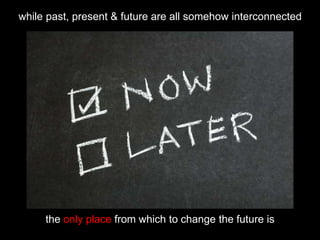
the only place from which to change the future is
while past, present & future are all somehow interconnected
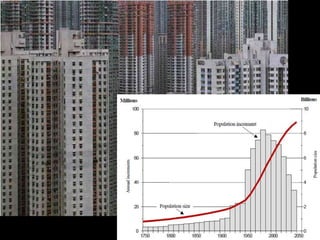
9 Billion happy people on this planet?
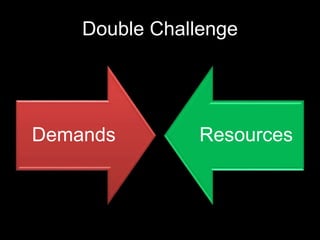
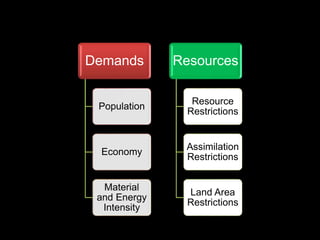
Double Challenge
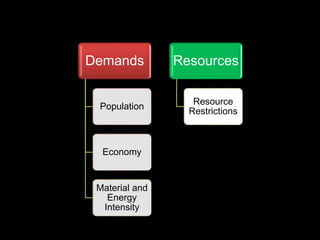
Demands Resources
Demands
Population
Resources
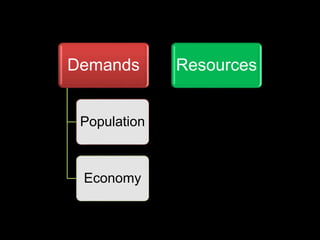
Demands
Population
Economy
Resources
Demands
Population
Economy
Material and
Energy
Intensity
Resources
Resource
Restrictions
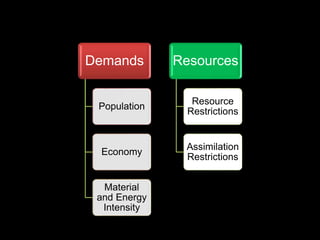
Demands
Population
Economy
Material
and Energy
Intensity
Resources
Resource
Restrictions
Assimilation
Restrictions
Demands
Population
Economy
Material
and Energy
Intensity
Resources
Resource
Restrictions
Assimilation
Restrictions
Land Area
Restrictions
Future???
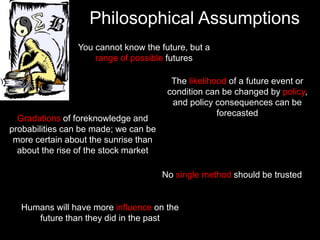
Philosophical Assumptions
Humans will have more influence on the
future than they did in the past
You cannot know the future, but a
range of possible futures
The likelihood of a future event or
condition can be changed by policy,
and policy consequences can be
forecasted
Gradations of foreknowledge and
probabilities can be made; we can be
more certain about the sunrise than
about the rise of the stock market
No single method should be trusted
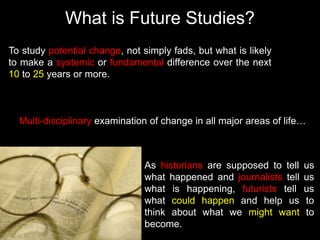
What is Future Studies?
To study potential change, not simply fads, but what is likely
to make a systemic or fundamental difference over the next
10 to 25 years or more.
As historians are supposed to tell us
what happened and journalists tell us
what is happening, futurists tell us
what could happen and help us to
think about what we might want to
become.
Multi-disciplinary examination of change in all major areas of life…
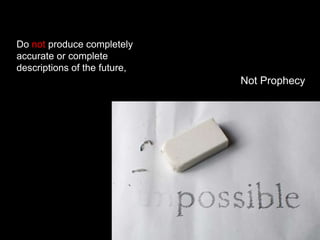
Not Prophecy
Do not produce completely
accurate or complete
descriptions of the future,
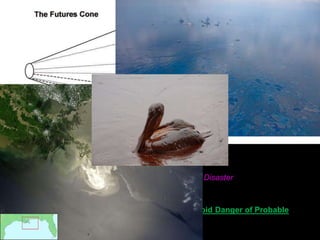
Goal 1: Preferable to Probable
Goal 2: Avoid Danger of Probable
BP Disaster
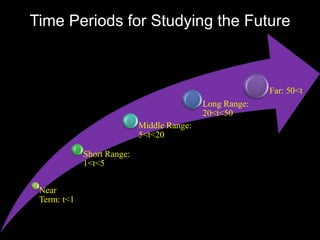
Time Periods for Studying the Future
Near
Term: t<1
Short Range:
1<t<5
Middle Range:
5<t<20
Long Range:
20<t<50
Far: 50<t
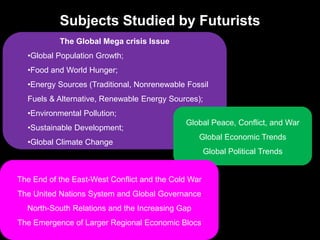
Subjects Studied by Futurists
The Global Mega crisis Issue
•Global Population Growth;
•Food and World Hunger;
•Energy Sources (Traditional, Nonrenewable Fossil
Fuels & Alternative, Renewable Energy Sources);
•Environmental Pollution;
•Sustainable Development;
•Global Climate Change
Global Peace, Conflict, and War
Global Economic Trends
Global Political Trends
The End of the East-West Conflict and the Cold War
The United Nations System and Global Governance
North-South Relations and the Increasing Gap
The Emergence of Larger Regional Economic Blocs
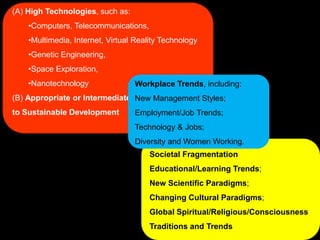
(A) High Technologies, such as:
•Computers, Telecommunications,
•Multimedia, Internet, Virtual Reality Technology
•Genetic Engineering,
•Space Exploration,
•Nanotechnology
(B) Appropriate or Intermediate Technologies, tied
to Sustainable Development
Societal Fragmentation
Educational/Learning Trends;
New Scientific Paradigms;
Changing Cultural Paradigms;
Global Spiritual/Religious/Consciousness
Traditions and Trends
Workplace Trends, including:
New Management Styles;
Employment/Job Trends;
Technology & Jobs;
Diversity and Women Working.
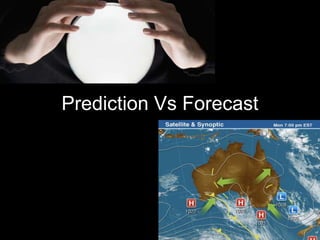
Prediction Vs Forecast
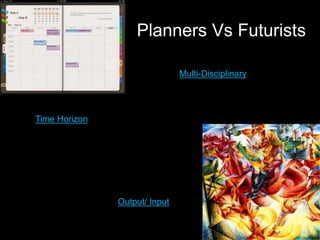
Planners Vs Futurists
Multi-Disciplinary
Time Horizon
Output/ Input
Reliability of Data
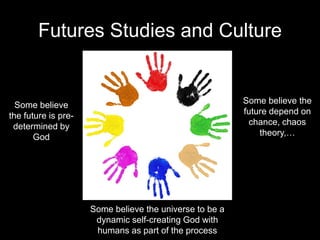
Futures Studies and Culture
Some believe
the future is pre-
determined by
God
Some believe the universe to be a
dynamic self-creating God with
humans as part of the process
Some believe the
future depend on
chance, chaos
theory,…
Plan for the Future Vs Plan or
Invent the Future
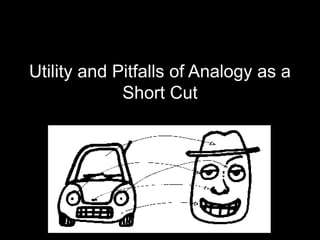
Utility and Pitfalls of Analogy as a
Short Cut
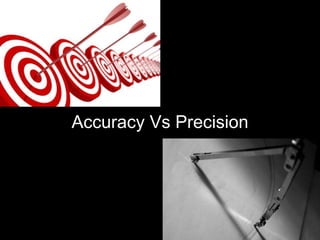
Accuracy Vs Precision
Correlations and Lead
Indicators
Four years before the fall of the Shah, Iran's ratio was 38 to 1.
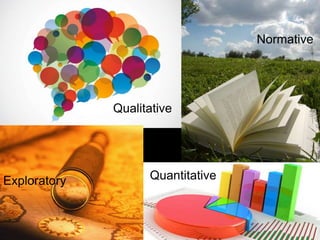
Classification of Methods
Exploratory
Normative
Quantitative
Qualitative
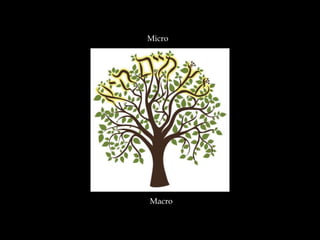
Macro
Micro
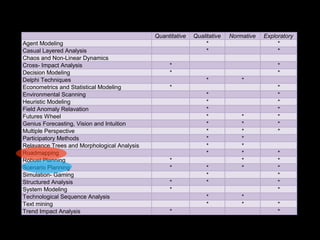
Quantitative Qualitative Normative Exploratory
Agent Modeling * *
Casual Layered Analysis * *
Chaos and Non-Linear Dynamics
Cross- Impact Analysis * *
Decision Modeling * *
Delphi Techniques * *
Econometrics and Statistical Modeling * *
Environmental Scanning * *
Heuristic Modeling * *
Field Anomaly Relavation * *
Futures Wheel * * *
Genius Forecasting, Vision and Intuition * * *
Multiple Perspective * * *
Participatory Methods * *
Relavance Trees and Morphological Analysis * *
Roadmapping * * *
Robust Planning * * *
Scenario Planning * * * *
Simulation- Gaming * *
Structured Analysis * * *
System Modeling * *
Technological Sequence Analysis * *
Text mining * * *
Trend Impact Analysis * *
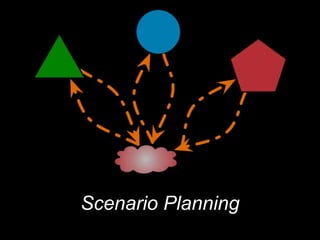
Scenario Planning
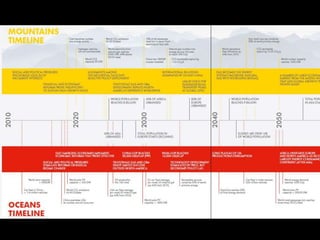
Roadmapping
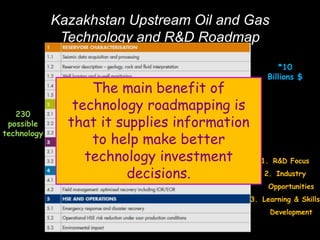
Kazakhstan Upstream Oil and Gas
Technology and R&D Roadmap
More than 300 industry representative…
*10
Billions $
230
possible
technology
1. R&D Focus
2. Industry
Opportunities
3. Learning & Skills
Development
The main benefit of
technology roadmapping is
that it supplies information
to help make better
technology investment
decisions.
The client’s Board had set aggressive
production targets for the new gas
resources.
development, acquisition and application
of a number of technologies new to the
company
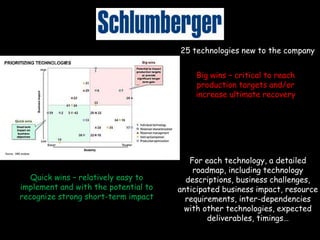
For each technology, a detailed
roadmap, including technology
descriptions, business challenges,
anticipated business impact, resource
requirements, inter-dependencies
with other technologies, expected
deliverables, timings…
Quick wins – relatively easy to
implement and with the potential to
recognize strong short-term impact
25 technologies new to the company
Big wins – critical to reach
production targets and/or
increase ultimate recovery
What about MAPNA Group?
CSP
Aircraft
Engine
Healthcare
Next Step…
Description of Methods/
Techniques
Case Studies
References
• Jerome C. Glenn, Futures Research Methodologies, 2009.
• Curtis W. Roney, Intersections of Strategic Planning and Futures Studies,
Journal of Future Studies, Nov 2010.
• Ulf Pillkahn, Using Trends and Scenarios as Tools for Strategy
Development, 2008.
• John Holmberg, Introduction to Future Studies, Barcelona, June 2011.
• Linda Groff and Paul Smoker, Introduction to Future Studies, State
University of California, 1999.
• Stephen M. Millett, Should probabilities be used with scenarios?, 2008.

Introduction to Futures Studies

  • 1.
    Introduction to FuturesStudies By: Vahid Shamekhi Aug 2014
  • 2.
    9 Billion happy peopleon this planet?
  • 3.
    Why Future Studies? systematicallyexplore, create, and test both possible and desirable futures to improve decisions The purpose of futures methodology
  • 4.
    strategically it isbetter better tomorrow without
  • 5.
    Positive visions, untestedby futures analysis
  • 6.
    • If nogeneral agreement exists about an organization's or nation's future direction, then how can one know what is useful or useless? • The lack of vision promotes aimlessness and apathy
  • 7.
    The understanding oftime is changing the perception of time is more open, what is possible and desirable? cyclical, rainy season more progressive and linear, more efficiency
  • 8.
    identify what youdon't know, but need to know, to make more intelligent decisions.
  • 9.
    Why? To Succeed in Your Career ToPrepare for Change To Choose Your Future To Make Better Decisions To Prevent Disasters To Seize Opportunitie s To Understand Today's World To Develop Self- Confidence To Expand Your Horizons
  • 10.
    the only placefrom which to change the future is while past, present & future are all somehow interconnected
  • 11.
    9 Billion happypeople on this planet?
  • 12.
  • 13.
  • 15.
  • 17.
  • 20.
  • 22.
  • 23.
  • 24.
    Philosophical Assumptions Humans willhave more influence on the future than they did in the past You cannot know the future, but a range of possible futures The likelihood of a future event or condition can be changed by policy, and policy consequences can be forecasted Gradations of foreknowledge and probabilities can be made; we can be more certain about the sunrise than about the rise of the stock market No single method should be trusted
  • 25.
    What is FutureStudies? To study potential change, not simply fads, but what is likely to make a systemic or fundamental difference over the next 10 to 25 years or more. As historians are supposed to tell us what happened and journalists tell us what is happening, futurists tell us what could happen and help us to think about what we might want to become. Multi-disciplinary examination of change in all major areas of life…
  • 26.
    Not Prophecy Do notproduce completely accurate or complete descriptions of the future,
  • 28.
    Goal 1: Preferableto Probable Goal 2: Avoid Danger of Probable BP Disaster
  • 30.
    Time Periods forStudying the Future Near Term: t<1 Short Range: 1<t<5 Middle Range: 5<t<20 Long Range: 20<t<50 Far: 50<t
  • 32.
    Subjects Studied byFuturists The Global Mega crisis Issue •Global Population Growth; •Food and World Hunger; •Energy Sources (Traditional, Nonrenewable Fossil Fuels & Alternative, Renewable Energy Sources); •Environmental Pollution; •Sustainable Development; •Global Climate Change Global Peace, Conflict, and War Global Economic Trends Global Political Trends The End of the East-West Conflict and the Cold War The United Nations System and Global Governance North-South Relations and the Increasing Gap The Emergence of Larger Regional Economic Blocs
  • 33.
    (A) High Technologies,such as: •Computers, Telecommunications, •Multimedia, Internet, Virtual Reality Technology •Genetic Engineering, •Space Exploration, •Nanotechnology (B) Appropriate or Intermediate Technologies, tied to Sustainable Development Societal Fragmentation Educational/Learning Trends; New Scientific Paradigms; Changing Cultural Paradigms; Global Spiritual/Religious/Consciousness Traditions and Trends Workplace Trends, including: New Management Styles; Employment/Job Trends; Technology & Jobs; Diversity and Women Working.
  • 34.
  • 35.
  • 36.
  • 37.
    Futures Studies andCulture Some believe the future is pre- determined by God Some believe the universe to be a dynamic self-creating God with humans as part of the process Some believe the future depend on chance, chaos theory,…
  • 38.
    Plan for theFuture Vs Plan or Invent the Future
  • 39.
    Utility and Pitfallsof Analogy as a Short Cut
  • 40.
  • 41.
    Correlations and Lead Indicators Fouryears before the fall of the Shah, Iran's ratio was 38 to 1.
  • 42.
  • 43.
  • 44.
    Quantitative Qualitative NormativeExploratory Agent Modeling * * Casual Layered Analysis * * Chaos and Non-Linear Dynamics Cross- Impact Analysis * * Decision Modeling * * Delphi Techniques * * Econometrics and Statistical Modeling * * Environmental Scanning * * Heuristic Modeling * * Field Anomaly Relavation * * Futures Wheel * * * Genius Forecasting, Vision and Intuition * * * Multiple Perspective * * * Participatory Methods * * Relavance Trees and Morphological Analysis * * Roadmapping * * * Robust Planning * * * Scenario Planning * * * * Simulation- Gaming * * Structured Analysis * * * System Modeling * * Technological Sequence Analysis * * Text mining * * * Trend Impact Analysis * *
  • 45.
  • 47.
  • 48.
    Kazakhstan Upstream Oiland Gas Technology and R&D Roadmap More than 300 industry representative… *10 Billions $ 230 possible technology 1. R&D Focus 2. Industry Opportunities 3. Learning & Skills Development The main benefit of technology roadmapping is that it supplies information to help make better technology investment decisions.
  • 49.
    The client’s Boardhad set aggressive production targets for the new gas resources. development, acquisition and application of a number of technologies new to the company
  • 50.
    For each technology,a detailed roadmap, including technology descriptions, business challenges, anticipated business impact, resource requirements, inter-dependencies with other technologies, expected deliverables, timings… Quick wins – relatively easy to implement and with the potential to recognize strong short-term impact 25 technologies new to the company Big wins – critical to reach production targets and/or increase ultimate recovery
  • 51.
  • 52.
  • 53.
    Next Step… Description ofMethods/ Techniques Case Studies
  • 55.
    References • Jerome C.Glenn, Futures Research Methodologies, 2009. • Curtis W. Roney, Intersections of Strategic Planning and Futures Studies, Journal of Future Studies, Nov 2010. • Ulf Pillkahn, Using Trends and Scenarios as Tools for Strategy Development, 2008. • John Holmberg, Introduction to Future Studies, Barcelona, June 2011. • Linda Groff and Paul Smoker, Introduction to Future Studies, State University of California, 1999. • Stephen M. Millett, Should probabilities be used with scenarios?, 2008.

Editor's Notes

  • #29 The Goal is to make preferable or desirable futures more probable, by visualizing clearly what we want to create (including the values that we want a future world to be based on), and then committing energy, resources, time, and our lives to creating that future world. Another Goal is to also note possible futures, that though they might not be probable or likely, if they did occur, would have a great impact on people's lives. We should thus be aware of such possibilities.
  • #53 If there is no sanctions till 2020, What will be Mehran position in his business? Is there any joint venture possibilities with major competitors of the world for Mehran? Is there any strategic acquisition opportunities for mehran? What was way of development for a company like schlumberger? Which development strategies?