

Introduction to Intel EPID
2
Intel Enhanced Privacy ID
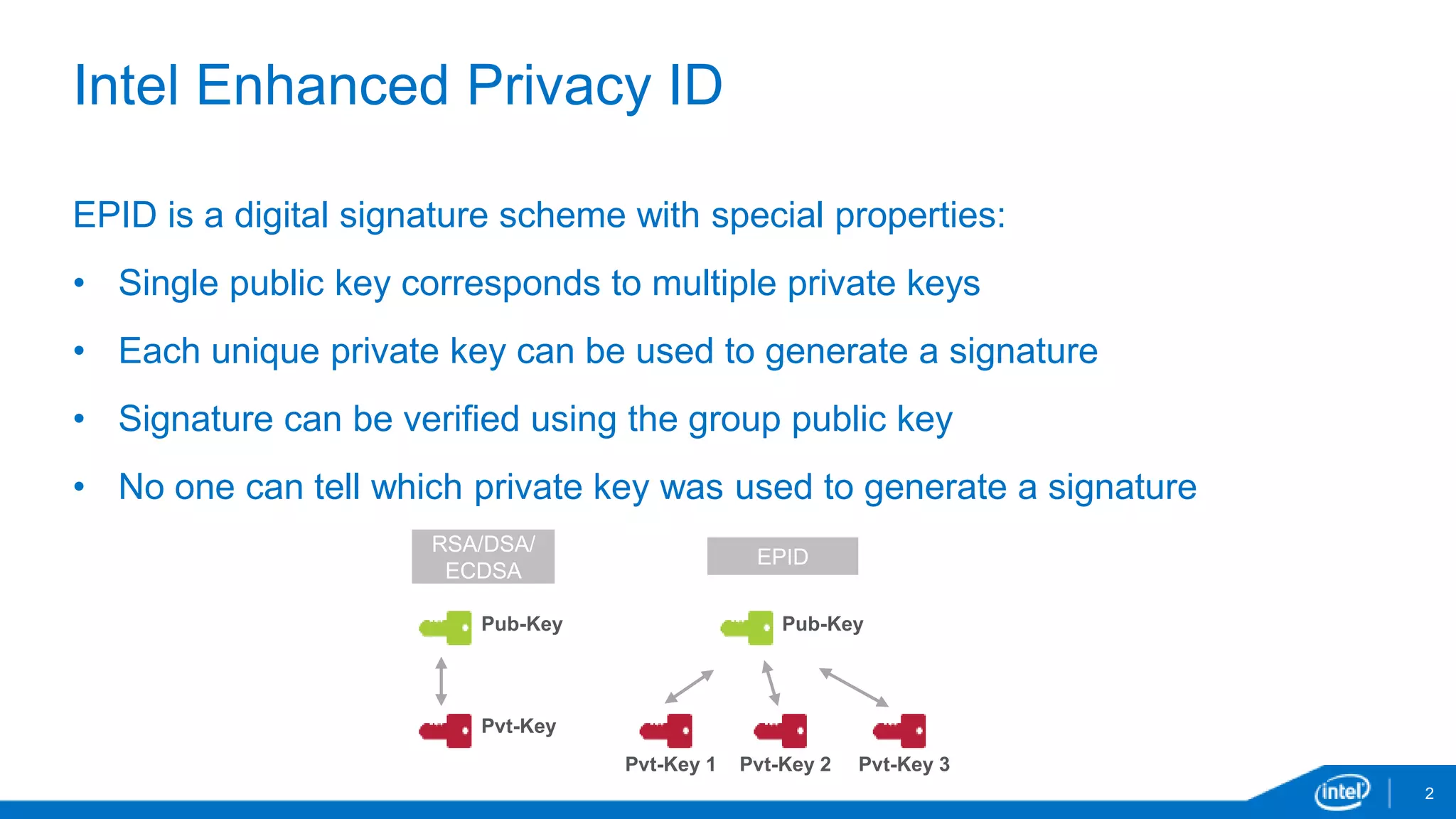
EPID is a digital signature scheme with special properties:
• Single public key corresponds to multiple private keys
• Each unique private key can be used to generate a signature
• Signature can be verified using the group public key
• No one can tell which private key was used to generate a signature
RSA/DSA/
ECDSA
EPID
Pub-Key
Pvt-Key
Pvt-Key 1
Pub-Key
Pvt-Key 2 Pvt-Key 3
3
Intel Enhanced Privacy ID
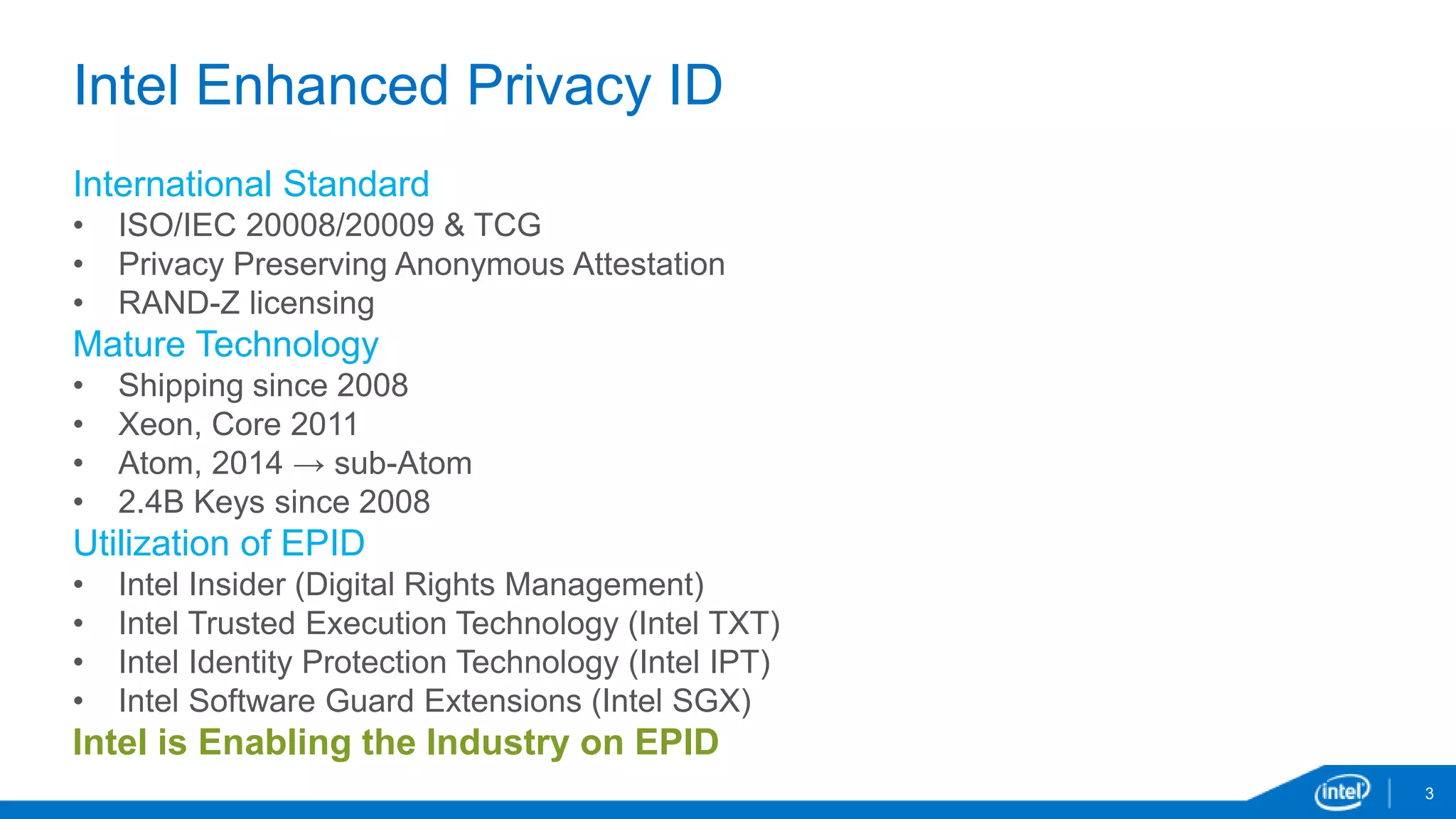
International Standard
• ISO/IEC 20008/20009 & TCG
• Privacy Preserving Anonymous Attestation
• RAND-Z licensing
Mature Technology
• Shipping since 2008
• Xeon, Core 2011
• Atom, 2014 → sub-Atom
• 2.4B Keys since 2008
Utilization of EPID
• Intel Insider (Digital Rights Management)
• Intel Trusted Execution Technology (Intel TXT)
• Intel Identity Protection Technology (Intel IPT)
• Intel Software Guard Extensions (Intel SGX)
Intel is Enabling the Industry on EPID
4
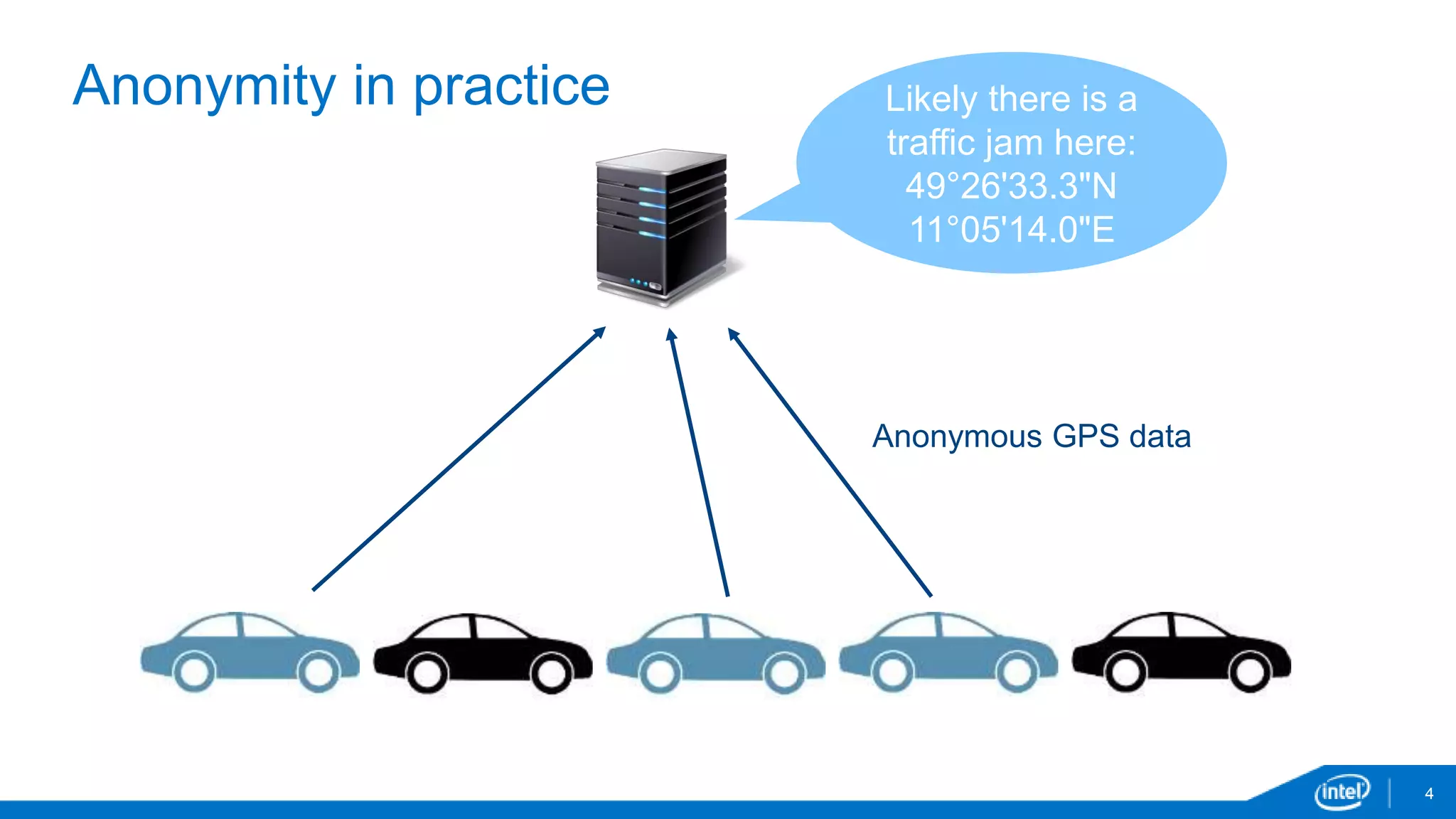
Anonymity in practice
Anonymous GPS data
Likely there is a
traffic jam here:
49°26'33.3"N
11°05'14.0"E
5
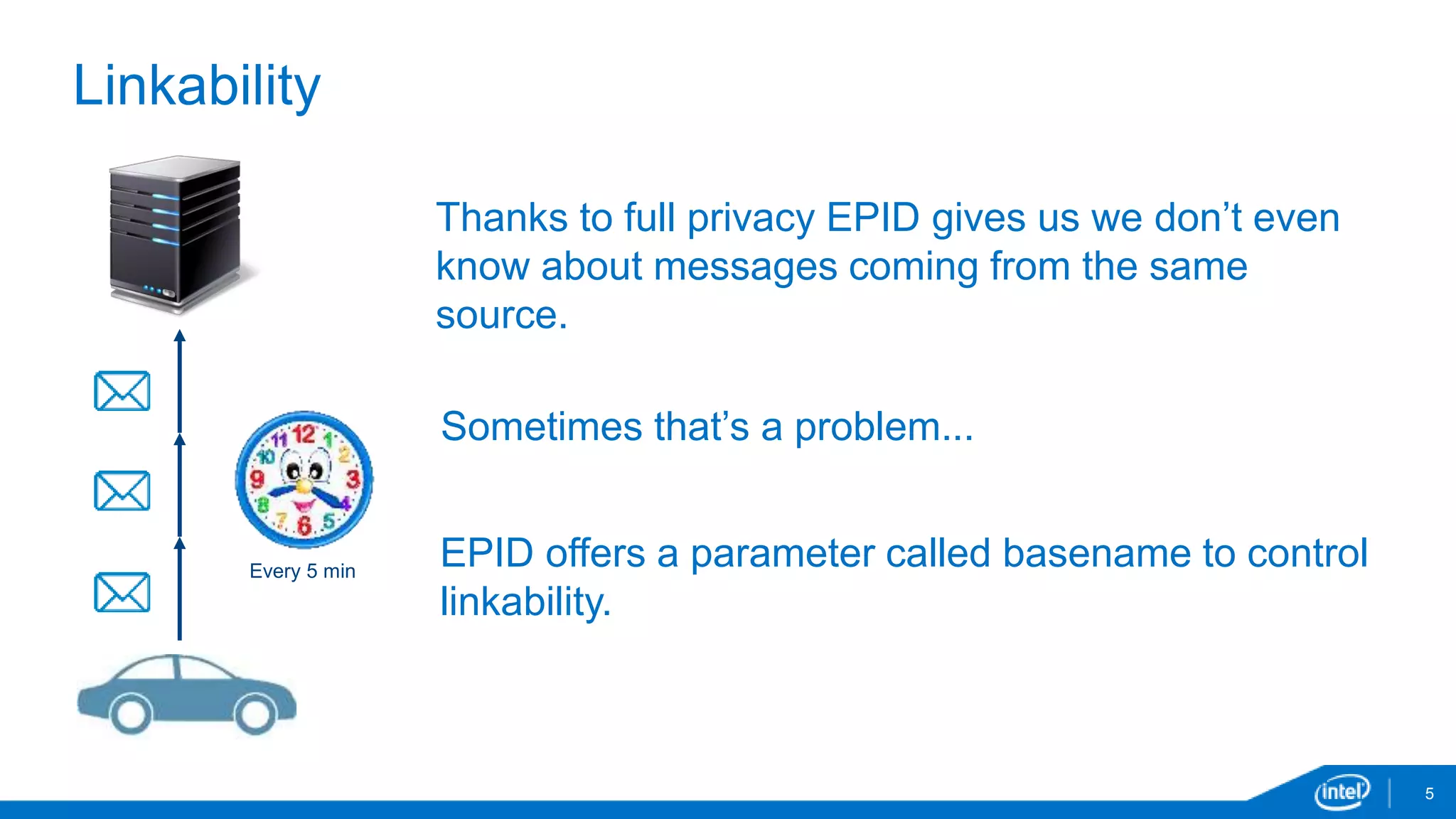
Linkability
Every 5 min
Thanks to full privacy EPID gives us we don’t even
know about messages coming from the same
source.
Sometimes that’s a problem...
EPID offers a parameter called basename to control
linkability.
6
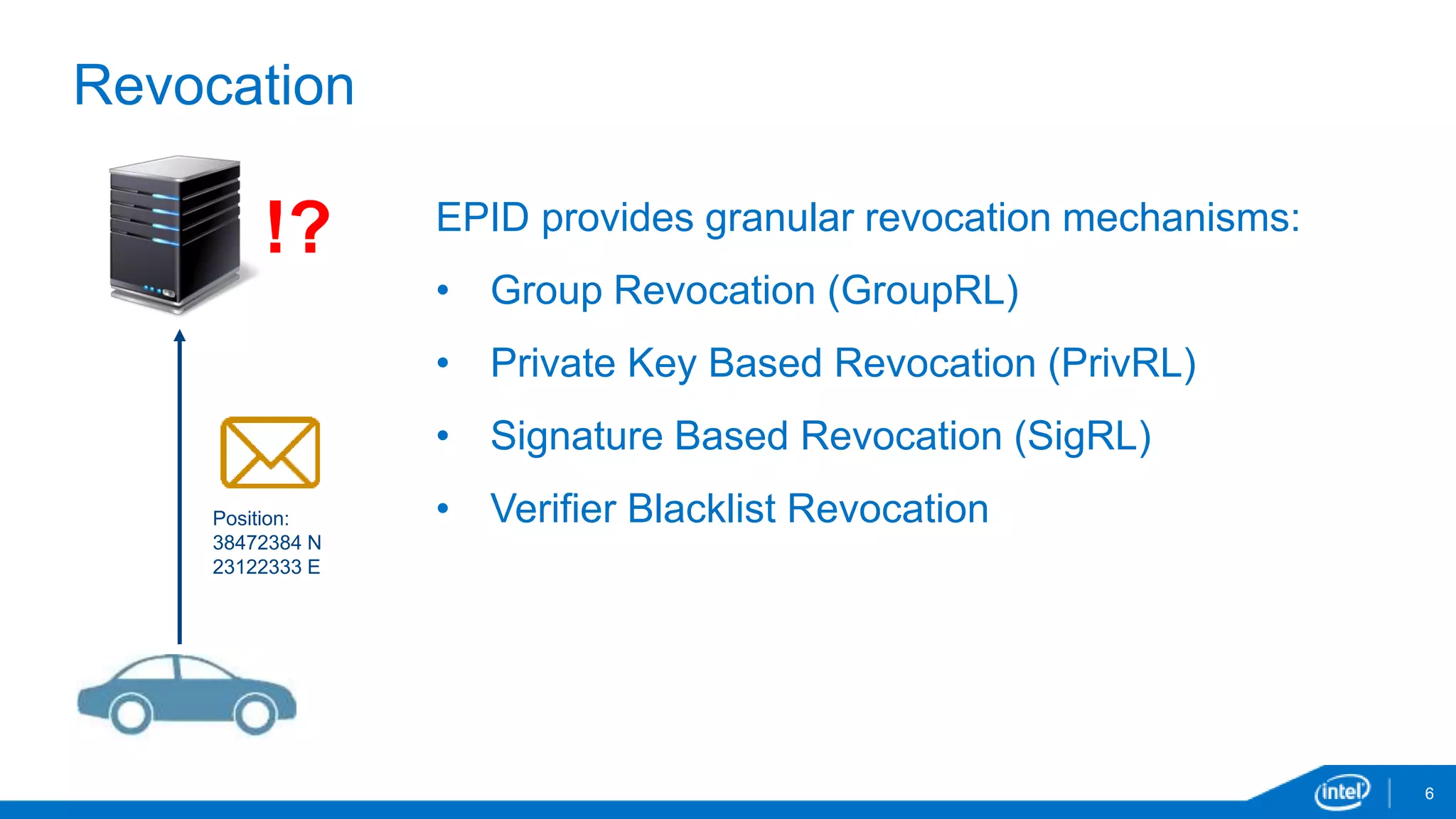
Revocation
Position:
38472384 N
23122333 E
EPID provides granular revocation mechanisms:
• Group Revocation (GroupRL)
• Private Key Based Revocation (PrivRL)
• Signature Based Revocation (SigRL)
• Verifier Blacklist Revocation
!?
7
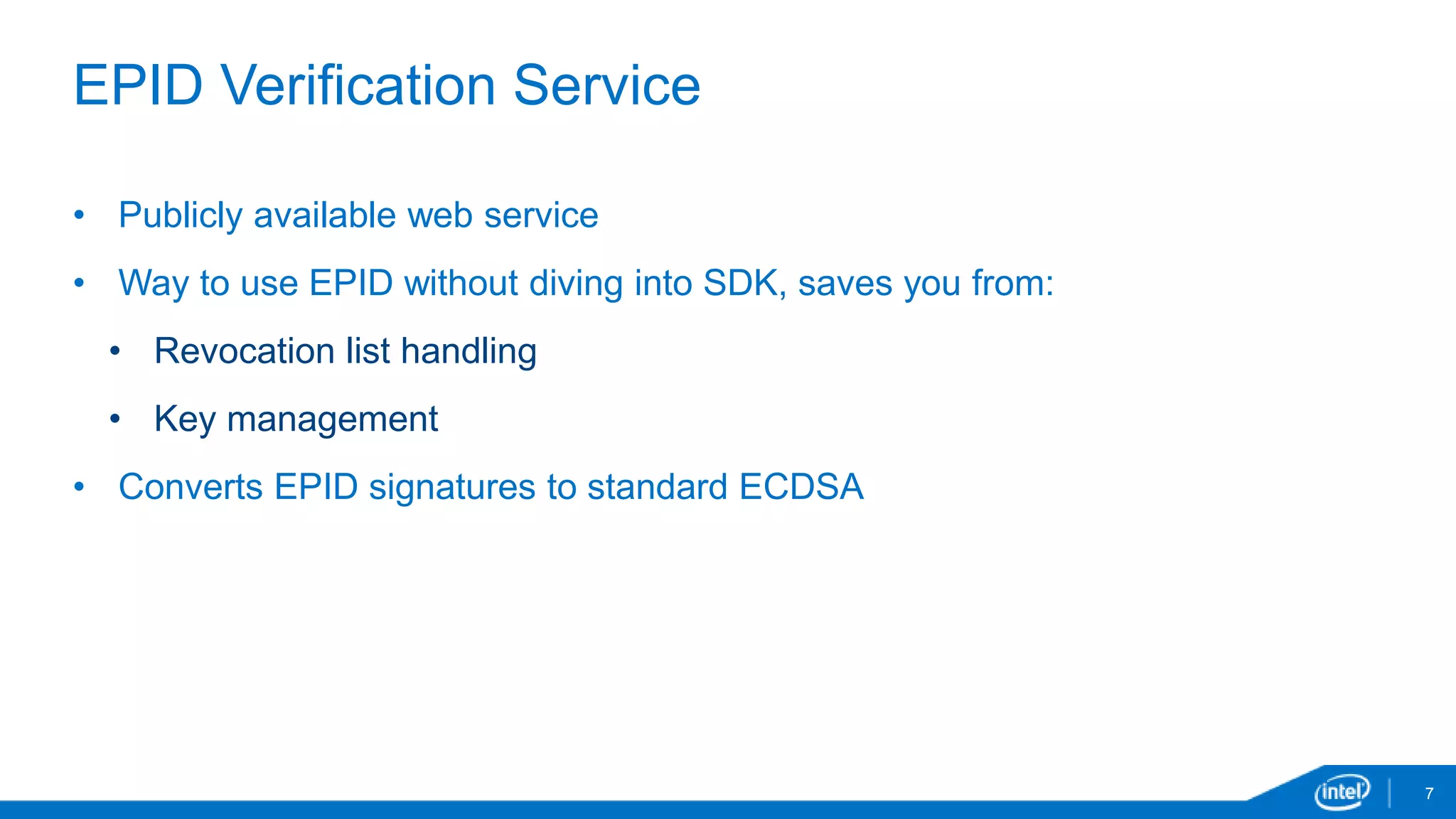
EPID Verification Service
• Publicly available web service
• Way to use EPID without diving into SDK, saves you from:
• Revocation list handling
• Key management
• Converts EPID signatures to standard ECDSA
8
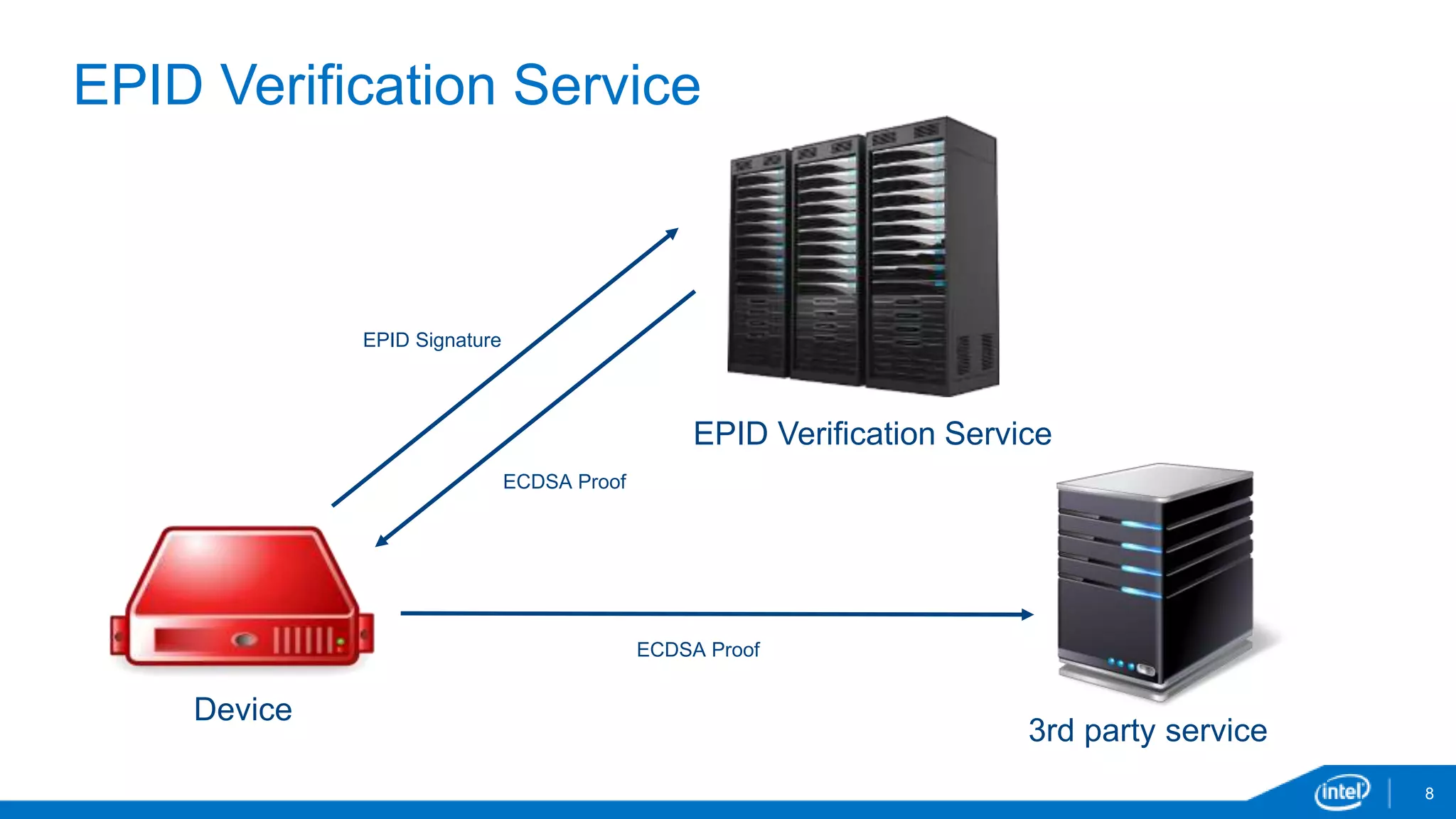
EPID Verification Service
Device
3rd party service
EPID Verification Service
ECDSA Proof
EPID Signature
ECDSA Proof
9
Materials available for Hackathon
• EPID SDK:
• Sources
• Documentation
• Examples
• Precompiled libraries
• Simplified examples in C
• Locally hosted version of EPID Verification service
• EPID Cheatsheet
Introduction to epid

Introduction to epid

  • 1.
  • 2.
    2 Intel Enhanced PrivacyID EPID is a digital signature scheme with special properties: • Single public key corresponds to multiple private keys • Each unique private key can be used to generate a signature • Signature can be verified using the group public key • No one can tell which private key was used to generate a signature RSA/DSA/ ECDSA EPID Pub-Key Pvt-Key Pvt-Key 1 Pub-Key Pvt-Key 2 Pvt-Key 3
  • 3.
    3 Intel Enhanced PrivacyID International Standard • ISO/IEC 20008/20009 & TCG • Privacy Preserving Anonymous Attestation • RAND-Z licensing Mature Technology • Shipping since 2008 • Xeon, Core 2011 • Atom, 2014 → sub-Atom • 2.4B Keys since 2008 Utilization of EPID • Intel Insider (Digital Rights Management) • Intel Trusted Execution Technology (Intel TXT) • Intel Identity Protection Technology (Intel IPT) • Intel Software Guard Extensions (Intel SGX) Intel is Enabling the Industry on EPID
  • 4.
    4 Anonymity in practice AnonymousGPS data Likely there is a traffic jam here: 49°26'33.3"N 11°05'14.0"E
  • 5.
    5 Linkability Every 5 min Thanksto full privacy EPID gives us we don’t even know about messages coming from the same source. Sometimes that’s a problem... EPID offers a parameter called basename to control linkability.
  • 6.
    6 Revocation Position: 38472384 N 23122333 E EPIDprovides granular revocation mechanisms: • Group Revocation (GroupRL) • Private Key Based Revocation (PrivRL) • Signature Based Revocation (SigRL) • Verifier Blacklist Revocation !?
  • 7.
    7 EPID Verification Service •Publicly available web service • Way to use EPID without diving into SDK, saves you from: • Revocation list handling • Key management • Converts EPID signatures to standard ECDSA
  • 8.
    8 EPID Verification Service Device 3rdparty service EPID Verification Service ECDSA Proof EPID Signature ECDSA Proof
  • 9.
    9 Materials available forHackathon • EPID SDK: • Sources • Documentation • Examples • Precompiled libraries • Simplified examples in C • Locally hosted version of EPID Verification service • EPID Cheatsheet