Corrosion and Protection
Presented By:
Engr. Mukesh Kumar
Lecturer
Dept. Metallurgy and Materials Engineering
MUET Jamshoro
CONTENTS
• Corrosion
• Major Consequences Of Corrosion
• Classification Of Corrosion
• Components Of Corrosion
• Corrosion Cost
Norms of Class
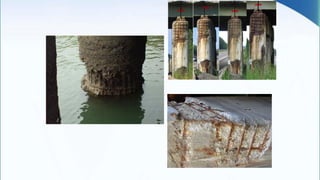
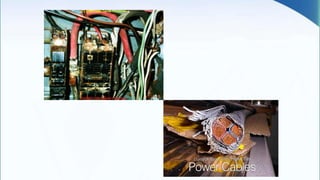
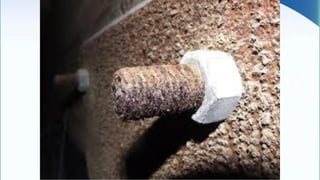
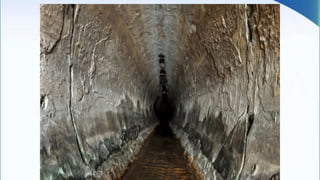
CORROSION ???
CORROSION
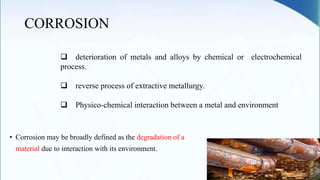
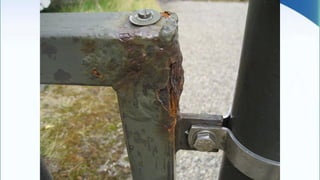
• Corrosion may be broadly defined as the degradation of a
material due to interaction with its environment.
 deterioration of metals and alloys by chemical or electrochemical
process.
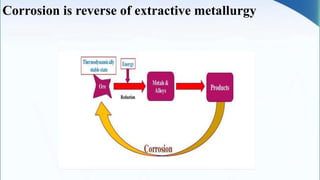
 reverse process of extractive metallurgy.
 Physico-chemical interaction between a metal and environment
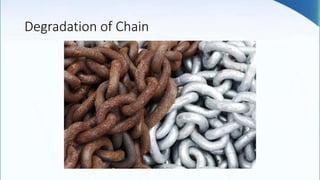
Degradation of Chain
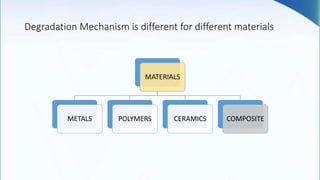
Degradation Mechanism is different for different materials
MATERIALS
METALS POLYMERS CERAMICS COMPOSITE
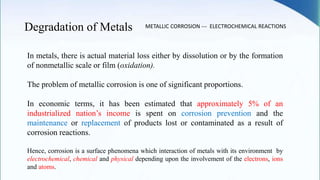
Degradation of Metals
In metals, there is actual material loss either by dissolution or by the formation
of nonmetallic scale or film (oxidation).
The problem of metallic corrosion is one of significant proportions.
In economic terms, it has been estimated that approximately 5% of an
industrialized nation’s income is spent on corrosion prevention and the
maintenance or replacement of products lost or contaminated as a result of
corrosion reactions.
METALLIC CORROSION --- ELECTROCHEMICAL REACTIONS
Hence, corrosion is a surface phenomena which interaction of metals with its environment by
electrochemical, chemical and physical depending upon the involvement of the electrons, ions
and atoms.
Deterioration of Polymers
• Polymers may deteriorate by swelling and dissolution.
• Covalent bond rupture, as a result of
Heat energy,
Chemical reactions
Radiation
• It should also be mentioned that because of the chemical
complexity of polymers, their degradation mechanisms are not well
understood.
POLYMERIC CORROSION ---- PHYSIOCHEMICAL
REACTIONS
Deterioration in Ceramics
• Ceramic materials are relatively resistant to deterioration, which
usually occurs at elevated temperatures or in rather extreme
environments.
• Corrosion of ceramic materials generally involves simple chemical
dissolution.
Major Consequences of corrosion
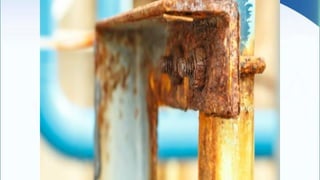
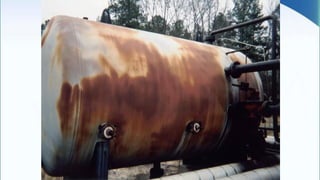
• Reduction of metal thickness leading to loss of mechanical strength and structural failure or
breakdown.
• Hazards or injuries to people arising from structural failure or breakdown (e.g. bridges, cars,
aircraft).
• Loss of time
• Reduced value of goods due to deterioration of appearance.
• Contamination of fluids in vessels and pipes.
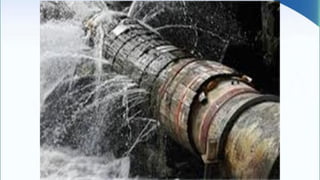
• Perforation (small holes) of vessels and pipes allowing escape of their contents and possible
harm to the surroundings.
• Loss of technically important surface properties of a metallic component. These could
include frictional and bearing properties, ease of fluid flow over a pipe surface, electrical
conductivity of contacts, surface reflectivity or heat transfer across a surface.
• Mechanical damage to valves, pumps, etc, or blockage of pipes by solid corrosion products.
• Added complexity and expense of equipment.
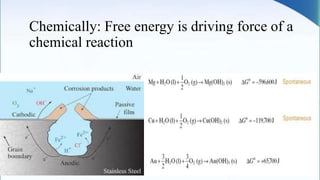
Chemically: Free energy is driving force of a
chemical reaction
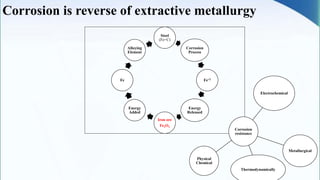
Corrosion is reverse of extractive metallurgy
Steel
(Fe+C)
Corrosion
Process
Fe+2
Energy
Released
Iron ore
Fe2O3
Energy
Added
Fe
Alloying
Element
Corrosion
resistance
Electrochemical
Metallurgical
Thermodynamically
Physical
Chemical
Corrosion is reverse of extractive metallurgy
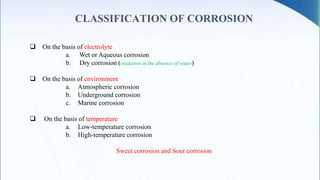
CLASSIFICATION OF CORROSION
 On the basis of electrolyte
a. Wet or Aqueous corrosion
b. Dry corrosion (oxidation in the absence of water)
 On the basis of environment
a. Atmospheric corrosion
b. Underground corrosion
c. Marine corrosion
 On the basis of temperature
a. Low-temperature corrosion
b. High-temperature corrosion
Sweet corrosion and Sour corrosion
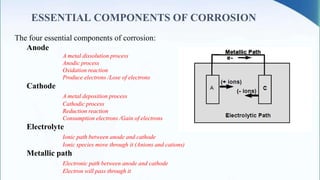
ESSENTIAL COMPONENTS OF CORROSION
The four essential components of corrosion:
Anode
A metal dissolution process
Anodic process
Oxidation reaction
Produce electrons /Lose of electrons
Cathode
A metal deposition process
Cathodic process
Reduction reaction
Consumption electrons /Gain of electrons
Electrolyte
Ionic path between anode and cathode
Ionic species move through it (Anions and cations)
Metallic path
Electronic path between anode and cathode
Electron will pass through it
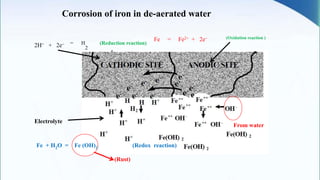
Electrolyte
Fe = Fe2+ + 2e (Oxidation reaction )
2H+ + 2e = H
2
(Reduction reaction)
Fe + H2O = Fe (OH)2 (Redox reaction)
(Rust)
From water
Corrosion of iron in de-aerated water
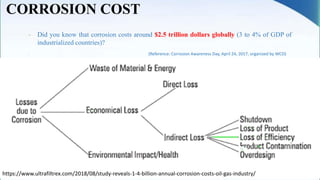
CORROSION COST
- Did you know that corrosion costs around $2.5 trillion dollars globally (3 to 4% of GDP of
industrialized countries)?
- (Reference: Corrosion Awareness Day, April 24, 2017, organized by WCO)
https://www.ultrafiltrex.com/2018/08/study-reveals-1-4-billion-annual-corrosion-costs-oil-gas-industry/
27
You are welcome to ask any question? ? ?

Introduction to corrosion

  • 1.
    Corrosion and Protection PresentedBy: Engr. Mukesh Kumar Lecturer Dept. Metallurgy and Materials Engineering MUET Jamshoro
  • 2.
    CONTENTS • Corrosion • MajorConsequences Of Corrosion • Classification Of Corrosion • Components Of Corrosion • Corrosion Cost
  • 3.
  • 4.
  • 5.
    CORROSION • Corrosion maybe broadly defined as the degradation of a material due to interaction with its environment.  deterioration of metals and alloys by chemical or electrochemical process.  reverse process of extractive metallurgy.  Physico-chemical interaction between a metal and environment
  • 14.
  • 15.
    Degradation Mechanism isdifferent for different materials MATERIALS METALS POLYMERS CERAMICS COMPOSITE
  • 16.
    Degradation of Metals Inmetals, there is actual material loss either by dissolution or by the formation of nonmetallic scale or film (oxidation). The problem of metallic corrosion is one of significant proportions. In economic terms, it has been estimated that approximately 5% of an industrialized nation’s income is spent on corrosion prevention and the maintenance or replacement of products lost or contaminated as a result of corrosion reactions. METALLIC CORROSION --- ELECTROCHEMICAL REACTIONS Hence, corrosion is a surface phenomena which interaction of metals with its environment by electrochemical, chemical and physical depending upon the involvement of the electrons, ions and atoms.
  • 17.
    Deterioration of Polymers •Polymers may deteriorate by swelling and dissolution. • Covalent bond rupture, as a result of Heat energy, Chemical reactions Radiation • It should also be mentioned that because of the chemical complexity of polymers, their degradation mechanisms are not well understood. POLYMERIC CORROSION ---- PHYSIOCHEMICAL REACTIONS
  • 18.
    Deterioration in Ceramics •Ceramic materials are relatively resistant to deterioration, which usually occurs at elevated temperatures or in rather extreme environments. • Corrosion of ceramic materials generally involves simple chemical dissolution.
  • 19.
    Major Consequences ofcorrosion • Reduction of metal thickness leading to loss of mechanical strength and structural failure or breakdown. • Hazards or injuries to people arising from structural failure or breakdown (e.g. bridges, cars, aircraft). • Loss of time • Reduced value of goods due to deterioration of appearance. • Contamination of fluids in vessels and pipes. • Perforation (small holes) of vessels and pipes allowing escape of their contents and possible harm to the surroundings. • Loss of technically important surface properties of a metallic component. These could include frictional and bearing properties, ease of fluid flow over a pipe surface, electrical conductivity of contacts, surface reflectivity or heat transfer across a surface. • Mechanical damage to valves, pumps, etc, or blockage of pipes by solid corrosion products. • Added complexity and expense of equipment.
  • 20.
    Chemically: Free energyis driving force of a chemical reaction
  • 21.
    Corrosion is reverseof extractive metallurgy
  • 22.
  • 23.
    CLASSIFICATION OF CORROSION On the basis of electrolyte a. Wet or Aqueous corrosion b. Dry corrosion (oxidation in the absence of water)  On the basis of environment a. Atmospheric corrosion b. Underground corrosion c. Marine corrosion  On the basis of temperature a. Low-temperature corrosion b. High-temperature corrosion Sweet corrosion and Sour corrosion
  • 24.
    ESSENTIAL COMPONENTS OFCORROSION The four essential components of corrosion: Anode A metal dissolution process Anodic process Oxidation reaction Produce electrons /Lose of electrons Cathode A metal deposition process Cathodic process Reduction reaction Consumption electrons /Gain of electrons Electrolyte Ionic path between anode and cathode Ionic species move through it (Anions and cations) Metallic path Electronic path between anode and cathode Electron will pass through it
  • 25.
    Electrolyte Fe = Fe2++ 2e (Oxidation reaction ) 2H+ + 2e = H 2 (Reduction reaction) Fe + H2O = Fe (OH)2 (Redox reaction) (Rust) From water Corrosion of iron in de-aerated water
  • 26.
    CORROSION COST - Didyou know that corrosion costs around $2.5 trillion dollars globally (3 to 4% of GDP of industrialized countries)? - (Reference: Corrosion Awareness Day, April 24, 2017, organized by WCO) https://www.ultrafiltrex.com/2018/08/study-reveals-1-4-billion-annual-corrosion-costs-oil-gas-industry/
  • 27.
    27 You are welcometo ask any question? ? ?