Physical Properties
of Materials and
structure
Engr. Mukesh Kumar
Department of Metallurgy and Materials Engineering , Mehran, UET Jamshoro.
02
03
01
Outline of today’s Lecture
Engr. Mukesh Kumar 2
Background
Information
Definition of Physical
and Chemical
Properties
Examples of Intensive
& Extensive Properties
Extended
Learning05
04 Conclusion
Materials Properties
3
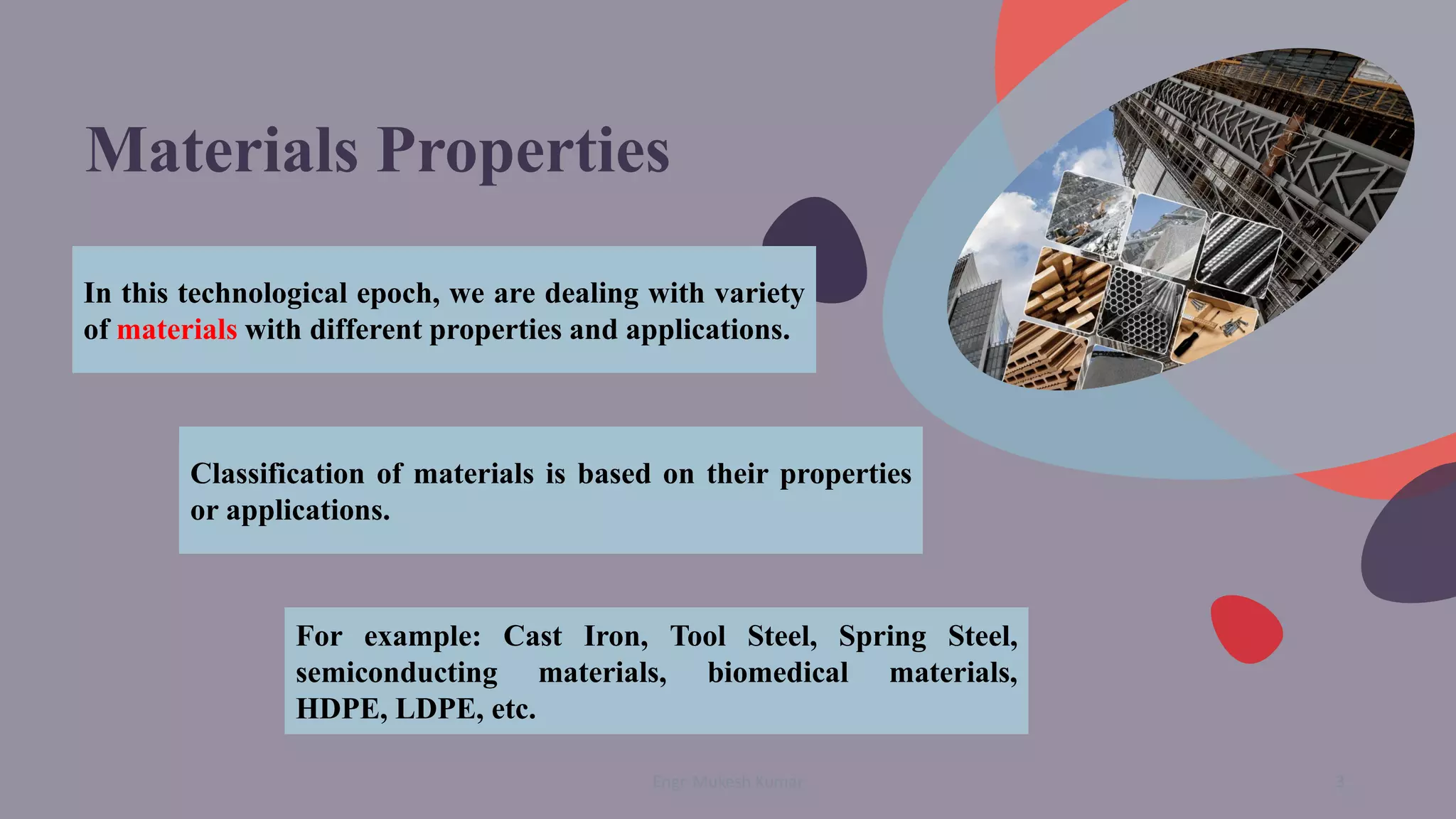
In this technological epoch, we are dealing with variety
of materials with different properties and applications.
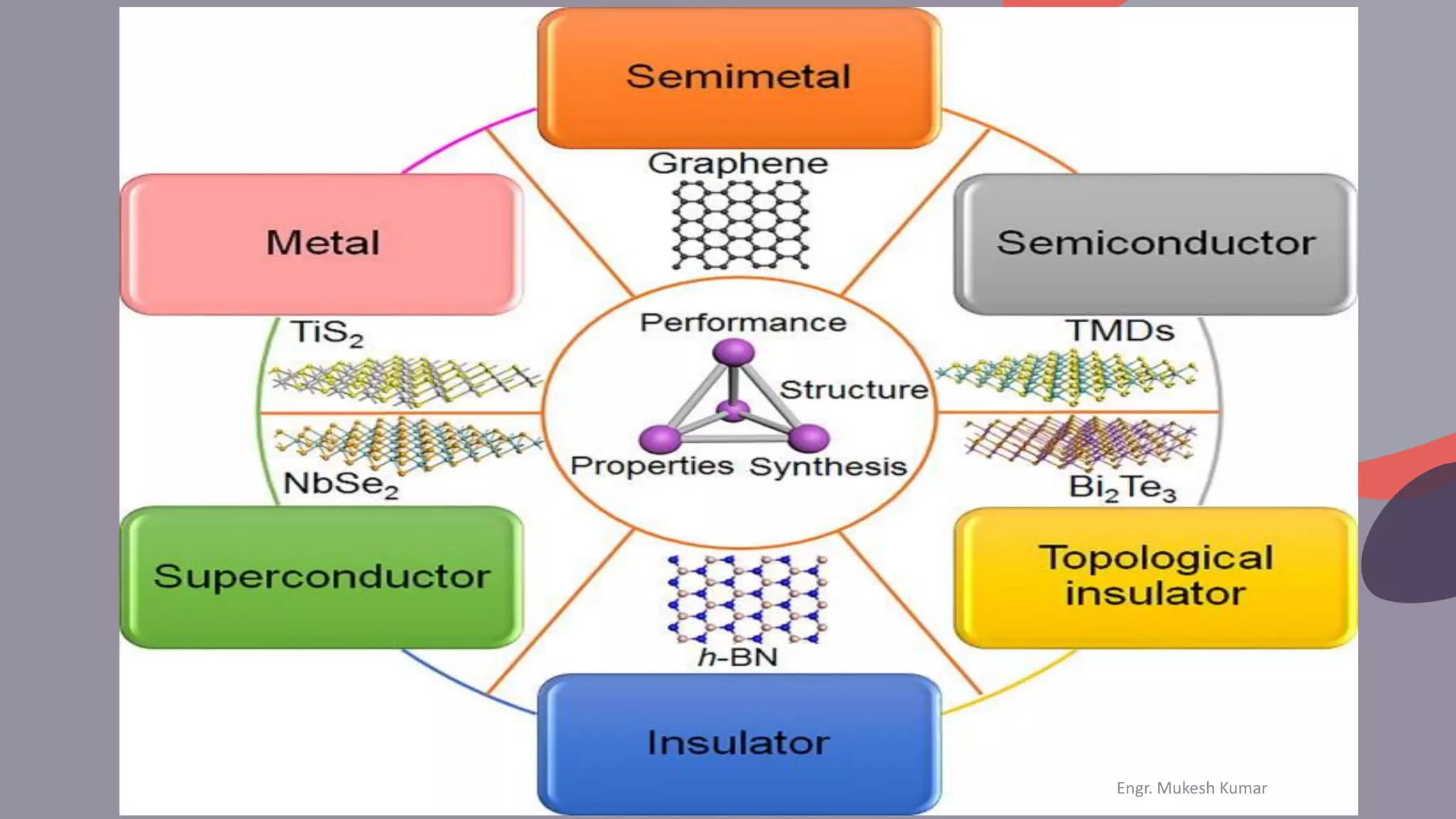
Classification of materials is based on their properties
or applications.
For example: Cast Iron, Tool Steel, Spring Steel,
semiconducting materials, biomedical materials,
HDPE, LDPE, etc.
Engr. Mukesh Kumar
4Engr. Mukesh Kumar
5
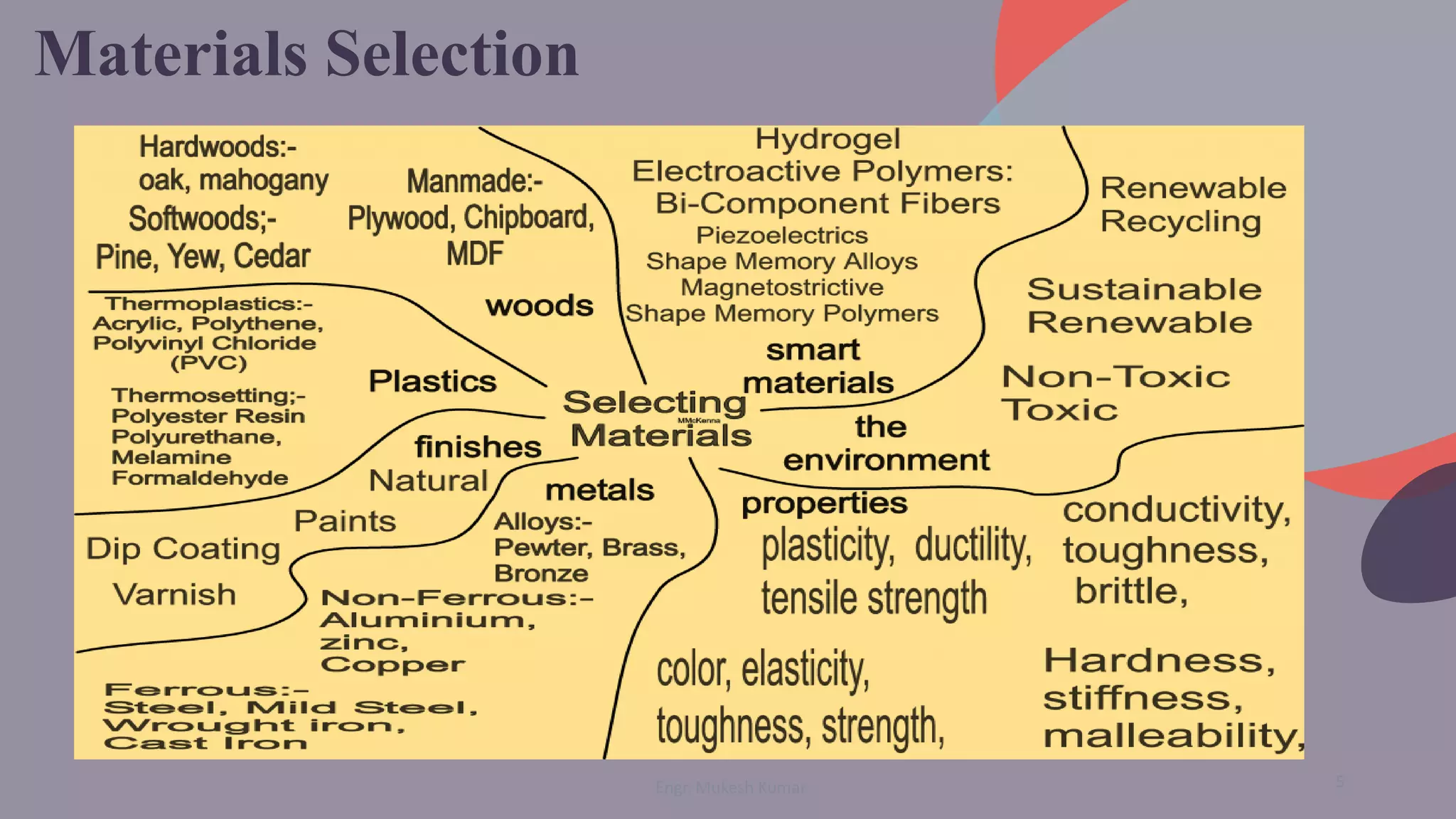
Materials Selection
Engr. Mukesh Kumar
6
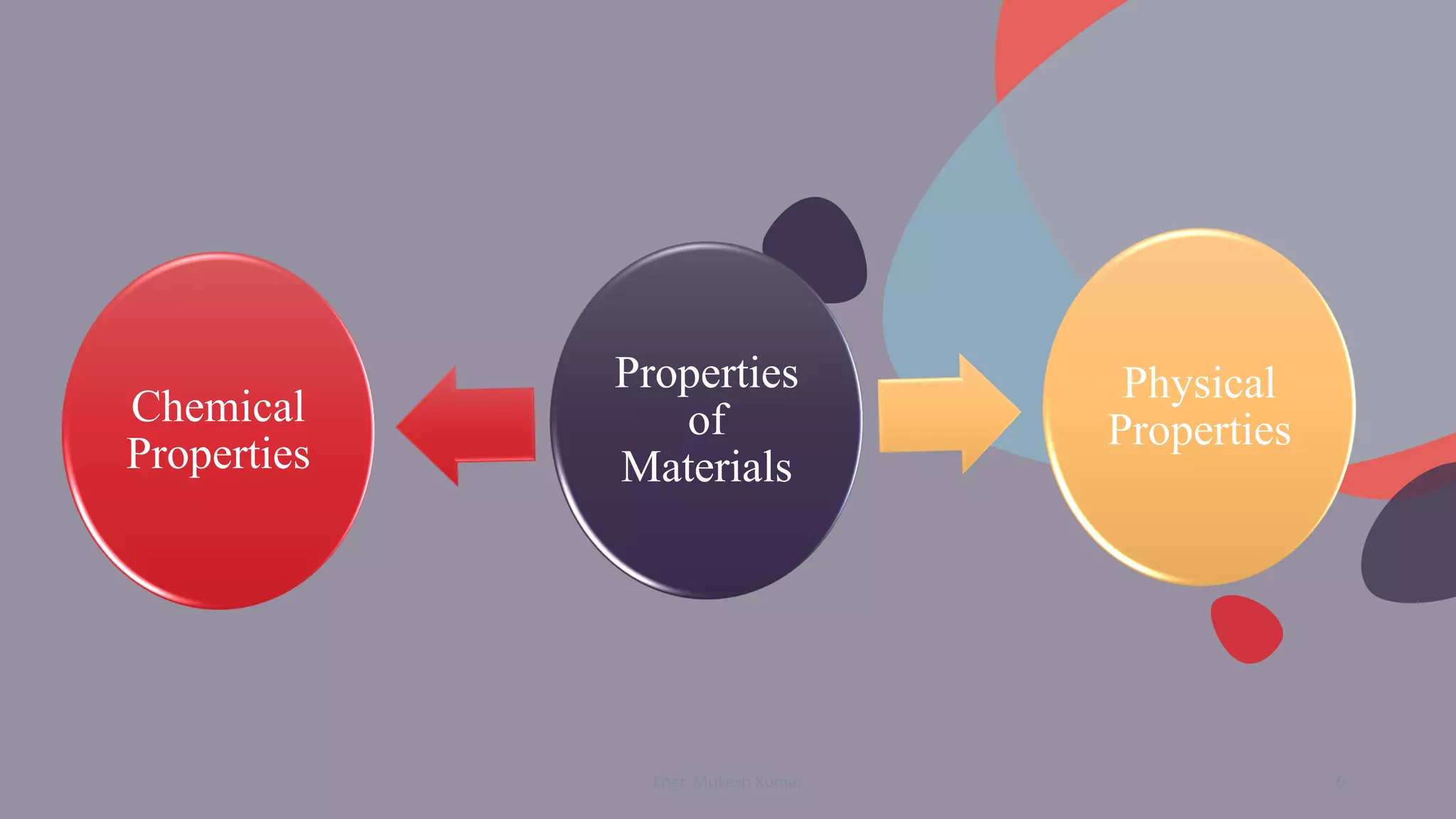
Properties
of
Materials
Chemical
Properties
Physical
Properties
Engr. Mukesh Kumar
7Engr. Mukesh Kumar
Physical property: Any characteristic that can be determined
without changing the substance’s chemical identity.
Chemical property: Any characteristic that can be determined
only by changing a substance’s molecular structure.
Physical and Chemical Properties
8
Enlist at least 3
Examples of Chemical
and Physical Properties
Engr. Mukesh Kumar
9Engr. Mukesh Kumar
Intensive Properties: Any characteristic of matter that does
not depend on the amount of the substance present.
Extensive property: Any characteristic of matter that depends
on the amount of matter being measured.
All physical properties are either Intensive or Extensive
10
Enlist at least 3
Examples of Intensive
and Extensive
Properties
Engr. Mukesh Kumar
Your Date Here Your Footer Here 11
Your Date Here Your Footer Here 12
13
Conclusion
Engr. Mukesh Kumar
14
Material Engineering student would like to answer for
Why is glass brittle, while copper is ductile? What is meant by a ductile material?
If we take two rods, one of Al and one of steel, why is it easier to bend the Al rod as compared
to the steel rod?
How can I change properties like hardness, without changing the composition (say of 0.8% C steel)?
Why is glass transparent, while any typical metal is opaque?
Why does the electrical conductivity of Cu decrease on heating, while that of Si increases?
Why does Iron corrode easily, while Aluminum does not (or does not seem to?!)?
How come I can hold a molten material in the liquid state below the melting point (e.g. water
can be held at sub-zero (C) temperatures), for at least some time (in many cases this is not difficult)?
Usually, good thermal conductors are also good electrical conductors. Why is this so?
Why is diamond a good thermal conductor, but not a good electrical conductor?
If I pull a spring and then release the load, it ‘comes back’ to its original shape. However, a if I
bend an aluminum rod, does not come back to its original shape. How can one understand these
You are
welcome to ask
any question…
15Engr. Mukesh Kumar
Extended
Learning
Have a Good Day!
16Engr. Mukesh Kumar

Lecture 3 physical properties of materials

  • 1.
    Physical Properties of Materialsand structure Engr. Mukesh Kumar Department of Metallurgy and Materials Engineering , Mehran, UET Jamshoro.
  • 2.
    02 03 01 Outline of today’sLecture Engr. Mukesh Kumar 2 Background Information Definition of Physical and Chemical Properties Examples of Intensive & Extensive Properties Extended Learning05 04 Conclusion
  • 3.
    Materials Properties 3 In thistechnological epoch, we are dealing with variety of materials with different properties and applications. Classification of materials is based on their properties or applications. For example: Cast Iron, Tool Steel, Spring Steel, semiconducting materials, biomedical materials, HDPE, LDPE, etc. Engr. Mukesh Kumar
  • 4.
  • 5.
  • 6.
  • 7.
    7Engr. Mukesh Kumar Physicalproperty: Any characteristic that can be determined without changing the substance’s chemical identity. Chemical property: Any characteristic that can be determined only by changing a substance’s molecular structure. Physical and Chemical Properties
  • 8.
    8 Enlist at least3 Examples of Chemical and Physical Properties Engr. Mukesh Kumar
  • 9.
    9Engr. Mukesh Kumar IntensiveProperties: Any characteristic of matter that does not depend on the amount of the substance present. Extensive property: Any characteristic of matter that depends on the amount of matter being measured. All physical properties are either Intensive or Extensive
  • 10.
    10 Enlist at least3 Examples of Intensive and Extensive Properties Engr. Mukesh Kumar
  • 11.
    Your Date HereYour Footer Here 11
  • 12.
    Your Date HereYour Footer Here 12
  • 13.
  • 14.
    14 Material Engineering studentwould like to answer for Why is glass brittle, while copper is ductile? What is meant by a ductile material? If we take two rods, one of Al and one of steel, why is it easier to bend the Al rod as compared to the steel rod? How can I change properties like hardness, without changing the composition (say of 0.8% C steel)? Why is glass transparent, while any typical metal is opaque? Why does the electrical conductivity of Cu decrease on heating, while that of Si increases? Why does Iron corrode easily, while Aluminum does not (or does not seem to?!)? How come I can hold a molten material in the liquid state below the melting point (e.g. water can be held at sub-zero (C) temperatures), for at least some time (in many cases this is not difficult)? Usually, good thermal conductors are also good electrical conductors. Why is this so? Why is diamond a good thermal conductor, but not a good electrical conductor? If I pull a spring and then release the load, it ‘comes back’ to its original shape. However, a if I bend an aluminum rod, does not come back to its original shape. How can one understand these
  • 15.
    You are welcome toask any question… 15Engr. Mukesh Kumar Extended Learning
  • 16.
    Have a GoodDay! 16Engr. Mukesh Kumar