


Introduction to
Banking
PRESENTED BY
DR.B.SUBHA
ASSISTANT PROFESSOR
KRISTU JAYANTI COLLEGE AUTONOMOUS
BANGALORE
What is Banking?
 accepting and
safeguarding money
owned by other
individuals and entities,
 lending out this money in
order to earn a profit.
 widened and now various
other services are also
offered by banks
Profit of Bank
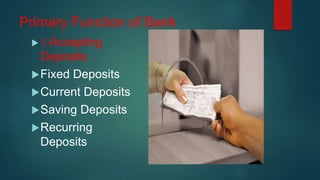
Primary Function of Bank
 1.Accepting
Deposits
Fixed Deposits
Current Deposits
Saving Deposits
Recurring
Deposits
Fixed Deposits
 Depositing money for a
specified period of time.
 Investment period may be
short or long term
 Fixed Tenure
 Higher rate of Interest.
 No withdrawal of money
before maturity
 In Emergencies withdrawal is
possible
Saving Deposit
 Basic Type of Bank
Account
 Deposit Money
 Keep it safe
 Withdraw funds with
some limitations.
 Earn interest
 Enjoy Maximum
Benefits.
Current Accounts
 Individual, businessmen or
corporates
 significantly higher number of
transactions with banks on a
regular basis.
 No interest from bank
 Maintain high minimum
balance
 Non maintenance of minimum
balance
 Penalty
 Single business no multiple
account.
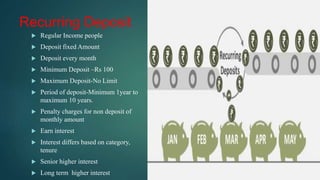
Recurring Deposit
 Regular Income people
 Deposit fixed Amount
 Deposit every month
 Minimum Deposit –Rs 100
 Maximum Deposit-No Limit
 Period of deposit-Minimum 1year to
maximum 10 years.
 Penalty charges for non deposit of
monthly amount
 Earn interest
 Interest differs based on category,
tenure
 Senior higher interest
 Long term higher interest
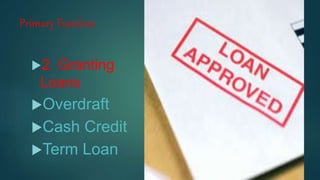
Primary Function
2. Granting
Loans
Overdraft
Cash Credit
Term Loan
Overdraft
 An overdraft lets you borrow
money through your current
account or savings account by
taking out more money than
you have in the account.
 Overdraft Limit
 Withdraw money till assigned
limit.
 Charges interest higher than
cash credit
 Short term credit
 Limit based on repayment
history
Cash credit
 Need to open separate bank account called cash credit
Account.
 Businessmen can claim not individuals
 Granted to customers to bridge working capital gap.
 Customers have to provide some form of collateral as
security
 Cash credits are tax deductible
 Cash credit is short term credit
 Interest rate is lower while comparing to overdraft
Previous Session Topics
Meaning of Bank
Banking Functions
Types of Functions
Forms of deposits
Forms of loans
Term Loan
 Term loan is a loan approved and disbursed by a bank
 for a fixed amount that shall be repaid in regular payments
 such as Equated Monthly Instalments (EMIs) over a defined
period of time
 Term loans can be offered in both fixed and floating rate of
interest.
 Tenure 1 to 10 years
 Tenure is decided at the time of loan application
 Example Home loan, educational loan ,car loan
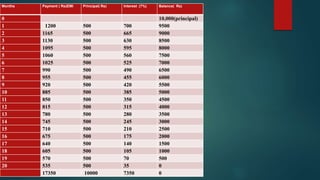
Months Payment ( Rs)EMI Principal( Rs) Interest (7%) Balance( Rs)
0 10,000(principal)
1 1200 500 700 9500
2 1165 500 665 9000
3 1130 500 630 8500
4 1095 500 595 8000
5 1060 500 560 7500
6 1025 500 525 7000
7 990 500 490 6500
8 955 500 455 6000
9 920 500 420 5500
10 885 500 385 5000
11 850 500 350 4500
12 815 500 315 4000
13 780 500 280 3500
14 745 500 245 3000
15 710 500 210 2500
16 675 500 175 2000
17 640 500 140 1500
18 605 500 105 1000
19 570 500 70 500
20 535 500 35 0
17350 10000 7350 0
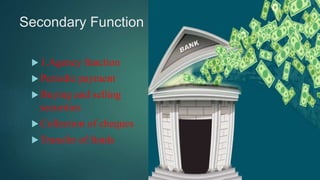
Secondary Function
 1.Agency function
 Periodic payment
 Buying and selling
securities
 Collection of cheques
 Transfer of funds
Agency function – Periodic Payment
Bank itself make monthly
payment from your accounts
Insurance premium, rent, salary
Customer authorizes bank
Buying and selling of shares
Behalf of customer bank
undertakes
Function of buying and selling
securities
Clear writing instruction
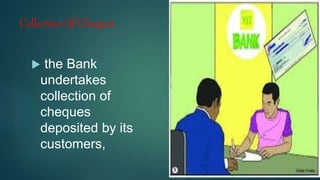
Collection Of Cheques
 the Bank
undertakes
collection of
cheques
deposited by its
customers,
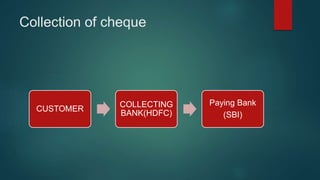
Collection of cheque
CUSTOMER
COLLECTING
BANK(HDFC)
Paying Bank
(SBI)
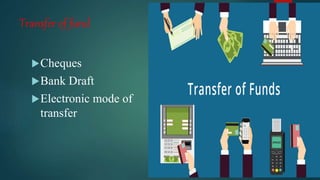
Transfer of fund
Cheques
Bank Draft
Electronic mode of
transfer
Cheques
 Document that orders bank to pay a specific sum of money
 From a person’s account
 To the person whom the cheque has been issued.
 Safe ,secure and convenient payment mode.
 Fear of theft is minimized
Bank draft
Instrument like cheque used to make payment
Cheque is issued by an individual
Bank draft or demand draft is issued by bank
Bank draft is guaranteed by the issuing bank
On customers request ,bank issues bank draft after ensuring the
customer has sufficient payment in his account.
Cheque is drawn by individual, but bank draft is drawn by bank
Demand draft or bank draft is the secured form of payment for
the payee.
Secondary Function: Utility function
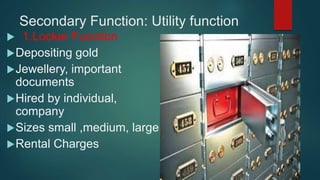
 1.Locker Function
Depositing gold
Jewellery, important
documents
Hired by individual,
company
Sizes small ,medium, large
Rental Charges
Utility Function: 2.Underwriting of
Shares
 Acts as underwriters to many companies
 Bank underwrites securities from the issuer then turns
around to sell
 Securities in the market
 Underwriters can sell the securities with more price in the
market than the price it purchased from the issuer.
 Risk is minimized for issuer
 Underwriters charge fees.
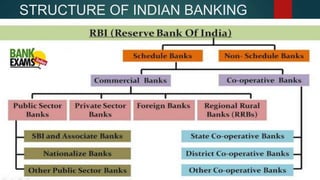
STRUCTURE OF INDIAN BANKING
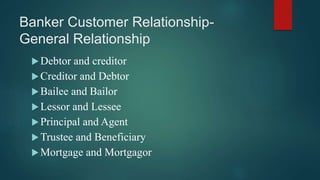
Banker Customer Relationship-
General Relationship
Debtor and creditor
Creditor and Debtor
Bailee and Bailor
Lessor and Lessee
Principal and Agent
Trustee and Beneficiary
Mortgage and Mortgagor
Debtor and Creditor
Customer is having a deposit account
like saving deposit, fixed, or current
account
Banker is the debtor
Customer is the creditor
Dignified debtor
Demand by means of cheques or ATM
Creditor and debtor
Banks gives loans and other
credit facility
Bank is the creditor
Customer is the debtor
Bailee and Bailor
Bank offers a service called safe custody
Bank will keep the customers documents and
valuables safely
When bank accepts the documents and keep
it safe
Banker - Bailee
Customer – Bailor.
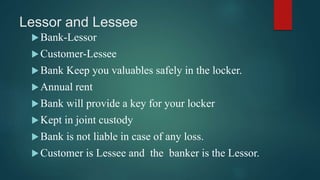
Lessor and Lessee
Bank-Lessor
Customer-Lessee
Bank Keep you valuables safely in the locker.
Annual rent
Bank will provide a key for your locker
Kept in joint custody
Bank is not liable in case of any loss.
Customer is Lessee and the banker is the Lessor.
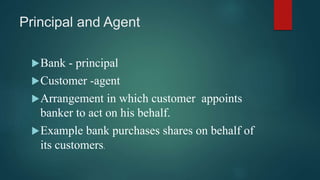
Principal and Agent
Bank - principal
Customer -agent
Arrangement in which customer appoints
banker to act on his behalf.
Example bank purchases shares on behalf of
its customers.
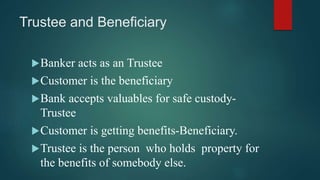
Trustee and Beneficiary
Banker acts as an Trustee
Customer is the beneficiary
Bank accepts valuables for safe custody-
Trustee
Customer is getting benefits-Beneficiary.
Trustee is the person who holds property for
the benefits of somebody else.
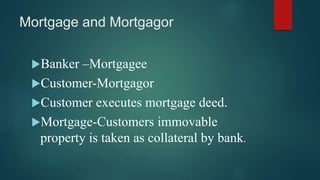
Mortgage and Mortgagor
Banker –Mortgagee
Customer-Mortgagor
Customer executes mortgage deed.
Mortgage-Customers immovable
property is taken as collateral by bank.

Introduction to Banking

  • 1.
    Introduction to Banking PRESENTED BY DR.B.SUBHA ASSISTANTPROFESSOR KRISTU JAYANTI COLLEGE AUTONOMOUS BANGALORE
  • 2.
    What is Banking? accepting and safeguarding money owned by other individuals and entities,  lending out this money in order to earn a profit.  widened and now various other services are also offered by banks
  • 3.
  • 4.
    Primary Function ofBank  1.Accepting Deposits Fixed Deposits Current Deposits Saving Deposits Recurring Deposits
  • 5.
    Fixed Deposits  Depositingmoney for a specified period of time.  Investment period may be short or long term  Fixed Tenure  Higher rate of Interest.  No withdrawal of money before maturity  In Emergencies withdrawal is possible
  • 6.
    Saving Deposit  BasicType of Bank Account  Deposit Money  Keep it safe  Withdraw funds with some limitations.  Earn interest  Enjoy Maximum Benefits.
  • 7.
    Current Accounts  Individual,businessmen or corporates  significantly higher number of transactions with banks on a regular basis.  No interest from bank  Maintain high minimum balance  Non maintenance of minimum balance  Penalty  Single business no multiple account.
  • 8.
    Recurring Deposit  RegularIncome people  Deposit fixed Amount  Deposit every month  Minimum Deposit –Rs 100  Maximum Deposit-No Limit  Period of deposit-Minimum 1year to maximum 10 years.  Penalty charges for non deposit of monthly amount  Earn interest  Interest differs based on category, tenure  Senior higher interest  Long term higher interest
  • 9.
  • 10.
    Overdraft  An overdraftlets you borrow money through your current account or savings account by taking out more money than you have in the account.  Overdraft Limit  Withdraw money till assigned limit.  Charges interest higher than cash credit  Short term credit  Limit based on repayment history
  • 11.
    Cash credit  Needto open separate bank account called cash credit Account.  Businessmen can claim not individuals  Granted to customers to bridge working capital gap.  Customers have to provide some form of collateral as security  Cash credits are tax deductible  Cash credit is short term credit  Interest rate is lower while comparing to overdraft
  • 12.
    Previous Session Topics Meaningof Bank Banking Functions Types of Functions Forms of deposits Forms of loans
  • 13.
    Term Loan  Termloan is a loan approved and disbursed by a bank  for a fixed amount that shall be repaid in regular payments  such as Equated Monthly Instalments (EMIs) over a defined period of time  Term loans can be offered in both fixed and floating rate of interest.  Tenure 1 to 10 years  Tenure is decided at the time of loan application  Example Home loan, educational loan ,car loan
  • 14.
    Months Payment (Rs)EMI Principal( Rs) Interest (7%) Balance( Rs) 0 10,000(principal) 1 1200 500 700 9500 2 1165 500 665 9000 3 1130 500 630 8500 4 1095 500 595 8000 5 1060 500 560 7500 6 1025 500 525 7000 7 990 500 490 6500 8 955 500 455 6000 9 920 500 420 5500 10 885 500 385 5000 11 850 500 350 4500 12 815 500 315 4000 13 780 500 280 3500 14 745 500 245 3000 15 710 500 210 2500 16 675 500 175 2000 17 640 500 140 1500 18 605 500 105 1000 19 570 500 70 500 20 535 500 35 0 17350 10000 7350 0
  • 15.
    Secondary Function  1.Agencyfunction  Periodic payment  Buying and selling securities  Collection of cheques  Transfer of funds
  • 16.
    Agency function –Periodic Payment Bank itself make monthly payment from your accounts Insurance premium, rent, salary Customer authorizes bank
  • 17.
    Buying and sellingof shares Behalf of customer bank undertakes Function of buying and selling securities Clear writing instruction
  • 18.
    Collection Of Cheques the Bank undertakes collection of cheques deposited by its customers,
  • 19.
  • 20.
    Transfer of fund Cheques BankDraft Electronic mode of transfer
  • 21.
    Cheques  Document thatorders bank to pay a specific sum of money  From a person’s account  To the person whom the cheque has been issued.  Safe ,secure and convenient payment mode.  Fear of theft is minimized
  • 22.
    Bank draft Instrument likecheque used to make payment Cheque is issued by an individual Bank draft or demand draft is issued by bank Bank draft is guaranteed by the issuing bank On customers request ,bank issues bank draft after ensuring the customer has sufficient payment in his account. Cheque is drawn by individual, but bank draft is drawn by bank Demand draft or bank draft is the secured form of payment for the payee.
  • 23.
    Secondary Function: Utilityfunction  1.Locker Function Depositing gold Jewellery, important documents Hired by individual, company Sizes small ,medium, large Rental Charges
  • 24.
    Utility Function: 2.Underwritingof Shares  Acts as underwriters to many companies  Bank underwrites securities from the issuer then turns around to sell  Securities in the market  Underwriters can sell the securities with more price in the market than the price it purchased from the issuer.  Risk is minimized for issuer  Underwriters charge fees.
  • 25.
  • 26.
    Banker Customer Relationship- GeneralRelationship Debtor and creditor Creditor and Debtor Bailee and Bailor Lessor and Lessee Principal and Agent Trustee and Beneficiary Mortgage and Mortgagor
  • 27.
    Debtor and Creditor Customeris having a deposit account like saving deposit, fixed, or current account Banker is the debtor Customer is the creditor Dignified debtor Demand by means of cheques or ATM
  • 28.
    Creditor and debtor Banksgives loans and other credit facility Bank is the creditor Customer is the debtor
  • 29.
    Bailee and Bailor Bankoffers a service called safe custody Bank will keep the customers documents and valuables safely When bank accepts the documents and keep it safe Banker - Bailee Customer – Bailor.
  • 30.
    Lessor and Lessee Bank-Lessor Customer-Lessee BankKeep you valuables safely in the locker. Annual rent Bank will provide a key for your locker Kept in joint custody Bank is not liable in case of any loss. Customer is Lessee and the banker is the Lessor.
  • 31.
    Principal and Agent Bank- principal Customer -agent Arrangement in which customer appoints banker to act on his behalf. Example bank purchases shares on behalf of its customers.
  • 32.
    Trustee and Beneficiary Bankeracts as an Trustee Customer is the beneficiary Bank accepts valuables for safe custody- Trustee Customer is getting benefits-Beneficiary. Trustee is the person who holds property for the benefits of somebody else.
  • 33.
    Mortgage and Mortgagor Banker–Mortgagee Customer-Mortgagor Customer executes mortgage deed. Mortgage-Customers immovable property is taken as collateral by bank.