
INTRODUCTION TO DIABETES & ANTI-
DIABETIC DRUG
SCREENING METHODS
By
ANURAG RAGHUVANSHI
Dept. of pharmacology
(A10654915001)
AMITY UNIVERSITY NOIDA
2015-16
anuragraghuvanshi3@gmail.com
CONTENTS
Classification of Diabetes
Definition & types of Diabetes mellitus
Pathological changes & symptoms
Pancreas- types of cell
Screening methods- classification
references
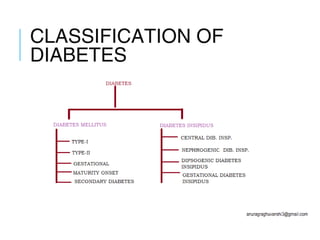
CLASSIFICATION OF
DIABETES
DIABETES INSIPIDUS
Diabetes insipidus is caused by problems related to the
antidiuretic hormone (ADH) or its receptor and causes frequent
urination.
There are four types of diabetes insipidus;
1) Central diabetes insipidus,
2) Nephrogenic diabetes insipidus,
3) Dipsogenic diabetes insipidus, and
4) Gestational diabetes insipidus.
SYMPTOM & DIAGNOSIS
The most common symptom of diabetes insipidus is frequent
urination.
The diagnosis for diabetes insipidus is based on a series of
tests (for example, urinalysis and fluid deprivation test).
The treatment for diabetes insipidus depends on the type of
diabetes insipidus.
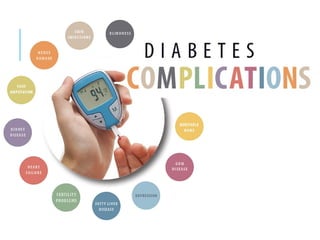
Diabetes can lead to chronic kidney disease.
Diabetes is the most common cause of kidney failure in the
US.
WHAT IS DIABETES
MELLITUS?
To answer that, you first need to understand the role of insulin
in your body.  
When you eat, your body turns food into sugars, or glucose. At
that point, your pancreas is supposed to release insulin.  
Insulin serves as a “key” to open your cells, to allow the
glucose to enter -- and allow you to use the glucose for
energy.  
But with diabetes, this system does not work.  
Several major things can go wrong – causing the onset of
diabetes. Type 1 and type 2 diabetes are the most common
forms of the disease, but there are also other kinds, such as
gestational diabetes, which occurs during pregnancy, as well as
other forms.   
DIFFERENCE BETWEEN
DIABETES MELLITUS AND
DIABETES INSIPIDUS
Diabetes insipidus should not be confused with diabetes
mellitus (DM), which results from insulin deficiency or
resistance leading to high blood glucose, also called blood
sugar.
Diabetes insipidus and diabetes mellitus are unrelated,
although they can have similar signs and symptoms, like
excessive thirst and excessive urination.
Diabetes mellitus is far more common than diabetes insipidus
and receives more news coverage. Diabetes mellitus has two
main forms, type 1 diabetes and type 2 diabetes. Diabetes
insipidus is a different form of illness altogether.
DEFINITION AND TYPES:
Diabetes mellitus is a metabolic disorder characterized by
hyperglycemia, glycosuria, hyperlipidemia, negative nitrogen balance
and sometimes ketonaemia.
Type 1 diabetes mellitus (IDDM):- due to β-cell destruction, usually
leading to absolute insulin deficiency
Type 2 diabetes mellitus (NIDDM) :-due to a progressive insulin
secretory defect on the background of insulin resistance
Gestational diabetes, Type III:- diabetes diagnosed in the second or
third trimester of pregnancy that is not clearly overt diabetes
Maturity-onset diabetes of the young (MODY):- at a young age, and
usually inherited in an autosomal-dominant manner.
Secondary diabetes: accounts for only 1-2% of patients with diabetes
mellitus
SECONDARY DIABETES
Pancreatic disease: cystic fibrosis, chronic pancreatitis,
pancreatectomy, carcinoma of the pancreas.
Endocrine: Cushing's syndrome, acromegaly, thyrotoxicosis,
phaeochromocytoma, glucagonoma.
Drug-induced: thiazide diuretics, corticosteroids, atypical
antipsychotics, antiretroviral protease inhibitors.
Congenital lipodystrophy.
Acanthosis nigricans.
Genetic: Wolfram's syndrome (which is also referred to as
DIDMOAD: diabetes insipidus, diabetes mellitus, optic atrophy and
deafness),Friedreich's ataxia, dystrophia myotonica,
haemochromatosis, glycogen storage diseases.
PATHOLOGICAL
CHANGES
Increase in vessel wall matrix.
Thickening of capillary basement membrane.
Cellular proliferation resulting in vascular
complication :-
Lumen narrowing
Early atherosclerosis
Sclerosis of glomerular capillaries
Retinopathy ( damage to retina)
Neuropathy (dysfunction of peripheral nerves)
Peripheral vascular insufficiency
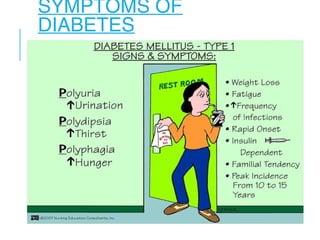
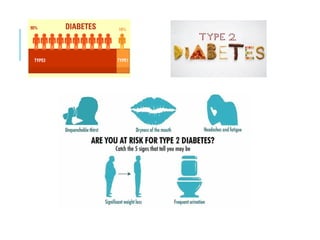
SYMPTOMS OF
DIABETES
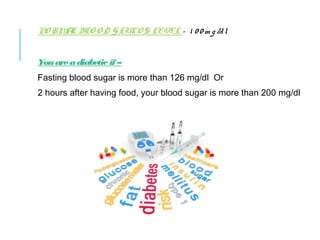
NORMAL BLOOD GLUCOS LEVEL – 100mg/dl
You are a diabetic if –
Fasting blood sugar is more than 126 mg/dl Or
2 hours after having food, your blood sugar is more than 200 mg/dl
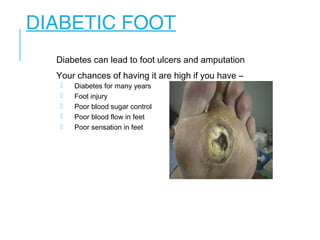
DIABETIC FOOT
Diabetes can lead to foot ulcers and amputation
Your chances of having it are high if you have –
 Diabetes for many years
 Foot injury
 Poor blood sugar control
 Poor blood flow in feet
 Poor sensation in feet
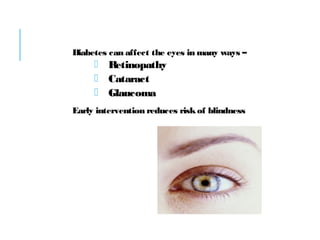
Diabetes can affect the eyes in many ways –
 Retinopathy
 Cataract
 Glaucoma
Early intervention reduces risk of blindness
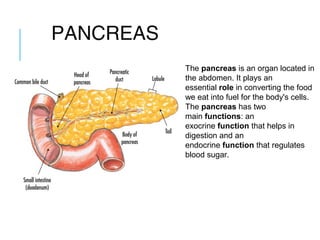
PANCREAS
The pancreas is an organ located in 
the abdomen. It plays an 
essential role in converting the food 
we eat into fuel for the body's cells. 
The pancreas has two 
main functions: an 
exocrine function that helps in 
digestion and an 
endocrine function that regulates 
blood sugar.
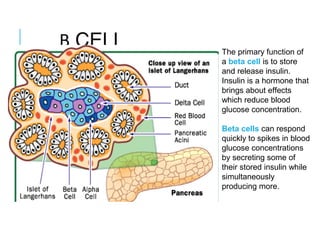
Β CELL The primary function of 
a beta cell is to store 
and release insulin. 
Insulin is a hormone that 
brings about effects 
which reduce blood 
glucose concentration. 
Beta cells can respond 
quickly to spikes in blood 
glucose concentrations 
by secreting some of 
their stored insulin while 
simultaneously 
producing more.
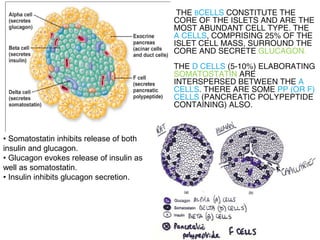
THE ΒCELLS CONSTITUTE THE
CORE OF THE ISLETS AND ARE THE
MOST ABUNDANT CELL TYPE. THE
A CELLS, COMPRISING 25% OF THE
ISLET CELL MASS, SURROUND THE
CORE AND SECRETE GLUCAGON.
THE D CELLS (5-10%) ELABORATING
SOMATOSTATIN ARE
INTERSPERSED BETWEEN THE A
CELLS. THERE ARE SOME PP (OR F)
CELLS (PANCREATIC POLYPEPTIDE
CONTAINING) ALSO.
• Somatostatin inhibits release of both 
insulin and glucagon. 
• Glucagon evokes release of insulin as 
well as somatostatin. 
• Insulin inhibits glucagon secretion. 
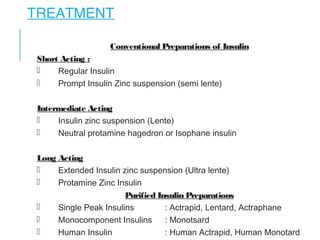
TREATMENT
Conventional Preparations of Insulin
Short Acting :
 Regular Insulin
 Prompt Insulin Zinc suspension (semi lente)
Intermediate Acting
 Insulin zinc suspension (Lente)
 Neutral protamine hagedron or Isophane insulin
Long Acting
 Extended Insulin zinc suspension (Ultra lente)
 Protamine Zinc Insulin
Purified Insulin Preparations
 Single Peak Insulins : Actrapid, Lentard, Actraphane
 Monocomponent Insulins : Monotsard
 Human Insulin : Human Actrapid, Human Monotard
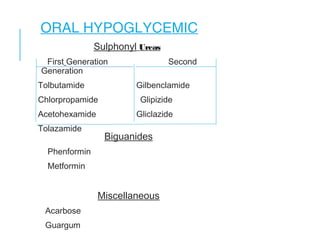
ORAL HYPOGLYCEMIC
Sulphonyl Ureas
First Generation Second
Generation
Tolbutamide Gilbenclamide
Chlorpropamide Glipizide
Acetohexamide Gliclazide
Tolazamide
Biguanides
Phenformin
Metformin
Miscellaneous
Acarbose
Guargum
MODELS FOR ANTI DIABETIC
SCREENING
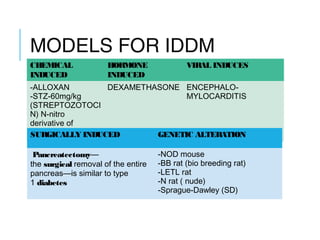
MODELS FOR IDDM
CHEMICAL
INDUCED
HORMONE
INDUCED
VIRAL INDUCES
-ALLOXAN
-STZ-60mg/kg
(STREPTOZOTOCI
N) N-nitro
derivative of
glucosamine)
DEXAMETHASONE ENCEPHALO-
MYLOCARDITIS
SURGICALLY INDUCED GENETIC ALTERATION
 Pancreatectomy—
the surgical removal of the entire
pancreas—is similar to type
1 diabetes
-NOD mouse
-BB rat (bio breeding rat)
-LETL rat
-N rat ( nude)
-Sprague-Dawley (SD)
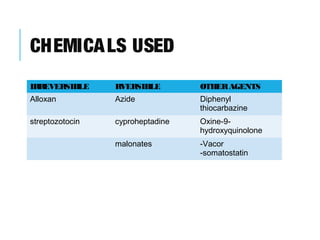
CHEMICALS USED
IRREVERSIBLE REVERSIBLE OTHER AGENTS
Alloxan Azide Diphenyl
thiocarbazine
streptozotocin cyproheptadine Oxine-9-
hydroxyquinolone
malonates -Vacor
-somatostatin
Models For Insulin Dependent Diabetes Mellitus    
[IDDM]
Alloxan induced diabetes
Principle/Mechanism -
Interacts with sulfhydryl groups and inhibit it- Following it’s uptake by the beta
cells, alloxan interacts with sulfhydryl- containing cellular components,
particularly enzymes known to be essential for beta cell function.
Glucokinase , an enzyme which has signal-recognition function in coupling the
glucose concentration to insulin release and it is particularly sensitive to
inhibition by alloxan.
Other proposed mechanism for alloxan cytotoxicity include direct induction of
mitochondrial abnormalities, extreme sensitivity of beta cells to the cytotoxic
effects of free radicals (generated during the reduction/ re-oxidation cycle of
alloxan) & damage to DNA within the beta cell nucleus.
 Dose: - In rats Alloxan at dose of 100 mg/kg produces diabetes.
Rabbits- 150mg/kg, beagle dog- 60mg/kg, baboons- 200mg/kg.
Procedure: -
Albino rats of either sex [150-200g] are injected with a single dose of
Alloxan monohydrate [100 mg/kg body weight] dissolved in normal
saline by i.p. route.
Animals showing fasting blood glucose level above 140 mg/dl after 48
hour of Alloxan administration are considered diabetic
For a period of six weeks, drug samples to be screened .
Blood glucose levels show triphasic response with hyperglycemia for 1
hour followed by hypoglycemia that lasts for 6 hours & stable
hyperglycemia after 48 hours
Serum is separated by centrifuge (3000 rpm) at (2-4 °C) for ten
minutes.
The serum glucose level is estimated by glucose oxidase-peroxidase
method [GOD-POD kit] using auto analyser.
LIMITATION
 HIGH MORTALITY
KETOSIS
SOME SPECIES ARE RESISTANT TO ALLOXAN e.g.
guinea pig
STREPTOZOTOCIN HAS ALMOST COMPLETELY
REPLACED ALOXAN
Streptozotocin induced diabetes
(glucosamine-nitrosourea compound)
Rakieten (1963) reported the diabetogenic activity of the antibiotic
Streptozotocin. The compound turned out to be specifically Cytotoxic to
beta-cells of the pancreas.
Streptozotocin induced diabetes in laboratory animals, mostly in rats,
has become a valuable tool in diabetes research being used by many
investigators.
Principle/ Mechanism
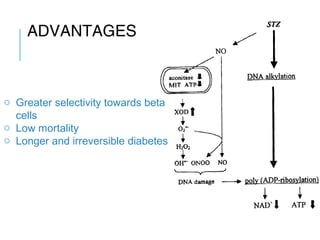
 Streptozotocin: is a broad-spectrum antibiotic, which causes beta
islet cell damage by free radical generation. It induces diabetes in
almost all species of animals excluding rabbits and guinea pigs.
Fragmentation of DNA
Nitric oxide generation
Induces diabetes in all species.
o Greater selectivity towards beta
cells
o Low mortality
o Longer and irreversible diabetes
ADVANTAGES
Procedure: -
Streptozotocin [60 mg/kg body weight] is prepared in citrated buffer
[pH 4.5]
Albino rats of either sex weighing 150-200 g are injected i.p with
above solution.
Animals showing fasting blood glucose levels > 140mg/dl after 48
hours of Streptozotocin administration are considered diabetic.
After six weeks of treatment blood samples are collected from 6 hr.
fasted animals through caudal vein
Serum is separated by centrifuge (3000 rpm) under cooling (2-4 °C)
for ten. Minutes
Serum glucose level is estimated by glucose- peroxidase method
[GOD-POD kit] using autoanalyser.
Virus induced diabetes
Principle: -
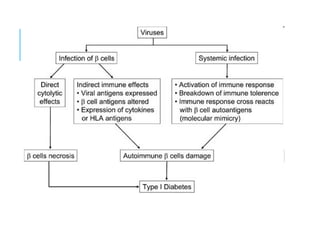
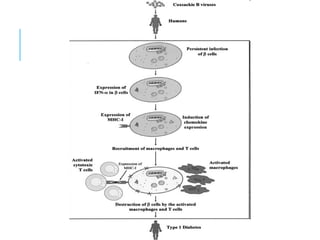
Various human viruses used for inducing diabetes include
RNA picorno virus
encephalomyocarditis [EMC-D]
coxsackie B4 [CB-4].
Renovirus
Mengo-2t
PROCEDURE
6-8 week old mice are inoculated by 0.1 ml of 1:50 dilutions of D-
variant encephalomyocarditis [EMC] through i.p.
0.1ml of above dilution contains 50 PFU [ plaque forming units] of
EMC virus. (mortality due to this concentration of virus is
approximately 10-20%)
A less infecting variant produces a comparable damage by eliciting
autoimmune reactivity to the beta cells.
Infected animals are considered hyperglycaemic if there non fasting
levels exceed by 250mg/dl
Drug samples to be screened are administered orally for a period of
6 weeks.
After 6 weeks of drug treatment, blood glucose estimation is done to
determine the anti diabetic activity.
Principle: - A transient diabetic syndrome can be induced by injecting
guinea pigs with anti insulin serum. Diabetes persists as long as
antibodies are capable of reacting with insulin remaining in the circulation.
Preparation of antibody :-
Bovine insulin, dissolved in acidified water [ph 3.0] at a dose of 1mg is
injected to guinea pigs weighing 300-4oo gm. Anti insulin sera is collected
after two weeks of antigenic challenge.
Procedure: -
Adult albino rats are injected with 0.25-1.0 ml of guinea pig anti- insulin
serum.
Insulin antibodies induce a dose dependent increase of blood glucose
level up to 300 mg/ dl.
The drug sample to be screened is administered by a suitable root and
blood glucose level is analysed to determine the activity.
Insulin antibodies induced
diabetes
LIMITATIONS
Effect persist as long as antibodies remain in the circulation
Large doses and prolonged administration- ketonaemia, ketonuria,
glycosuria and acidosis are fatal to animals
SURGICALLY INDUCED
METHODS
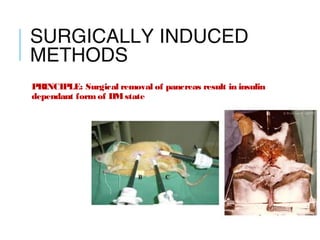
PRINCIPLE: Surgical removal of pancreas result in insulin
dependant form of DM state
SURGICALLY INDUCED
ANIMALS
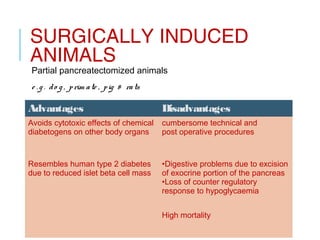
Partial pancreatectomized animals
e.g. dog, primate, pig & rats
Advantages Disadvantages
Avoids cytotoxic effects of chemical
diabetogens on other body organs
cumbersome technical and
post operative procedures
Resembles human type 2 diabetes
due to reduced islet beta cell mass
•Digestive problems due to excision
of exocrine portion of the pancreas
•Loss of counter regulatory
response to hypoglycaemia
High mortality
HORMONE INDUCED DM
PRINCIPLE/MECHANISM
DEXAMETHASONE is a long acting glucocorticoid possessing
immunosuppressant action in the islets and produces type 1 diabetes.
PROCEDURE
•Adult rats 150-200gm dexamethasone (2-5mg/kg i.p.)
•Repeated injection of same dose level is carried out for a period of 0-
30 days resulting in IDDM.
•The sample to be screened is administered through a suitable route,
blood glucose is measured.
LIMITATION
Long standing procedure.
Genetic models
Non obese diabetic mouse [NOD MOUSE]
NOD mouse is model for IDDM.
Hypoinsulinemia is developed which is
caused by autoimmune destruction of
pancreatic beta cells in association with
autoantibody production.
Procedure: -
Mice are breed at laboratory by sib mating
over 20 generations.
After 20 generations of sib mating,
spontaneous development of IDDM in mice
is obtained. Diabetes develops abruptly
between 100-200 days of age.
[Characterized by weight loss, poly urea,
severe glycosuria]
Animals are treated with the drug sample to
be screened.
N
BB RAT
NOD MUSE
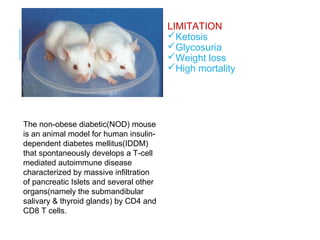
The non-obese diabetic(NOD) mouse
is an animal model for human insulin-
dependent diabetes mellitus(IDDM)
that spontaneously develops a T-cell
mediated autoimmune disease
characterized by massive infiltration
of pancreatic Islets and several other
organs(namely the submandibular
salivary & thyroid glands) by CD4 and
CD8 T cells.
LIMITATION
Ketosis
Glycosuria
Weight loss
High mortality
COHEN DIABETIC RAT
Diabetes in Cohen rats is characterized by hyperglycemia, glucosuria, and
hyperinsulinemia, with late development of hypoinsulinemia, insulin
resistance, and decrease in the number and sensitivity of insulin receptors.
The rats develop overt diabetes and diabetes related complications when fed a
diet rich in sucrose or other refined sugars and poor in copper content.
Models For NIDDM
Streptozotocin induced neonatal model for NIDDM
Streptozotocin causes severe pancreatic beta cells destruction,
accompanied by decrease in pancreatic insulin stores and rise in
plasma insulin levels.
Procedure: -
Neonatal rats are treated with streptozotocin [90 mg per kg body
weight] (for NR & SD rats150mg/kg STZ was injected intraperitoneally)
prepared in citrate buffer [pH 4.5] by i.p at birth or within the first five
days following birth.
After six weeks rats develops symptoms similar to NIDDM.
Rats showing fasting blood glucose level above 140 mg/ dl are
considered diabetic.
Drug sample to be screened is administered by a suitable route and
Blood glucose level is analysed to determine the activity.
ADRENALINE INDUCED ACUTE
HYPERGLYCAEMIA
Adrenaline is a counter regulatory hormone to insulin. It increases
the rate of glycogenolysis and the glucose levels in blood causing
hyperglycaemia.
Procedure:-
Adult albino rats are injected at a dose level of 0.1 mg / kg through
s.c. route
The dose produces peak hyperglycaemic effect after one hour and
lasts up to four hours.
The drug sample to be analysed is administered through a suitable
route.
Blood glucose is determined.(The oral hypoglycaemic agents can
be screened by this method)
Assay for insulin & insulin like activity
This assay involves comparing two standard solutions of insulin with
the test drug for it’s insulin like activity
Procedure:-
Four groups of six rabbits weighing at least 1.8 kg are used
Two standard solutions of insulin containing one unit and two units
respectively and two dilutions of sample whose potency is to be
examine are prepared.
Each of the prepared solution (0.5 ml) is injected subcutaneously.
After one hour and 2.5 hr. of each injection, a suitable blood sample is
taken from the ear vein of each rabbit and blood sugar determined
preferably by glucose oxidase method.
Blood sugardeterminations in mice:-
Purpose and rationale:-
Eneroth and Ahlund (1968, 1970a,b) recommended a twin crossover
method for bio-assay of insulin using blood glucose levels in mice instead
of hypoglycemic seizures giving more precise results.
Procedure:-
Non-fasting mice of the same strain and sex are used having body
masses such that the difference between the heaviest and lightest mouse
is not more than 2 g. The mice are assigned at random to four equal
groups of not less than 10 animals. Two dilutions of a solution of the
substance or of the preparation to be examined and 2 dilutions of the
reference solution are prepared using as diluent 0.9% NaCl solution
adjusted to pH 2.5 with 0.1 N hydrochloric acid and containing a suitable
protein carrier. In a preliminary experiment, concentrations of 0.02 IU and
0.10 IU are tested.
Each of the prepared solutions (0.1 ml/10 g body weight) is injected
subcutaneously to one group of mice according to a randomized block
design. Not less than 2.5 h later, each solution is administered to a second
group of mice following a twin crossover design. Exactly 30 min after each
injection, a sample of 50 μl of blood is taken from the orbital venous sinus
of each mouse. Blood glucose concentration is determined by a suitable
method, such as described by Hoffman (1937).
Evaluation:-
The potency is calculated by the usual statistical methods for the twin-
cross-over assay.
REFERENCES:-
Dr Hayley Willacy- Diabetes Mellitus, Document ID:
2048 (v30)http://patient.info/doctor/diabetes-mellitus
http://www.diabetesresearch.org/what-is-diabetes
Drug screening methods :- By S.K Gupta
http://www.ijrpbsonline.com/files/59-3290.pdf
http://www.pharmaceutical-tech.com/articles/id/antidiabetes
http://www.medicinenet.com/diabetes_insipidus/article.htm
THANK YOU
By
ANURAG RAGHUVANSHI
Dept. of pharmacology
(A10654915001)
AMITY UNIVERSITY NOIDA
2015-16
anuragraghuvanshi3@gmail.c
om

Introduction to Diabetes & anti diabetic drug screening methods

  • 1.
    INTRODUCTION TO DIABETES& ANTI- DIABETIC DRUG SCREENING METHODS By ANURAG RAGHUVANSHI Dept. of pharmacology (A10654915001) AMITY UNIVERSITY NOIDA 2015-16 anuragraghuvanshi3@gmail.com
  • 2.
    CONTENTS Classification of Diabetes Definition& types of Diabetes mellitus Pathological changes & symptoms Pancreas- types of cell Screening methods- classification references
  • 3.
  • 4.
    DIABETES INSIPIDUS Diabetes insipidus iscaused by problems related to the antidiuretic hormone (ADH) or its receptor and causes frequent urination. There are four types of diabetes insipidus; 1) Central diabetes insipidus, 2) Nephrogenic diabetes insipidus, 3) Dipsogenic diabetes insipidus, and 4) Gestational diabetes insipidus.
  • 5.
    SYMPTOM & DIAGNOSIS Themost common symptom of diabetes insipidus is frequent urination. The diagnosis for diabetes insipidus is based on a series of tests (for example, urinalysis and fluid deprivation test). The treatment for diabetes insipidus depends on the type of diabetes insipidus. Diabetes can lead to chronic kidney disease. Diabetes is the most common cause of kidney failure in the US.
  • 6.
    WHAT IS DIABETES MELLITUS? Toanswer that, you first need to understand the role of insulin in your body.   When you eat, your body turns food into sugars, or glucose. At that point, your pancreas is supposed to release insulin.   Insulin serves as a “key” to open your cells, to allow the glucose to enter -- and allow you to use the glucose for energy.   But with diabetes, this system does not work.   Several major things can go wrong – causing the onset of diabetes. Type 1 and type 2 diabetes are the most common forms of the disease, but there are also other kinds, such as gestational diabetes, which occurs during pregnancy, as well as other forms.   
  • 7.
    DIFFERENCE BETWEEN DIABETES MELLITUSAND DIABETES INSIPIDUS Diabetes insipidus should not be confused with diabetes mellitus (DM), which results from insulin deficiency or resistance leading to high blood glucose, also called blood sugar. Diabetes insipidus and diabetes mellitus are unrelated, although they can have similar signs and symptoms, like excessive thirst and excessive urination. Diabetes mellitus is far more common than diabetes insipidus and receives more news coverage. Diabetes mellitus has two main forms, type 1 diabetes and type 2 diabetes. Diabetes insipidus is a different form of illness altogether.
  • 8.
    DEFINITION AND TYPES: Diabetesmellitus is a metabolic disorder characterized by hyperglycemia, glycosuria, hyperlipidemia, negative nitrogen balance and sometimes ketonaemia. Type 1 diabetes mellitus (IDDM):- due to β-cell destruction, usually leading to absolute insulin deficiency Type 2 diabetes mellitus (NIDDM) :-due to a progressive insulin secretory defect on the background of insulin resistance Gestational diabetes, Type III:- diabetes diagnosed in the second or third trimester of pregnancy that is not clearly overt diabetes Maturity-onset diabetes of the young (MODY):- at a young age, and usually inherited in an autosomal-dominant manner. Secondary diabetes: accounts for only 1-2% of patients with diabetes mellitus
  • 9.
    SECONDARY DIABETES Pancreatic disease:cystic fibrosis, chronic pancreatitis, pancreatectomy, carcinoma of the pancreas. Endocrine: Cushing's syndrome, acromegaly, thyrotoxicosis, phaeochromocytoma, glucagonoma. Drug-induced: thiazide diuretics, corticosteroids, atypical antipsychotics, antiretroviral protease inhibitors. Congenital lipodystrophy. Acanthosis nigricans. Genetic: Wolfram's syndrome (which is also referred to as DIDMOAD: diabetes insipidus, diabetes mellitus, optic atrophy and deafness),Friedreich's ataxia, dystrophia myotonica, haemochromatosis, glycogen storage diseases.
  • 10.
    PATHOLOGICAL CHANGES Increase in vesselwall matrix. Thickening of capillary basement membrane. Cellular proliferation resulting in vascular complication :- Lumen narrowing Early atherosclerosis Sclerosis of glomerular capillaries Retinopathy ( damage to retina) Neuropathy (dysfunction of peripheral nerves) Peripheral vascular insufficiency
  • 11.
  • 14.
    NORMAL BLOOD GLUCOSLEVEL – 100mg/dl You are a diabetic if – Fasting blood sugar is more than 126 mg/dl Or 2 hours after having food, your blood sugar is more than 200 mg/dl
  • 16.
    DIABETIC FOOT Diabetes canlead to foot ulcers and amputation Your chances of having it are high if you have –  Diabetes for many years  Foot injury  Poor blood sugar control  Poor blood flow in feet  Poor sensation in feet
  • 17.
    Diabetes can affectthe eyes in many ways –  Retinopathy  Cataract  Glaucoma Early intervention reduces risk of blindness
  • 18.
  • 19.
    Β CELL The primary function of  a betacell is to store  and release insulin.  Insulin is a hormone that  brings about effects  which reduce blood  glucose concentration.  Beta cells can respond  quickly to spikes in blood  glucose concentrations  by secreting some of  their stored insulin while  simultaneously  producing more.
  • 20.
    THE ΒCELLS CONSTITUTETHE CORE OF THE ISLETS AND ARE THE MOST ABUNDANT CELL TYPE. THE A CELLS, COMPRISING 25% OF THE ISLET CELL MASS, SURROUND THE CORE AND SECRETE GLUCAGON. THE D CELLS (5-10%) ELABORATING SOMATOSTATIN ARE INTERSPERSED BETWEEN THE A CELLS. THERE ARE SOME PP (OR F) CELLS (PANCREATIC POLYPEPTIDE CONTAINING) ALSO. • Somatostatin inhibits release of both  insulin and glucagon.  • Glucagon evokes release of insulin as  well as somatostatin.  • Insulin inhibits glucagon secretion. 
  • 21.
    TREATMENT Conventional Preparations ofInsulin Short Acting :  Regular Insulin  Prompt Insulin Zinc suspension (semi lente) Intermediate Acting  Insulin zinc suspension (Lente)  Neutral protamine hagedron or Isophane insulin Long Acting  Extended Insulin zinc suspension (Ultra lente)  Protamine Zinc Insulin Purified Insulin Preparations  Single Peak Insulins : Actrapid, Lentard, Actraphane  Monocomponent Insulins : Monotsard  Human Insulin : Human Actrapid, Human Monotard
  • 22.
    ORAL HYPOGLYCEMIC Sulphonyl Ureas FirstGeneration Second Generation Tolbutamide Gilbenclamide Chlorpropamide Glipizide Acetohexamide Gliclazide Tolazamide Biguanides Phenformin Metformin Miscellaneous Acarbose Guargum
  • 23.
  • 24.
    MODELS FOR IDDM CHEMICAL INDUCED HORMONE INDUCED VIRALINDUCES -ALLOXAN -STZ-60mg/kg (STREPTOZOTOCI N) N-nitro derivative of glucosamine) DEXAMETHASONE ENCEPHALO- MYLOCARDITIS SURGICALLY INDUCED GENETIC ALTERATION  Pancreatectomy— the surgical removal of the entire pancreas—is similar to type 1 diabetes -NOD mouse -BB rat (bio breeding rat) -LETL rat -N rat ( nude) -Sprague-Dawley (SD)
  • 25.
    CHEMICALS USED IRREVERSIBLE REVERSIBLEOTHER AGENTS Alloxan Azide Diphenyl thiocarbazine streptozotocin cyproheptadine Oxine-9- hydroxyquinolone malonates -Vacor -somatostatin
  • 26.
    Models For Insulin Dependent Diabetes Mellitus     [IDDM] Alloxan induced diabetes Principle/Mechanism- Interacts with sulfhydryl groups and inhibit it- Following it’s uptake by the beta cells, alloxan interacts with sulfhydryl- containing cellular components, particularly enzymes known to be essential for beta cell function. Glucokinase , an enzyme which has signal-recognition function in coupling the glucose concentration to insulin release and it is particularly sensitive to inhibition by alloxan. Other proposed mechanism for alloxan cytotoxicity include direct induction of mitochondrial abnormalities, extreme sensitivity of beta cells to the cytotoxic effects of free radicals (generated during the reduction/ re-oxidation cycle of alloxan) & damage to DNA within the beta cell nucleus.
  • 27.
     Dose: -In rats Alloxan at dose of 100 mg/kg produces diabetes. Rabbits- 150mg/kg, beagle dog- 60mg/kg, baboons- 200mg/kg. Procedure: - Albino rats of either sex [150-200g] are injected with a single dose of Alloxan monohydrate [100 mg/kg body weight] dissolved in normal saline by i.p. route. Animals showing fasting blood glucose level above 140 mg/dl after 48 hour of Alloxan administration are considered diabetic For a period of six weeks, drug samples to be screened . Blood glucose levels show triphasic response with hyperglycemia for 1 hour followed by hypoglycemia that lasts for 6 hours & stable hyperglycemia after 48 hours Serum is separated by centrifuge (3000 rpm) at (2-4 °C) for ten minutes. The serum glucose level is estimated by glucose oxidase-peroxidase method [GOD-POD kit] using auto analyser.
  • 28.
    LIMITATION  HIGH MORTALITY KETOSIS SOMESPECIES ARE RESISTANT TO ALLOXAN e.g. guinea pig STREPTOZOTOCIN HAS ALMOST COMPLETELY REPLACED ALOXAN
  • 29.
    Streptozotocin induced diabetes (glucosamine-nitrosourea compound) Rakieten(1963) reported the diabetogenic activity of the antibiotic Streptozotocin. The compound turned out to be specifically Cytotoxic to beta-cells of the pancreas. Streptozotocin induced diabetes in laboratory animals, mostly in rats, has become a valuable tool in diabetes research being used by many investigators. Principle/ Mechanism  Streptozotocin: is a broad-spectrum antibiotic, which causes beta islet cell damage by free radical generation. It induces diabetes in almost all species of animals excluding rabbits and guinea pigs. Fragmentation of DNA Nitric oxide generation Induces diabetes in all species.
  • 30.
    o Greater selectivitytowards beta cells o Low mortality o Longer and irreversible diabetes ADVANTAGES
  • 31.
    Procedure: - Streptozotocin [60mg/kg body weight] is prepared in citrated buffer [pH 4.5] Albino rats of either sex weighing 150-200 g are injected i.p with above solution. Animals showing fasting blood glucose levels > 140mg/dl after 48 hours of Streptozotocin administration are considered diabetic. After six weeks of treatment blood samples are collected from 6 hr. fasted animals through caudal vein Serum is separated by centrifuge (3000 rpm) under cooling (2-4 °C) for ten. Minutes Serum glucose level is estimated by glucose- peroxidase method [GOD-POD kit] using autoanalyser.
  • 32.
    Virus induced diabetes Principle:- Various human viruses used for inducing diabetes include RNA picorno virus encephalomyocarditis [EMC-D] coxsackie B4 [CB-4]. Renovirus Mengo-2t
  • 33.
    PROCEDURE 6-8 week oldmice are inoculated by 0.1 ml of 1:50 dilutions of D- variant encephalomyocarditis [EMC] through i.p. 0.1ml of above dilution contains 50 PFU [ plaque forming units] of EMC virus. (mortality due to this concentration of virus is approximately 10-20%) A less infecting variant produces a comparable damage by eliciting autoimmune reactivity to the beta cells. Infected animals are considered hyperglycaemic if there non fasting levels exceed by 250mg/dl Drug samples to be screened are administered orally for a period of 6 weeks. After 6 weeks of drug treatment, blood glucose estimation is done to determine the anti diabetic activity.
  • 36.
    Principle: - Atransient diabetic syndrome can be induced by injecting guinea pigs with anti insulin serum. Diabetes persists as long as antibodies are capable of reacting with insulin remaining in the circulation. Preparation of antibody :- Bovine insulin, dissolved in acidified water [ph 3.0] at a dose of 1mg is injected to guinea pigs weighing 300-4oo gm. Anti insulin sera is collected after two weeks of antigenic challenge. Procedure: - Adult albino rats are injected with 0.25-1.0 ml of guinea pig anti- insulin serum. Insulin antibodies induce a dose dependent increase of blood glucose level up to 300 mg/ dl. The drug sample to be screened is administered by a suitable root and blood glucose level is analysed to determine the activity. Insulin antibodies induced diabetes
  • 37.
    LIMITATIONS Effect persist aslong as antibodies remain in the circulation Large doses and prolonged administration- ketonaemia, ketonuria, glycosuria and acidosis are fatal to animals
  • 38.
    SURGICALLY INDUCED METHODS PRINCIPLE: Surgicalremoval of pancreas result in insulin dependant form of DM state
  • 39.
    SURGICALLY INDUCED ANIMALS Partial pancreatectomizedanimals e.g. dog, primate, pig & rats Advantages Disadvantages Avoids cytotoxic effects of chemical diabetogens on other body organs cumbersome technical and post operative procedures Resembles human type 2 diabetes due to reduced islet beta cell mass •Digestive problems due to excision of exocrine portion of the pancreas •Loss of counter regulatory response to hypoglycaemia High mortality
  • 40.
    HORMONE INDUCED DM PRINCIPLE/MECHANISM DEXAMETHASONEis a long acting glucocorticoid possessing immunosuppressant action in the islets and produces type 1 diabetes. PROCEDURE •Adult rats 150-200gm dexamethasone (2-5mg/kg i.p.) •Repeated injection of same dose level is carried out for a period of 0- 30 days resulting in IDDM. •The sample to be screened is administered through a suitable route, blood glucose is measured. LIMITATION Long standing procedure.
  • 41.
    Genetic models Non obesediabetic mouse [NOD MOUSE] NOD mouse is model for IDDM. Hypoinsulinemia is developed which is caused by autoimmune destruction of pancreatic beta cells in association with autoantibody production. Procedure: - Mice are breed at laboratory by sib mating over 20 generations. After 20 generations of sib mating, spontaneous development of IDDM in mice is obtained. Diabetes develops abruptly between 100-200 days of age. [Characterized by weight loss, poly urea, severe glycosuria] Animals are treated with the drug sample to be screened. N BB RAT NOD MUSE
  • 42.
    The non-obese diabetic(NOD)mouse is an animal model for human insulin- dependent diabetes mellitus(IDDM) that spontaneously develops a T-cell mediated autoimmune disease characterized by massive infiltration of pancreatic Islets and several other organs(namely the submandibular salivary & thyroid glands) by CD4 and CD8 T cells. LIMITATION Ketosis Glycosuria Weight loss High mortality
  • 43.
    COHEN DIABETIC RAT Diabetesin Cohen rats is characterized by hyperglycemia, glucosuria, and hyperinsulinemia, with late development of hypoinsulinemia, insulin resistance, and decrease in the number and sensitivity of insulin receptors. The rats develop overt diabetes and diabetes related complications when fed a diet rich in sucrose or other refined sugars and poor in copper content.
  • 44.
    Models For NIDDM Streptozotocininduced neonatal model for NIDDM Streptozotocin causes severe pancreatic beta cells destruction, accompanied by decrease in pancreatic insulin stores and rise in plasma insulin levels. Procedure: - Neonatal rats are treated with streptozotocin [90 mg per kg body weight] (for NR & SD rats150mg/kg STZ was injected intraperitoneally) prepared in citrate buffer [pH 4.5] by i.p at birth or within the first five days following birth. After six weeks rats develops symptoms similar to NIDDM. Rats showing fasting blood glucose level above 140 mg/ dl are considered diabetic. Drug sample to be screened is administered by a suitable route and Blood glucose level is analysed to determine the activity.
  • 45.
    ADRENALINE INDUCED ACUTE HYPERGLYCAEMIA Adrenalineis a counter regulatory hormone to insulin. It increases the rate of glycogenolysis and the glucose levels in blood causing hyperglycaemia. Procedure:- Adult albino rats are injected at a dose level of 0.1 mg / kg through s.c. route The dose produces peak hyperglycaemic effect after one hour and lasts up to four hours. The drug sample to be analysed is administered through a suitable route. Blood glucose is determined.(The oral hypoglycaemic agents can be screened by this method)
  • 46.
    Assay for insulin& insulin like activity This assay involves comparing two standard solutions of insulin with the test drug for it’s insulin like activity Procedure:- Four groups of six rabbits weighing at least 1.8 kg are used Two standard solutions of insulin containing one unit and two units respectively and two dilutions of sample whose potency is to be examine are prepared. Each of the prepared solution (0.5 ml) is injected subcutaneously. After one hour and 2.5 hr. of each injection, a suitable blood sample is taken from the ear vein of each rabbit and blood sugar determined preferably by glucose oxidase method.
  • 47.
    Blood sugardeterminations inmice:- Purpose and rationale:- Eneroth and Ahlund (1968, 1970a,b) recommended a twin crossover method for bio-assay of insulin using blood glucose levels in mice instead of hypoglycemic seizures giving more precise results. Procedure:- Non-fasting mice of the same strain and sex are used having body masses such that the difference between the heaviest and lightest mouse is not more than 2 g. The mice are assigned at random to four equal groups of not less than 10 animals. Two dilutions of a solution of the substance or of the preparation to be examined and 2 dilutions of the reference solution are prepared using as diluent 0.9% NaCl solution adjusted to pH 2.5 with 0.1 N hydrochloric acid and containing a suitable protein carrier. In a preliminary experiment, concentrations of 0.02 IU and 0.10 IU are tested.
  • 48.
    Each of theprepared solutions (0.1 ml/10 g body weight) is injected subcutaneously to one group of mice according to a randomized block design. Not less than 2.5 h later, each solution is administered to a second group of mice following a twin crossover design. Exactly 30 min after each injection, a sample of 50 μl of blood is taken from the orbital venous sinus of each mouse. Blood glucose concentration is determined by a suitable method, such as described by Hoffman (1937). Evaluation:- The potency is calculated by the usual statistical methods for the twin- cross-over assay.
  • 49.
    REFERENCES:- Dr Hayley Willacy-Diabetes Mellitus, Document ID: 2048 (v30)http://patient.info/doctor/diabetes-mellitus http://www.diabetesresearch.org/what-is-diabetes Drug screening methods :- By S.K Gupta http://www.ijrpbsonline.com/files/59-3290.pdf http://www.pharmaceutical-tech.com/articles/id/antidiabetes http://www.medicinenet.com/diabetes_insipidus/article.htm
  • 50.
    THANK YOU By ANURAG RAGHUVANSHI Dept.of pharmacology (A10654915001) AMITY UNIVERSITY NOIDA 2015-16 anuragraghuvanshi3@gmail.c om