Transcranial Direct Current
Stimulation (tDCS)
Daniel C. Stevenson
daniel.cortez.stevenson@gmail.com
https://www.linkedin.com/in/daniel-c-stevenson/
Presented in Fall, 2015
1
Agenda
1. History, tDCS vs. TMS, applications, & efficacy
2. Physiological effects of tDCS
3. Physiological basis of tDCS
4. Safety, DIY, and the FDA
5. Future Directions
2
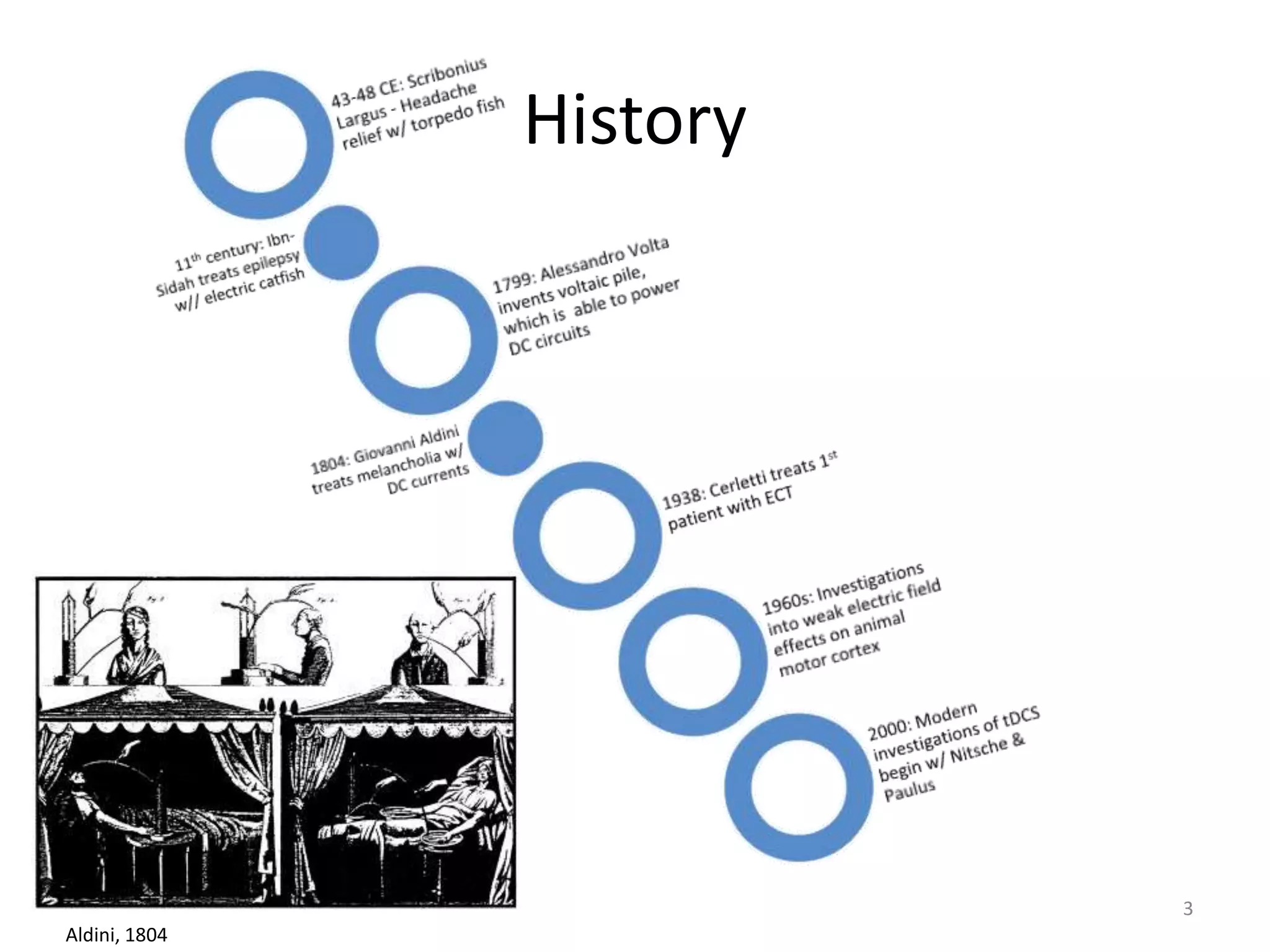
History
Aldini, 1804
3
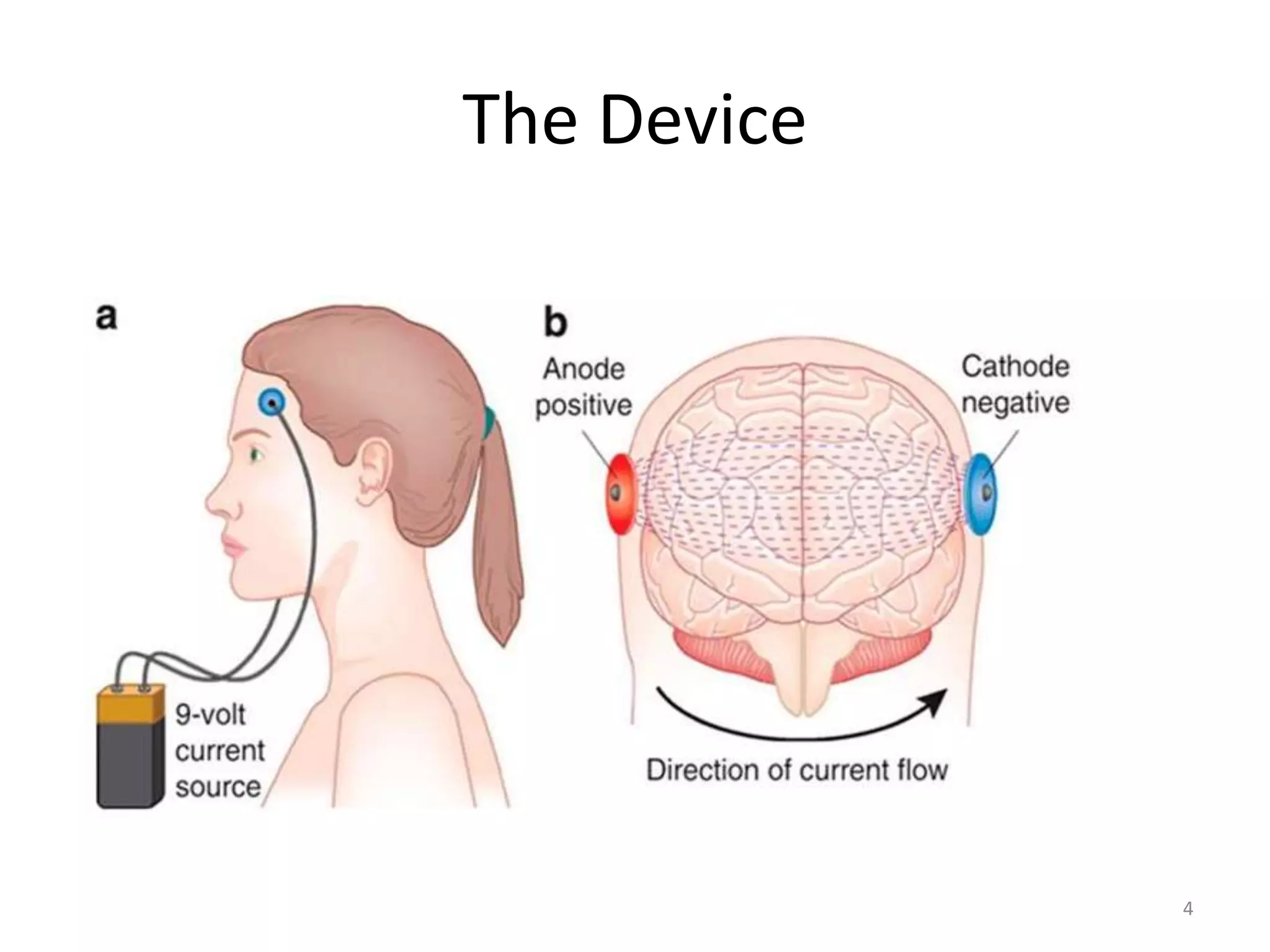
The Device
4
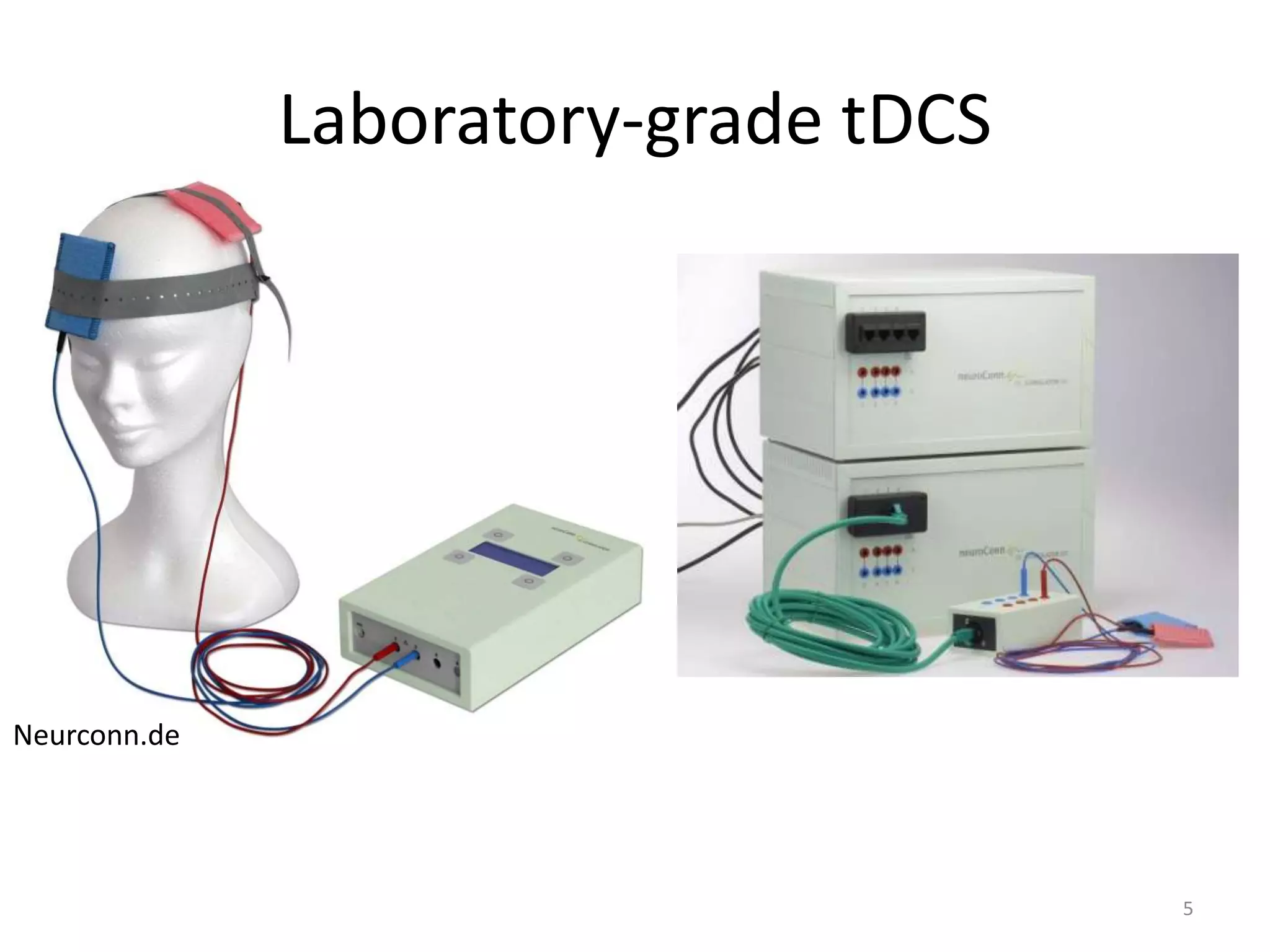
Laboratory-grade tDCS
Neurconn.de
5
Commercial tDCS
6
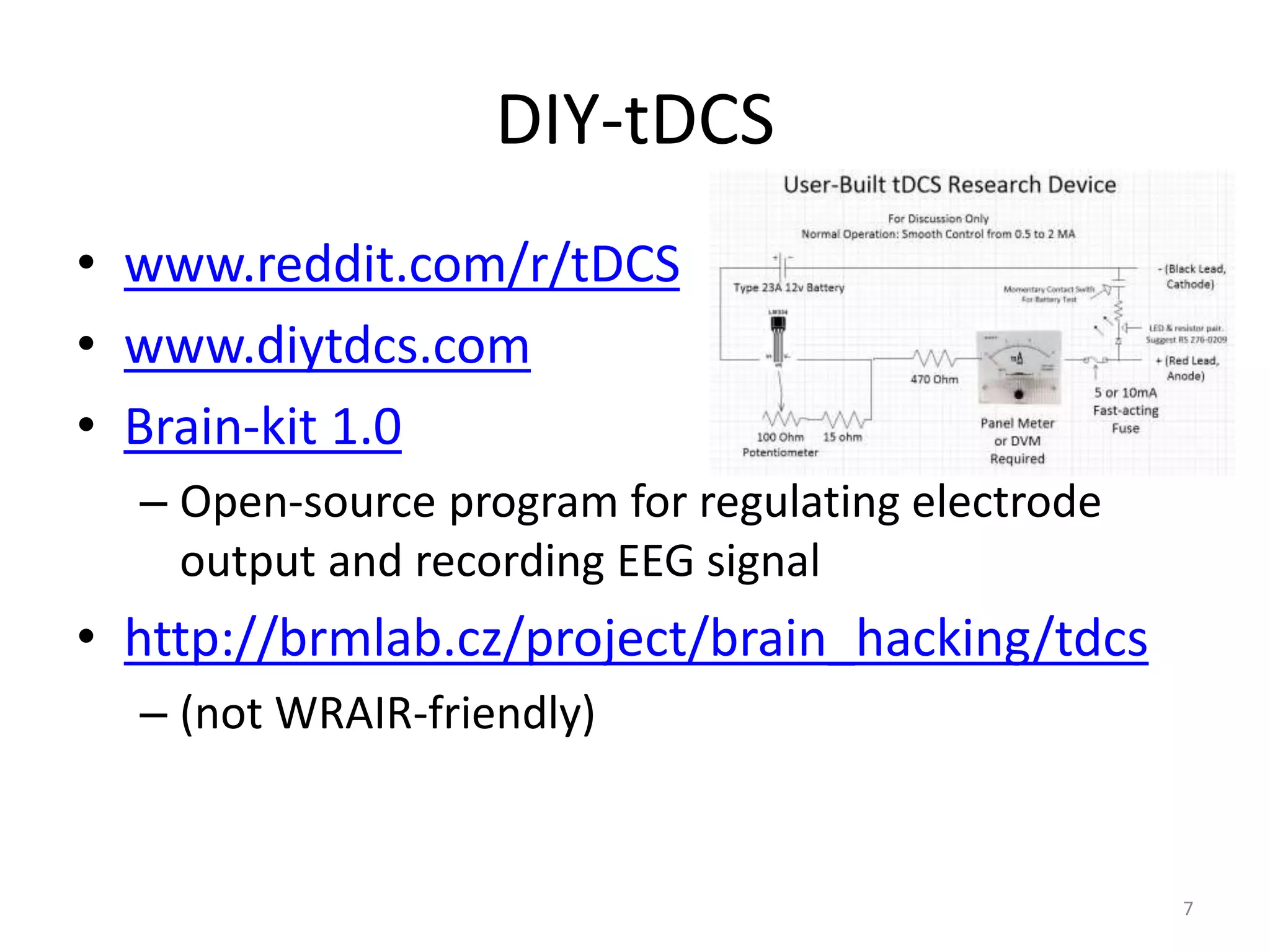
DIY-tDCS
• www.reddit.com/r/tDCS
• www.diytdcs.com
• Brain-kit 1.0
– Open-source program for regulating electrode
output and recording EEG signal
• http://brmlab.cz/project/brain_hacking/tdcs
– (not WRAIR-friendly)
7
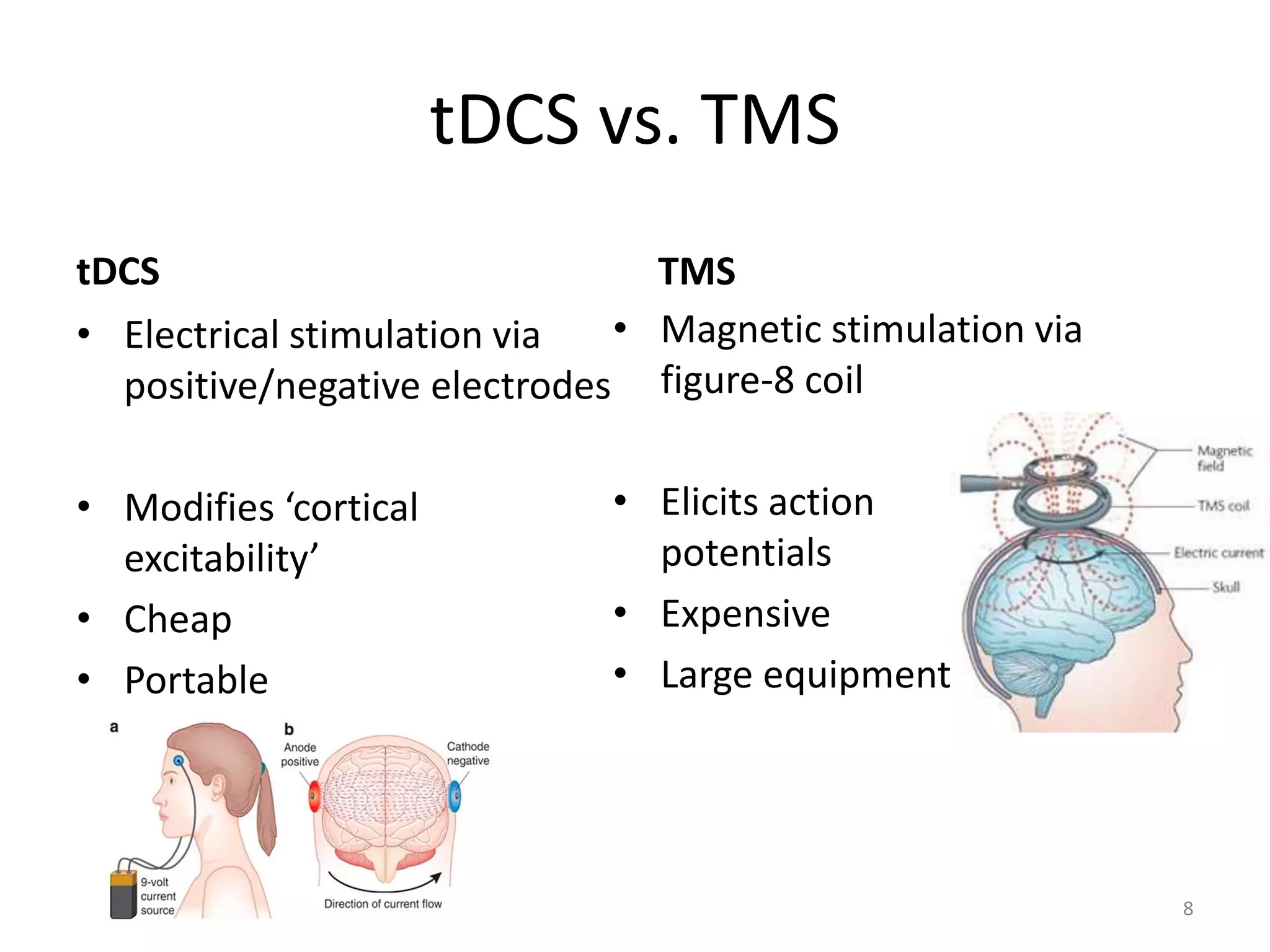
tDCS vs. TMS
tDCS
• Electrical stimulation via
positive/negative electrodes
• Modifies ‘cortical
excitability’
• Cheap
• Portable
TMS
• Magnetic stimulation via
figure-8 coil
• Elicits action
potentials
• Expensive
• Large equipment
8
Applications
Two broad categories:
1) Therapeutic
– patient populations
2) Enhancement
– healthy populations
9
Therapeutic Application
• Pain
• Migraine
• Tinnitus
• Depression
• Addiction
• Schizophrenia
10
• Anxiety
• Dementia
• Stroke
• Alzheimers
• Parkinson’s
• Post-polio syndrome
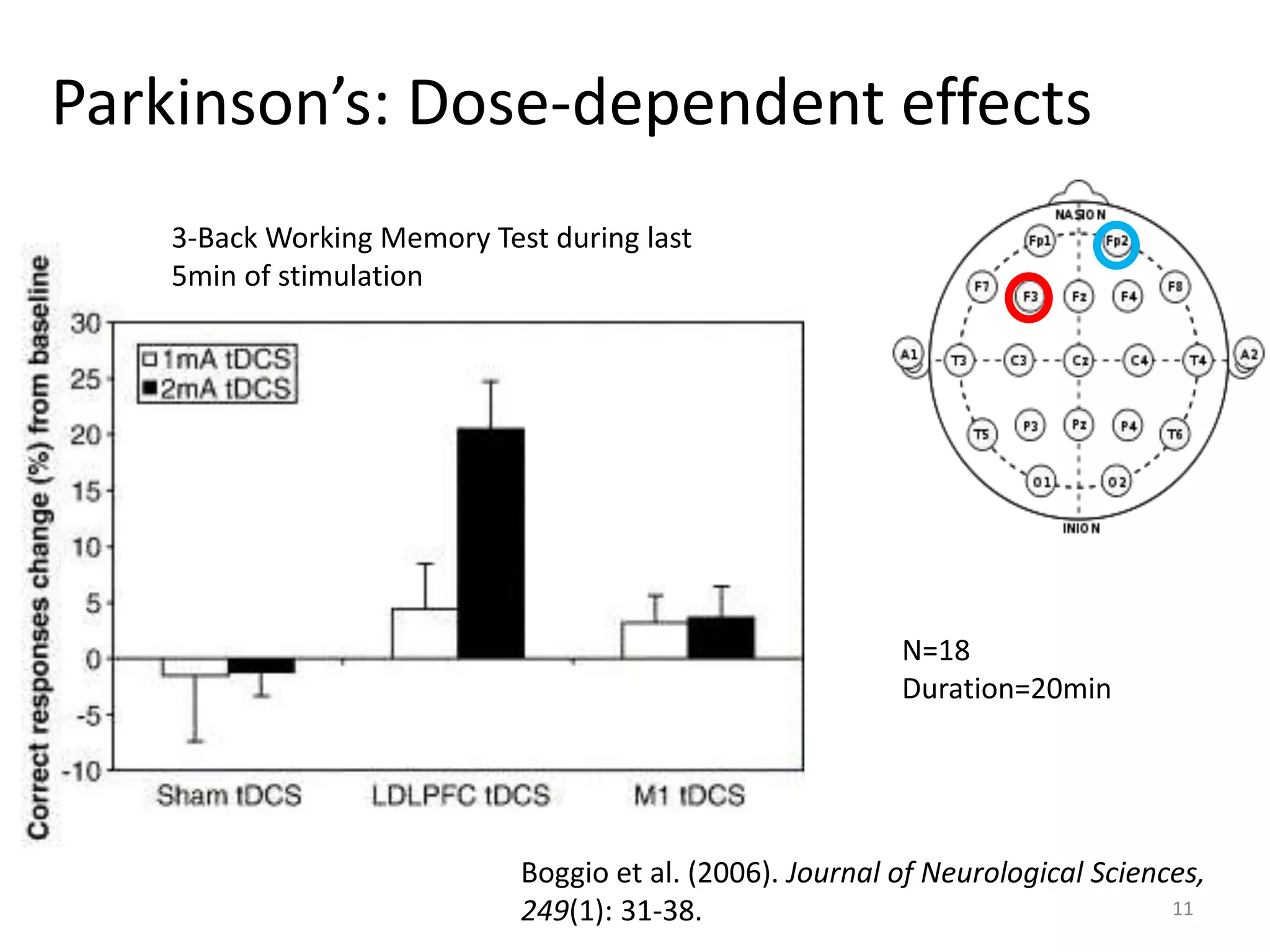
Parkinson’s: Dose-dependent effects
11
Boggio et al. (2006). Journal of Neurological Sciences,
249(1): 31-38.
N=18
Duration=20min
3-Back Working Memory Test during last
5min of stimulation
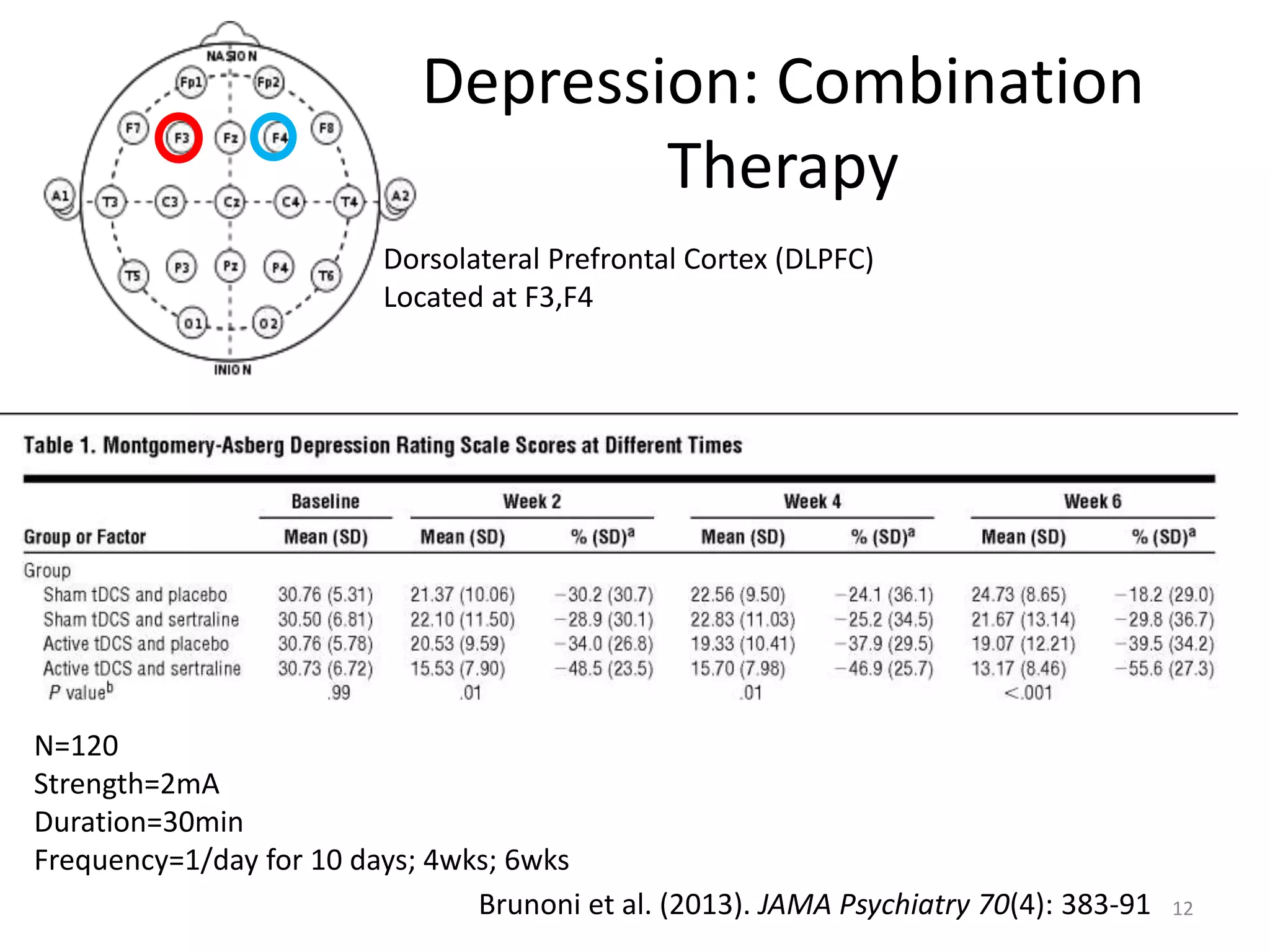
Depression: Combination
Therapy
12Brunoni et al. (2013). JAMA Psychiatry 70(4): 383-91
Dorsolateral Prefrontal Cortex (DLPFC)
Located at F3,F4
N=120
Strength=2mA
Duration=30min
Frequency=1/day for 10 days; 4wks; 6wks
Enhancement Application
• Motor learning
• Language learning
• Visual perception
• Working memory
• Attention
• Problem-solving
• Moral judgment
13
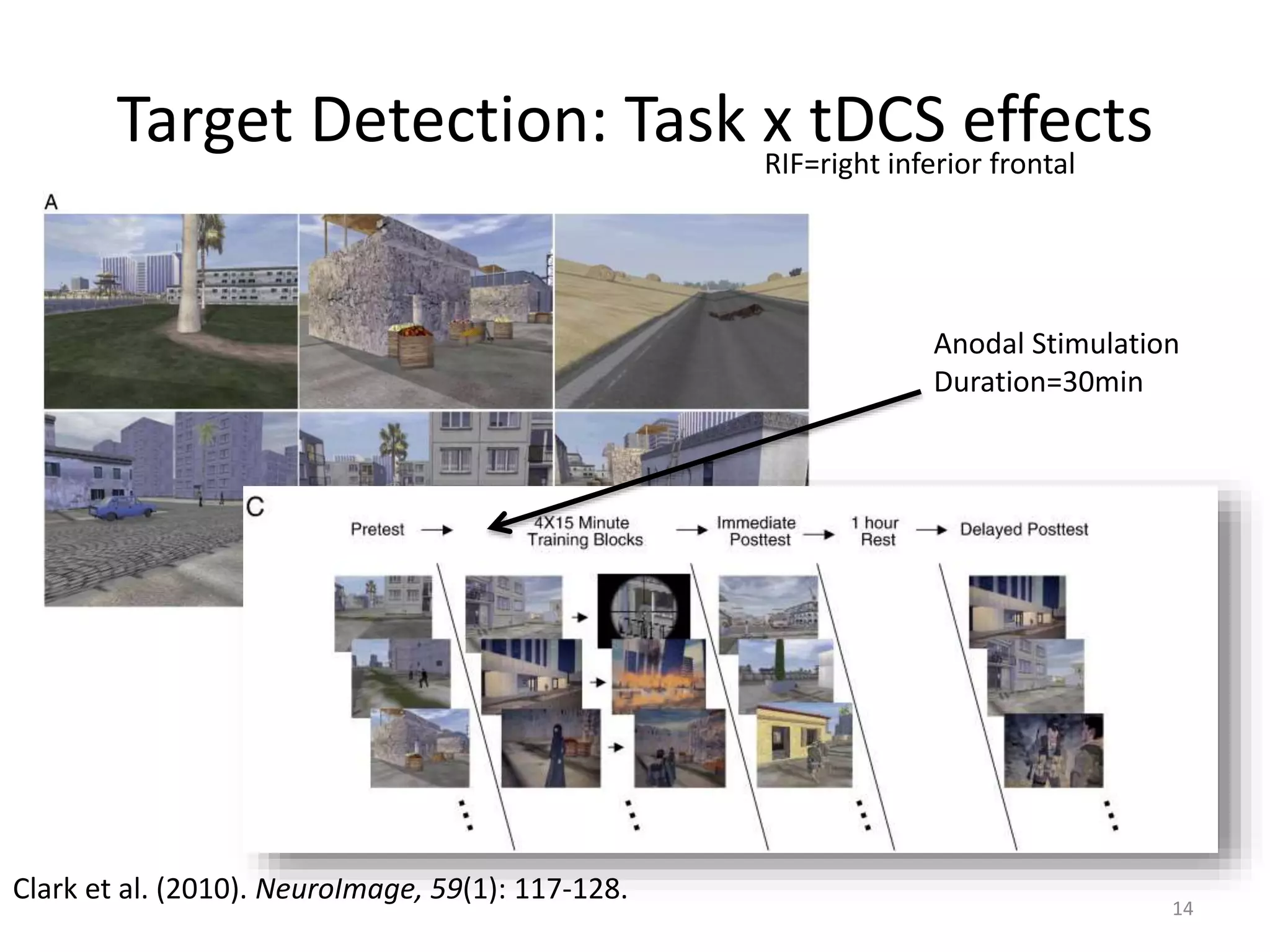
Target Detection: Task x tDCS effects
14
Clark et al. (2010). NeuroImage, 59(1): 117-128.
RIF=right inferior frontal
Anodal Stimulation
Duration=30min
15
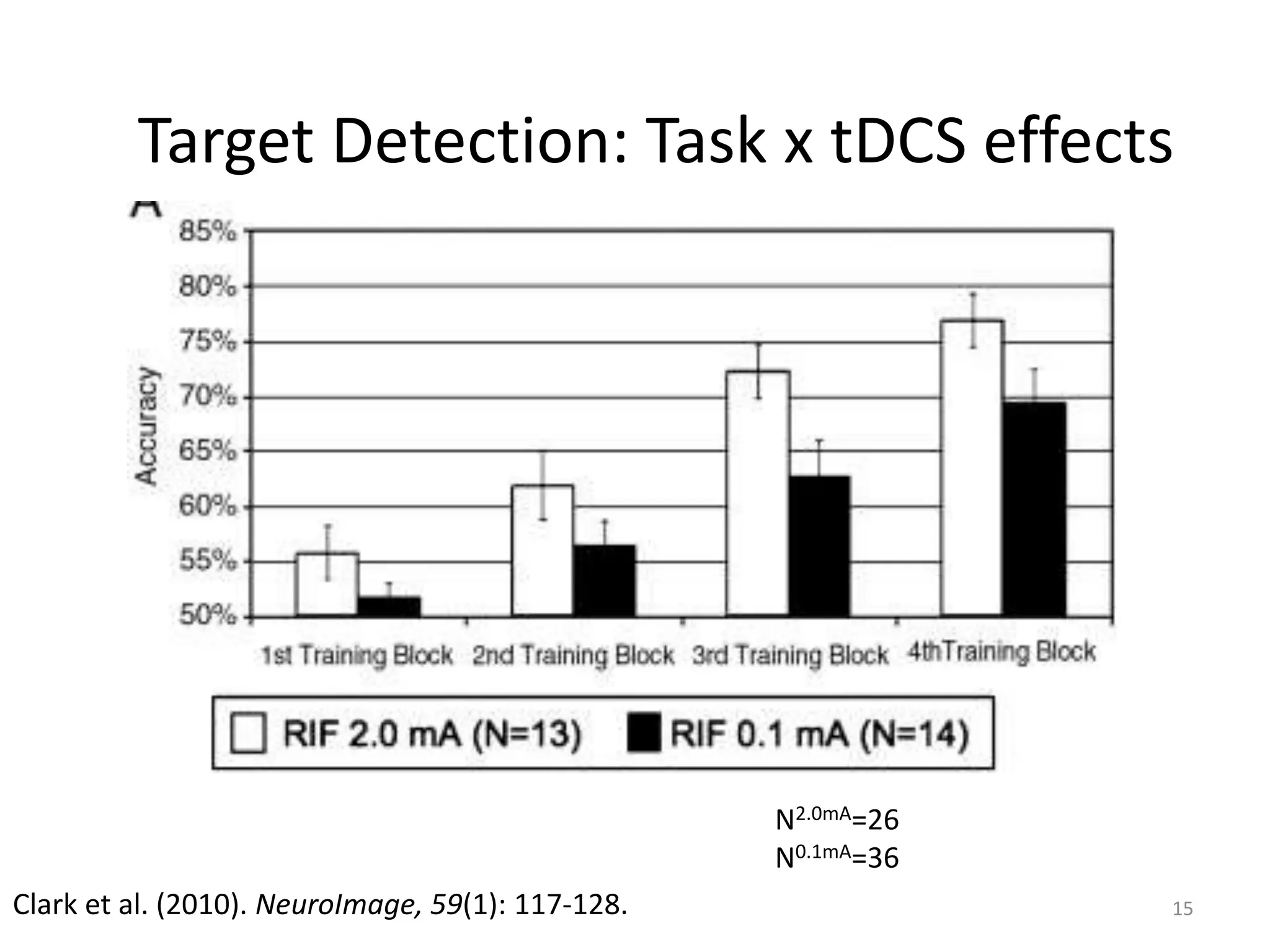
Target Detection: Task x tDCS effects
Clark et al. (2010). NeuroImage, 59(1): 117-128.
N2.0mA=26
N0.1mA=36
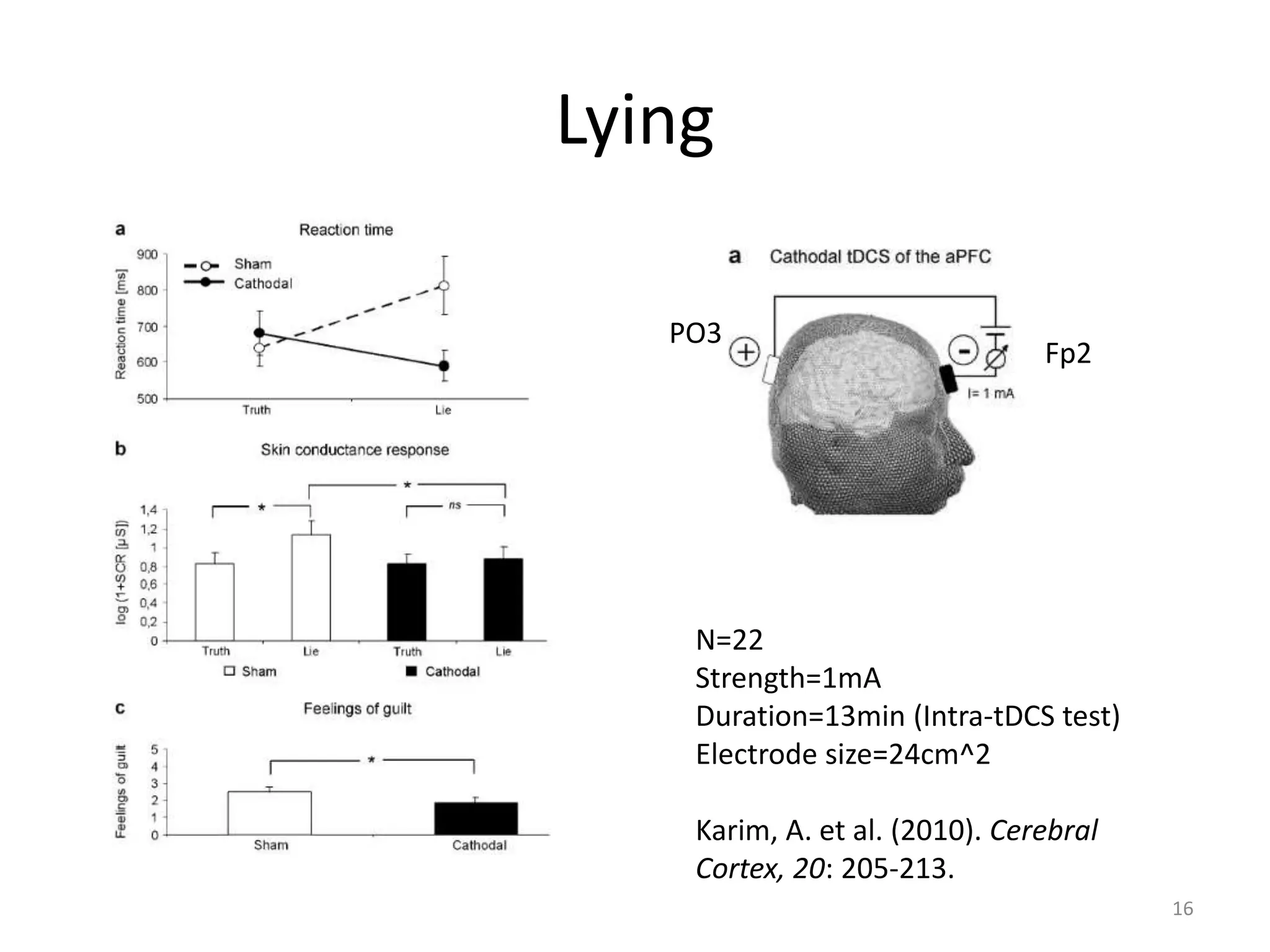
Lying
16
N=22
Strength=1mA
Duration=13min (Intra-tDCS test)
Electrode size=24cm^2
Karim, A. et al. (2010). Cerebral
Cortex, 20: 205-213.
PO3
Fp2
Is there really an effect?
• Horvath, J. C., Forte, J. D., & Carter, O. (2015). Quantitative
review finds no evidence of cognitive effects in healthy
populations from single-session transcranial direct current
stimulation (tDCS). Brain Stimulation, 8(3): 535-550.
• Price, A. R., & Hamilton, R. H. (2015). A re-evaluation of the
cognitive effects from single-session transcranial direct
current stimulation. Brain Stimulation 8(3): 663-665.
• Horvath, J. C. (2015). New quantitative analysis following
Price & Hamilton’s critique do not change original findings
of Horvath et al. Brain Stimulation 8(3): 665-666.
• Nitsche, M. A., Bikson, M., & Bestmann, S. (2015). On the
use of meta-analysis in neuromodulatory non-invasive brain
stimulation. Brain Stimulation 8(3): 666-667.
17
The Physiological Effects of tDCS
18
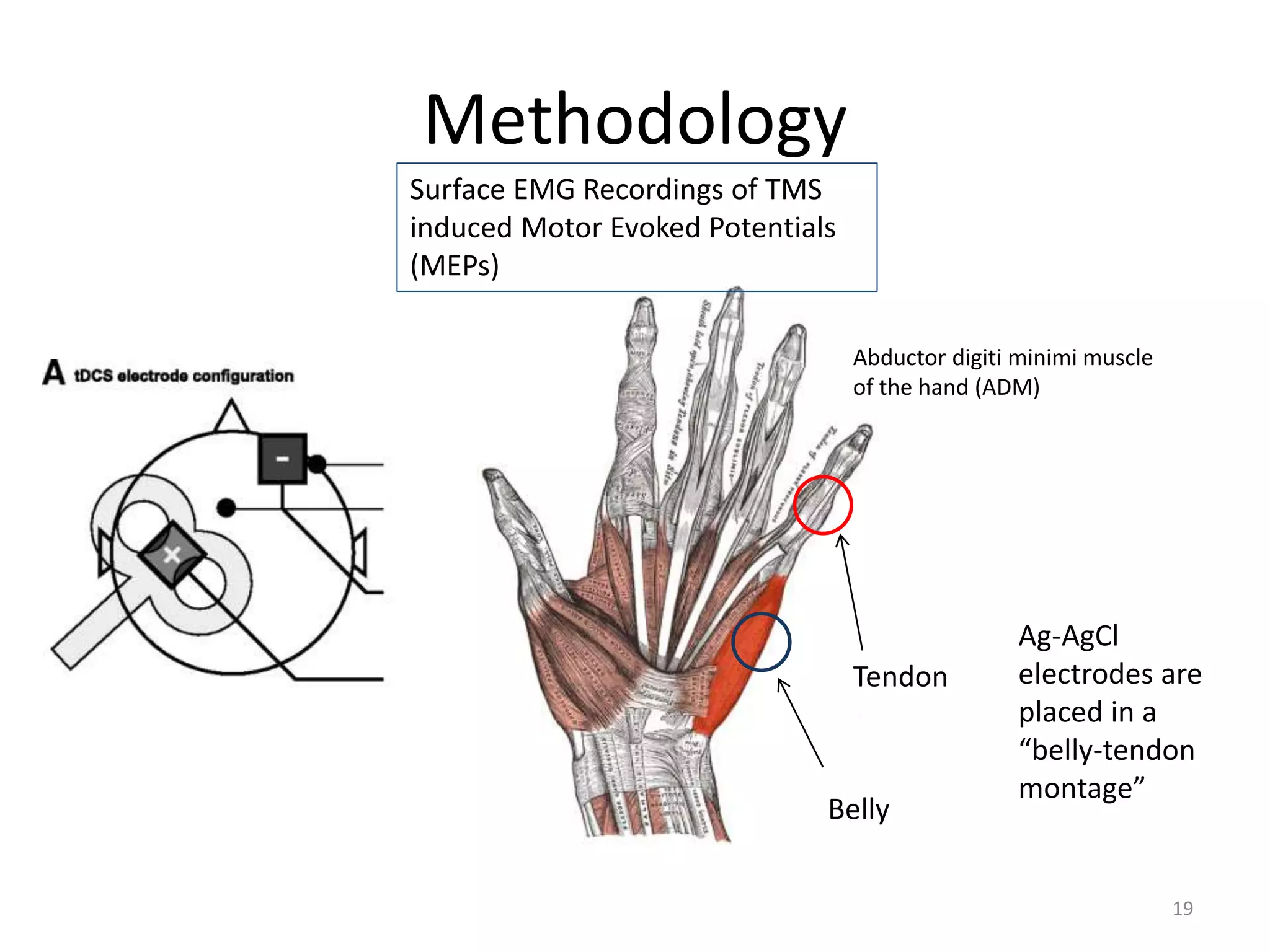
Methodology
Abductor digiti minimi muscle
of the hand (ADM)
Tendon
Belly
Surface EMG Recordings of TMS
induced Motor Evoked Potentials
(MEPs)
Ag-AgCl
electrodes are
placed in a
“belly-tendon
montage”
19
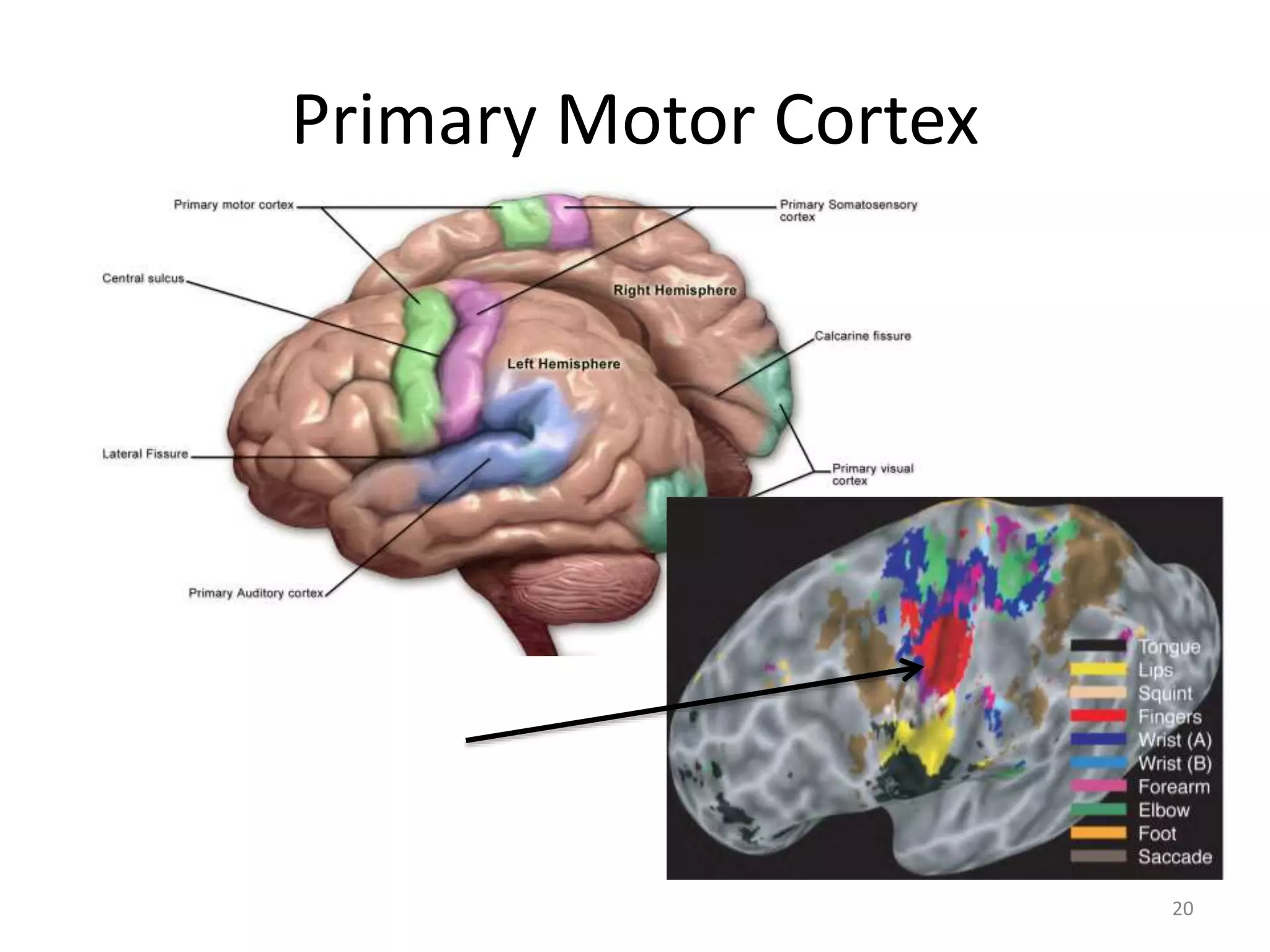
Primary Motor Cortex
20
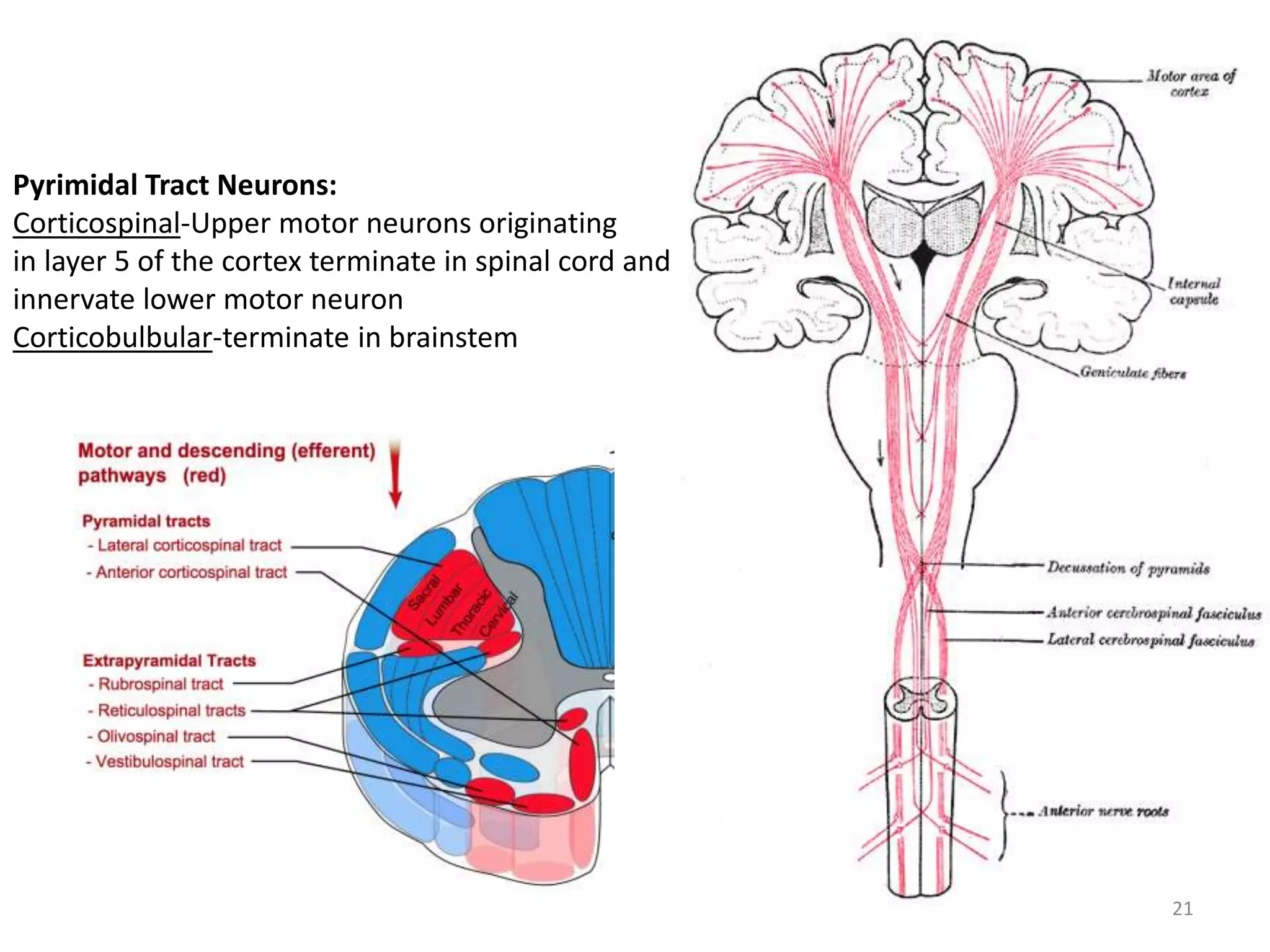
Pyrimidal Tract Neurons:
Corticospinal-Upper motor neurons originating
in layer 5 of the cortex terminate in spinal cord and
innervate lower motor neuron
Corticobulbular-terminate in brainstem
21
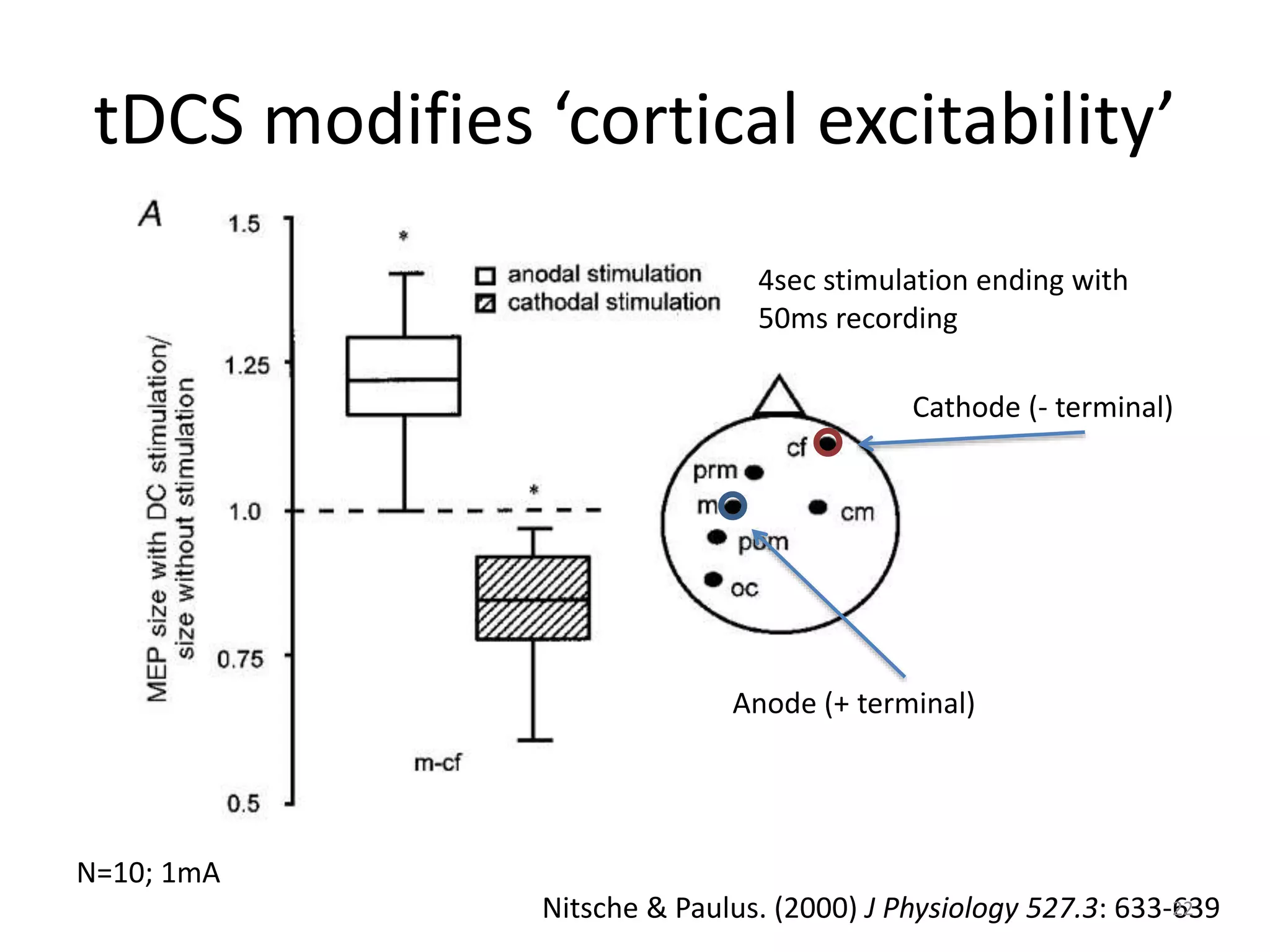
tDCS modifies ‘cortical excitability’
Nitsche & Paulus. (2000) J Physiology 527.3: 633-639
N=10; 1mA
4sec stimulation ending with
50ms recording
Anode (+ terminal)
Cathode (- terminal)
22
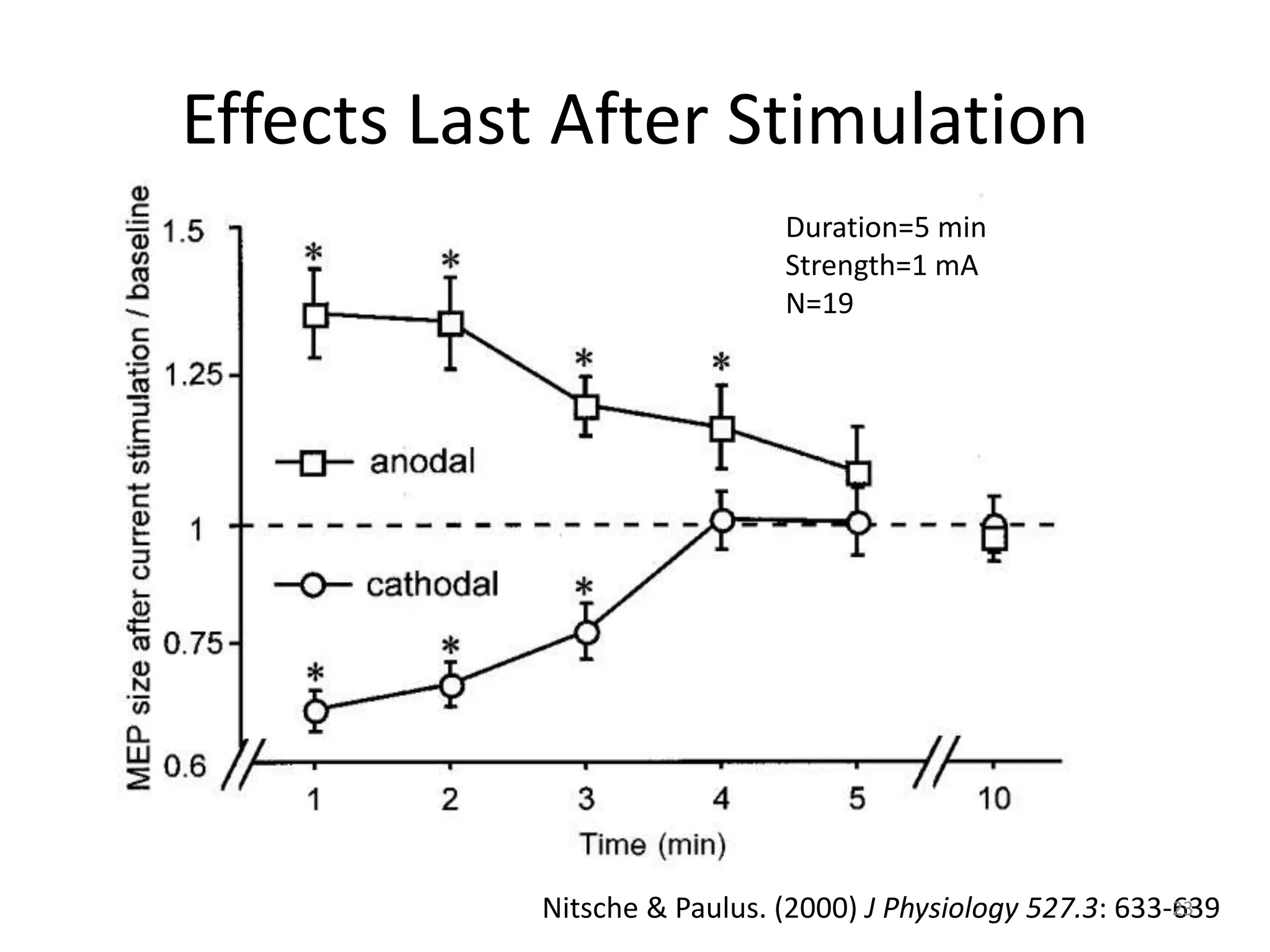
Effects Last After Stimulation
Nitsche & Paulus. (2000) J Physiology 527.3: 633-639
Duration=5 min
Strength=1 mA
N=19
23
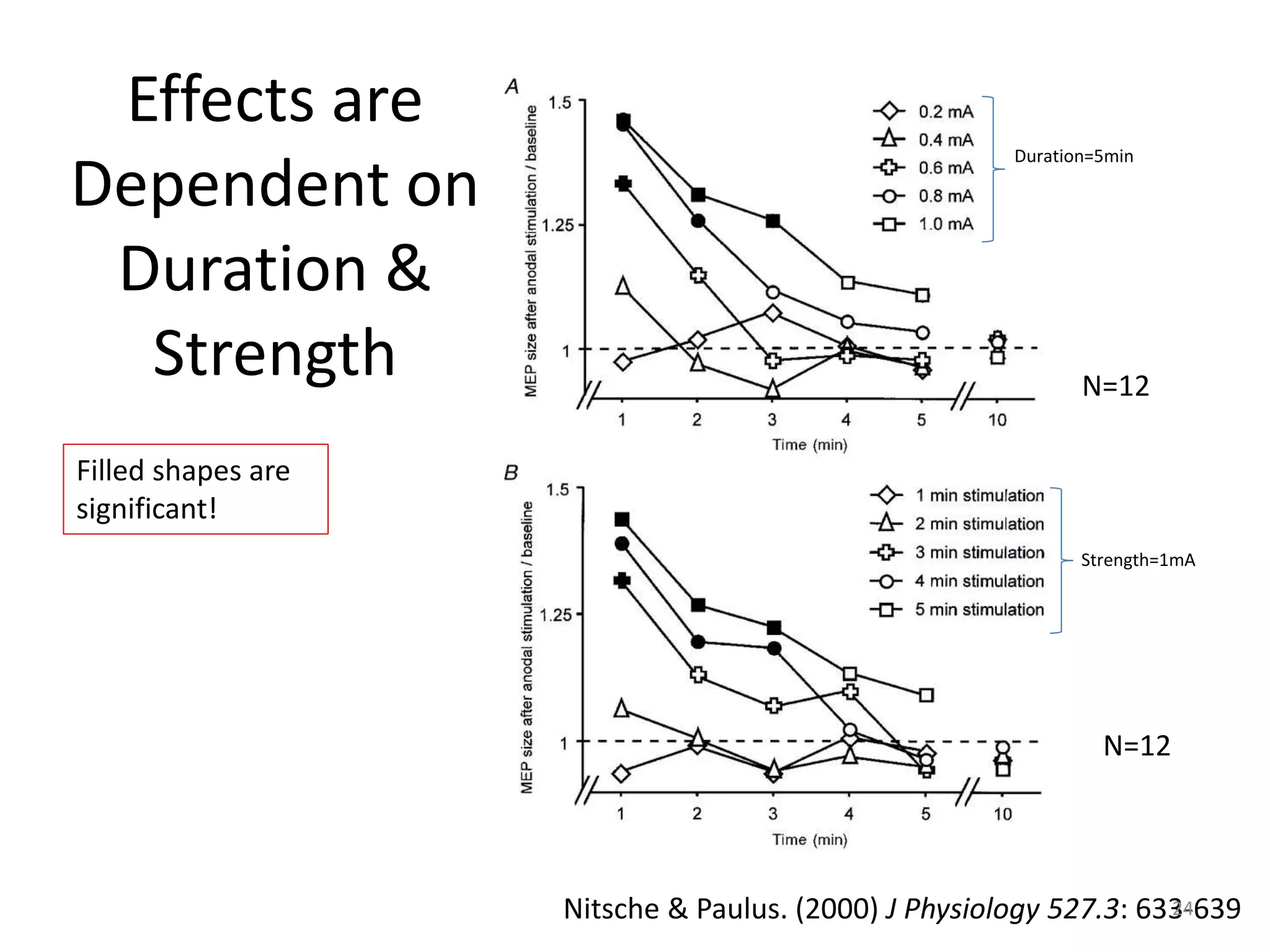
Effects are
Dependent on
Duration &
Strength
Nitsche & Paulus. (2000) J Physiology 527.3: 633-639
Duration=5min
Strength=1mA
Filled shapes are
significant!
N=12
N=12
24
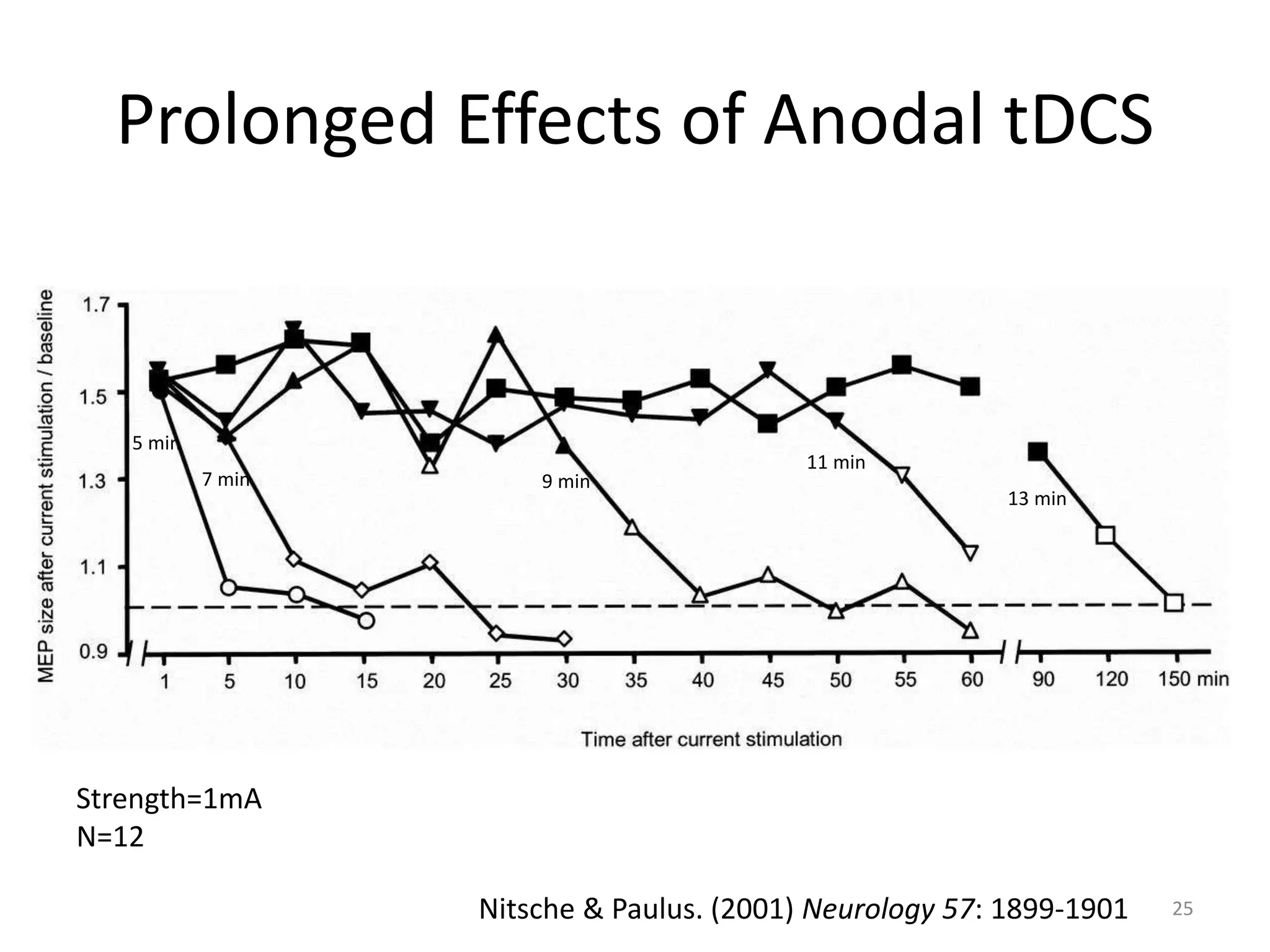
Prolonged Effects of Anodal tDCS
Nitsche & Paulus. (2001) Neurology 57: 1899-1901
7 min 9 min
11 min
5 min
13 min
Strength=1mA
N=12
25
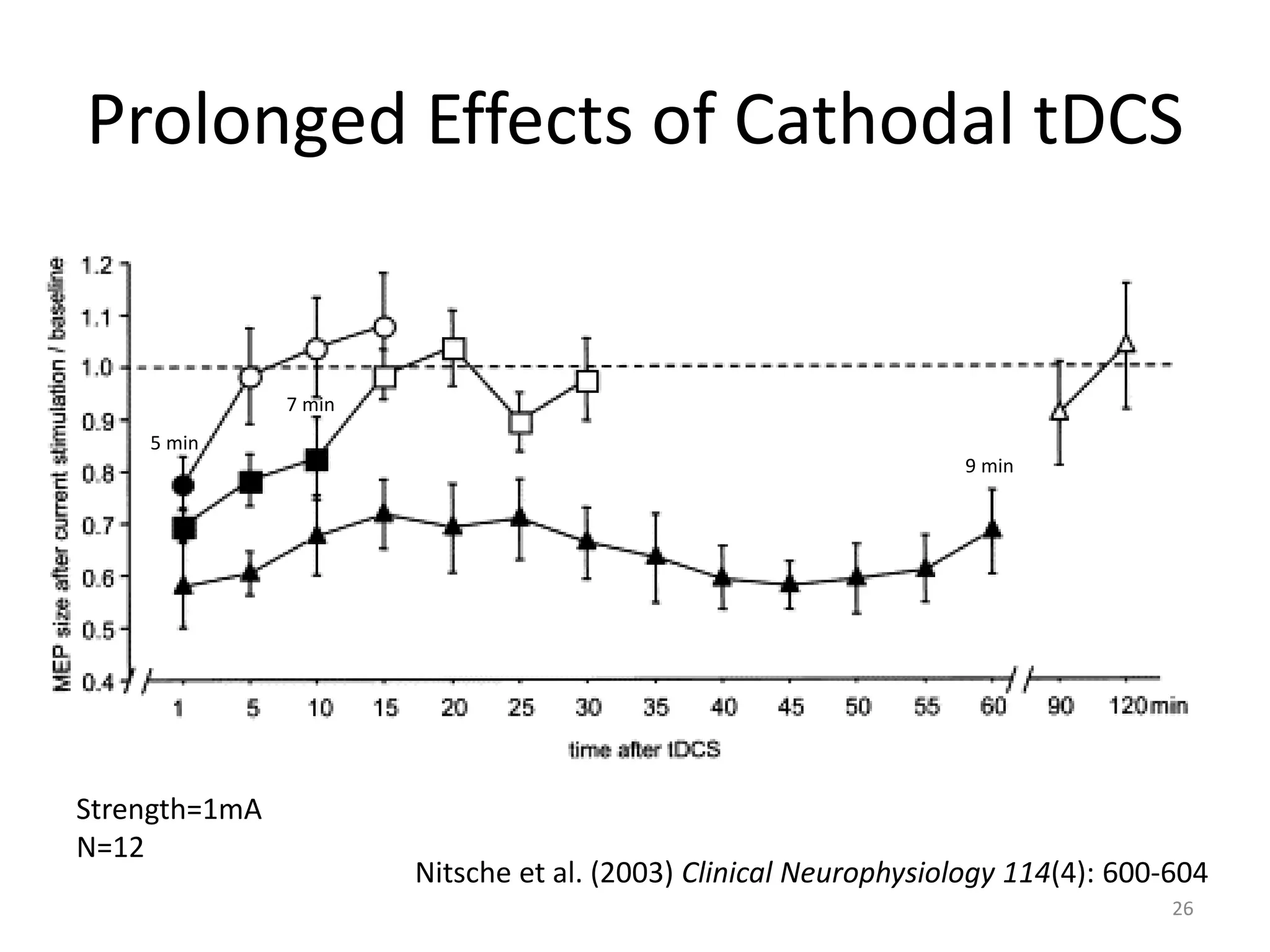
Prolonged Effects of Cathodal tDCS
Nitsche et al. (2003) Clinical Neurophysiology 114(4): 600-604
5 min
7 min
9 min
Strength=1mA
N=12
26
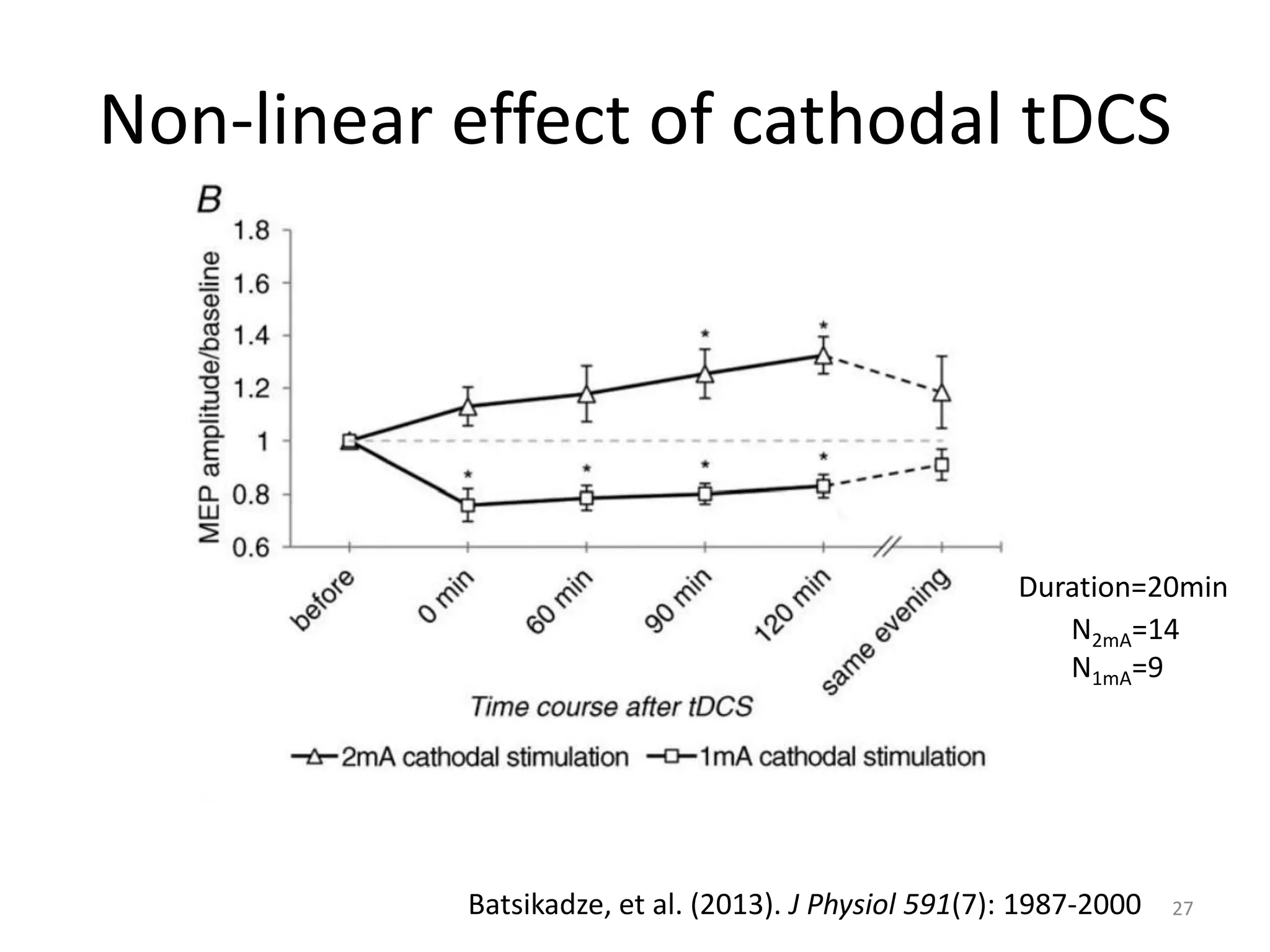
Non-linear effect of cathodal tDCS
27Batsikadze, et al. (2013). J Physiol 591(7): 1987-2000
N2mA=14
N1mA=9
Duration=20min
The Physiological Basis for tDCS
28
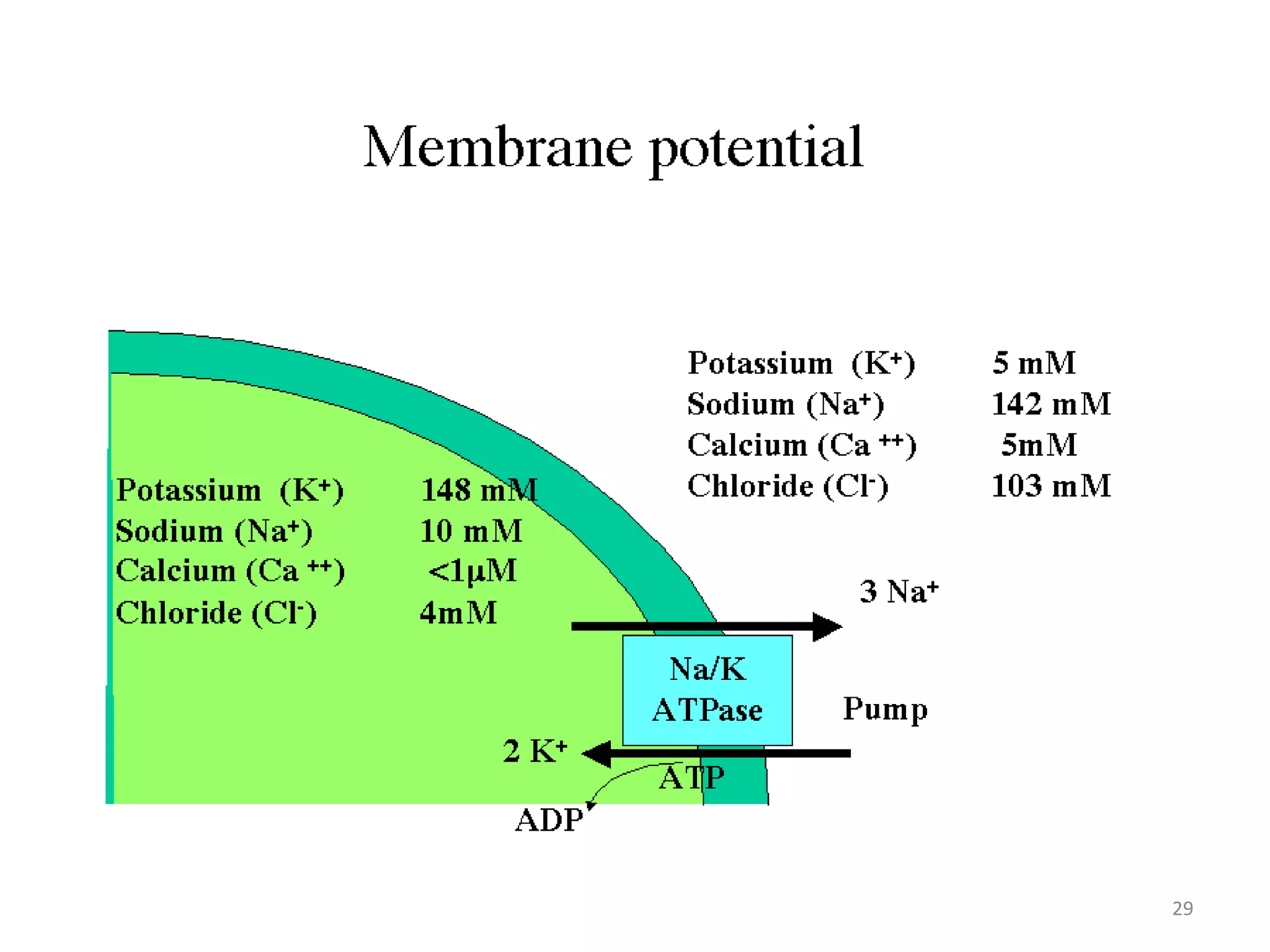
29
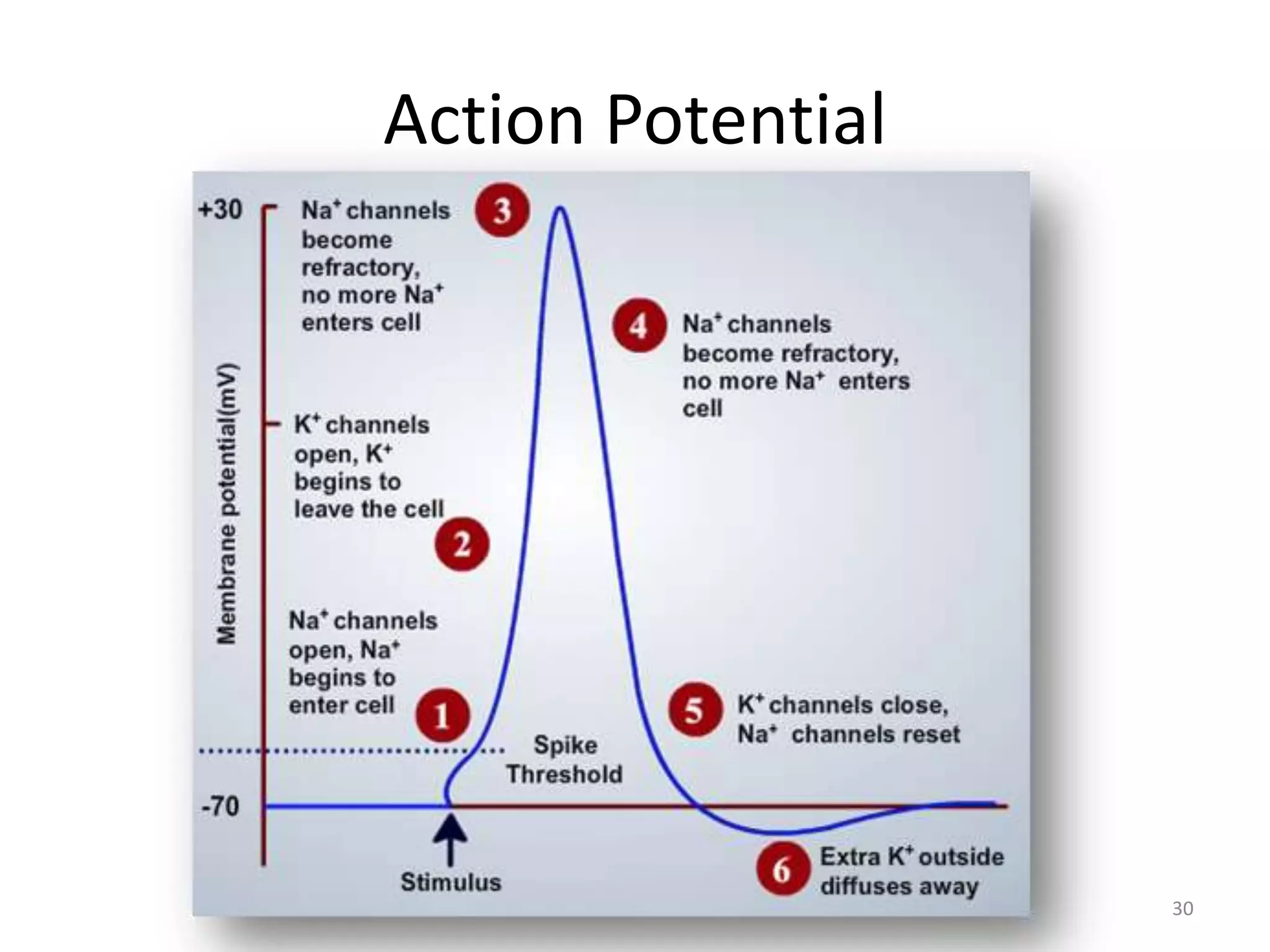
Action Potential
30
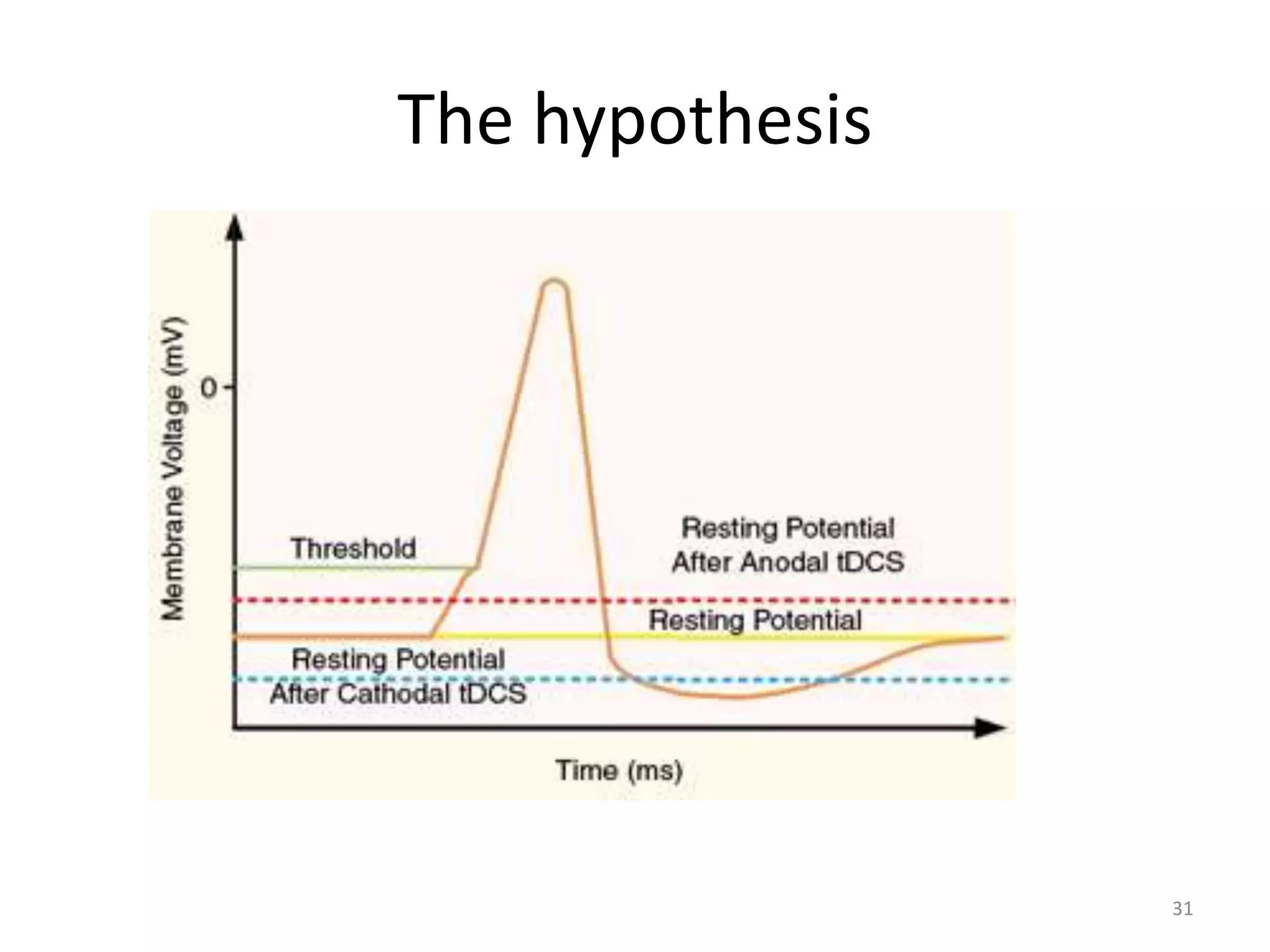
The hypothesis
31
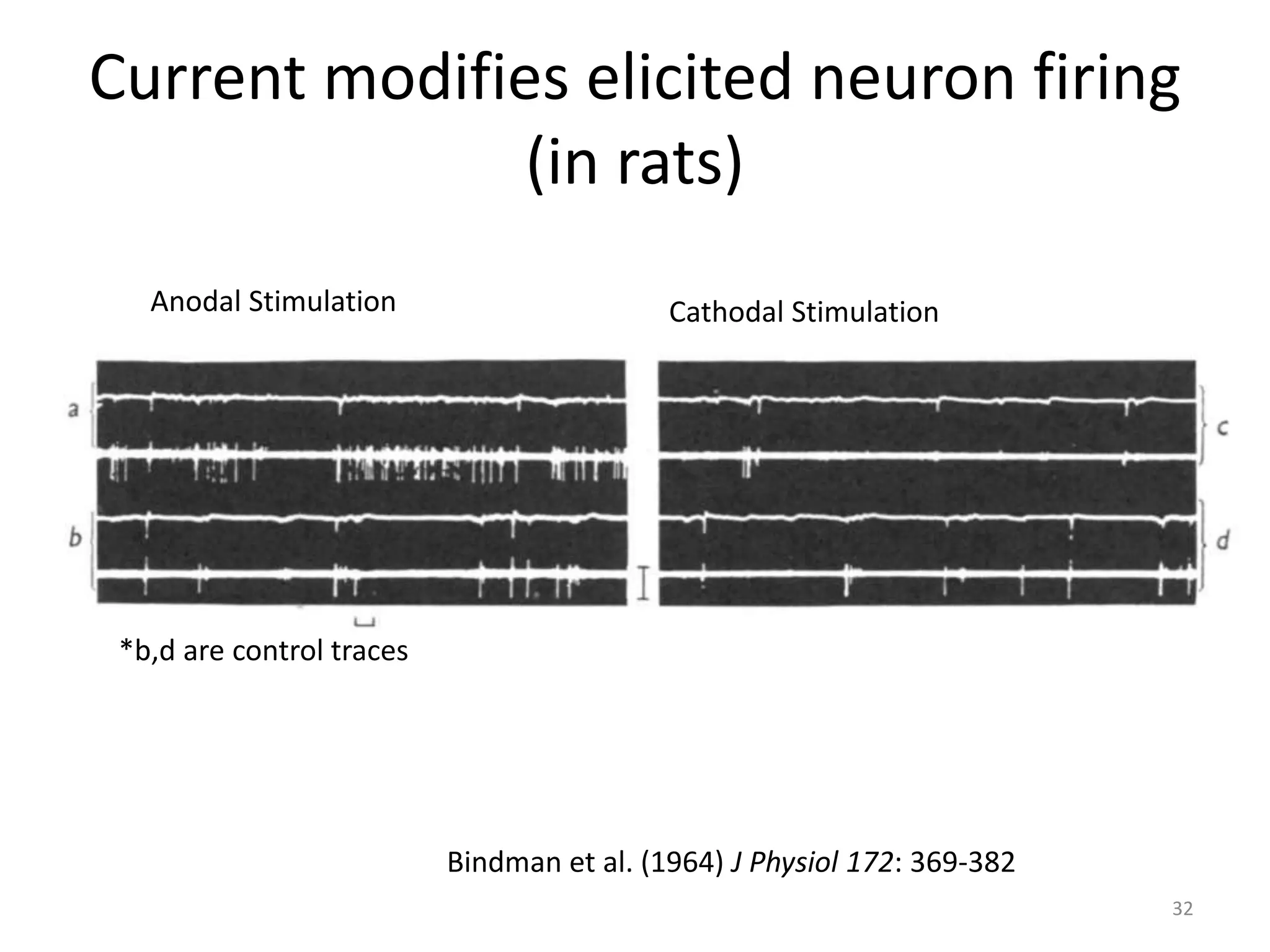
Current modifies elicited neuron firing
(in rats)
32
Anodal Stimulation Cathodal Stimulation
Bindman et al. (1964) J Physiol 172: 369-382
*b,d are control traces
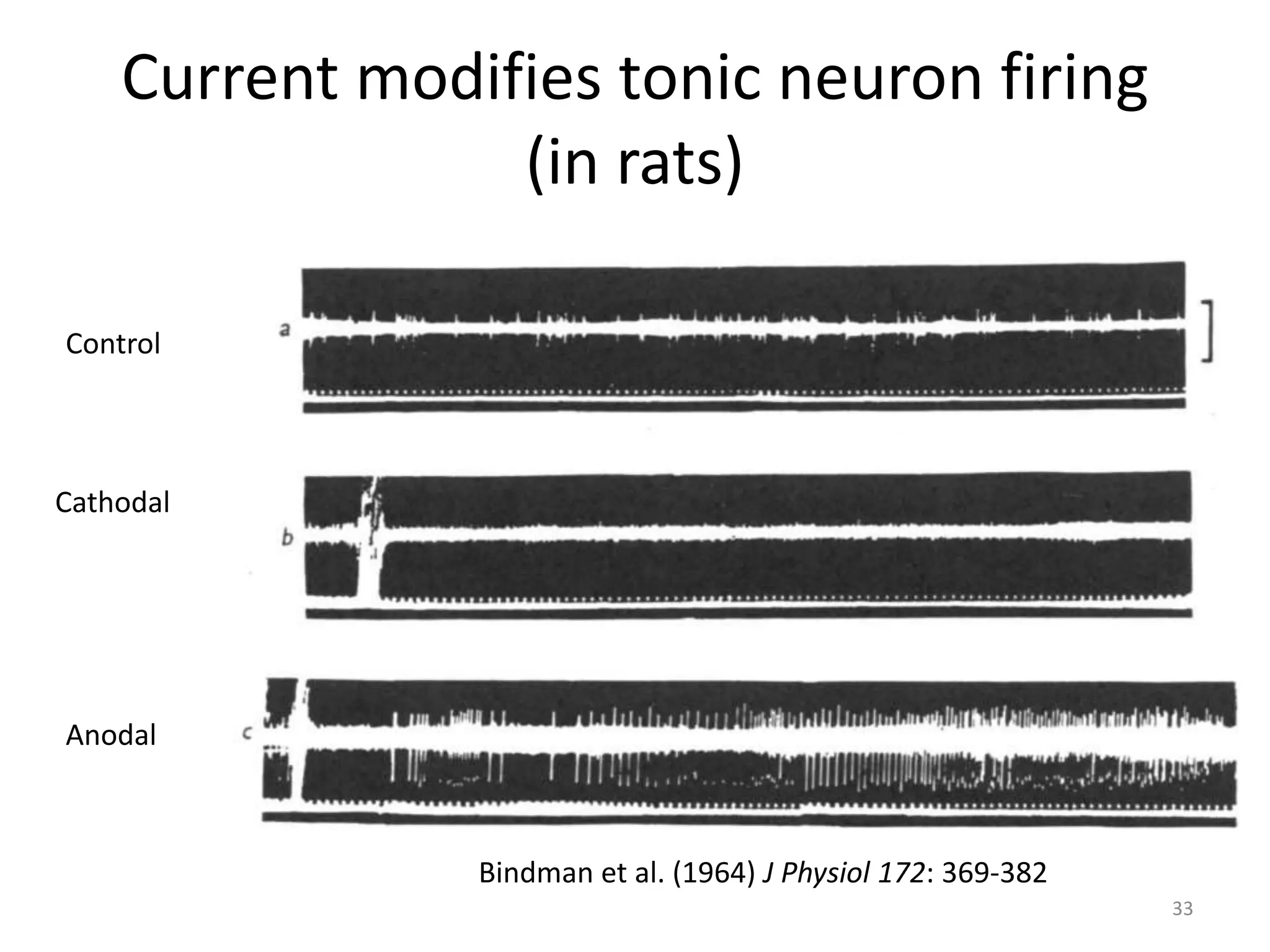
Current modifies tonic neuron firing
(in rats)
33
Control
Cathodal
Anodal
Bindman et al. (1964) J Physiol 172: 369-382
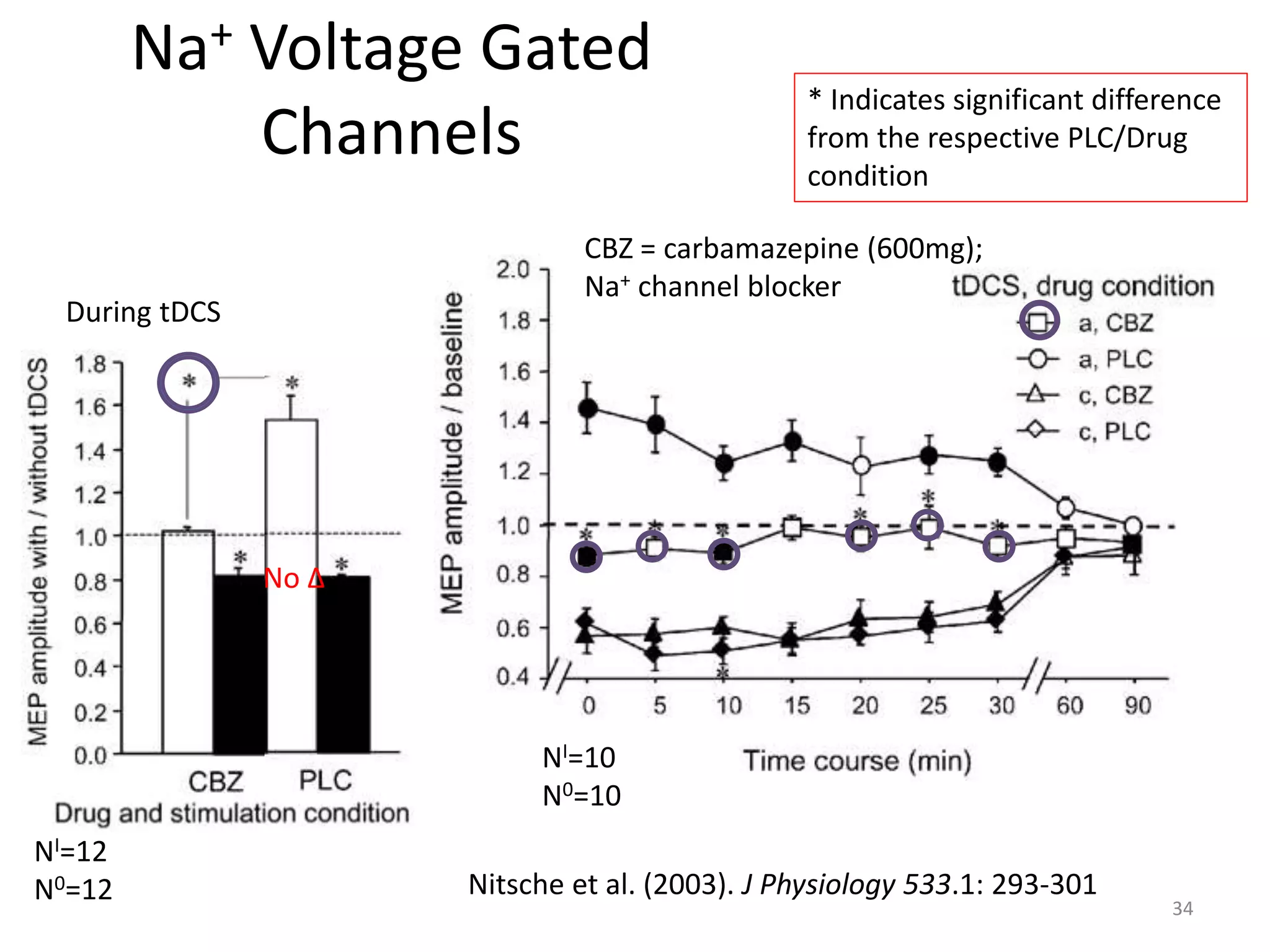
Na+ Voltage Gated
Channels
Nitsche et al. (2003). J Physiology 533.1: 293-301
CBZ = carbamazepine (600mg);
Na+ channel blocker
* Indicates significant difference
from the respective PLC/Drug
condition
NI=12
N0=12
NI=10
N0=10
No ∆
34
During tDCS
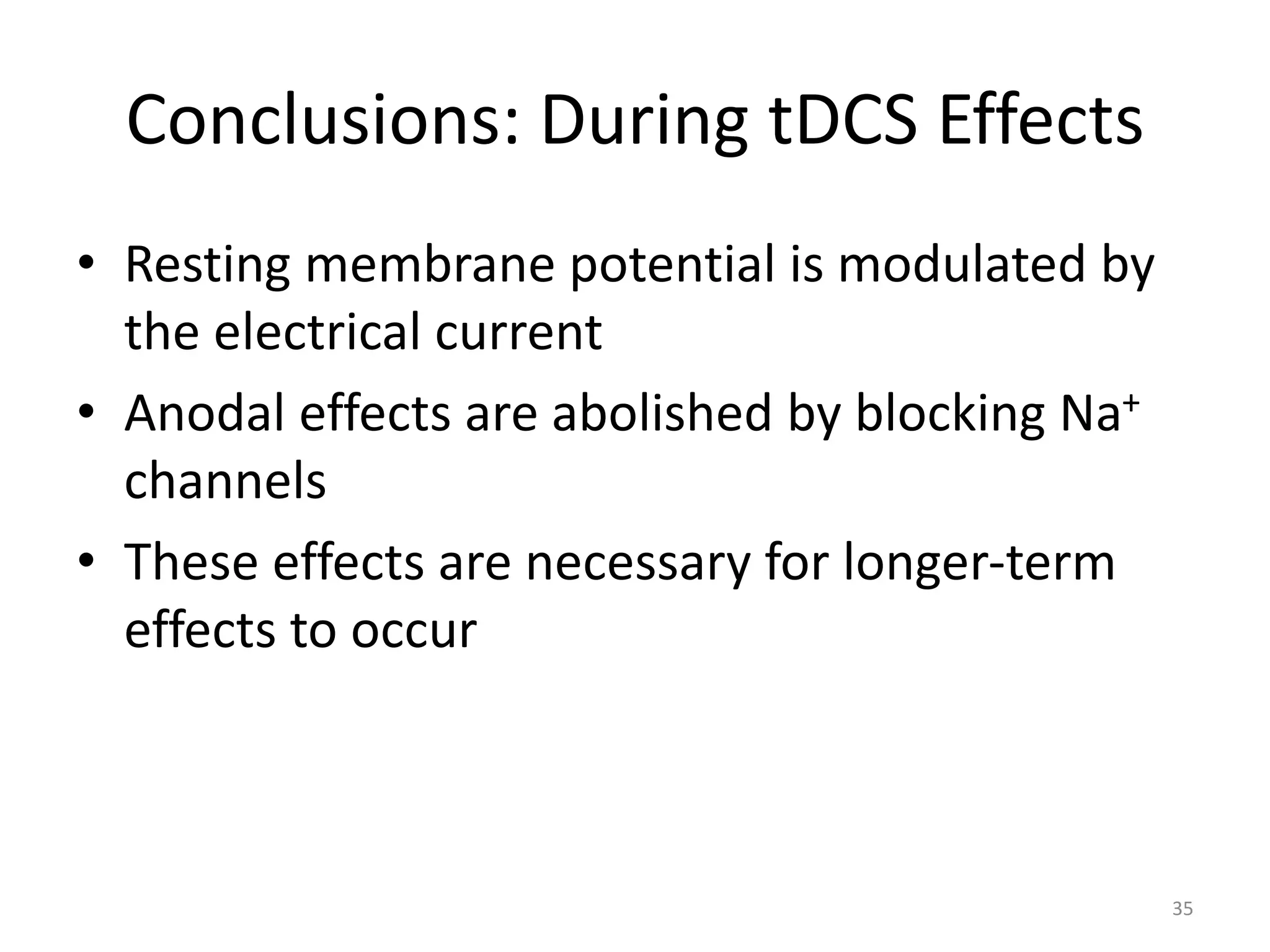
Conclusions: During tDCS Effects
• Resting membrane potential is modulated by
the electrical current
• Anodal effects are abolished by blocking Na+
channels
• These effects are necessary for longer-term
effects to occur
35
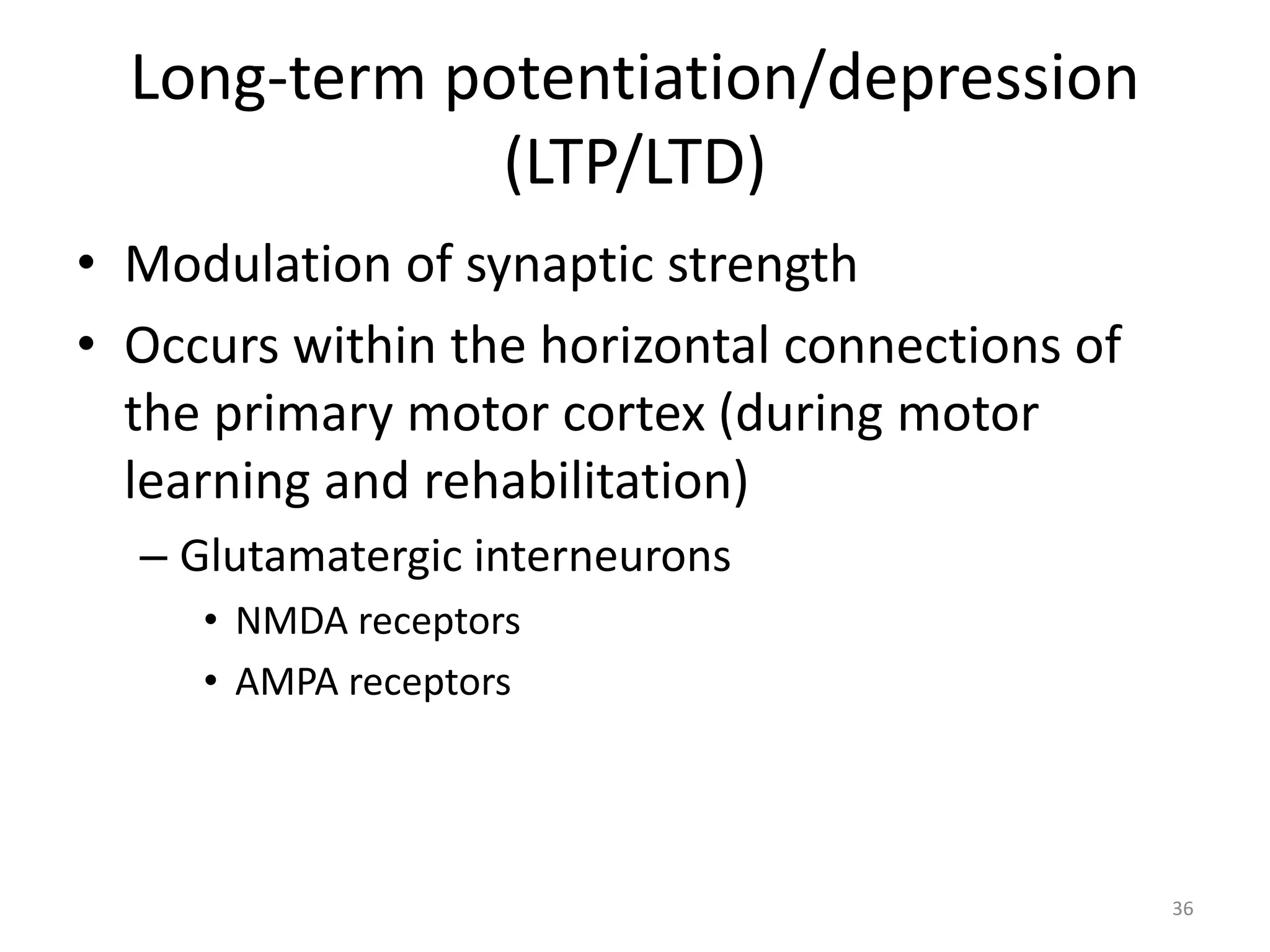
Long-term potentiation/depression
(LTP/LTD)
• Modulation of synaptic strength
• Occurs within the horizontal connections of
the primary motor cortex (during motor
learning and rehabilitation)
– Glutamatergic interneurons
• NMDA receptors
• AMPA receptors
36
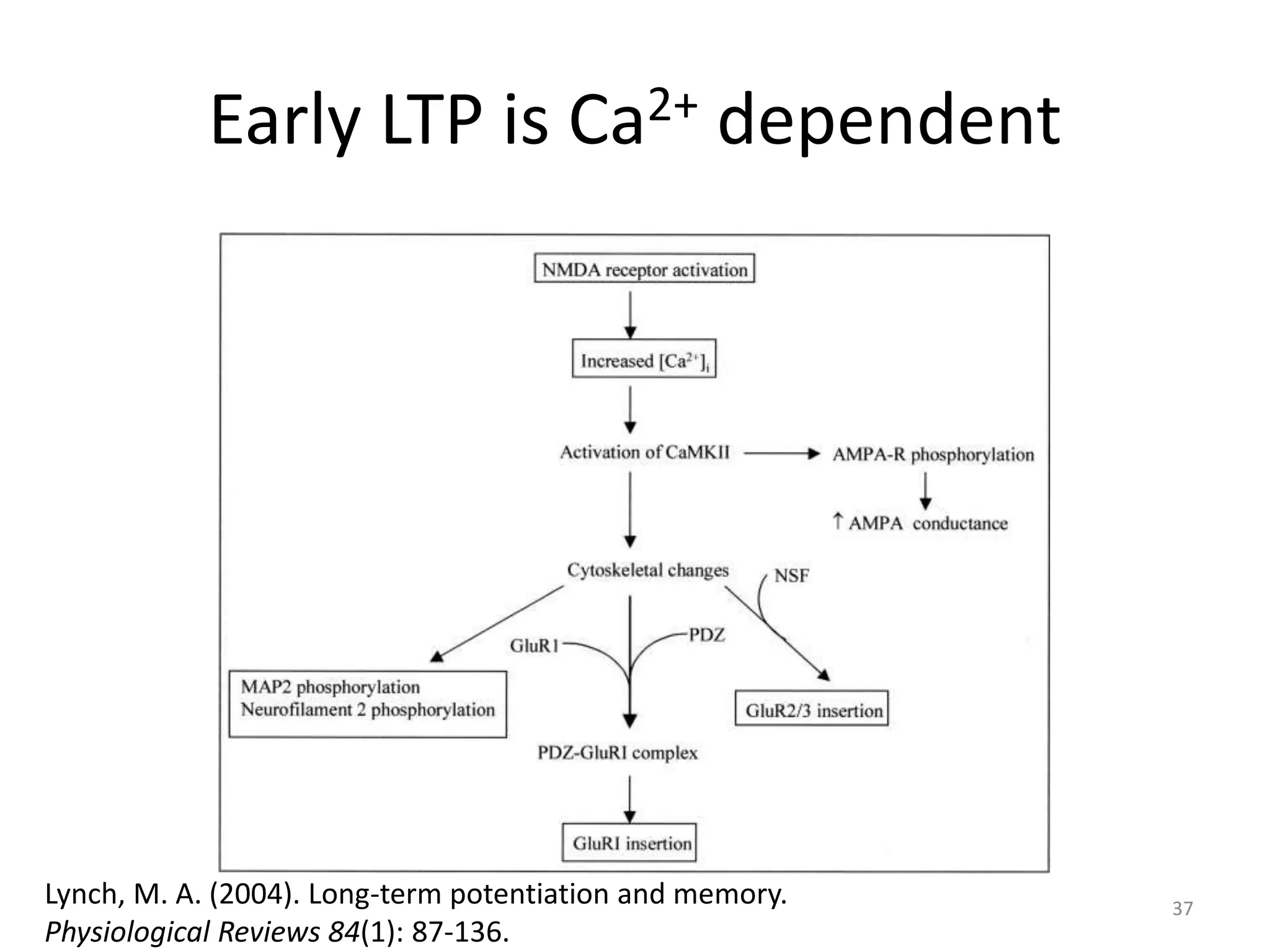
Early LTP is Ca2+ dependent
37
Lynch, M. A. (2004). Long-term potentiation and memory.
Physiological Reviews 84(1): 87-136.
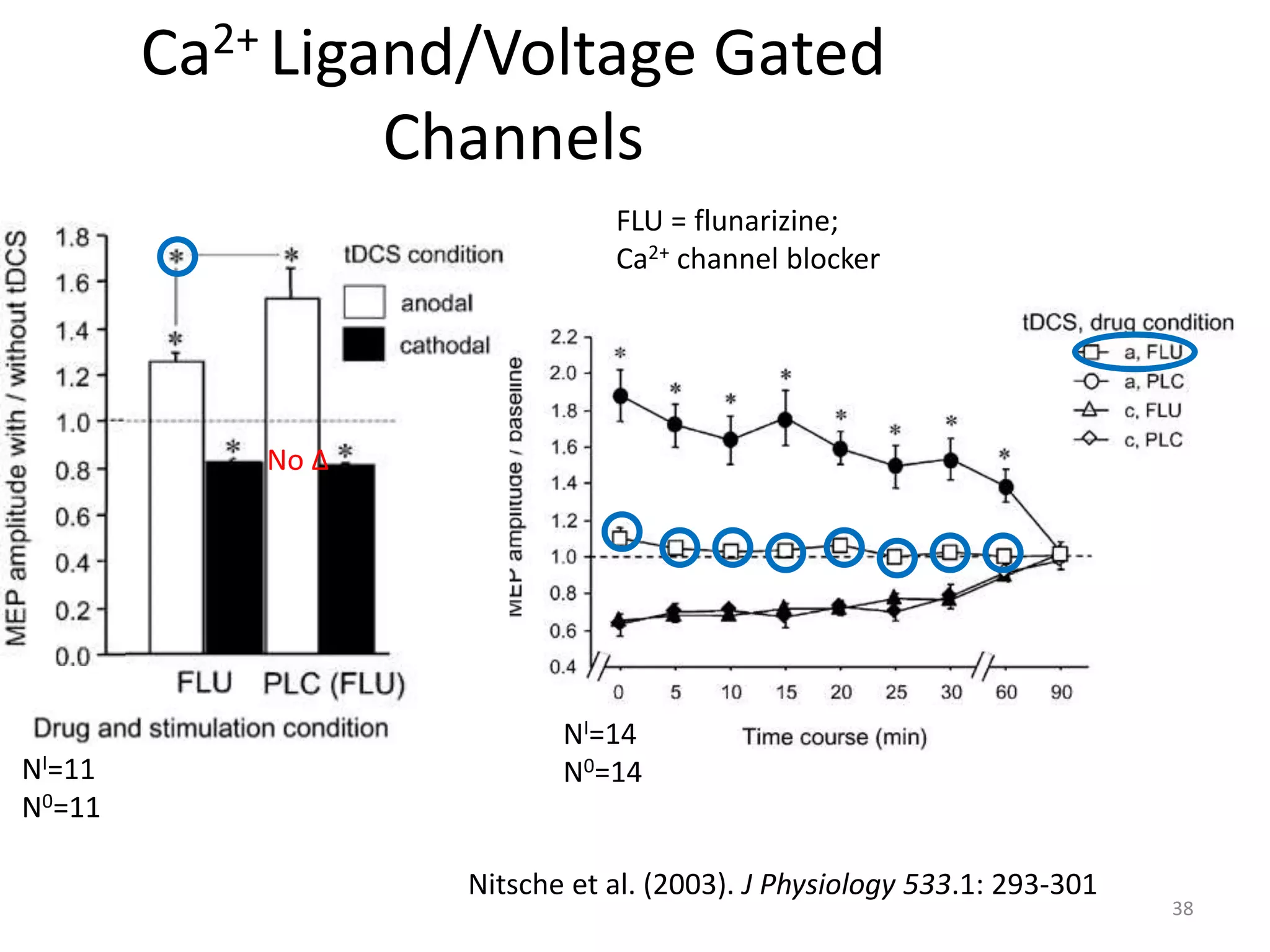
Ca2+ Ligand/Voltage Gated
Channels
Nitsche et al. (2003). J Physiology 533.1: 293-301
FLU = flunarizine;
Ca2+ channel blocker
NI=11
N0=11
NI=14
N0=14
No ∆
38
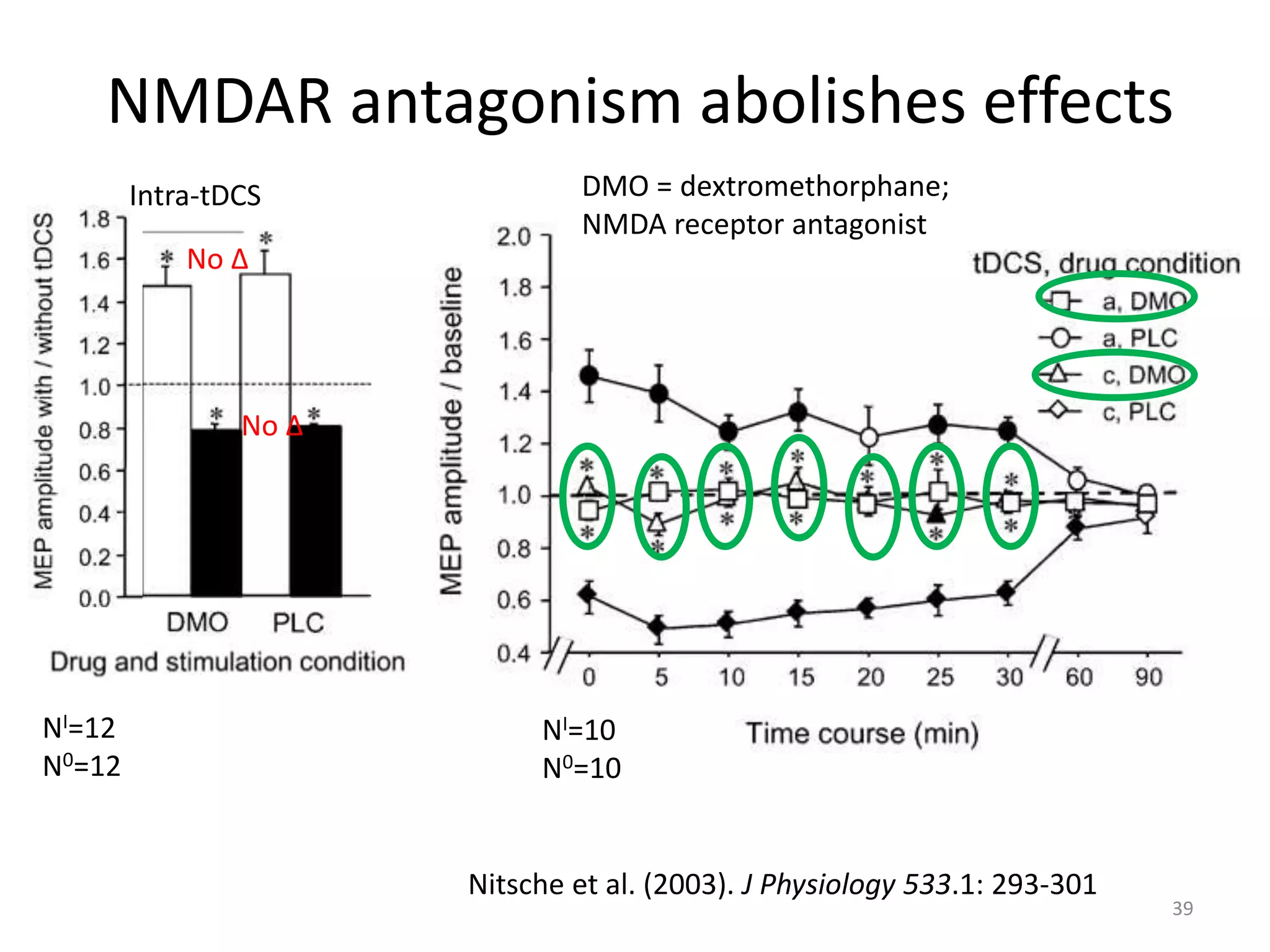
NMDAR antagonism abolishes effects
Nitsche et al. (2003). J Physiology 533.1: 293-301
DMO = dextromethorphane;
NMDA receptor antagonist
NI=12
N0=12
NI=10
N0=10
No ∆
No ∆
39
Intra-tDCS
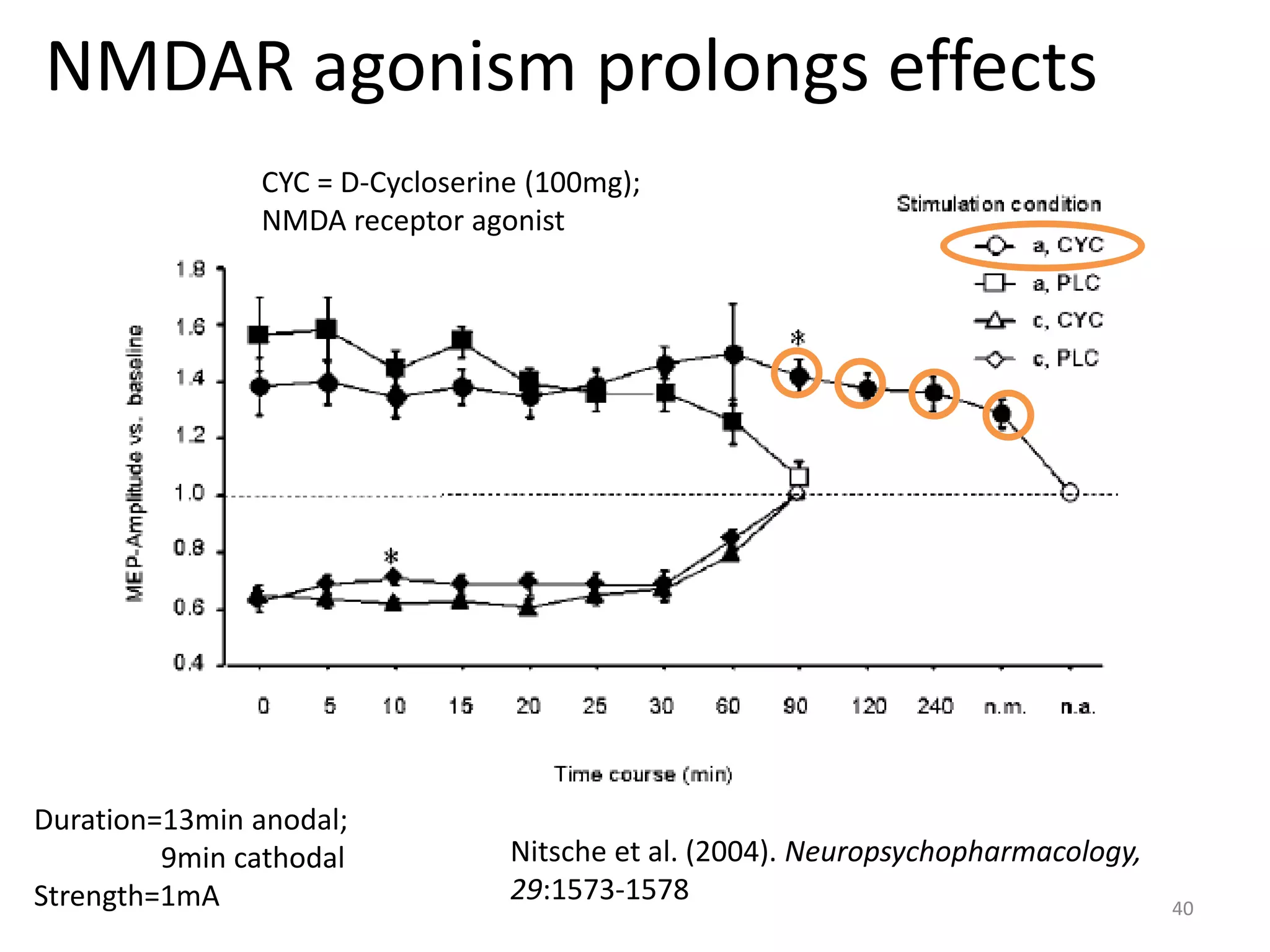
NMDAR agonism prolongs effects
Duration=13min anodal;
9min cathodal
Strength=1mA
CYC = D-Cycloserine (100mg);
NMDA receptor agonist
40
Nitsche et al. (2004). Neuropsychopharmacology,
29:1573-1578
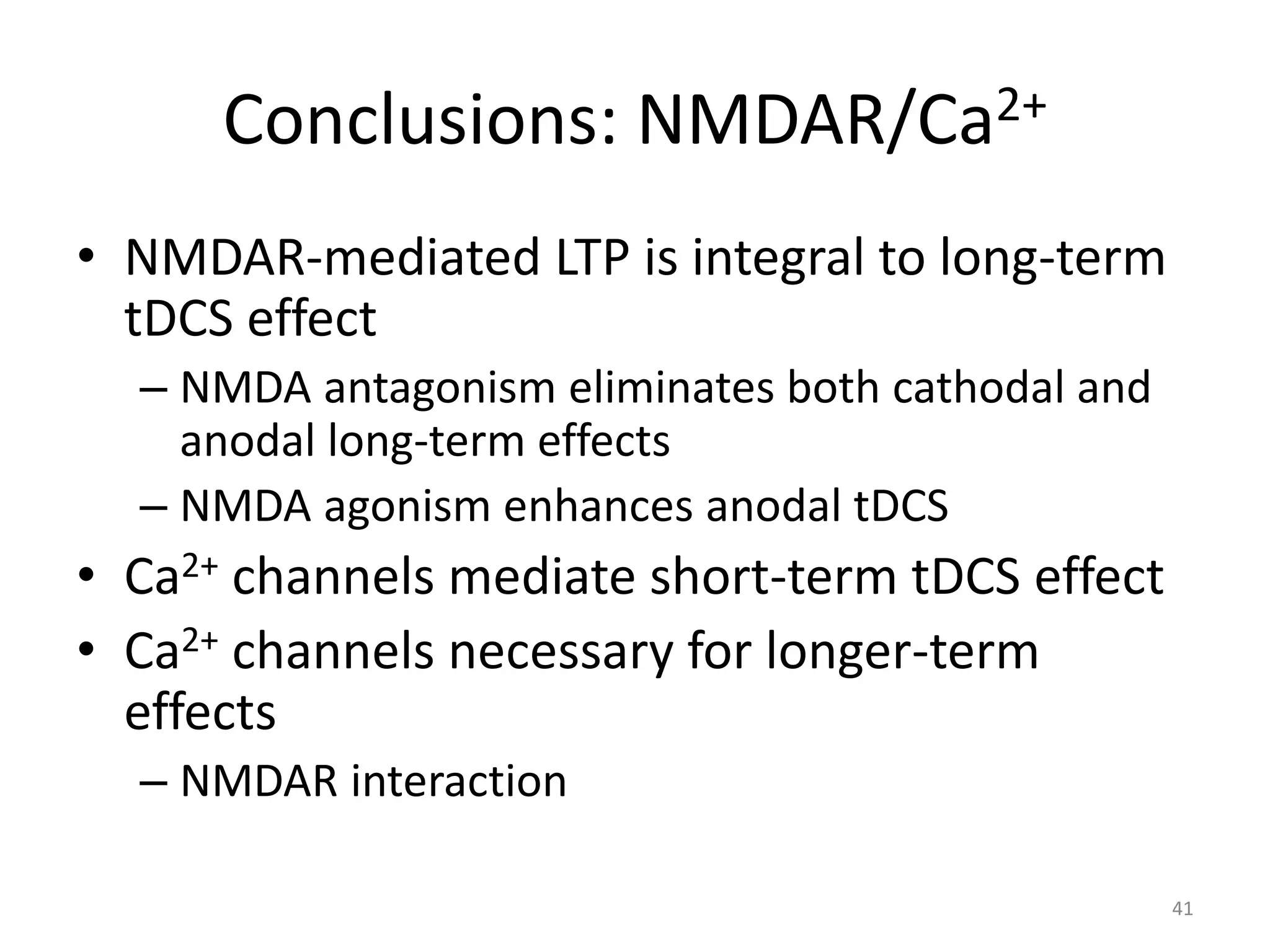
Conclusions: NMDAR/Ca2+
• NMDAR-mediated LTP is integral to long-term
tDCS effect
– NMDA antagonism eliminates both cathodal and
anodal long-term effects
– NMDA agonism enhances anodal tDCS
• Ca2+ channels mediate short-term tDCS effect
• Ca2+ channels necessary for longer-term
effects
– NMDAR interaction
41
Conclusions: Physiological Basis
1. Short-term effects are mediated by sub-
threshold alterations in neuron resting
membrane potential
2. Long-term effects are mediated by LTP
involving NMDA receptors
42
Safety: Adverse Effects
• 63% of studies report 1 mild ‘adverse effect’
– Itching, tingling, headache, burning sensation,
discomfort
• However:
– Active tDCS Rate = Sham Rate
– Except:
• Skin reddening (Tx w/ Ketoprofen)
43
Fregni et al. (2014). Clinical Research and Regulatory Affairs, [Early
Online]: 1-14.
Safety: Serious Adverse Effects
• Review: No “serious adverse events” since
1998 in >10,000 subjects
• 1964 study: “respiratory and motor paralysis”
– Bifrontal anodal electrodes with leg cathode
– 10x intended current strength (likely ~3mA)
– DIY-tDCS concerns
44
Fregni et al. (2014). Clinical Research and Regulatory Affairs, [Early
Online]: 1-14.
Lippold O. C. J., & Redfearn, J. W. T. (1964). Mental changes resulting
from the passage of small direct currents through the human brain.
110(469): 768-772
Safety: Physiological Evidence
• No pathological changes in:
– Serum enolase (marker of neuronal damage)
– HRV
– EEG
• 100x the charge density used in humans is
required to cause brain damage in rats
– Discomfort in humans starts at 2-3x
45
Fregni et al. (2014). Clinical Research and Regulatory Affairs, [Early
Online]: 1-14.
Safety: Maladaptive Plasticity
• “Non-invasive”
46
Safety: Standard Parameters
• Current strength <2.5mA
• Duration <60min
• ≤2 sessions per day
• This does not imply going beyond these
parameters is not safe!
47
Fregni et al. (2014). Clinical Research and Regulatory Affairs, [Early
Online]: 1-14.
Safety: Unknowns
• Long-term usage
• Need for more studies on safety
48
Fregni et al. (2014). Clinical Research and Regulatory Affairs, [Early
Online]: 1-14.
FDA Regulations
• “Medical device”
– Most stimulators are Class II
• “Investigational Device Exception” approval
– “non-significant risk” exception  “expedited IDE”
– NSR overwhelmingly applied
• “Minimal Risk”
• Not cleared for any medical indication
49
tDCS Research is Accelerating
• 2008: Review of 122 tDCS studies since 1998a
– physiological effects of tDCS
– pharmacological modulation of tDCS
– establishing application protocols
• 2008-2010: ~100 new tDCS studiesb
– enhancing the efficacy of protocols
– defining safety parameters
– broadening the range of application
50
a Nitsche et al. (2008). Brain Stimulation, 1: 206-233.
b Nitsche, M. A., & Paulus, W. (2011). Restorative Neurology and Neuroscience, 29:463-492.
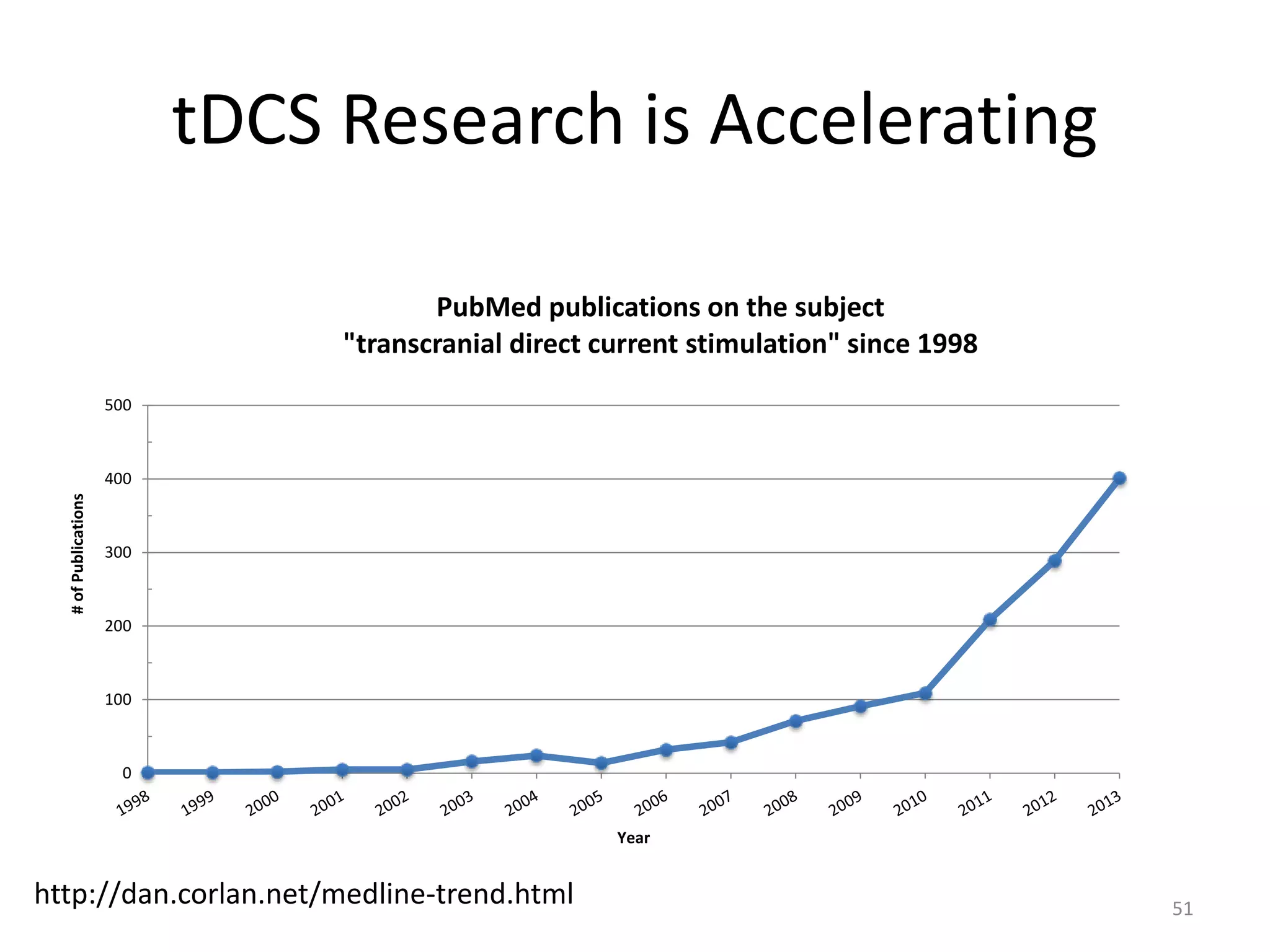
tDCS Research is Accelerating
51
0
100
200
300
400
500
#ofPublications
Year
PubMed publications on the subject
"transcranial direct current stimulation" since 1998
http://dan.corlan.net/medline-trend.html
Future Research Should Explore…
• effects of tDCS on cortical areas outside of M1
– neurotransmitters, receptors, neurons, and
networks are heterogeneous
• interaction of of [Stimulation x Task]
• timing and duration of stimulation (before,
during or after a task)
• multi-electrode stimulation of functional
networks
52
Shin, Y.-I., Foerster, A., & Nitsche, M. A. (2015).
Neuropsychologia, 69: 154-175
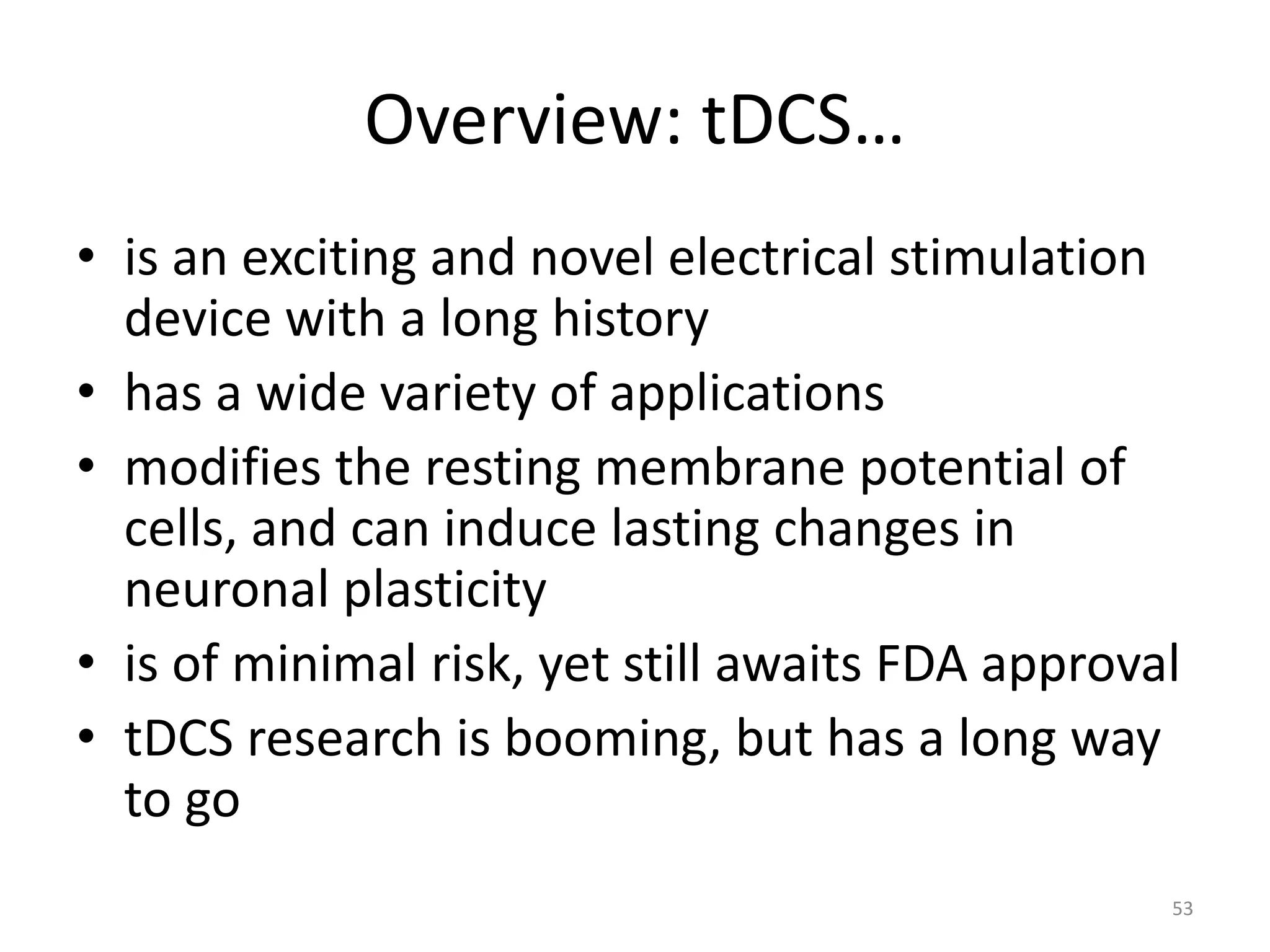
Overview: tDCS…
• is an exciting and novel electrical stimulation
device with a long history
• has a wide variety of applications
• modifies the resting membrane potential of
cells, and can induce lasting changes in
neuronal plasticity
• is of minimal risk, yet still awaits FDA approval
• tDCS research is booming, but has a long way
to go
53
That’s it! (Or is it?)
54

Intro to Transcranial Direct Curent Stimulation (tDCS)

  • 1.
    Transcranial Direct Current Stimulation(tDCS) Daniel C. Stevenson daniel.cortez.stevenson@gmail.com https://www.linkedin.com/in/daniel-c-stevenson/ Presented in Fall, 2015 1
  • 2.
    Agenda 1. History, tDCSvs. TMS, applications, & efficacy 2. Physiological effects of tDCS 3. Physiological basis of tDCS 4. Safety, DIY, and the FDA 5. Future Directions 2
  • 3.
  • 4.
  • 5.
  • 6.
  • 7.
    DIY-tDCS • www.reddit.com/r/tDCS • www.diytdcs.com •Brain-kit 1.0 – Open-source program for regulating electrode output and recording EEG signal • http://brmlab.cz/project/brain_hacking/tdcs – (not WRAIR-friendly) 7
  • 8.
    tDCS vs. TMS tDCS •Electrical stimulation via positive/negative electrodes • Modifies ‘cortical excitability’ • Cheap • Portable TMS • Magnetic stimulation via figure-8 coil • Elicits action potentials • Expensive • Large equipment 8
  • 9.
    Applications Two broad categories: 1)Therapeutic – patient populations 2) Enhancement – healthy populations 9
  • 10.
    Therapeutic Application • Pain •Migraine • Tinnitus • Depression • Addiction • Schizophrenia 10 • Anxiety • Dementia • Stroke • Alzheimers • Parkinson’s • Post-polio syndrome
  • 11.
    Parkinson’s: Dose-dependent effects 11 Boggioet al. (2006). Journal of Neurological Sciences, 249(1): 31-38. N=18 Duration=20min 3-Back Working Memory Test during last 5min of stimulation
  • 12.
    Depression: Combination Therapy 12Brunoni etal. (2013). JAMA Psychiatry 70(4): 383-91 Dorsolateral Prefrontal Cortex (DLPFC) Located at F3,F4 N=120 Strength=2mA Duration=30min Frequency=1/day for 10 days; 4wks; 6wks
  • 13.
    Enhancement Application • Motorlearning • Language learning • Visual perception • Working memory • Attention • Problem-solving • Moral judgment 13
  • 14.
    Target Detection: Taskx tDCS effects 14 Clark et al. (2010). NeuroImage, 59(1): 117-128. RIF=right inferior frontal Anodal Stimulation Duration=30min
  • 15.
    15 Target Detection: Taskx tDCS effects Clark et al. (2010). NeuroImage, 59(1): 117-128. N2.0mA=26 N0.1mA=36
  • 16.
    Lying 16 N=22 Strength=1mA Duration=13min (Intra-tDCS test) Electrodesize=24cm^2 Karim, A. et al. (2010). Cerebral Cortex, 20: 205-213. PO3 Fp2
  • 17.
    Is there reallyan effect? • Horvath, J. C., Forte, J. D., & Carter, O. (2015). Quantitative review finds no evidence of cognitive effects in healthy populations from single-session transcranial direct current stimulation (tDCS). Brain Stimulation, 8(3): 535-550. • Price, A. R., & Hamilton, R. H. (2015). A re-evaluation of the cognitive effects from single-session transcranial direct current stimulation. Brain Stimulation 8(3): 663-665. • Horvath, J. C. (2015). New quantitative analysis following Price & Hamilton’s critique do not change original findings of Horvath et al. Brain Stimulation 8(3): 665-666. • Nitsche, M. A., Bikson, M., & Bestmann, S. (2015). On the use of meta-analysis in neuromodulatory non-invasive brain stimulation. Brain Stimulation 8(3): 666-667. 17
  • 18.
  • 19.
    Methodology Abductor digiti minimimuscle of the hand (ADM) Tendon Belly Surface EMG Recordings of TMS induced Motor Evoked Potentials (MEPs) Ag-AgCl electrodes are placed in a “belly-tendon montage” 19
  • 20.
  • 21.
    Pyrimidal Tract Neurons: Corticospinal-Uppermotor neurons originating in layer 5 of the cortex terminate in spinal cord and innervate lower motor neuron Corticobulbular-terminate in brainstem 21
  • 22.
    tDCS modifies ‘corticalexcitability’ Nitsche & Paulus. (2000) J Physiology 527.3: 633-639 N=10; 1mA 4sec stimulation ending with 50ms recording Anode (+ terminal) Cathode (- terminal) 22
  • 23.
    Effects Last AfterStimulation Nitsche & Paulus. (2000) J Physiology 527.3: 633-639 Duration=5 min Strength=1 mA N=19 23
  • 24.
    Effects are Dependent on Duration& Strength Nitsche & Paulus. (2000) J Physiology 527.3: 633-639 Duration=5min Strength=1mA Filled shapes are significant! N=12 N=12 24
  • 25.
    Prolonged Effects ofAnodal tDCS Nitsche & Paulus. (2001) Neurology 57: 1899-1901 7 min 9 min 11 min 5 min 13 min Strength=1mA N=12 25
  • 26.
    Prolonged Effects ofCathodal tDCS Nitsche et al. (2003) Clinical Neurophysiology 114(4): 600-604 5 min 7 min 9 min Strength=1mA N=12 26
  • 27.
    Non-linear effect ofcathodal tDCS 27Batsikadze, et al. (2013). J Physiol 591(7): 1987-2000 N2mA=14 N1mA=9 Duration=20min
  • 28.
  • 29.
  • 30.
  • 31.
  • 32.
    Current modifies elicitedneuron firing (in rats) 32 Anodal Stimulation Cathodal Stimulation Bindman et al. (1964) J Physiol 172: 369-382 *b,d are control traces
  • 33.
    Current modifies tonicneuron firing (in rats) 33 Control Cathodal Anodal Bindman et al. (1964) J Physiol 172: 369-382
  • 34.
    Na+ Voltage Gated Channels Nitscheet al. (2003). J Physiology 533.1: 293-301 CBZ = carbamazepine (600mg); Na+ channel blocker * Indicates significant difference from the respective PLC/Drug condition NI=12 N0=12 NI=10 N0=10 No ∆ 34 During tDCS
  • 35.
    Conclusions: During tDCSEffects • Resting membrane potential is modulated by the electrical current • Anodal effects are abolished by blocking Na+ channels • These effects are necessary for longer-term effects to occur 35
  • 36.
    Long-term potentiation/depression (LTP/LTD) • Modulationof synaptic strength • Occurs within the horizontal connections of the primary motor cortex (during motor learning and rehabilitation) – Glutamatergic interneurons • NMDA receptors • AMPA receptors 36
  • 37.
    Early LTP isCa2+ dependent 37 Lynch, M. A. (2004). Long-term potentiation and memory. Physiological Reviews 84(1): 87-136.
  • 38.
    Ca2+ Ligand/Voltage Gated Channels Nitscheet al. (2003). J Physiology 533.1: 293-301 FLU = flunarizine; Ca2+ channel blocker NI=11 N0=11 NI=14 N0=14 No ∆ 38
  • 39.
    NMDAR antagonism abolisheseffects Nitsche et al. (2003). J Physiology 533.1: 293-301 DMO = dextromethorphane; NMDA receptor antagonist NI=12 N0=12 NI=10 N0=10 No ∆ No ∆ 39 Intra-tDCS
  • 40.
    NMDAR agonism prolongseffects Duration=13min anodal; 9min cathodal Strength=1mA CYC = D-Cycloserine (100mg); NMDA receptor agonist 40 Nitsche et al. (2004). Neuropsychopharmacology, 29:1573-1578
  • 41.
    Conclusions: NMDAR/Ca2+ • NMDAR-mediatedLTP is integral to long-term tDCS effect – NMDA antagonism eliminates both cathodal and anodal long-term effects – NMDA agonism enhances anodal tDCS • Ca2+ channels mediate short-term tDCS effect • Ca2+ channels necessary for longer-term effects – NMDAR interaction 41
  • 42.
    Conclusions: Physiological Basis 1.Short-term effects are mediated by sub- threshold alterations in neuron resting membrane potential 2. Long-term effects are mediated by LTP involving NMDA receptors 42
  • 43.
    Safety: Adverse Effects •63% of studies report 1 mild ‘adverse effect’ – Itching, tingling, headache, burning sensation, discomfort • However: – Active tDCS Rate = Sham Rate – Except: • Skin reddening (Tx w/ Ketoprofen) 43 Fregni et al. (2014). Clinical Research and Regulatory Affairs, [Early Online]: 1-14.
  • 44.
    Safety: Serious AdverseEffects • Review: No “serious adverse events” since 1998 in >10,000 subjects • 1964 study: “respiratory and motor paralysis” – Bifrontal anodal electrodes with leg cathode – 10x intended current strength (likely ~3mA) – DIY-tDCS concerns 44 Fregni et al. (2014). Clinical Research and Regulatory Affairs, [Early Online]: 1-14. Lippold O. C. J., & Redfearn, J. W. T. (1964). Mental changes resulting from the passage of small direct currents through the human brain. 110(469): 768-772
  • 45.
    Safety: Physiological Evidence •No pathological changes in: – Serum enolase (marker of neuronal damage) – HRV – EEG • 100x the charge density used in humans is required to cause brain damage in rats – Discomfort in humans starts at 2-3x 45 Fregni et al. (2014). Clinical Research and Regulatory Affairs, [Early Online]: 1-14.
  • 46.
  • 47.
    Safety: Standard Parameters •Current strength <2.5mA • Duration <60min • ≤2 sessions per day • This does not imply going beyond these parameters is not safe! 47 Fregni et al. (2014). Clinical Research and Regulatory Affairs, [Early Online]: 1-14.
  • 48.
    Safety: Unknowns • Long-termusage • Need for more studies on safety 48 Fregni et al. (2014). Clinical Research and Regulatory Affairs, [Early Online]: 1-14.
  • 49.
    FDA Regulations • “Medicaldevice” – Most stimulators are Class II • “Investigational Device Exception” approval – “non-significant risk” exception  “expedited IDE” – NSR overwhelmingly applied • “Minimal Risk” • Not cleared for any medical indication 49
  • 50.
    tDCS Research isAccelerating • 2008: Review of 122 tDCS studies since 1998a – physiological effects of tDCS – pharmacological modulation of tDCS – establishing application protocols • 2008-2010: ~100 new tDCS studiesb – enhancing the efficacy of protocols – defining safety parameters – broadening the range of application 50 a Nitsche et al. (2008). Brain Stimulation, 1: 206-233. b Nitsche, M. A., & Paulus, W. (2011). Restorative Neurology and Neuroscience, 29:463-492.
  • 51.
    tDCS Research isAccelerating 51 0 100 200 300 400 500 #ofPublications Year PubMed publications on the subject "transcranial direct current stimulation" since 1998 http://dan.corlan.net/medline-trend.html
  • 52.
    Future Research ShouldExplore… • effects of tDCS on cortical areas outside of M1 – neurotransmitters, receptors, neurons, and networks are heterogeneous • interaction of of [Stimulation x Task] • timing and duration of stimulation (before, during or after a task) • multi-electrode stimulation of functional networks 52 Shin, Y.-I., Foerster, A., & Nitsche, M. A. (2015). Neuropsychologia, 69: 154-175
  • 53.
    Overview: tDCS… • isan exciting and novel electrical stimulation device with a long history • has a wide variety of applications • modifies the resting membrane potential of cells, and can induce lasting changes in neuronal plasticity • is of minimal risk, yet still awaits FDA approval • tDCS research is booming, but has a long way to go 53
  • 54.
    That’s it! (Oris it?) 54

Editor's Notes

  • #4 Scribonius Largus Sudden, transient stupor with pain relief Relief due to numbness, torpor, and narcotic effect from electric fish Alos Pliny the Elder and Greek physician Claudius Glaen (131-401 AD) Ibn-Sidah Muslin physician Placed on frontal bone Alessandro Volta Electrical stimuli of varying du7ration can evoke different physiological effects Discusions with Galvani started the electrical century Many different applications of electricity (including medicine) DC current = Galvanic Current = Voltaic Current Giovanni Aldini (Galvani’s nephew) Facial muscle contractions in guillotined cadavers On himself: induced insomnia for a few days and ‘unpleasant sensation’ Augistin and Grapengiesser DC currents as stimulating or sedative treatment Bishoff Successful Tx in a case of depression 1938: Cerletti treats 1st patient with ECT Priori 2003 Clinical Neurophysiology
  • #11 Kuo, Paulus, & Nitsche (2014) NeuroImage Fregni et al, Clinical Research and Regulatory Affairs (2014) Tinnitus Anodal tDCS reduces intensisty of symptoms Stroke Daily sessions of tDCS improve upper limb function, increase activities of daily living (ADLs) scores Various Montages, w/ or w/out Physical Therapy improve motor function in mild to moderate stoke patients Anodal tDCS over perilesional areas improves language function, persists over time when coupled with language training Stability of improvement over clinically significant intervals remains to be assessed. Alzheimer’s May improve memory performance rtDCS creates effects lasting >4 weeks Addiction Effective in reducing cravings for food, smoking, concaine and alcohol. As effective as rTMS in reducing cravings in substant dependent people and cravings for palatable food DLPFC Post-Polio Syndrome Anodal tDCS over pre-motor areas improves sleep and fatigue symptoms
  • #13 Brunoni et al. (2013). The Sertraline vs Electrical Current Therapy for Treating Depression Clinical StudyResults From a Factorial, Randomized, Controlled Trial. JAMA Psychiatry 70(4): 383-391
  • #14 Nitsche, M. A., & Paulus, W. (2011). Transcranial direct current stimulation – update 2011. Restorative Neurology and Neuroscience, 29:463-492.
  • #15 Clark et al. (2010). TDCS guided using fMRI significantly accelerates learning to identify concealed objects. NeuroImage, 59(1): 117-128. Subjects with 2.0mA stimulation were also better than sham at both post-tests right frontal and parietal cortex are involved in learning to identify concealed objects in naturalistic surroundings. Furthermore, they suggest that the application of anodal tDCS over these regions can greatly increase learning, resulting in one of the largest effects on learning yet reported. Effects also found for Right Parietal
  • #17 Karim, A. A., Schneider, M., Lotze, M., Veit, R., Sauseng, P., Braun, C., & Birbaumer, N. (2010). The truth about lying: Inhibitioin of the anterioir prefrontal cortex improves deceptive behavior. Cerebral Cortex, 20: 205-213.
  • #20 In this arrangement, active electrode (known as G1) is placed on the belly of the muscle and reference electrode (known as G2) on the tendon. The ground electrode is usually placed between the stimulating and recording electrodes. (http://neurologysimplified.blogspot.com/2008/09/recording-electrodes-for-motor-studies.html) \ Image from : Acute Changes in Motor Cortical Excitability During Slow Oscillatory and Constant Anodal Transcranial Direct Current Stimulation Til Ole Bergmann, Sergiu Groppa, Markus Seeger, Matthias Mölle, Lisa Marshall, Hartwig Roman Siebner Journal of Neurophysiology Published 1 October 2009 Vol. 102 no. 4, 2303-2311 DOI: 10.1152/jn.00437.2009
  • #21 "Blausen 0103 Brain Sensory&Motor" by BruceBlaus. When using this image in external sources it can be cited as:Blausen.com staff. "Blausen gallery 2014". Wikiversity Journal of Medicine. DOI:10.15347/wjm/2014.010. ISSN 20018762. - Own work. Licensed under CC BY 3.0 via Wikimedia Commons - https://commons.wikimedia.org/wiki/File:Blausen_0103_Brain_Sensory%26Motor.png#/media/File:Blausen_0103_Brain_Sensory%26Motor.png "Human motor map" by Michael Graziano - emailed peresonally. Licensed under CC BY-SA 1.0 via Wikipedia - https://en.wikipedia.org/wiki/File:Human_motor_map.jpg#/media/File:Human_motor_map.jpg
  • #22  "Spinal cord tracts - English" by Polarlys and Mikael Häggström - File:Medulla spinalis - tracts - English.svg by Polarlys (translation by Selket).. Licensed under CC BY-SA 3.0 via Wikimedia Commons - https://commons.wikimedia.org/wiki/File:Spinal_cord_tracts_-_English.svg#/media/File:Spinal_cord_tracts_-_English.svg
  • #23 Nitsche & Paulus J Physiology (2000) Boxes indicate 25th and 75th percentiles Error Bars indicate 10th and 90th percentiles MEPs recorded in Abductor Digiti minimi (ADM) muscle Ag/AgCl electrodes in a belly tendon arrangement Neuroscan system (Neuroscan Inc., Herndon, VA, USA)
  • #26 Time indicates last significant timepoint at indicated stimulus duration 35cm^2 electrodes
  • #27 Fig. 1. After-effects of cathodal tDCS. Time course of changes in MEP amplitude evoked by a standard TMS pulse following termination of 5 – 9 min polarisation with a 1 mA DC current. Error bars are SEM 35 cm^2 electrodes
  • #30 http://www.ucl.ac.uk/~sjjgsca/NerveRestingPot.gif
  • #31 http://antranik.org/wp-content/uploads/2012/04/membrane-potential-as-time-passes-in-an-action-potential.png
  • #35  No effect for cathodal! This is in accordance with tDCS-generated hyperpolarization of the neuron leading to inactivation of the relevant voltage-gated channels and therefore negation of any drug effect.
  • #36 Cathodal tDCS hyperpolarization inactivation of Ca2+/Na+ voltage gated channels no drug effect
  • #38 Lynch, M. A. (2004). Long-term potentiation and memory. Physiological Reviews 84(1): 87-136. Ca activations Calcium dependent kinases which control AMPA and NMDA receptor trafficking
  • #39  This is in accordance with tDCS-generated hyperpolarization of the neuron leading to inactivation of the relevant voltage-gated channels and therefore negation of any drug effect. tDCShyperpolarizationinactivation of Na+/Ca2+ voltage gated channelsno drug effect
  • #41 Error bars are SEM 35 cm^2 Binds at glycine binding site 100mg dosage of CYC beneificicial for Alzheimer’s disease
  • #44 Fregni et al. (2014). Regulatory considerations for the clinical and research use of transcranial direct current stimulation (tDCS): Review and recommendations from an expert panel. Clinical Research and Regulatory Affairs, [Early Online]: 1-14. Fregni et al, Clinical Research and Regulatory Affairs (2014) “Out of 172 articles, 56% mentioned adverse effects and 63% reported at least one adverse effect” “when they were systematically assessed, the rates of common adverse effects did not differ between the active arms of the studies and the sham arms.” Most studies did not systematically assess Erythema = skin reddening “Due to an increase in blood flow of dermal vessels accompanying the current application” Might be ameliorated by pre-treatment topical Ketoprofen (NSAID w/ analgesic and antipyretic effects, inhibits production of prostaglandin) Rare skin burns resulting from incorrect application (prep of skin, humidifcation of sponges, limit of voltage)
  • #45 Serious Adverse events “According to the FDA, and similarly to other international regulatory agencies, serious adverse events are those in which the outcome is (i) death, (ii) life-threatening, (iii) hospitalization, (iv) disability/permanent damage, (v) congenital anomaly/birth defect, (vi) required intervention to prevent permanent impairment or damage (for implantable devices), (vii) and other serious events—e.g. refractory seizures, cardiorespiratory arrest, anaphylactic reaction etc.”
  • #46 Fregni et al, Clinical Research and Regulatory Affairs (2014)
  • #47 Fregni et al, Clinical Research and Regulatory Affairs (2014) “non-invasive procedure in the standard medical usage of this term, meaning that it does not involve penetrating the skin or a body cavity”
  • #48 Fregni et al, Clinical Research and Regulatory Affairs (2014) This does not imply going beyond these parameters is not safe, but we can not say for sure.
  • #49 Fregni et al, Clinical Research and Regulatory Affairs (2014) The safety and efficacy of daily to twice-daily, domiciliary, 30-min, 1–3-mA tDCS sessions across nearly 3 years was reported in a patient with schizophrenia
  • #50 Medical Device “According to the US Food and Drug Administration (FDA) (27), a medical device is defined as: ‘‘An instrument, apparatus, implement, machine, contrivance, implant, in vitro reagent, or other similar or related article, including a component part, or accessory’’ that is recognized for the use in diagnosis, prevention, and treatment in humans without using chemical pathways.” REGARDLESS OF USAGE INDICATION “nearly all noninvasive or cutaneously administered electrical stimulation devices have been deemed Class II medical devices by the FDA” Investigational Device Exception (IDE) Approval “allows for human research pending controls, documentation, and monitoring by both the manufacturer and investigator.” Every clinical trial with tDCS requires an IDE approval from FDA EXCEPT those clinical trials that receive a NSR exception from their IRB, resulting in an expedited IDE by FDA NSR designation overwhelmingly applied by both IRBs and FDA (when asked) NeuroConn and Soterix Medical have IDE for tDCS Minimal risk “Minimal risk means there have been no serious adverse events, that common adverse effects such as reddening of the skin are mild and short-lived, and that reasonable efforts at assessment have determined there is no evidence of brain damage.” DEVICE x PROTOCOL designation If it were significant-risk May still be approved if “benefits offset risk and/or appropriate measures are taken to control risk” Clearance Absence of manufacturer application Fregni et al, Clinical Research and Regulatory Affairs (2014)
  • #51 Nitsche, M. A., & Paulus, W. (2011). Transcranial direct current stimulation – update 2011. Restorative Neurology and Neuroscience, 29:463-492.