Stress!
Discussion
1. Describe an occasion when you‟ve felt
   under stress
2. What type of emotions do we feel when
   we‟re stressed?
3. What physiological changes are you
   aware of when you‟re stressed?
4. Define stress
What is stress?
  “When an imbalance or discrepancy exists
  between perceived demands and perceived
   coping resources, then a state of stress
                   exists”

                            Cox & Mackay (1978)

Individual Differences?

Do we all get stressed from the same things?
Why are there individual differences in stress?
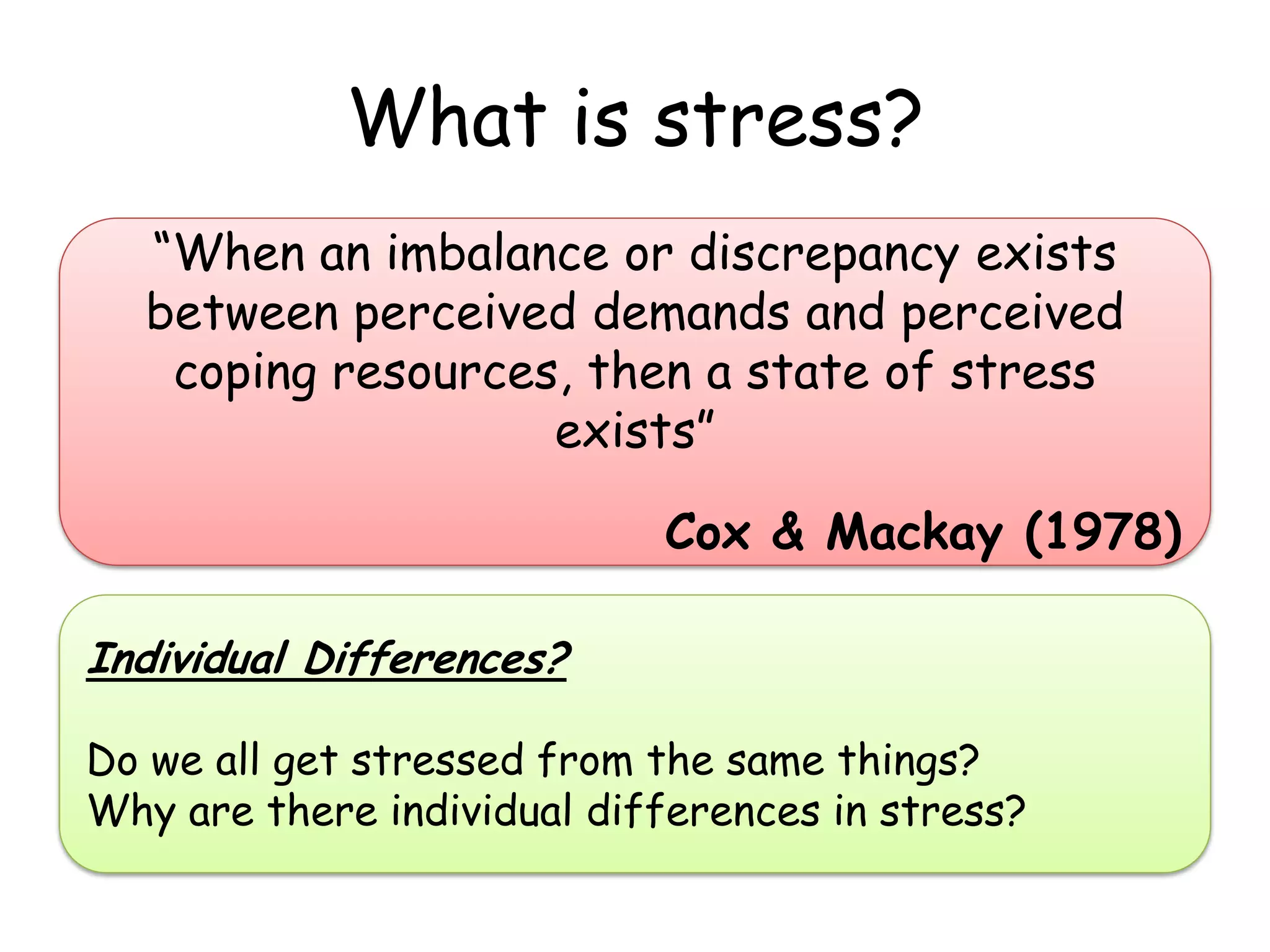
Body response
How does your body respond when you‟re
 stressed?
What changes are you aware of?
   Increased      Increased   Increase in
      HR?            BR?       energy?


Why do you think these changes occur?
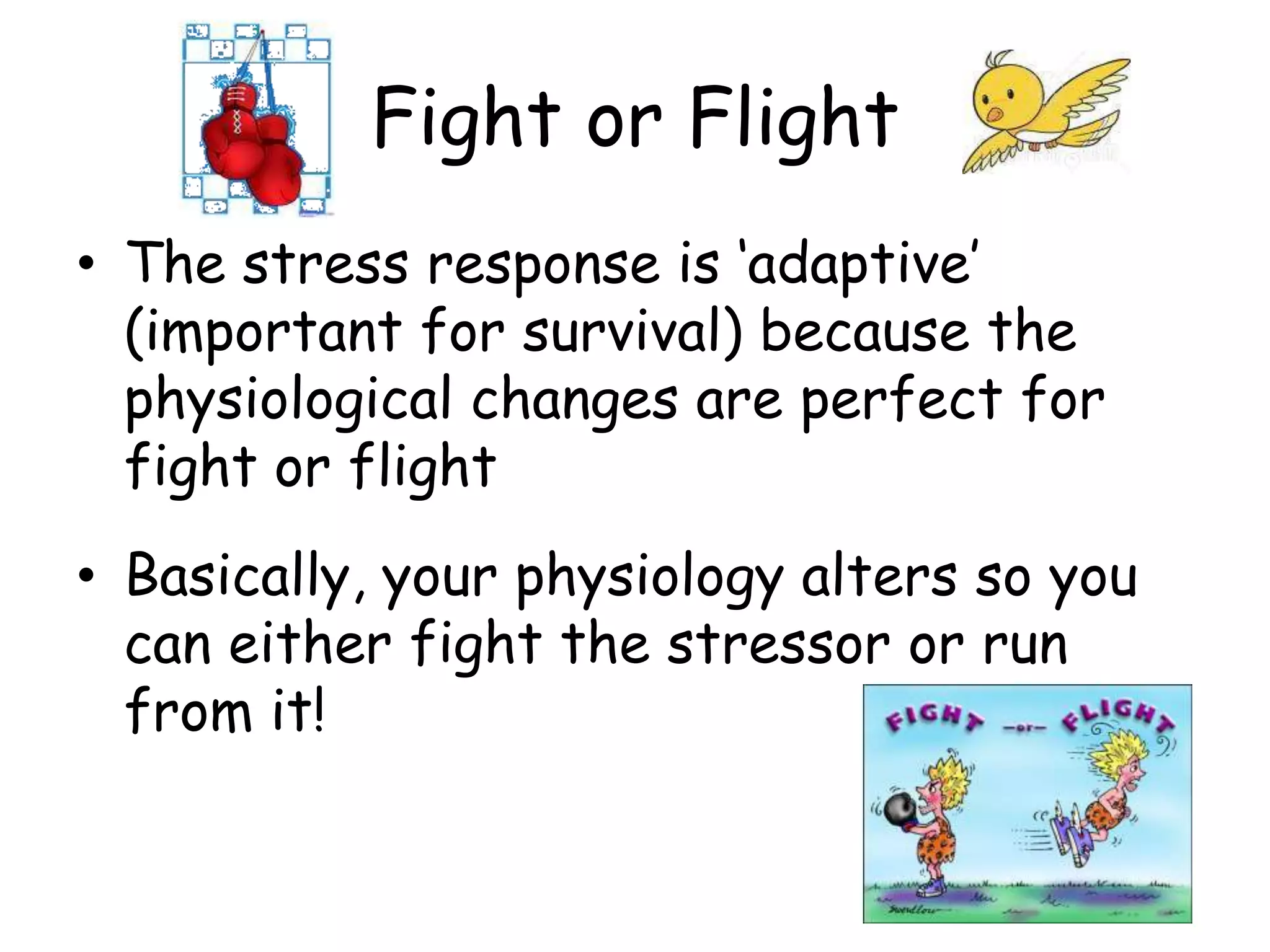
Fight or Flight
• The stress response is „adaptive‟
  (important for survival) because the
  physiological changes are perfect for
  fight or flight
• Basically, your physiology alters so you
  can either fight the stressor or run
  from it!
Fight or Flight

         Stressor
Any event that causes a stress
reaction in the body. Stressors
     include environmental
 stressors (workplace/college)
    and life events (divorce,
             illness)
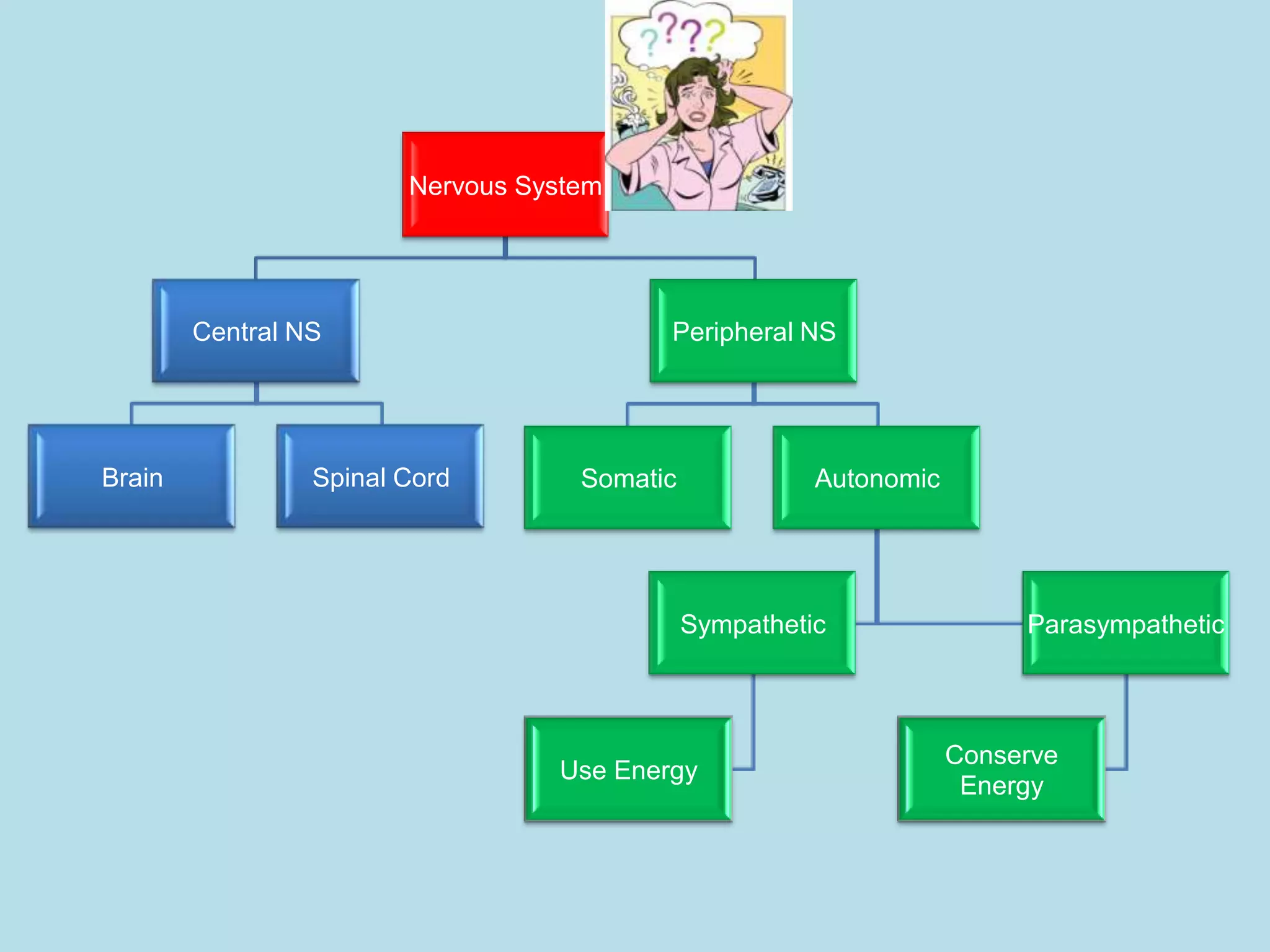
Nervous System


        Central NS                        Peripheral NS


Brain            Spinal Cord        Somatic             Autonomic


                                              Sympathetic                Parasympathetic


                                                                    Conserve
                                  Use Energy
                                                                     Energy
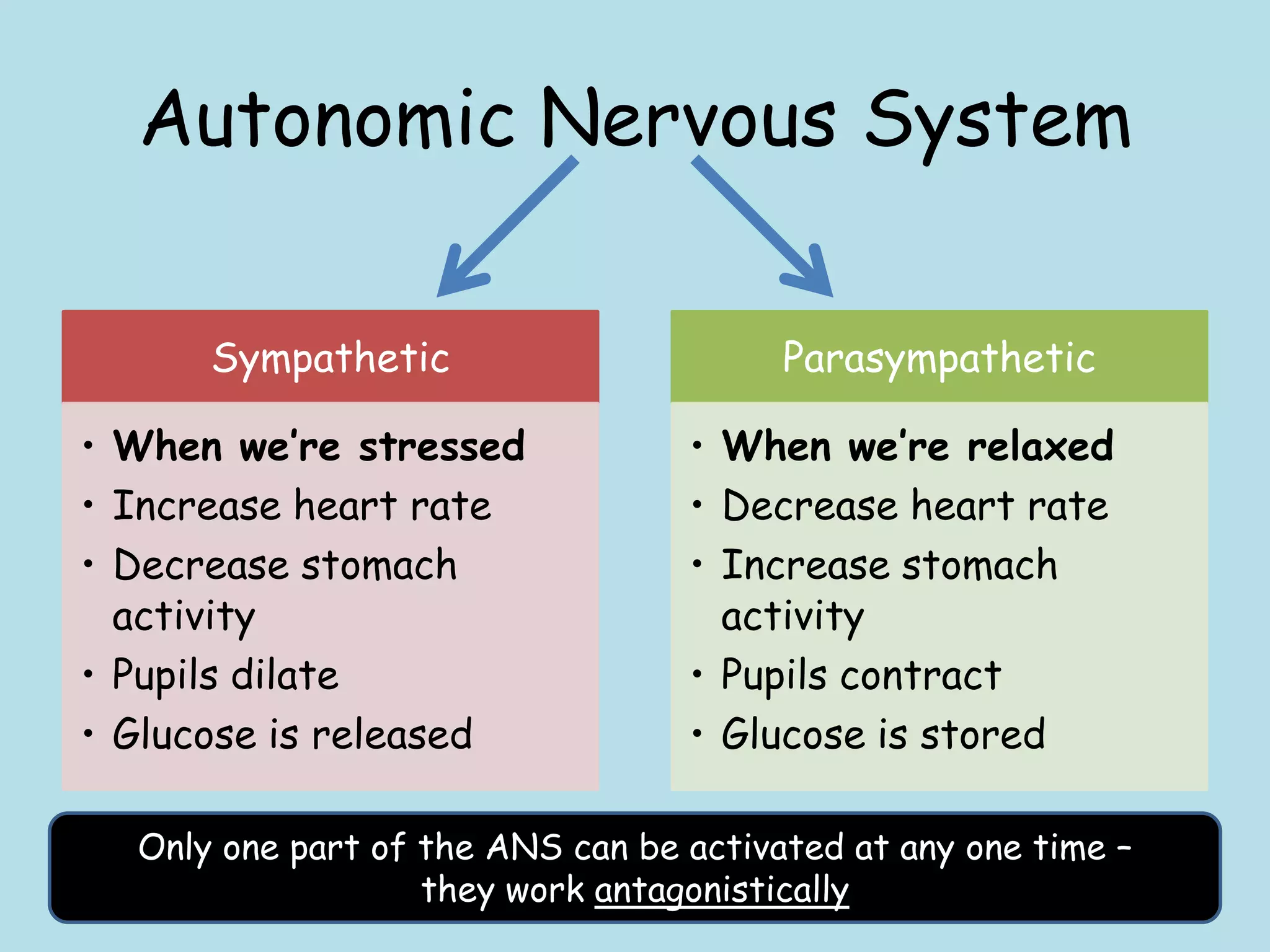
Autonomic Nervous System

      Sympathetic                       Parasympathetic

• When we’re stressed             • When we’re relaxed
• Increase heart rate             • Decrease heart rate
• Decrease stomach                • Increase stomach
  activity                          activity
• Pupils dilate                   • Pupils contract
• Glucose is released             • Glucose is stored

  Only one part of the ANS can be activated at any one time –
                   they work antagonistically
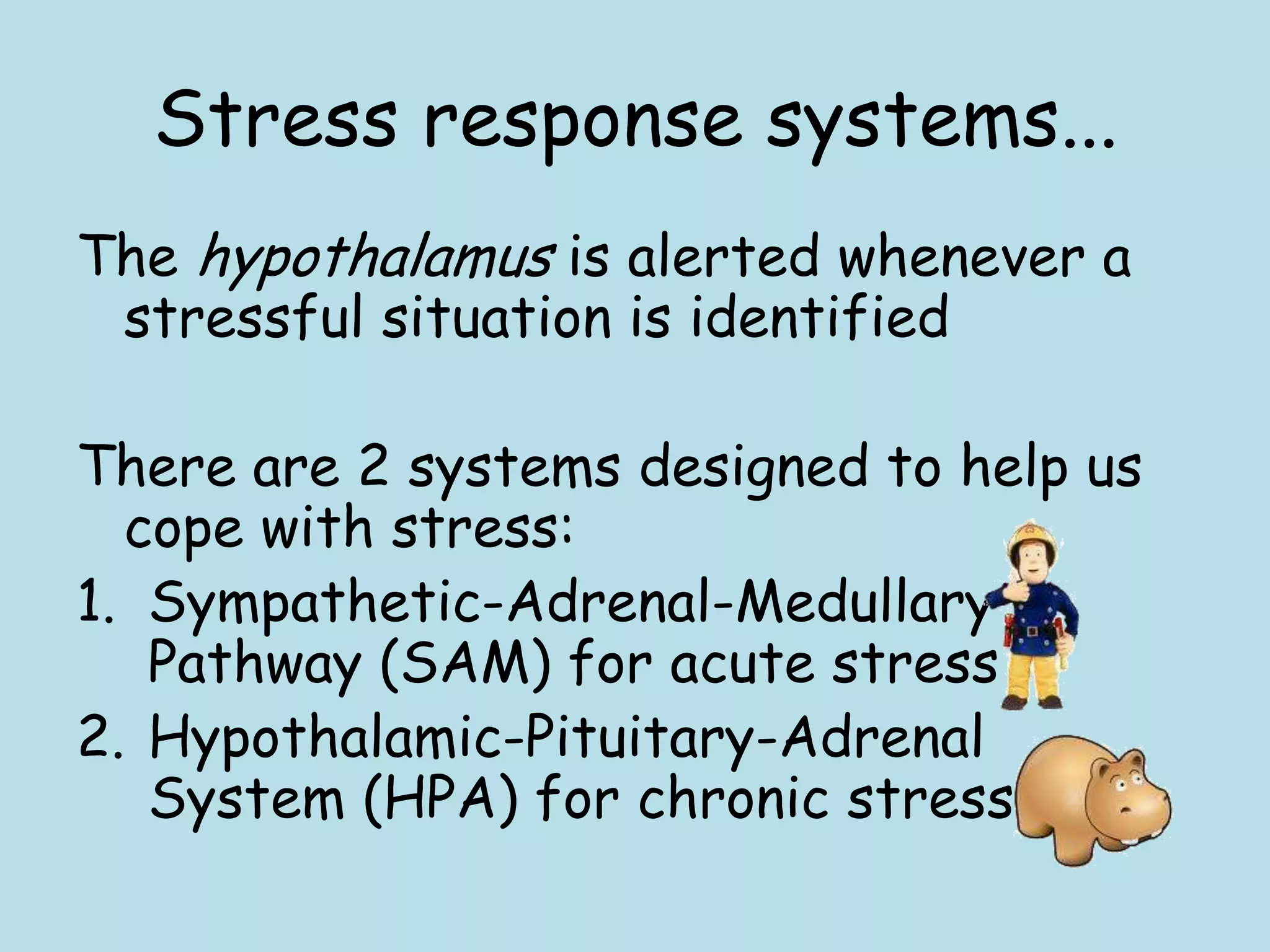
Stress response systems...
The hypothalamus is alerted whenever a
 stressful situation is identified

There are 2 systems designed to help us
  cope with stress:
1. Sympathetic-Adrenal-Medullary
   Pathway (SAM) for acute stress
2. Hypothalamic-Pituitary-Adrenal
   System (HPA) for chronic stress
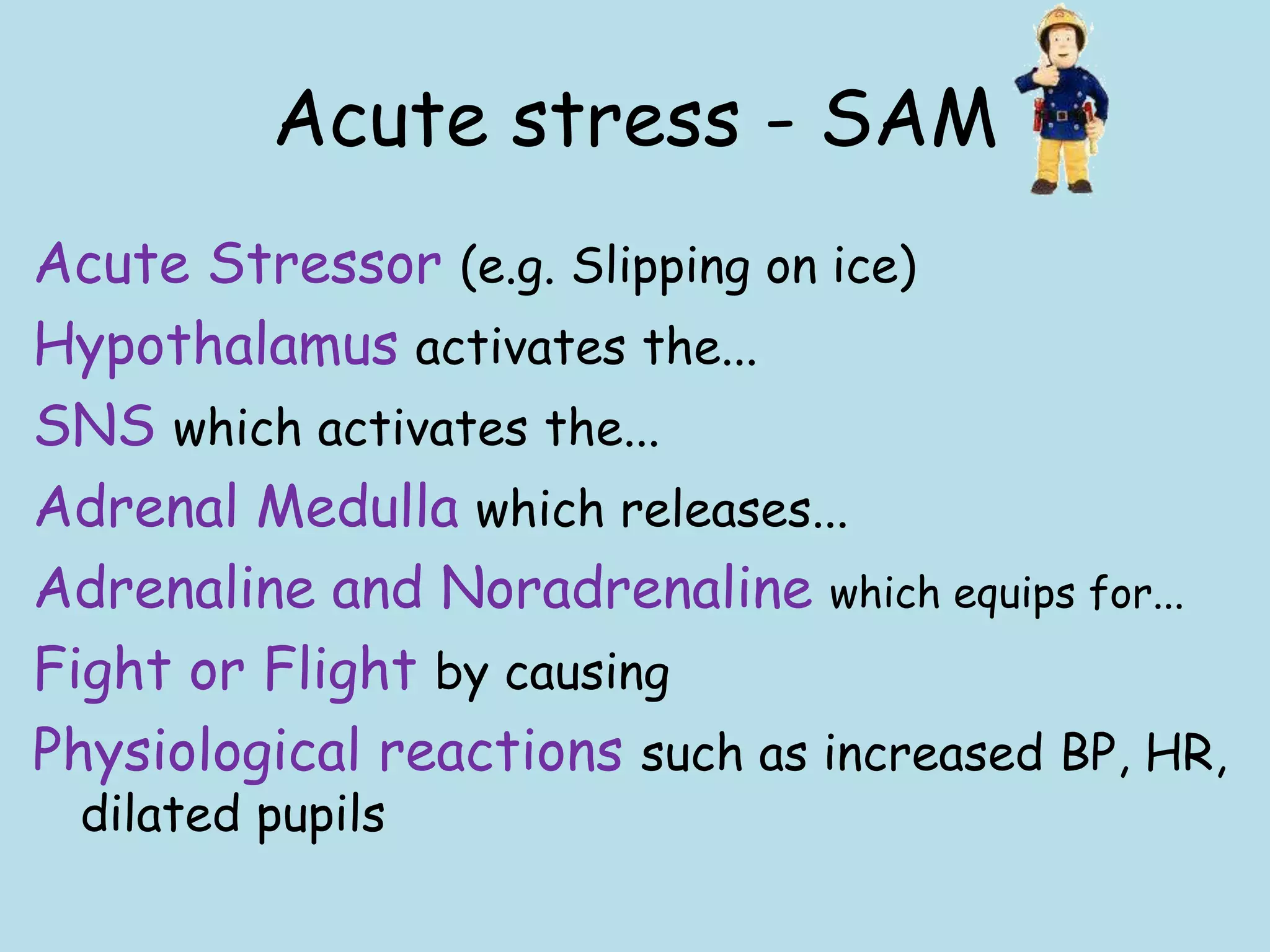
Acute stress - SAM
Acute Stressor (e.g. Slipping on ice)
Hypothalamus activates the...
SNS which activates the...
Adrenal Medulla which releases...
Adrenaline and Noradrenaline which equips for...
Fight or Flight by causing
Physiological reactions such as increased BP, HR,
 dilated pupils
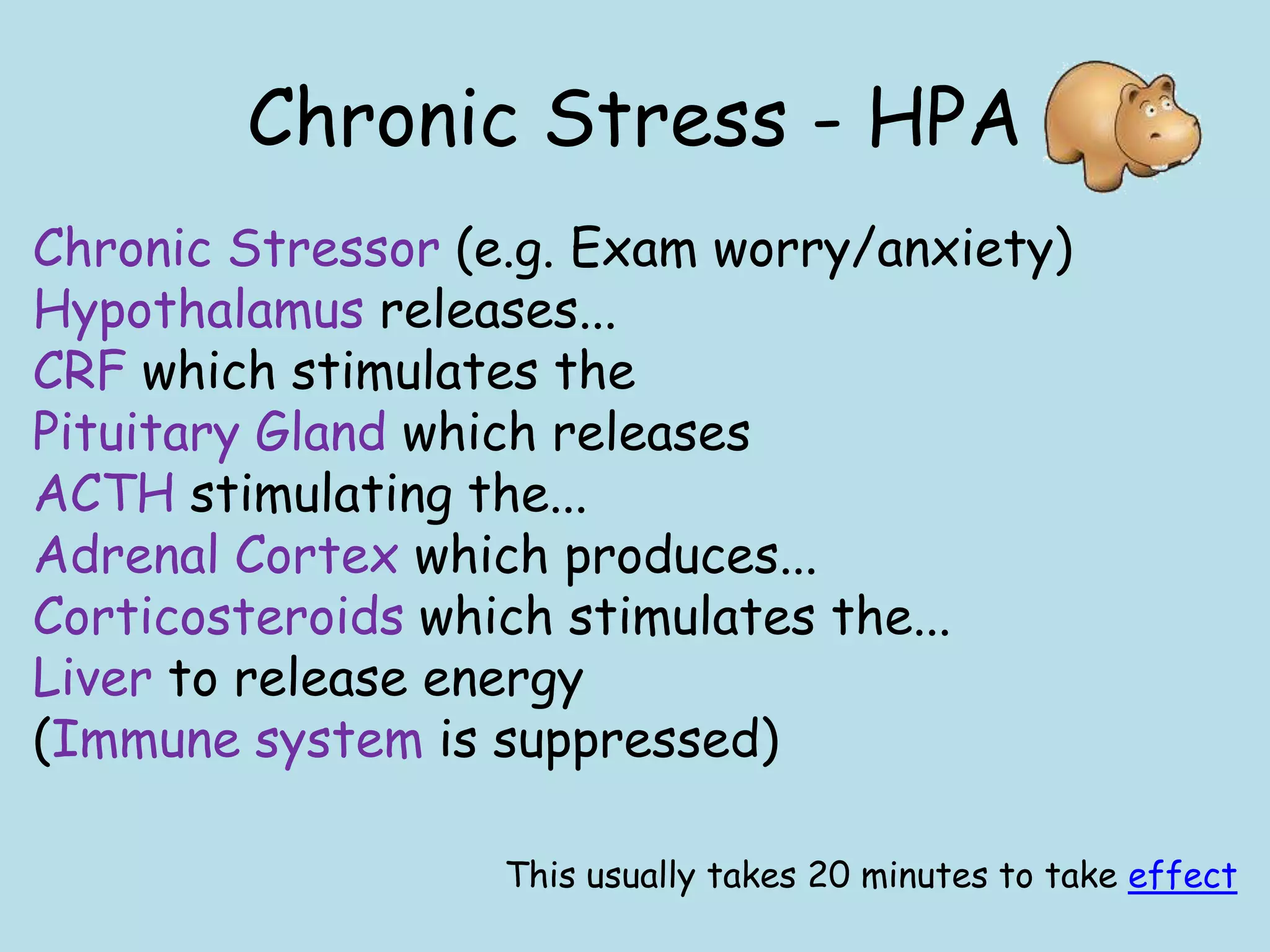
Chronic Stress - HPA
Chronic Stressor (e.g. Exam worry/anxiety)
Hypothalamus releases...
CRF which stimulates the
Pituitary Gland which releases
ACTH stimulating the...
Adrenal Cortex which produces...
Corticosteroids which stimulates the...
Liver to release energy
(Immune system is suppressed)

                   This usually takes 20 minutes to take effect
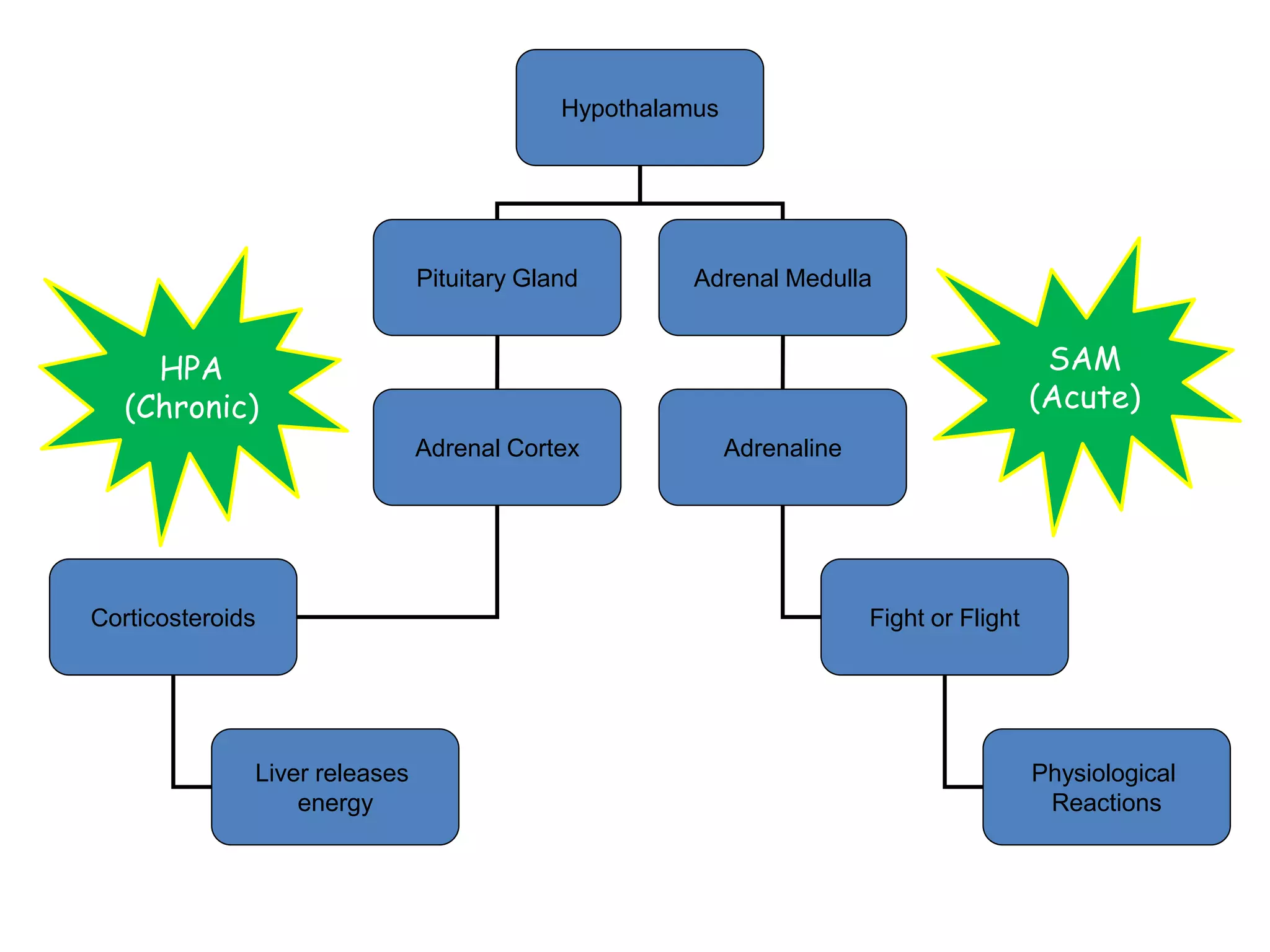
Hypothalamus


                               Pituitary Gland        Adrenal Medulla


     HPA                                                                                   SAM
   (Chronic)                                                                              (Acute)
                               Adrenal Cortex              Adrenaline


Corticosteroids                                                         Fight or Flight


              Liver releases                                                              Physiological
                  energy                                                                   Reactions
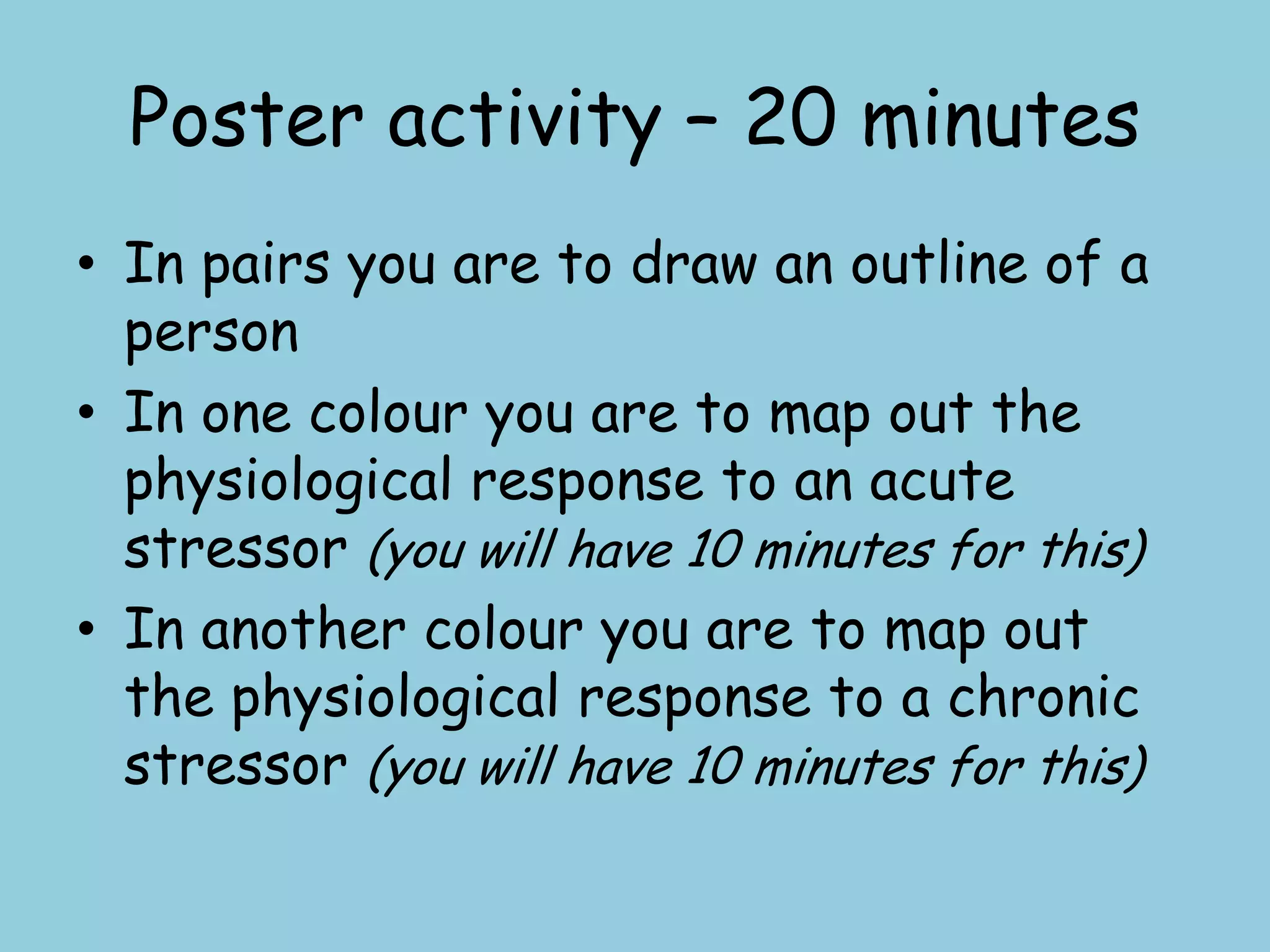
Poster activity – 20 minutes
• In pairs you are to draw an outline of a
  person
• In one colour you are to map out the
  physiological response to an acute
  stressor (you will have 10 minutes for this)
• In another colour you are to map out
  the physiological response to a chronic
  stressor (you will have 10 minutes for this)
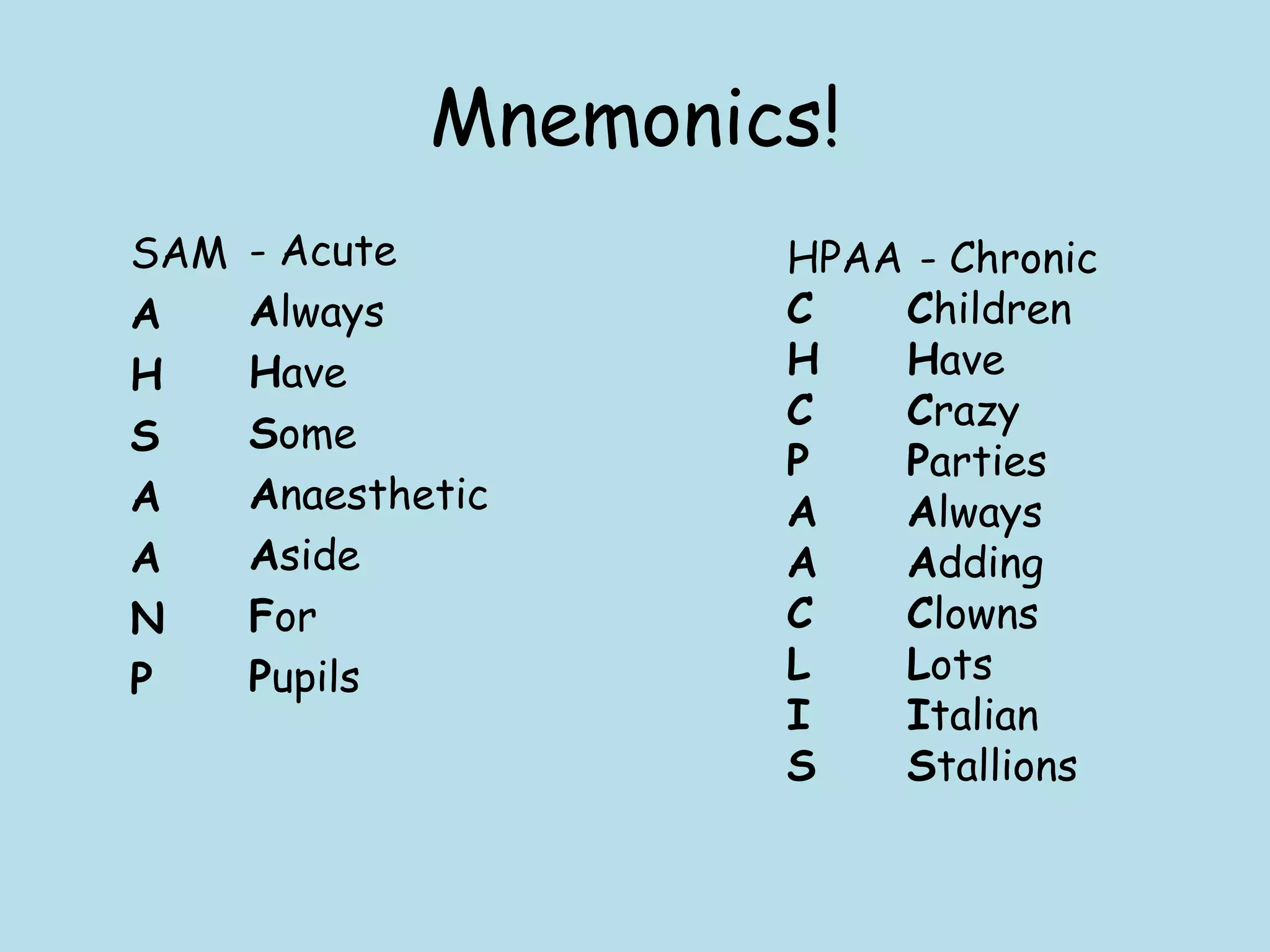
Mnemonics!
SAM   - Acute         HPAA - Chronic
A     Always          C   Children
H     Have            H   Have
                      C   Crazy
S     Some
                      P   Parties
A     Anaesthetic     A   Always
A     Aside           A   Adding
N     For             C   Clowns
P     Pupils          L   Lots
                      I   Italian
                      S   Stallions
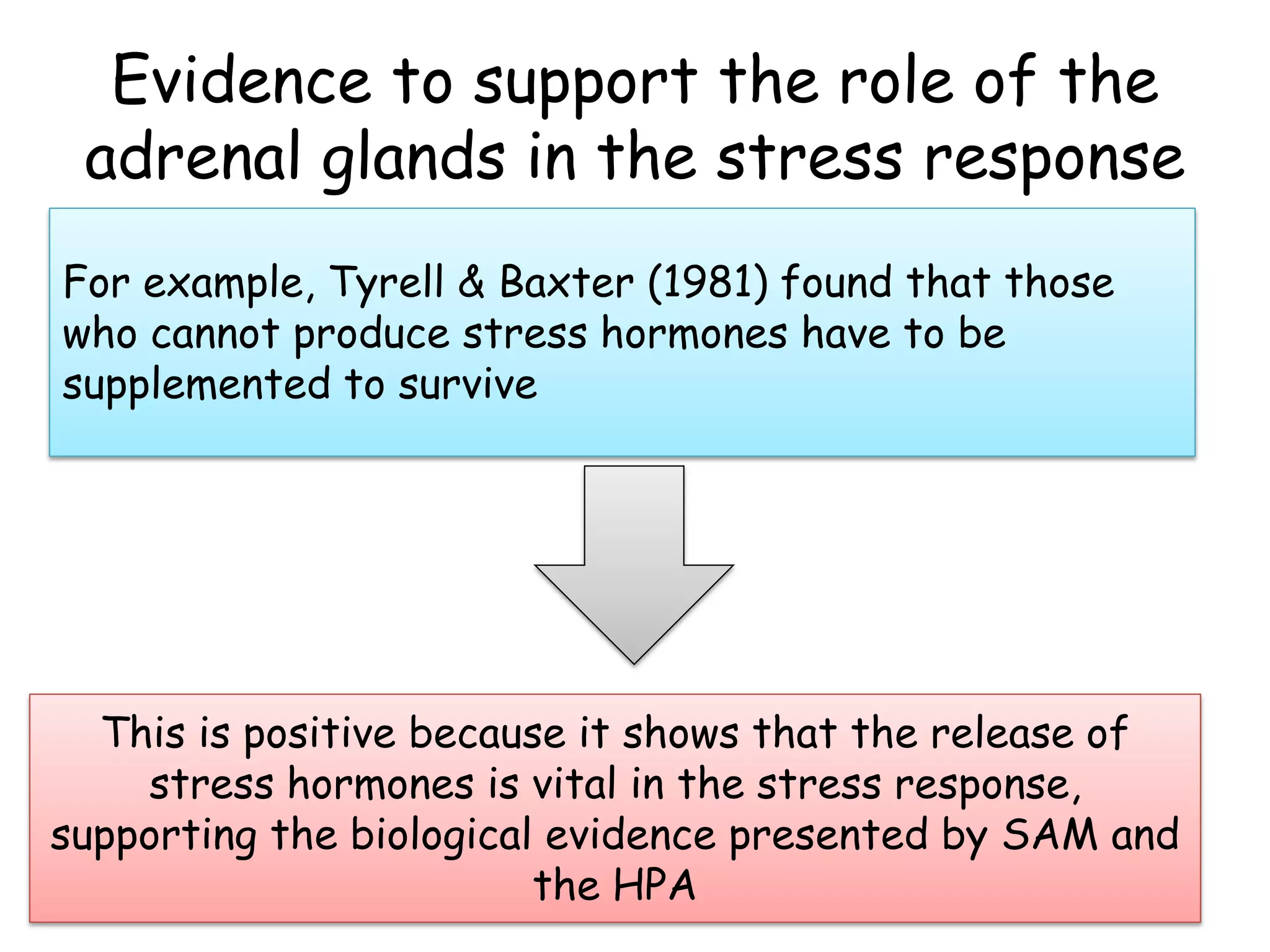
Evidence to support the role of the
 adrenal glands in the stress response
For example, Tyrell & Baxter (1981) found that those
who cannot produce stress hormones have to be
supplemented to survive


  This is positive because it shows that the release of
    stress hormones is vital in the stress response,
supporting the biological evidence presented by SAM and
                         the HPA
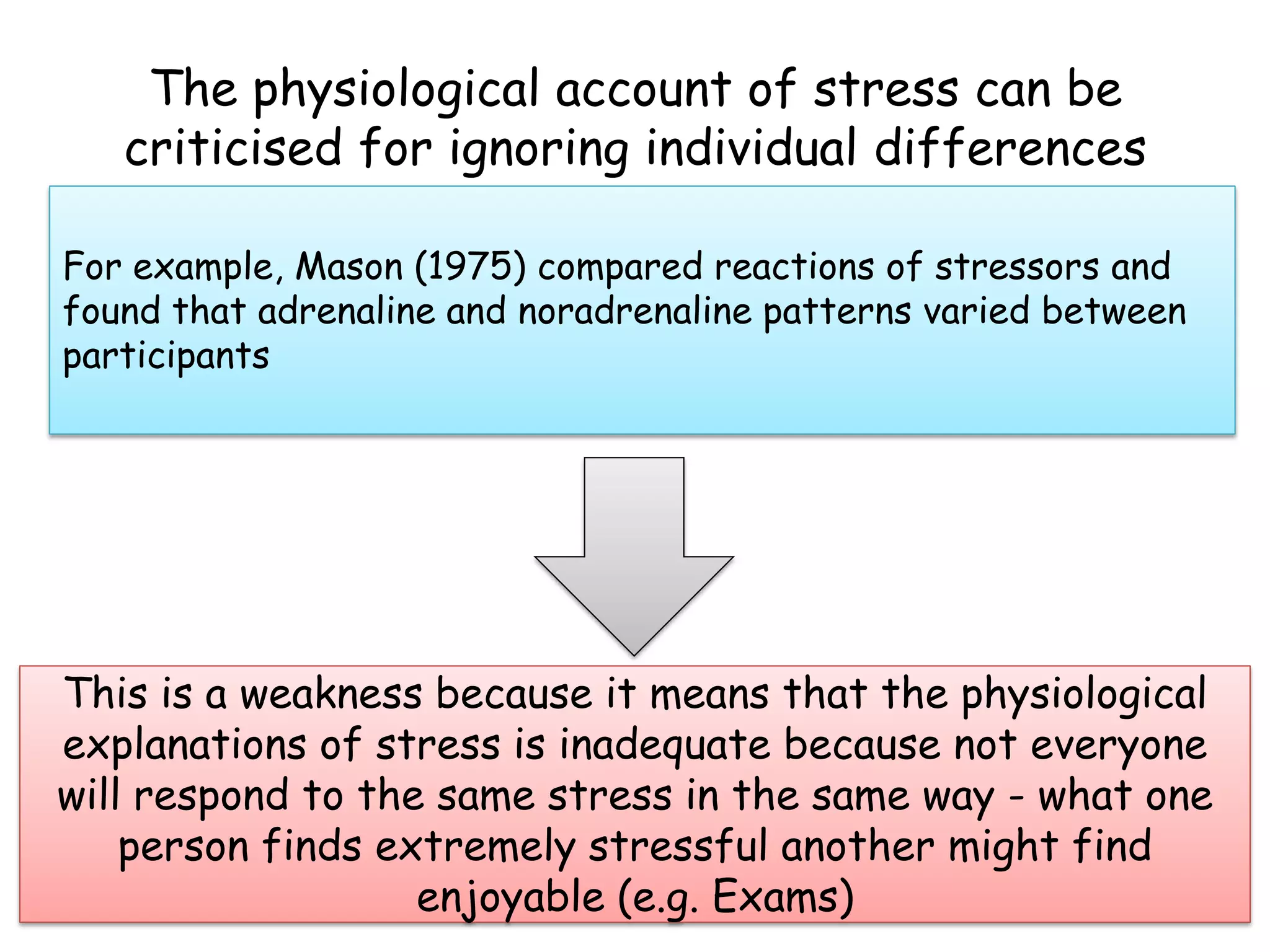
The physiological account of stress can be
   criticised for ignoring individual differences

For example, Mason (1975) compared reactions of stressors and
found that adrenaline and noradrenaline patterns varied between
participants


This is a weakness because it means that the physiological
explanations of stress is inadequate because not everyone
will respond to the same stress in the same way - what one
    person finds extremely stressful another might find
                   enjoyable (e.g. Exams)
The physiological approach suggests that people
   are passive in their stress response – ignoring
                psychological factors

 For example, Mason (1975) suggests that there is an active
 process of psychological appraisal when people are confronted
 with a stressor


This is a weakness because it indicates that how an individual
 views the stressor will affect their bodily response – and
 this is ignored by the physiological explanations of stress
TASK!
• You will be split into 2 groups, each group
  will be give one response to stress (SAM or
  HPA)

• In your groups you are to organise
  yourselves and „act out‟ the response to
  stress

• You have 15/20 minutes in which to do this

• This will all be filmed – make it a good‟un!

Intro, hpa and sam

  • 1.
  • 2.
    Discussion 1. Describe anoccasion when you‟ve felt under stress 2. What type of emotions do we feel when we‟re stressed? 3. What physiological changes are you aware of when you‟re stressed? 4. Define stress
  • 3.
    What is stress? “When an imbalance or discrepancy exists between perceived demands and perceived coping resources, then a state of stress exists” Cox & Mackay (1978) Individual Differences? Do we all get stressed from the same things? Why are there individual differences in stress?
  • 4.
    Body response How doesyour body respond when you‟re stressed? What changes are you aware of? Increased Increased Increase in HR? BR? energy? Why do you think these changes occur?
  • 5.
    Fight or Flight •The stress response is „adaptive‟ (important for survival) because the physiological changes are perfect for fight or flight • Basically, your physiology alters so you can either fight the stressor or run from it!
  • 6.
    Fight or Flight Stressor Any event that causes a stress reaction in the body. Stressors include environmental stressors (workplace/college) and life events (divorce, illness)
  • 7.
    Nervous System Central NS Peripheral NS Brain Spinal Cord Somatic Autonomic Sympathetic Parasympathetic Conserve Use Energy Energy
  • 8.
    Autonomic Nervous System Sympathetic Parasympathetic • When we’re stressed • When we’re relaxed • Increase heart rate • Decrease heart rate • Decrease stomach • Increase stomach activity activity • Pupils dilate • Pupils contract • Glucose is released • Glucose is stored Only one part of the ANS can be activated at any one time – they work antagonistically
  • 9.
    Stress response systems... Thehypothalamus is alerted whenever a stressful situation is identified There are 2 systems designed to help us cope with stress: 1. Sympathetic-Adrenal-Medullary Pathway (SAM) for acute stress 2. Hypothalamic-Pituitary-Adrenal System (HPA) for chronic stress
  • 10.
    Acute stress -SAM Acute Stressor (e.g. Slipping on ice) Hypothalamus activates the... SNS which activates the... Adrenal Medulla which releases... Adrenaline and Noradrenaline which equips for... Fight or Flight by causing Physiological reactions such as increased BP, HR, dilated pupils
  • 11.
    Chronic Stress -HPA Chronic Stressor (e.g. Exam worry/anxiety) Hypothalamus releases... CRF which stimulates the Pituitary Gland which releases ACTH stimulating the... Adrenal Cortex which produces... Corticosteroids which stimulates the... Liver to release energy (Immune system is suppressed) This usually takes 20 minutes to take effect
  • 12.
    Hypothalamus Pituitary Gland Adrenal Medulla HPA SAM (Chronic) (Acute) Adrenal Cortex Adrenaline Corticosteroids Fight or Flight Liver releases Physiological energy Reactions
  • 13.
    Poster activity –20 minutes • In pairs you are to draw an outline of a person • In one colour you are to map out the physiological response to an acute stressor (you will have 10 minutes for this) • In another colour you are to map out the physiological response to a chronic stressor (you will have 10 minutes for this)
  • 14.
    Mnemonics! SAM - Acute HPAA - Chronic A Always C Children H Have H Have C Crazy S Some P Parties A Anaesthetic A Always A Aside A Adding N For C Clowns P Pupils L Lots I Italian S Stallions
  • 15.
    Evidence to supportthe role of the adrenal glands in the stress response For example, Tyrell & Baxter (1981) found that those who cannot produce stress hormones have to be supplemented to survive This is positive because it shows that the release of stress hormones is vital in the stress response, supporting the biological evidence presented by SAM and the HPA
  • 16.
    The physiological accountof stress can be criticised for ignoring individual differences For example, Mason (1975) compared reactions of stressors and found that adrenaline and noradrenaline patterns varied between participants This is a weakness because it means that the physiological explanations of stress is inadequate because not everyone will respond to the same stress in the same way - what one person finds extremely stressful another might find enjoyable (e.g. Exams)
  • 17.
    The physiological approachsuggests that people are passive in their stress response – ignoring psychological factors For example, Mason (1975) suggests that there is an active process of psychological appraisal when people are confronted with a stressor This is a weakness because it indicates that how an individual views the stressor will affect their bodily response – and this is ignored by the physiological explanations of stress
  • 18.
    TASK! • You willbe split into 2 groups, each group will be give one response to stress (SAM or HPA) • In your groups you are to organise yourselves and „act out‟ the response to stress • You have 15/20 minutes in which to do this • This will all be filmed – make it a good‟un!