Copyright © 2019, 2017, 2015 Pearson Education, Inc. All Rights Reserved
Health The Basics
13th
Edition
Chapter 3:
Managing Stress and
Coping with Life's
Challenges
Copyright © 2019, 2017, 2015 Pearson Education, Inc. All Rights Reserved
Learning Outcomes
•
3.1 Define stress and examine its potential impact on health, relationships, and success in
college and life.
•
3.2 Explain key stress theories as well as the emotional, mental, and physiological
changes that occur during the stress response.
•
3.3 Examine the physical health risks that may occur with chronic stress.
•
3.4 Examine the intellectual and psychological effects of stress and their impacts on
college students.
•
3.5 Discuss sources of stress and examine the unique stressors that affect young adults
and particularly college students.
•
3.6 Explain key individual factors that may influence whether or not a person is able to
cope with stressors
•
3.7 Explore stress management and stress reduction strategies, ways you can cope more
effectively with stress, and mindfulness strategies that can enrich your life experiences
and reduce health risks.
Copyright © 2019, 2017, 2015 Pearson Education, Inc. All Rights Reserved
What Is Stress?
• Stress is the mental and physical response and adaptation by our bodies to real or
perceived change and challenges.
• A stressor is any real or perceived physical, social, or psychological event or stimulus
that causes our bodies to react to stress.
• Eustress, a positive stress, presents opportunities for personal growth.
• Distress is a negative stress that can have a detrimental effect on health.
• Acute stress is a short-term physiological response to an immediate or perceived
threat.
• Episodic acute stress occurs when regularly reacting with wild, acute stress about one
thing or another.
• Chronic stress is an ongoing state of physiological arousal in response to ongoing or
numerous perceived threats.
• Traumatic stress is a physiological and mental response that occurs for a prolonged
period of time after a major stressful event in which one may be seriously hurt, killed, or
witness horrible things.
Copyright © 2019, 2017, 2015 Pearson Education, Inc. All Rights Reserved
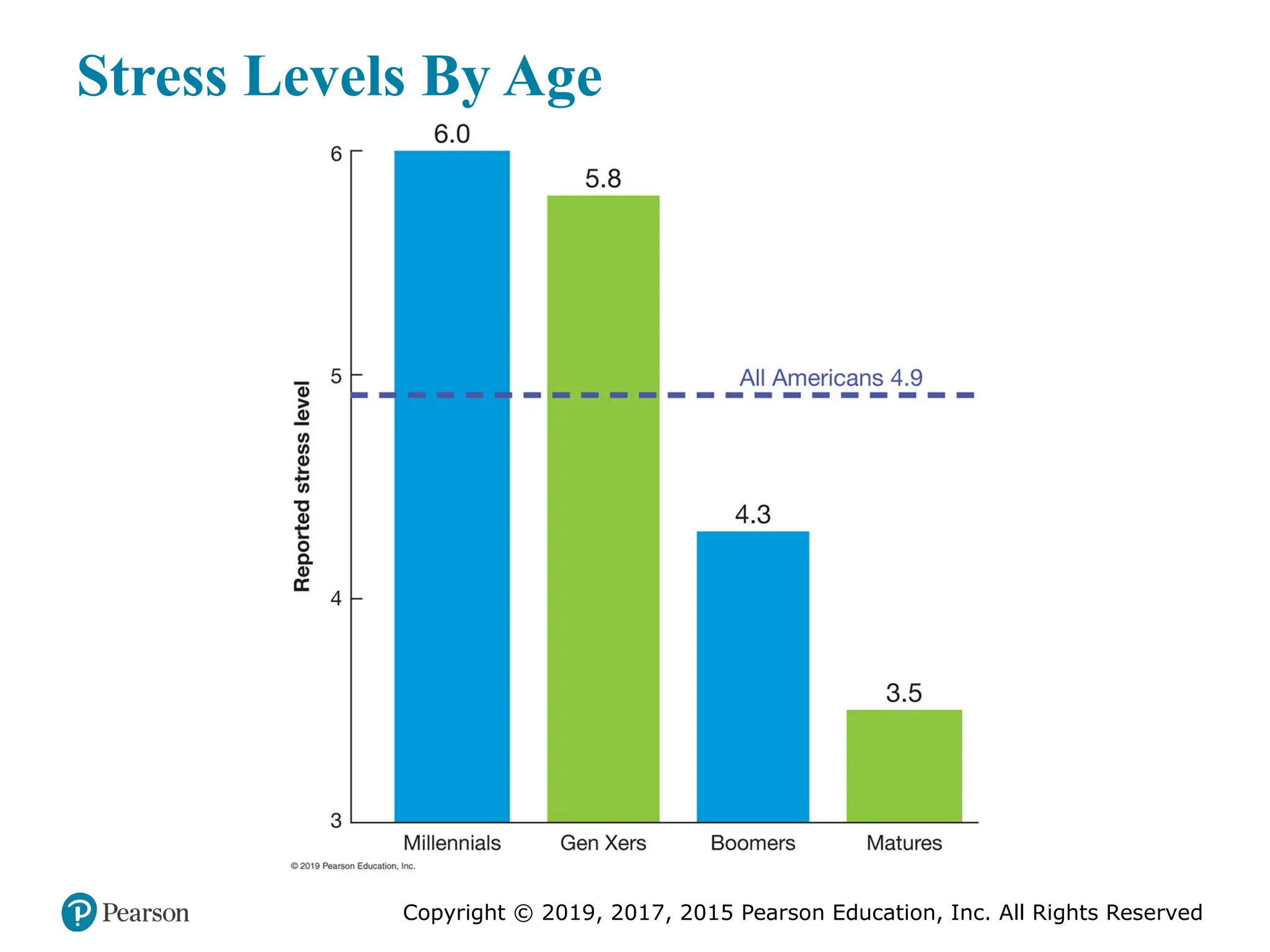
Stress Levels By Age
Copyright © 2019, 2017, 2015 Pearson Education, Inc. All Rights Reserved
Your Body's Response to Stress
• When stress levels are low, the body is often in a state of
homeostasis.
– This is a balanced physiological state in which all the body's
systems function smoothly.
• Stressors trigger a crisis mode physiological response, after which the
body tries to return to homeostasis by means of an adaptive response.
Copyright © 2019, 2017, 2015 Pearson Education, Inc. All Rights Reserved
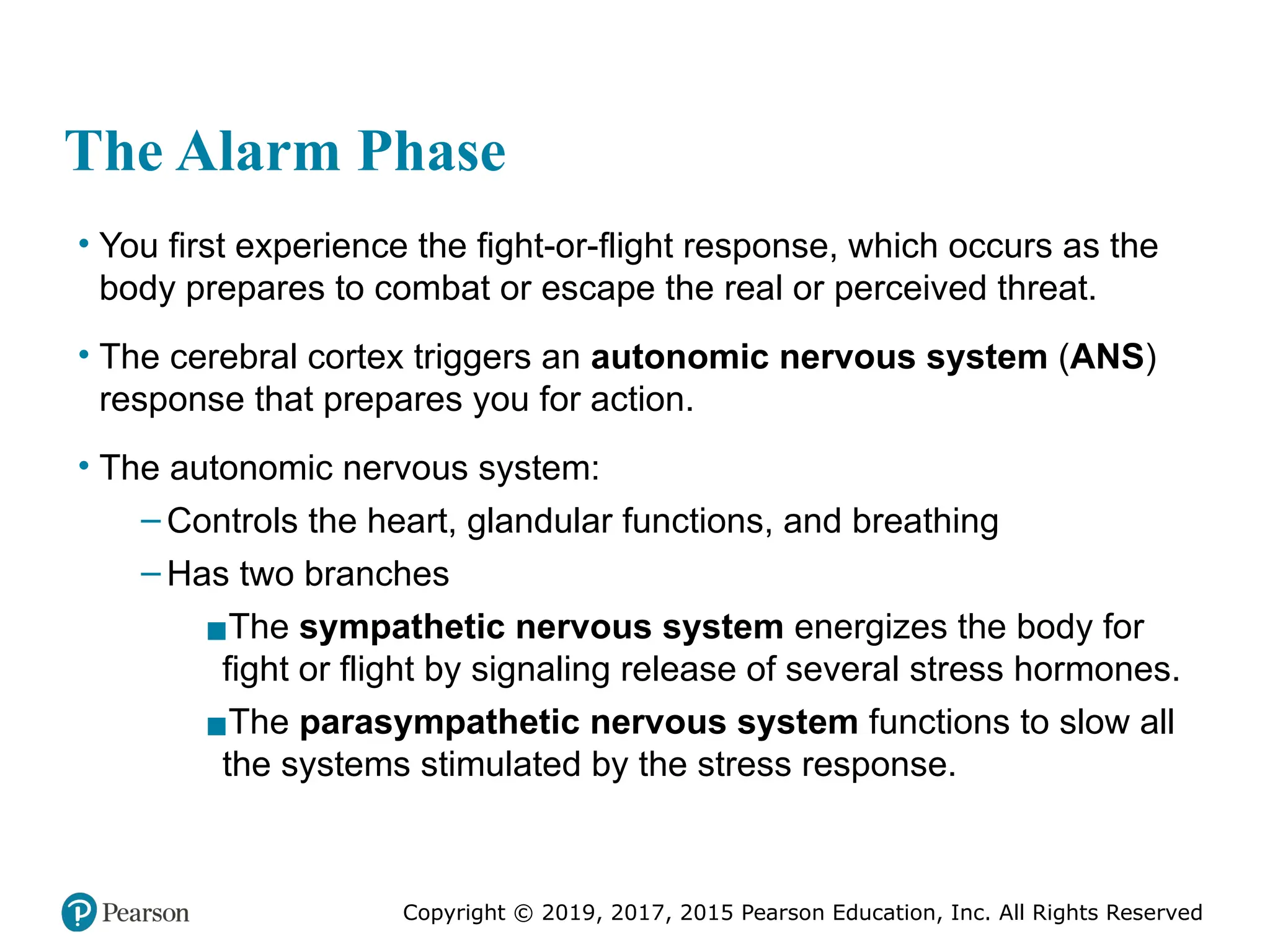
The General Adaptation Syndrome
Figure 3.2 The General Adaptation Syndrome (GAS) The GAS is the body’s method of coping with prolonged stress.
Source: American Psychological Association, “Stress in America, The Impact of Discrimination,” March 2016, http://www.apa.org/news/press/releases/stress/2015/
impact-of-discrimination.pdf.
Copyright © 2019, 2017, 2015 Pearson Education, Inc. All Rights Reserved
The Alarm Phase
• You first experience the fight-or-flight response, which occurs as the
body prepares to combat or escape the real or perceived threat.
• The cerebral cortex triggers an autonomic nervous system (ANS)
response that prepares you for action.
• The autonomic nervous system:
– Controls the heart, glandular functions, and breathing
– Has two branches
▪The sympathetic nervous system energizes the body for
fight or flight by signaling release of several stress hormones.
▪The parasympathetic nervous system functions to slow all
the systems stimulated by the stress response.
Copyright © 2019, 2017, 2015 Pearson Education, Inc. All Rights Reserved
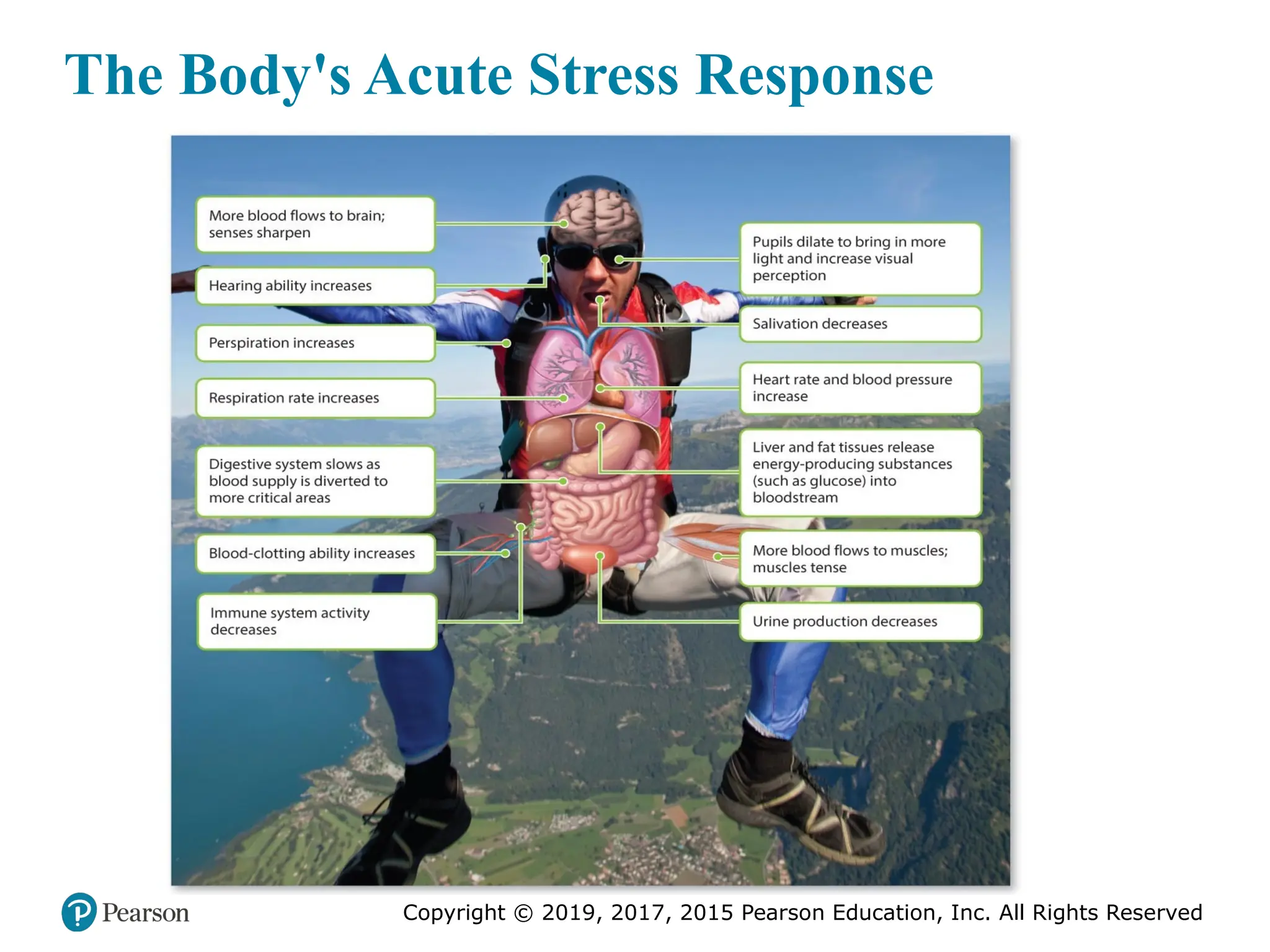
The Body's Acute Stress Response
Copyright © 2019, 2017, 2015 Pearson Education, Inc. All Rights Reserved
The Alarm Phase (cont.)
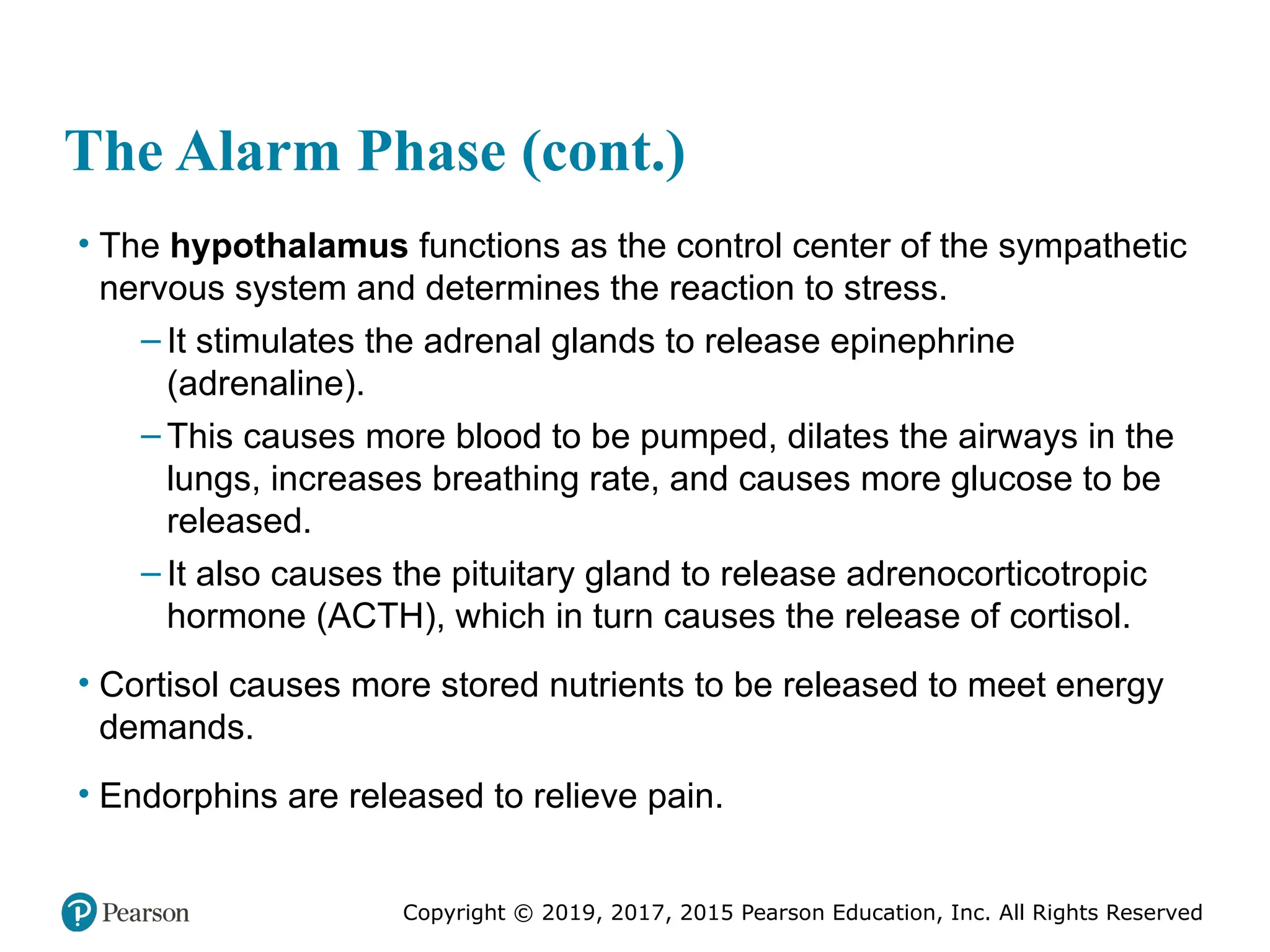
• The hypothalamus functions as the control center of the sympathetic
nervous system and determines the reaction to stress.
– It stimulates the adrenal glands to release epinephrine
(adrenaline).
– This causes more blood to be pumped, dilates the airways in the
lungs, increases breathing rate, and causes more glucose to be
released.
– It also causes the pituitary gland to release adrenocorticotropic
hormone (ACTH), which in turn causes the release of cortisol.
• Cortisol causes more stored nutrients to be released to meet energy
demands.
• Endorphins are released to relieve pain.
Copyright © 2019, 2017, 2015 Pearson Education, Inc. All Rights Reserved
The Resistance Phase
• During the resistance phase, the body tries to return to homeostasis.
• Because some perceived stressor still exists, the body does not
achieve complete calm or rest—it stays activated, causing a higher
metabolic rate in some organ tissues.
Copyright © 2019, 2017, 2015 Pearson Education, Inc. All Rights Reserved
The Exhaustion Phase
• A prolonged effort to adapt to stress may lead to allostatic load or
exhaustive wear and tear on the body.
• This exhaustion phase occurs when the physical and emotional
energy used to fight the stressor has been depleted.
• Continual release of cortisol and other hormones can reduce
immunocompetence, or the ability of the body to protect you.
Copyright © 2019, 2017, 2015 Pearson Education, Inc. All Rights Reserved
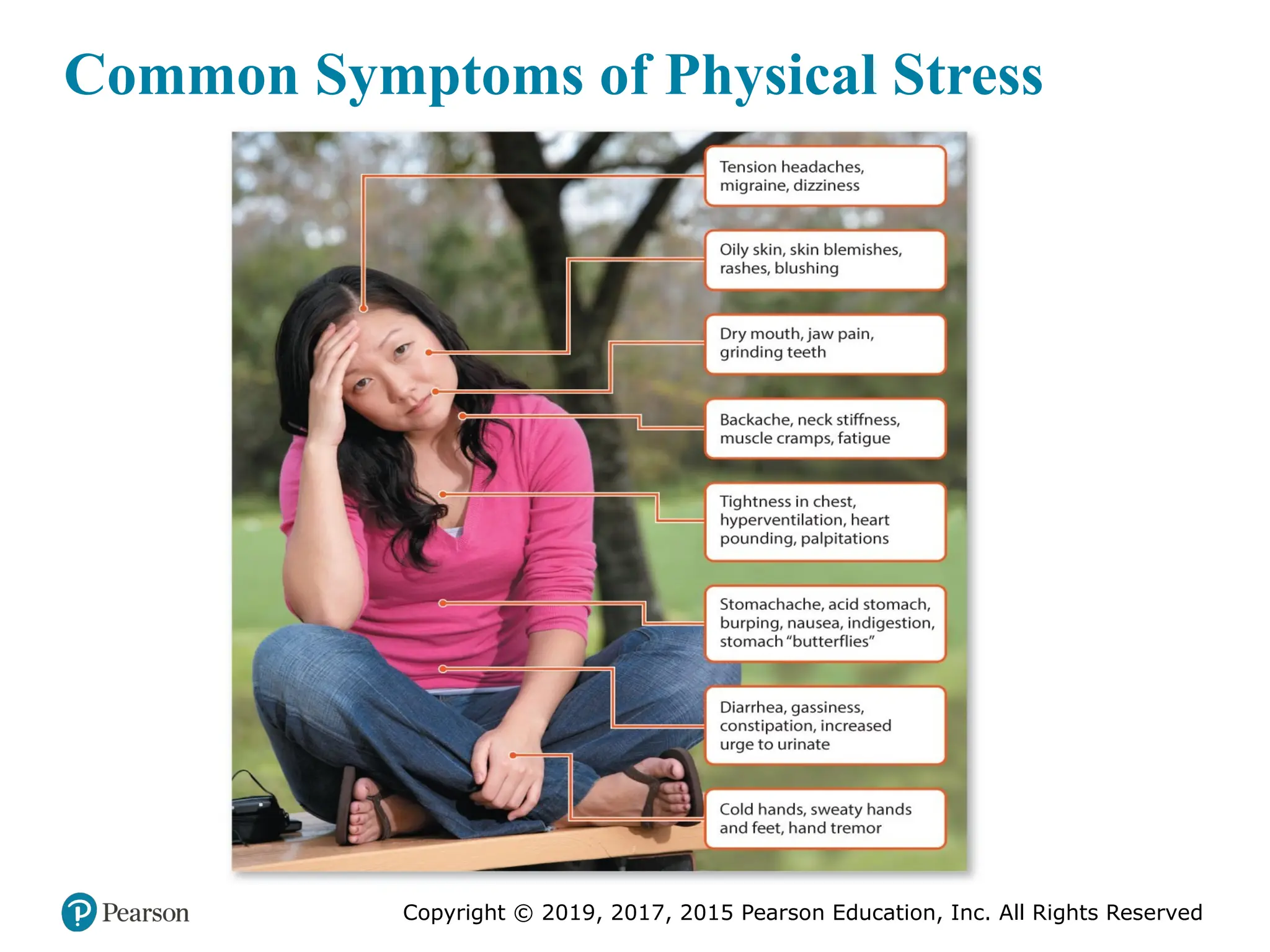
Common Symptoms of Physical Stress
Copyright © 2019, 2017, 2015 Pearson Education, Inc. All Rights Reserved
Physical Effects of Stress
• Stress and cardiovascular disease
– Long-term stress impacts heart rate, blood pressure, heart attack, and stroke.
Stress is one of the key modifiable risk factors for heart attack.
• Stress and weight gain
– Higher stress levels may drive us toward food because they may increase cortisol
levels in the bloodstream.
• Stress and hair loss
– Too much stress can lead to thinning hair, and even baldness, in men and women.
• Stress and diabetes
– Controlling stress is critical for preventing weight gain and other risk factors for type
2 diabetes as well as for short- and long-term diabetes management.
Copyright © 2019, 2017, 2015 Pearson Education, Inc. All Rights Reserved
Physical Effects of Stress (cont.)
• Stress and digestive problems
– Causes for digestive disorders are often unknown, but it is assumed that an
underlying illness, pathogen, injury, or inflammation is present when stress triggers
nausea, vomiting, stomach cramps, and gut pain or diarrhea.
– Some relaxation techniques are particularly helpful in coping with stressors that
make digestive problems worse.
• Stress and impaired immunity
– Psychoneuroimmunology (PNI) analyzes the relationship between the mind's
response to stress and the immune system's ability to function effectively.
– Too much stress over a long period can negatively affect various aspects of the
cellular immune response.
Copyright © 2019, 2017, 2015 Pearson Education, Inc. All Rights Reserved
Intellectual Effects of Stress
• A recent survey showed that 56 percent of respondents (43
percent of men and 61 percent of women) said they felt
overwhelmed by all that they had to do in the past 2 weeks.
• Nearly 56 percent of students reported more than average or
tremendous stress in the last year.
• Stress, memory, and concentration
– Acute stress has been shown to impair
short-term memory, particularly verbal memory.
– New research in rats has linked prolonged exposure to cortisol to shrinking the
hippocampus, the brain's major memory center.
Copyright © 2019, 2017, 2015 Pearson Education, Inc. All Rights Reserved
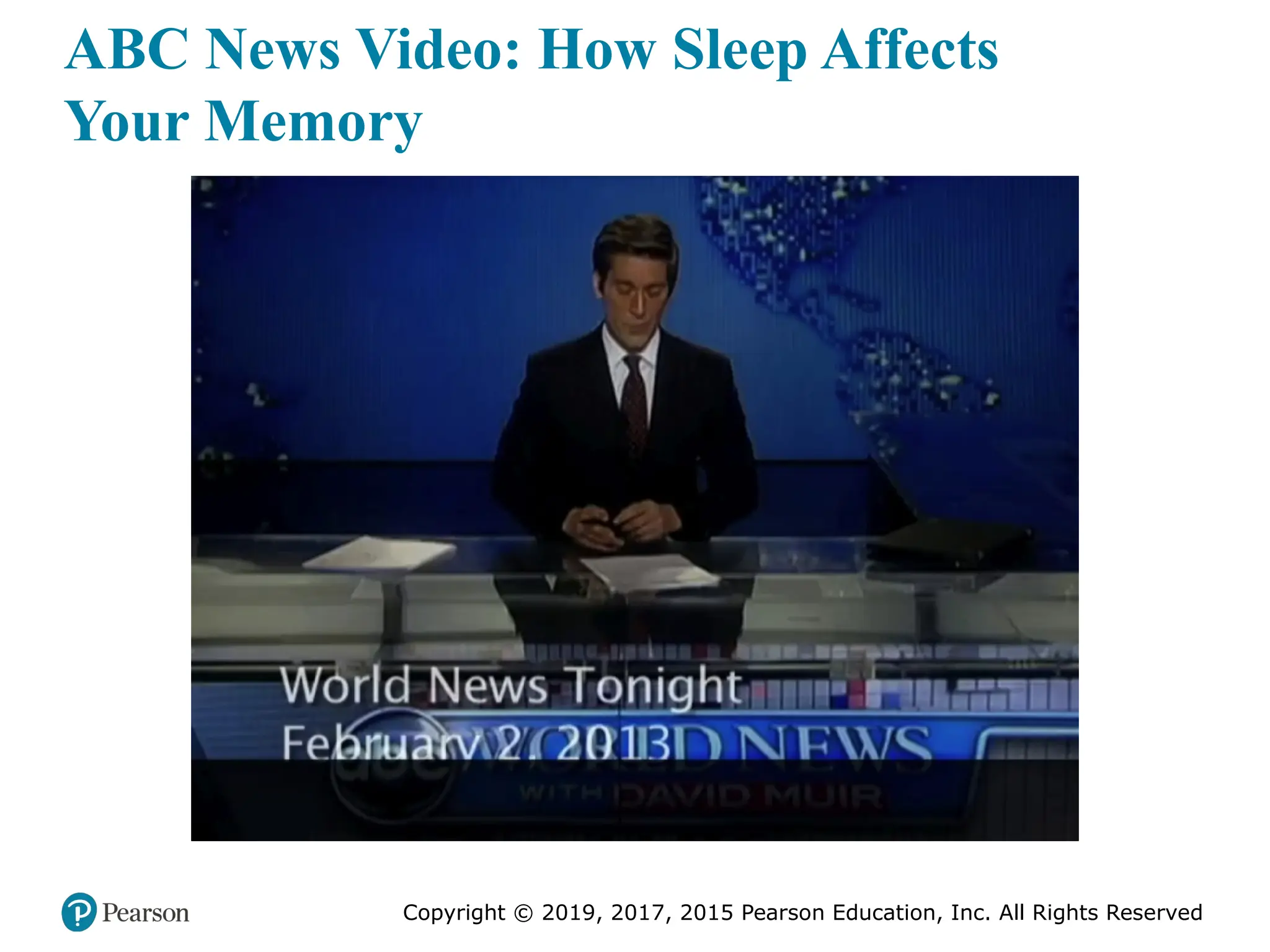
ABC News Video: How Sleep Affects
Your Memory
Copyright © 2019, 2017, 2015 Pearson Education, Inc. All Rights Reserved
ABC News Video: How Sleep Affects
Your Memory
Discussion Questions
1. What practical methods can be used to improve slow wave sleep?
2. What is the take-home message from the video regarding how sleep
affects your memory?
Copyright © 2019, 2017, 2015 Pearson Education, Inc. All Rights Reserved
Psychological Effects of Stress
• Rates of mental disorders, particularly depression and anxiety, are
associated with environmental stressors.
• College students face grade pressure, stress from finding housing,
becoming financially independent, career choices and employment,
relationships, and family.
Copyright © 2019, 2017, 2015 Pearson Education, Inc. All Rights Reserved
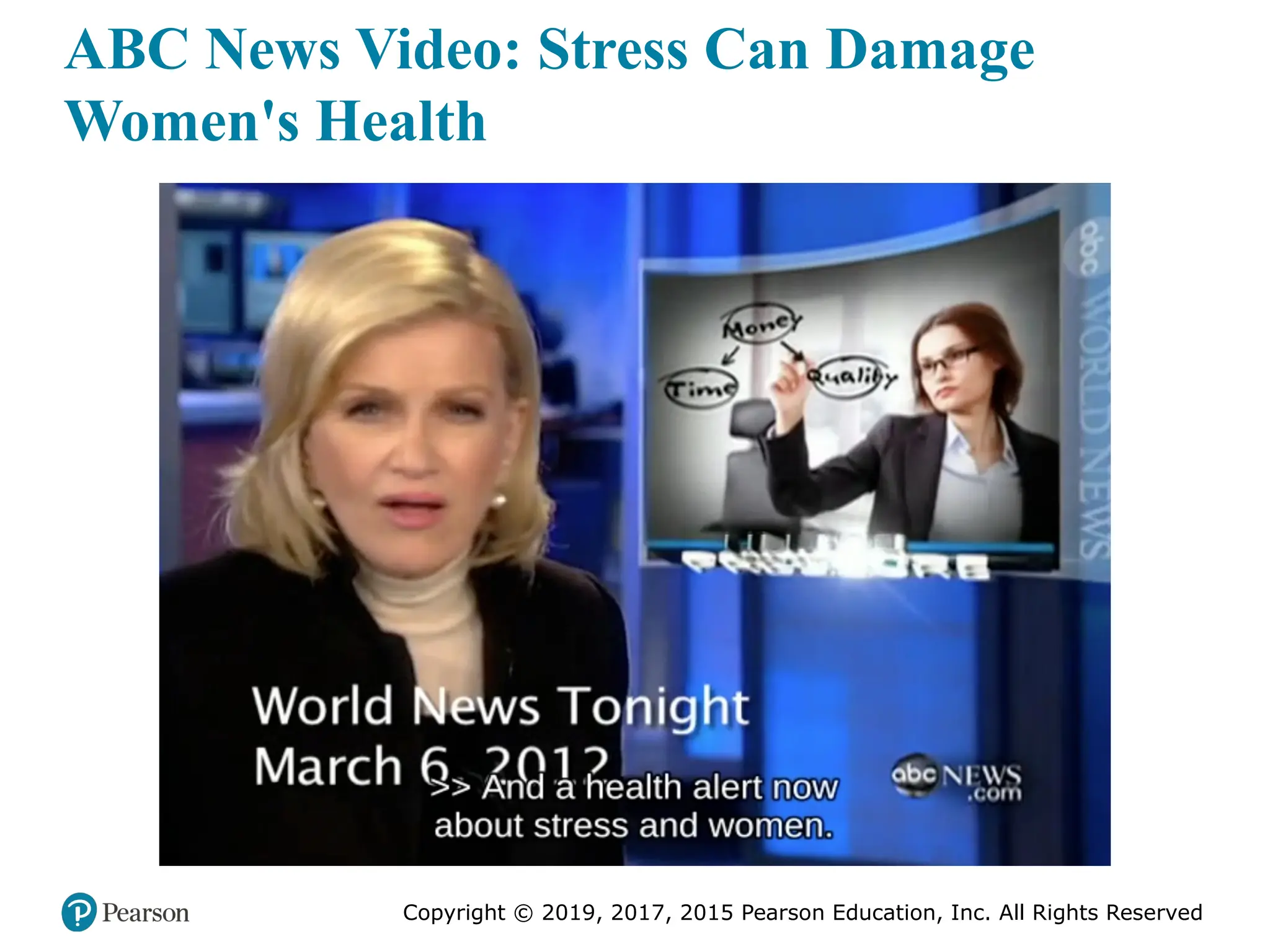
ABC News Video: Stress Can Damage
Women's Health
Copyright © 2019, 2017, 2015 Pearson Education, Inc. All Rights Reserved
ABC News Video: Stress Can Damage
Women's Health
Discussion Questions
1. Discuss symptoms of increased cortisol production and the
physiological process of the body's production of cortisol.
2. Discuss the signs and symptoms of stress and ways to decrease
stress.
Copyright © 2019, 2017, 2015 Pearson Education, Inc. All Rights Reserved
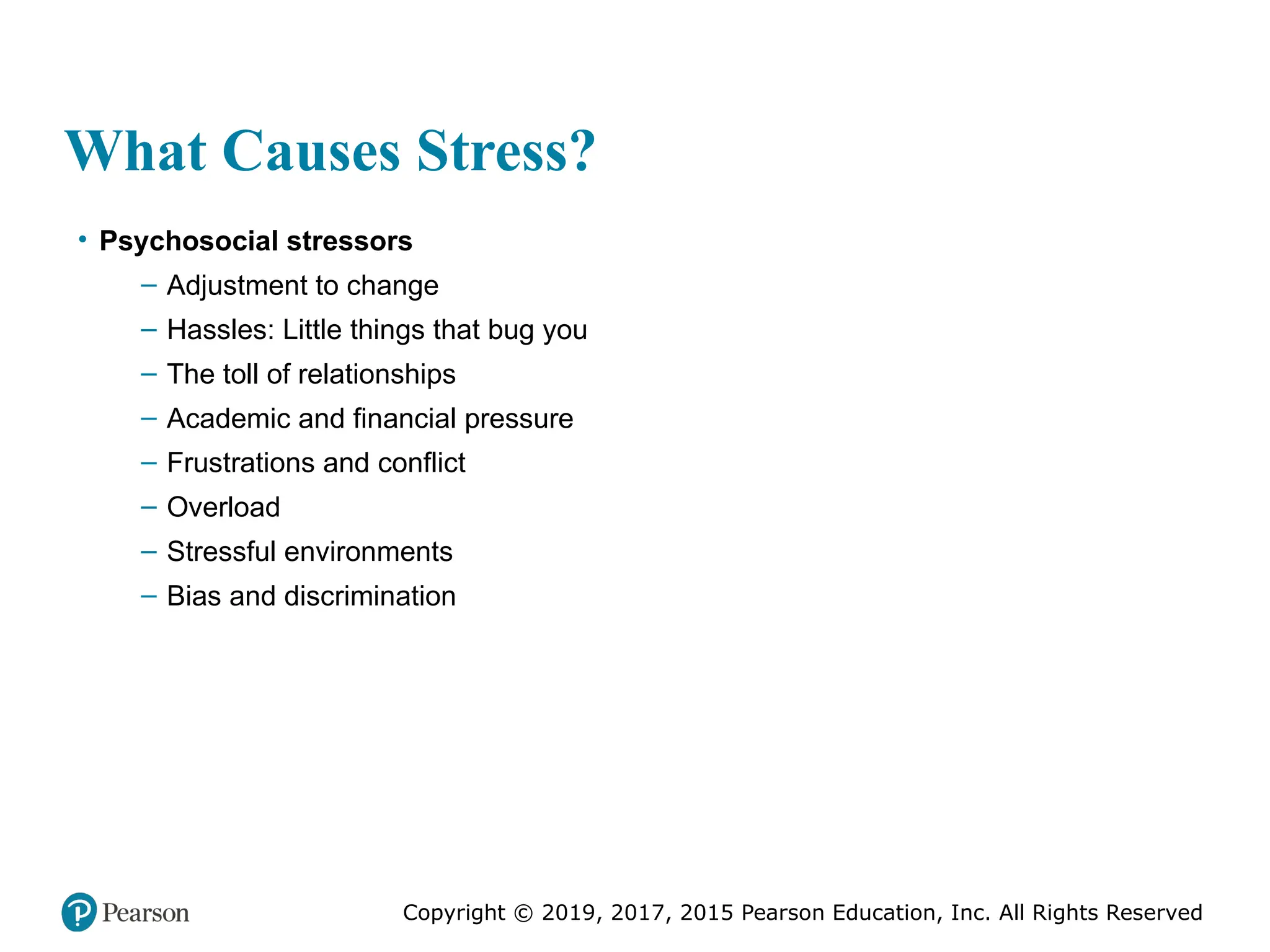
What Causes Stress?
• Psychosocial stressors
– Adjustment to change
– Hassles: Little things that bug you
– The toll of relationships
– Academic and financial pressure
– Frustrations and conflict
– Overload
– Stressful environments
– Bias and discrimination
Copyright © 2019, 2017, 2015 Pearson Education, Inc. All Rights Reserved
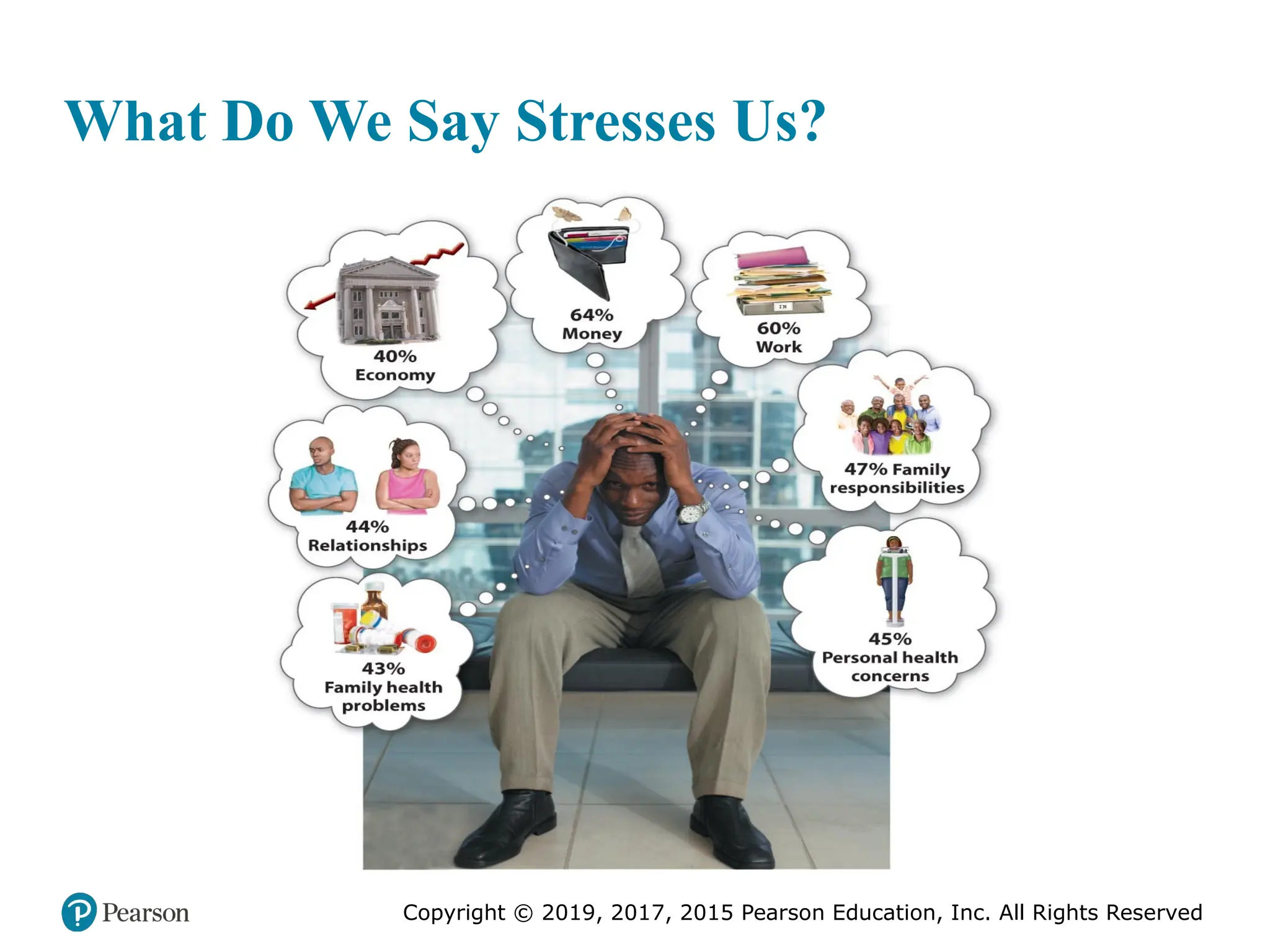
What Do We Say Stresses Us?
Copyright © 2019, 2017, 2015 Pearson Education, Inc. All Rights Reserved
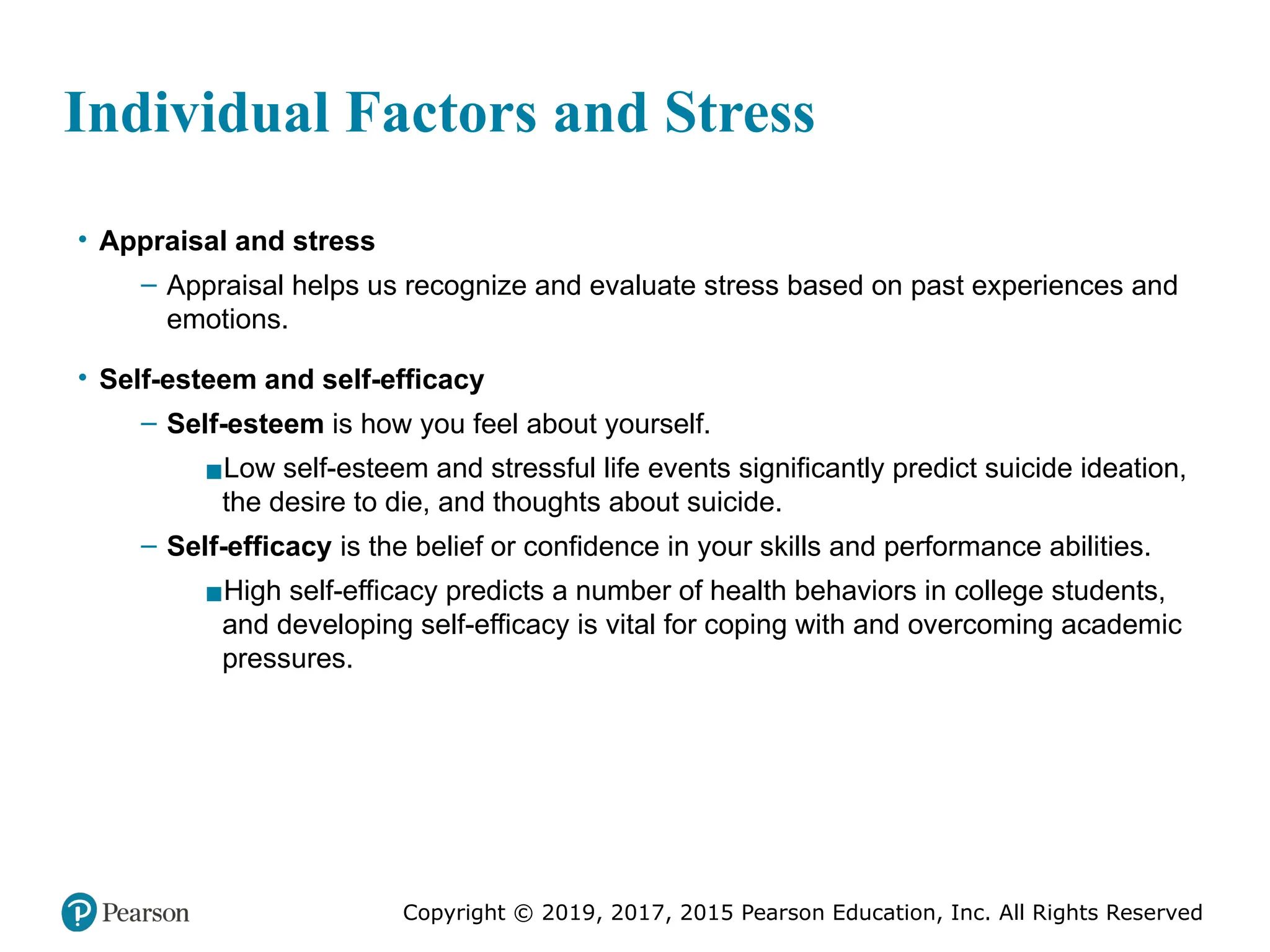
Individual Factors and Stress
• Appraisal and stress
– Appraisal helps us recognize and evaluate stress based on past experiences and
emotions.
• Self-esteem and self-efficacy
– Self-esteem is how you feel about yourself.
▪Low self-esteem and stressful life events significantly predict suicide ideation,
the desire to die, and thoughts about suicide.
– Self-efficacy is the belief or confidence in your skills and performance abilities.
▪High self-efficacy predicts a number of health behaviors in college students,
and developing self-efficacy is vital for coping with and overcoming academic
pressures.
Copyright © 2019, 2017, 2015 Pearson Education, Inc. All Rights Reserved
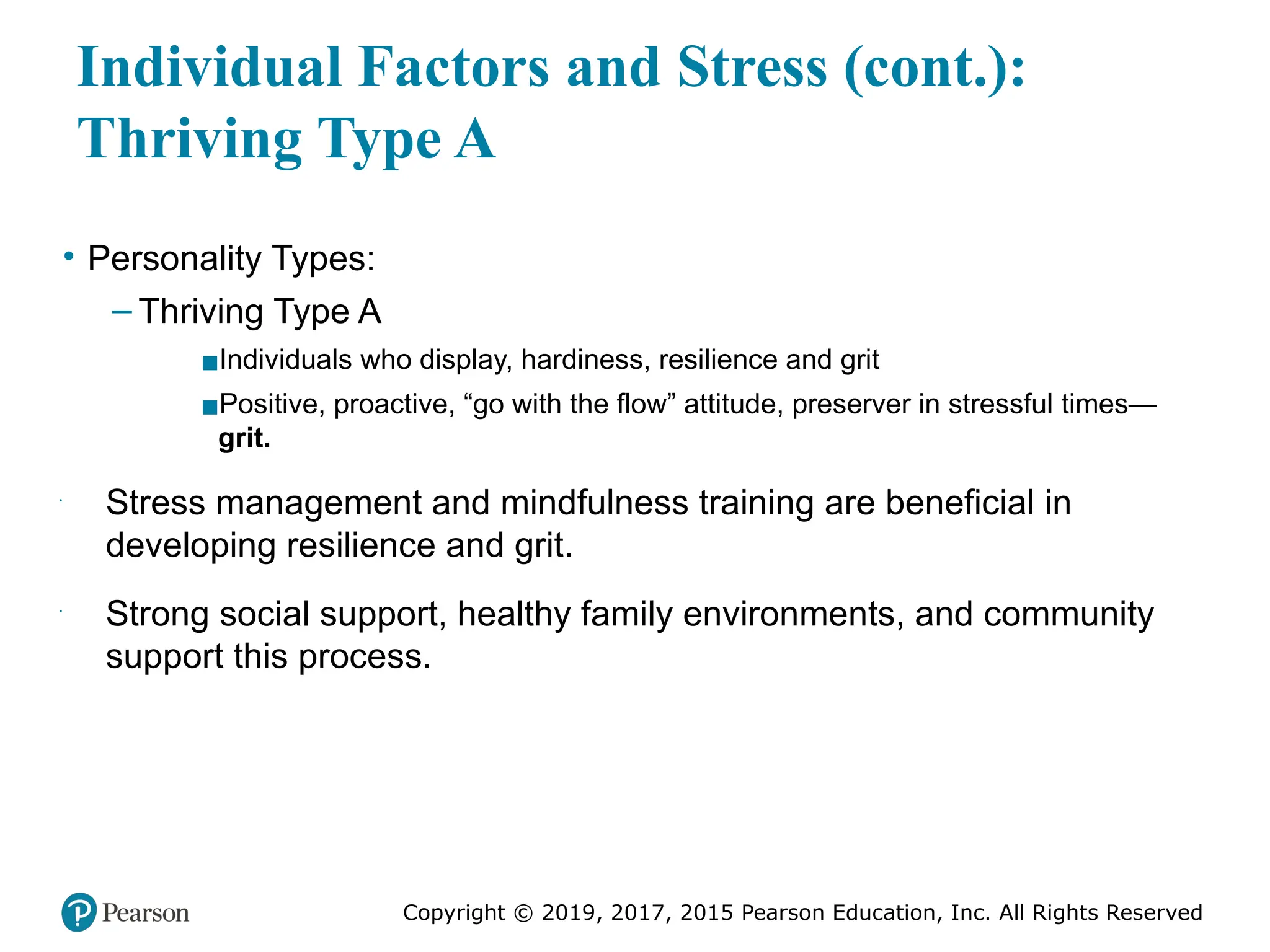
Individual Factors and Stress (cont.):
Thriving Type A
• Personality Types:
– Thriving Type A
▪Individuals who display, hardiness, resilience and grit
▪Positive, proactive, “go with the flow” attitude, preserver in stressful times—
grit.
•
Stress management and mindfulness training are beneficial in
developing resilience and grit.
•
Strong social support, healthy family environments, and community
support this process.
Copyright © 2019, 2017, 2015 Pearson Education, Inc. All Rights Reserved
Individual Factors and Stress (cont.)
• Type A and type B personalities
– Type A personalities are hard-driving, competitive, time-driven perfectionists at
increased risk for heart disease. Some, however, thrive in this supercharged
lifestyle.
– Type B personalities are relaxed, noncompetitive, and more tolerant of others.
– None of us is wholly type A or B.
• Type C and type D personalities
– Type C personalities are stoic and tend to deny feelings; they are conforming,
lack assertiveness, and may feel helpless or hopeless. This may lead to
greater susceptibility to asthma, multiple sclerosis, autoimmune disorders, and
cancers.
– Type D personalities exhibit excessive negative worry, irritability, and gloom,
and are socially inhibited. They may be eight times more likely to die of heart
attack or sudden death.
Copyright © 2019, 2017, 2015 Pearson Education, Inc. All Rights Reserved
Are Individual Factors Inescapable?
• Psychological hardiness may negate self-imposed stress with Type
A personalities.
• Shift and persist research has shown that with the help of positive
role models, youth, in the presence of extreme and persistent
adversity, are able to reframe appraisals of current stressors. Staying
positive and focusing on the future serves to protect against negative
impacts of stress.
Copyright © 2019, 2017, 2015 Pearson Education, Inc. All Rights Reserved
Managing Stress in College
• Practice mental work to reduce stress—mindfulness
– Assess your stressors and solve problems.
– Use compassion in your thinking and internal conversations.
• Develop a support network
– Find supportive people.
– Invest in your loved ones.
• Cultivate your spiritual side
– Find your purpose in life and live your days more fully.
Copyright © 2019, 2017, 2015 Pearson Education, Inc. All Rights Reserved
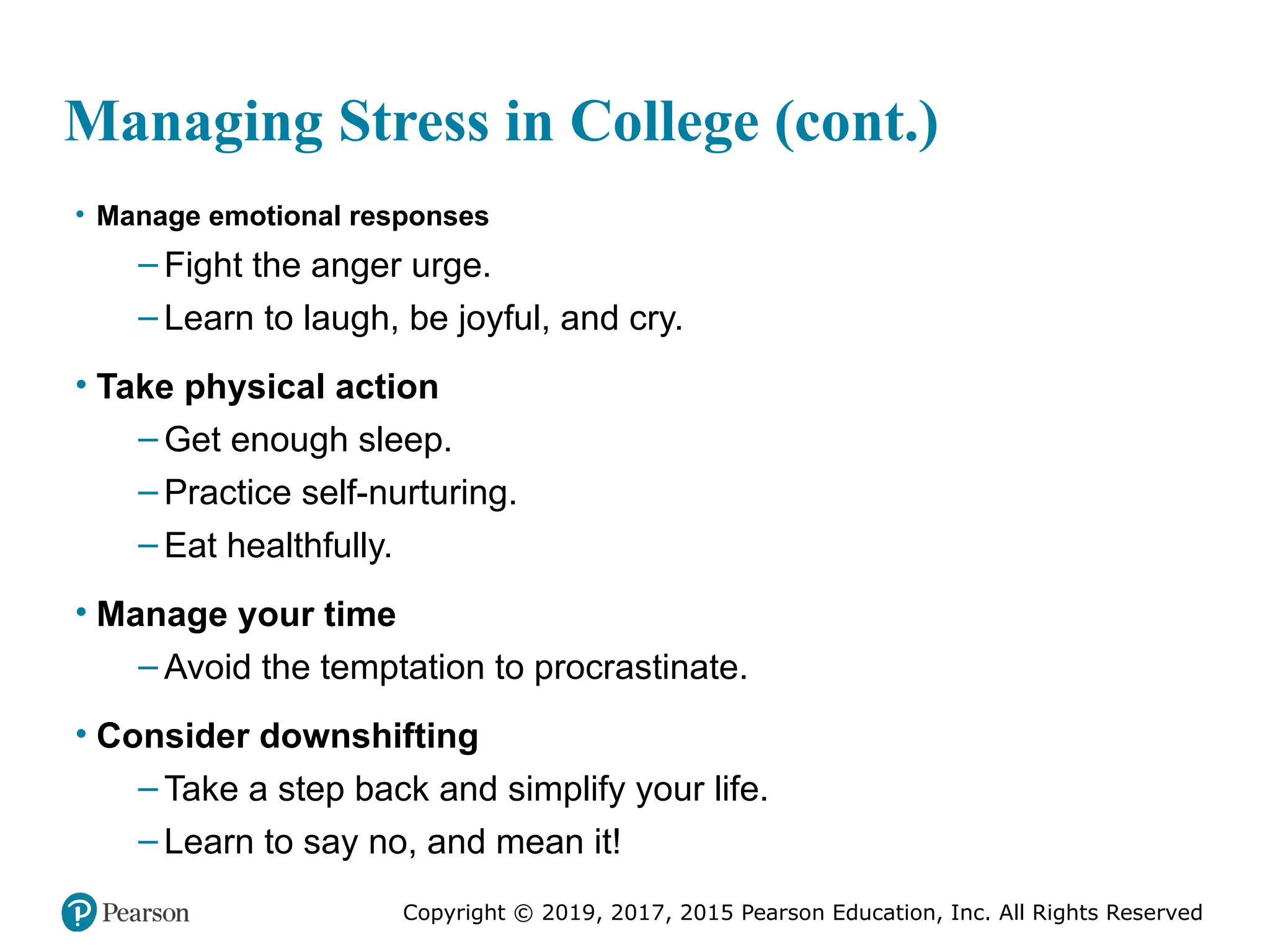
Managing Stress in College (cont.)
• Manage emotional responses
– Fight the anger urge.
– Learn to laugh, be joyful, and cry.
• Take physical action
– Get enough sleep.
– Practice self-nurturing.
– Eat healthfully.
• Manage your time
– Avoid the temptation to procrastinate.
• Consider downshifting
– Take a step back and simplify your life.
– Learn to say no, and mean it!
Copyright © 2019, 2017, 2015 Pearson Education, Inc. All Rights Reserved
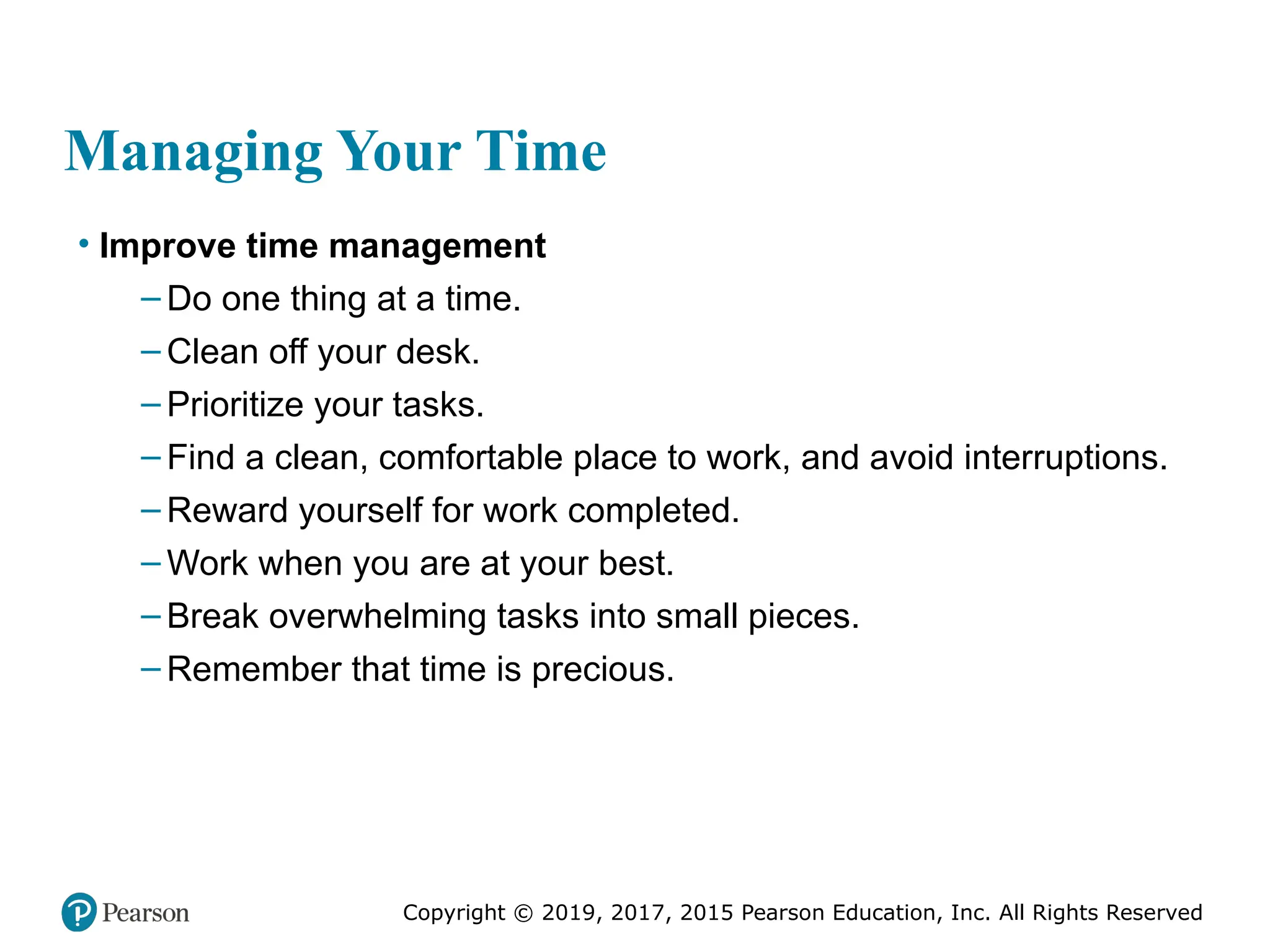
Managing Your Time
• Improve time management
– Do one thing at a time.
– Clean off your desk.
– Prioritize your tasks.
– Find a clean, comfortable place to work, and avoid interruptions.
– Reward yourself for work completed.
– Work when you are at your best.
– Break overwhelming tasks into small pieces.
– Remember that time is precious.
Copyright © 2019, 2017, 2015 Pearson Education, Inc. All Rights Reserved
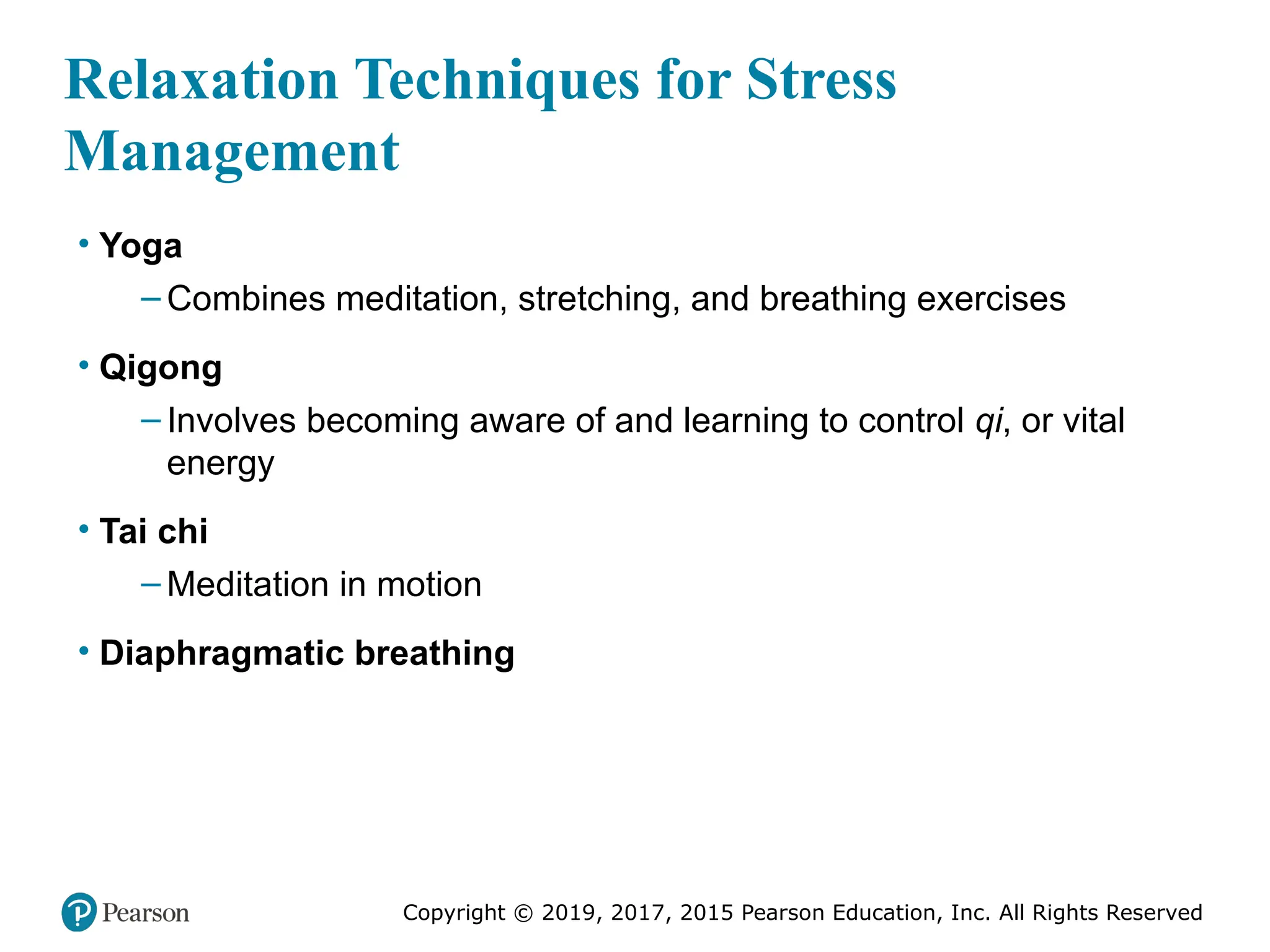
Relaxation Techniques for Stress
Management
• Yoga
– Combines meditation, stretching, and breathing exercises
• Qigong
– Involves becoming aware of and learning to control qi, or vital
energy
• Tai chi
– Meditation in motion
• Diaphragmatic breathing
Copyright © 2019, 2017, 2015 Pearson Education, Inc. All Rights Reserved
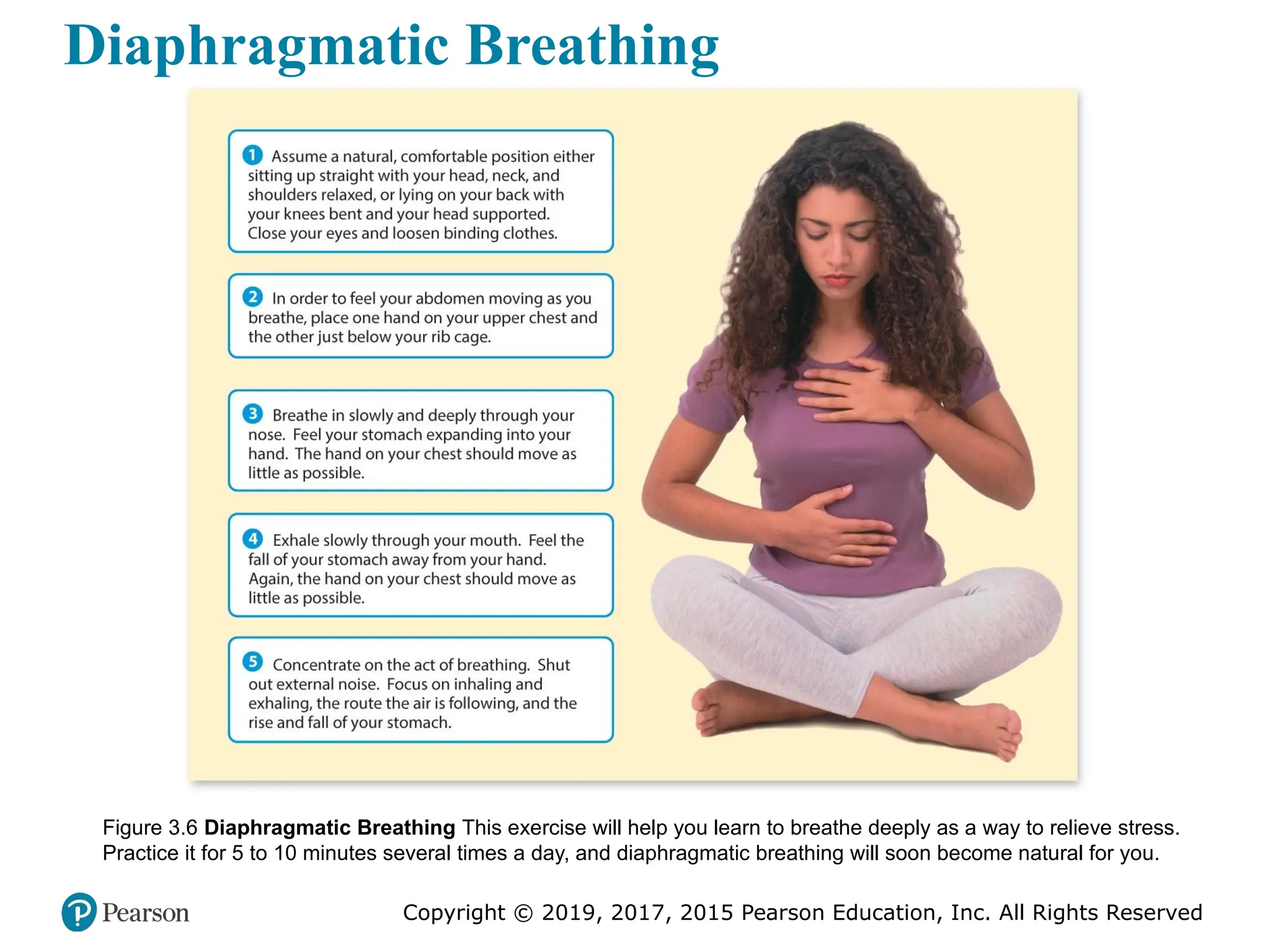
Diaphragmatic Breathing
Figure 3.6 Diaphragmatic Breathing This exercise will help you learn to breathe deeply as a way to relieve stress.
Practice it for 5 to 10 minutes several times a day, and diaphragmatic breathing will soon become natural for you.
Copyright © 2019, 2017, 2015 Pearson Education, Inc. All Rights Reserved
Relaxation Techniques for Stress
Management
• Meditation: A relaxation technique that involves deep breathing and
concentration
• Visualization: The creation of mental images to promote relaxation
• Progressive muscle relaxation
Copyright © 2019, 2017, 2015 Pearson Education, Inc. All Rights Reserved
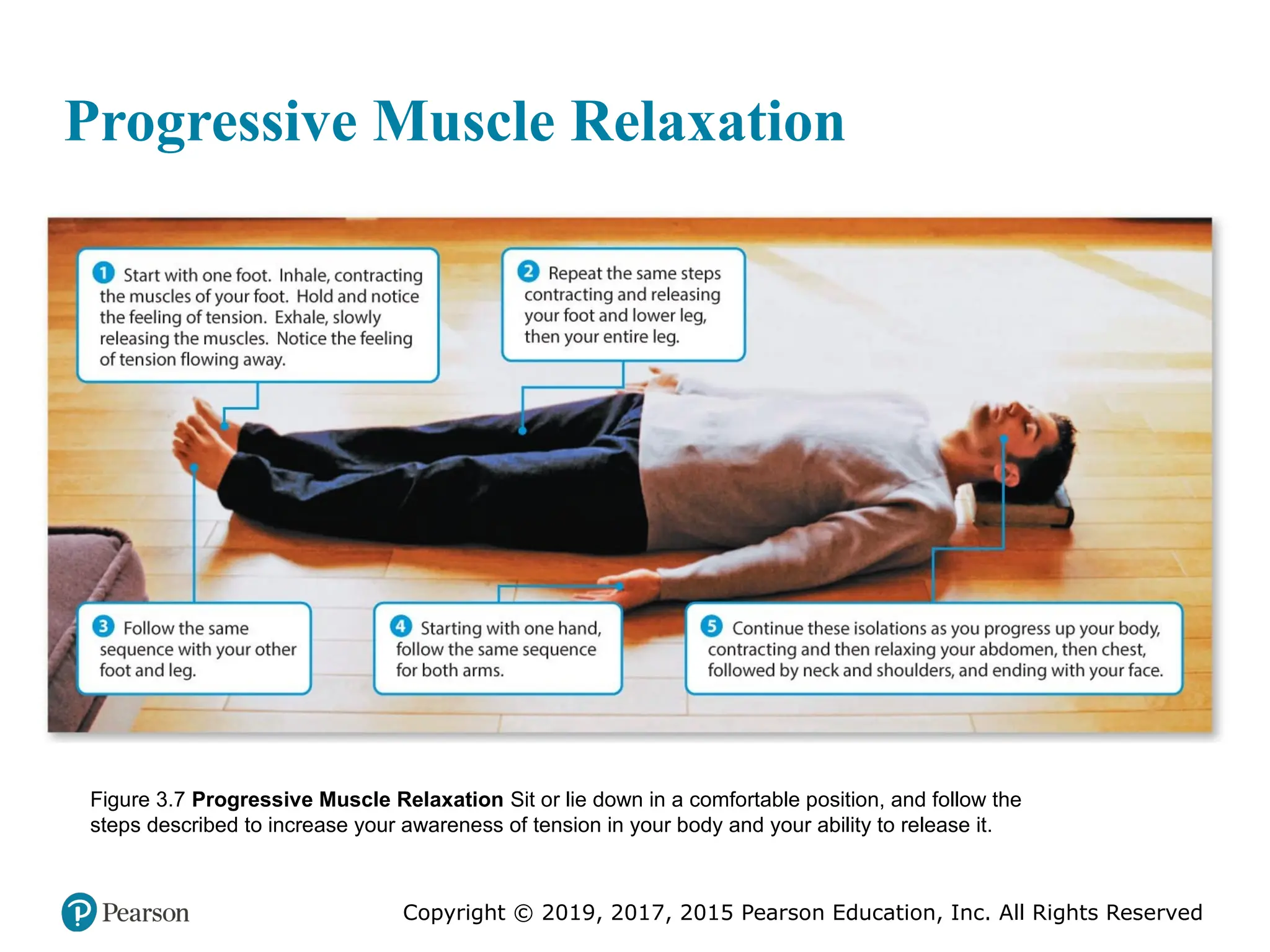
Progressive Muscle Relaxation
Figure 3.7 Progressive Muscle Relaxation Sit or lie down in a comfortable position, and follow the
steps described to increase your awareness of tension in your body and your ability to release it.
Copyright © 2019, 2017, 2015 Pearson Education, Inc. All Rights Reserved
Relaxation Techniques for Stress
Management (cont.)
• Massage therapy: Swedish massage may have beneficial effects on
blood pressure and inflammation.
• Biofeedback: A technique using a machine to self-monitor physical
responses to stress.

Managing Stress and Coping with Life's Challenges

  • 1.
    Copyright © 2019,2017, 2015 Pearson Education, Inc. All Rights Reserved Health The Basics 13th Edition Chapter 3: Managing Stress and Coping with Life's Challenges
  • 2.
    Copyright © 2019,2017, 2015 Pearson Education, Inc. All Rights Reserved Learning Outcomes • 3.1 Define stress and examine its potential impact on health, relationships, and success in college and life. • 3.2 Explain key stress theories as well as the emotional, mental, and physiological changes that occur during the stress response. • 3.3 Examine the physical health risks that may occur with chronic stress. • 3.4 Examine the intellectual and psychological effects of stress and their impacts on college students. • 3.5 Discuss sources of stress and examine the unique stressors that affect young adults and particularly college students. • 3.6 Explain key individual factors that may influence whether or not a person is able to cope with stressors • 3.7 Explore stress management and stress reduction strategies, ways you can cope more effectively with stress, and mindfulness strategies that can enrich your life experiences and reduce health risks.
  • 3.
    Copyright © 2019,2017, 2015 Pearson Education, Inc. All Rights Reserved What Is Stress? • Stress is the mental and physical response and adaptation by our bodies to real or perceived change and challenges. • A stressor is any real or perceived physical, social, or psychological event or stimulus that causes our bodies to react to stress. • Eustress, a positive stress, presents opportunities for personal growth. • Distress is a negative stress that can have a detrimental effect on health. • Acute stress is a short-term physiological response to an immediate or perceived threat. • Episodic acute stress occurs when regularly reacting with wild, acute stress about one thing or another. • Chronic stress is an ongoing state of physiological arousal in response to ongoing or numerous perceived threats. • Traumatic stress is a physiological and mental response that occurs for a prolonged period of time after a major stressful event in which one may be seriously hurt, killed, or witness horrible things.
  • 4.
    Copyright © 2019,2017, 2015 Pearson Education, Inc. All Rights Reserved Stress Levels By Age
  • 5.
    Copyright © 2019,2017, 2015 Pearson Education, Inc. All Rights Reserved Your Body's Response to Stress • When stress levels are low, the body is often in a state of homeostasis. – This is a balanced physiological state in which all the body's systems function smoothly. • Stressors trigger a crisis mode physiological response, after which the body tries to return to homeostasis by means of an adaptive response.
  • 6.
    Copyright © 2019,2017, 2015 Pearson Education, Inc. All Rights Reserved The General Adaptation Syndrome Figure 3.2 The General Adaptation Syndrome (GAS) The GAS is the body’s method of coping with prolonged stress. Source: American Psychological Association, “Stress in America, The Impact of Discrimination,” March 2016, http://www.apa.org/news/press/releases/stress/2015/ impact-of-discrimination.pdf.
  • 7.
    Copyright © 2019,2017, 2015 Pearson Education, Inc. All Rights Reserved The Alarm Phase • You first experience the fight-or-flight response, which occurs as the body prepares to combat or escape the real or perceived threat. • The cerebral cortex triggers an autonomic nervous system (ANS) response that prepares you for action. • The autonomic nervous system: – Controls the heart, glandular functions, and breathing – Has two branches ▪The sympathetic nervous system energizes the body for fight or flight by signaling release of several stress hormones. ▪The parasympathetic nervous system functions to slow all the systems stimulated by the stress response.
  • 8.
    Copyright © 2019,2017, 2015 Pearson Education, Inc. All Rights Reserved The Body's Acute Stress Response
  • 9.
    Copyright © 2019,2017, 2015 Pearson Education, Inc. All Rights Reserved The Alarm Phase (cont.) • The hypothalamus functions as the control center of the sympathetic nervous system and determines the reaction to stress. – It stimulates the adrenal glands to release epinephrine (adrenaline). – This causes more blood to be pumped, dilates the airways in the lungs, increases breathing rate, and causes more glucose to be released. – It also causes the pituitary gland to release adrenocorticotropic hormone (ACTH), which in turn causes the release of cortisol. • Cortisol causes more stored nutrients to be released to meet energy demands. • Endorphins are released to relieve pain.
  • 10.
    Copyright © 2019,2017, 2015 Pearson Education, Inc. All Rights Reserved The Resistance Phase • During the resistance phase, the body tries to return to homeostasis. • Because some perceived stressor still exists, the body does not achieve complete calm or rest—it stays activated, causing a higher metabolic rate in some organ tissues.
  • 11.
    Copyright © 2019,2017, 2015 Pearson Education, Inc. All Rights Reserved The Exhaustion Phase • A prolonged effort to adapt to stress may lead to allostatic load or exhaustive wear and tear on the body. • This exhaustion phase occurs when the physical and emotional energy used to fight the stressor has been depleted. • Continual release of cortisol and other hormones can reduce immunocompetence, or the ability of the body to protect you.
  • 12.
    Copyright © 2019,2017, 2015 Pearson Education, Inc. All Rights Reserved Common Symptoms of Physical Stress
  • 13.
    Copyright © 2019,2017, 2015 Pearson Education, Inc. All Rights Reserved Physical Effects of Stress • Stress and cardiovascular disease – Long-term stress impacts heart rate, blood pressure, heart attack, and stroke. Stress is one of the key modifiable risk factors for heart attack. • Stress and weight gain – Higher stress levels may drive us toward food because they may increase cortisol levels in the bloodstream. • Stress and hair loss – Too much stress can lead to thinning hair, and even baldness, in men and women. • Stress and diabetes – Controlling stress is critical for preventing weight gain and other risk factors for type 2 diabetes as well as for short- and long-term diabetes management.
  • 14.
    Copyright © 2019,2017, 2015 Pearson Education, Inc. All Rights Reserved Physical Effects of Stress (cont.) • Stress and digestive problems – Causes for digestive disorders are often unknown, but it is assumed that an underlying illness, pathogen, injury, or inflammation is present when stress triggers nausea, vomiting, stomach cramps, and gut pain or diarrhea. – Some relaxation techniques are particularly helpful in coping with stressors that make digestive problems worse. • Stress and impaired immunity – Psychoneuroimmunology (PNI) analyzes the relationship between the mind's response to stress and the immune system's ability to function effectively. – Too much stress over a long period can negatively affect various aspects of the cellular immune response.
  • 15.
    Copyright © 2019,2017, 2015 Pearson Education, Inc. All Rights Reserved Intellectual Effects of Stress • A recent survey showed that 56 percent of respondents (43 percent of men and 61 percent of women) said they felt overwhelmed by all that they had to do in the past 2 weeks. • Nearly 56 percent of students reported more than average or tremendous stress in the last year. • Stress, memory, and concentration – Acute stress has been shown to impair short-term memory, particularly verbal memory. – New research in rats has linked prolonged exposure to cortisol to shrinking the hippocampus, the brain's major memory center.
  • 16.
    Copyright © 2019,2017, 2015 Pearson Education, Inc. All Rights Reserved ABC News Video: How Sleep Affects Your Memory
  • 17.
    Copyright © 2019,2017, 2015 Pearson Education, Inc. All Rights Reserved ABC News Video: How Sleep Affects Your Memory Discussion Questions 1. What practical methods can be used to improve slow wave sleep? 2. What is the take-home message from the video regarding how sleep affects your memory?
  • 18.
    Copyright © 2019,2017, 2015 Pearson Education, Inc. All Rights Reserved Psychological Effects of Stress • Rates of mental disorders, particularly depression and anxiety, are associated with environmental stressors. • College students face grade pressure, stress from finding housing, becoming financially independent, career choices and employment, relationships, and family.
  • 19.
    Copyright © 2019,2017, 2015 Pearson Education, Inc. All Rights Reserved ABC News Video: Stress Can Damage Women's Health
  • 20.
    Copyright © 2019,2017, 2015 Pearson Education, Inc. All Rights Reserved ABC News Video: Stress Can Damage Women's Health Discussion Questions 1. Discuss symptoms of increased cortisol production and the physiological process of the body's production of cortisol. 2. Discuss the signs and symptoms of stress and ways to decrease stress.
  • 21.
    Copyright © 2019,2017, 2015 Pearson Education, Inc. All Rights Reserved What Causes Stress? • Psychosocial stressors – Adjustment to change – Hassles: Little things that bug you – The toll of relationships – Academic and financial pressure – Frustrations and conflict – Overload – Stressful environments – Bias and discrimination
  • 22.
    Copyright © 2019,2017, 2015 Pearson Education, Inc. All Rights Reserved What Do We Say Stresses Us?
  • 23.
    Copyright © 2019,2017, 2015 Pearson Education, Inc. All Rights Reserved Individual Factors and Stress • Appraisal and stress – Appraisal helps us recognize and evaluate stress based on past experiences and emotions. • Self-esteem and self-efficacy – Self-esteem is how you feel about yourself. ▪Low self-esteem and stressful life events significantly predict suicide ideation, the desire to die, and thoughts about suicide. – Self-efficacy is the belief or confidence in your skills and performance abilities. ▪High self-efficacy predicts a number of health behaviors in college students, and developing self-efficacy is vital for coping with and overcoming academic pressures.
  • 24.
    Copyright © 2019,2017, 2015 Pearson Education, Inc. All Rights Reserved Individual Factors and Stress (cont.): Thriving Type A • Personality Types: – Thriving Type A ▪Individuals who display, hardiness, resilience and grit ▪Positive, proactive, “go with the flow” attitude, preserver in stressful times— grit. • Stress management and mindfulness training are beneficial in developing resilience and grit. • Strong social support, healthy family environments, and community support this process.
  • 25.
    Copyright © 2019,2017, 2015 Pearson Education, Inc. All Rights Reserved Individual Factors and Stress (cont.) • Type A and type B personalities – Type A personalities are hard-driving, competitive, time-driven perfectionists at increased risk for heart disease. Some, however, thrive in this supercharged lifestyle. – Type B personalities are relaxed, noncompetitive, and more tolerant of others. – None of us is wholly type A or B. • Type C and type D personalities – Type C personalities are stoic and tend to deny feelings; they are conforming, lack assertiveness, and may feel helpless or hopeless. This may lead to greater susceptibility to asthma, multiple sclerosis, autoimmune disorders, and cancers. – Type D personalities exhibit excessive negative worry, irritability, and gloom, and are socially inhibited. They may be eight times more likely to die of heart attack or sudden death.
  • 26.
    Copyright © 2019,2017, 2015 Pearson Education, Inc. All Rights Reserved Are Individual Factors Inescapable? • Psychological hardiness may negate self-imposed stress with Type A personalities. • Shift and persist research has shown that with the help of positive role models, youth, in the presence of extreme and persistent adversity, are able to reframe appraisals of current stressors. Staying positive and focusing on the future serves to protect against negative impacts of stress.
  • 27.
    Copyright © 2019,2017, 2015 Pearson Education, Inc. All Rights Reserved Managing Stress in College • Practice mental work to reduce stress—mindfulness – Assess your stressors and solve problems. – Use compassion in your thinking and internal conversations. • Develop a support network – Find supportive people. – Invest in your loved ones. • Cultivate your spiritual side – Find your purpose in life and live your days more fully.
  • 28.
    Copyright © 2019,2017, 2015 Pearson Education, Inc. All Rights Reserved Managing Stress in College (cont.) • Manage emotional responses – Fight the anger urge. – Learn to laugh, be joyful, and cry. • Take physical action – Get enough sleep. – Practice self-nurturing. – Eat healthfully. • Manage your time – Avoid the temptation to procrastinate. • Consider downshifting – Take a step back and simplify your life. – Learn to say no, and mean it!
  • 29.
    Copyright © 2019,2017, 2015 Pearson Education, Inc. All Rights Reserved Managing Your Time • Improve time management – Do one thing at a time. – Clean off your desk. – Prioritize your tasks. – Find a clean, comfortable place to work, and avoid interruptions. – Reward yourself for work completed. – Work when you are at your best. – Break overwhelming tasks into small pieces. – Remember that time is precious.
  • 30.
    Copyright © 2019,2017, 2015 Pearson Education, Inc. All Rights Reserved Relaxation Techniques for Stress Management • Yoga – Combines meditation, stretching, and breathing exercises • Qigong – Involves becoming aware of and learning to control qi, or vital energy • Tai chi – Meditation in motion • Diaphragmatic breathing
  • 31.
    Copyright © 2019,2017, 2015 Pearson Education, Inc. All Rights Reserved Diaphragmatic Breathing Figure 3.6 Diaphragmatic Breathing This exercise will help you learn to breathe deeply as a way to relieve stress. Practice it for 5 to 10 minutes several times a day, and diaphragmatic breathing will soon become natural for you.
  • 32.
    Copyright © 2019,2017, 2015 Pearson Education, Inc. All Rights Reserved Relaxation Techniques for Stress Management • Meditation: A relaxation technique that involves deep breathing and concentration • Visualization: The creation of mental images to promote relaxation • Progressive muscle relaxation
  • 33.
    Copyright © 2019,2017, 2015 Pearson Education, Inc. All Rights Reserved Progressive Muscle Relaxation Figure 3.7 Progressive Muscle Relaxation Sit or lie down in a comfortable position, and follow the steps described to increase your awareness of tension in your body and your ability to release it.
  • 34.
    Copyright © 2019,2017, 2015 Pearson Education, Inc. All Rights Reserved Relaxation Techniques for Stress Management (cont.) • Massage therapy: Swedish massage may have beneficial effects on blood pressure and inflammation. • Biofeedback: A technique using a machine to self-monitor physical responses to stress.

Editor's Notes

  • #1 Ask students to write down their top five current stressors. Next ask them if they fit into either relationships, money, or time categories. You might want to reflect back on the lists as you go through this chapter and encourage discussion on resolutions.
  • #9 Glucose is released from the liver. In addition, epinephrine causes the pupils to dilate to improve visual sensitivity. The body is now poised to act immediately.
  • #23 Type A personalities with a toxic core are at an increased risk for heart disease. Type B personalities are described as being relaxed, noncompetitive, and more tolerant of others. Type C personalities are characterized as stoic and may be more susceptible to illness. Type D personalities are characterized by a tendency toward excessive negative worry, irritability and gloom, and inability to express these feelings owing to social inhibitions.
  • #25 None of us is wholly type A or B. Some Type A personalities who are hard-driving seem to thrive on their supercharged lifestyles. Only those with a toxic core–those with disproportionate amounts of anger, who are distrustful, and who have a cynical approach to life known as a hostility–are at increased risk of heart disease.