Download to read offline

![HUMAN MICROBIOME
The human microbiome is the aggregate of all microbiota that reside on or within human
tissues and biofluids along with the corresponding anatomical sites in which they reside,[1]
including the skin, mammary glands, seminal fluid, uterus, ovarian follicles, lung, saliva, oral
mucosa, conjunctiva, biliary tract, and gastrointestinal tract.
INTESTINAL MICROBIOME:
Intestinal microbiota,flora, or microbiome are the microorganisms including bacteria, archaea
and fungi that live in the intestinal tracts of humans and other animals. The gastrointestinal
metagenome is the aggregate of all the genomes of gut microbiota. The intestine is the main
location of human microbiota.
Intestine is the main location of human microbiota
Fecel material may consist of bacteria and other microorganisms.
Over 300 different bacterial species have been isolated from human feces.
Intestinal micrbiome consist of:
Stomach
Large intestine
Small intestine](https://image.slidesharecdn.com/intestinalmicrobiome871-211205064148/85/Intestinal-micro-biome-2-320.jpg)
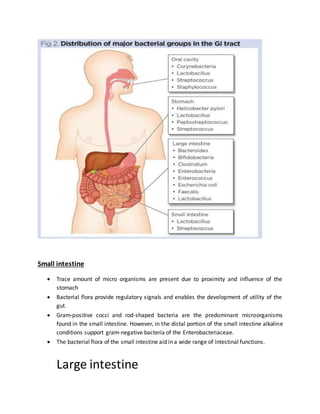



The human microbiome refers to the microorganisms that reside in and on human tissues. The intestinal microbiome is the largest and most densely populated microbial community. The small intestine contains trace amounts of microorganisms while the large intestine contains over 300 bacterial species including obligate anaerobes like Bacteroides and Bifidobacterium. The intestinal microbiome aids in digestion, regulates the immune system, controls brain health, and affects overall gut health. Diet, age, genetics, and antibiotic use are some of the main factors that can modify the intestinal microbiome. Diseases caused by intestinal microbes include diarrhea, cholera, shigellosis, and typhoid fever.


