
The Art of Interviewing
(Believe me...it is an art)
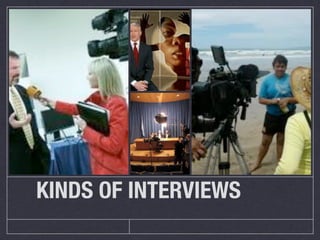
KINDS OF INTERVIEWS
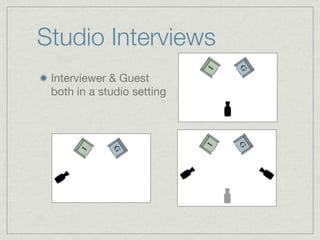
Studio Interviews
 Interviewer & Guest
 both in a studio setting
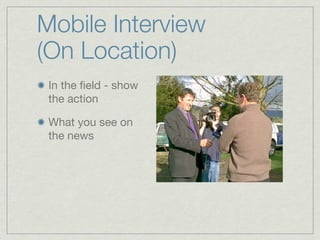
Mobile Interview
(On Location)
 In the field - show
 the action

 What you see on
 the news
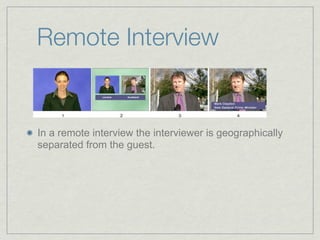
Remote Interview


In a remote interview the interviewer is geographically
separated from the guest.
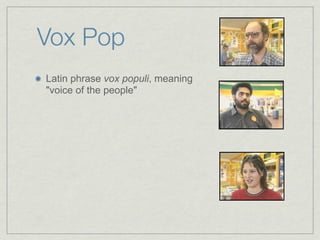
Vox Pop
Latin phrase vox populi, meaning
"voice of the people"
HOW-TO INTERVIEW
Preparing for an
interview involves:
Contacting and making arrangements with the
interviewee(s)

Choosing a location

Preparing equipment

Traveling to the location and setting up

Final briefing and technical checks
An interview is a
conversation
The interviewer is the facilitator. (S)he chooses the topic of conversation,
asks questions and guides the discussion.

The guest is the subject of the interview. (S)he will do most of the talking
and get most of the camera shots.

The viewer is a silent observer who has been invited into the conversation.


Bring them there, make them care
Interview Terminology
    IV
Interview

Guest
The person being interviewed

One-Shot
Shot of a single person, either interviewer or guest. Usually a mid-shot or tighter.

Two-Shot
Shot of two people, e.g. interviewer and guest.

Back-Cut Question
Shot of the interviewer asking a question, shown from the other side of the guest.

Noddy
Shot of the interviewer nodding or showing an appropriate facial expression.
Most interviews seek to achieve one or more of the
 following goals:

1.Obtain the interviewee's knowledge about the topic
2.Obtain the interviewee's opinion and/or feelings about
  the topic
3.Feature the interviewee as the subject
Do your homework
Have a list of questions.
Ask them what you should ask
Back-cut questions
LISTEN
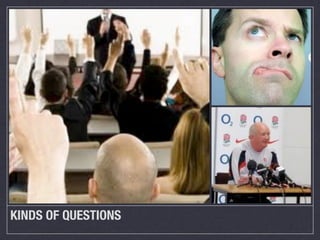
KINDS OF QUESTIONS
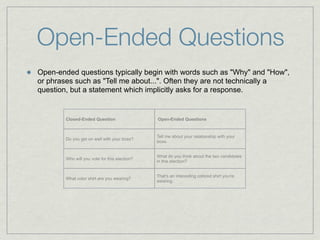
Open-Ended Questions
Open-ended questions typically begin with words such as "Why" and "How",
or phrases such as "Tell me about...". Often they are not technically a
question, but a statement which implicitly asks for a response.


        Closed-Ended Question                  Open-Ended Questions


                                               Tell me about your relationship with your
        Do you get on well with your boss?
                                               boss.


                                               What do you think about the two candidates
        Who will you vote for this election?
                                               in this election?


                                               That's an interesting colored shirt you're
        What color shirt are you wearing?
                                               wearing.
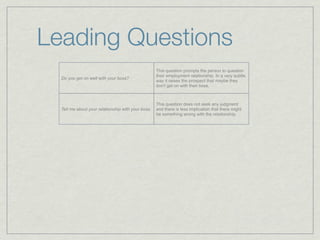
Leading Questions
                                                    This question prompts the person to question
                                                    their employment relationship. In a very subtle
  Do you get on well with your boss?
                                                    way it raises the prospect that maybe they
                                                    don't get on with their boss.


                                                    This question does not seek any judgment
  Tell me about your relationship with your boss.   and there is less implication that there might
                                                    be something wrong with the relationship.
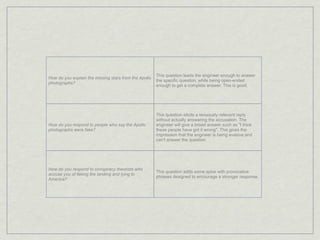
This question leads the engineer enough to answer
How do you explain the missing stars from the Apollo
                                                       the specific question, while being open-ended
photographs?
                                                       enough to get a complete answer. This is good.


                                                       This question elicits a tenuously-relevant reply
                                                       without actually answering the accusation. The
How do you respond to people who say the Apollo        engineer will give a broad answer such as "I think
photographs were fake?                                 these people have got it wrong". This gives the
                                                       impression that the engineer is being evasive and
                                                       can't answer the question.


How do you respond to conspiracy theorists who
                                                       This question adds some spice with provocative
accuse you of faking the landing and lying to
                                                       phrases designed to encourage a stronger response.
America?
Tips
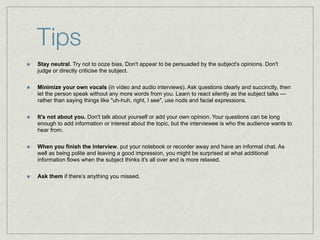
Stay neutral. Try not to ooze bias. Don't appear to be persuaded by the subject's opinions. Don't
judge or directly criticise the subject.

Minimize your own vocals (in video and audio interviews). Ask questions clearly and succinctly, then
let the person speak without any more words from you. Learn to react silently as the subject talks —
rather than saying things like "uh-huh, right, I see", use nods and facial expressions.

It's not about you. Don't talk about yourself or add your own opinion. Your questions can be long
enough to add information or interest about the topic, but the interviewee is who the audience wants to
hear from.

When you finish the interview, put your notebook or recorder away and have an informal chat. As
well as being polite and leaving a good impression, you might be surprised at what additional
information flows when the subject thinks it's all over and is more relaxed.

Ask them if there’s anything you missed.
Interviewing PowerPoint

Interviewing PowerPoint

  • 1.
    The Art ofInterviewing (Believe me...it is an art)
  • 2.
  • 3.
    Studio Interviews Interviewer& Guest both in a studio setting
  • 4.
    Mobile Interview (On Location) In the field - show the action What you see on the news
  • 5.
    Remote Interview In aremote interview the interviewer is geographically separated from the guest.
  • 6.
    Vox Pop Latin phrasevox populi, meaning "voice of the people"
  • 7.
  • 8.
    Preparing for an interviewinvolves: Contacting and making arrangements with the interviewee(s) Choosing a location Preparing equipment Traveling to the location and setting up Final briefing and technical checks
  • 9.
    An interview isa conversation The interviewer is the facilitator. (S)he chooses the topic of conversation, asks questions and guides the discussion. The guest is the subject of the interview. (S)he will do most of the talking and get most of the camera shots. The viewer is a silent observer who has been invited into the conversation. Bring them there, make them care
  • 10.
    Interview Terminology IV Interview Guest The person being interviewed One-Shot Shot of a single person, either interviewer or guest. Usually a mid-shot or tighter. Two-Shot Shot of two people, e.g. interviewer and guest. Back-Cut Question Shot of the interviewer asking a question, shown from the other side of the guest. Noddy Shot of the interviewer nodding or showing an appropriate facial expression.
  • 11.
    Most interviews seekto achieve one or more of the following goals: 1.Obtain the interviewee's knowledge about the topic 2.Obtain the interviewee's opinion and/or feelings about the topic 3.Feature the interviewee as the subject
  • 12.
    Do your homework Havea list of questions. Ask them what you should ask Back-cut questions LISTEN
  • 13.
  • 14.
    Open-Ended Questions Open-ended questionstypically begin with words such as "Why" and "How", or phrases such as "Tell me about...". Often they are not technically a question, but a statement which implicitly asks for a response. Closed-Ended Question Open-Ended Questions Tell me about your relationship with your Do you get on well with your boss? boss. What do you think about the two candidates Who will you vote for this election? in this election? That's an interesting colored shirt you're What color shirt are you wearing? wearing.
  • 15.
    Leading Questions This question prompts the person to question their employment relationship. In a very subtle Do you get on well with your boss? way it raises the prospect that maybe they don't get on with their boss. This question does not seek any judgment Tell me about your relationship with your boss. and there is less implication that there might be something wrong with the relationship.
  • 16.
    This question leadsthe engineer enough to answer How do you explain the missing stars from the Apollo the specific question, while being open-ended photographs? enough to get a complete answer. This is good. This question elicits a tenuously-relevant reply without actually answering the accusation. The How do you respond to people who say the Apollo engineer will give a broad answer such as "I think photographs were fake? these people have got it wrong". This gives the impression that the engineer is being evasive and can't answer the question. How do you respond to conspiracy theorists who This question adds some spice with provocative accuse you of faking the landing and lying to phrases designed to encourage a stronger response. America?
  • 17.
    Tips Stay neutral. Trynot to ooze bias. Don't appear to be persuaded by the subject's opinions. Don't judge or directly criticise the subject. Minimize your own vocals (in video and audio interviews). Ask questions clearly and succinctly, then let the person speak without any more words from you. Learn to react silently as the subject talks — rather than saying things like "uh-huh, right, I see", use nods and facial expressions. It's not about you. Don't talk about yourself or add your own opinion. Your questions can be long enough to add information or interest about the topic, but the interviewee is who the audience wants to hear from. When you finish the interview, put your notebook or recorder away and have an informal chat. As well as being polite and leaving a good impression, you might be surprised at what additional information flows when the subject thinks it's all over and is more relaxed. Ask them if there’s anything you missed.