
FOR AN OPEN 
INTEROPERABLE 
INTERNET OF 
THINGS
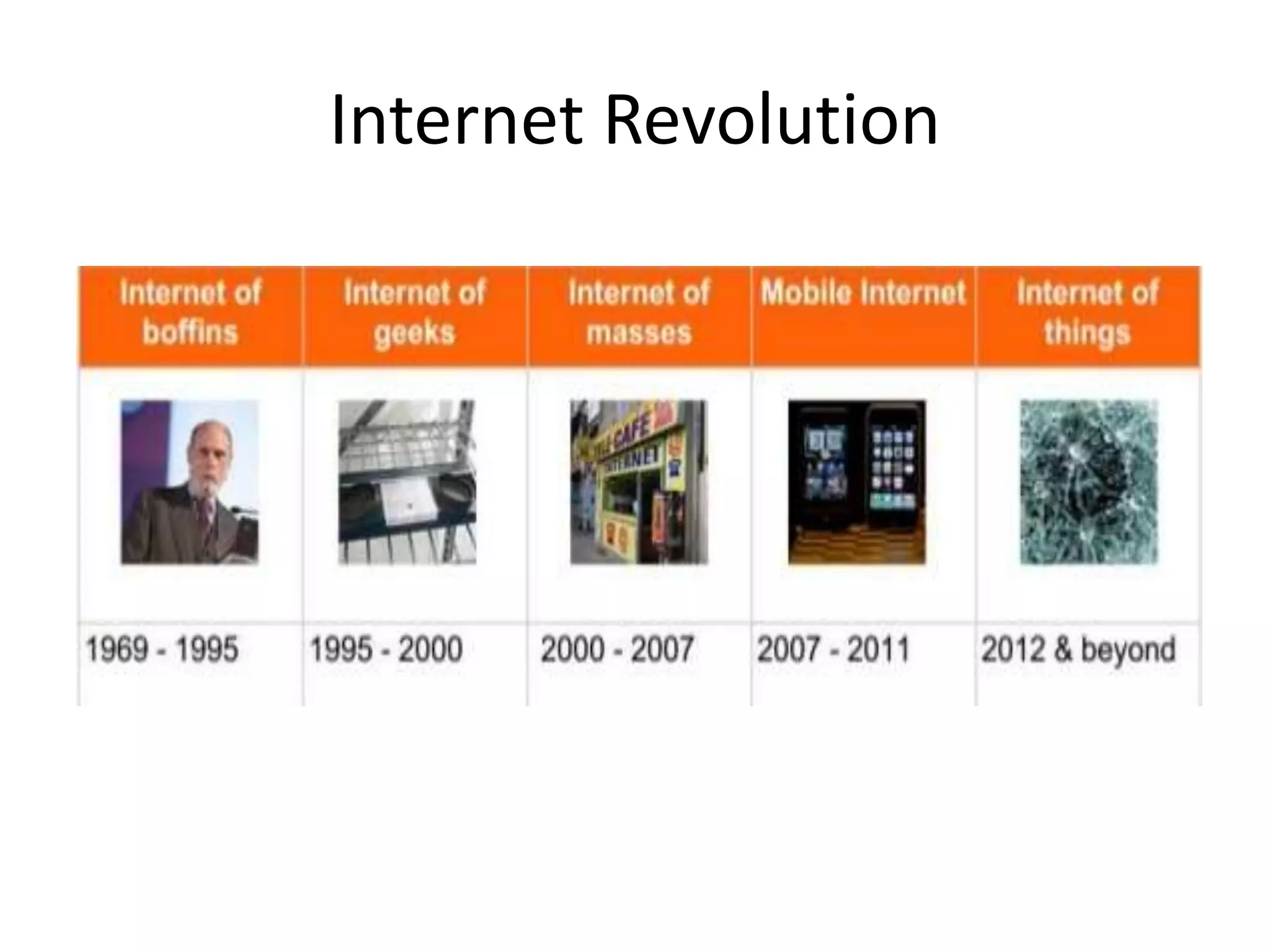
Internet Revolution
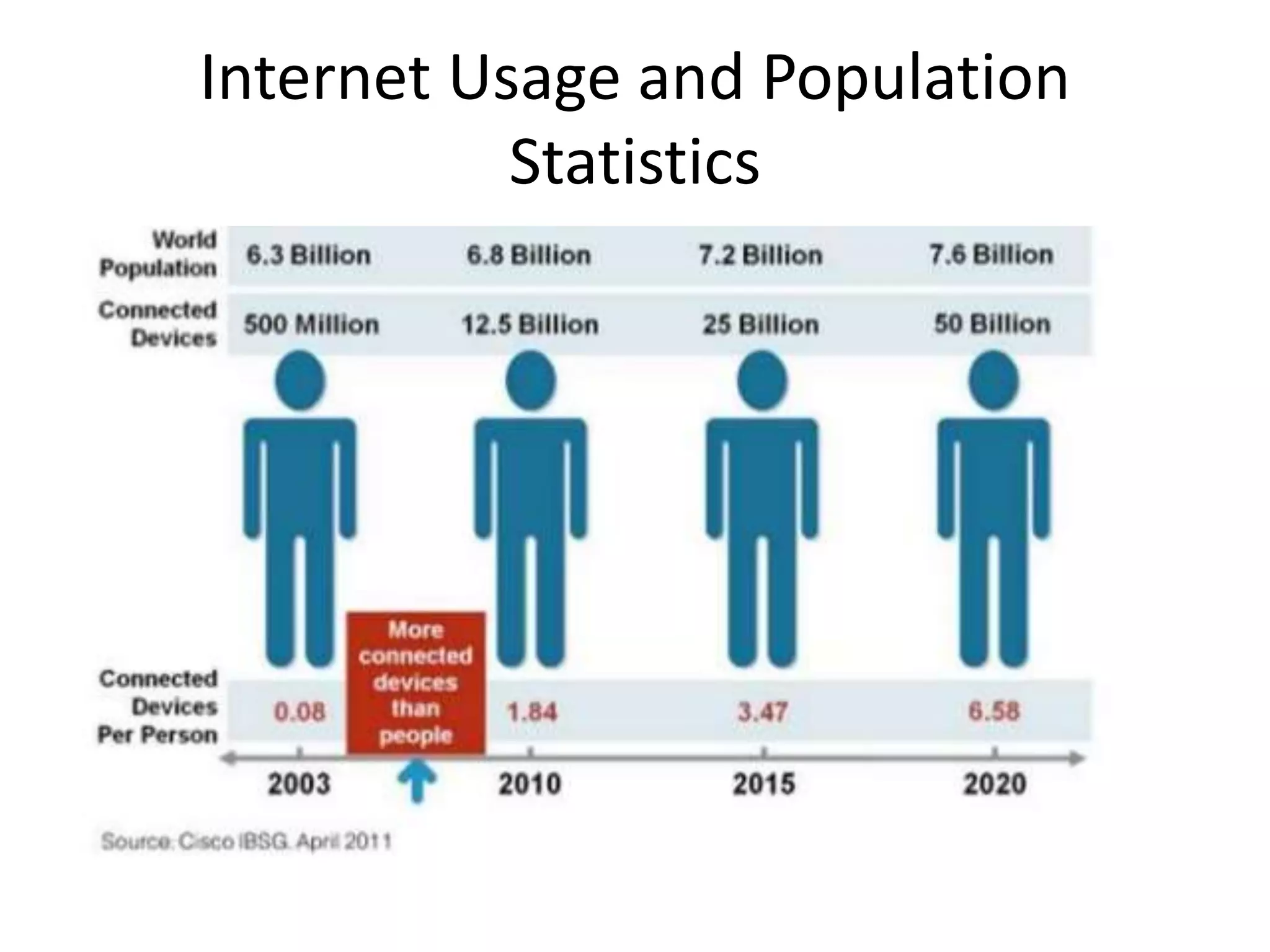
Internet Usage and Population 
Statistics
Internet of Things 
• Kevin Ashton coined 
"Internet of Things" 
phrase to describe a 
system where the 
Internet is connected to 
the physical world via 
ubiquitous sensors 
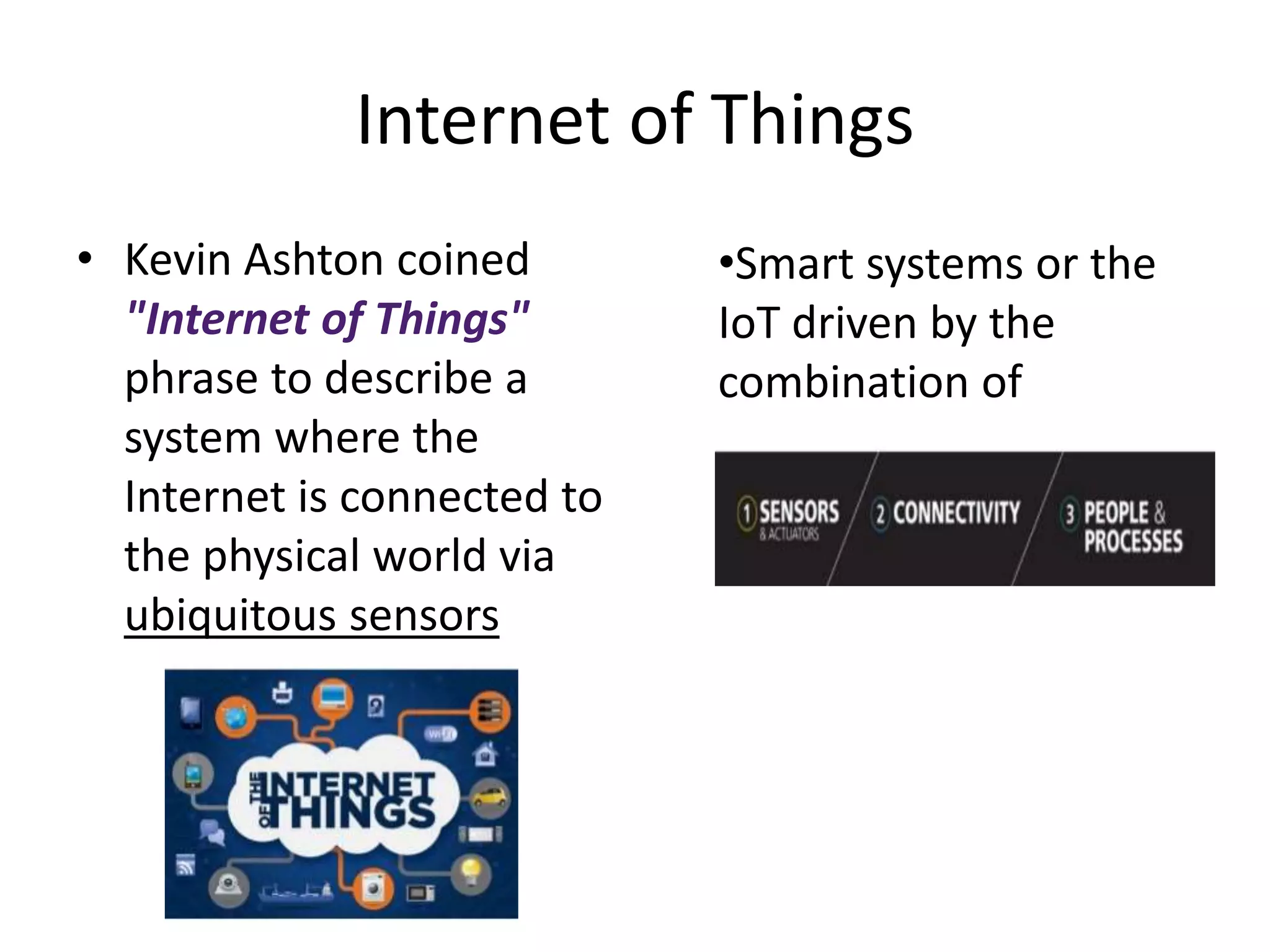
•Smart systems or the 
IoT driven by the 
combination of
IoT(Cont..) 
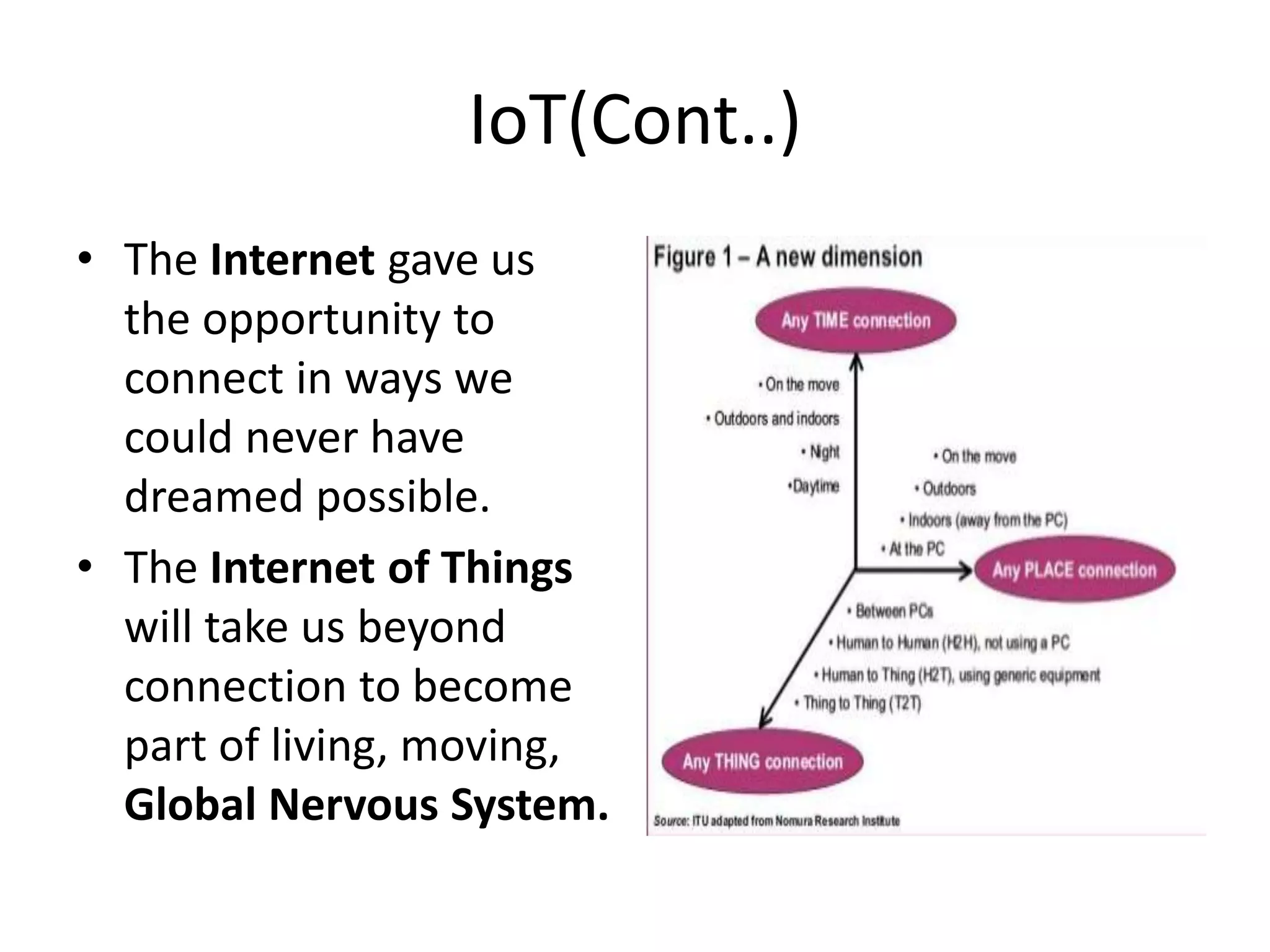
• The Internet gave us 
the opportunity to 
connect in ways we 
could never have 
dreamed possible. 
• The Internet of Things 
will take us beyond 
connection to become 
part of living, moving, 
Global Nervous System.
Technologies used on IoT 
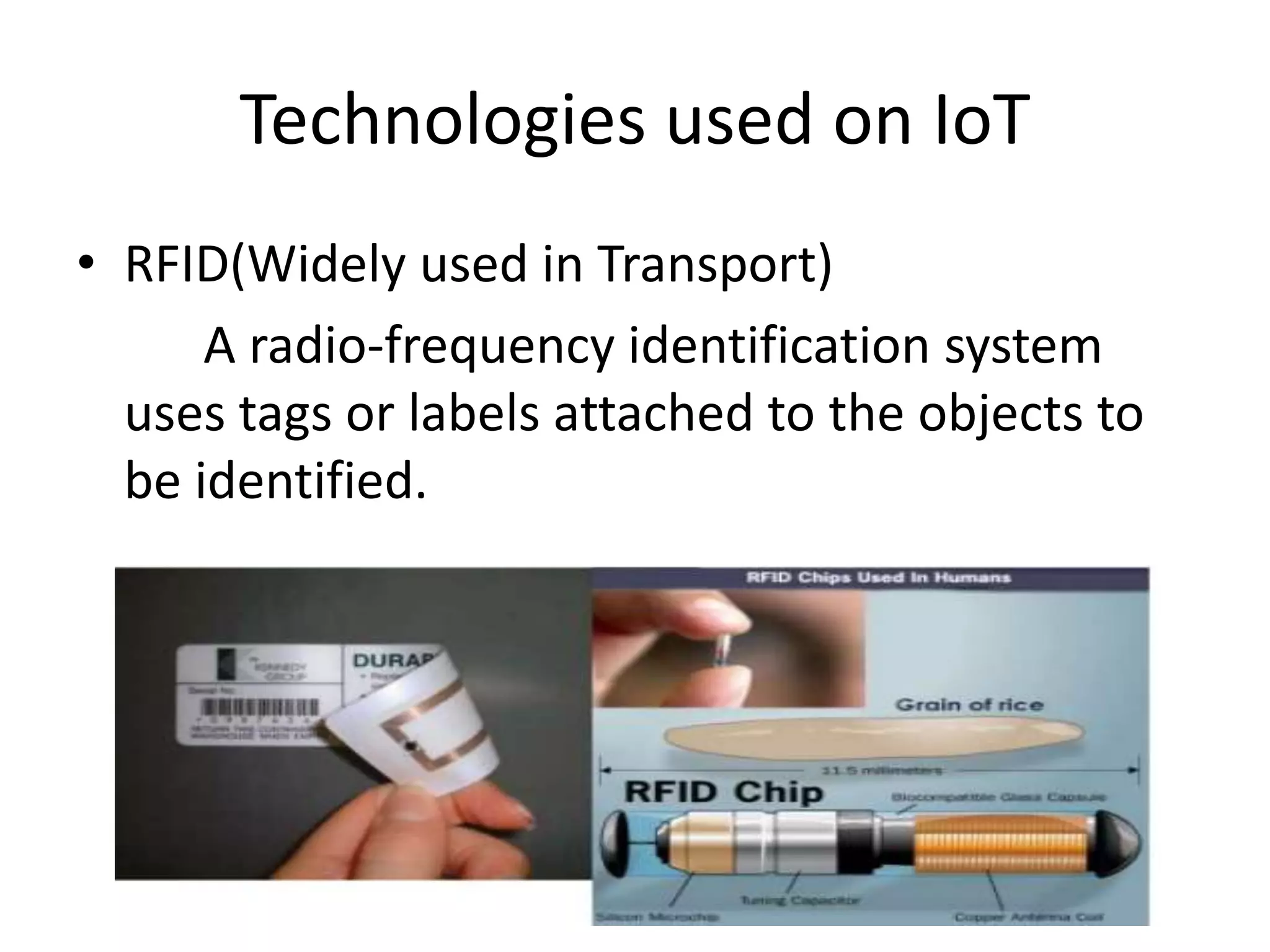
• RFID(Widely used in Transport) 
A radio-frequency identification system 
uses tags or labels attached to the objects to 
be identified.
• Sensors and Smartphones. 
Sensors are used in everyday objects such as touch- sensitive 
elevator buttons. 
In the near future almost everybody will probably have a 
Smartphone. 
• ZigBee IEEE 802.15.4 
Low cost. 
Long battery life. 
Secure networking. 
Physical range 10 to 100 meters. 
Support for Multiple Network Topologies.
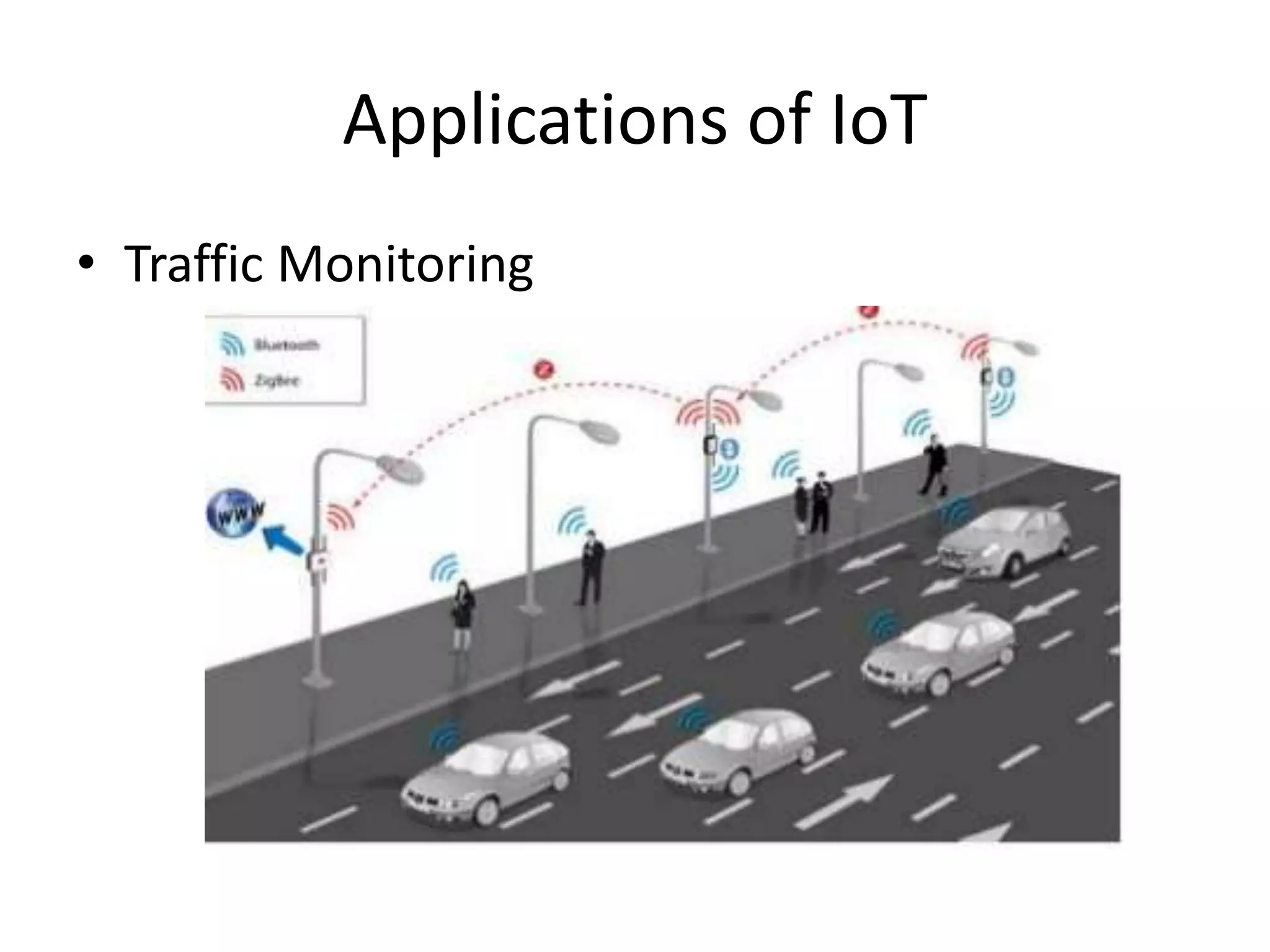
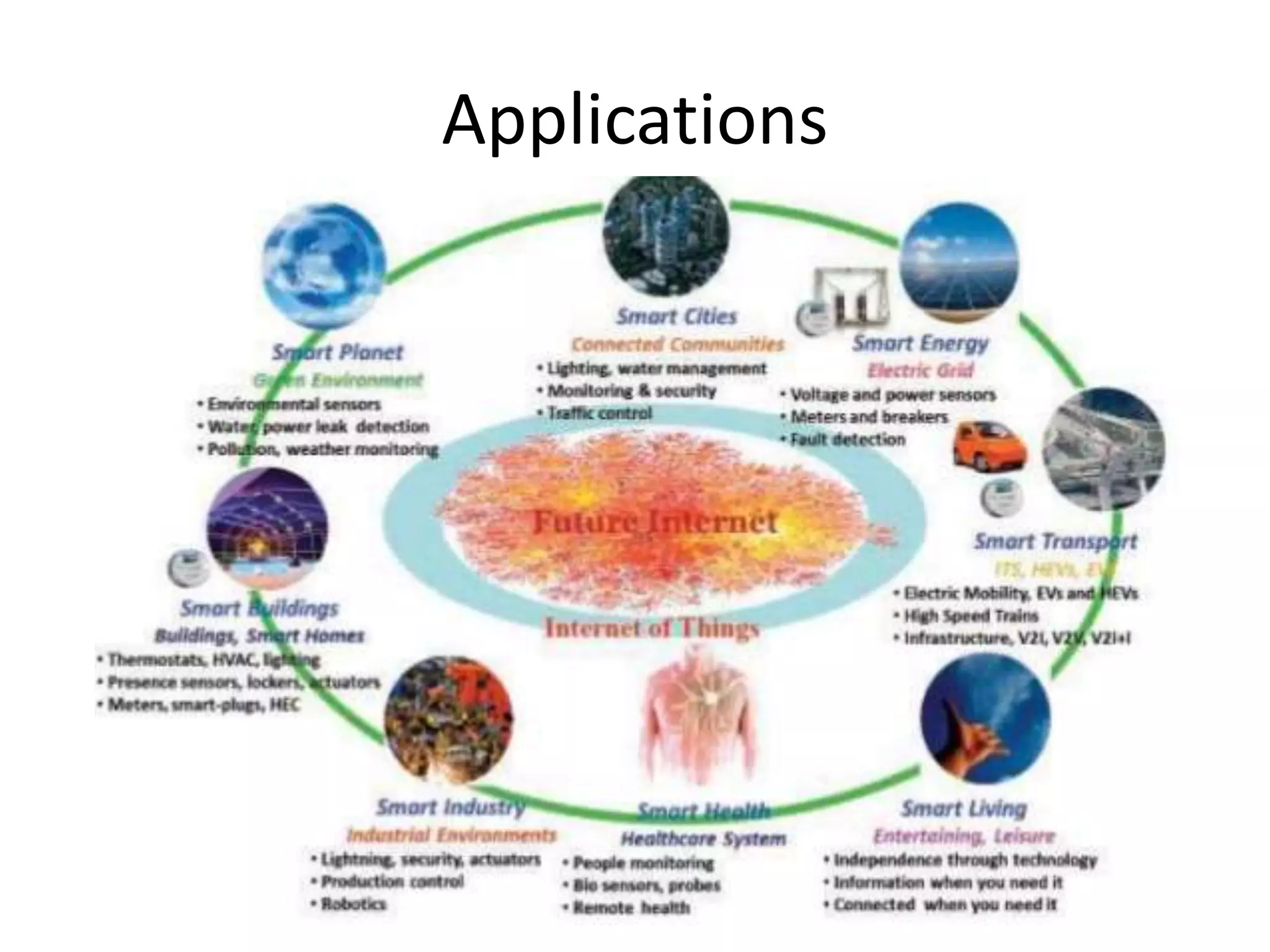
Applications of IoT 
• Traffic Monitoring
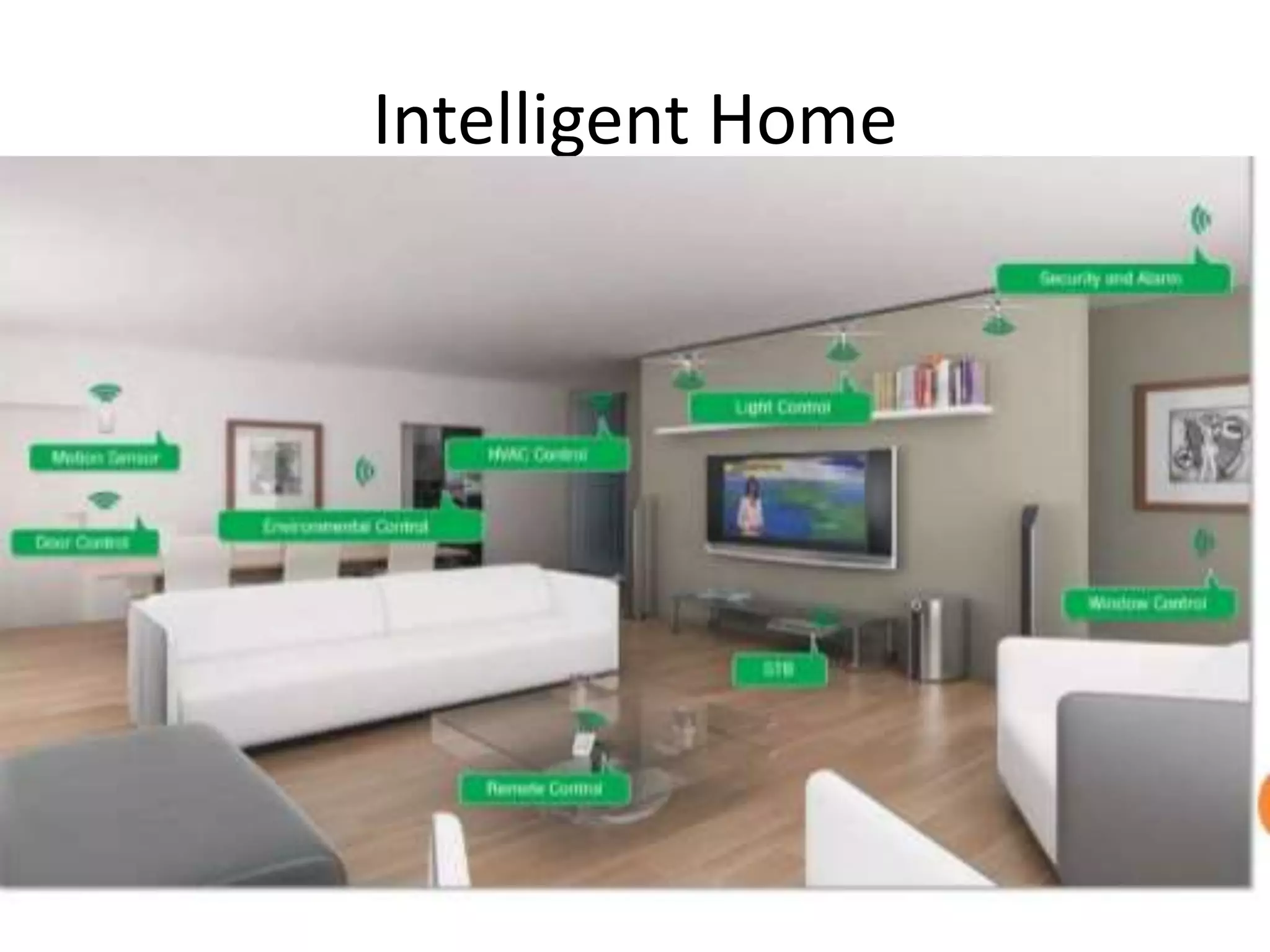
Intelligent Home
Applications
What it’s mean for your Business? 
• Three C’s of IOT 
-Communication 
-Control and Automation 
-Costs Savings
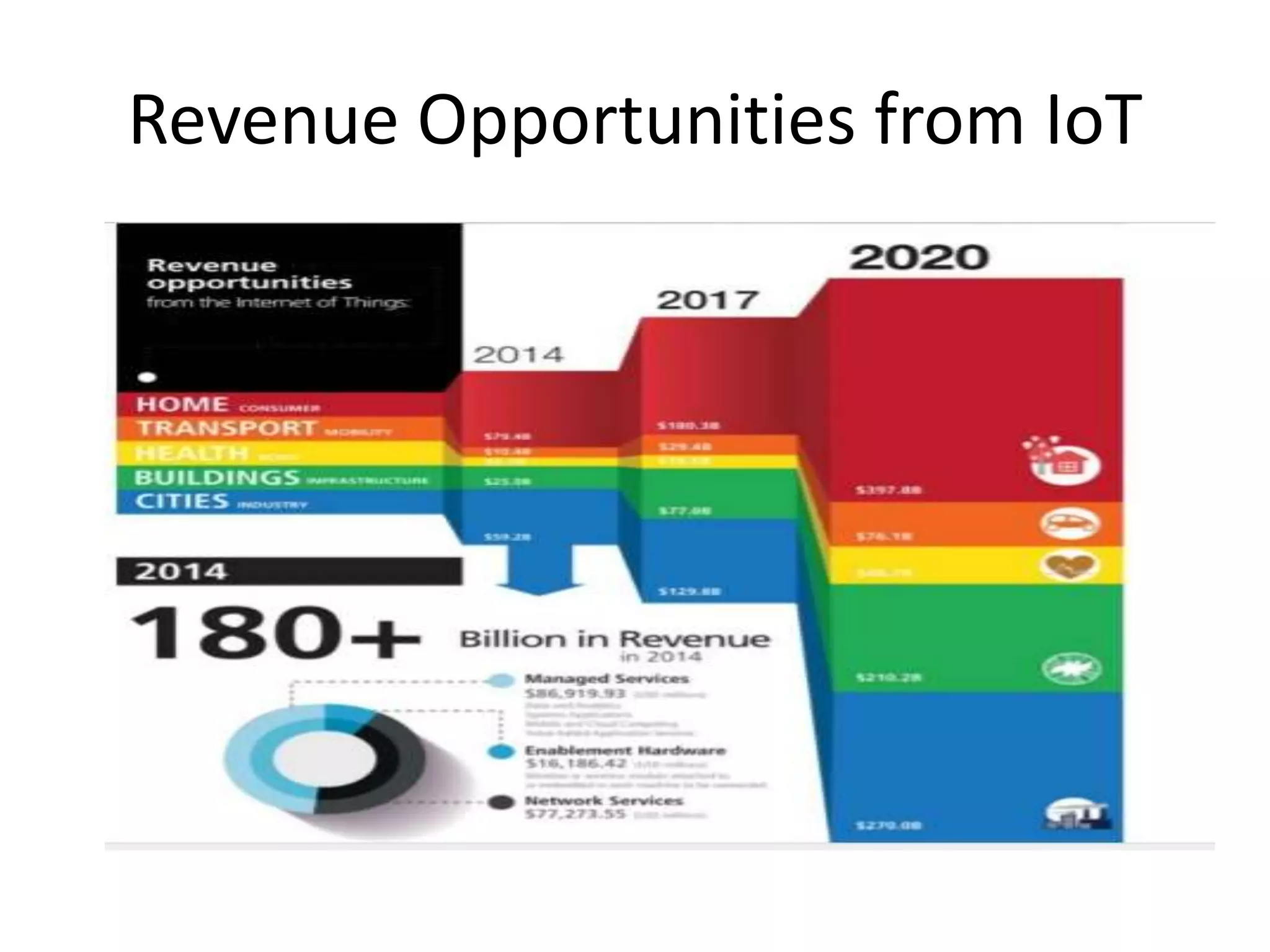
Revenue Opportunities from IoT
Challenges 
1.Technological Standardization in most areas 
are still remain fragmented. 
2.managing and fostering rapid innovation is a 
challenge for governments 
3.Management of Data 
4. privacy and security 
5.Absence of governance
THANK YOU

Internet of Things

  • 1.
    FOR AN OPEN INTEROPERABLE INTERNET OF THINGS
  • 2.
  • 3.
    Internet Usage andPopulation Statistics
  • 4.
    Internet of Things • Kevin Ashton coined "Internet of Things" phrase to describe a system where the Internet is connected to the physical world via ubiquitous sensors •Smart systems or the IoT driven by the combination of
  • 5.
    IoT(Cont..) • TheInternet gave us the opportunity to connect in ways we could never have dreamed possible. • The Internet of Things will take us beyond connection to become part of living, moving, Global Nervous System.
  • 6.
    Technologies used onIoT • RFID(Widely used in Transport) A radio-frequency identification system uses tags or labels attached to the objects to be identified.
  • 7.
    • Sensors andSmartphones. Sensors are used in everyday objects such as touch- sensitive elevator buttons. In the near future almost everybody will probably have a Smartphone. • ZigBee IEEE 802.15.4 Low cost. Long battery life. Secure networking. Physical range 10 to 100 meters. Support for Multiple Network Topologies.
  • 8.
    Applications of IoT • Traffic Monitoring
  • 9.
  • 10.
  • 11.
    What it’s meanfor your Business? • Three C’s of IOT -Communication -Control and Automation -Costs Savings
  • 12.
  • 13.
    Challenges 1.Technological Standardizationin most areas are still remain fragmented. 2.managing and fostering rapid innovation is a challenge for governments 3.Management of Data 4. privacy and security 5.Absence of governance
  • 14.

Editor's Notes

  • #2 The Internet of Things (IoT) is a scenario in which objects, animals or people are provided with unique identifiers and the ability to transfer data over a network without requiring human-to-human or human-to-computer interaction.
  • #3 Boffins- A person engaged in technical research. Geeks- Engage in computer related tasks with greater attention.
  • #5 Ubiquitous Sensor: the sensor that being present every where.
  • #7 RFID: Tracking of goods, human and animals. Inserted in passports. Can help detect and retrieve stolen cars. RFID, short for Rradio Frequency IDentification, is a technology that enables identification of a tag (that is normally attached with an entity) by using electromagnetic waves. The function served by RFID is similar to bar code identification, but line of sight signals are not required for operation of RFID.
  • #8 ZigBee is an established set of specifications for wireless personal area networking (WPAN), i.e., digital radio connections between computers and related devices. 
  • #12 Communication: IoT communicates information to people and systems, such as state and health of equipment (e.g.it’s on or off, charged, full or empty) and data from sensors that can monitor a person’s vital signs. Control and Automation. In a connected world, a business will have visibility into a device’s condition. In many cases, a business or consumer will also be able to remotely control a device. Cost Savings. Many companies will adopt IoT to save money. Measurement provides actual performance data and equipment health, instead of just estimates. Businesses, particularly industrial companies, lose money when equipment fails. With new sensor information, IoT can help a company save money by minimizing equipment failure and allowing the business to perform planned maintenance.
  • #14 Absence of governance is the first main challenge One major barrier for the widespread adoption of the Internet of Things technology is the absence of governance. Without an impartial governing authority it will be impossible to have a truly global “Internet of Things”, accepted by states, companies, trade organizations and the common people. Today there is not a unique universal numbering scheme as just described: PCglobal and the Ubiquitous Networking Lab propose two different, non- compatible ways of identifying objects, and there is the risk to have them competing in the coming future over the global market. There is also the need of keeping governance as generic as possible, as having one authority per application field will certainly lead to overlap, confusion and competition between standards. Objects can have different identities in different contexts so having multiple authorities would create a kind of multi-homing, which can lead to disastrous results.