A Presentation by
Rishab
Rishab
Rishab
Plan of Presentation
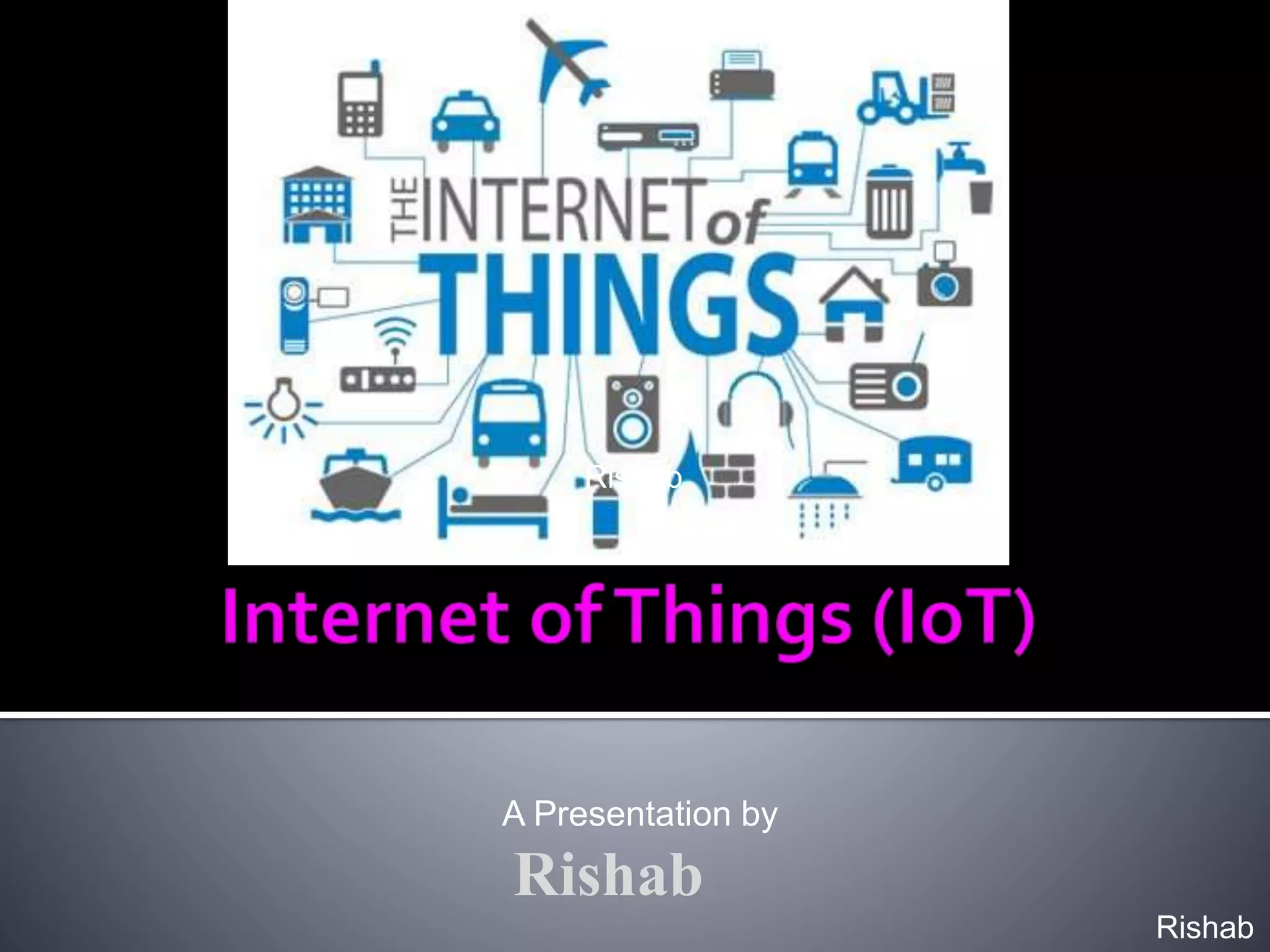
 What is Internet of Things?
 How IoT Works?
 Current Status & Future Prospect of IoT
 Knowledge Management – From Data to Wisdom
 The Future of IoT
 Some Examples of IoT
 The Potential of IoT
 Few Applications of IoT
 Technological Challenges of IoT
 Criticisms & Controversies of IoT
 References
2Rishab
What is IoT?
The Internet of Things (IoT) is the network of physical
objects or "things" embedded with electronics, software,
sensors, and network connectivity, which enables these
objects to collect and exchange data.
IoT allows objects to be sensed and controlled
remotely across existing network infrastructure, creating
opportunities for more direct integration between the
physical world and computer-based systems, and resulting
in improved efficiency, accuracy and economic benefit.
3Rishab
"Things," in the IoT sense, can refer to a wide variety
of devices such as heart monitoring implants, biochip
transponders on farm animals, electric clams in coastal
waters, automobiles with built-in sensors, DNA analysis
devices for environmental/food/pathogen monitoring or
field operation devices that assist fire-fighters in search
and rescue operations.
These devices collect useful data with the help of
various existing technologies and then autonomously flow
the data between other devices.
4Rishab
The concept of the Internet of Things first became
popular in 1999, through the Auto-ID Center at MIT and
related market-analysis publications. R
Radio-frequency identification (RFID) was seen as a
prerequisite for the IoT at that point. If all objects and
people in daily life were equipped with identifiers,
computers could manage and inventory them. Besides
using RFID, the tagging of things may be achieved through
such technologies as near field communication, barcodes,
QR codes, bluetooth, and digital watermarking.
History of IoT
5Rishab
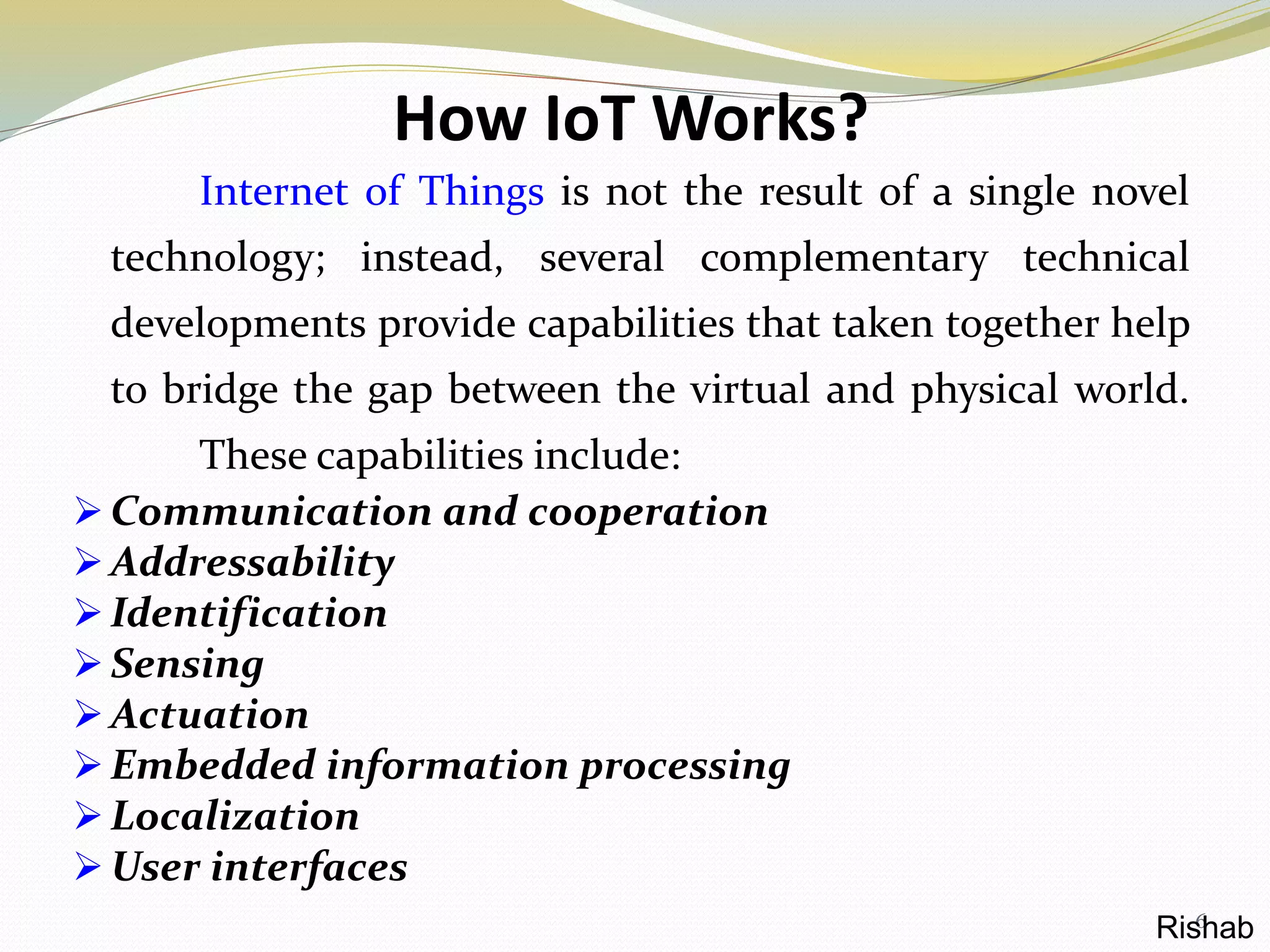
How IoT Works?
Internet of Things is not the result of a single novel
technology; instead, several complementary technical
developments provide capabilities that taken together help
to bridge the gap between the virtual and physical world.
These capabilities include:
 Communication and cooperation
 Addressability
 Identification
 Sensing
 Actuation
 Embedded information processing
 Localization
 User interfaces
6Rishab
How IoT Works?
7
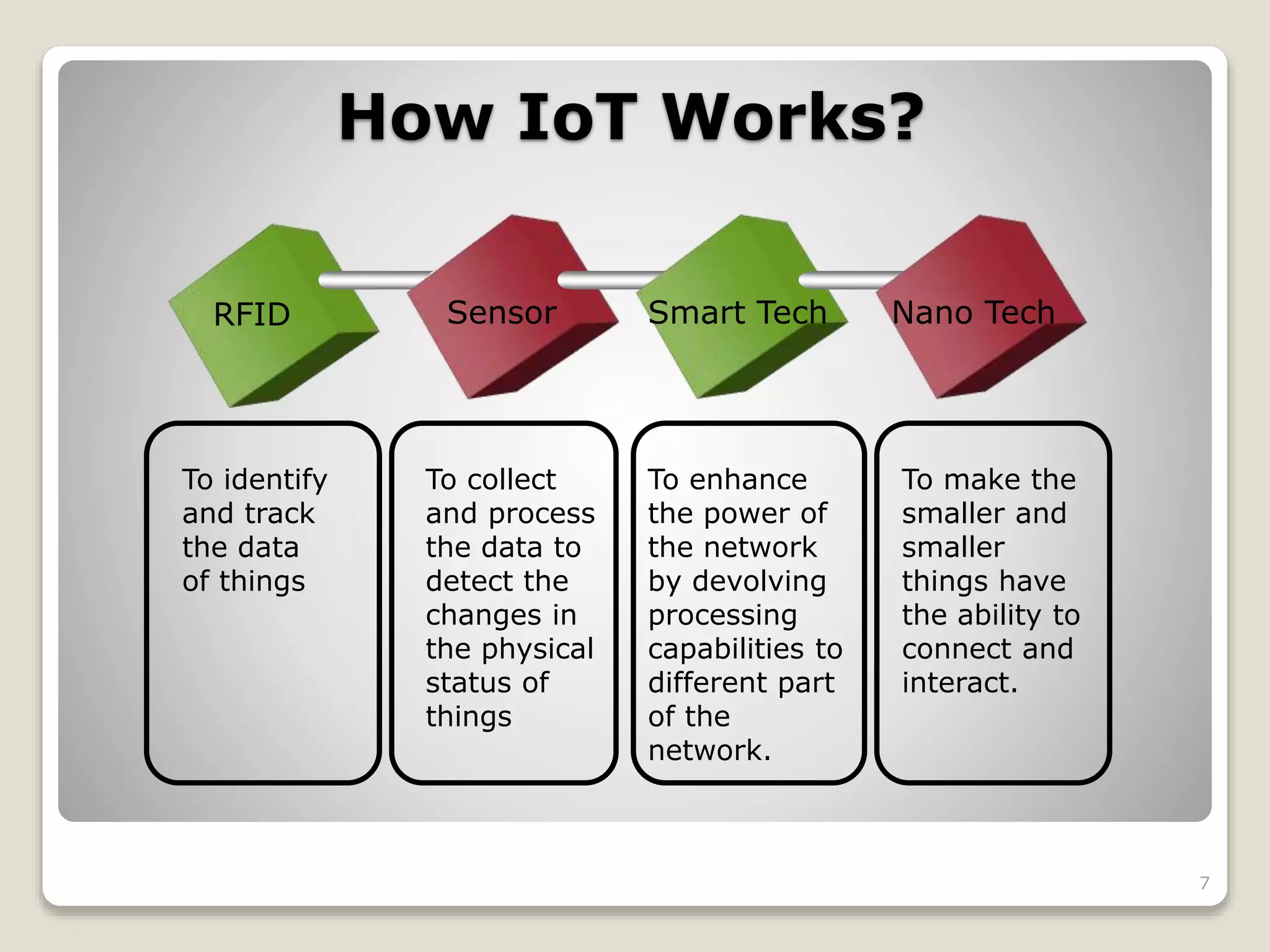
RFID Sensor Smart Tech Nano Tech
To identify
and track
the data
of things
To collect
and process
the data to
detect the
changes in
the physical
status of
things
To enhance
the power of
the network
by devolving
processing
capabilities to
different part
of the
network.
To make the
smaller and
smaller
things have
the ability to
connect and
interact.
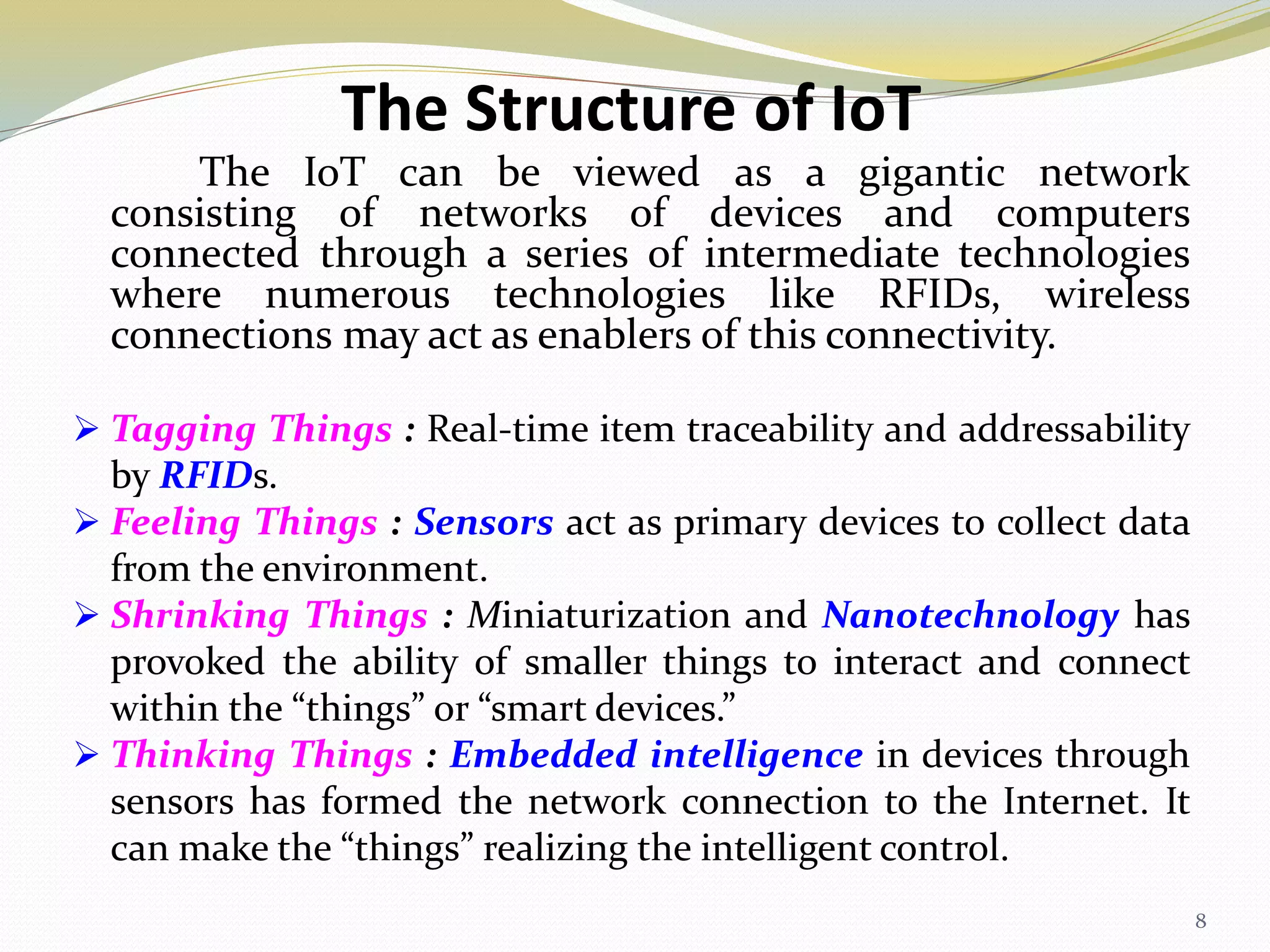
The Structure of IoT
The IoT can be viewed as a gigantic network
consisting of networks of devices and computers
connected through a series of intermediate technologies
where numerous technologies like RFIDs, wireless
connections may act as enablers of this connectivity.
 Tagging Things : Real-time item traceability and addressability
by RFIDs.
 Feeling Things : Sensors act as primary devices to collect data
from the environment.
 Shrinking Things : Miniaturization and Nanotechnology has
provoked the ability of smaller things to interact and connect
within the “things” or “smart devices.”
 Thinking Things : Embedded intelligence in devices through
sensors has formed the network connection to the Internet. It
can make the “things” realizing the intelligent control.
8
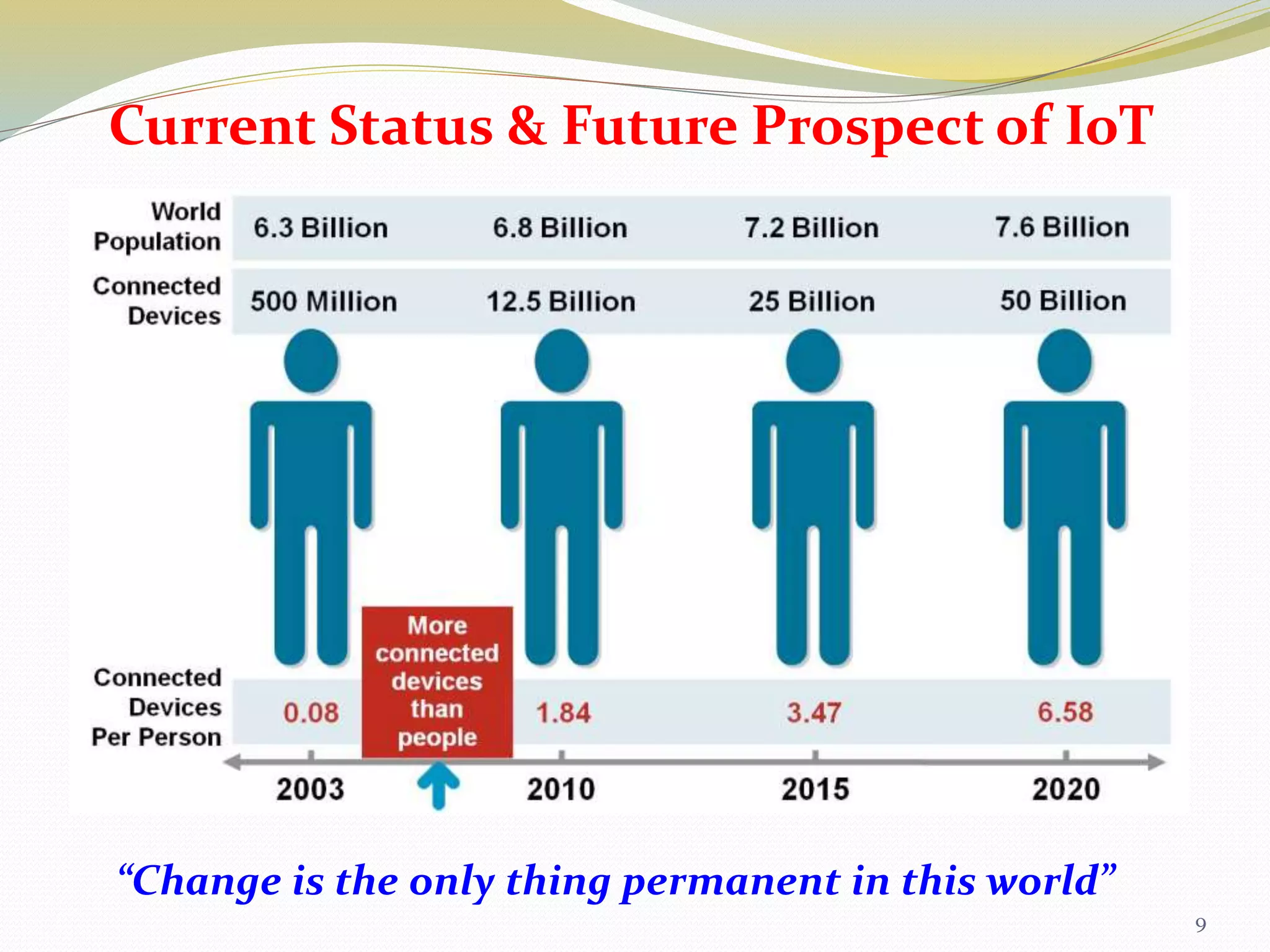
Current Status & Future Prospect of IoT
9
“Change is the only thing permanent in this world”
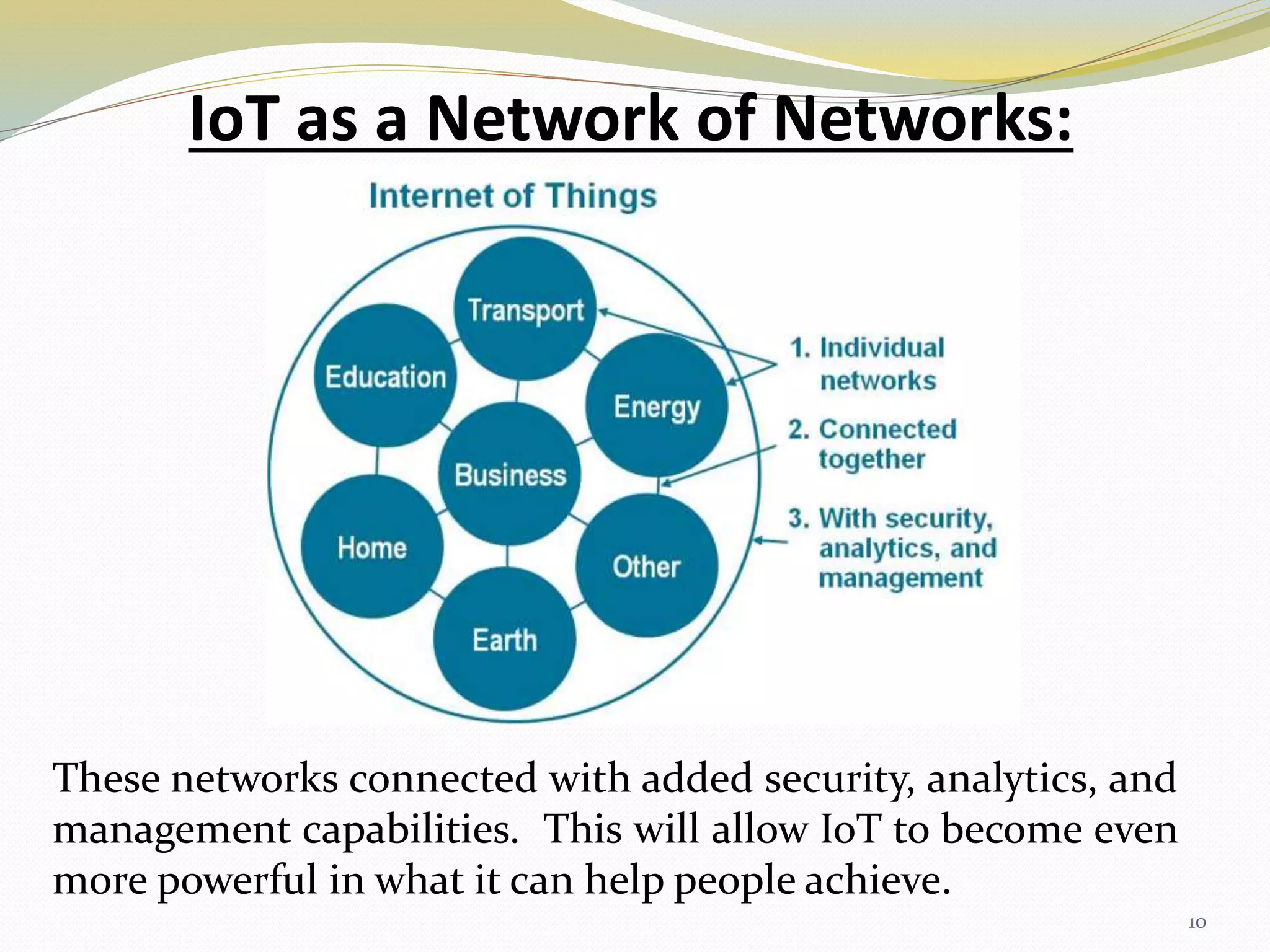
IoT as a Network of Networks:
10
These networks connected with added security, analytics, and
management capabilities. This will allow IoT to become even
more powerful in what it can help people achieve.
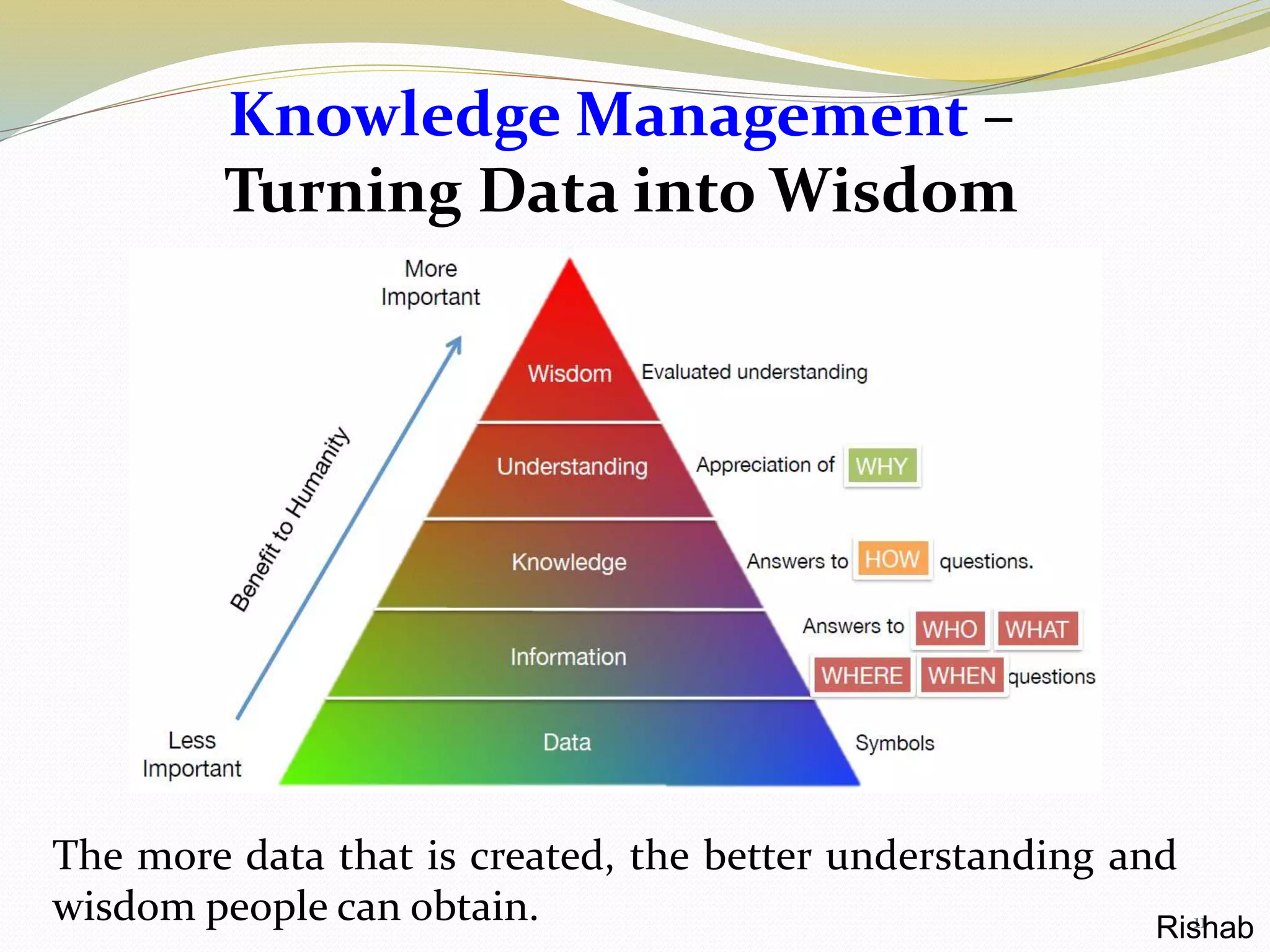
Knowledge Management –
Turning Data into Wisdom
11
The more data that is created, the better understanding and
wisdom people can obtain. Rishab
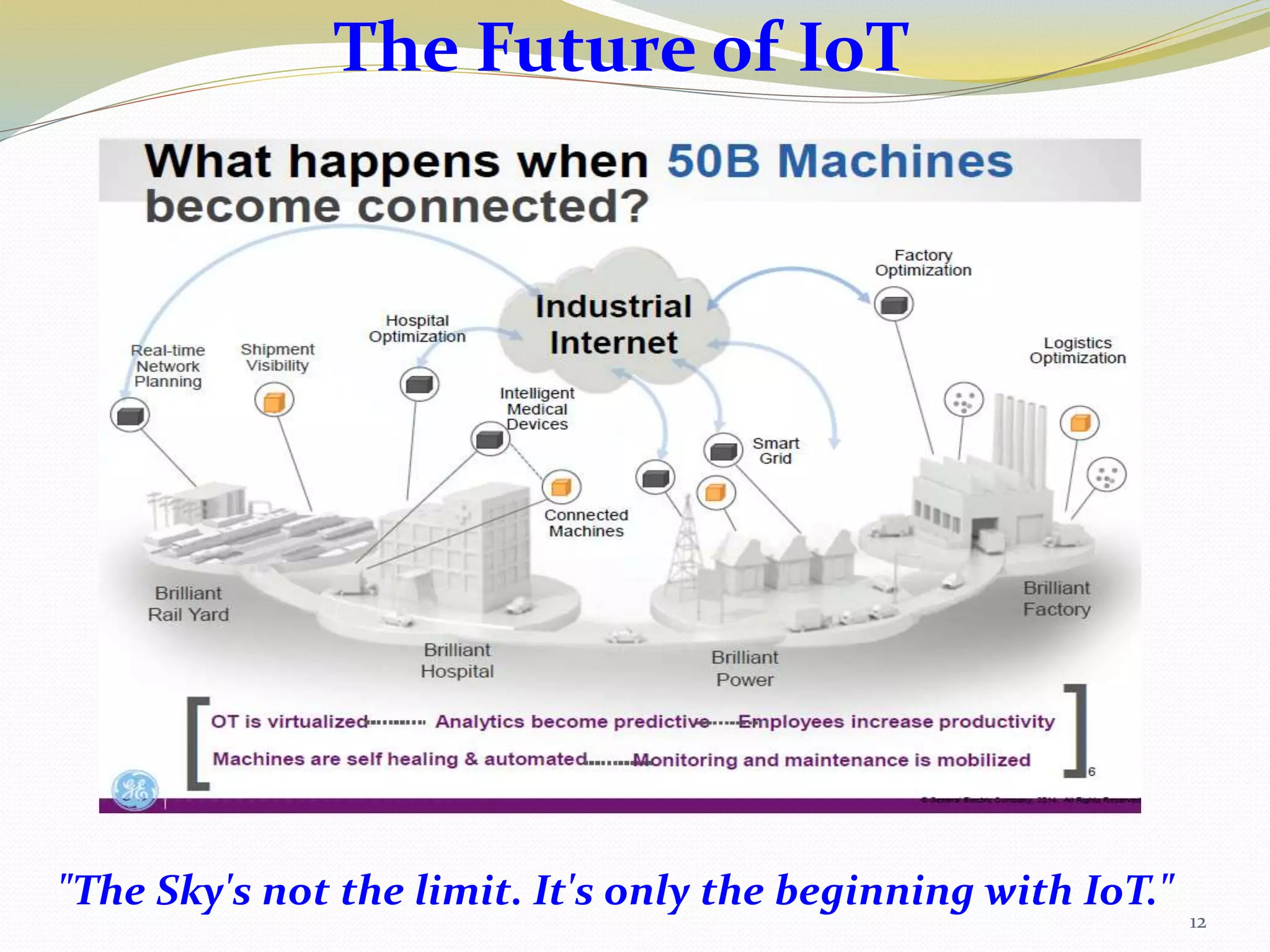
The Future of IoT
12
"The Sky's not the limit. It's only the beginning with IoT."
13
Examples of
the Internet
of Things
14
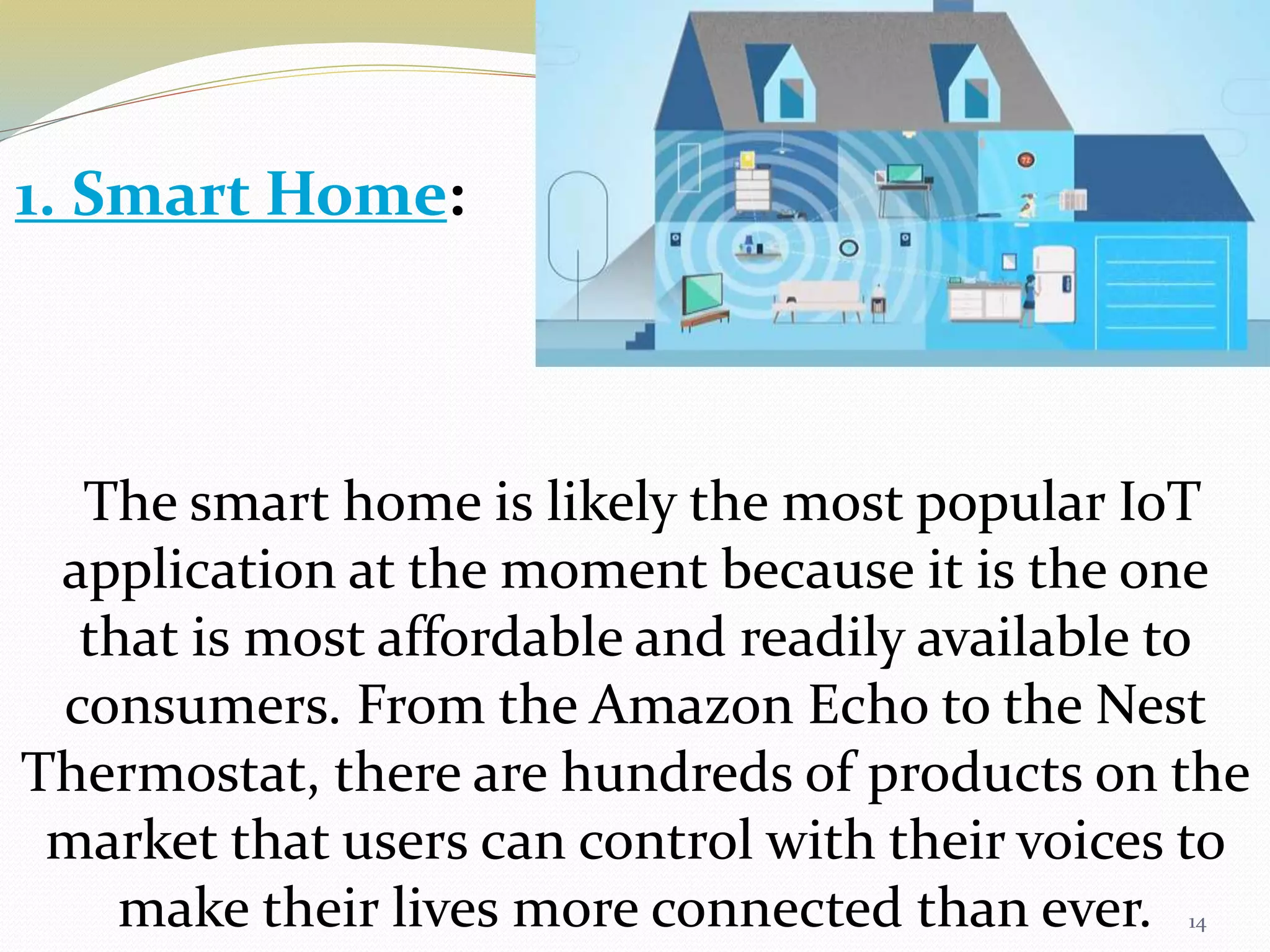
The smart home is likely the most popular IoT
application at the moment because it is the one
that is most affordable and readily available to
consumers. From the Amazon Echo to the Nest
Thermostat, there are hundreds of products on the
market that users can control with their voices to
make their lives more connected than ever.
1. Smart Home:
15
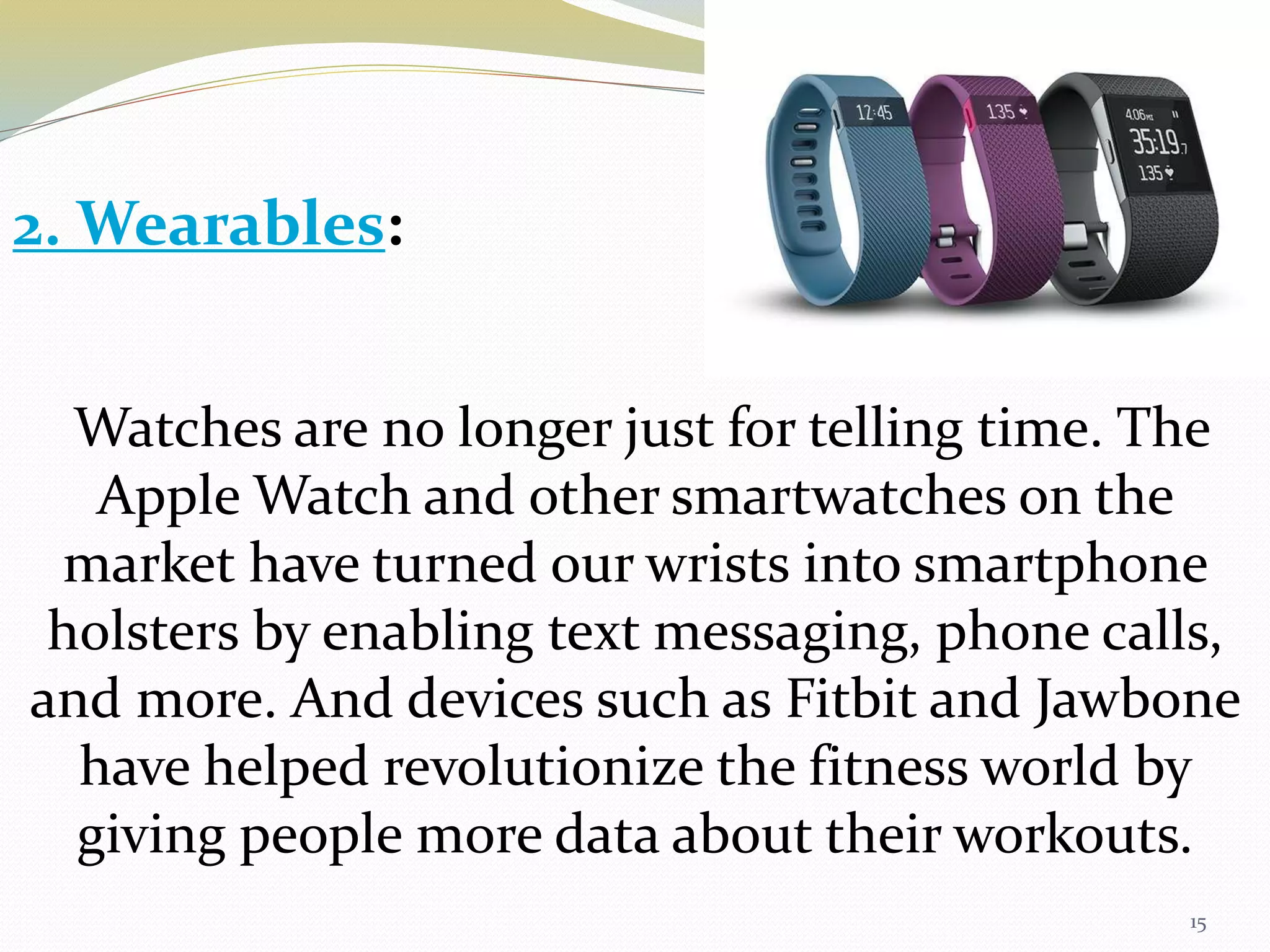
Watches are no longer just for telling time. The
Apple Watch and other smartwatches on the
market have turned our wrists into smartphone
holsters by enabling text messaging, phone calls,
and more. And devices such as Fitbit and Jawbone
have helped revolutionize the fitness world by
giving people more data about their workouts.
2. Wearables:
16
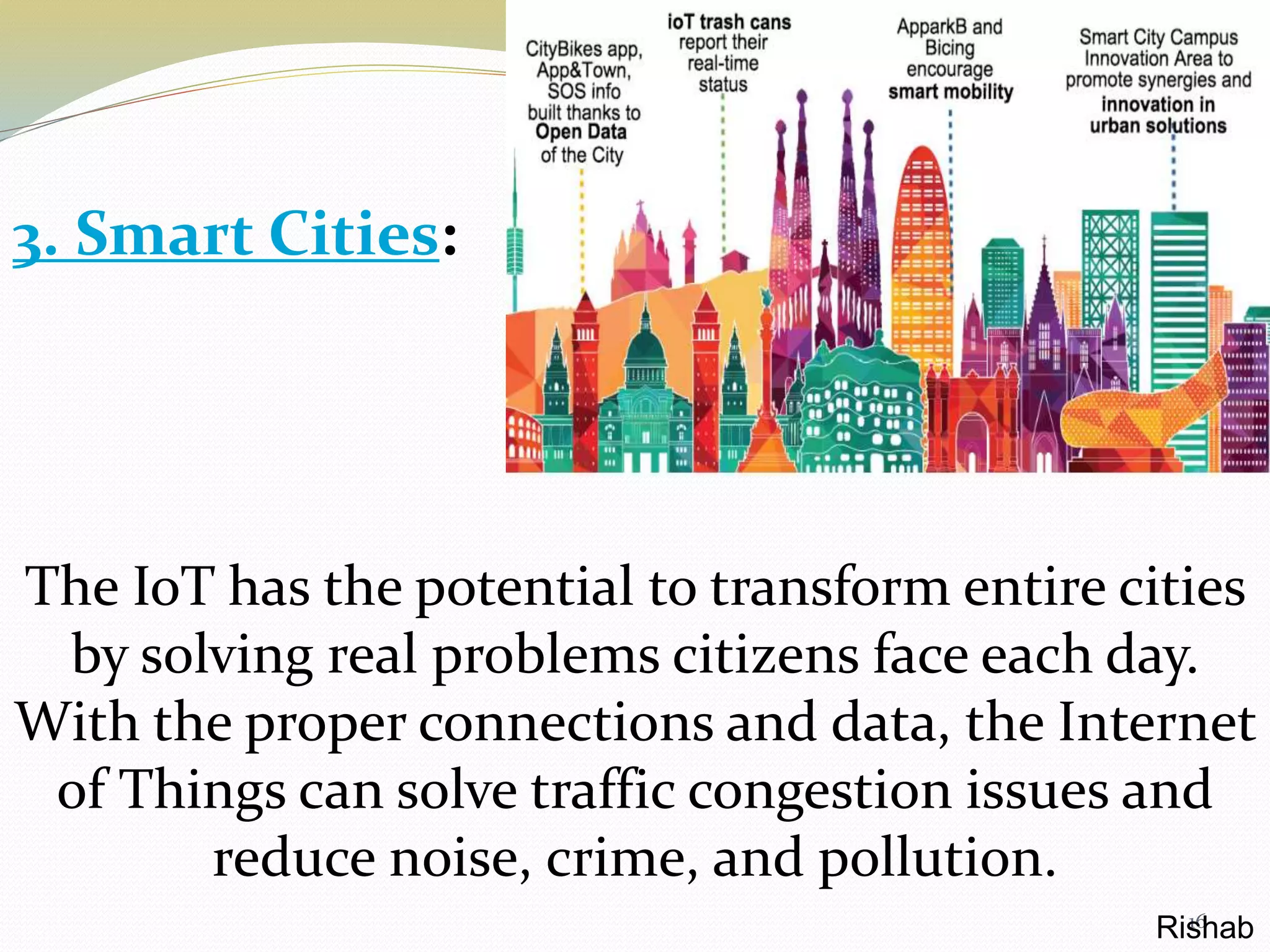
The IoT has the potential to transform entire cities
by solving real problems citizens face each day.
With the proper connections and data, the Internet
of Things can solve traffic congestion issues and
reduce noise, crime, and pollution.
3. Smart Cities:
Rishab
17
These vehicles are equipped with Internet access
and can share that access with others, just like
connecting to a wireless network in a home or
office. More vehicles are starting to come equipped
with this functionality, so prepare to see more apps
included in future cars.
4. Connected Car:
18
The Potential of IoT
19
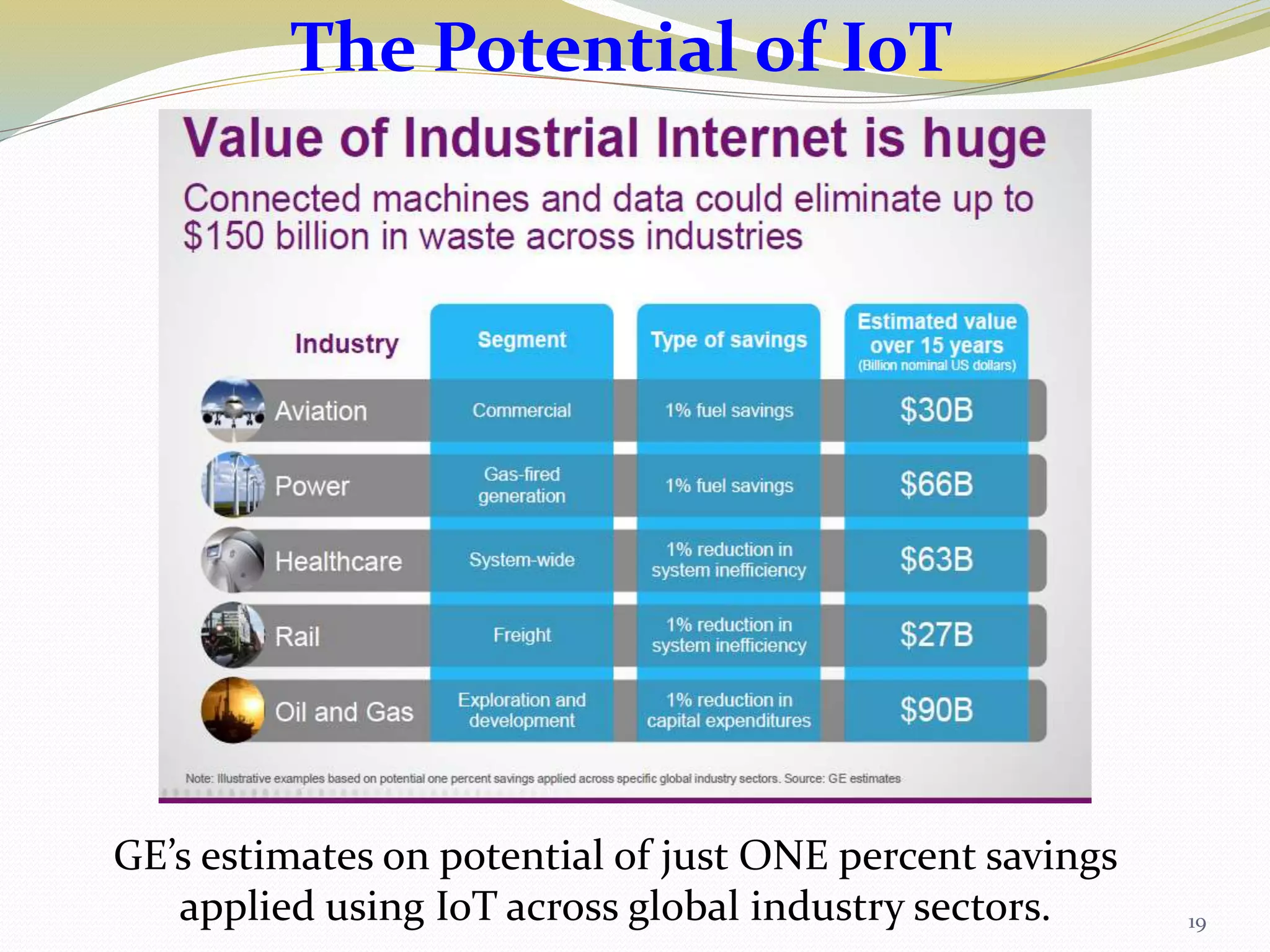
GE’s estimates on potential of just ONE percent savings
applied using IoT across global industry sectors.
Unlock the Massive potential of IoT
20
Technology roadmap of IoT
21
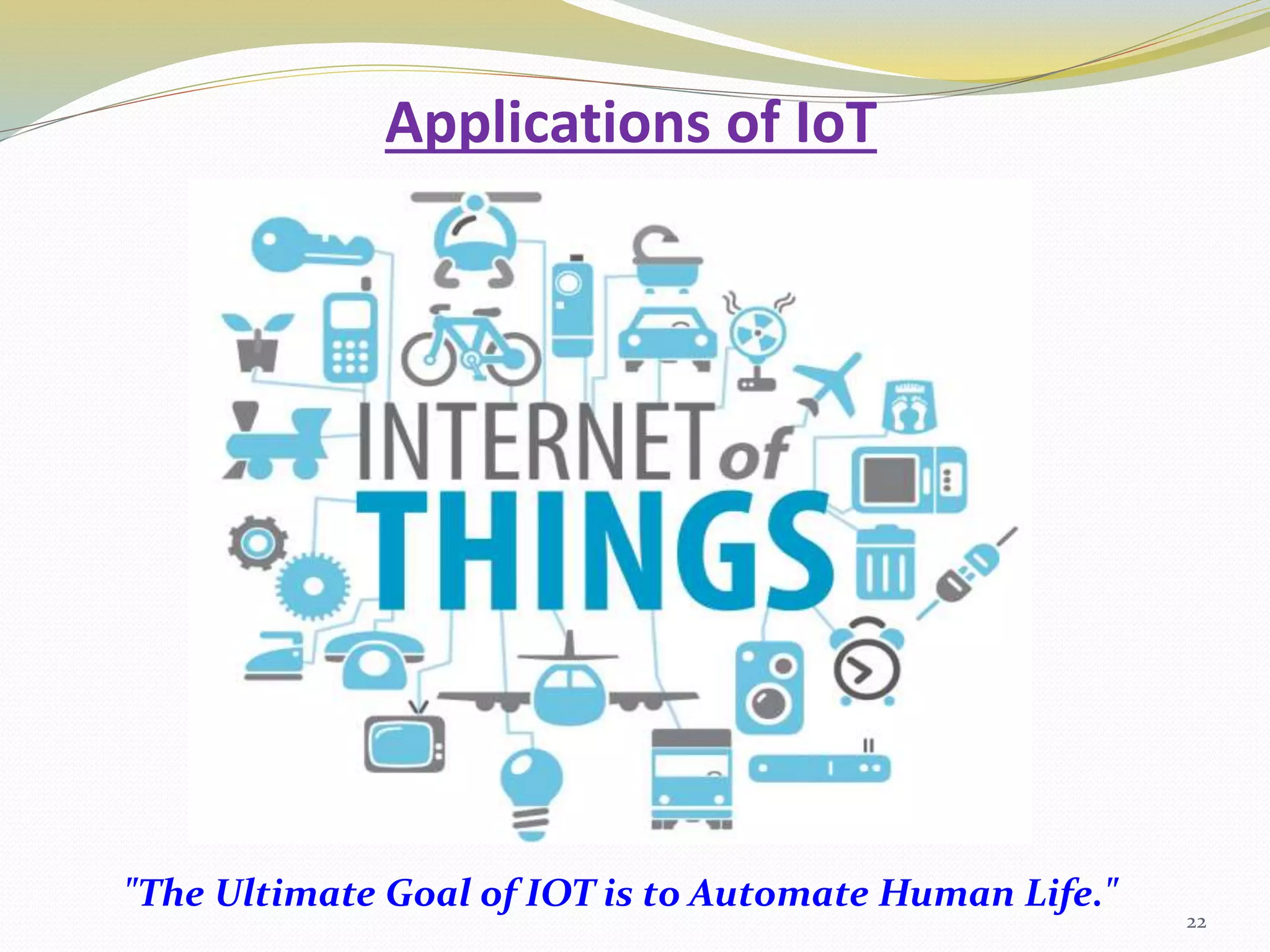
Applications of IoT
"The Ultimate Goal of IOT is to Automate Human Life."
22
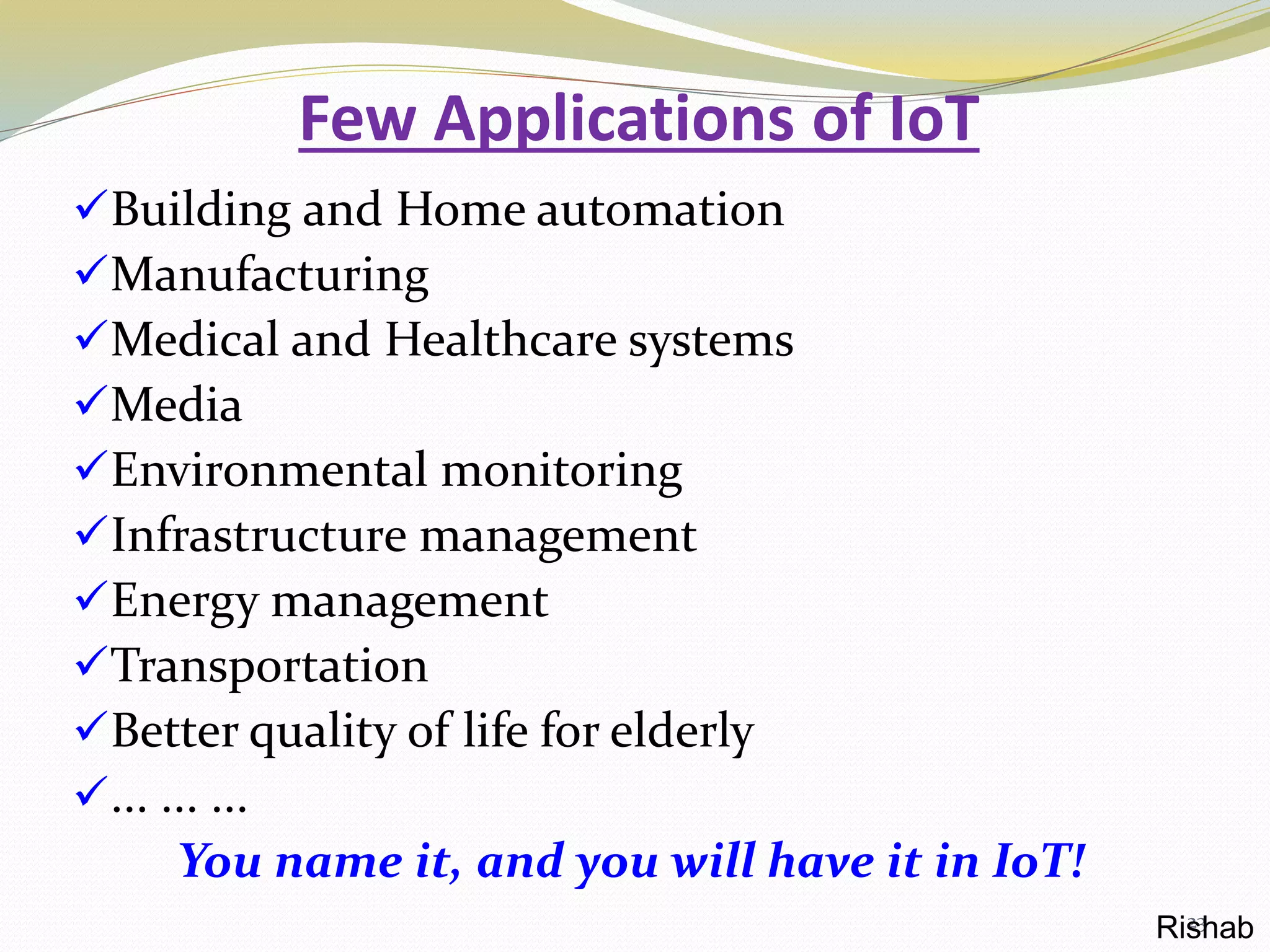
Few Applications of IoT
Building and Home automation
Manufacturing
Medical and Healthcare systems
Media
Environmental monitoring
Infrastructure management
Energy management
Transportation
Better quality of life for elderly
... ... ...
You name it, and you will have it in IoT!
23Rishab
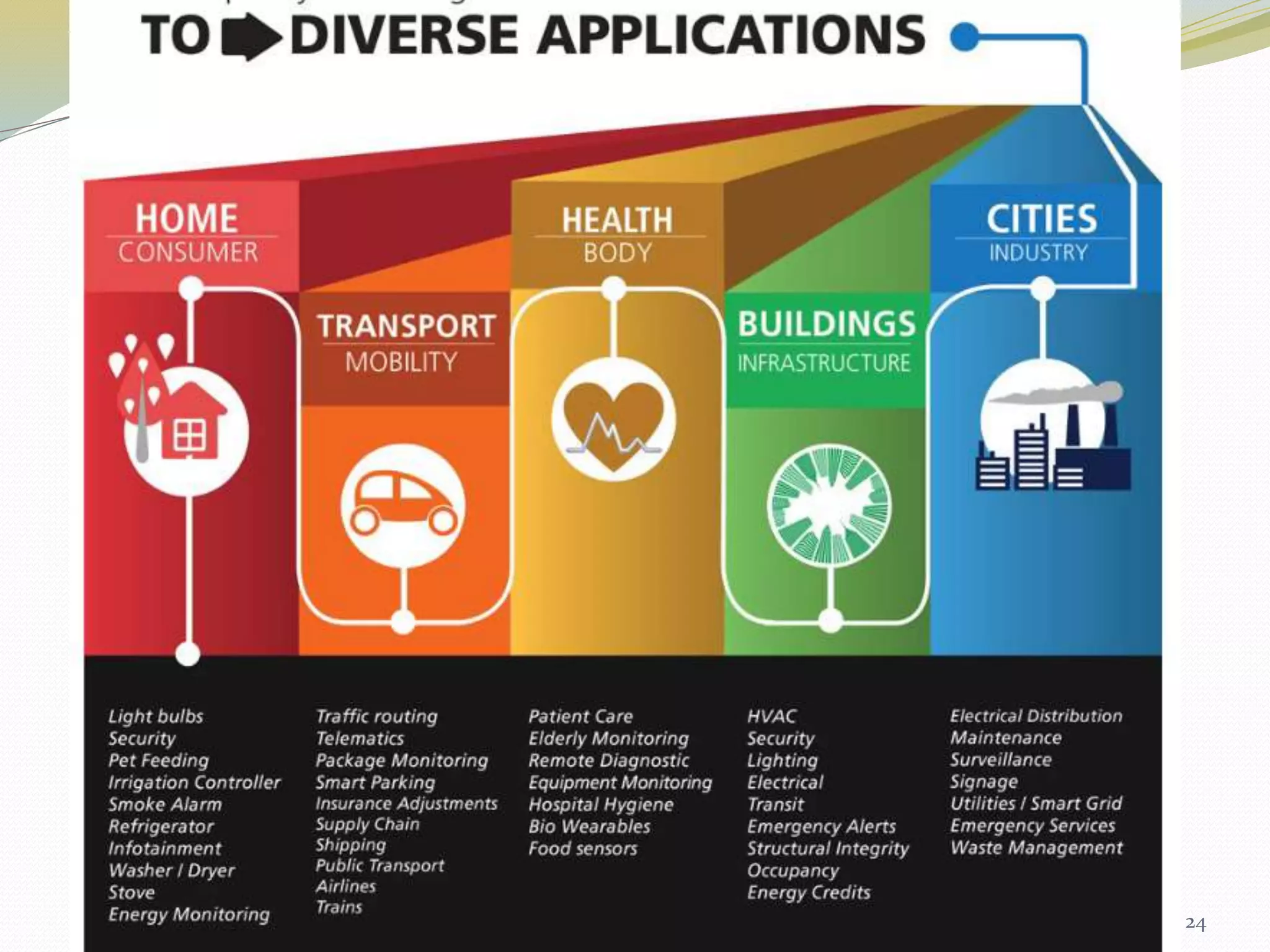
24
25
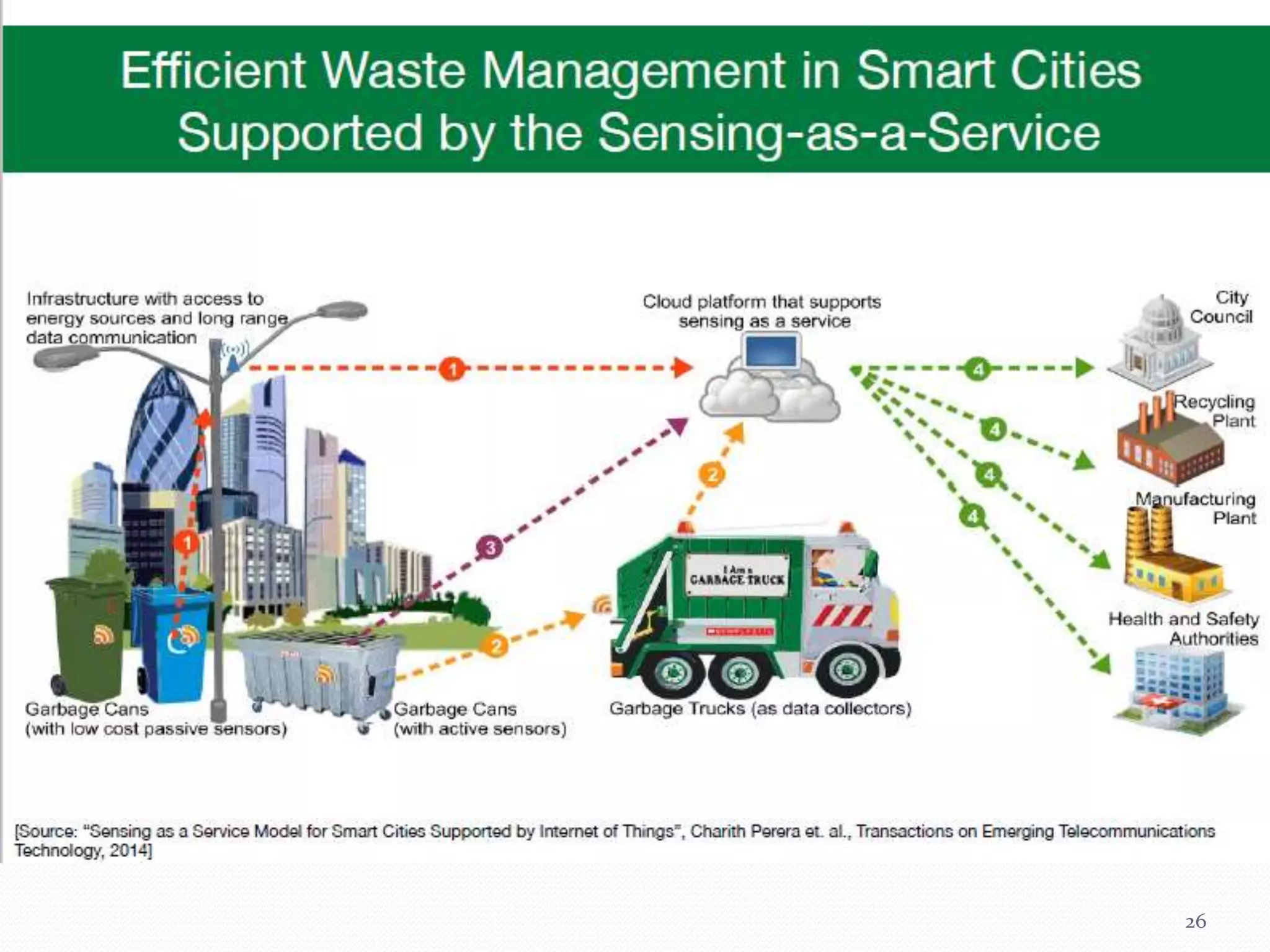
26
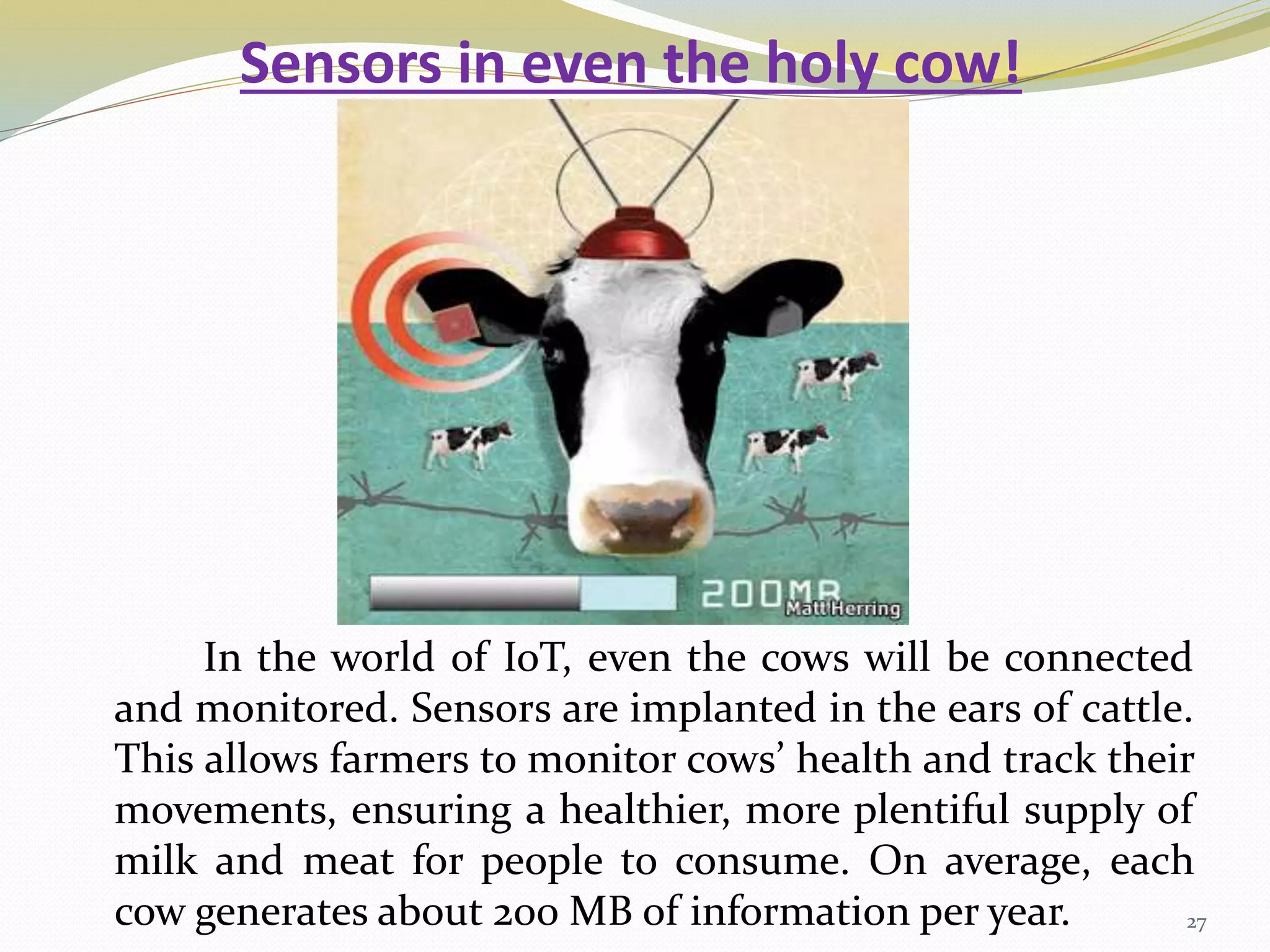
Sensors in even the holy cow!
In the world of IoT, even the cows will be connected
and monitored. Sensors are implanted in the ears of cattle.
This allows farmers to monitor cows’ health and track their
movements, ensuring a healthier, more plentiful supply of
milk and meat for people to consume. On average, each
cow generates about 200 MB of information per year. 27
Of course, we know nothing remains static, especially
when it comes to the Internet. Initiatives and advances,
such as Cisco‘s Planetary Skin, GE’s Industrial Internet,
HP‘s central nervous system for the earth (CeNSE), and
smart dust, have the potential to add millions—even
billions—of sensors to the Internet.
As cows, water pipes, people, and even shoes, trees,
and animals become connected to IoT, the world has the
potential to become a better place.
“With a trillion sensors embedded in the
environment—all connected by computing systems,
software, and services—it will be possible to hear the
heartbeat of the Earth, impacting human interaction with
the globe as profoundly as the Internet has revolutionized
communication.” - Peter Hartwell, Senior Researcher, HP
Labs.
“How much more IoT can do is only left to your
imagination”
28
Internet of Things is the next stage of the
information revolution and referenced the inter-
connectivity of everything from urban transport to
medical devices to household appliances.
Integration with the Internet implies that devices
will use an IP address as a unique identifier. However,
due to the limited address space of IPv4 (which allows
for 4.3 billion unique addresses), objects in the IoT will
have to use IPv6 to accommodate the extremely large
address space required.
Objects in the IoT will not only be devices with
sensory capabilities, but also provide actuation
capabilities (e.g., bulbs or locks controlled over the
Internet).
29
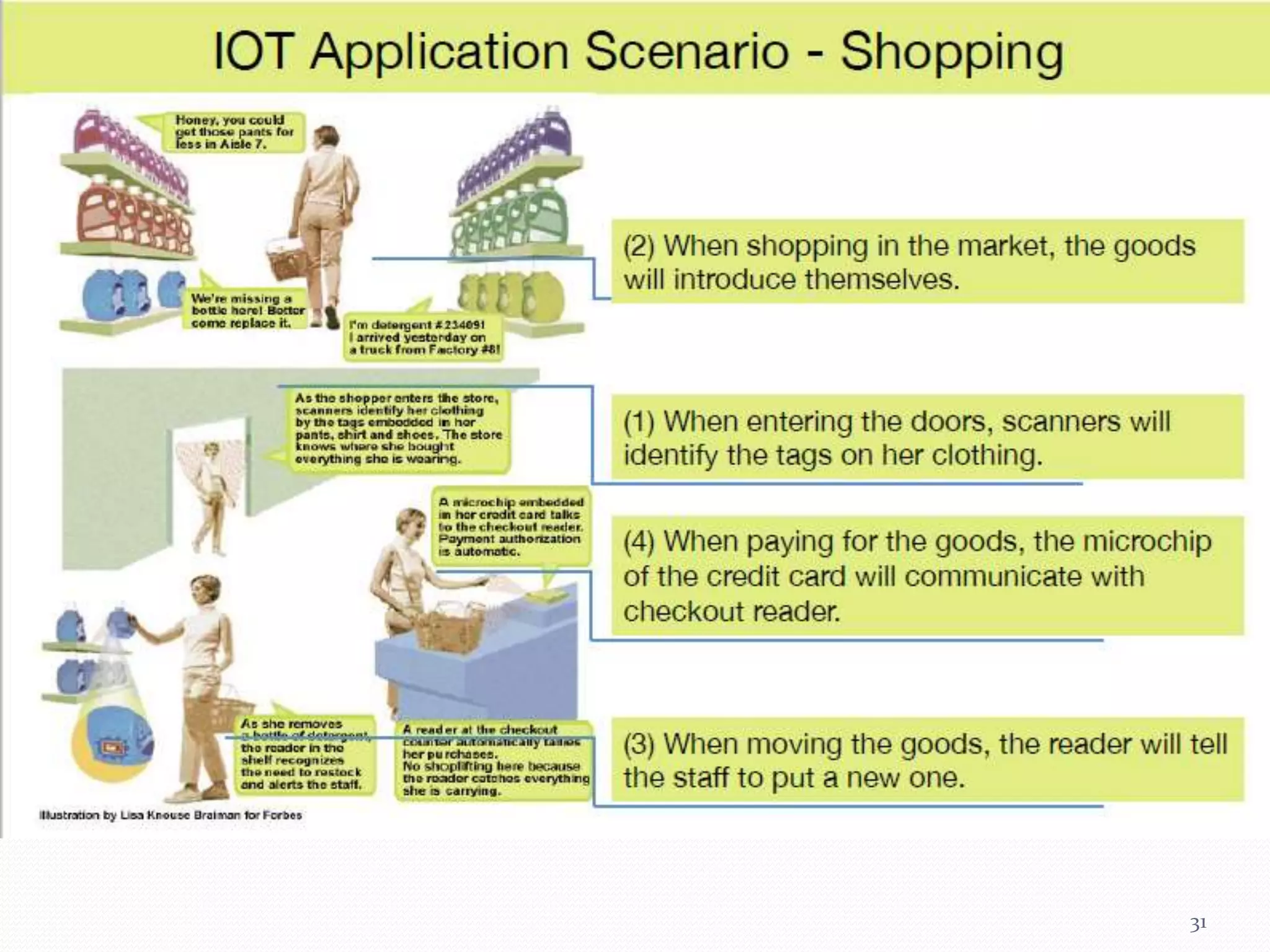
On the other hand, IoT systems could also be
responsible for performing actions, not just sensing
things. Intelligent shopping systems, for example,
could monitor specific users' purchasing habits in a
store by tracking their specific mobile phones. These
users could then be provided with special offers on
their favourite products, or even location of items that
they need, which their fridge has automatically
conveyed to the phone.
Additional examples of sensing and actuating are
reflected in applications that deal with heat, electricity
and energy management, as well as cruise-assisting
transportation systems. Other applications that the
Internet of Things can provide is enabling extended
home security features and home automation.
30
31
32
33Rishab
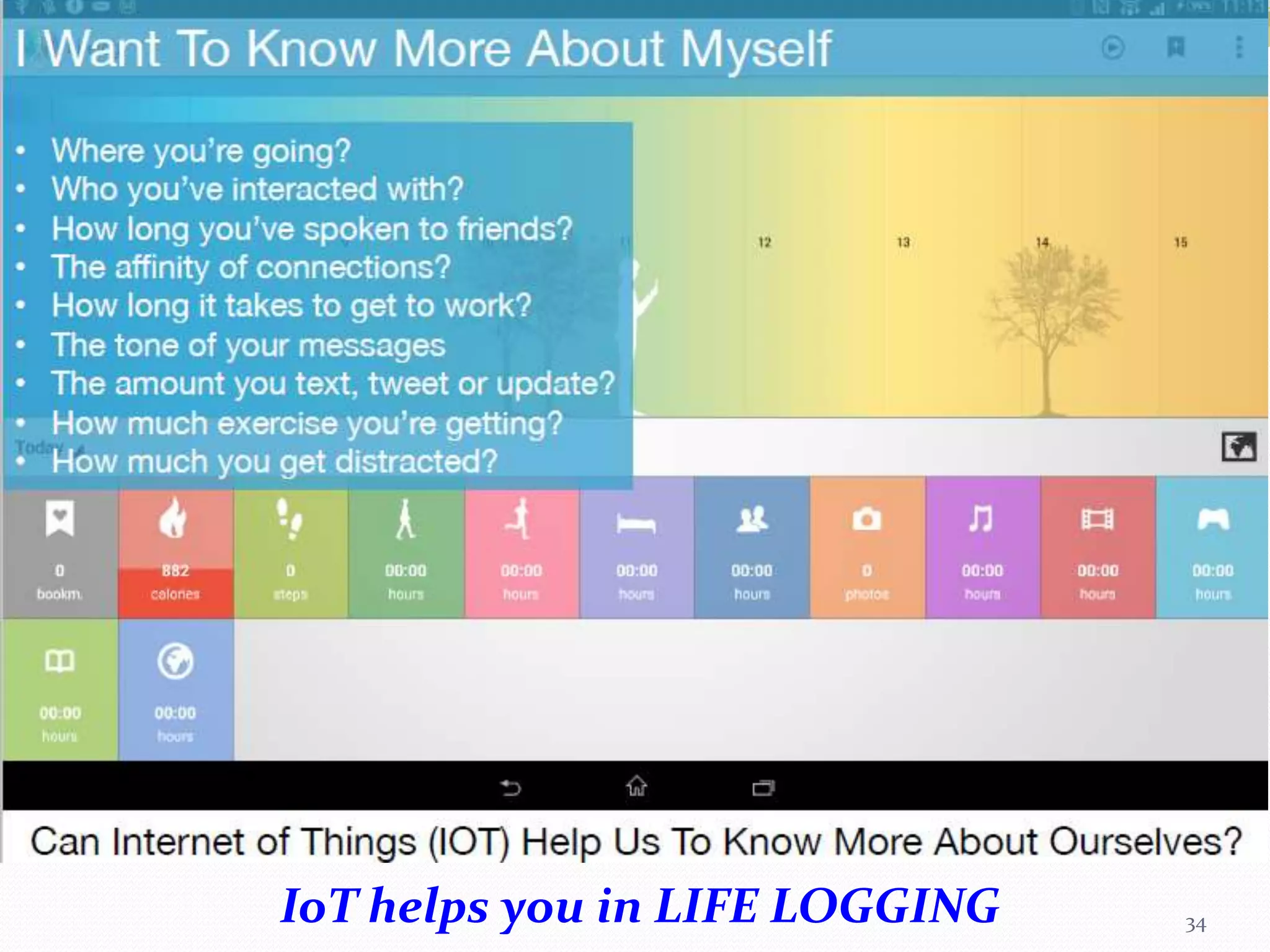
34IoT helps you in LIFE LOGGING
35
TECHNOLOGICAL CHALLENGES OF IoT
At present IoT is faced with many challenges, such as:
 Scalability
 Technological Standardization
 Inter operability
 Discovery
 Software complexity
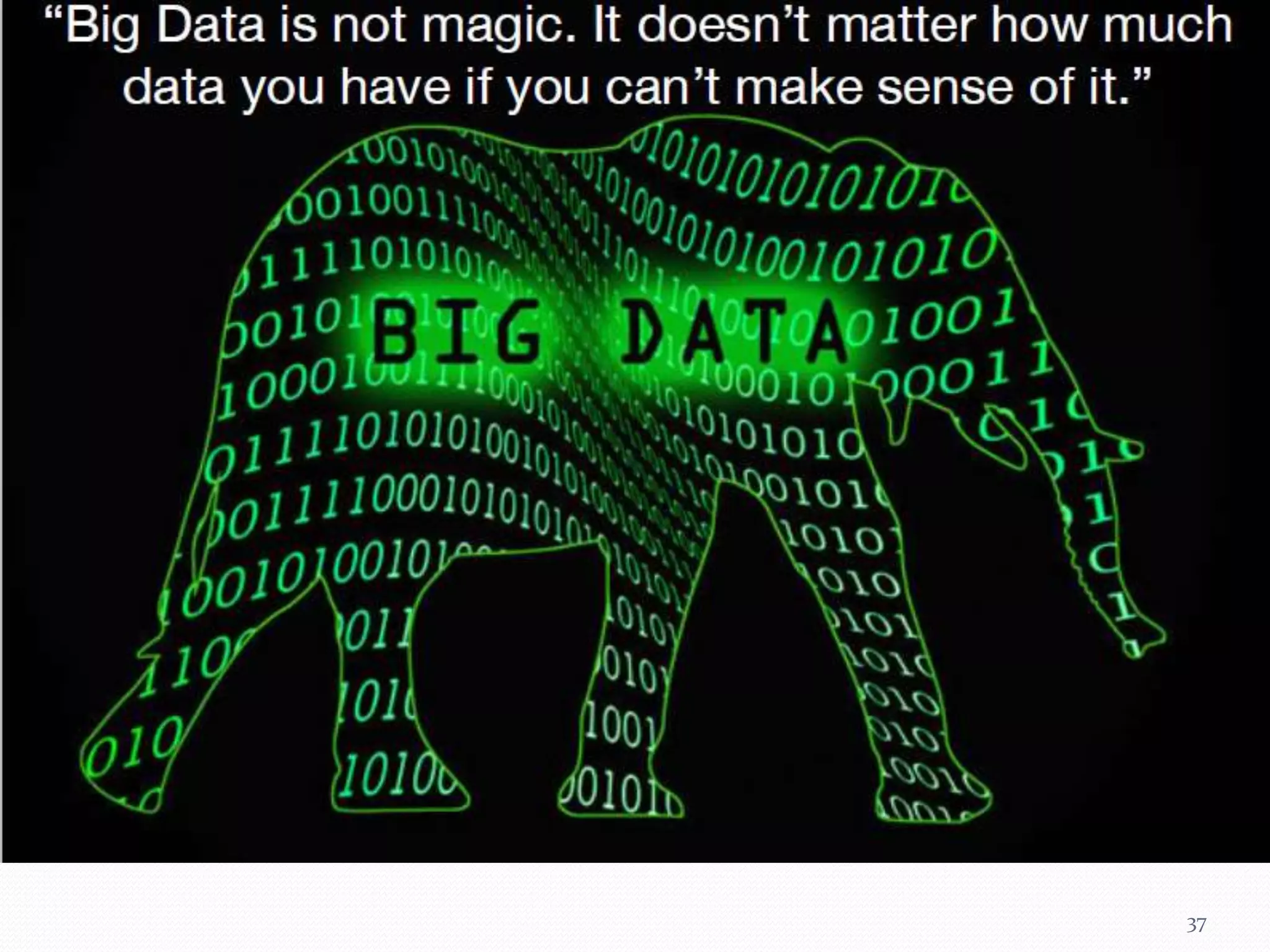
 Data volumes and interpretation
 Power Supply
 Interaction and short range communication
 Wireless communication
 Fault tolerance
36
37
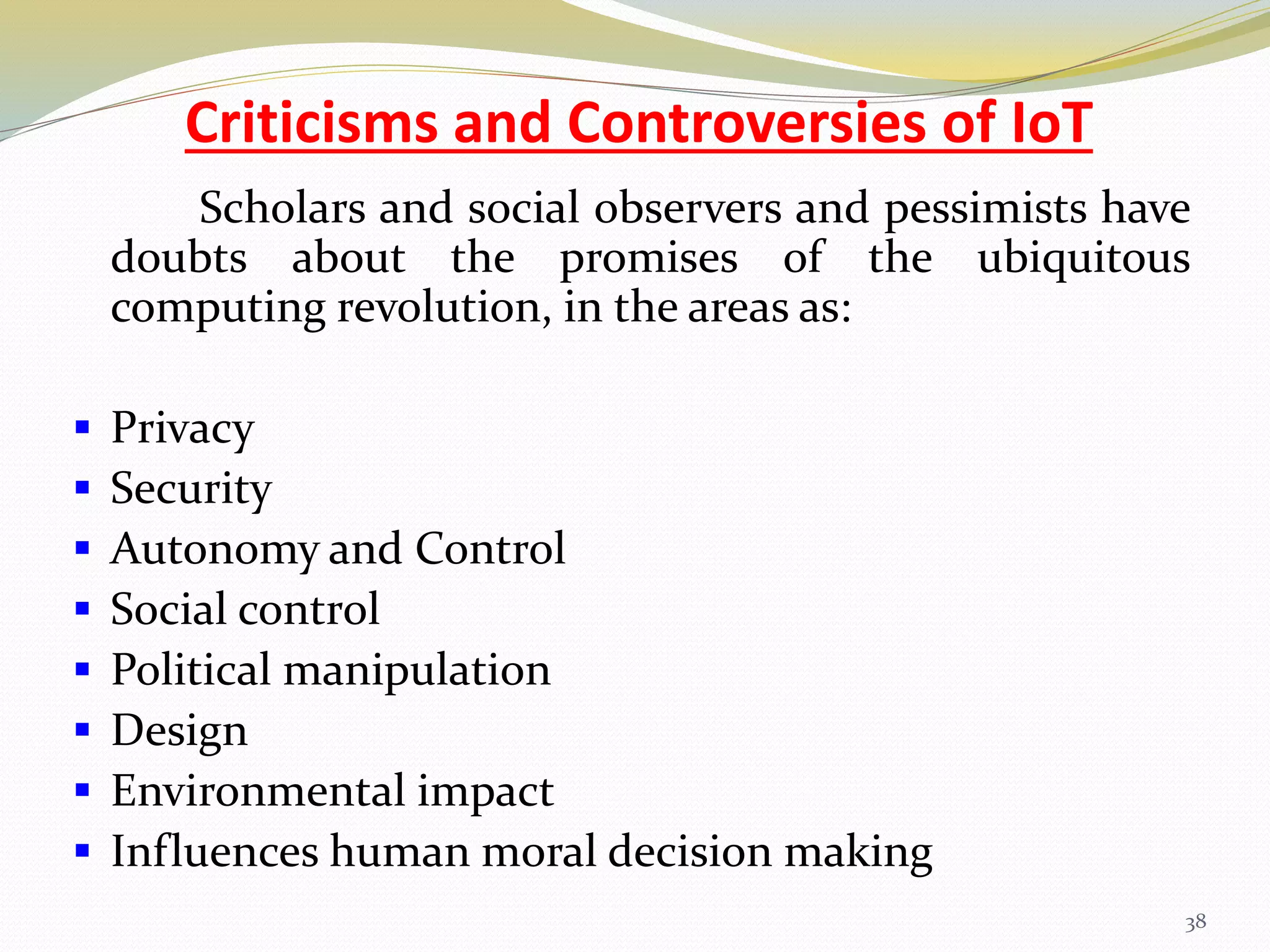
Criticisms and Controversies of IoT
Scholars and social observers and pessimists have
doubts about the promises of the ubiquitous
computing revolution, in the areas as:
 Privacy
 Security
 Autonomy and Control
 Social control
 Political manipulation
 Design
 Environmental impact
 Influences human moral decision making
38
39
References
1. www.google.com
2. https://en.wikipedia.org/wiki/Internet_of_Things
3. Cisco whitepaper, "The Internet of Things" - How the Next
Evolution of the Internet Is Changing Everything, by Dave Evans,
April 2011.
4. GE cloud expo 2014, "Industrial Internet as a Service", by Shyam
Varan Nath, Principal Architect.
5. Dr. Mazlan Abbas, MIMOS Berhad, Wisma IEM, Petaling Jaya
40Rishab
THANK YOU
41Rishab

Internet of-thing

  • 1.
  • 2.
    Plan of Presentation What is Internet of Things?  How IoT Works?  Current Status & Future Prospect of IoT  Knowledge Management – From Data to Wisdom  The Future of IoT  Some Examples of IoT  The Potential of IoT  Few Applications of IoT  Technological Challenges of IoT  Criticisms & Controversies of IoT  References 2Rishab
  • 3.
    What is IoT? TheInternet of Things (IoT) is the network of physical objects or "things" embedded with electronics, software, sensors, and network connectivity, which enables these objects to collect and exchange data. IoT allows objects to be sensed and controlled remotely across existing network infrastructure, creating opportunities for more direct integration between the physical world and computer-based systems, and resulting in improved efficiency, accuracy and economic benefit. 3Rishab
  • 4.
    "Things," in theIoT sense, can refer to a wide variety of devices such as heart monitoring implants, biochip transponders on farm animals, electric clams in coastal waters, automobiles with built-in sensors, DNA analysis devices for environmental/food/pathogen monitoring or field operation devices that assist fire-fighters in search and rescue operations. These devices collect useful data with the help of various existing technologies and then autonomously flow the data between other devices. 4Rishab
  • 5.
    The concept ofthe Internet of Things first became popular in 1999, through the Auto-ID Center at MIT and related market-analysis publications. R Radio-frequency identification (RFID) was seen as a prerequisite for the IoT at that point. If all objects and people in daily life were equipped with identifiers, computers could manage and inventory them. Besides using RFID, the tagging of things may be achieved through such technologies as near field communication, barcodes, QR codes, bluetooth, and digital watermarking. History of IoT 5Rishab
  • 6.
    How IoT Works? Internetof Things is not the result of a single novel technology; instead, several complementary technical developments provide capabilities that taken together help to bridge the gap between the virtual and physical world. These capabilities include:  Communication and cooperation  Addressability  Identification  Sensing  Actuation  Embedded information processing  Localization  User interfaces 6Rishab
  • 7.
    How IoT Works? 7 RFIDSensor Smart Tech Nano Tech To identify and track the data of things To collect and process the data to detect the changes in the physical status of things To enhance the power of the network by devolving processing capabilities to different part of the network. To make the smaller and smaller things have the ability to connect and interact.
  • 8.
    The Structure ofIoT The IoT can be viewed as a gigantic network consisting of networks of devices and computers connected through a series of intermediate technologies where numerous technologies like RFIDs, wireless connections may act as enablers of this connectivity.  Tagging Things : Real-time item traceability and addressability by RFIDs.  Feeling Things : Sensors act as primary devices to collect data from the environment.  Shrinking Things : Miniaturization and Nanotechnology has provoked the ability of smaller things to interact and connect within the “things” or “smart devices.”  Thinking Things : Embedded intelligence in devices through sensors has formed the network connection to the Internet. It can make the “things” realizing the intelligent control. 8

  • 9.
    Current Status &Future Prospect of IoT 9 “Change is the only thing permanent in this world”
  • 10.
    IoT as aNetwork of Networks: 10 These networks connected with added security, analytics, and management capabilities. This will allow IoT to become even more powerful in what it can help people achieve.
  • 11.
    Knowledge Management – TurningData into Wisdom 11 The more data that is created, the better understanding and wisdom people can obtain. Rishab
  • 12.
    The Future ofIoT 12 "The Sky's not the limit. It's only the beginning with IoT."
  • 13.
  • 14.
    14 The smart homeis likely the most popular IoT application at the moment because it is the one that is most affordable and readily available to consumers. From the Amazon Echo to the Nest Thermostat, there are hundreds of products on the market that users can control with their voices to make their lives more connected than ever. 1. Smart Home:
  • 15.
    15 Watches are nolonger just for telling time. The Apple Watch and other smartwatches on the market have turned our wrists into smartphone holsters by enabling text messaging, phone calls, and more. And devices such as Fitbit and Jawbone have helped revolutionize the fitness world by giving people more data about their workouts. 2. Wearables:
  • 16.
    16 The IoT hasthe potential to transform entire cities by solving real problems citizens face each day. With the proper connections and data, the Internet of Things can solve traffic congestion issues and reduce noise, crime, and pollution. 3. Smart Cities: Rishab
  • 17.
    17 These vehicles areequipped with Internet access and can share that access with others, just like connecting to a wireless network in a home or office. More vehicles are starting to come equipped with this functionality, so prepare to see more apps included in future cars. 4. Connected Car:
  • 18.
  • 19.
    The Potential ofIoT 19 GE’s estimates on potential of just ONE percent savings applied using IoT across global industry sectors.
  • 20.
    Unlock the Massivepotential of IoT 20
  • 21.
  • 22.
    Applications of IoT "TheUltimate Goal of IOT is to Automate Human Life." 22
  • 23.
    Few Applications ofIoT Building and Home automation Manufacturing Medical and Healthcare systems Media Environmental monitoring Infrastructure management Energy management Transportation Better quality of life for elderly ... ... ... You name it, and you will have it in IoT! 23Rishab
  • 24.
  • 25.
  • 26.
  • 27.
    Sensors in eventhe holy cow! In the world of IoT, even the cows will be connected and monitored. Sensors are implanted in the ears of cattle. This allows farmers to monitor cows’ health and track their movements, ensuring a healthier, more plentiful supply of milk and meat for people to consume. On average, each cow generates about 200 MB of information per year. 27
  • 28.
    Of course, weknow nothing remains static, especially when it comes to the Internet. Initiatives and advances, such as Cisco‘s Planetary Skin, GE’s Industrial Internet, HP‘s central nervous system for the earth (CeNSE), and smart dust, have the potential to add millions—even billions—of sensors to the Internet. As cows, water pipes, people, and even shoes, trees, and animals become connected to IoT, the world has the potential to become a better place. “With a trillion sensors embedded in the environment—all connected by computing systems, software, and services—it will be possible to hear the heartbeat of the Earth, impacting human interaction with the globe as profoundly as the Internet has revolutionized communication.” - Peter Hartwell, Senior Researcher, HP Labs. “How much more IoT can do is only left to your imagination” 28
  • 29.
    Internet of Thingsis the next stage of the information revolution and referenced the inter- connectivity of everything from urban transport to medical devices to household appliances. Integration with the Internet implies that devices will use an IP address as a unique identifier. However, due to the limited address space of IPv4 (which allows for 4.3 billion unique addresses), objects in the IoT will have to use IPv6 to accommodate the extremely large address space required. Objects in the IoT will not only be devices with sensory capabilities, but also provide actuation capabilities (e.g., bulbs or locks controlled over the Internet). 29
  • 30.
    On the otherhand, IoT systems could also be responsible for performing actions, not just sensing things. Intelligent shopping systems, for example, could monitor specific users' purchasing habits in a store by tracking their specific mobile phones. These users could then be provided with special offers on their favourite products, or even location of items that they need, which their fridge has automatically conveyed to the phone. Additional examples of sensing and actuating are reflected in applications that deal with heat, electricity and energy management, as well as cruise-assisting transportation systems. Other applications that the Internet of Things can provide is enabling extended home security features and home automation. 30
  • 31.
  • 32.
  • 33.
  • 34.
    34IoT helps youin LIFE LOGGING
  • 35.
  • 36.
    TECHNOLOGICAL CHALLENGES OFIoT At present IoT is faced with many challenges, such as:  Scalability  Technological Standardization  Inter operability  Discovery  Software complexity  Data volumes and interpretation  Power Supply  Interaction and short range communication  Wireless communication  Fault tolerance 36
  • 37.
  • 38.
    Criticisms and Controversiesof IoT Scholars and social observers and pessimists have doubts about the promises of the ubiquitous computing revolution, in the areas as:  Privacy  Security  Autonomy and Control  Social control  Political manipulation  Design  Environmental impact  Influences human moral decision making 38
  • 39.
  • 40.
    References 1. www.google.com 2. https://en.wikipedia.org/wiki/Internet_of_Things 3.Cisco whitepaper, "The Internet of Things" - How the Next Evolution of the Internet Is Changing Everything, by Dave Evans, April 2011. 4. GE cloud expo 2014, "Industrial Internet as a Service", by Shyam Varan Nath, Principal Architect. 5. Dr. Mazlan Abbas, MIMOS Berhad, Wisma IEM, Petaling Jaya 40Rishab
  • 41.