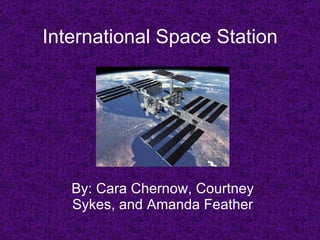
International Space Station By: Cara Chernow, Courtney Sykes, and Amanda Feather
The Beginning Starting in 1984, President Ronald Regan has the first ideas of creating a permanently manned space station in constant orbit of the earth. Ten years later, President Clinton bring back the idea and the process begins.
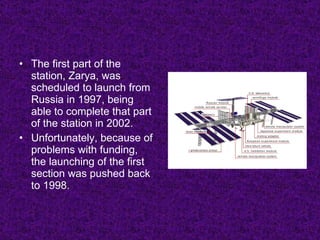
The first part of the station, Zarya, was scheduled to launch from Russia in 1997, being able to complete that part of the station in 2002. Unfortunately, because of problems with funding, the launching of the first section was pushed back to 1998.
Even though the main parts of the station were delayed from taking off, there were service modules already up in the orbit.
Trouble with Takeoff With the new expected takeoff day approaching, more trouble occurs with funding and now new technical problems, too. Takeoff gets delayed until finally in February of 2001, the real work beings.
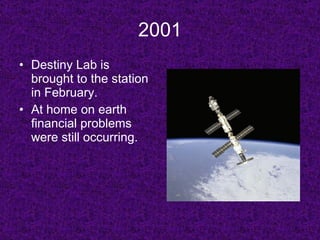
2001 Destiny Lab is brought to the station in February. At home on earth financial problems were still occurring.
2002 The focus is now on the station’s main truss. This was made to hold big power plants and other similar systems. Three new additions of the truss were added from Shuttle missions during this year.
2003 Unfortunately, on February 1, 2003, a tragic event occurred in space.  The Colombia Space Shuttle crashed on its way back to Earth. This event made the US shuttle at the station return home and stop construction for a period of time.
With US astronauts not present at the station, the building was left up to the Russians. In order to conserve resources at the station during this time, the Russians agreed to reduce their missions from three to only two astronauts.
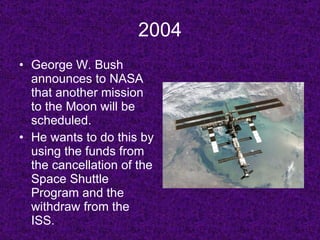
2004 George W. Bush announces to NASA that another mission to the Moon will be scheduled. He wants to do this by using the funds from the cancellation of the Space Shuttle Program and the withdraw from the ISS.
This new plan would work out that the Space Station Shuttle would stop being used in 2010, around the same time as the completion of the Space Station. In 2016 NASA will stop funding for the Station.
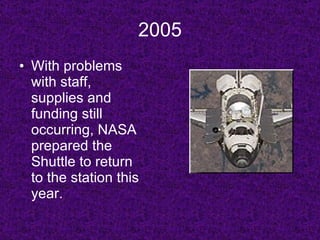
2005 With problems with staff, supplies and funding still occurring, NASA prepared the Shuttle to return to the station this year.
2006 Plans for future construction and missions are scheduled. This includes building the station so that by 2009 it is able to support a six-person crew at one time.
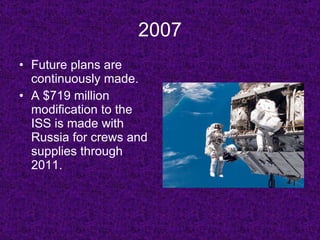
2007 Future plans are continuously made. A $719 million modification to the ISS is made with Russia for crews and supplies through 2011.
2008 Agreements with Russia and other European countries are made. A crew of Europeans and Americans is scheduled to go to the station in 2012.
2009 The American segment of the station is complete. The fourth, and last, power-generating section is complete. The American section can now support its goal of a six person crew at one time.
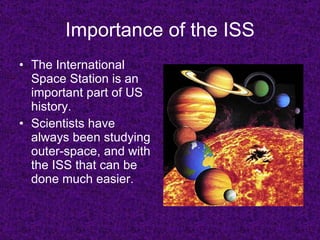
Importance of the ISS The International Space Station is an important part of US history. Scientists have always been studying outer-space, and with the ISS that can be done much easier.

International Space Station

  • 1.
    International Space StationBy: Cara Chernow, Courtney Sykes, and Amanda Feather
  • 2.
    The Beginning Startingin 1984, President Ronald Regan has the first ideas of creating a permanently manned space station in constant orbit of the earth. Ten years later, President Clinton bring back the idea and the process begins.
  • 3.
    The first partof the station, Zarya, was scheduled to launch from Russia in 1997, being able to complete that part of the station in 2002. Unfortunately, because of problems with funding, the launching of the first section was pushed back to 1998.
  • 4.
    Even though themain parts of the station were delayed from taking off, there were service modules already up in the orbit.
  • 5.
    Trouble with TakeoffWith the new expected takeoff day approaching, more trouble occurs with funding and now new technical problems, too. Takeoff gets delayed until finally in February of 2001, the real work beings.
  • 6.
    2001 Destiny Labis brought to the station in February. At home on earth financial problems were still occurring.
  • 7.
    2002 The focusis now on the station’s main truss. This was made to hold big power plants and other similar systems. Three new additions of the truss were added from Shuttle missions during this year.
  • 8.
    2003 Unfortunately, onFebruary 1, 2003, a tragic event occurred in space. The Colombia Space Shuttle crashed on its way back to Earth. This event made the US shuttle at the station return home and stop construction for a period of time.
  • 9.
    With US astronautsnot present at the station, the building was left up to the Russians. In order to conserve resources at the station during this time, the Russians agreed to reduce their missions from three to only two astronauts.
  • 10.
    2004 George W.Bush announces to NASA that another mission to the Moon will be scheduled. He wants to do this by using the funds from the cancellation of the Space Shuttle Program and the withdraw from the ISS.
  • 11.
    This new planwould work out that the Space Station Shuttle would stop being used in 2010, around the same time as the completion of the Space Station. In 2016 NASA will stop funding for the Station.
  • 12.
    2005 With problemswith staff, supplies and funding still occurring, NASA prepared the Shuttle to return to the station this year.
  • 13.
    2006 Plans forfuture construction and missions are scheduled. This includes building the station so that by 2009 it is able to support a six-person crew at one time.
  • 14.
    2007 Future plansare continuously made. A $719 million modification to the ISS is made with Russia for crews and supplies through 2011.
  • 15.
    2008 Agreements withRussia and other European countries are made. A crew of Europeans and Americans is scheduled to go to the station in 2012.
  • 16.
    2009 The Americansegment of the station is complete. The fourth, and last, power-generating section is complete. The American section can now support its goal of a six person crew at one time.
  • 17.
    Importance of theISS The International Space Station is an important part of US history. Scientists have always been studying outer-space, and with the ISS that can be done much easier.