Population – group of individuals of the same species
living in the same area, potentially interacting

Community – group of populations of different species
living in the same area, potentially interacting

What are some ecological interactions?
Why are ecological interactions important?

Interactions can affect distribution and abundance.

Interactions can influence evolution.

Think about how the following interactions can affect
distribution, abundance, and evolution.
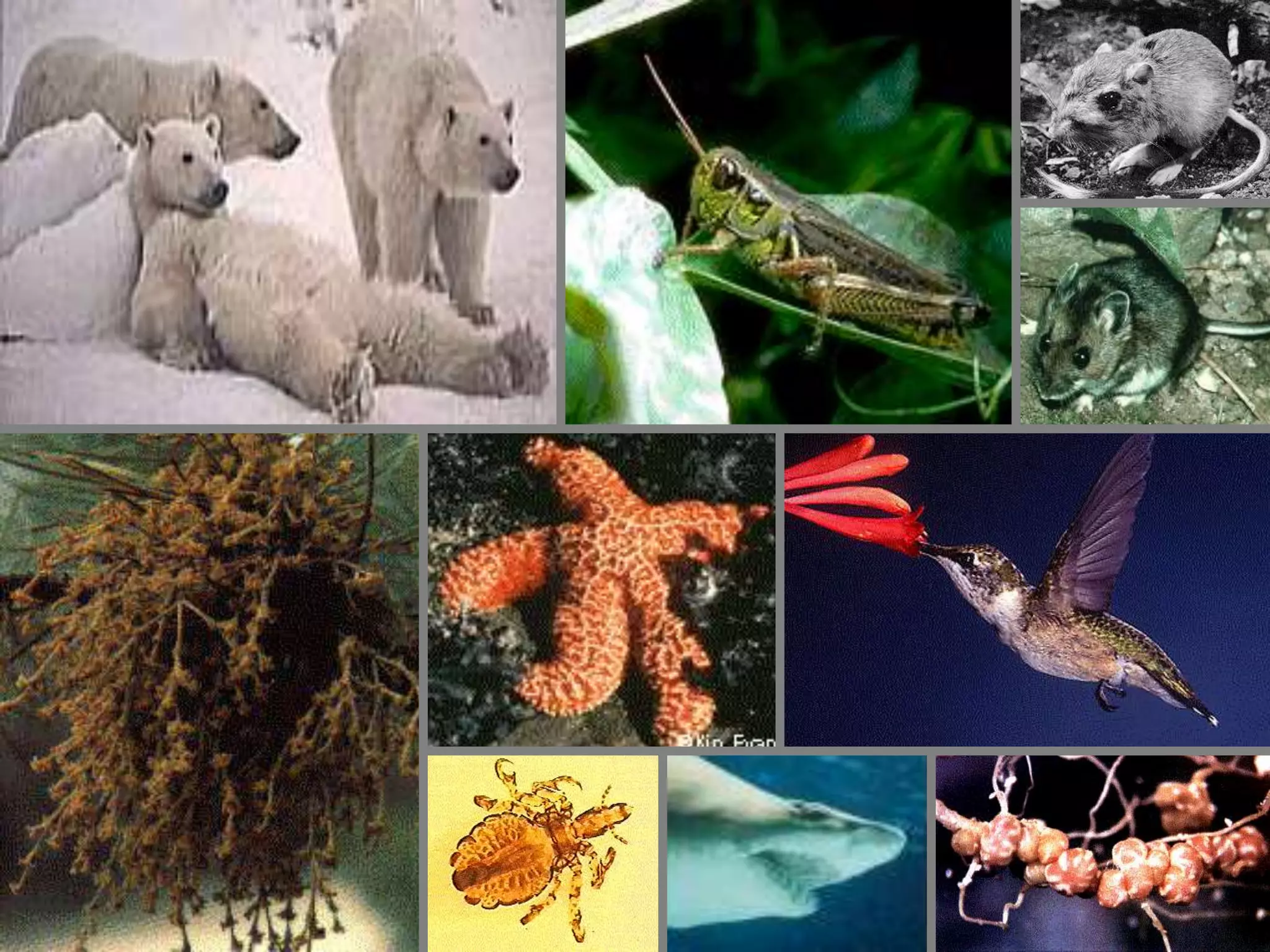
Types of ecological interactions
competition

predation
parasitism
mutualism
commensalism
symbiosis
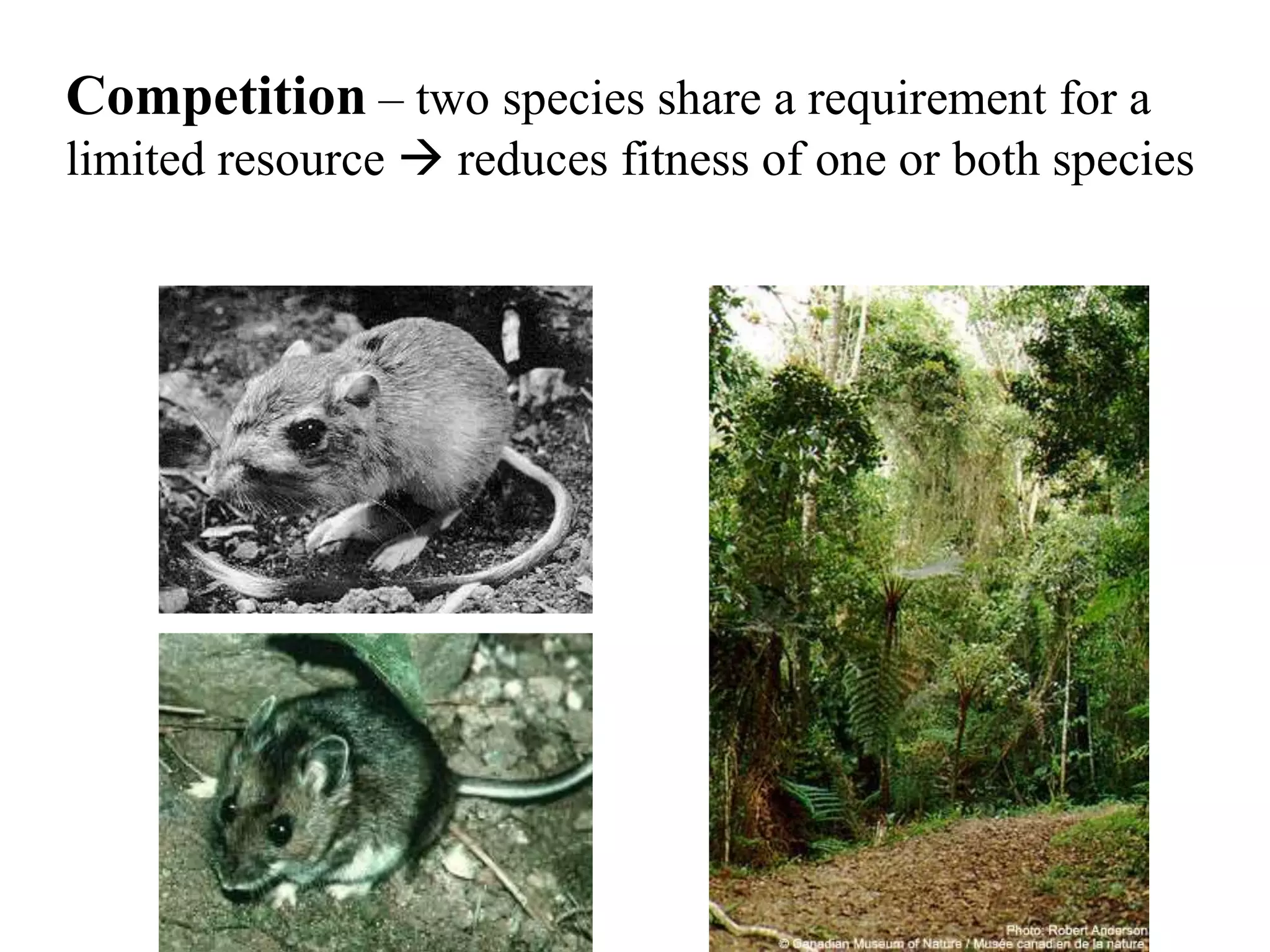
Competition – two species share a requirement for a
limited resource  reduces fitness of one or both species
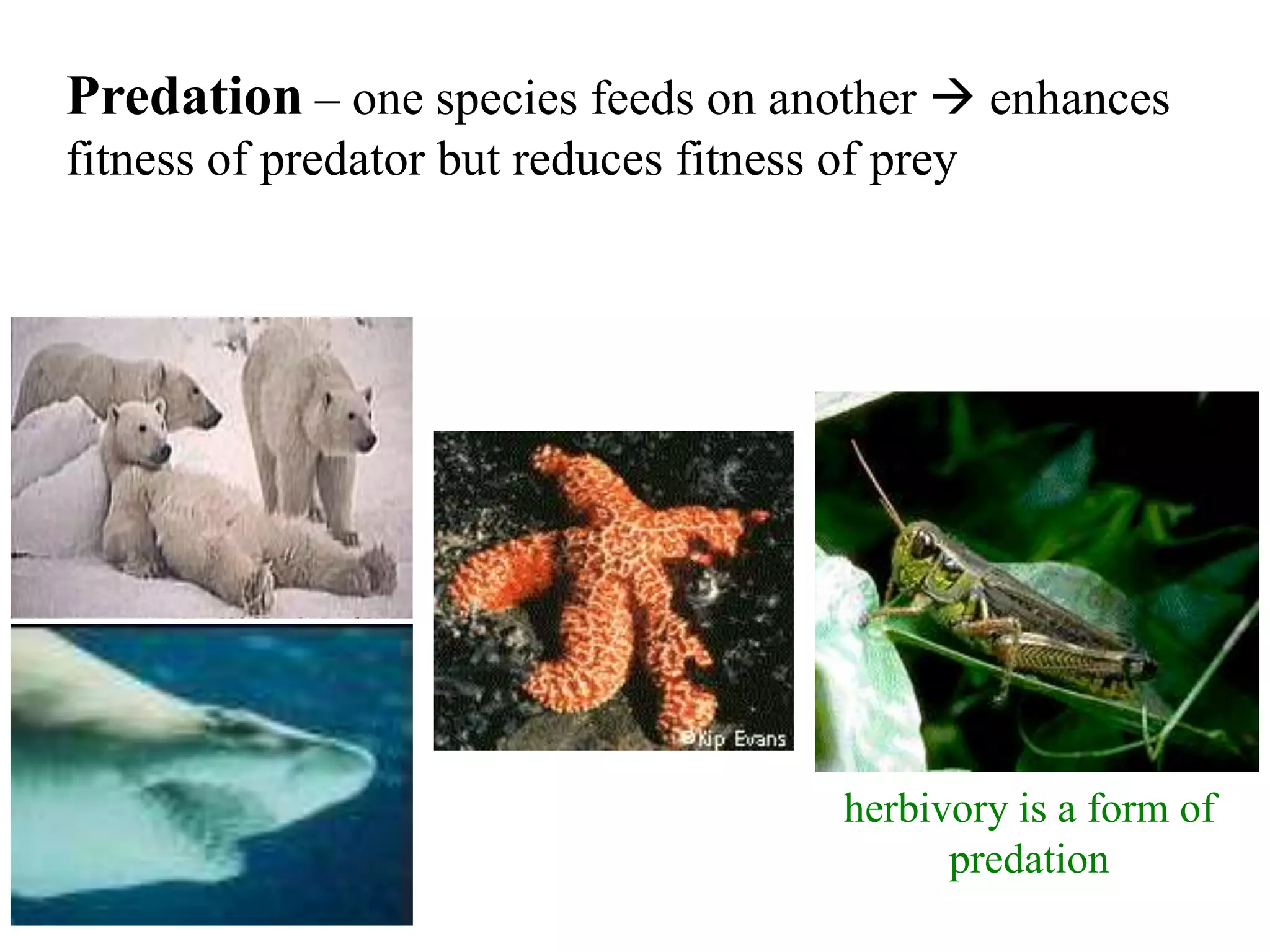
Predation – one species feeds on another  enhances
fitness of predator but reduces fitness of prey

herbivory is a form of
predation
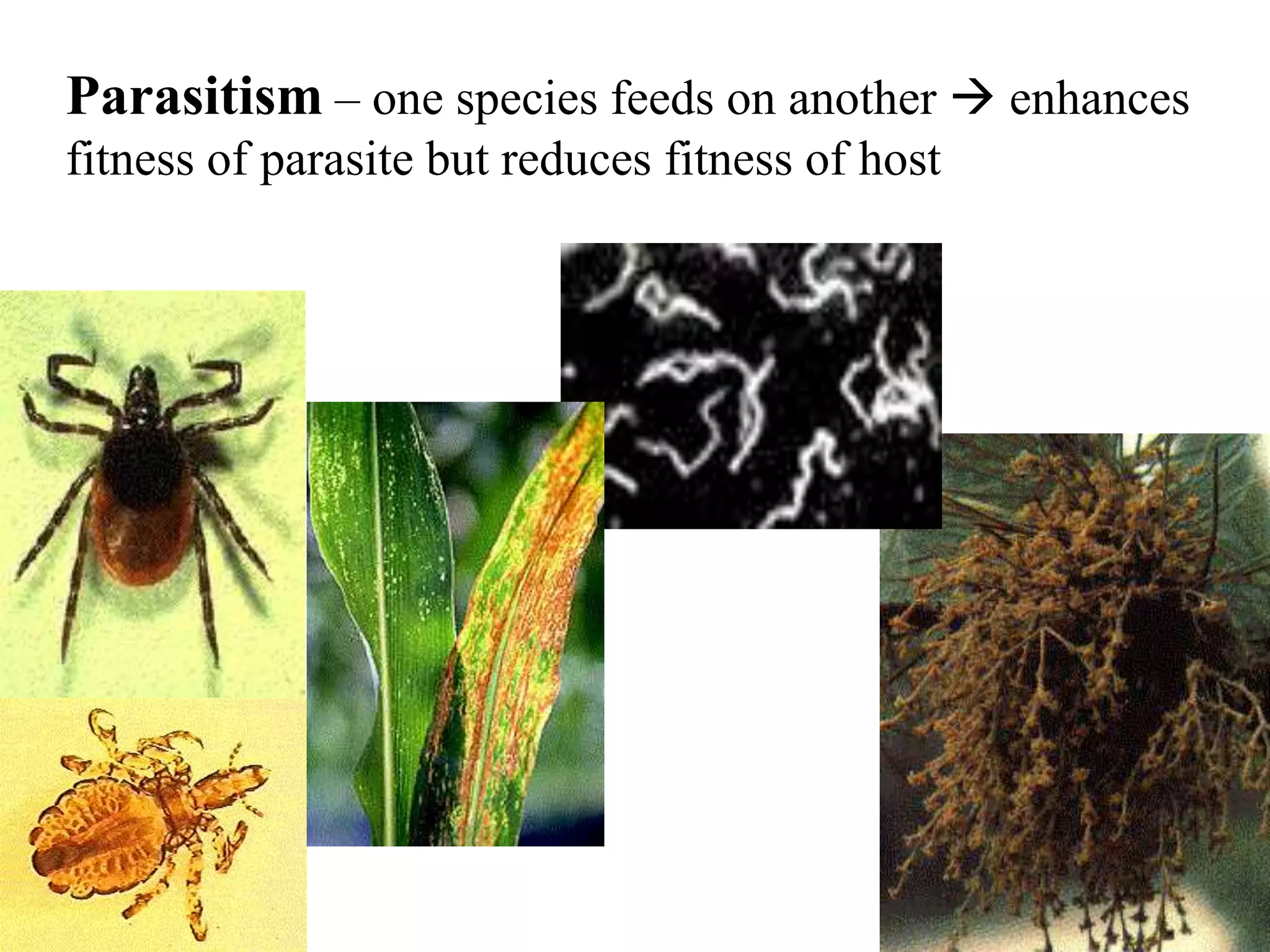
Parasitism – one species feeds on another  enhances
fitness of parasite but reduces fitness of host
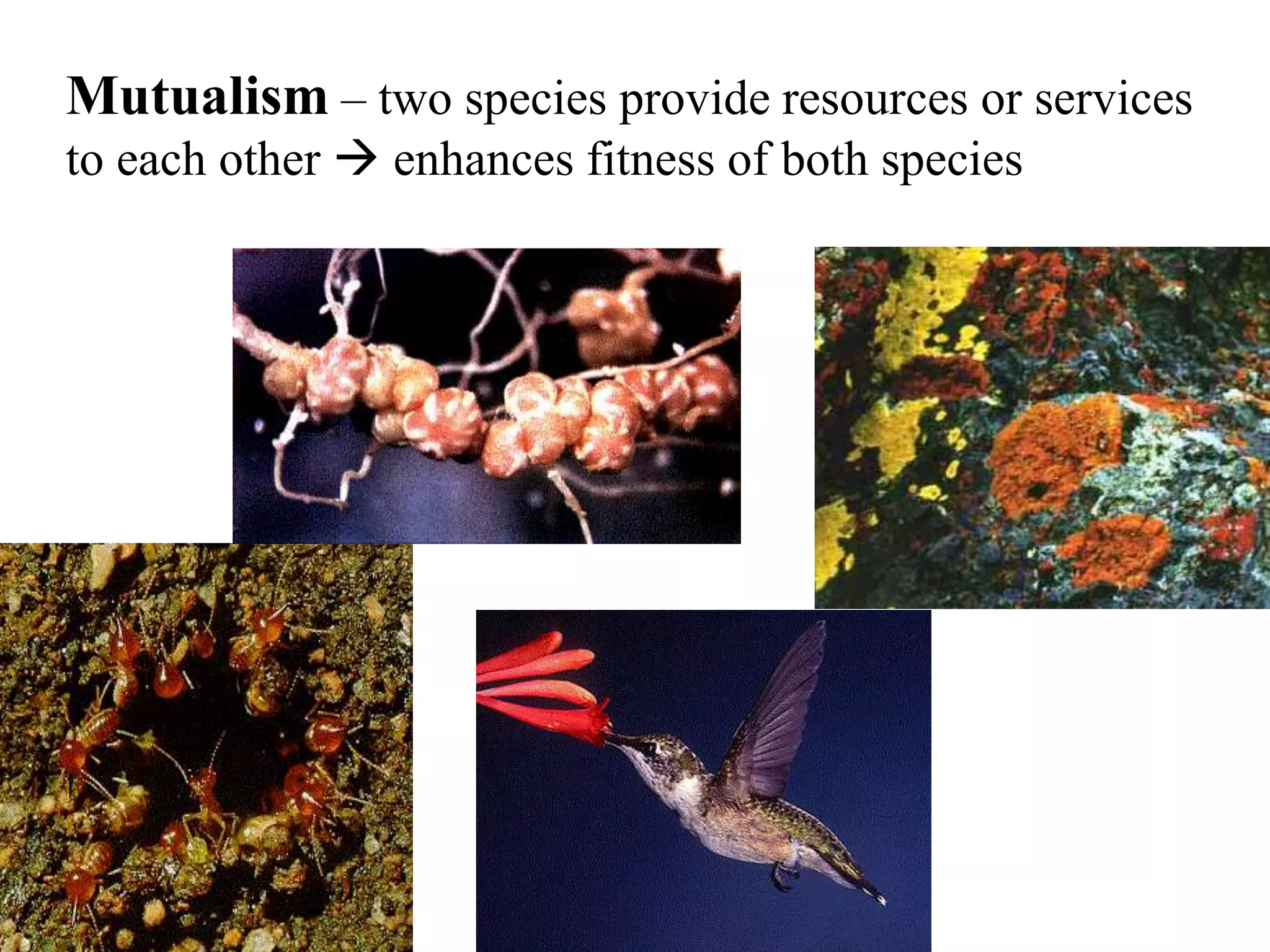
Mutualism – two species provide resources or services
to each other  enhances fitness of both species
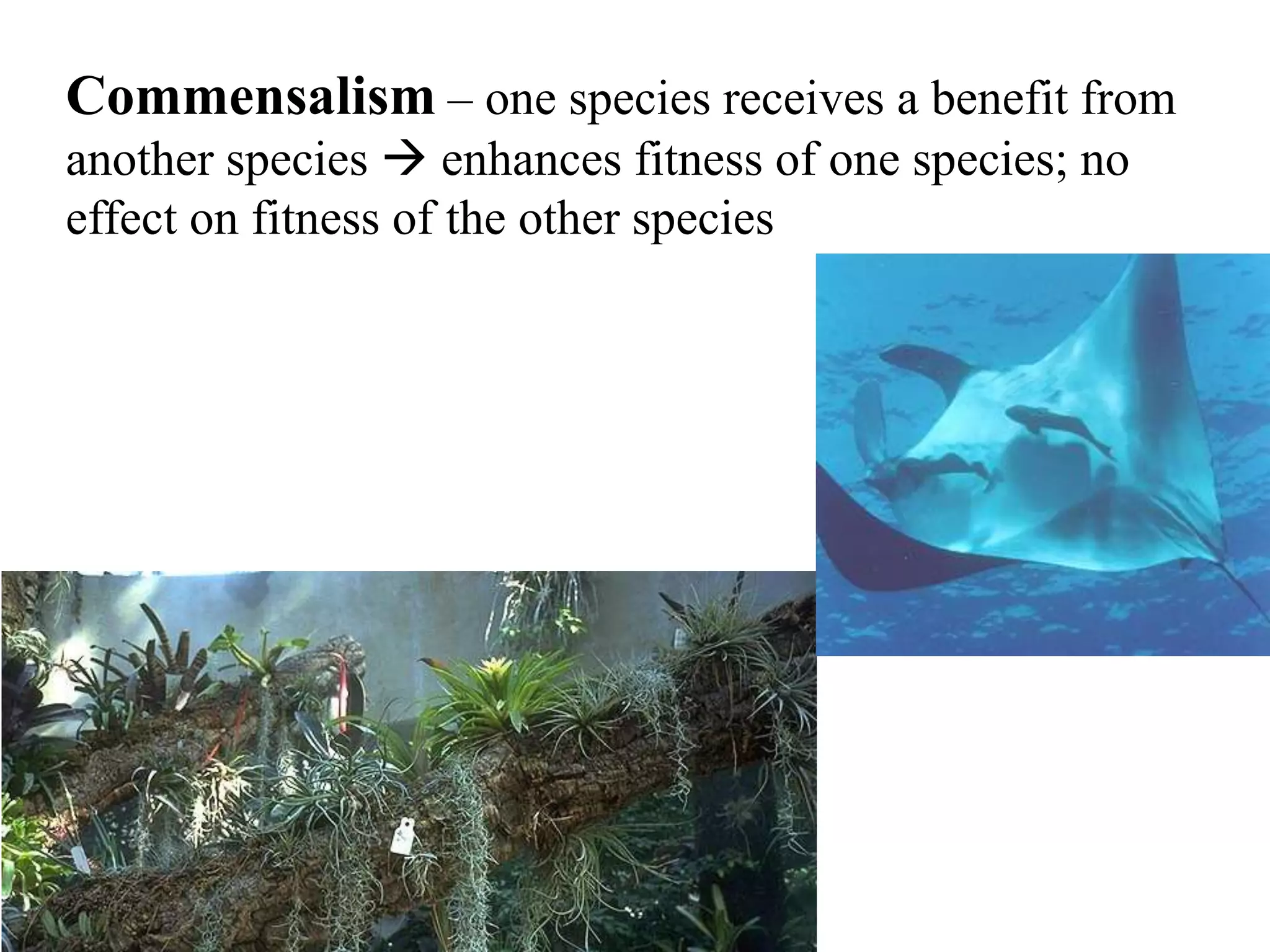
Commensalism – one species receives a benefit from
another species  enhances fitness of one species; no
effect on fitness of the other species
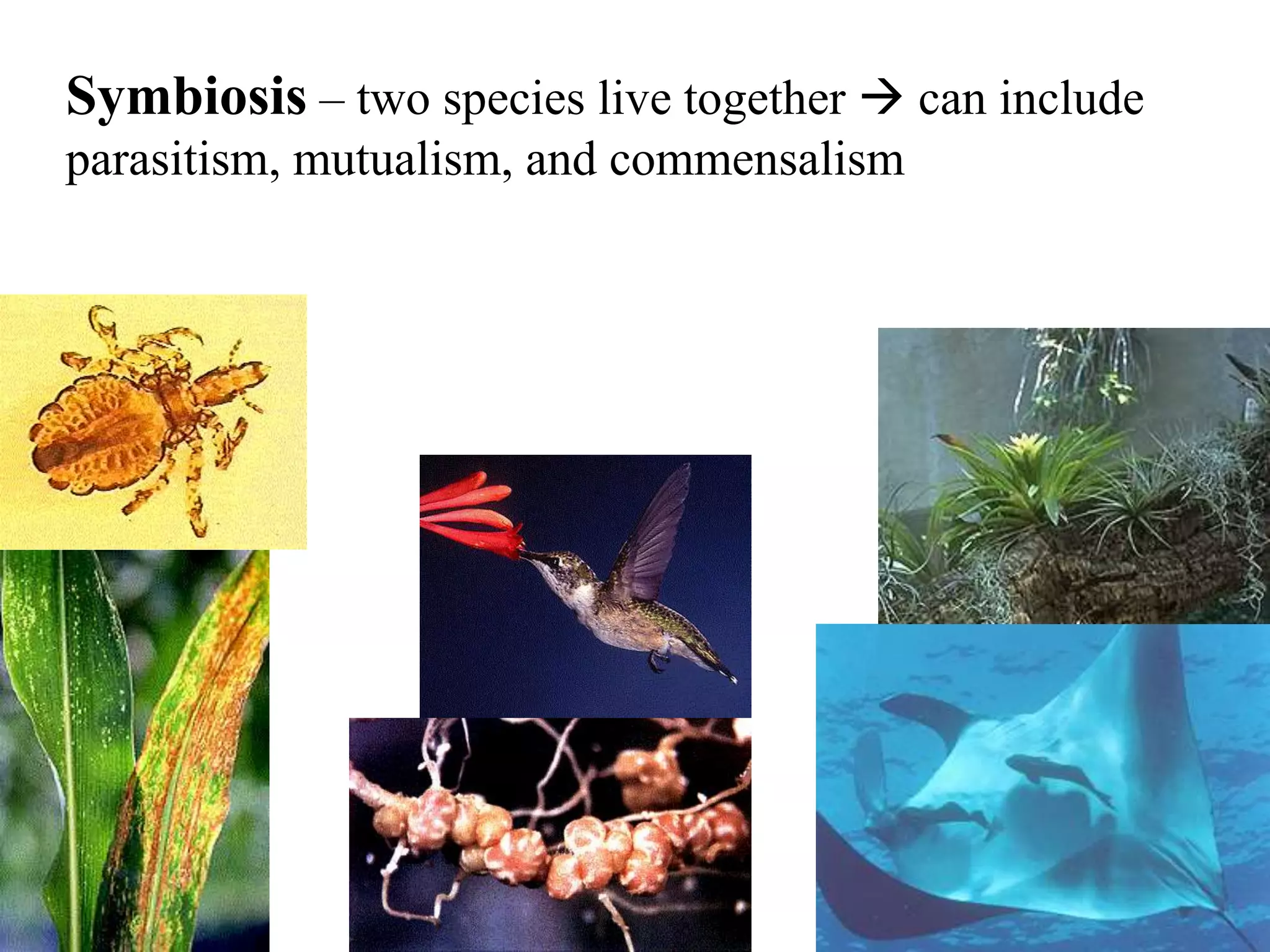
Symbiosis – two species live together  can include
parasitism, mutualism, and commensalism
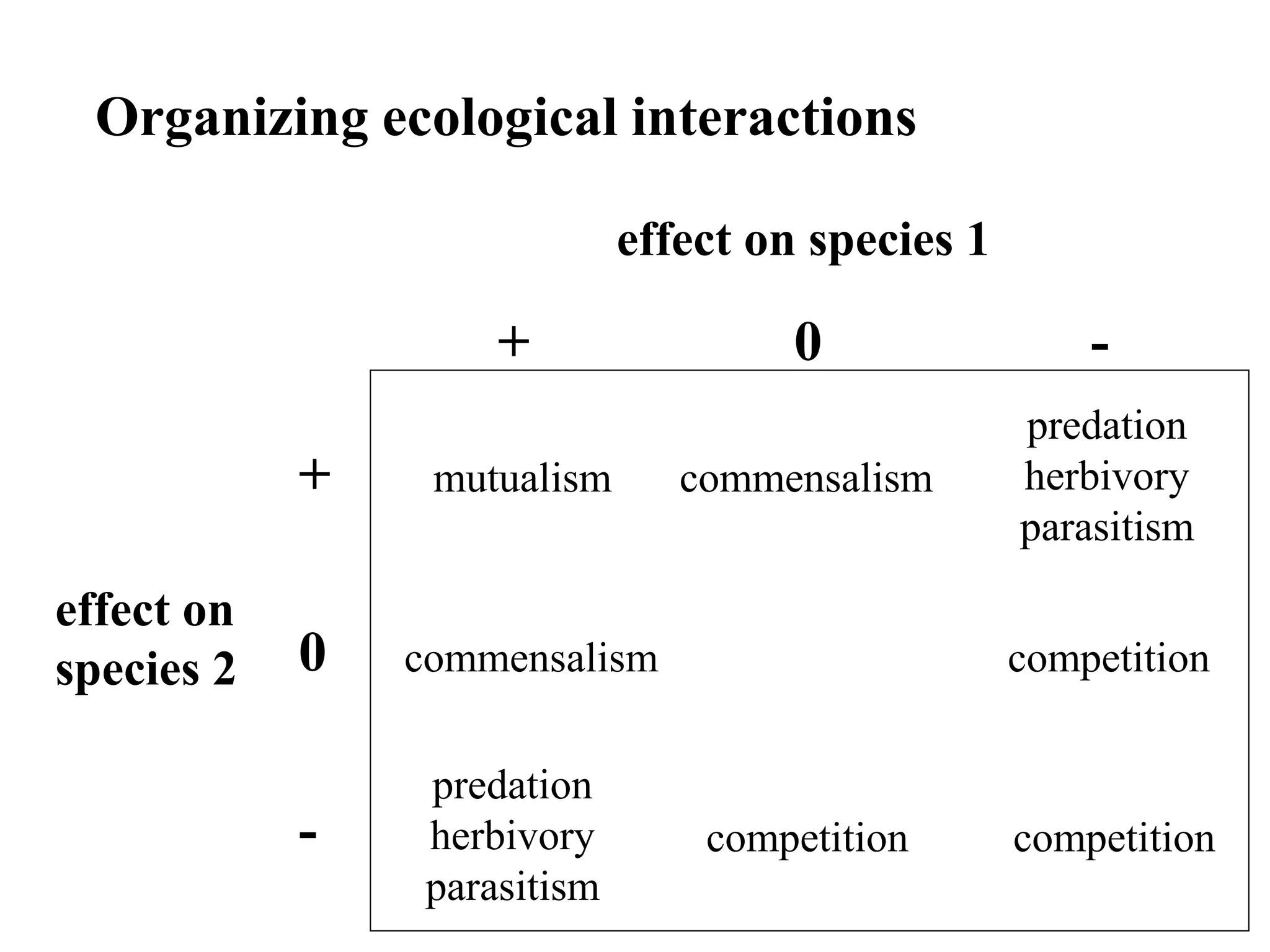
Organizing ecological interactions
effect on species 1

+

+
effect on
species 2

mutualism

0

0

-

commensalism

predation
herbivory
parasitism

commensalism

-

predation
herbivory
parasitism

competition

competition

competition

"Interactions of organisms in ecosystem"

  • 1.
    Population – groupof individuals of the same species living in the same area, potentially interacting Community – group of populations of different species living in the same area, potentially interacting What are some ecological interactions?
  • 2.
    Why are ecologicalinteractions important? Interactions can affect distribution and abundance. Interactions can influence evolution. Think about how the following interactions can affect distribution, abundance, and evolution.
  • 3.
    Types of ecologicalinteractions competition predation parasitism mutualism commensalism symbiosis
  • 5.
    Competition – twospecies share a requirement for a limited resource  reduces fitness of one or both species
  • 6.
    Predation – onespecies feeds on another  enhances fitness of predator but reduces fitness of prey herbivory is a form of predation
  • 7.
    Parasitism – onespecies feeds on another  enhances fitness of parasite but reduces fitness of host
  • 8.
    Mutualism – twospecies provide resources or services to each other  enhances fitness of both species
  • 9.
    Commensalism – onespecies receives a benefit from another species  enhances fitness of one species; no effect on fitness of the other species
  • 10.
    Symbiosis – twospecies live together  can include parasitism, mutualism, and commensalism
  • 11.
    Organizing ecological interactions effecton species 1 + + effect on species 2 mutualism 0 0 - commensalism predation herbivory parasitism commensalism - predation herbivory parasitism competition competition competition