“Effects of Interaction”
Beneficial and harmful
interactions among living things
Jenefer Agustina P. Magora T-III
Masi Elementary School
• demonstrate understanding of
the effects of interaction
between and among living
things;
• describe some types of
beneficial and harmful
interactions among living
things.
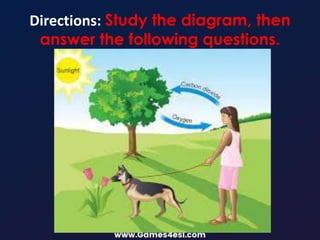
Directions: Study the diagram, then
answer the following questions.
1. What living things are found in the picture?
2. What is given off by the tree that is needed by the
woman? What is given off by the girl that is needed by
the tree?
3. What do you think will happen if the cow or other
animals will not give off carbon dioxide? What do you
think will happen if trees or other plants are not present
in the environment?
4. Do they have important roles in the environment?
What are they?
5. Are the organisms interacting with each other? Is
the interaction beneficial or harmful?
MYSTERY Box Game
Keep / Give The Box?
• Make 2 teams
HOW TO PLAY:
• Pick a letter and answer the question
• Then you must choose:
KEEP THE BOX
or
GIVE THE BOX to the other team
BE CAREFUL!
The points in the box
can be GOOD or BAD
ARE YOU READY?
B
E
H
A
J
G
C D
F
I
True or False
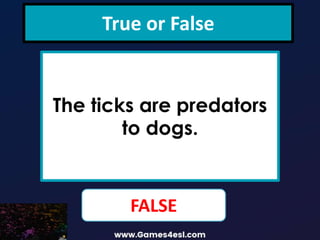
The ticks are predators
to dogs.
FALSE
+10
True or False
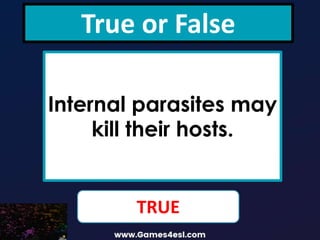
Internal parasites may
kill their hosts.
TRUE
-5
True or False
Tapeworms are examples
of internal parasites.
TRUE
+15
True or False
Internal parasites
live outside the
host’s body.
FALSE
-10
True or False
Lice and ticks are
examples of
internal parasites.
FALSE
+10
True or False
In the relationship
between the frog and
the fly, the fly is the prey.
TRUE
-5
True or False
Plants compete for
sunlight. The relationship
is called competition.
competition.
TRUE
+20
True or False
Predators are usually
large animals and prey
are usually bigger
animals.
FALSE
+10
True or False
If the population of prey
decreases, the number
of predators also
decreases.
TRUE
+20
True or False
When carabaos and
goats eat on the same
grassland, their
relationship is called
parasitism.

FALSE
-10
GREAT JOB!!!
Directions: Tell (Yes) if the
statement shows interaction
among living things and (No) if
not.

GREAT JOB!!!
Guide Questions
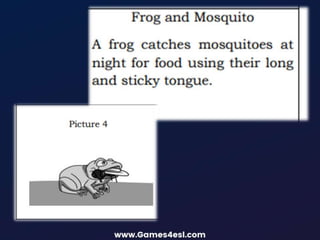
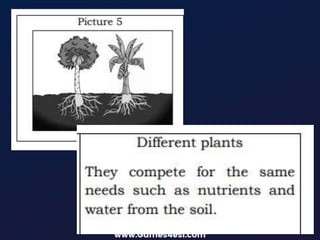
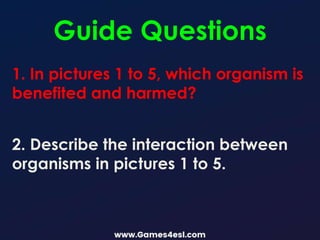
1. In pictures 1 to 5, which organism is
benefited and harmed?
2. Describe the interaction between
organisms in pictures 1 to 5.
3. What pictures show beneficial
interactions in the environment?
4. What pictures show harmful
interactions in the environment?
5. What made the interactions
beneficial? harmful?
6. If you are going to choose from
the different interactions you’ve seen
in the pictures, what do you think is
the best? Why?
Points to Remember:
Living things constantly interact with their
environment. Each kind of environment is
made up of biotic (living) and abiotic
(non-living) components that interact
and depend on one another Illustrated
by: Kristal Grace C. Ilao and Jotham D.
Balonzo 7 CO_Q2_Science 4_ Module 8
in different ways. Such interactions
among living things and their
environment enable them to live in units
called Ecosystems.
Ecology
the branch of Science that
deals with the many
relationships and
interactions of living things
with one another and with
their environments.
Ecosystems
it consists of all living and non-living
things in a given area; it is the largest
and the most complex level of
organization which consists of all plants,
animals and microorganisms which
function with all the environmental
factors such as sunlight, climate, soil,
water, air, space, nutrients, temperature
and energy.
Interaction is a
relationship that
exists among
organisms. It could
be beneficial or
harmful
There are interactions where
both species benefit from the
relationship and there are
also interactions where one
specie benefits but the other
is neither affected nor
harmed. These interactions
are beneficial/ important for
survival.
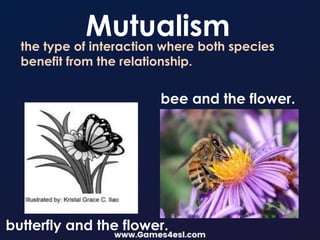
Mutualism
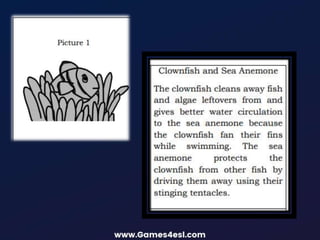
the type of interaction where both species
benefit from the relationship.
butterfly and the flower.
bee and the flower.
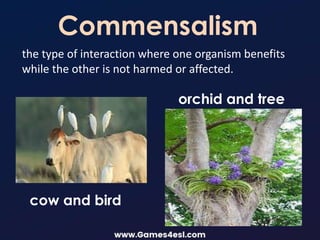
Commensalism
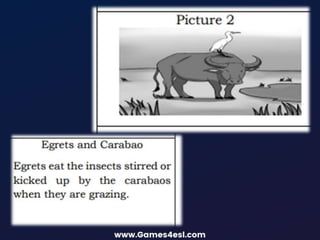
the type of interaction where one organism benefits
while the other is not harmed or affected.
cow and bird
orchid and tree
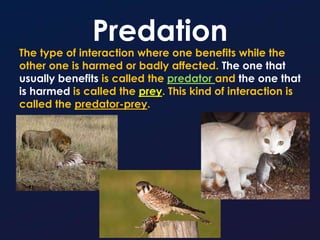
Predation
The type of interaction where one benefits while the
other one is harmed or badly affected. The one that
usually benefits is called the predator and the one that
is harmed is called the prey. This kind of interaction is
called the predator-prey.
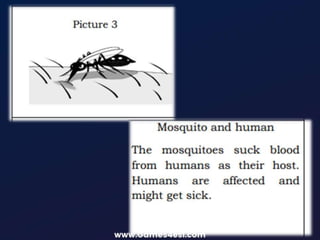
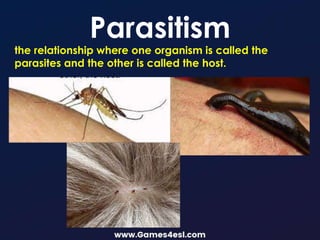
Parasitism
the relationship where one organism is called the
parasites and the other is called the host.
Parasites can be:
a. Internal parasites- they are
found inside the body of the
host
Ex: ascaris, ringworm, tapeworm
b. External parasite- they are
found outside the body of the
host
Ex: aphids, tick
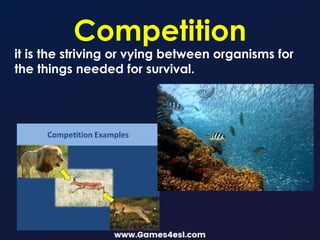
Competition
it is the striving or vying between organisms for
the things needed for survival.
it is everything that surrounds and
affects an animal. It includes
plants and other animals in the
area, rocks, soil, air, and water.
Both living and non-living things
are parts of an environment.
Environment
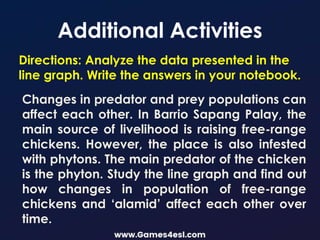
Additional Activities
Directions: Analyze the data presented in the
line graph. Write the answers in your notebook.
Changes in predator and prey populations can
affect each other. In Barrio Sapang Palay, the
main source of livelihood is raising free-range
chickens. However, the place is also infested
with phytons. The main predator of the chicken
is the phyton. Study the line graph and find out
how changes in population of free-range
chickens and ‘alamid’ affect each other over
time.

MYSTERY BOX TEMPLATE - Developing Mystery science.pptx

  • 1.
    “Effects of Interaction” Beneficialand harmful interactions among living things Jenefer Agustina P. Magora T-III Masi Elementary School
  • 2.
    • demonstrate understandingof the effects of interaction between and among living things; • describe some types of beneficial and harmful interactions among living things.
  • 3.
    Directions: Study thediagram, then answer the following questions.
  • 4.
    1. What livingthings are found in the picture? 2. What is given off by the tree that is needed by the woman? What is given off by the girl that is needed by the tree? 3. What do you think will happen if the cow or other animals will not give off carbon dioxide? What do you think will happen if trees or other plants are not present in the environment? 4. Do they have important roles in the environment? What are they? 5. Are the organisms interacting with each other? Is the interaction beneficial or harmful?
  • 5.
    MYSTERY Box Game Keep/ Give The Box?
  • 6.
    • Make 2teams HOW TO PLAY: • Pick a letter and answer the question • Then you must choose: KEEP THE BOX or GIVE THE BOX to the other team
  • 7.
    BE CAREFUL! The pointsin the box can be GOOD or BAD
  • 8.
  • 9.
  • 10.
    True or False Theticks are predators to dogs. FALSE
  • 12.
  • 13.
    True or False Internalparasites may kill their hosts. TRUE
  • 15.
  • 16.
    True or False Tapewormsare examples of internal parasites. TRUE
  • 18.
  • 19.
    True or False Internalparasites live outside the host’s body. FALSE
  • 21.
  • 22.
    True or False Liceand ticks are examples of internal parasites. FALSE
  • 24.
  • 25.
    True or False Inthe relationship between the frog and the fly, the fly is the prey. TRUE
  • 27.
  • 28.
    True or False Plantscompete for sunlight. The relationship is called competition. competition. TRUE
  • 30.
  • 31.
    True or False Predatorsare usually large animals and prey are usually bigger animals. FALSE
  • 33.
  • 34.
    True or False Ifthe population of prey decreases, the number of predators also decreases. TRUE
  • 36.
  • 37.
    True or False Whencarabaos and goats eat on the same grassland, their relationship is called parasitism. FALSE
  • 39.
  • 40.
  • 41.
    Directions: Tell (Yes)if the statement shows interaction among living things and (No) if not.
  • 42.
  • 48.
    Guide Questions 1. Inpictures 1 to 5, which organism is benefited and harmed? 2. Describe the interaction between organisms in pictures 1 to 5.
  • 49.
    3. What picturesshow beneficial interactions in the environment? 4. What pictures show harmful interactions in the environment? 5. What made the interactions beneficial? harmful? 6. If you are going to choose from the different interactions you’ve seen in the pictures, what do you think is the best? Why?
  • 50.
    Points to Remember: Livingthings constantly interact with their environment. Each kind of environment is made up of biotic (living) and abiotic (non-living) components that interact and depend on one another Illustrated by: Kristal Grace C. Ilao and Jotham D. Balonzo 7 CO_Q2_Science 4_ Module 8 in different ways. Such interactions among living things and their environment enable them to live in units called Ecosystems.
  • 51.
    Ecology the branch ofScience that deals with the many relationships and interactions of living things with one another and with their environments.
  • 52.
    Ecosystems it consists ofall living and non-living things in a given area; it is the largest and the most complex level of organization which consists of all plants, animals and microorganisms which function with all the environmental factors such as sunlight, climate, soil, water, air, space, nutrients, temperature and energy.
  • 53.
    Interaction is a relationshipthat exists among organisms. It could be beneficial or harmful
  • 54.
    There are interactionswhere both species benefit from the relationship and there are also interactions where one specie benefits but the other is neither affected nor harmed. These interactions are beneficial/ important for survival.
  • 55.
    Mutualism the type ofinteraction where both species benefit from the relationship. butterfly and the flower. bee and the flower.
  • 56.
    Commensalism the type ofinteraction where one organism benefits while the other is not harmed or affected. cow and bird orchid and tree
  • 57.
    Predation The type ofinteraction where one benefits while the other one is harmed or badly affected. The one that usually benefits is called the predator and the one that is harmed is called the prey. This kind of interaction is called the predator-prey.
  • 58.
    Parasitism the relationship whereone organism is called the parasites and the other is called the host.
  • 59.
    Parasites can be: a.Internal parasites- they are found inside the body of the host Ex: ascaris, ringworm, tapeworm b. External parasite- they are found outside the body of the host Ex: aphids, tick
  • 60.
    Competition it is thestriving or vying between organisms for the things needed for survival.
  • 61.
    it is everythingthat surrounds and affects an animal. It includes plants and other animals in the area, rocks, soil, air, and water. Both living and non-living things are parts of an environment. Environment
  • 62.
    Additional Activities Directions: Analyzethe data presented in the line graph. Write the answers in your notebook. Changes in predator and prey populations can affect each other. In Barrio Sapang Palay, the main source of livelihood is raising free-range chickens. However, the place is also infested with phytons. The main predator of the chicken is the phyton. Study the line graph and find out how changes in population of free-range chickens and ‘alamid’ affect each other over time.