Integrated Approach to Design,  Construction & Commissioning of Buildings AND ENERGY EFFICIENT DESIGNS: A PROSPEROUS PATH TO A CLEAN ENVIRONMENT
Introduction Building Configuration and Placement  Design Tools  Passive Solar (includes passive solar heating, passive solar cooling, thermal storage, daylighting)  Building Envelope  Active Solar and Photovoltaic Systems  Appliances & Equipment  Lighting  Building Materials
Introduction Establishing a base case—for example, a performance profile showing energy use and costs for a typical facility that complies with code and other measures for the project type, location, size, etc.  Identifying a range of solutions—all those that appear to have potential for the specific project.  Evaluating the performance of individual strategies—one by one through sensitivity analysis or a process of elimination parametrics
Grouping strategies that are high performers into different combinations to evaluate performance.  Selecting strategies, refining the design, and reiterating the analysis throughout the process.  design teams often make incremental changes that are effective and result in high-performance buildings.
Building Configuration and Placement Solar accessibility should be a part of site analysis.   Orienting the building   "skin to volume" ratio of the building perimeter daylighting Compromise the thermal performance of the building, the electrical load and cooling load savings
Design and Analysis Tools for Building Simulation ? Building Design Advisor Building life-cycle cost Assessment DOE-2   hour-by-hour energy use  ENERGY-10   annual simulation program  Energy Plus   modeling buildings with associated heating, cooling, lighting, ventilating, and other energy flows SERI-RES   passive solar design and thermal performance SPARK   Models complex building envelopes Window   thermal performance of fenestration products
Passive Solar Design Passive Solar Heating   Passive Solar Cooling   Thermal Storage   Daylighting
Passive solar design - challenging Can natural daylighting reduce the need for electric light?  If less electric light generates less heat, will there be a lower cooling load?  If the cooling load is lower, can the fans be smaller?  Will natural ventilation allow fans and other cooling equipment to be turned off at times ?
Climate (sun, wind, air temperature, and humidity)  Building orientation (glazing and room layout)  Building use type (occupancy schedules and use profiles)  Lighting and daylighting (electric and natural light sources)  Building envelope (geometry, insulation, fenestration, air leakage, ventilation, shading, thermal mass, color)  Internal heat gains (from lighting, office equipment, machinery, and people)  HVAC (plant, systems, and controls)  Energy costs (fuel source, demand charges, conversion efficiency).
The Problem an optimum design is based on minimizing  life-cycle cost : the sum of solar system first-cost and life-cycle operating costs 19 th  century contrivances that seemed to serve our parents and grandparents so well are attracting our attention today. Cost and technical analyses
Building Envelope Windows   Walls and Roofs   Insulation   Climate Considerations   Doors, Windows, and Openings   Thermal Efficiency   Reflectivity   Moisture Buildup
Active Solar Systems Active Solar Hot Water   Active Solar Heating   Photovoltaic Cells Biomass Generation Recycling Building waste Wind Energy?
TECHNOLOGY AVAILABLE Advanced Wind Turbines. Photovoltaic Modules. Economically viable for high quality power applications. Rail Transport in preference to Road. Telecomunications, Data & Video communications & Electronic Commerce. -----Travel less.
 
Some examples of Innovative path Battery Bus Zero effluent - Zuari fertiliser. Energy efficiency - Ambuja Cement. Use office waste for heat & energy. Use CNG in preference to liquid fuels. Reduce pollution at traffic lights.
Some Steps of Innovative path Buildings to be designed to be reasonably self sufficient to operate; with their own energy sources & waste disposal systems. Industrial units to have their basic power generation locally. Use electronic communications;  Minimise  TRAVEL
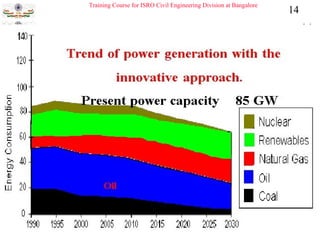
Results of Innovative path Energy consumpion should marginally decrease & there should be a change from  OIL, COAL  & Nuclear to  SOLAR, WIND & Fuel Cells.
Sustainable Building Materials Non-toxic  Recycled and recyclable  Renewable  Local  Standard sizes, modular, pre-cut (reduces waste)  Certified wood  Durable and long lasting
E&M Systems HVAC Lighting Water Supply & Sewage Disposal Fire Detection & Protection
National Building Code New Chapter ZERO Emphasis on Integrated approach What is the cost of implementation?  What is the investment needed? How long will it take? What are the benefits? Who has succeeded in implementation?
Thank You
Integrated Approach to Design,  Construction & Commissioning of Buildings AND  ENERGY EFFICIENT DESIGNS: A PROSPEROUS PATH TO A CLEAN ENVIRONMENT

Integrated Design

  • 1.
    Integrated Approach toDesign, Construction & Commissioning of Buildings AND ENERGY EFFICIENT DESIGNS: A PROSPEROUS PATH TO A CLEAN ENVIRONMENT
  • 2.
    Introduction Building Configurationand Placement Design Tools Passive Solar (includes passive solar heating, passive solar cooling, thermal storage, daylighting) Building Envelope Active Solar and Photovoltaic Systems Appliances & Equipment Lighting Building Materials
  • 3.
    Introduction Establishing abase case—for example, a performance profile showing energy use and costs for a typical facility that complies with code and other measures for the project type, location, size, etc. Identifying a range of solutions—all those that appear to have potential for the specific project. Evaluating the performance of individual strategies—one by one through sensitivity analysis or a process of elimination parametrics
  • 4.
    Grouping strategies thatare high performers into different combinations to evaluate performance. Selecting strategies, refining the design, and reiterating the analysis throughout the process. design teams often make incremental changes that are effective and result in high-performance buildings.
  • 5.
    Building Configuration andPlacement Solar accessibility should be a part of site analysis. Orienting the building "skin to volume" ratio of the building perimeter daylighting Compromise the thermal performance of the building, the electrical load and cooling load savings
  • 6.
    Design and AnalysisTools for Building Simulation ? Building Design Advisor Building life-cycle cost Assessment DOE-2 hour-by-hour energy use ENERGY-10 annual simulation program Energy Plus modeling buildings with associated heating, cooling, lighting, ventilating, and other energy flows SERI-RES passive solar design and thermal performance SPARK Models complex building envelopes Window thermal performance of fenestration products
  • 7.
    Passive Solar DesignPassive Solar Heating Passive Solar Cooling Thermal Storage Daylighting
  • 8.
    Passive solar design- challenging Can natural daylighting reduce the need for electric light? If less electric light generates less heat, will there be a lower cooling load? If the cooling load is lower, can the fans be smaller? Will natural ventilation allow fans and other cooling equipment to be turned off at times ?
  • 9.
    Climate (sun, wind,air temperature, and humidity) Building orientation (glazing and room layout) Building use type (occupancy schedules and use profiles) Lighting and daylighting (electric and natural light sources) Building envelope (geometry, insulation, fenestration, air leakage, ventilation, shading, thermal mass, color) Internal heat gains (from lighting, office equipment, machinery, and people) HVAC (plant, systems, and controls) Energy costs (fuel source, demand charges, conversion efficiency).
  • 10.
    The Problem anoptimum design is based on minimizing life-cycle cost : the sum of solar system first-cost and life-cycle operating costs 19 th century contrivances that seemed to serve our parents and grandparents so well are attracting our attention today. Cost and technical analyses
  • 11.
    Building Envelope Windows Walls and Roofs Insulation Climate Considerations Doors, Windows, and Openings Thermal Efficiency Reflectivity Moisture Buildup
  • 12.
    Active Solar SystemsActive Solar Hot Water Active Solar Heating Photovoltaic Cells Biomass Generation Recycling Building waste Wind Energy?
  • 13.
    TECHNOLOGY AVAILABLE AdvancedWind Turbines. Photovoltaic Modules. Economically viable for high quality power applications. Rail Transport in preference to Road. Telecomunications, Data & Video communications & Electronic Commerce. -----Travel less.
  • 14.
  • 15.
    Some examples ofInnovative path Battery Bus Zero effluent - Zuari fertiliser. Energy efficiency - Ambuja Cement. Use office waste for heat & energy. Use CNG in preference to liquid fuels. Reduce pollution at traffic lights.
  • 16.
    Some Steps ofInnovative path Buildings to be designed to be reasonably self sufficient to operate; with their own energy sources & waste disposal systems. Industrial units to have their basic power generation locally. Use electronic communications; Minimise TRAVEL
  • 17.
    Results of Innovativepath Energy consumpion should marginally decrease & there should be a change from OIL, COAL & Nuclear to SOLAR, WIND & Fuel Cells.
  • 18.
    Sustainable Building MaterialsNon-toxic Recycled and recyclable Renewable Local Standard sizes, modular, pre-cut (reduces waste) Certified wood Durable and long lasting
  • 19.
    E&M Systems HVACLighting Water Supply & Sewage Disposal Fire Detection & Protection
  • 20.
    National Building CodeNew Chapter ZERO Emphasis on Integrated approach What is the cost of implementation? What is the investment needed? How long will it take? What are the benefits? Who has succeeded in implementation?
  • 21.
  • 22.
    Integrated Approach toDesign, Construction & Commissioning of Buildings AND ENERGY EFFICIENT DESIGNS: A PROSPEROUS PATH TO A CLEAN ENVIRONMENT