Peter Hoffmann, AIA, LEED AP
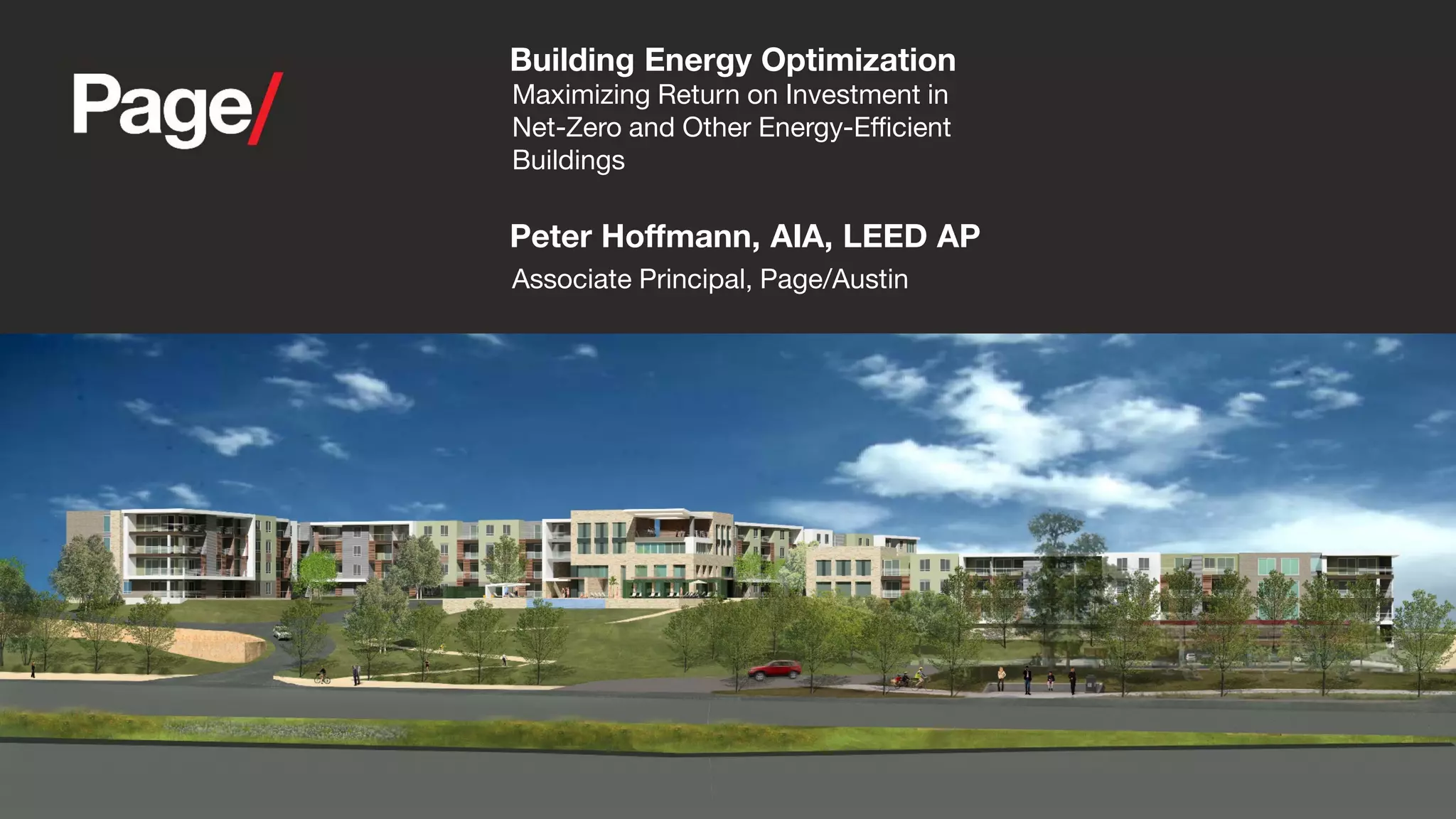
Building Energy Optimization
Maximizing Return on Investment in
Net-Zero and Other Energy-Efficient
Buildings
Associate Principal, Page/Austin
Texas Society of Architects
A051
Building Energy Optimization
59
Peter Hoffmann
11-7-2015
Credit(s) earned on completion of
this course will be reported to AIA
CES for AIA members.
Certificates of Completion for
both AIA members and non-AIA
members are available upon
request.
This course is registered with AIA
CES for continuing professional
education. As such, it does not
include content that may be
deemed or construed to be an
approval or endorsement by the
AIA of any material of
construction or any method or
manner of
handling, using, distributing, or
dealing in any material or
product.
______________________________________
_____
Questions related to specific materials,
methods, and services will be addressed at the
conclusion of this presentation.
SAMPLE OPTIONAL SLIDE
This presentation is protected by US and International Copyright laws.
Reproduction, distribution, display and use of the presentation without
written permission of the speaker is proh
© PageSoutherlandPage 2015
Copyright Materials
This presentation demonstrates a methodical
approach that Page used to target net zero
energy use for a multifamily project. While the
individual strategies used for a multifamily
project will differ from those employed for other
building types, the strategic and tactical
approaches toward achieving the best return on
investment are applicable to any building
project
Course
Description
Learning
Objectives
1. Help their Client define their energy/sustainability goals.
2. Know who to include in a energy/sustainability programming team.
3. Create a list of Energy Efficiency Measures
4. Evaluate EEM’s Return on Investment based on several metrics
At the end of the this course, participants will be able to:
History Process SummaryIntroduction
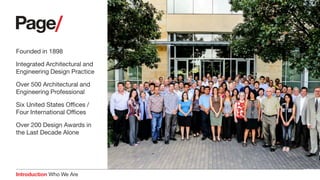
Introduction Who We Are
Founded in 1898
Integrated Architectural and
Engineering Design Practice
Over 500 Architectural and
Engineering Professional
Six United States Offices /
Four International Offices
Over 200 Design Awards in
the Last Decade Alone
Page Southerland Page, Inc.
Austin, Texas
Architecture
Engineering
Interiors
Planning
Consulting
 Commissioning
 Lab Planning
 Programming
 Sustainability
Introduction Market Sectors
Academic
Civic / Government
Corporate / Commercial
Healthcare
Housing / Hospitality
Science / Technology
History Process SummaryIntroduction
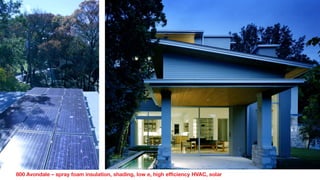
800 Avondale – spray foam insulation, shading, low e, high efficiency HVAC, solar
Four Points Office Campus – LEED Gold, Core and Shell, minimal footprint in an ecologically sensitive area
Lakeway Regional Medical Center – LEED Silver, EW orientation, natural materials
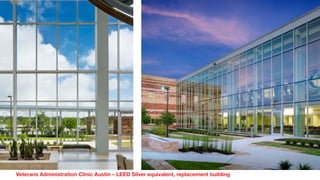
Veterans Administration Clinic Austin – LEED Silver equivalent, replacement building
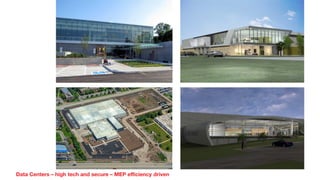
Data Centers – high tech and secure – MEP efficiency driven
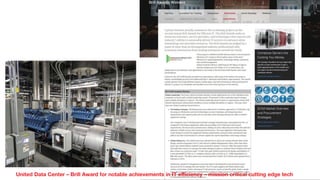
United Data Center – Brill Award for notable achievements in IT efficiency – mission critical cutting edge tech
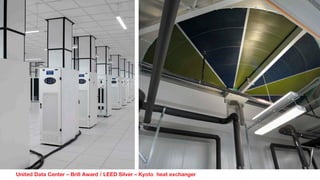
United Data Center – Brill Award / LEED Silver – Kyoto heat exchanger
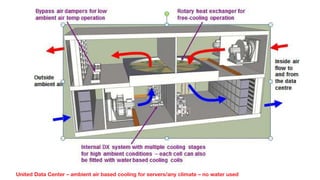
United Data Center – ambient air based cooling for servers/any climate – no water used
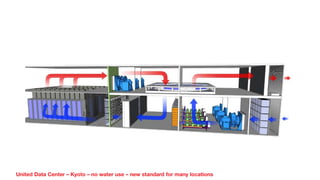
United Data Center – Kyoto – no water use – new standard for many locations
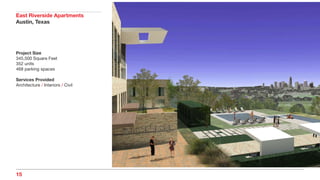
15
Project Size
345,500 Square Feet
352 units
468 parking spaces
Services Provided
Architecture / Interiors / Civil
East Riverside Apartments
Austin, Texas
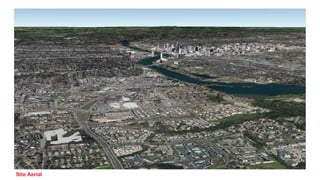
Site Aerial
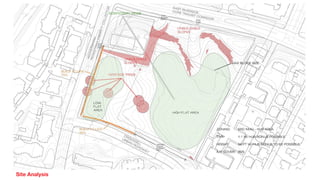
Site Analysis
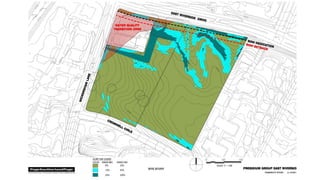
Topography & Hydrology
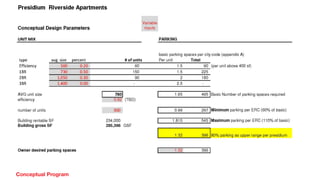
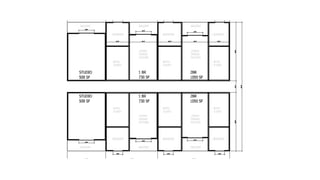
Conceptual Program
Early Concept
Net Zero
Gas Turbine / Co & Tri-generation
Solar
New Project Requirements
History Process SummaryIntroduction
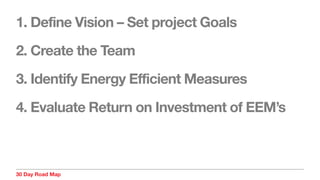
30 Day Road Map
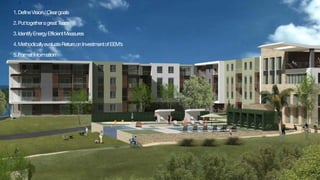
1. Define Vision – Set project Goals
2. Create the Team
3. Identify Energy Efficient Measures
4. Evaluate Return on Investment of EEM’s
Collaborative Project Approach
Begin with your clients vision.
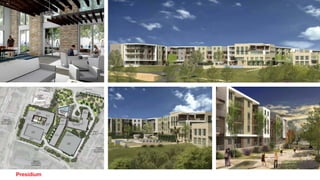
Presidium Group
Capital Group
Property Management
Energy
East Riverside Apartments
- First ground up development
- Flagship & test bed for future projects
Client profile
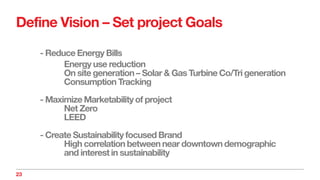
Define Vision – Set project Goals
- Reduce Energy Bills
Energy use reduction
On site generation – Solar & Gas Turbine Co/Tri generation
Consumption Tracking
- Maximize Marketability of project
Net Zero
LEED
- Create Sustainability focused Brand
High correlation between near downtown demographic
and interest in sustainability
23
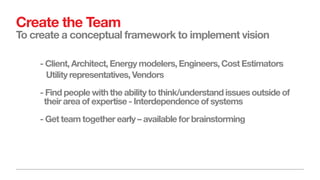
Create the Team
To create a conceptual framework to implement vision
- Client, Architect, Energy modelers, Engineers, Cost Estimators
Utility representatives, Vendors
- Find people with the ability to think/understand issues outside of
their area of expertise - Interdependence of systems
- Get team together early – available for brainstorming
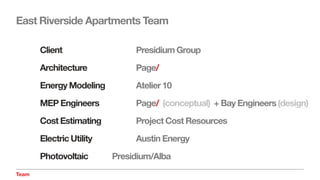
East Riverside Apartments Team
Client Presidium Group
Architecture Page/
Energy Modeling Atelier 10
MEP Engineers Page/ (conceptual) + Bay Engineers (design)
Cost Estimating Project Cost Resources
Electric Utility Austin Energy
Photovoltaic Presidium/Alba
Team
Identify Energy Efficient Measures
East Riverside Apartments
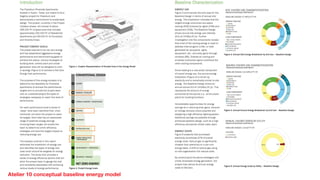
- Generate energy use base line data (conceptualenergy model)
- Leverage your teams knowledge of EEM’s
Previous Experience
Current Developments
- Get the Team in a room and charrette
Team is greater than sum of parts
- Don’t forget the basics
- Be open to new ideas
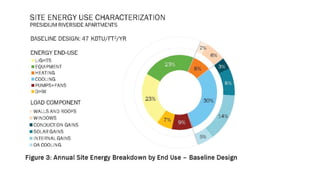
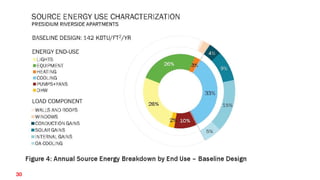
Atelier 10 conceptual baseline energy model
30
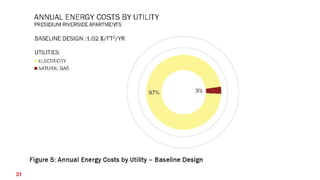
31
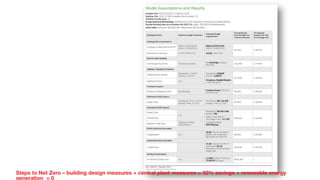
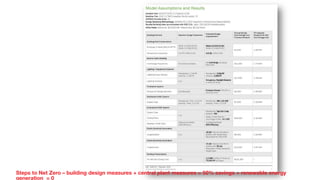
Steps to Net Zero – building design measures + central plant measures = 50% savings + renewable energy
generation = 0
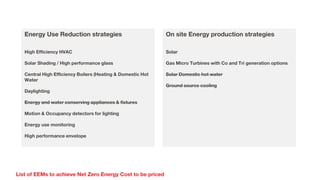
List of EEMs to achieve Net Zero Energy Cost to be priced
Energy Use Reduction strategies
High Efficiency HVAC
Solar Shading / High performance glass
Central High Efficiency Boilers (Heating & Domestic Hot
Water
Daylighting
Energy and water conserving appliances & fixtures
Motion & Occupancy detectors for lighting
Energy use monitoring
High performance envelope
On site Energy production strategies
Solar
Gas Micro Turbines with Co and Tri generation options
Solar Domestic hot water
Ground source cooling
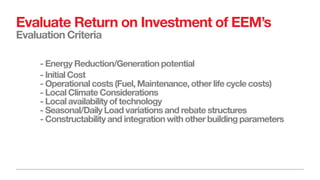
Evaluate Return on Investment of EEM’s
Evaluation Criteria
- Energy Reduction/Generation potential
- Initial Cost
- Operational costs (Fuel, Maintenance, other life cycle costs)
- Local Climate Considerations
- Local availability of technology
- Seasonal/Daily Load variations and rebate structures
- Constructability and integration with other building parameters
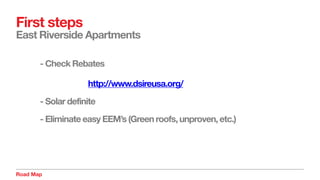
First steps
East Riverside Apartments
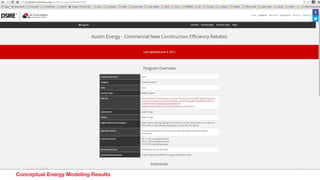
- Check Rebates
http://www.dsireusa.org/
- Solar definite
- Eliminate easy EEM’s (Green roofs, unproven, etc.)
Road Map
Conceptual Energy Modeling Results
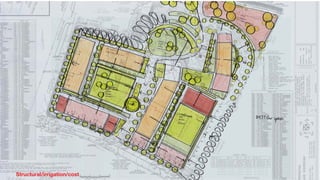
Structural/irrigation/cost
Steps to Net Zero – building design measures + central plant measures = 50% savings + renewable energy
generation = 0
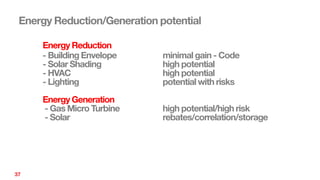
Energy Reduction/Generation potential
Energy Reduction
- Building Envelope minimal gain - Code
- Solar Shading high potential
- HVAC high potential
- Lighting potential with risks
Energy Generation
- Gas Micro Turbine high potential/high risk
- Solar rebates/correlation/storage
37
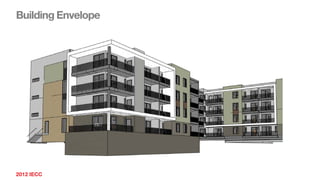
2012 IECC
Building Envelope
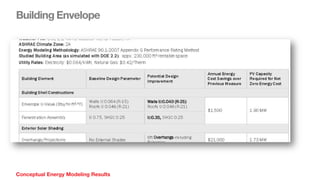
Conceptual Energy Modeling Results
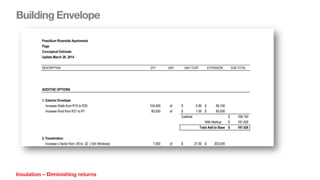
Building Envelope
Insulation – Diminishing returns
Building Envelope
Insulation – Diminishing returns
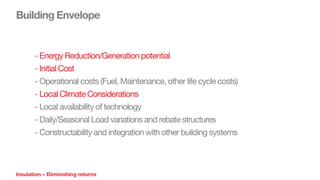
Building Envelope
- Energy Reduction/Generation potential
- Initial Cost
- Operational costs (Fuel, Maintenance, other life cycle costs)
- Local Climate Considerations
- Local availability of technology
- Daily/Seasonal Load variations and rebate structures
- Constructability and integration with other building systems
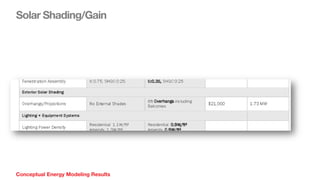
Conceptual Energy Modeling Results
Solar Shading/Gain
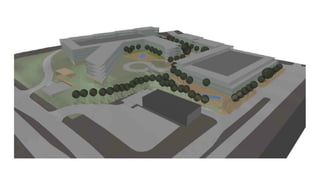
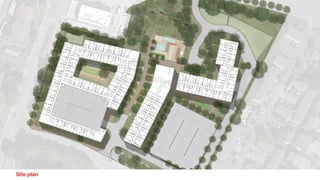
Site plan
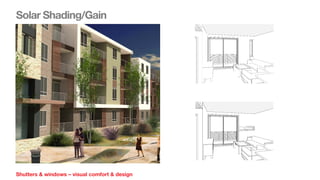
Solar Shading/Gain
Shutters & windows – visual comfort & design
Solar Shading/Gain
Solar Shading/Gain
- Energy Reduction/Generation potential
- Initial Cost
- Operational costs (Fuel, Maintenance, other life cycle costs)
- Local Climate Considerations
- Local availability of technology
- Daily/Seasonal Load variations and rebate structures
- Constructability and integration with other building systems
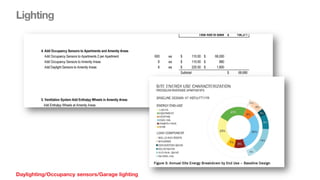
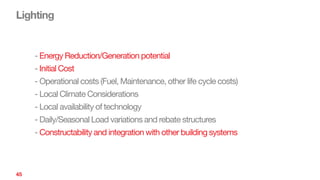
Lighting
Daylighting/Occupancy sensors/Garage lighting
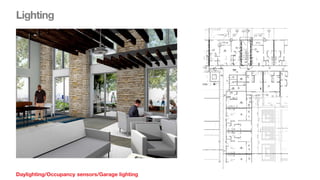
Lighting
Daylighting/Occupancy sensors/Garage lighting
Lighting
45
- Energy Reduction/Generation potential
- Initial Cost
- Operational costs (Fuel, Maintenance, other life cycle costs)
- Local Climate Considerations
- Local availability of technology
- Daily/Seasonal Load variations and rebate structures
- Constructability and integration with other building systems
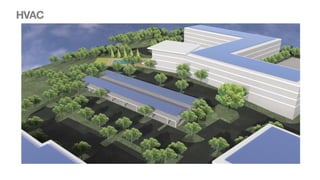
HVAC
Roof space/DOE vs Energy Plus/initial cost
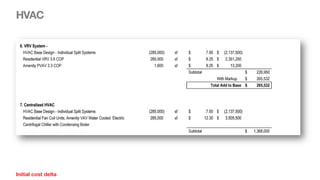
HVAC
Initial cost delta
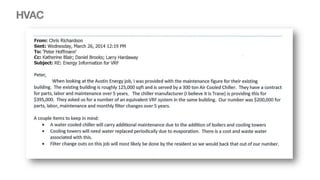
HVAC
HVAC
HVAC
- Energy Reduction/Generation potential
- Initial Cost
- Operational costs (Fuel, Maintenance, other life cycle costs)
- Local Climate Considerations
- Local availability of technology
- Daily/Seasonal Load variations and rebate structures
- Constructability and integration with other building systems
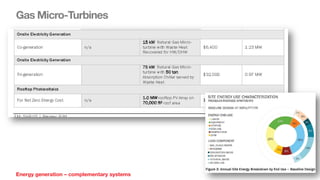
Gas Micro-Turbines
Energy generation – complementary systems
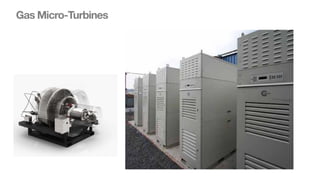
Gas Micro-Turbines
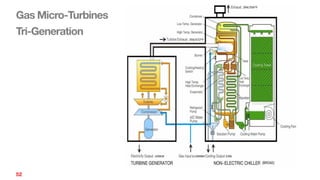
Gas Micro-Turbines
Tri-Generation
52
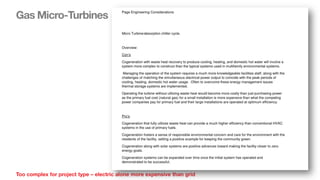
Gas Micro-Turbines
Too complex for project type – electric alone more expensive than grid
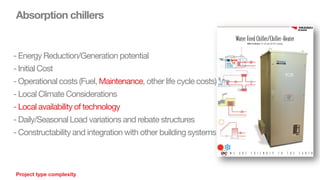
Absorption chillers
Project type complexity
- Energy Reduction/Generation potential
- Initial Cost
- Operational costs (Fuel, Maintenance, other life cycle costs)
- Local Climate Considerations
- Local availability of technology
- Daily/Seasonal Load variations and rebate structures
- Constructability and integration with other building systems
Gas Micro-Turbines
- Energy Reduction/Generation potential
- Initial Cost
- Operational costs (Fuel, Maintenance, other life cycle costs)
- Local Climate Considerations
- Local availability of technology
- Daily/Seasonal Load variations and rebate structures
- Constructability and integration with other building systems
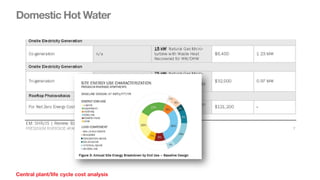
Domestic Hot Water
Central plant/life cycle cost analysis
Domestic Hot Water
Water softening/piping
- Energy Reduction/Generation potential
- Initial Cost
- Operational costs (Fuel, Maintenance, other life cycle costs)
- Local Climate Considerations
- Local availability of technology
- Daily/Seasonal Load variations and rebate structures
- Constructability and integration with other building systems
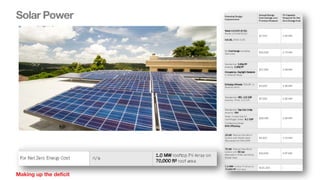
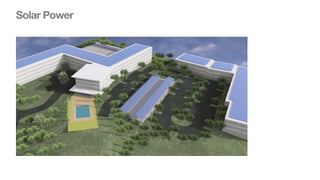
Solar Power
Making up the deficit
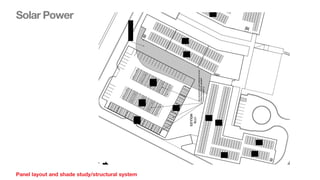
Solar Power
Panel layout and shade study/structural system
Solar Power
Solar Power
Visible Solar
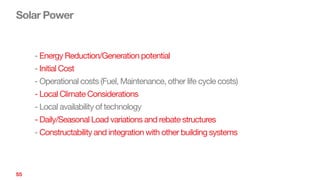
Solar Power
55
- Energy Reduction/Generation potential
- Initial Cost
- Operational costs (Fuel, Maintenance, other life cycle costs)
- Local Climate Considerations
- Local availability of technology
- Daily/Seasonal Load variations and rebate structures
- Constructability and integration with other building systems
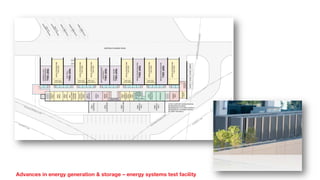
Advances in energy generation & storage – energy systems test facility
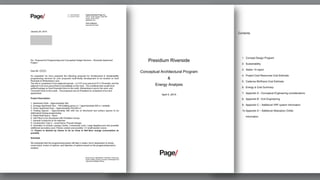
Final Report
History Process SummaryIntroduction
Presidium
1.DefineVision/Cleargoals
2.PuttogetheragreatTeam
3.IdentifyEnergyEfficientMeasures
4.MethodicallyevaluateReturnonInvestmentofEEM’s
5.FormatInformation
Presidium
Sample Last Slide
This concludes The American Institute of Architects
Continuing Education Systems Course
Texas Society of Architects 512-478-7386
Net Zero - TSA presentation

Net Zero - TSA presentation

  • 1.
    Peter Hoffmann, AIA,LEED AP Building Energy Optimization Maximizing Return on Investment in Net-Zero and Other Energy-Efficient Buildings Associate Principal, Page/Austin
  • 2.
    Texas Society ofArchitects A051 Building Energy Optimization 59 Peter Hoffmann 11-7-2015
  • 3.
    Credit(s) earned oncompletion of this course will be reported to AIA CES for AIA members. Certificates of Completion for both AIA members and non-AIA members are available upon request. This course is registered with AIA CES for continuing professional education. As such, it does not include content that may be deemed or construed to be an approval or endorsement by the AIA of any material of construction or any method or manner of handling, using, distributing, or dealing in any material or product. ______________________________________ _____ Questions related to specific materials, methods, and services will be addressed at the conclusion of this presentation.
  • 4.
    SAMPLE OPTIONAL SLIDE Thispresentation is protected by US and International Copyright laws. Reproduction, distribution, display and use of the presentation without written permission of the speaker is proh © PageSoutherlandPage 2015 Copyright Materials
  • 5.
    This presentation demonstratesa methodical approach that Page used to target net zero energy use for a multifamily project. While the individual strategies used for a multifamily project will differ from those employed for other building types, the strategic and tactical approaches toward achieving the best return on investment are applicable to any building project Course Description
  • 6.
    Learning Objectives 1. Help theirClient define their energy/sustainability goals. 2. Know who to include in a energy/sustainability programming team. 3. Create a list of Energy Efficiency Measures 4. Evaluate EEM’s Return on Investment based on several metrics At the end of the this course, participants will be able to:
  • 7.
  • 8.
    Introduction Who WeAre Founded in 1898 Integrated Architectural and Engineering Design Practice Over 500 Architectural and Engineering Professional Six United States Offices / Four International Offices Over 200 Design Awards in the Last Decade Alone Page Southerland Page, Inc. Austin, Texas Architecture Engineering Interiors Planning Consulting  Commissioning  Lab Planning  Programming  Sustainability
  • 9.
    Introduction Market Sectors Academic Civic/ Government Corporate / Commercial Healthcare Housing / Hospitality Science / Technology
  • 10.
  • 11.
    800 Avondale –spray foam insulation, shading, low e, high efficiency HVAC, solar
  • 12.
    Four Points OfficeCampus – LEED Gold, Core and Shell, minimal footprint in an ecologically sensitive area
  • 13.
    Lakeway Regional MedicalCenter – LEED Silver, EW orientation, natural materials
  • 14.
    Veterans Administration ClinicAustin – LEED Silver equivalent, replacement building
  • 15.
    Data Centers –high tech and secure – MEP efficiency driven
  • 16.
    United Data Center– Brill Award for notable achievements in IT efficiency – mission critical cutting edge tech
  • 17.
    United Data Center– Brill Award / LEED Silver – Kyoto heat exchanger
  • 18.
    United Data Center– ambient air based cooling for servers/any climate – no water used
  • 19.
    United Data Center– Kyoto – no water use – new standard for many locations
  • 20.
    15 Project Size 345,500 SquareFeet 352 units 468 parking spaces Services Provided Architecture / Interiors / Civil East Riverside Apartments Austin, Texas
  • 21.
  • 22.
  • 23.
  • 24.
  • 25.
  • 26.
    Net Zero Gas Turbine/ Co & Tri-generation Solar New Project Requirements
  • 27.
  • 29.
    30 Day RoadMap 1. Define Vision – Set project Goals 2. Create the Team 3. Identify Energy Efficient Measures 4. Evaluate Return on Investment of EEM’s
  • 30.
    Collaborative Project Approach Beginwith your clients vision.
  • 31.
    Presidium Group Capital Group PropertyManagement Energy East Riverside Apartments - First ground up development - Flagship & test bed for future projects Client profile
  • 32.
    Define Vision –Set project Goals - Reduce Energy Bills Energy use reduction On site generation – Solar & Gas Turbine Co/Tri generation Consumption Tracking - Maximize Marketability of project Net Zero LEED - Create Sustainability focused Brand High correlation between near downtown demographic and interest in sustainability 23
  • 33.
    Create the Team Tocreate a conceptual framework to implement vision - Client, Architect, Energy modelers, Engineers, Cost Estimators Utility representatives, Vendors - Find people with the ability to think/understand issues outside of their area of expertise - Interdependence of systems - Get team together early – available for brainstorming
  • 34.
    East Riverside ApartmentsTeam Client Presidium Group Architecture Page/ Energy Modeling Atelier 10 MEP Engineers Page/ (conceptual) + Bay Engineers (design) Cost Estimating Project Cost Resources Electric Utility Austin Energy Photovoltaic Presidium/Alba Team
  • 35.
    Identify Energy EfficientMeasures East Riverside Apartments - Generate energy use base line data (conceptualenergy model) - Leverage your teams knowledge of EEM’s Previous Experience Current Developments - Get the Team in a room and charrette Team is greater than sum of parts - Don’t forget the basics - Be open to new ideas
  • 38.
    Atelier 10 conceptualbaseline energy model
  • 40.
  • 41.
  • 42.
    Steps to NetZero – building design measures + central plant measures = 50% savings + renewable energy generation = 0
  • 43.
    List of EEMsto achieve Net Zero Energy Cost to be priced Energy Use Reduction strategies High Efficiency HVAC Solar Shading / High performance glass Central High Efficiency Boilers (Heating & Domestic Hot Water Daylighting Energy and water conserving appliances & fixtures Motion & Occupancy detectors for lighting Energy use monitoring High performance envelope On site Energy production strategies Solar Gas Micro Turbines with Co and Tri generation options Solar Domestic hot water Ground source cooling
  • 44.
    Evaluate Return onInvestment of EEM’s Evaluation Criteria - Energy Reduction/Generation potential - Initial Cost - Operational costs (Fuel, Maintenance, other life cycle costs) - Local Climate Considerations - Local availability of technology - Seasonal/Daily Load variations and rebate structures - Constructability and integration with other building parameters
  • 45.
    First steps East RiversideApartments - Check Rebates http://www.dsireusa.org/ - Solar definite - Eliminate easy EEM’s (Green roofs, unproven, etc.) Road Map
  • 46.
  • 47.
  • 48.
    Steps to NetZero – building design measures + central plant measures = 50% savings + renewable energy generation = 0
  • 49.
    Energy Reduction/Generation potential EnergyReduction - Building Envelope minimal gain - Code - Solar Shading high potential - HVAC high potential - Lighting potential with risks Energy Generation - Gas Micro Turbine high potential/high risk - Solar rebates/correlation/storage 37
  • 50.
  • 51.
    Conceptual Energy ModelingResults Building Envelope
  • 52.
    Insulation – Diminishingreturns Building Envelope
  • 53.
    Insulation – Diminishingreturns Building Envelope - Energy Reduction/Generation potential - Initial Cost - Operational costs (Fuel, Maintenance, other life cycle costs) - Local Climate Considerations - Local availability of technology - Daily/Seasonal Load variations and rebate structures - Constructability and integration with other building systems
  • 54.
    Conceptual Energy ModelingResults Solar Shading/Gain
  • 55.
  • 57.
    Shutters & windows– visual comfort & design Solar Shading/Gain
  • 58.
    Solar Shading/Gain - EnergyReduction/Generation potential - Initial Cost - Operational costs (Fuel, Maintenance, other life cycle costs) - Local Climate Considerations - Local availability of technology - Daily/Seasonal Load variations and rebate structures - Constructability and integration with other building systems
  • 59.
  • 60.
  • 61.
    Lighting 45 - Energy Reduction/Generationpotential - Initial Cost - Operational costs (Fuel, Maintenance, other life cycle costs) - Local Climate Considerations - Local availability of technology - Daily/Seasonal Load variations and rebate structures - Constructability and integration with other building systems
  • 62.
    HVAC Roof space/DOE vsEnergy Plus/initial cost
  • 63.
  • 64.
  • 65.
  • 66.
    HVAC - Energy Reduction/Generationpotential - Initial Cost - Operational costs (Fuel, Maintenance, other life cycle costs) - Local Climate Considerations - Local availability of technology - Daily/Seasonal Load variations and rebate structures - Constructability and integration with other building systems
  • 67.
    Gas Micro-Turbines Energy generation– complementary systems
  • 68.
  • 69.
  • 70.
    Gas Micro-Turbines Too complexfor project type – electric alone more expensive than grid
  • 71.
    Absorption chillers Project typecomplexity - Energy Reduction/Generation potential - Initial Cost - Operational costs (Fuel, Maintenance, other life cycle costs) - Local Climate Considerations - Local availability of technology - Daily/Seasonal Load variations and rebate structures - Constructability and integration with other building systems
  • 72.
    Gas Micro-Turbines - EnergyReduction/Generation potential - Initial Cost - Operational costs (Fuel, Maintenance, other life cycle costs) - Local Climate Considerations - Local availability of technology - Daily/Seasonal Load variations and rebate structures - Constructability and integration with other building systems
  • 73.
    Domestic Hot Water Centralplant/life cycle cost analysis
  • 74.
    Domestic Hot Water Watersoftening/piping - Energy Reduction/Generation potential - Initial Cost - Operational costs (Fuel, Maintenance, other life cycle costs) - Local Climate Considerations - Local availability of technology - Daily/Seasonal Load variations and rebate structures - Constructability and integration with other building systems
  • 75.
  • 76.
    Solar Power Panel layoutand shade study/structural system
  • 77.
  • 78.
  • 79.
    Solar Power 55 - EnergyReduction/Generation potential - Initial Cost - Operational costs (Fuel, Maintenance, other life cycle costs) - Local Climate Considerations - Local availability of technology - Daily/Seasonal Load variations and rebate structures - Constructability and integration with other building systems
  • 80.
    Advances in energygeneration & storage – energy systems test facility
  • 81.
  • 83.
  • 84.
  • 85.
  • 87.
    Sample Last Slide Thisconcludes The American Institute of Architects Continuing Education Systems Course Texas Society of Architects 512-478-7386