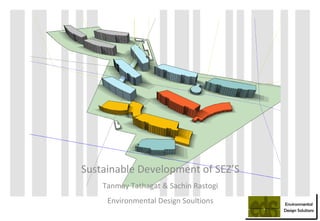
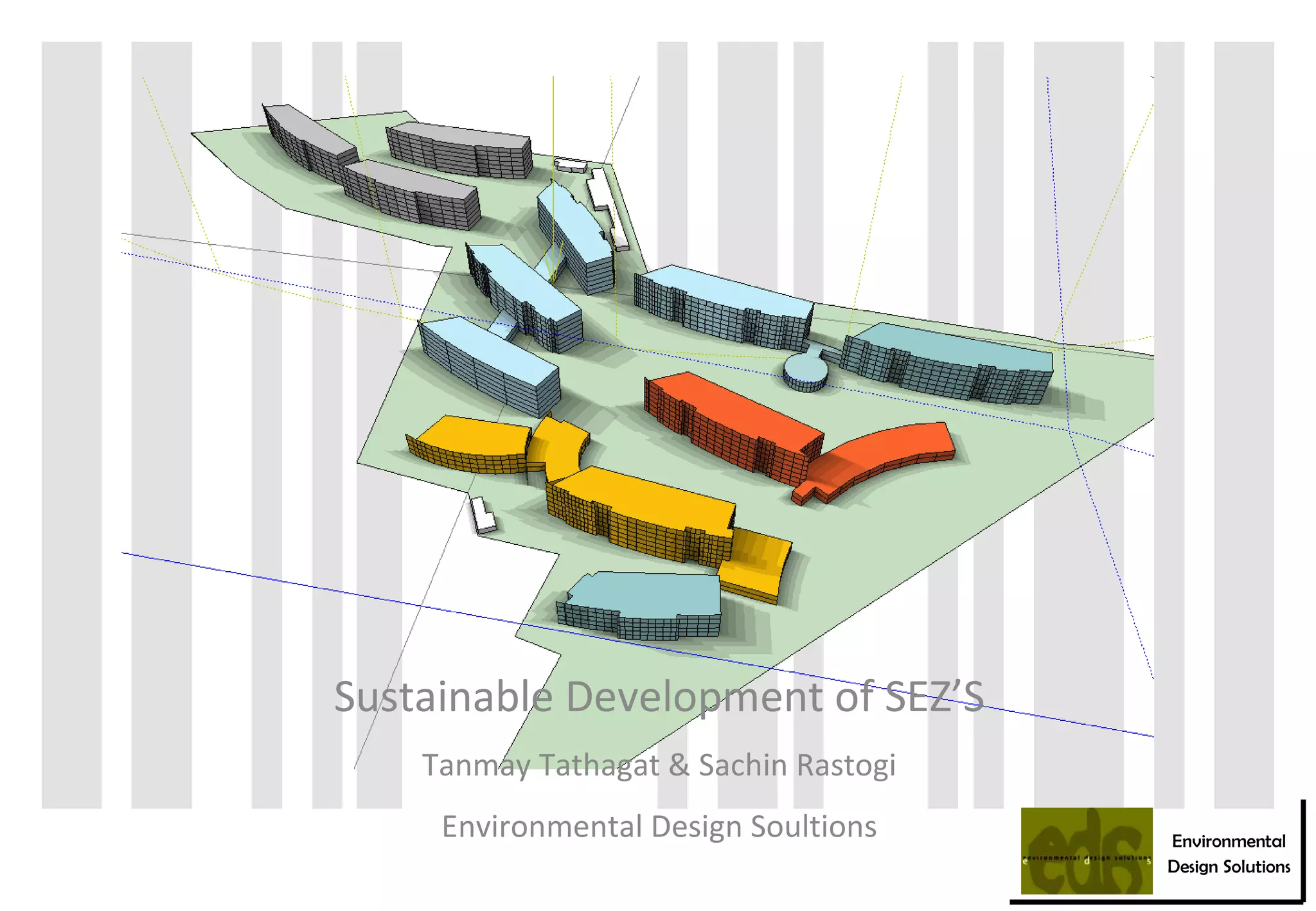
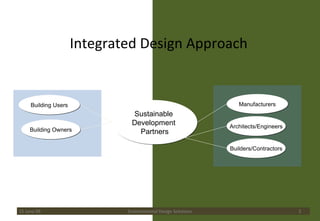
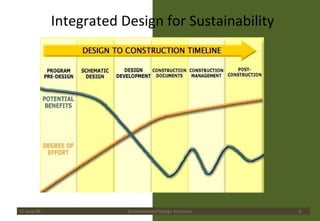
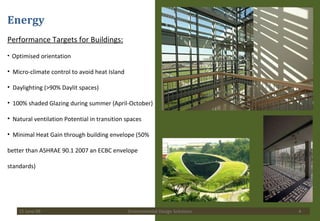
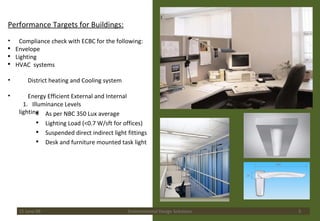
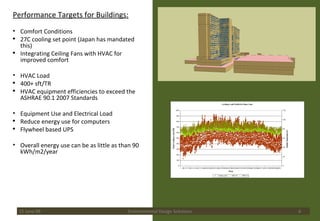
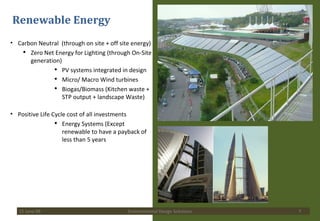
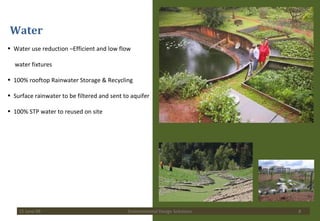
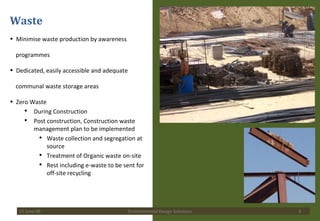
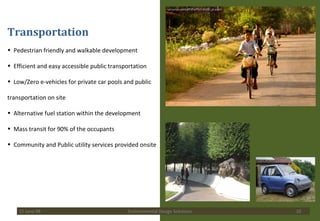
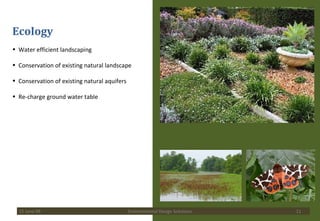
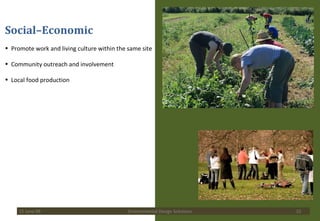
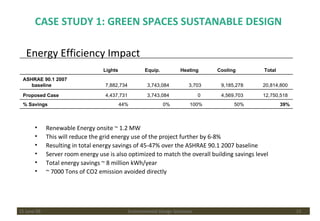
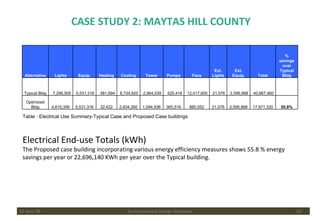
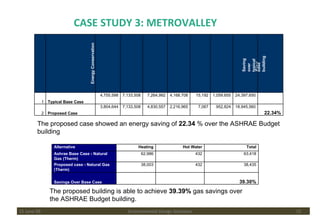
The document outlines sustainability targets and strategies for developing special economic zones (SEZs) including optimizing building orientation, maximizing daylighting, reducing energy usage through efficient envelopes and HVAC systems, generating on-site renewable energy, minimizing waste, and encouraging non-motorized transportation. Case studies show potential energy savings of 39-55% compared to baseline standards through these integrated design approaches. The proposed designs could avoid 7,000 tons of CO2 emissions annually from one development.



![[Metropolia Student Project Seminar 24.5.] Zero Energy Buildings, Group B](https://cdn.slidesharecdn.com/ss_thumbnails/zeroenergybuildingsgroupb-120529021343-phpapp01-thumbnail.jpg?width=640&height=640&fit=bounds)


![Brazil country analysis report [team 2]](https://cdn.slidesharecdn.com/ss_thumbnails/brazil-countryanalysisreportteam2-110505124207-phpapp01-thumbnail.jpg?width=640&height=640&fit=bounds)


![Getting Started with Apache Spark: Big Data Made Simple [Free Meetup]](https://cdn.slidesharecdn.com/ss_thumbnails/apachesparkgettingstarted-260203175547-8361bcc3-thumbnail.jpg?width=640&height=640&fit=bounds)


