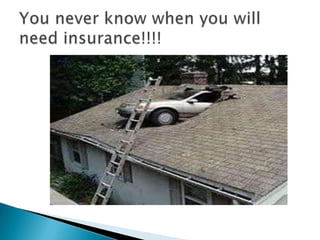
•People insure things that are
valuable to them and that would
cost a lot of money to replace if
they were stolen or damaged in
some way
   Insurance is a way of protecting ourselves
    financially by arranging for the payment of a
    sum of money in the event of loss or injury
    occuring.
   Cover all possible risk
   Be enough to cover the loss that might occur
    e.g. if a house is worth €100,000 it should be
    insured for €100,000, and not for less

    http://www.commoncraft.com/video/insurance
   Example of Motor Insurance
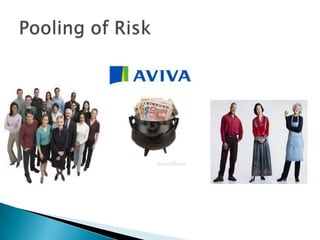
   Not everyone’s car will be stolen or damaged
    so the money paid to the insurance company
    is used to pay a small % of people whose cars
    are stolen or damaged
   This is known as the Pooling of risk
1. Calculate the value of the item you wish to
       insure

   2. Contact an insurance company

   3. Complete the proposal form
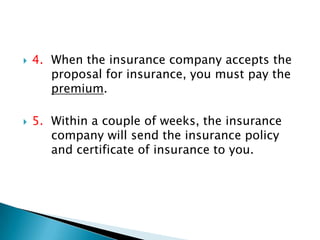
   4. When the insurance company accepts the
       proposal for insurance, you must pay the
       premium.

   5. Within a couple of weeks, the insurance
       company will send the insurance policy
       and certificate of insurance to you.
   Personal
   Home
   Life
   Motor Vehicle
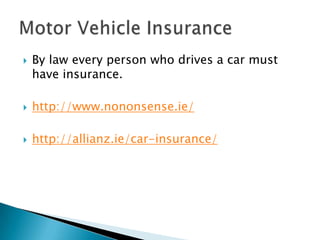
   By law every person who drives a car must
    have insurance.

   http://www.nononsense.ie/

   http://allianz.ie/car-insurance/
Third party, fire   Compensates the insured in
and theft           the case of the car going on
                    fire or being stolen


Comprehensive       This gives third party, fire
                    and theft cover, as well as
                    accidental damage, which
                    gives compensation for
                    damage to the motorist’s
                    own car
   If you have no accidents or claims made
    during the year, you will receive a discount on
    your premium for the next year. This is
    known as a no claims bonus
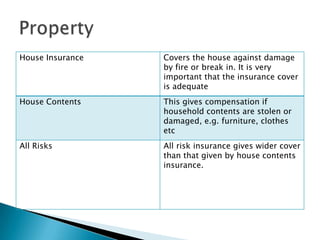
House Insurance   Covers the house against damage
                  by fire or break in. It is very
                  important that the insurance cover
                  is adequate
House Contents    This gives compensation if
                  household contents are stolen or
                  damaged, e.g. furniture, clothes
                  etc
All Risks         All risk insurance gives wider cover
                  than that given by house contents
                  insurance.
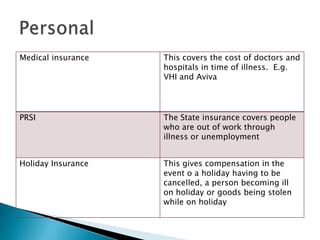
Medical insurance   This covers the cost of doctors and
                    hospitals in time of illness. E.g.
                    VHI and Aviva


PRSI                The State insurance covers people
                    who are out of work through
                    illness or unemployment


Holiday Insurance   This gives compensation in the
                    event o a holiday having to be
                    cancelled, a person becoming ill
                    on holiday or goods being stolen
                    while on holiday
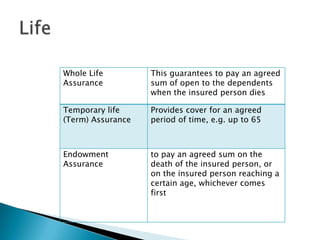
Whole Life         This guarantees to pay an agreed
Assurance          sum of open to the dependents
                   when the insured person dies

Temporary life     Provides cover for an agreed
(Term) Assurance   period of time, e.g. up to 65


Endowment          to pay an agreed sum on the
Assurance          death of the insured person, or
                   on the insured person reaching a
                   certain age, whichever comes
                   first
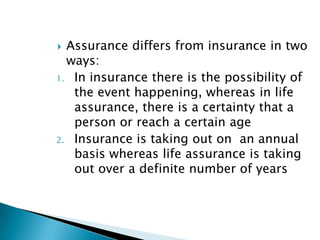
 Assurance differs from insurance in two
  ways:
1. In insurance there is the possibility of
   the event happening, whereas in life
   assurance, there is a certainty that a
   person or reach a certain age
2. Insurance is taking out on an annual
   basis whereas life assurance is taking
   out over a definite number of years
1.   Insurable Interest:
People can only insure something where they benefit
from having the item and it would cost you money to
replace it if it was robbed or stolen, e.g. Your house


Your House                                 Neighbours
                                           House
2. Utmost good faith: Answer all questions
truthfully and provide all relevant information
to the insurance company. E.g. Insurance
company may refuse to pay a claim for a
house fire, because it was not told that the
roof was thatched.
3.Indemnity: This rule states you should not
make a profit from insurance.
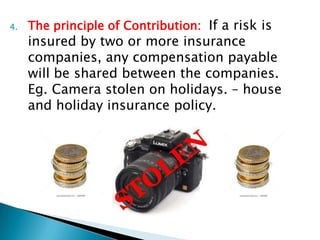
4.   The principle of Contribution: If a risk is
     insured by two or more insurance
     companies, any compensation payable
     will be shared between the companies.
     Eg. Camera stolen on holidays. – house
     and holiday insurance policy.
5. The principle of Subrogation: Insurers, who pay
out full compensation for an item which they have
insured, are entitled to take possession of the item
and sue a third party.

   subrogation – linked to indemnity.
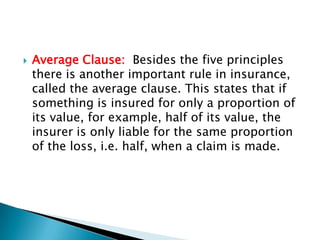
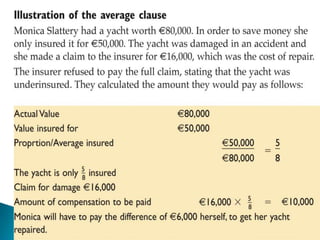
   Average Clause: Besides the five principles
    there is another important rule in insurance,
    called the average clause. This states that if
    something is insured for only a proportion of
    its value, for example, half of its value, the
    insurer is only liable for the same proportion
    of the loss, i.e. half, when a claim is made.
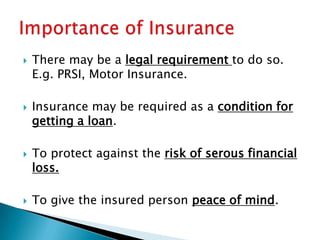
   There may be a legal requirement to do so.
    E.g. PRSI, Motor Insurance.

   Insurance may be required as a condition for
    getting a loan.

   To protect against the risk of serous financial
    loss.

   To give the insured person peace of mind.
1.   Loss of profit due to sudden increases in the cost
     of production
2.   Loss of profit due to strikes
3.   Loss of profit due to changes in consumers’ tastes
     and fashions
4.   Loss of profit due to the entry of new rival firms
     into the industry
5.   Loss of profit due to the adverse effects of new
     legislation
6.   Loss of profit due to adverse effects of
     international trade agreements before the trade
     agreement
7.   Loss of profit due to bad management
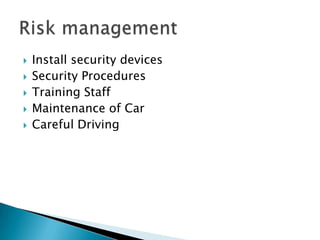
   Install security devices
   Security Procedures
   Training Staff
   Maintenance of Car
   Careful Driving
   http://www.youtube.com/watch?v=-
    c_zppq6YfQ&feature=related
Insurance broker           Utmost good faith
Days of Grace              Indemnity

Proposal form              Subrogation
Premium                    Contribution
Insurance policy           Non insurable risk
Cover note                 Exclusion clause
Renewal notice             Policy Excess
Insurable interest         Surrender Value
Comprehensive motor        False Economy
insurance
Certificate of insurance   Insurer
No claims bonus            Assessor
Actuary                    Loadings
Insurance

Insurance

  • 1.
    •People insure thingsthat are valuable to them and that would cost a lot of money to replace if they were stolen or damaged in some way
  • 2.
    Insurance is a way of protecting ourselves financially by arranging for the payment of a sum of money in the event of loss or injury occuring.
  • 3.
    Cover all possible risk  Be enough to cover the loss that might occur e.g. if a house is worth €100,000 it should be insured for €100,000, and not for less http://www.commoncraft.com/video/insurance
  • 4.
    Example of Motor Insurance  Not everyone’s car will be stolen or damaged so the money paid to the insurance company is used to pay a small % of people whose cars are stolen or damaged  This is known as the Pooling of risk
  • 7.
    1. Calculate thevalue of the item you wish to insure  2. Contact an insurance company  3. Complete the proposal form
  • 8.
    4. When the insurance company accepts the proposal for insurance, you must pay the premium.  5. Within a couple of weeks, the insurance company will send the insurance policy and certificate of insurance to you.
  • 9.
    Personal  Home  Life  Motor Vehicle
  • 10.
    By law every person who drives a car must have insurance.  http://www.nononsense.ie/  http://allianz.ie/car-insurance/
  • 11.
    Third party, fire Compensates the insured in and theft the case of the car going on fire or being stolen Comprehensive This gives third party, fire and theft cover, as well as accidental damage, which gives compensation for damage to the motorist’s own car
  • 12.
    If you have no accidents or claims made during the year, you will receive a discount on your premium for the next year. This is known as a no claims bonus
  • 13.
    House Insurance Covers the house against damage by fire or break in. It is very important that the insurance cover is adequate House Contents This gives compensation if household contents are stolen or damaged, e.g. furniture, clothes etc All Risks All risk insurance gives wider cover than that given by house contents insurance.
  • 14.
    Medical insurance This covers the cost of doctors and hospitals in time of illness. E.g. VHI and Aviva PRSI The State insurance covers people who are out of work through illness or unemployment Holiday Insurance This gives compensation in the event o a holiday having to be cancelled, a person becoming ill on holiday or goods being stolen while on holiday
  • 15.
    Whole Life This guarantees to pay an agreed Assurance sum of open to the dependents when the insured person dies Temporary life Provides cover for an agreed (Term) Assurance period of time, e.g. up to 65 Endowment to pay an agreed sum on the Assurance death of the insured person, or on the insured person reaching a certain age, whichever comes first
  • 16.
     Assurance differsfrom insurance in two ways: 1. In insurance there is the possibility of the event happening, whereas in life assurance, there is a certainty that a person or reach a certain age 2. Insurance is taking out on an annual basis whereas life assurance is taking out over a definite number of years
  • 17.
    1. Insurable Interest: People can only insure something where they benefit from having the item and it would cost you money to replace it if it was robbed or stolen, e.g. Your house Your House Neighbours House
  • 18.
    2. Utmost goodfaith: Answer all questions truthfully and provide all relevant information to the insurance company. E.g. Insurance company may refuse to pay a claim for a house fire, because it was not told that the roof was thatched.
  • 19.
    3.Indemnity: This rulestates you should not make a profit from insurance.
  • 20.
    4. The principle of Contribution: If a risk is insured by two or more insurance companies, any compensation payable will be shared between the companies. Eg. Camera stolen on holidays. – house and holiday insurance policy.
  • 21.
    5. The principleof Subrogation: Insurers, who pay out full compensation for an item which they have insured, are entitled to take possession of the item and sue a third party. subrogation – linked to indemnity.
  • 22.
    Average Clause: Besides the five principles there is another important rule in insurance, called the average clause. This states that if something is insured for only a proportion of its value, for example, half of its value, the insurer is only liable for the same proportion of the loss, i.e. half, when a claim is made.
  • 24.
    There may be a legal requirement to do so. E.g. PRSI, Motor Insurance.  Insurance may be required as a condition for getting a loan.  To protect against the risk of serous financial loss.  To give the insured person peace of mind.
  • 25.
    1. Loss of profit due to sudden increases in the cost of production 2. Loss of profit due to strikes 3. Loss of profit due to changes in consumers’ tastes and fashions 4. Loss of profit due to the entry of new rival firms into the industry 5. Loss of profit due to the adverse effects of new legislation 6. Loss of profit due to adverse effects of international trade agreements before the trade agreement 7. Loss of profit due to bad management
  • 26.
    Install security devices  Security Procedures  Training Staff  Maintenance of Car  Careful Driving
  • 27.
    http://www.youtube.com/watch?v=- c_zppq6YfQ&feature=related
  • 28.
    Insurance broker Utmost good faith Days of Grace Indemnity Proposal form Subrogation Premium Contribution Insurance policy Non insurable risk Cover note Exclusion clause Renewal notice Policy Excess Insurable interest Surrender Value Comprehensive motor False Economy insurance Certificate of insurance Insurer No claims bonus Assessor Actuary Loadings