1
Paul Davies
Destinations @ Saltburn, UK Online Centre
Aims and Objectives
27/06/2014 2
Ways to inspire the SME’s you see to do more with digital
Excuses and how to counter them
What can help with – learning opportunities
3
We want to make a difference
We want to share the power of
connectivity with SME’s / Micro
businesses as well as individuals.
Often the heart of smaller
communities.
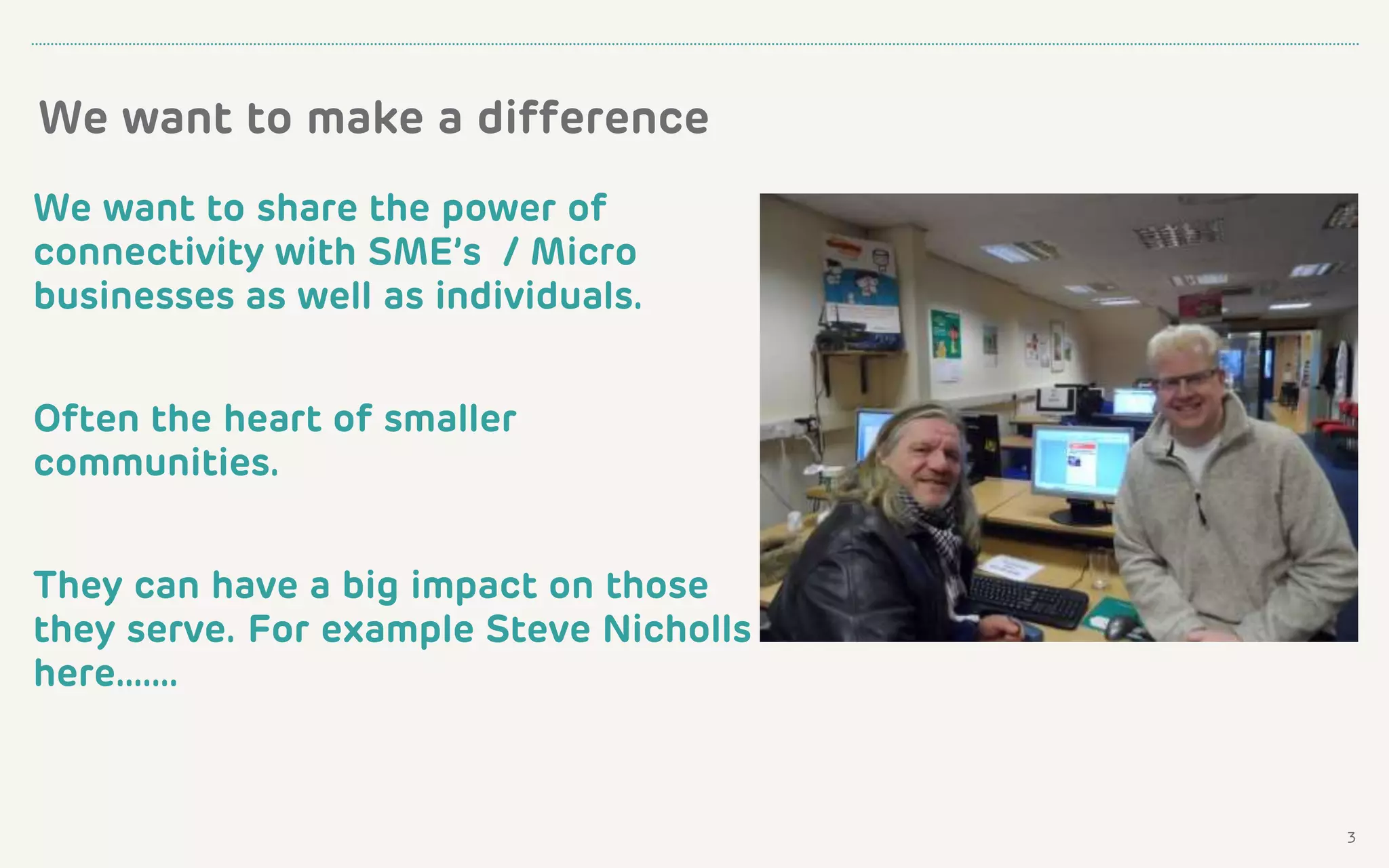
They can have a big impact on those
they serve. For example Steve Nicholls
here…….
Isn’t every small business online?
Potential users
• Start Ups
• First Year
• Self Employed
• Business Growth
• Product / Infrastructure investment
• ‘Glass Ceiling’
Active resistors
• Skill conscious
• Cost conscious
• Time conscious
• ‘Mine is a manual business’
4
Go ON UK User Profiles September 2012
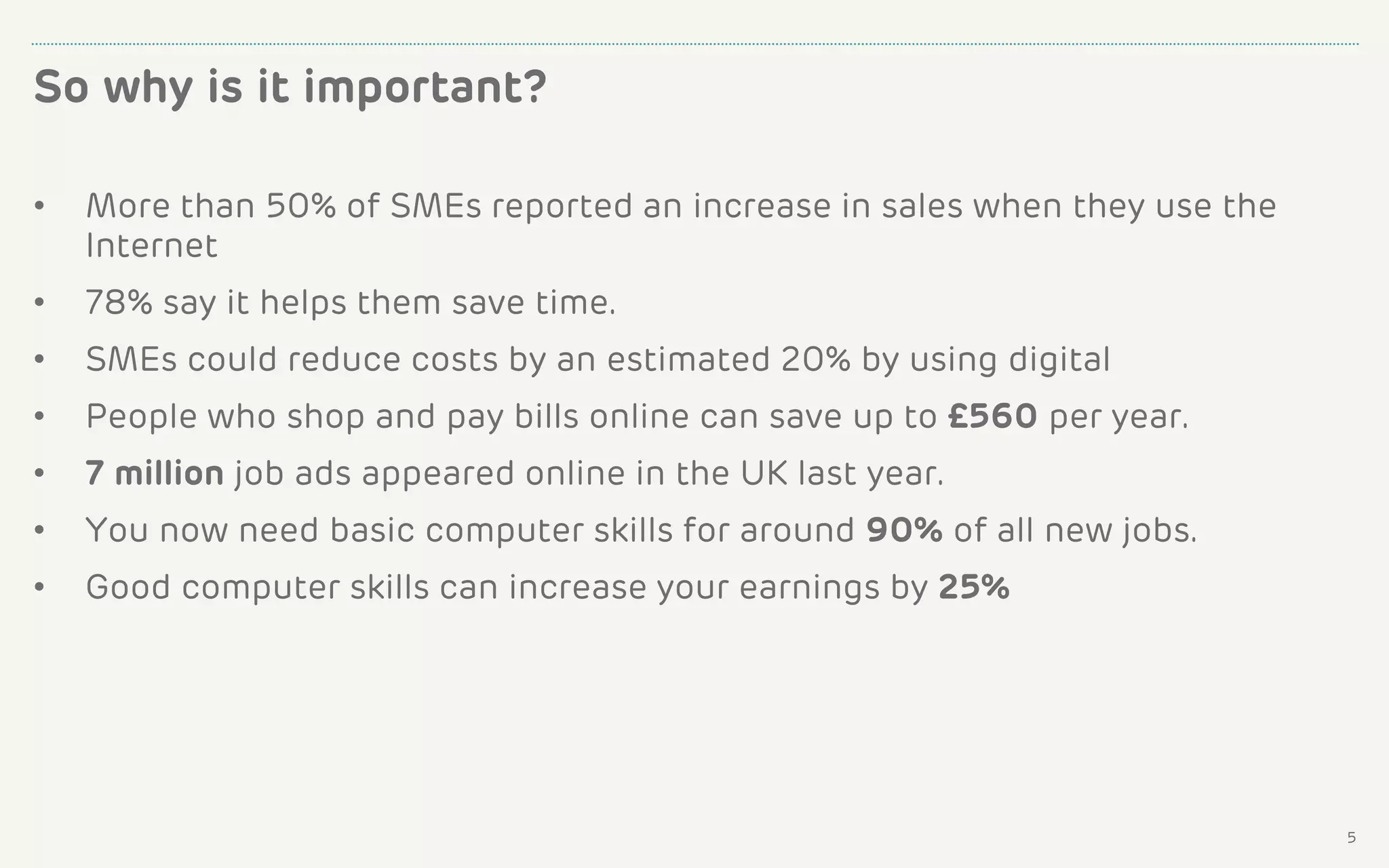
• More than 50% of SMEs reported an increase in sales when they use the
Internet
• 78% say it helps them save time.
• SMEs could reduce costs by an estimated 20% by using digital
• People who shop and pay bills online can save up to £560 per year.
• 7 million job ads appeared online in the UK last year.
• You now need basic computer skills for around 90% of all new jobs.
• Good computer skills can increase your earnings by 25%
So why is it important?
5
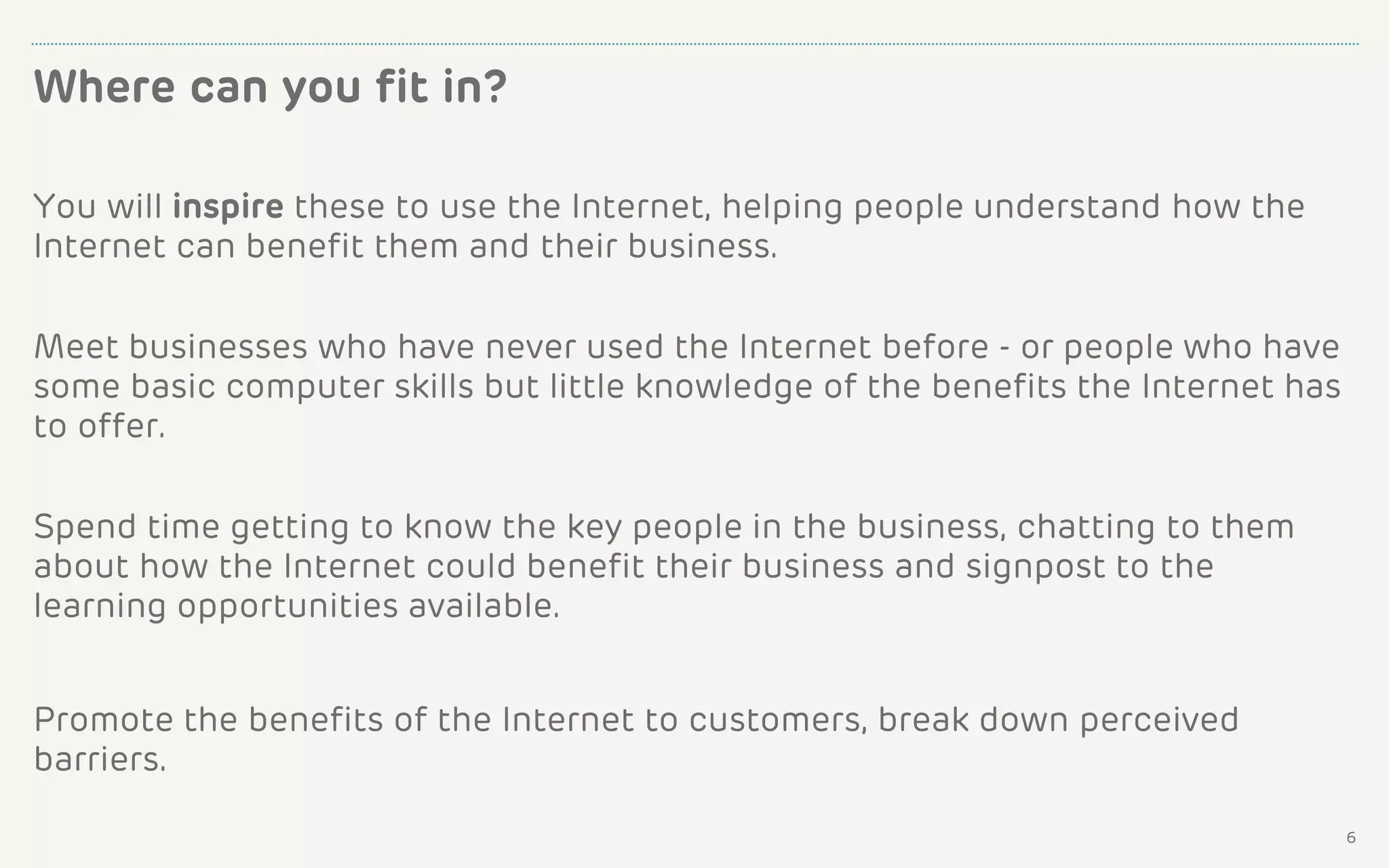
You will inspire these to use the Internet, helping people understand how the
Internet can benefit them and their business.
Meet businesses who have never used the Internet before - or people who have
some basic computer skills but little knowledge of the benefits the Internet has
to offer.
Spend time getting to know the key people in the business, chatting to them
about how the Internet could benefit their business and signpost to the
learning opportunities available.
Promote the benefits of the Internet to customers, break down perceived
barriers.
Where can you fit in?
6
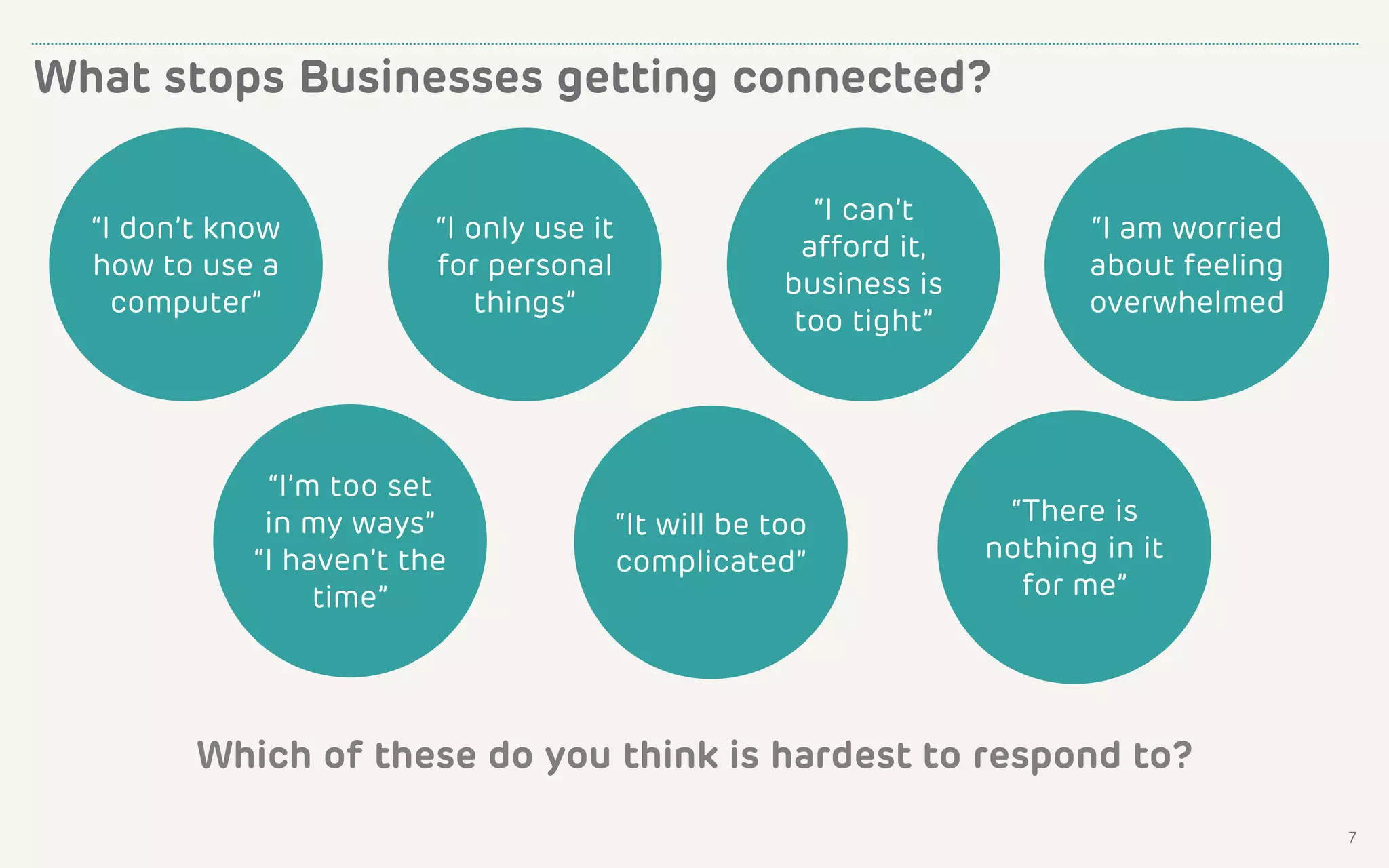
Which of these do you think is hardest to respond to?
7
“I am worried
about feeling
overwhelmed
“It will be too
complicated”
“I’m too set
in my ways”
“I haven’t the
time”
“I don’t know
how to use a
computer”
“I only use it
for personal
things”
“I can’t
afford it,
business is
too tight”
“There is
nothing in it
for me”
What stops Businesses getting connected?
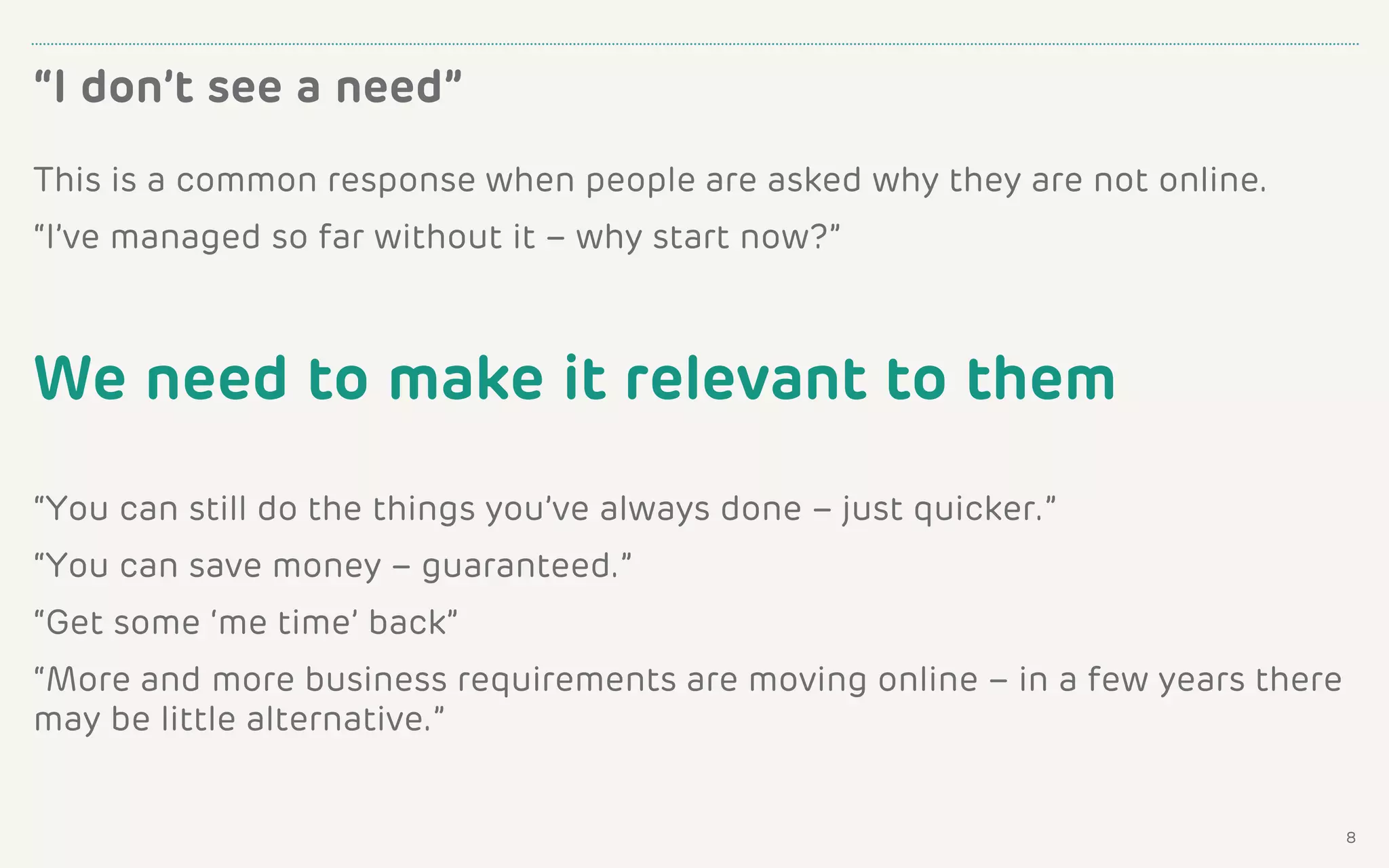
This is a common response when people are asked why they are not online.
“I’ve managed so far without it – why start now?”
We need to make it relevant to them
“You can still do the things you’ve always done – just quicker.”
“You can save money – guaranteed.”
“Get some ‘me time’ back”
“More and more business requirements are moving online – in a few years there
may be little alternative.”
“I don’t see a need”
8
• Get to know your client – top level problems, concerns, issues?
• Share your own experiences or the successes of others.
• Be prepared for the conversation to go off track, but remember to bring
people back on track.
• Listen and pick up on peoples’ motivations.
• Make it relaxed – they are here to be inspired and not always to learn new
skills straight away or feel uneasy.
Remember to avoid jargon and find simpler ways of
explaining things.
Getting to know people
9
Overview
27/06/2014 10
Assessment / Fact Finding – assess options and opportunities through an initial fact finding
session, identifiying :
•Their current digital skills level
•Their business need (now/future)
•Business maturity
•A digital ‘audit’ of hardware and ICT infrastructure (if applicable)
Priorities - understand their priorities for digital learning, both individually and for their business.
Learning Journey - the above 2 stages will help shape the beneficiaries learning journey.
Learning will be shaped using resources on Learn My Way.
We cover issues such as;
• Internet banking
• Set-up and use
• Security
• Different accounts
• Direct debits / Standing order benefits
• Prepayments
• Financial controls, including budgets, cashflow, cost analysis
• Setting up a website: eCommerce options, security implications
• Using social media - business growth potential
• HMRC and tax returns
• Other legal issues: company returns, credit ratios, insurance
• Staff, HR and training - financial implications
The benefits
11
Make delivery programmes individual and bespoke
27/06/2014 12
Ongoing considerations
Motivation – To undertake learning and continue learning.
Individual Attention – Perhaps not present in a previous learning experiences
Understanding the relevance of learning – How learning impacts upon aspects of their life.
Paced Learning - dislike of the prescribed nature of a previous learning experiences
Confidence / peace of mind – That personal circumstance are respected.
Participant led - where the interests of an individual or a business help set the agenda for
what they learn.
Continuous flexibility - There can be no one size fits all and centres need to adopt a fluid
approach and go with the flow.
Local facilities – People may not travel, especially if time is tight.
Let people discover their own reasons and results and they will find out what will keep
them digitally included and not develop “digital apathy”
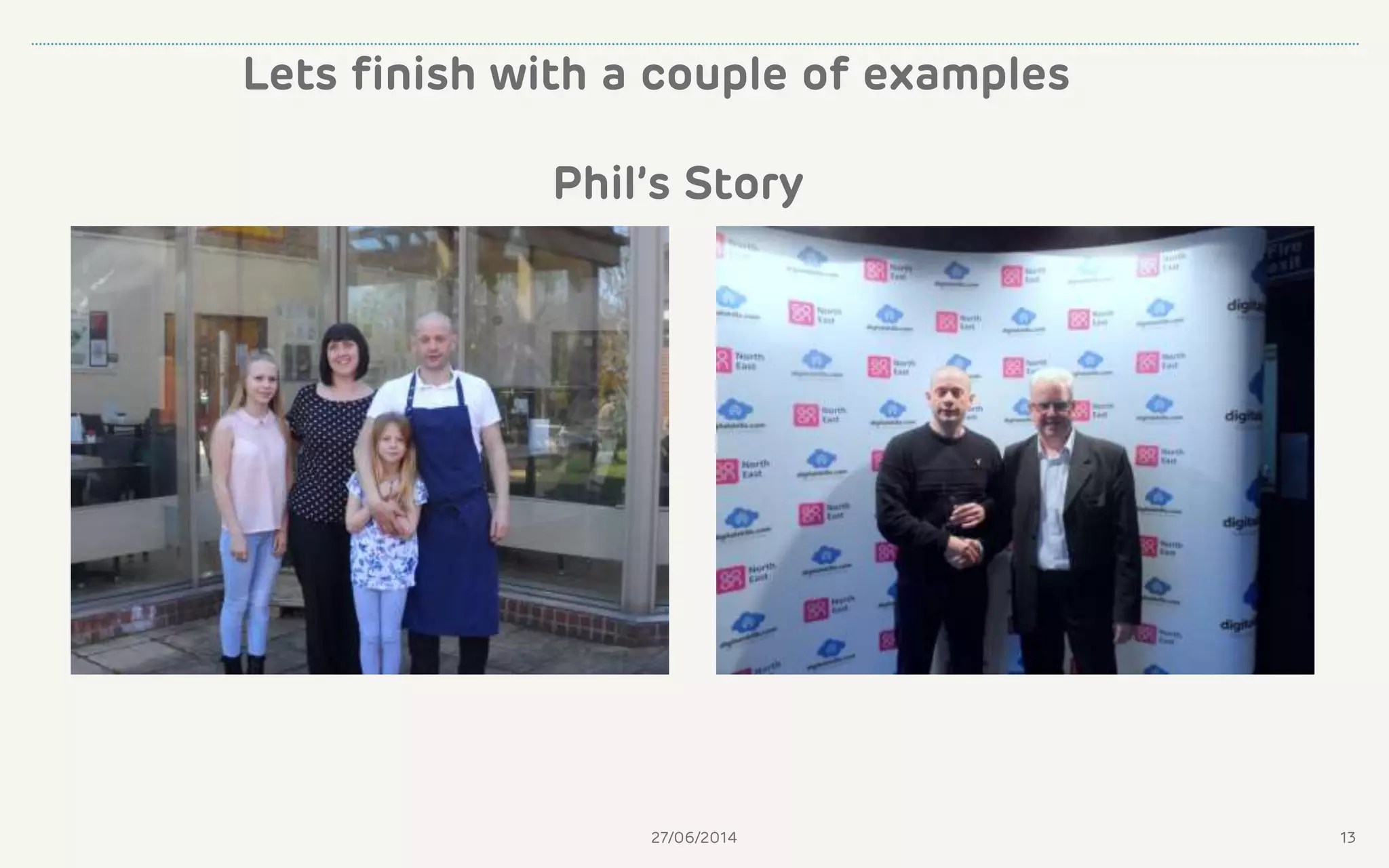
Lets finish with a couple of examples
27/06/2014 13
Phil’s Story
27/06/2014 14
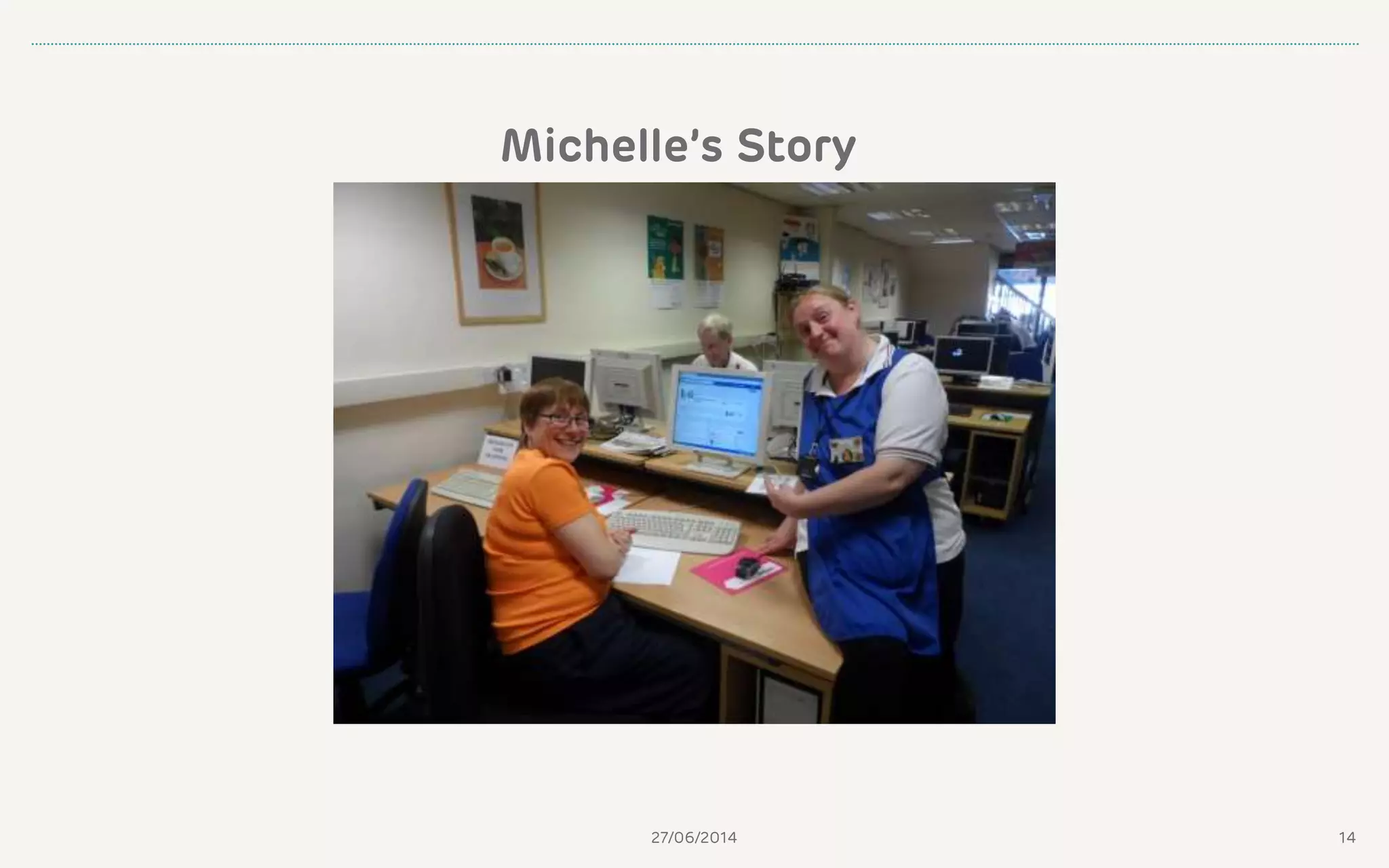
Michelle’s Story
Thank You
Destinations @ Saltburn - 01287 626432
Paul Davies: 07724 168 699 p.davies347@ntlworld.com
15

Inspiring SMEs to do more with digital (Paul Davies)

  • 1.
    1 Paul Davies Destinations @Saltburn, UK Online Centre
  • 2.
    Aims and Objectives 27/06/20142 Ways to inspire the SME’s you see to do more with digital Excuses and how to counter them What can help with – learning opportunities
  • 3.
    3 We want tomake a difference We want to share the power of connectivity with SME’s / Micro businesses as well as individuals. Often the heart of smaller communities. They can have a big impact on those they serve. For example Steve Nicholls here…….
  • 4.
    Isn’t every smallbusiness online? Potential users • Start Ups • First Year • Self Employed • Business Growth • Product / Infrastructure investment • ‘Glass Ceiling’ Active resistors • Skill conscious • Cost conscious • Time conscious • ‘Mine is a manual business’ 4 Go ON UK User Profiles September 2012
  • 5.
    • More than50% of SMEs reported an increase in sales when they use the Internet • 78% say it helps them save time. • SMEs could reduce costs by an estimated 20% by using digital • People who shop and pay bills online can save up to £560 per year. • 7 million job ads appeared online in the UK last year. • You now need basic computer skills for around 90% of all new jobs. • Good computer skills can increase your earnings by 25% So why is it important? 5
  • 6.
    You will inspirethese to use the Internet, helping people understand how the Internet can benefit them and their business. Meet businesses who have never used the Internet before - or people who have some basic computer skills but little knowledge of the benefits the Internet has to offer. Spend time getting to know the key people in the business, chatting to them about how the Internet could benefit their business and signpost to the learning opportunities available. Promote the benefits of the Internet to customers, break down perceived barriers. Where can you fit in? 6
  • 7.
    Which of thesedo you think is hardest to respond to? 7 “I am worried about feeling overwhelmed “It will be too complicated” “I’m too set in my ways” “I haven’t the time” “I don’t know how to use a computer” “I only use it for personal things” “I can’t afford it, business is too tight” “There is nothing in it for me” What stops Businesses getting connected?
  • 8.
    This is acommon response when people are asked why they are not online. “I’ve managed so far without it – why start now?” We need to make it relevant to them “You can still do the things you’ve always done – just quicker.” “You can save money – guaranteed.” “Get some ‘me time’ back” “More and more business requirements are moving online – in a few years there may be little alternative.” “I don’t see a need” 8
  • 9.
    • Get toknow your client – top level problems, concerns, issues? • Share your own experiences or the successes of others. • Be prepared for the conversation to go off track, but remember to bring people back on track. • Listen and pick up on peoples’ motivations. • Make it relaxed – they are here to be inspired and not always to learn new skills straight away or feel uneasy. Remember to avoid jargon and find simpler ways of explaining things. Getting to know people 9
  • 10.
    Overview 27/06/2014 10 Assessment /Fact Finding – assess options and opportunities through an initial fact finding session, identifiying : •Their current digital skills level •Their business need (now/future) •Business maturity •A digital ‘audit’ of hardware and ICT infrastructure (if applicable) Priorities - understand their priorities for digital learning, both individually and for their business. Learning Journey - the above 2 stages will help shape the beneficiaries learning journey. Learning will be shaped using resources on Learn My Way.
  • 11.
    We cover issuessuch as; • Internet banking • Set-up and use • Security • Different accounts • Direct debits / Standing order benefits • Prepayments • Financial controls, including budgets, cashflow, cost analysis • Setting up a website: eCommerce options, security implications • Using social media - business growth potential • HMRC and tax returns • Other legal issues: company returns, credit ratios, insurance • Staff, HR and training - financial implications The benefits 11
  • 12.
    Make delivery programmesindividual and bespoke 27/06/2014 12 Ongoing considerations Motivation – To undertake learning and continue learning. Individual Attention – Perhaps not present in a previous learning experiences Understanding the relevance of learning – How learning impacts upon aspects of their life. Paced Learning - dislike of the prescribed nature of a previous learning experiences Confidence / peace of mind – That personal circumstance are respected. Participant led - where the interests of an individual or a business help set the agenda for what they learn. Continuous flexibility - There can be no one size fits all and centres need to adopt a fluid approach and go with the flow. Local facilities – People may not travel, especially if time is tight. Let people discover their own reasons and results and they will find out what will keep them digitally included and not develop “digital apathy”
  • 13.
    Lets finish witha couple of examples 27/06/2014 13 Phil’s Story
  • 14.
  • 15.
    Thank You Destinations @Saltburn - 01287 626432 Paul Davies: 07724 168 699 p.davies347@ntlworld.com 15

Editor's Notes

  • #2 Setting the scene for people
  • #4 Suggest this would be our Digital Living EE branded film when it’s ready – but use UKOC one in the meantime
  • #5 General discussion about the type of people who aren’t online and why
  • #8 “I don’t see a need” is the one we may see most frequently – refer to the activity and then cover this one in more detail afterwards (slide 15)
  • #9 Cover the challenges in more detail through discussion and referral to the manual
  • #10 The next few slides go into a little more detail on certain key points