Psychological Health Chapter Three
Psychological Health What Psychological health is not.. Not the same as psychological normality Conforming to social norms Never seeking help for personal problems “Mentally ill” Peoples appearance
Defining Psychological Health Negative definition Positive definition Abraham Maslow’s “Toward a Psychology of Being” Hierarchy of needs Studied very successful people ( Self-actualization) Abraham Lincoln, Henry David Thoreau, Ludwig van Beethoven, Eleanor Roosevelt, and Albert Einstein Realism Acceptance Autonomy Intimacy Creativity
 
Meeting Life’s Challenges Growing Up Psychologically Adult identity Intimacy Values and Purpose
Achieving Healthy Self-Esteem Developing a Positive Self-Concept Begins in childhood Integration Stability Meeting Challenges to Self-Esteem Challenge is your self-concept Acknowledge that something has gone wrong Notice your patterns of thinking Develop realistic self-talk Being less defensive Being optimistic
Achieving Healthy Self-Esteem (continue) Maintaining honest communication Dealing with loneliness Dealing with anger Managing your own anger Dealing with anger in other people
Psychological Disorders Anxiety Disorders Simple phobia or Specific phobia Fear of something definite Most common and most understandable Social phobia Fear of humiliation or embarrassment while being observed by others Panic disorders Sudden unexpected surges in anxiety Rapid and strong heart beat Shortness of breath Loss of physical equilibrium Feeling of losing mental control
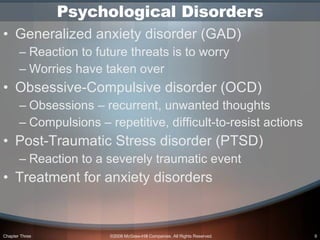
Psychological Disorders Generalized anxiety disorder (GAD) Reaction to future threats is to worry  Worries have taken over Obsessive-Compulsive disorder (OCD) Obsessions – recurrent, unwanted thoughts Compulsions – repetitive, difficult-to-resist actions Post-Traumatic Stress disorder (PTSD) Reaction to a severely traumatic event Treatment for anxiety disorders
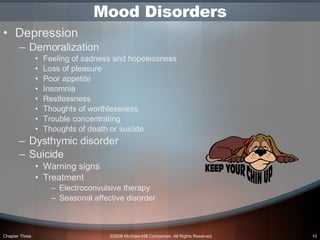
Mood Disorders Depression Demoralization Feeling of sadness and hopelessness Loss of pleasure Poor appetite Insomnia Restlessness Thoughts of worthlessness Trouble concentrating Thoughts of death or suicide Dysthymic disorder Suicide  Warning signs Treatment Electroconvulsive therapy Seasonal affective disorder
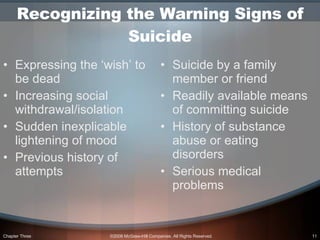
Recognizing the Warning Signs of Suicide Expressing the ‘wish’ to be dead Increasing social withdrawal/isolation Sudden inexplicable lightening of mood Previous history of attempts Suicide by a family member or friend Readily available means of committing suicide History of substance abuse or eating disorders Serious medical problems
Psychological Disorders Mania and Bipolar Disorder Gender differences Equal numbers of men and women suffer, women are nearly twice as likely as men to be clinically depressed Schizophrenia Uncertain about what causes it General characteristics  Disorganized thoughts Inappropriate emotions Delusions Auditory hallucinations Deteriorating social and work function
Getting Help Self Help Books Writing a journal Religious Social groups Peer counseling and support groups Professional  Determine the need  Choosing a mental health professional Psychiatrists Clinical psychologists Social workers Licensed Counselors Clergy Treatment Team
Psychological Health Chapter Three

Insel10ebrup Ppt Ch03

  • 1.
  • 2.
    Psychological Health WhatPsychological health is not.. Not the same as psychological normality Conforming to social norms Never seeking help for personal problems “Mentally ill” Peoples appearance
  • 3.
    Defining Psychological HealthNegative definition Positive definition Abraham Maslow’s “Toward a Psychology of Being” Hierarchy of needs Studied very successful people ( Self-actualization) Abraham Lincoln, Henry David Thoreau, Ludwig van Beethoven, Eleanor Roosevelt, and Albert Einstein Realism Acceptance Autonomy Intimacy Creativity
  • 4.
  • 5.
    Meeting Life’s ChallengesGrowing Up Psychologically Adult identity Intimacy Values and Purpose
  • 6.
    Achieving Healthy Self-EsteemDeveloping a Positive Self-Concept Begins in childhood Integration Stability Meeting Challenges to Self-Esteem Challenge is your self-concept Acknowledge that something has gone wrong Notice your patterns of thinking Develop realistic self-talk Being less defensive Being optimistic
  • 7.
    Achieving Healthy Self-Esteem(continue) Maintaining honest communication Dealing with loneliness Dealing with anger Managing your own anger Dealing with anger in other people
  • 8.
    Psychological Disorders AnxietyDisorders Simple phobia or Specific phobia Fear of something definite Most common and most understandable Social phobia Fear of humiliation or embarrassment while being observed by others Panic disorders Sudden unexpected surges in anxiety Rapid and strong heart beat Shortness of breath Loss of physical equilibrium Feeling of losing mental control
  • 9.
    Psychological Disorders Generalizedanxiety disorder (GAD) Reaction to future threats is to worry Worries have taken over Obsessive-Compulsive disorder (OCD) Obsessions – recurrent, unwanted thoughts Compulsions – repetitive, difficult-to-resist actions Post-Traumatic Stress disorder (PTSD) Reaction to a severely traumatic event Treatment for anxiety disorders
  • 10.
    Mood Disorders DepressionDemoralization Feeling of sadness and hopelessness Loss of pleasure Poor appetite Insomnia Restlessness Thoughts of worthlessness Trouble concentrating Thoughts of death or suicide Dysthymic disorder Suicide Warning signs Treatment Electroconvulsive therapy Seasonal affective disorder
  • 11.
    Recognizing the WarningSigns of Suicide Expressing the ‘wish’ to be dead Increasing social withdrawal/isolation Sudden inexplicable lightening of mood Previous history of attempts Suicide by a family member or friend Readily available means of committing suicide History of substance abuse or eating disorders Serious medical problems
  • 12.
    Psychological Disorders Maniaand Bipolar Disorder Gender differences Equal numbers of men and women suffer, women are nearly twice as likely as men to be clinically depressed Schizophrenia Uncertain about what causes it General characteristics Disorganized thoughts Inappropriate emotions Delusions Auditory hallucinations Deteriorating social and work function
  • 13.
    Getting Help SelfHelp Books Writing a journal Religious Social groups Peer counseling and support groups Professional Determine the need Choosing a mental health professional Psychiatrists Clinical psychologists Social workers Licensed Counselors Clergy Treatment Team
  • 14.