1) Death is defined as the cessation of life and can be determined by the absence of brain activity. There are debates around euthanasia and physician-assisted suicide regarding a potential "right to die."
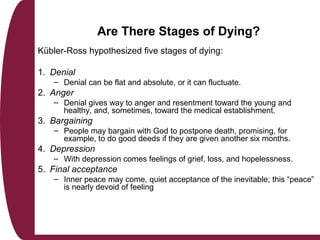
2) People experience different stages of dying and grieving including denial, anger, bargaining, depression, and acceptance. Children and adolescents also experience death differently than adults.
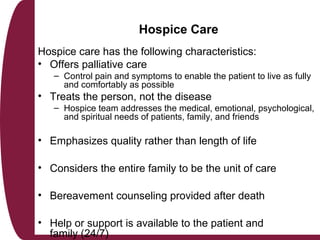
3) It is important to support the dying and bereaved by being present, allowing them to grieve, and not imposing expectations. Funerals, legal matters, and social support networks all aid in coping with loss.