Exercise for Health and Fitness Chapter 10
 
What is Physical Fitness? Set of physical attributes that allows the body to respond or adapt to the demands and stress of physical effort Five components of fitness: Cardiorespiratory endurance: Muscular Strength Muscular endurance Flexibility Body composition
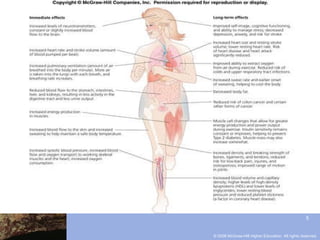
Benefits of Exercise Improved cardiorespiratory function More efficient metabolism Improved body composition
 
Disease Prevention and Management Cardiovascular Disease Improves blood fat levels - improves HDL’s  Improves blood pressure Hypertension Coronary heart disease Stroke Reduction of certain cancers Osteoporosis Type II Diabetes
Improved Psychological and Emotional Wellness Reduced stress Reduced anxiety and depression Improved self-image Learning and memory Enjoyment
Additional Benefits of Exercise Improved immune function Prevention of injures and low-back pain Improved wellness over the life span
Designing Your Exercise Program Physical activity and exercise for health and fitness Defined as any body movement carried out by skeletal muscles and requiring energy. Lifestyle physical activity for health promotion Surgeon General’s 150 calories per day or 1000 calories per week
 
Designing Your Exercise Program Lifestyle physical activity for health promotion and weight management More than half of all U.S. adults are overweight Recommendations by the Institute of Medicine, 2005 Dietary Guidelines for Americans, and the WHO/FAO How much physical activity is enough?
 
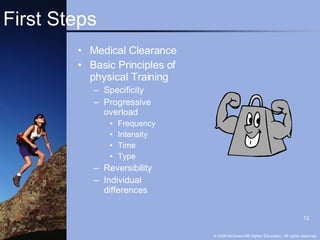
First Steps Medical Clearance Basic Principles of physical Training Specificity Progressive overload Frequency Intensity Time Type Reversibility Individual differences
Cardiorespiratory Endurance Exercises Frequency - 3-5 days Intensity - 60-80% Maximal oxygen consumption (VO2max) Target heart rate range Refer to Take Charge:  Determining Your Target Heart Rate Range Duration - 20-60 minutes The warm-up and cool-down Type of Activity - walking, jogging, swimming, biking & C.C. skiing
Developing Muscular Strength and Endurance Types of Strength Training Exercise Resistance exercise Isometric (static) exercise Isotonic (dynamic) exercise Choosing equipment Choosing exercises Frequency Intensity Duration A caution about supplements
Flexibility Exercises Proper stretching technique Statically Ballistic (bouncing) is dangerous Active Passive Frequency Intensity Duration
Putting It All Together Cardiorespiratory endurance At least 20 minutes Target heart rate 3 to 5 days a week Muscular strength and endurance Major muscle groups (8-10 machines, one or more sets) 2 or 3 days a week Flexibility 2 or 3 days a week After exercise Skill training
FITT Principle
Getting Started and Staying on Track Selecting instructors, equipment, and facilities Finding help and advice about exercise Selecting equipment Choosing a fitness center Well-balanced diet and adequate water/fluids. Balanced diet Drink before and during exercise 2 cups, 2 hours before Manage your fitness program  Consistency: The key to physical improvement Assess your fitness Endurance by checking your time for the 1.5 mile run/walk.
Preventing and Managing Athletic Injuries  Care for injuries that may occur. R.I.C.E. Staying in condition Warm-up and Cool down Use proper body mechanics Not exercising when ill Use proper equipment Not returning to normal exercise programs until injury has healed
Exercise for Health and Fitness Chapter 10

Insel10ebrup Ppt Ch10

  • 1.
    Exercise for Healthand Fitness Chapter 10
  • 2.
  • 3.
    What is PhysicalFitness? Set of physical attributes that allows the body to respond or adapt to the demands and stress of physical effort Five components of fitness: Cardiorespiratory endurance: Muscular Strength Muscular endurance Flexibility Body composition
  • 4.
    Benefits of ExerciseImproved cardiorespiratory function More efficient metabolism Improved body composition
  • 5.
  • 6.
    Disease Prevention andManagement Cardiovascular Disease Improves blood fat levels - improves HDL’s Improves blood pressure Hypertension Coronary heart disease Stroke Reduction of certain cancers Osteoporosis Type II Diabetes
  • 7.
    Improved Psychological andEmotional Wellness Reduced stress Reduced anxiety and depression Improved self-image Learning and memory Enjoyment
  • 8.
    Additional Benefits ofExercise Improved immune function Prevention of injures and low-back pain Improved wellness over the life span
  • 9.
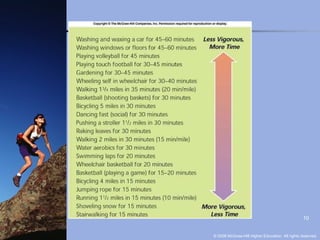
    Designing Your ExerciseProgram Physical activity and exercise for health and fitness Defined as any body movement carried out by skeletal muscles and requiring energy. Lifestyle physical activity for health promotion Surgeon General’s 150 calories per day or 1000 calories per week
  • 10.
  • 11.
    Designing Your ExerciseProgram Lifestyle physical activity for health promotion and weight management More than half of all U.S. adults are overweight Recommendations by the Institute of Medicine, 2005 Dietary Guidelines for Americans, and the WHO/FAO How much physical activity is enough?
  • 12.
  • 13.
    First Steps MedicalClearance Basic Principles of physical Training Specificity Progressive overload Frequency Intensity Time Type Reversibility Individual differences
  • 14.
    Cardiorespiratory Endurance ExercisesFrequency - 3-5 days Intensity - 60-80% Maximal oxygen consumption (VO2max) Target heart rate range Refer to Take Charge: Determining Your Target Heart Rate Range Duration - 20-60 minutes The warm-up and cool-down Type of Activity - walking, jogging, swimming, biking & C.C. skiing
  • 15.
    Developing Muscular Strengthand Endurance Types of Strength Training Exercise Resistance exercise Isometric (static) exercise Isotonic (dynamic) exercise Choosing equipment Choosing exercises Frequency Intensity Duration A caution about supplements
  • 16.
    Flexibility Exercises Properstretching technique Statically Ballistic (bouncing) is dangerous Active Passive Frequency Intensity Duration
  • 17.
    Putting It AllTogether Cardiorespiratory endurance At least 20 minutes Target heart rate 3 to 5 days a week Muscular strength and endurance Major muscle groups (8-10 machines, one or more sets) 2 or 3 days a week Flexibility 2 or 3 days a week After exercise Skill training
  • 18.
  • 19.
    Getting Started andStaying on Track Selecting instructors, equipment, and facilities Finding help and advice about exercise Selecting equipment Choosing a fitness center Well-balanced diet and adequate water/fluids. Balanced diet Drink before and during exercise 2 cups, 2 hours before Manage your fitness program Consistency: The key to physical improvement Assess your fitness Endurance by checking your time for the 1.5 mile run/walk.
  • 20.
    Preventing and ManagingAthletic Injuries Care for injuries that may occur. R.I.C.E. Staying in condition Warm-up and Cool down Use proper body mechanics Not exercising when ill Use proper equipment Not returning to normal exercise programs until injury has healed
  • 21.
    Exercise for Healthand Fitness Chapter 10