INTRODUCTORY ENTOMOLOGY
Insect Anatomy
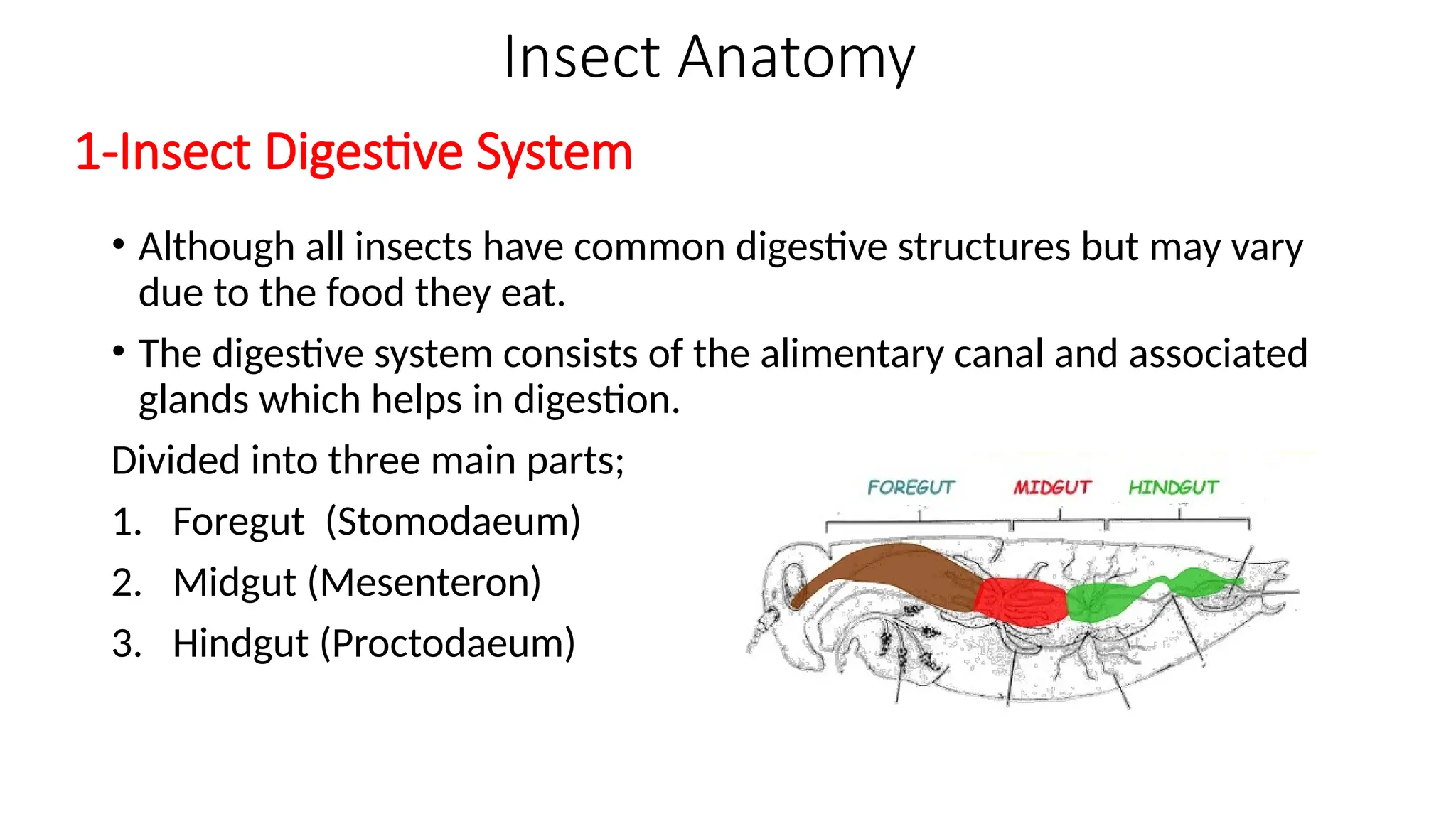
• Although all insects have common digestive structures but may vary
due to the food they eat.
• The digestive system consists of the alimentary canal and associated
glands which helps in digestion.
Divided into three main parts;
1. Foregut (Stomodaeum)
2. Midgut (Mesenteron)
3. Hindgut (Proctodaeum)
1-Insect Digestive System
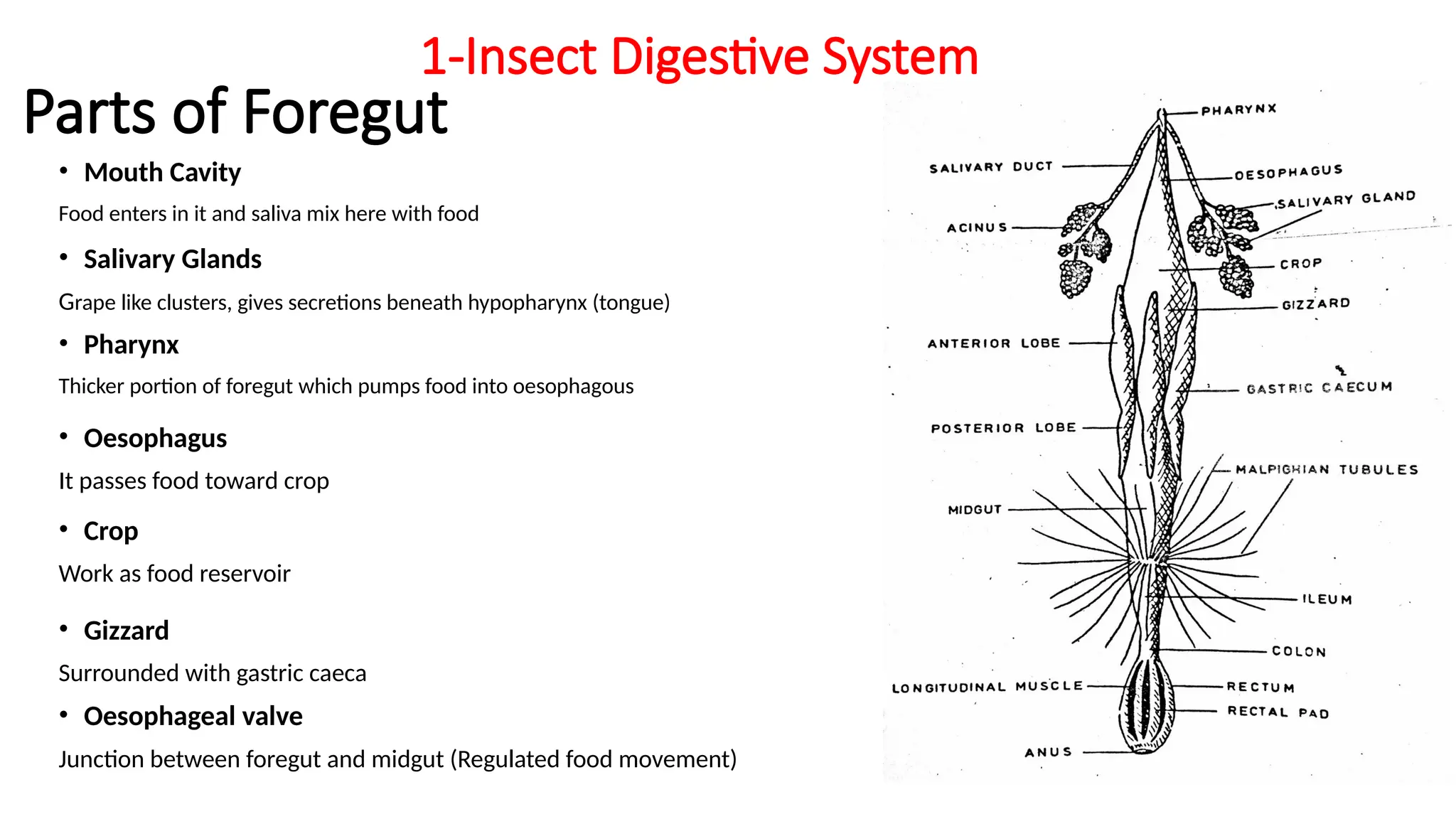
Parts of Foregut
• Mouth Cavity
Food enters in it and saliva mix here with food
• Salivary Glands
Grape like clusters, gives secretions beneath hypopharynx (tongue)
• Pharynx
Thicker portion of foregut which pumps food into oesophagous
• Oesophagus
It passes food toward crop
• Crop
Work as food reservoir
• Gizzard
Surrounded with gastric caeca
• Oesophageal valve
Junction between foregut and midgut (Regulated food movement)
1-Insect Digestive System
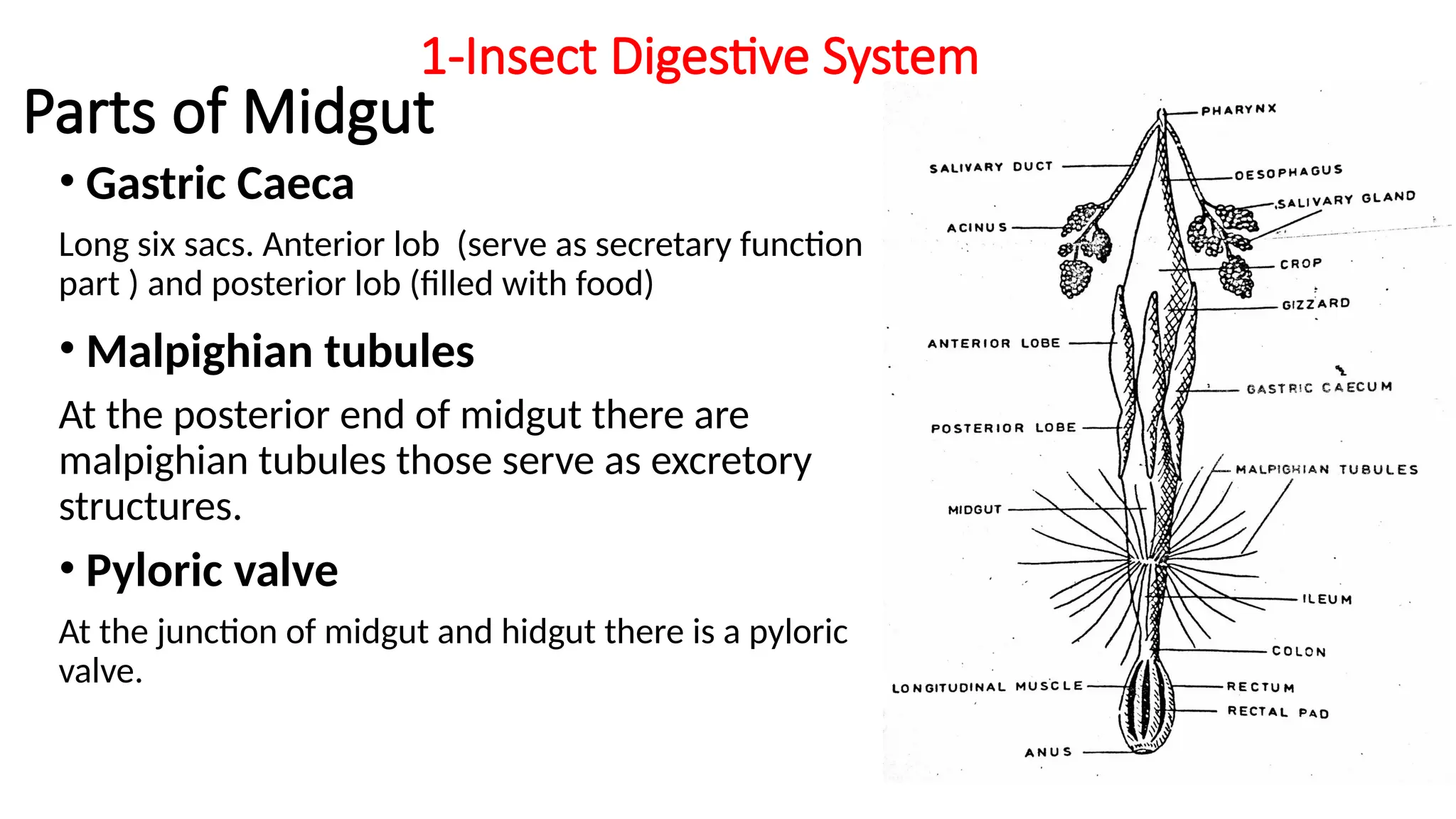
Parts of Midgut
• Gastric Caeca
Long six sacs. Anterior lob (serve as secretary function
part ) and posterior lob (filled with food)
• Malpighian tubules
At the posterior end of midgut there are
malpighian tubules those serve as excretory
structures.
• Pyloric valve
At the junction of midgut and hidgut there is a pyloric
valve.
1-Insect Digestive System
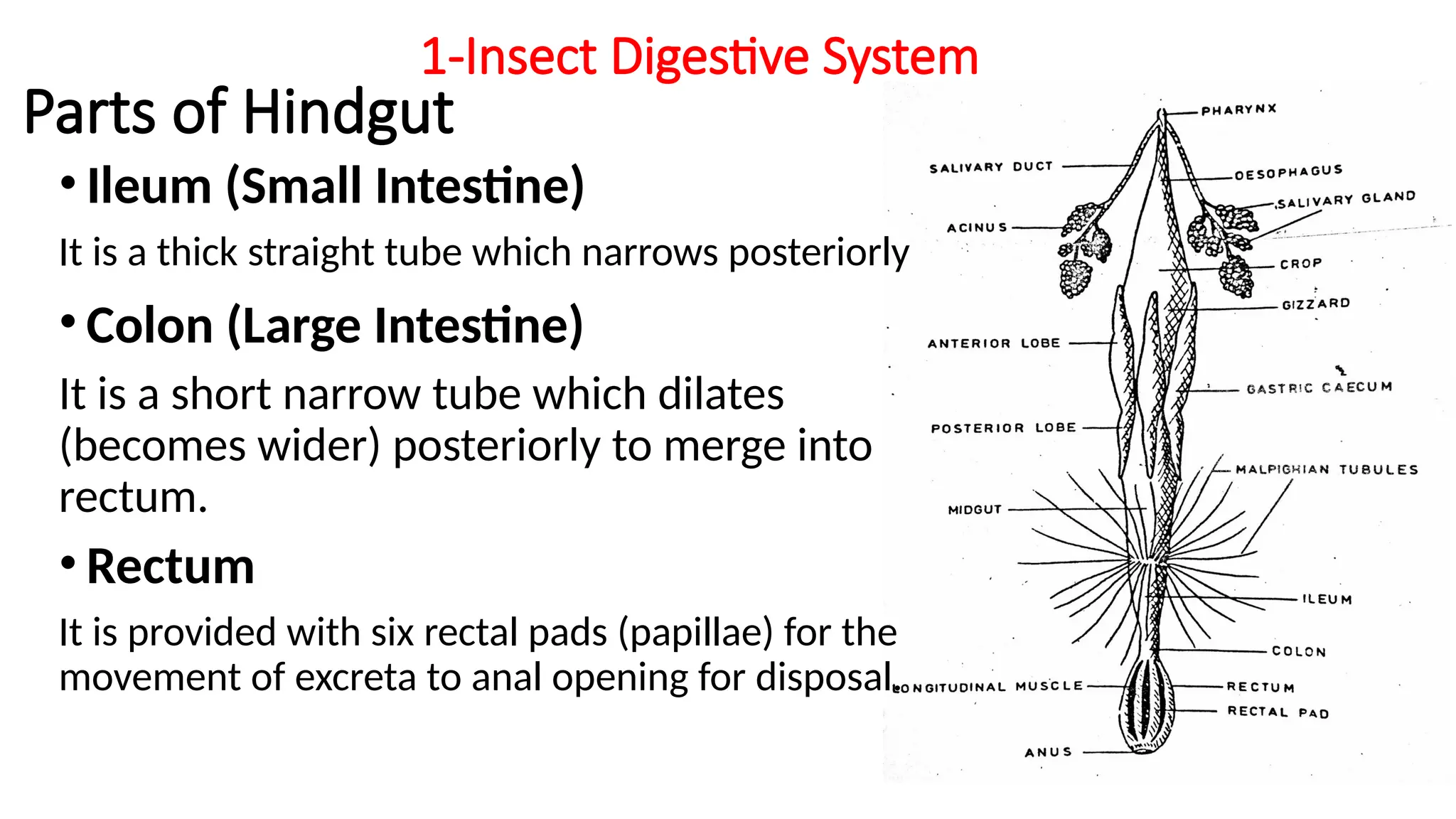
Parts of Hindgut
• Ileum (Small Intestine)
It is a thick straight tube which narrows posteriorly
• Colon (Large Intestine)
It is a short narrow tube which dilates
(becomes wider) posteriorly to merge into
rectum.
• Rectum
It is provided with six rectal pads (papillae) for the
movement of excreta to anal opening for disposal.
Insect Anatomy
• Insect excretory system consists of two main structures:
1. Malpighian tubules
Chief excretory organs. Waste products from the insect blood are
excreted by the glandular lining of these tubes and passes into rectum
where mixed with faeces and wasted out through anus.
2. Fat-bodies
Yellow or whitish masses surround the gut.
Stores the proteins, fats etc from the food for normal body functions
2-Insect Excretory System

Insect Anatomy, Digestive & Excretery Sy.........stem (1).pptx

  • 1.
  • 2.
    Insect Anatomy • Althoughall insects have common digestive structures but may vary due to the food they eat. • The digestive system consists of the alimentary canal and associated glands which helps in digestion. Divided into three main parts; 1. Foregut (Stomodaeum) 2. Midgut (Mesenteron) 3. Hindgut (Proctodaeum) 1-Insect Digestive System
  • 3.
    1-Insect Digestive System Partsof Foregut • Mouth Cavity Food enters in it and saliva mix here with food • Salivary Glands Grape like clusters, gives secretions beneath hypopharynx (tongue) • Pharynx Thicker portion of foregut which pumps food into oesophagous • Oesophagus It passes food toward crop • Crop Work as food reservoir • Gizzard Surrounded with gastric caeca • Oesophageal valve Junction between foregut and midgut (Regulated food movement)
  • 4.
    1-Insect Digestive System Partsof Midgut • Gastric Caeca Long six sacs. Anterior lob (serve as secretary function part ) and posterior lob (filled with food) • Malpighian tubules At the posterior end of midgut there are malpighian tubules those serve as excretory structures. • Pyloric valve At the junction of midgut and hidgut there is a pyloric valve.
  • 5.
    1-Insect Digestive System Partsof Hindgut • Ileum (Small Intestine) It is a thick straight tube which narrows posteriorly • Colon (Large Intestine) It is a short narrow tube which dilates (becomes wider) posteriorly to merge into rectum. • Rectum It is provided with six rectal pads (papillae) for the movement of excreta to anal opening for disposal.
  • 6.
    Insect Anatomy • Insectexcretory system consists of two main structures: 1. Malpighian tubules Chief excretory organs. Waste products from the insect blood are excreted by the glandular lining of these tubes and passes into rectum where mixed with faeces and wasted out through anus. 2. Fat-bodies Yellow or whitish masses surround the gut. Stores the proteins, fats etc from the food for normal body functions 2-Insect Excretory System