•Dr. Mohammad Salah Mady
Lecturer of ORL,HNS .
Otorhinolaryngology Department,
Ain Shams University.
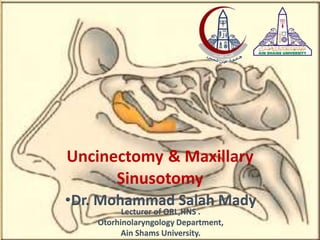
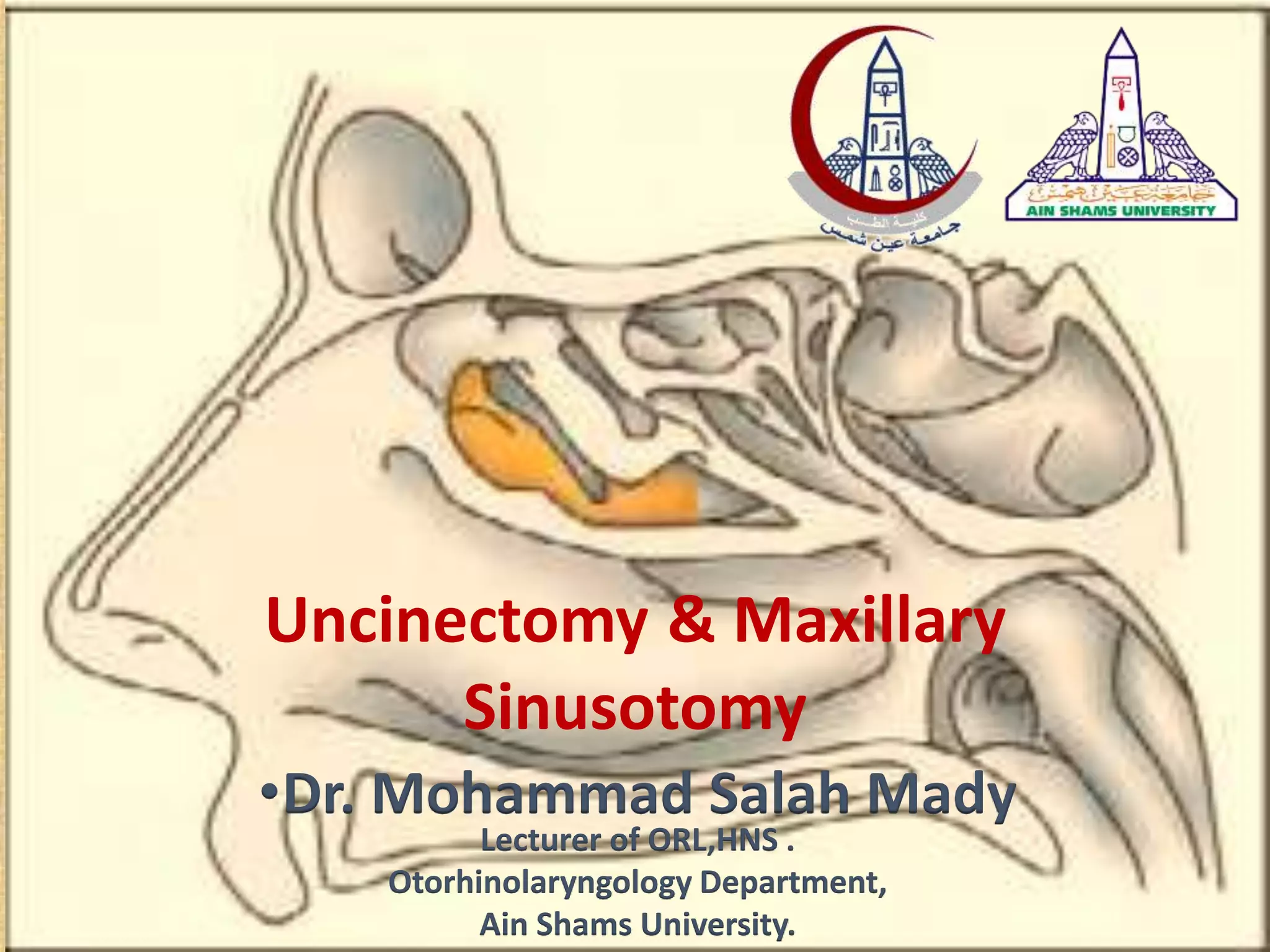
Uncinectomy & Maxillary
Sinusotomy
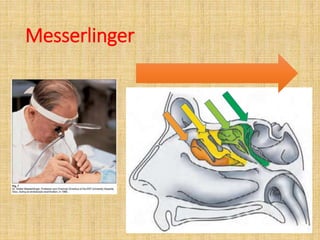
Messerlinger
The Wigand technique calls for a back-to-front
exenteration of disease from the paranasal sinuses
The Wigand technique finds application in cases of massive
polyposis or in revision surgery (where anatomical
landmarks are distorted
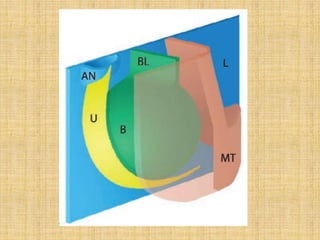
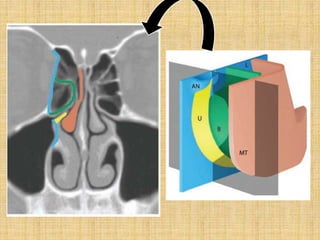
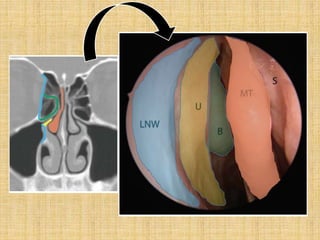
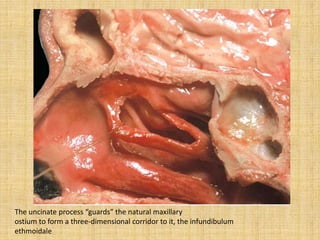
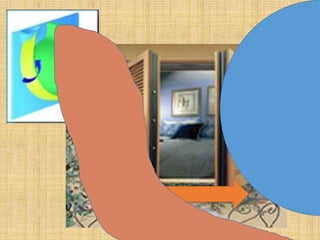
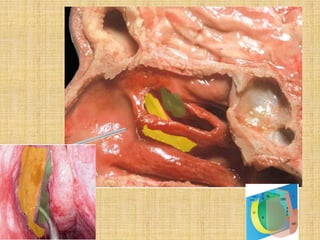
The uncinate process “guards” the natural maxillary
ostium to form a three-dimensional corridor to it, the infundibulum
ethmoidale
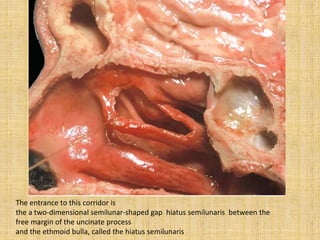
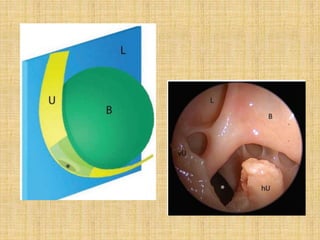
The entrance to this corridor is
the a two-dimensional semilunar-shaped gap hiatus semilunaris between the
free margin of the uncinate process
and the ethmoid bulla, called the hiatus semilunaris
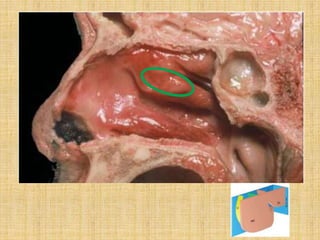
Max. Os. before uncinectomy
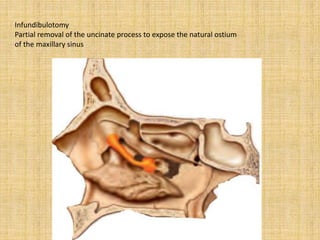
Infundibulotomy
Partial removal of the uncinate process to expose the natural ostium
of the maxillary sinus
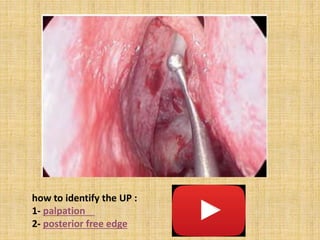
how to identify the UP :
1- palpation
2- posterior free edge
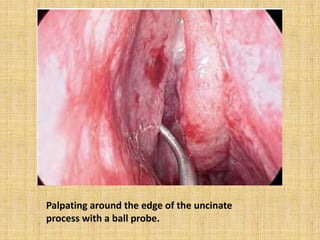
Palpating around the edge of the uncinate
process with a ball probe.
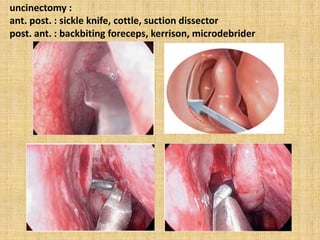
uncinectomy :
ant. post. : sickle knife, cottle, suction dissector
post. ant. : backbiting foreceps, kerrison, microdebrider
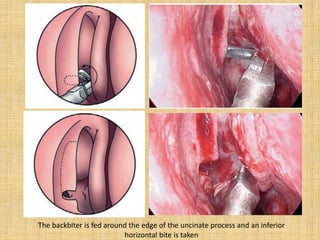
The backbiter is fed around the edge of the uncinate process and an inferior
horizontal bite is taken
uncinectomy + MMA (
backbiting + microdebrider)
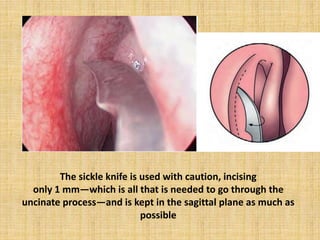
The sickle knife is used with caution, incising
only 1 mm—which is all that is needed to go through the
uncinate process—and is kept in the sagittal plane as much as
possible
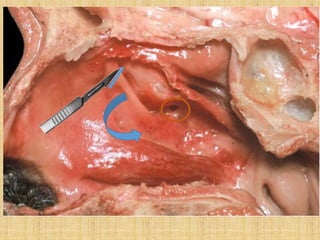
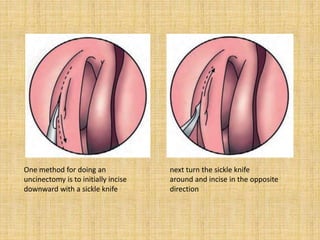
One method for doing an
uncinectomy is to initially incise
downward with a sickle knife
next turn the sickle knife
around and incise in the opposite
direction
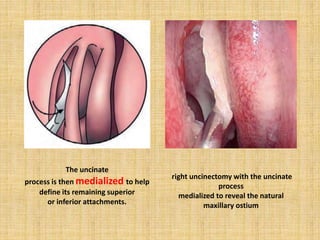
The uncinate
process is then medialized to help
define its remaining superior
or inferior attachments.
right uncinectomy with the uncinate
process
medialized to reveal the natural
maxillary ostium
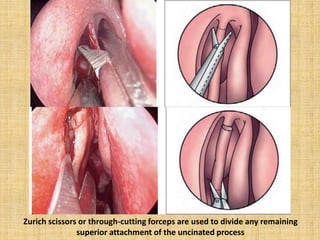
Zurich scissors or through-cutting forceps are used to divide any remaining
superior attachment of the uncinated process
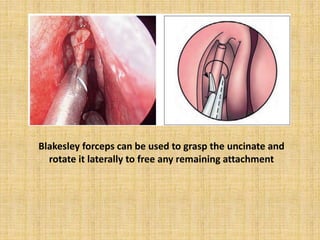
Blakesley forceps can be used to grasp the uncinate and
rotate it laterally to free any remaining attachment
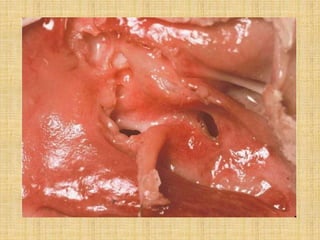
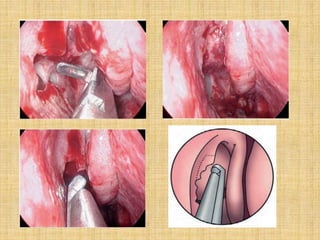
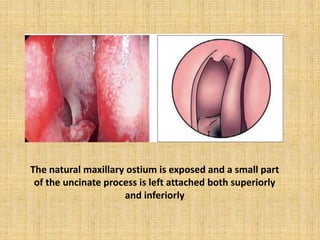
The natural maxillary ostium is exposed and a small part
of the uncinate process is left attached both superiorly
and inferiorly
uncinectomy & MMA (sickle knife)) + accessory ostium
uncinectomy by suction dissector
drsalahmady@gmail
Mohammad Salah Mady
00201006054993
Mohammad Salah Mady
Mohammad Salah Mady

Infundibulotomy & Maxillary sinusotomy pg

  • 1.
    •Dr. Mohammad SalahMady Lecturer of ORL,HNS . Otorhinolaryngology Department, Ain Shams University. Uncinectomy & Maxillary Sinusotomy
  • 2.
  • 3.
    The Wigand techniquecalls for a back-to-front exenteration of disease from the paranasal sinuses The Wigand technique finds application in cases of massive polyposis or in revision surgery (where anatomical landmarks are distorted
  • 10.
    The uncinate process“guards” the natural maxillary ostium to form a three-dimensional corridor to it, the infundibulum ethmoidale
  • 11.
    The entrance tothis corridor is the a two-dimensional semilunar-shaped gap hiatus semilunaris between the free margin of the uncinate process and the ethmoid bulla, called the hiatus semilunaris
  • 17.
    Max. Os. beforeuncinectomy
  • 18.
    Infundibulotomy Partial removal ofthe uncinate process to expose the natural ostium of the maxillary sinus
  • 19.
    how to identifythe UP : 1- palpation 2- posterior free edge
  • 20.
    Palpating around theedge of the uncinate process with a ball probe.
  • 21.
    uncinectomy : ant. post.: sickle knife, cottle, suction dissector post. ant. : backbiting foreceps, kerrison, microdebrider
  • 22.
    The backbiter isfed around the edge of the uncinate process and an inferior horizontal bite is taken
  • 24.
    uncinectomy + MMA( backbiting + microdebrider)
  • 25.
    The sickle knifeis used with caution, incising only 1 mm—which is all that is needed to go through the uncinate process—and is kept in the sagittal plane as much as possible
  • 26.
    One method fordoing an uncinectomy is to initially incise downward with a sickle knife next turn the sickle knife around and incise in the opposite direction
  • 27.
    The uncinate process isthen medialized to help define its remaining superior or inferior attachments. right uncinectomy with the uncinate process medialized to reveal the natural maxillary ostium
  • 28.
    Zurich scissors orthrough-cutting forceps are used to divide any remaining superior attachment of the uncinated process
  • 29.
    Blakesley forceps canbe used to grasp the uncinate and rotate it laterally to free any remaining attachment
  • 30.
    The natural maxillaryostium is exposed and a small part of the uncinate process is left attached both superiorly and inferiorly
  • 31.
    uncinectomy & MMA(sickle knife)) + accessory ostium uncinectomy by suction dissector
  • 36.