
CONSERVATIVE
LARYNGEAL SURGERY
Presented by – Dr. Aashish Tomar
Moderator – Dr Ishapreet Tuli Co-Moderator – Dr Ankur
Gupta
• The goal of any organ conservative surgery is to preserve function without
compromising cure rate
• The procedures permits safe excision of the tumour with preservation of the ssential
functions of the larynx , namely , phonation , nasal respiration and protection of the
airway
• Conservative surgeries AKA Partial laryngectomies can be
• Transoral endoscopic resections(with CO2 laser)
• Open partial laryngectomy
TRANSORAL ENDOSCOPIC LASER
RESECTION
• One sitting, day care procedure without need for tracheostomy
• Lower cost , early restoration of swallowing
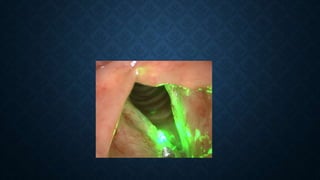
• Performed with suspension laryngoscope and microscope coupled with CO2 laser
manipulated with micromanipulator.
• ET tube wrapped in aluminium foil to prevent combustion of anaesthetic gases, and
soaked cotton balls in larynx to prevent thermal damage. Goggles for OT personnel.
• .
• Indications for transoral laser resection includes
• Leukoplakia/erythroplakia of vocal cord
• T1/T2 glottis cancers with freely mobile vocal cords
• T1/T2 cancers of supraglottis
• Select T3 supraglottic cancer with early invasion of the pre –epiglottic space with freely mobile vocal
cords
• T1/T2 cancer of hypopharynx with freely mobile vocal cords and with no invasion of the paraglottis or the
para pharynx
• Localised residual or recurrent cancers following failure of radiation therapy for early cancer of the
glottis , supraglottis or hypopharynx
• Non squamous histology which is not radiosensitive eg neuroendocrine tumors, neuroectodermal tumors,
minor salivary gland neoplasms
TYPES OF OPEN PARTIAL LARYNGECTOMY
• Procedure for glottis cancer
• Laryngofissure with Cordectomy
• Vertical partial laryngectomy
• Supracricoid partial laryngectomy (SCPL)with crico-hyiodo-epiglottopexy(CHEP)
LARYNGOFISSURE WITH CORDECTOMY
• Indications – T1 -mid cord lesion(not reaching anterior commissure), no impairment
of cord mobility,
• Prior tracheostomy is needed
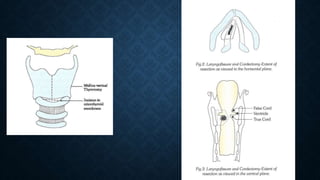
• Midline vertical thyrotomy
• Entry through cricothyroid membrane
• Margins – anterior 2 mm behind anterior commissure, posteriorly till vocal process
of arytenoids, superiorly – just above false cords, inferiorly – lower border of thyroid
cartilage
• Quality of voice following laryngofissure and cordectomy is inferior to that following
an endoscopic laser cordectomy
• Voice quality is best following successful radiation therapy
VERTICAL PARTIAL LARYNGECTOMY
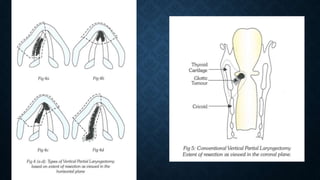
• Also called vertical hemilaryngectomy
• Types
• Hemilaryngectomy (withoiut involvement of the anterior commissure or the
arytenoid)
• frontal laryngectomy (anterior commissure lesion)
• Frontolateral laryngectomy (extension across the anterior commissure)
• Extended hemilaryngectomy (involving the arytenoid)
• Indications
• There are situations in early glottis cancers (T1/T2) where VPL is more useful and scores over
treatment with radiation therapy or with TOLR
• Involvement of anterior commissure
• Impaired mobility of the vocal cord
• Subglottic extension of disease( <10mm anteriorly and <5mm posteriorly)
• Inadequate exposure
• Salvage of post radiotherapy recurrence
• Select T3 glottis cancers(where cords are fixed but both arytenoids are freely mobile and there is
minimal extension above or below the cord level)
PROCEADURE
• full thickness en bloc segment of involved glottis with overlying thyroid cartilage, upper margin –
false cords, lower margins – above cricoid
• Entry in larynx – via cricothyroid membrane
• Both superior laryngeal nerves preserved, epiglottis preserved
• Reconstruction
• Reconstruction –
• Reattachment of contralateral vocal cord to adjoining thyroid cartilage
• Mucosal defect need not be reconstructed – heals via granulations – forms pseudo cords
• To reconstruct resected arytenoids we use muscle , tendon , fat , cartilage or epiglottis as
reconstructing posterior bulk is important
COMPLICATIONS OF
HEMILARYNGECTOMIES
• When a large anterior part (anterior commissure region) is resected the resultant
defect results in problem of stenosis
• When a large posterior part (arytenoid region) is resected the resultant defect
results in problem of aspiration and poor voice quality
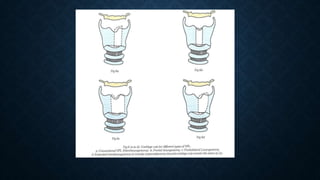
SUPRACRICOID LARYNGECTOMY WITH CRICO-
HYOIDO-EPIGLOTTOPEXY
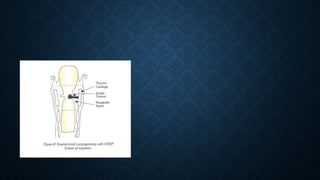
• It deals essentialy with glotto-supraglottic tumors and involves removal of the entire thyroid cartilage
bilaterally along with the paraglottic spaces
• it involves removal of the infrahyoid epiglottis
• Indications -T1b /T2a/T2b(cord mobility impaired) and T3( fixed vocal cord) with freely mobile arytenoids
Resection removes entire thyroid cartilage and paraglottic space
• Essential that pre- epiglottic space free of disease – since entry into larynx is via a transepiglottic
incision.
• Cricoid, hyoid, suprahyoid epiglottis, bilateral superior laryngeal nerves – preserved
• Contraindications – involvement of pre – epiglottic space, involvement of cricoarytenoid joint, poor
pulmonary reserve.
• Advantages over vertical partial laryngectomy- better exposure during surgery, oncologically safe as
thyroid cartilage fully removed
COMPLICATIONS
• Pneumonia due to aspiration
• Dehiscence of the crico-hyoido-epiglottopexy
• Laryngeal stenosis
PROCEDURES FOR SUPRAGLOTTIC CANCER
• Most common tumors of larynx in india – marginal zone region lesions most
frequent. Present late, rich in lymphatics, have cervical nodal mets at presentation,
spread preferentially in upwards direcrtion – need horizontal resections
• Horizontal partial laryngectomy includes
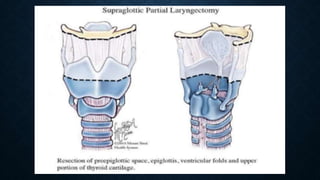
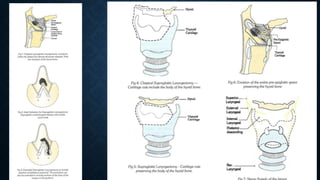
• Horizontal Supraglottic partial laryngectomy- where resection includes the false
cord , the epiglottis , the pre epiglottic space and the upper third of the thyroid
cartilage the hyoid is included in the resection when the pre epiglottic space is
grossly infiltrated
• Extended supraglottic partial laryngectomies for tumor extending to the pyriform or
base of the tongue or the arytenoid
• Indications
• carcinoma of infrahyoid supraglottis with mobile cords
• supraglottic cancers with large neck secondaries(N2,N3)
• suprahyoid lesions in young adults (radiotherapy itself carcinogenic in young -20%)
• Contraindications
• invasion of paraglottic space –transglottic tumor,
• poor pulmonary reserve
• involvement of thyroid cartilage
• involvement of pyriform sinus apex
• involvement of interarytenoid or post cricoid region
• extensive base of tongue involvement(loss of vasculature)
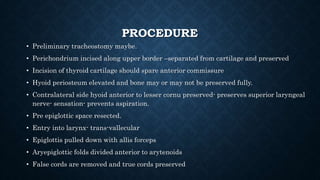
PROCEDURE
• Preliminary tracheostomy maybe.
• Perichondrium incised along upper border –separated from cartilage and preserved
• Incision of thyroid cartilage should spare anterior commissure
• Hyoid periosteum elevated and bone may or may not be preserved fully.
• Contralateral side hyoid anterior to lesser cornu preserved- preserves superior laryngeal
nerve- sensation- prevents aspiration.
• Pre epiglottic space resected.
• Entry into larynx- trans-vallecular
• Epiglottis pulled down with allis forceps
• Aryepiglottic folds divided anterior to arytenoids
• False cords are removed and true cords preserved
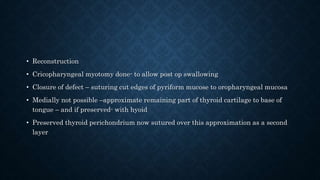
• Reconstruction
• Cricopharyngeal myotomy done- to allow post op swallowing
• Closure of defect – suturing cut edges of pyriform mucose to oropharyngeal mucosa
• Medially not possible –approximate remaining part of thyroid cartilage to base of
tongue – and if preserved- with hyoid
• Preserved thyroid perichondrium now sutured over this approximation as a second
layer
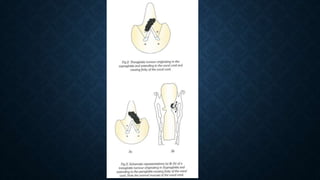
EXTENDED SUPRAGLOTTIC
LARYNGECTOMY
• Extended means – resection of involved arytenoid or lateral wall of pyriform fossa or vallecula or
base of tongue
• Arytenoid resection – can lead to aspiration and significant poor quality of voice – prevented by
medializing ipsilateral cord remnant – anchoring it to superior border of cricoid cartilage.
• Base of tongue/vallecular resection – when tumours involve lingual surface pof the epiglottis ,
vallecular and adjacent portion of base of tonguenow the entry into larynx is made via uninvolved
ventricle inferiorly
• Resection of lateral wall of pyriform fossa along with involved portion of the lateral and posterior
pharyngeal wall is compatible with the extended supraglottic laryngectomy resultant defect is
repaired with myocutaneous flap
• Aspiration and pharyngocutaneous fistula are complications.
PROCEDURES FOR TRANSGLOTTIC
CANCERS
• These procedures are a combination of vertical and horizontal partial
laryngectomies
• Three quarter laryngectomy
• Supracricoid partial laryngectomy with crico-hyoido-pexy(SCPL-CHP)
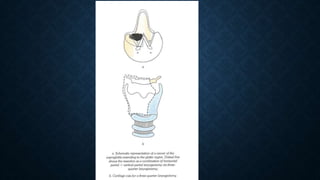
THREE QUARTER LARYNGECTOMY
• Combination of supraglottic horizontal partial laryngectomy and vertical hemi
laryngectomy
• Indications -Supraglottic tumors extending to glottis or vice versa.
• Contra indications – involvement of subglottis,involvement of cricoarytenoid joint,
thyroid cartilage invasion, inter arytenoid and post cricoid involvement.
• Resection – body of hyoid, thyroid cartilage, supraglottis with pre-epiglottic space, true
cord with paraglottic space, and arytenoid if involved.
• Glottic reconstruction – reconstruct ipsilateral true cord to maintain functioning aditus
• a. with a muscle flap – inferior based sternohyoid muscle flap (not good – contracts)
• b. with cartilage – thyroid cartilage used as free or pedicled graft (better)
SUPRACRICOID LARYNGECTOMY WITH
CRICOHYOIDOPEXY
• Indicated for transglottic cancers with extension to anterior commissure or
paraglottic space but no extension to pyriform fossa or base of tongue
• Contra-indications – cricoarytenoid joint involvement, subglottic extension – more
than 10mm anteriorly and 5 mm posteriorly, involvement of vallecula, base of
tongue, pyriform sinus, post cricoid and inter arytenoid regions, prior tracheostomy.
• Thyroid cartilage erosion is not a contraindication to this procedure
• Resection includes – entire thyroid cartilage, paraglottic space, pre-epiglottic space
and epiglottis.
• Preserved – cricoid cartilage, hyoid bone and one arytenoid.
•Thank you
Conservative laryngeal surgery

Conservative laryngeal surgery

  • 1.
    CONSERVATIVE LARYNGEAL SURGERY Presented by– Dr. Aashish Tomar Moderator – Dr Ishapreet Tuli Co-Moderator – Dr Ankur Gupta
  • 2.
    • The goalof any organ conservative surgery is to preserve function without compromising cure rate • The procedures permits safe excision of the tumour with preservation of the ssential functions of the larynx , namely , phonation , nasal respiration and protection of the airway • Conservative surgeries AKA Partial laryngectomies can be • Transoral endoscopic resections(with CO2 laser) • Open partial laryngectomy
  • 3.
    TRANSORAL ENDOSCOPIC LASER RESECTION •One sitting, day care procedure without need for tracheostomy • Lower cost , early restoration of swallowing • Performed with suspension laryngoscope and microscope coupled with CO2 laser manipulated with micromanipulator. • ET tube wrapped in aluminium foil to prevent combustion of anaesthetic gases, and soaked cotton balls in larynx to prevent thermal damage. Goggles for OT personnel. • .
  • 4.
    • Indications fortransoral laser resection includes • Leukoplakia/erythroplakia of vocal cord • T1/T2 glottis cancers with freely mobile vocal cords • T1/T2 cancers of supraglottis • Select T3 supraglottic cancer with early invasion of the pre –epiglottic space with freely mobile vocal cords • T1/T2 cancer of hypopharynx with freely mobile vocal cords and with no invasion of the paraglottis or the para pharynx • Localised residual or recurrent cancers following failure of radiation therapy for early cancer of the glottis , supraglottis or hypopharynx • Non squamous histology which is not radiosensitive eg neuroendocrine tumors, neuroectodermal tumors, minor salivary gland neoplasms
  • 6.
    TYPES OF OPENPARTIAL LARYNGECTOMY • Procedure for glottis cancer • Laryngofissure with Cordectomy • Vertical partial laryngectomy • Supracricoid partial laryngectomy (SCPL)with crico-hyiodo-epiglottopexy(CHEP)
  • 7.
    LARYNGOFISSURE WITH CORDECTOMY •Indications – T1 -mid cord lesion(not reaching anterior commissure), no impairment of cord mobility, • Prior tracheostomy is needed • Midline vertical thyrotomy • Entry through cricothyroid membrane • Margins – anterior 2 mm behind anterior commissure, posteriorly till vocal process of arytenoids, superiorly – just above false cords, inferiorly – lower border of thyroid cartilage
  • 9.
    • Quality ofvoice following laryngofissure and cordectomy is inferior to that following an endoscopic laser cordectomy • Voice quality is best following successful radiation therapy
  • 10.
    VERTICAL PARTIAL LARYNGECTOMY •Also called vertical hemilaryngectomy • Types • Hemilaryngectomy (withoiut involvement of the anterior commissure or the arytenoid) • frontal laryngectomy (anterior commissure lesion) • Frontolateral laryngectomy (extension across the anterior commissure) • Extended hemilaryngectomy (involving the arytenoid)
  • 13.
    • Indications • Thereare situations in early glottis cancers (T1/T2) where VPL is more useful and scores over treatment with radiation therapy or with TOLR • Involvement of anterior commissure • Impaired mobility of the vocal cord • Subglottic extension of disease( <10mm anteriorly and <5mm posteriorly) • Inadequate exposure • Salvage of post radiotherapy recurrence • Select T3 glottis cancers(where cords are fixed but both arytenoids are freely mobile and there is minimal extension above or below the cord level)
  • 14.
    PROCEADURE • full thicknessen bloc segment of involved glottis with overlying thyroid cartilage, upper margin – false cords, lower margins – above cricoid • Entry in larynx – via cricothyroid membrane • Both superior laryngeal nerves preserved, epiglottis preserved • Reconstruction • Reconstruction – • Reattachment of contralateral vocal cord to adjoining thyroid cartilage • Mucosal defect need not be reconstructed – heals via granulations – forms pseudo cords • To reconstruct resected arytenoids we use muscle , tendon , fat , cartilage or epiglottis as reconstructing posterior bulk is important
  • 15.
    COMPLICATIONS OF HEMILARYNGECTOMIES • Whena large anterior part (anterior commissure region) is resected the resultant defect results in problem of stenosis • When a large posterior part (arytenoid region) is resected the resultant defect results in problem of aspiration and poor voice quality
  • 16.
    SUPRACRICOID LARYNGECTOMY WITHCRICO- HYOIDO-EPIGLOTTOPEXY • It deals essentialy with glotto-supraglottic tumors and involves removal of the entire thyroid cartilage bilaterally along with the paraglottic spaces • it involves removal of the infrahyoid epiglottis • Indications -T1b /T2a/T2b(cord mobility impaired) and T3( fixed vocal cord) with freely mobile arytenoids Resection removes entire thyroid cartilage and paraglottic space • Essential that pre- epiglottic space free of disease – since entry into larynx is via a transepiglottic incision. • Cricoid, hyoid, suprahyoid epiglottis, bilateral superior laryngeal nerves – preserved • Contraindications – involvement of pre – epiglottic space, involvement of cricoarytenoid joint, poor pulmonary reserve. • Advantages over vertical partial laryngectomy- better exposure during surgery, oncologically safe as thyroid cartilage fully removed
  • 18.
    COMPLICATIONS • Pneumonia dueto aspiration • Dehiscence of the crico-hyoido-epiglottopexy • Laryngeal stenosis
  • 19.
    PROCEDURES FOR SUPRAGLOTTICCANCER • Most common tumors of larynx in india – marginal zone region lesions most frequent. Present late, rich in lymphatics, have cervical nodal mets at presentation, spread preferentially in upwards direcrtion – need horizontal resections • Horizontal partial laryngectomy includes • Horizontal Supraglottic partial laryngectomy- where resection includes the false cord , the epiglottis , the pre epiglottic space and the upper third of the thyroid cartilage the hyoid is included in the resection when the pre epiglottic space is grossly infiltrated • Extended supraglottic partial laryngectomies for tumor extending to the pyriform or base of the tongue or the arytenoid
  • 20.
    • Indications • carcinomaof infrahyoid supraglottis with mobile cords • supraglottic cancers with large neck secondaries(N2,N3) • suprahyoid lesions in young adults (radiotherapy itself carcinogenic in young -20%) • Contraindications • invasion of paraglottic space –transglottic tumor, • poor pulmonary reserve • involvement of thyroid cartilage • involvement of pyriform sinus apex • involvement of interarytenoid or post cricoid region • extensive base of tongue involvement(loss of vasculature)
  • 23.
    PROCEDURE • Preliminary tracheostomymaybe. • Perichondrium incised along upper border –separated from cartilage and preserved • Incision of thyroid cartilage should spare anterior commissure • Hyoid periosteum elevated and bone may or may not be preserved fully. • Contralateral side hyoid anterior to lesser cornu preserved- preserves superior laryngeal nerve- sensation- prevents aspiration. • Pre epiglottic space resected. • Entry into larynx- trans-vallecular • Epiglottis pulled down with allis forceps • Aryepiglottic folds divided anterior to arytenoids • False cords are removed and true cords preserved
  • 24.
    • Reconstruction • Cricopharyngealmyotomy done- to allow post op swallowing • Closure of defect – suturing cut edges of pyriform mucose to oropharyngeal mucosa • Medially not possible –approximate remaining part of thyroid cartilage to base of tongue – and if preserved- with hyoid • Preserved thyroid perichondrium now sutured over this approximation as a second layer
  • 25.
    EXTENDED SUPRAGLOTTIC LARYNGECTOMY • Extendedmeans – resection of involved arytenoid or lateral wall of pyriform fossa or vallecula or base of tongue • Arytenoid resection – can lead to aspiration and significant poor quality of voice – prevented by medializing ipsilateral cord remnant – anchoring it to superior border of cricoid cartilage. • Base of tongue/vallecular resection – when tumours involve lingual surface pof the epiglottis , vallecular and adjacent portion of base of tonguenow the entry into larynx is made via uninvolved ventricle inferiorly • Resection of lateral wall of pyriform fossa along with involved portion of the lateral and posterior pharyngeal wall is compatible with the extended supraglottic laryngectomy resultant defect is repaired with myocutaneous flap • Aspiration and pharyngocutaneous fistula are complications.
  • 26.
    PROCEDURES FOR TRANSGLOTTIC CANCERS •These procedures are a combination of vertical and horizontal partial laryngectomies • Three quarter laryngectomy • Supracricoid partial laryngectomy with crico-hyoido-pexy(SCPL-CHP)
  • 27.
    THREE QUARTER LARYNGECTOMY •Combination of supraglottic horizontal partial laryngectomy and vertical hemi laryngectomy • Indications -Supraglottic tumors extending to glottis or vice versa. • Contra indications – involvement of subglottis,involvement of cricoarytenoid joint, thyroid cartilage invasion, inter arytenoid and post cricoid involvement. • Resection – body of hyoid, thyroid cartilage, supraglottis with pre-epiglottic space, true cord with paraglottic space, and arytenoid if involved. • Glottic reconstruction – reconstruct ipsilateral true cord to maintain functioning aditus • a. with a muscle flap – inferior based sternohyoid muscle flap (not good – contracts) • b. with cartilage – thyroid cartilage used as free or pedicled graft (better)
  • 29.
    SUPRACRICOID LARYNGECTOMY WITH CRICOHYOIDOPEXY •Indicated for transglottic cancers with extension to anterior commissure or paraglottic space but no extension to pyriform fossa or base of tongue • Contra-indications – cricoarytenoid joint involvement, subglottic extension – more than 10mm anteriorly and 5 mm posteriorly, involvement of vallecula, base of tongue, pyriform sinus, post cricoid and inter arytenoid regions, prior tracheostomy. • Thyroid cartilage erosion is not a contraindication to this procedure • Resection includes – entire thyroid cartilage, paraglottic space, pre-epiglottic space and epiglottis. • Preserved – cricoid cartilage, hyoid bone and one arytenoid.
  • 31.