Informed Consent Form
Dr. Ghiath
Alahmad
What is “Consent?”
Defined as permission, approval, or assent
Touching a person without consent constitutes a
battery, and putting a person in fear of being touched
without consent is assault.
What is “INFORMED Consent”?
Consent given by the patient based on
knowledge of the procedure to be performed,
including its risks and benefits, as well as
alternatives to the proposed treatment.
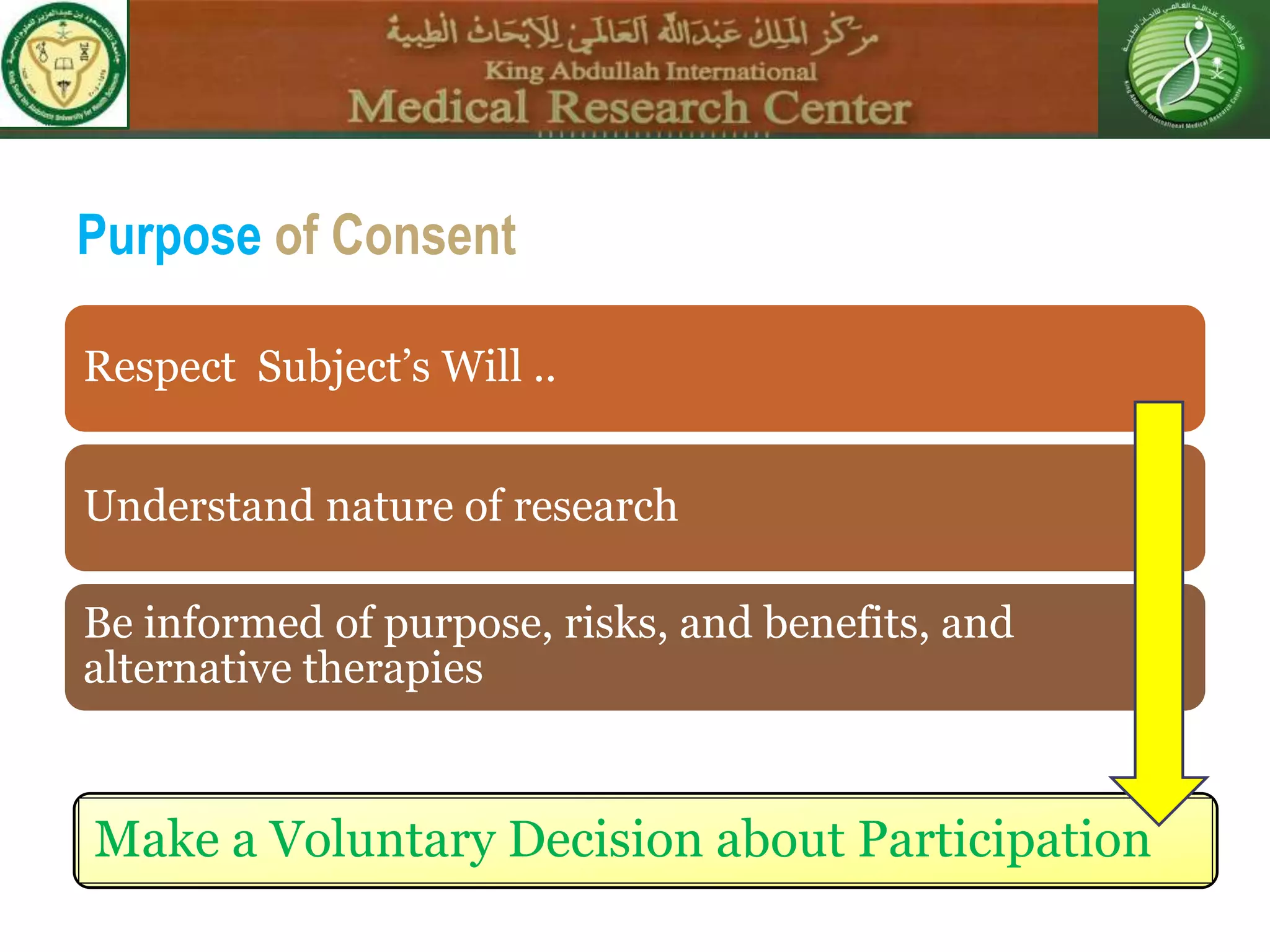
Purpose of Consent
Respect Subject’s Will ..
Understand nature of research
Be informed of purpose, risks, and benefits, and
alternative therapies
Make a Voluntary Decision about Participation
“Informative” Informed Consent
What you need to know about informed
consent.
What you need to do to create an
“informative” Informed Consent Form.
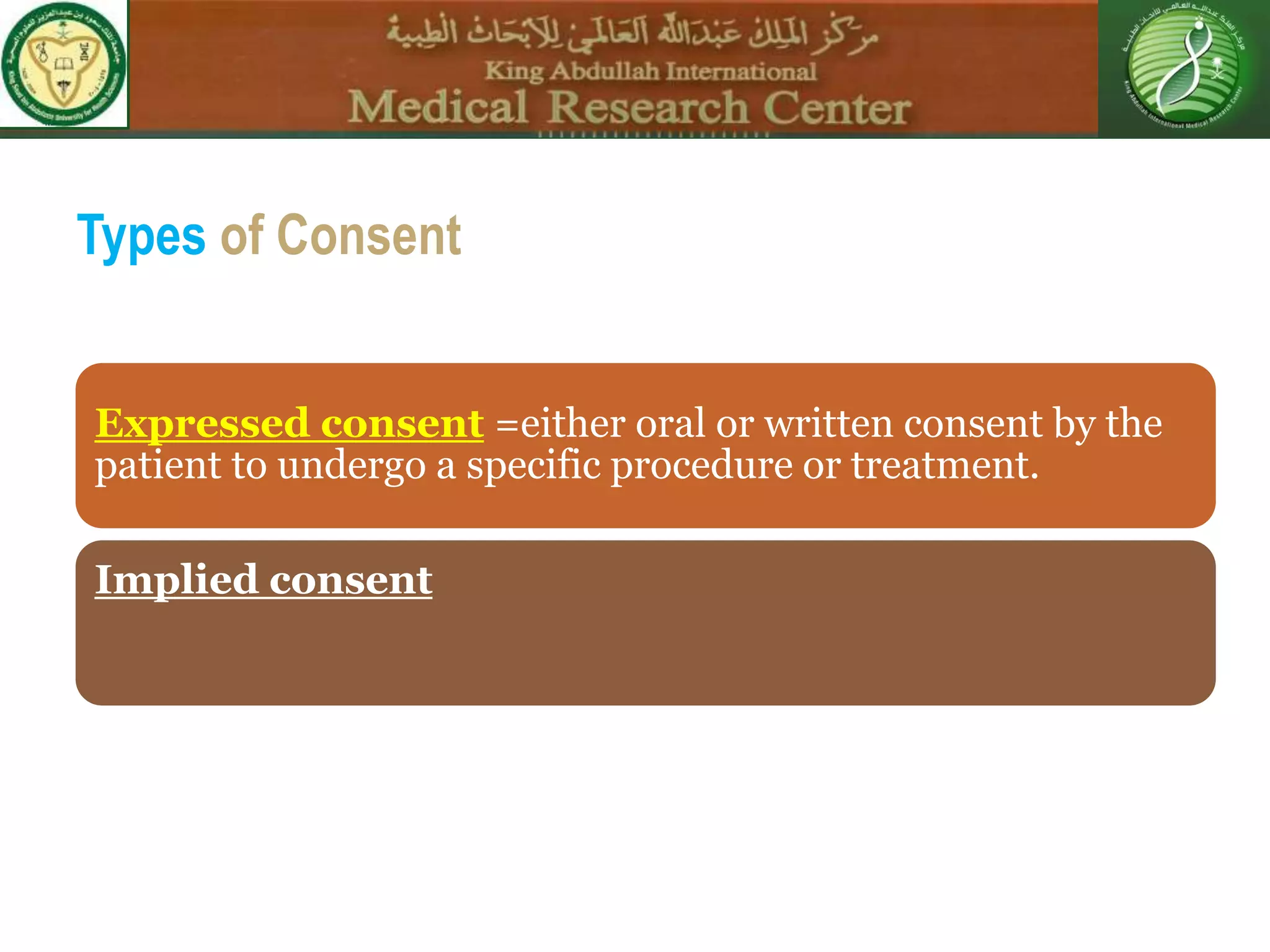
Types of Consent
Expressed consent =either oral or written consent by the
patient to undergo a specific procedure or treatment.
Implied consent =inferred from the circumstances. It is
rarely documented and is relied upon for care or treatment
that is routine and does not involve significant risk.
Types of Consent
Expressed consent =either oral or written consent by the
patient to undergo a specific procedure or treatment.
Implied consent =inferred from the circumstances. It is
rarely documented and is relied upon for care or treatment
that is routine and does not involve significant risk.
Types of Consent
Expressed consent =either oral or written consent by the
patient to undergo a specific procedure or treatment.
Implied consent =inferred from the circumstances. It is
rarely documented and is relied upon for care or treatment
that is routine and does not involve significant risk.
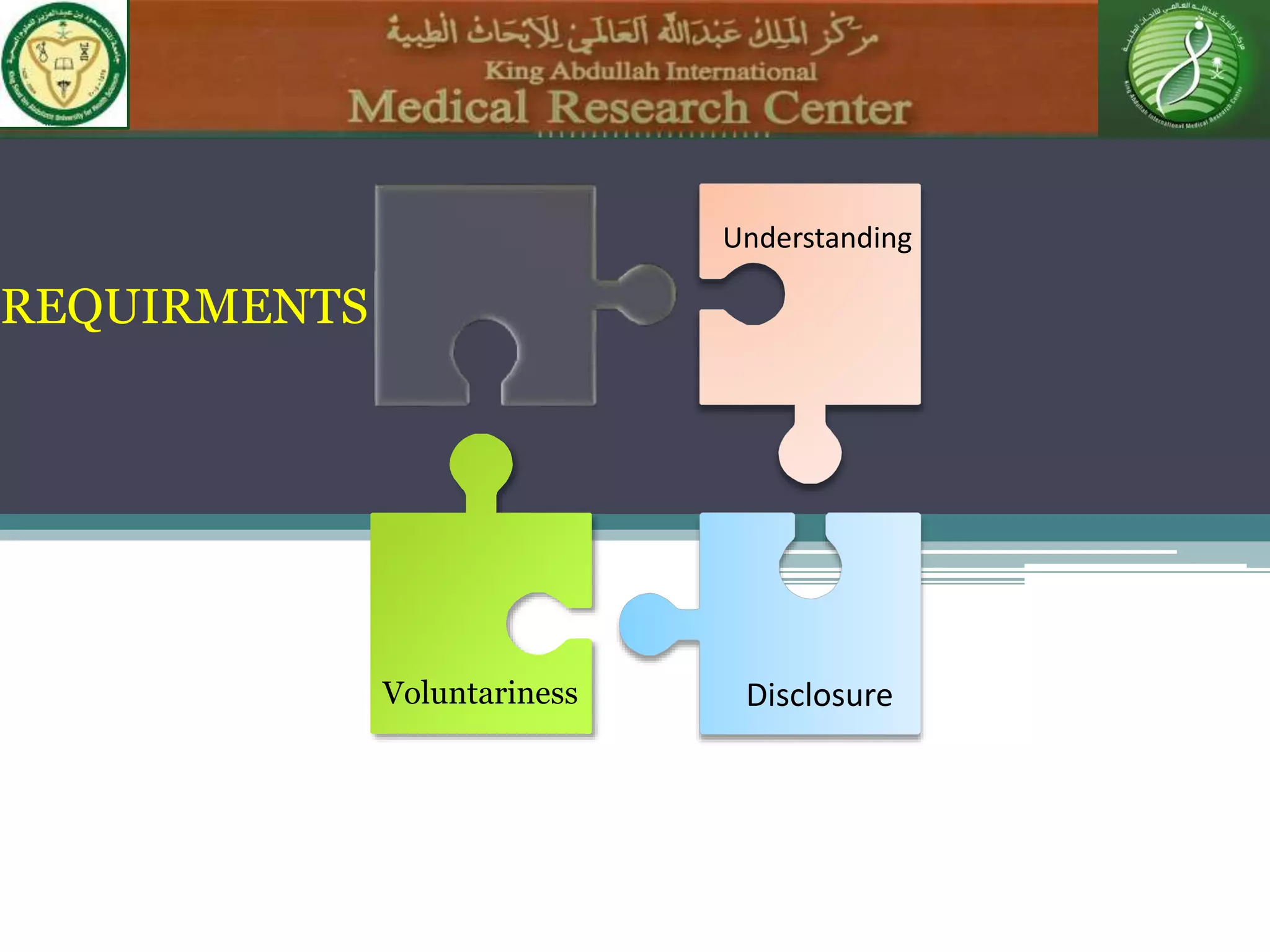
REQUIRMENTS
REQUIRMENTS
Voluntariness
REQUIRMENTS
Voluntariness Disclosure
REQUIRMENTS
Voluntariness Disclosure
Understanding
REQUIRMENTS
Voluntariness Disclosure
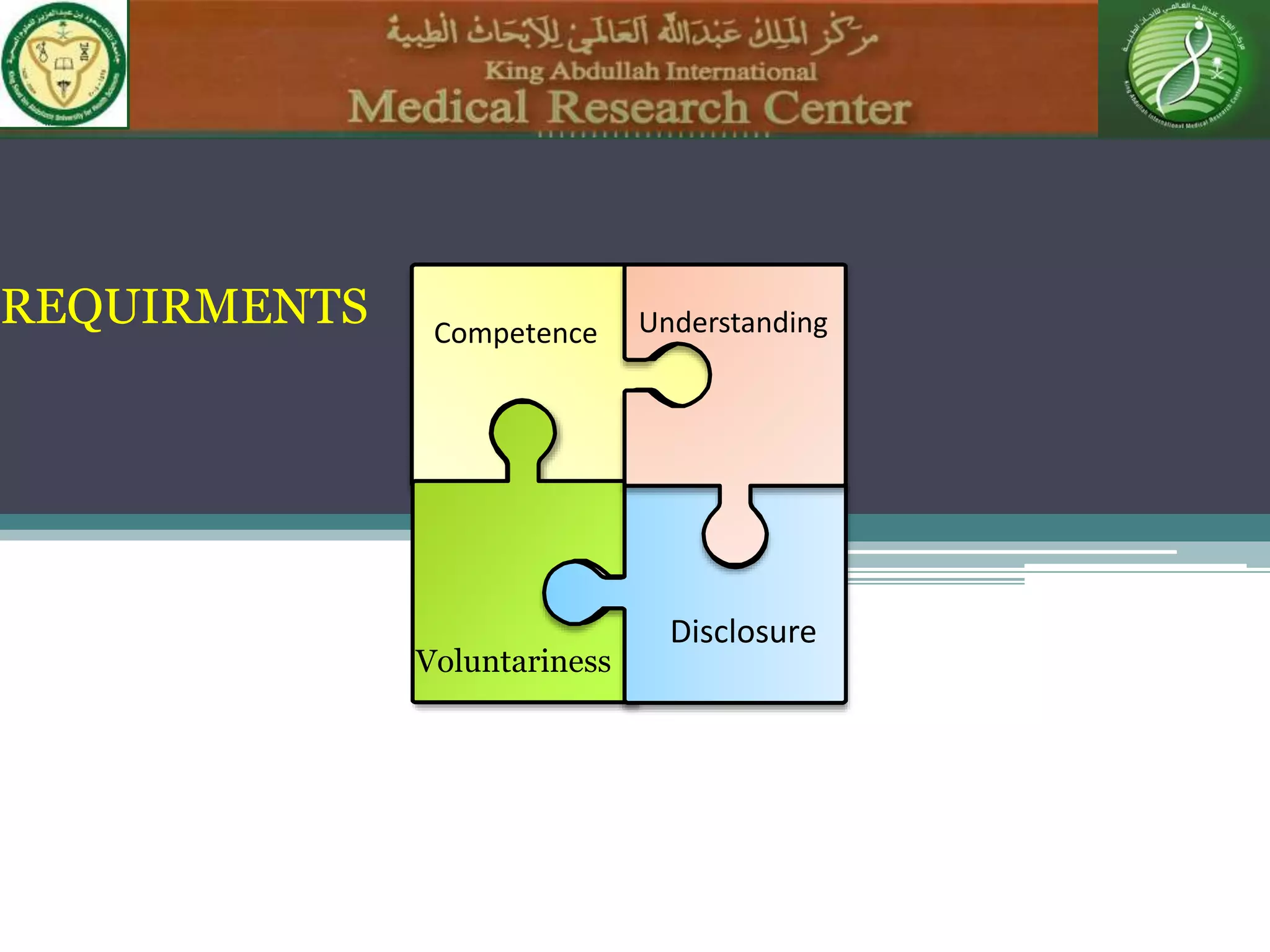
Competence Understanding
REQUIRMENTS
Voluntariness
Disclosure
Competence UnderstandingREQUIRMENTS
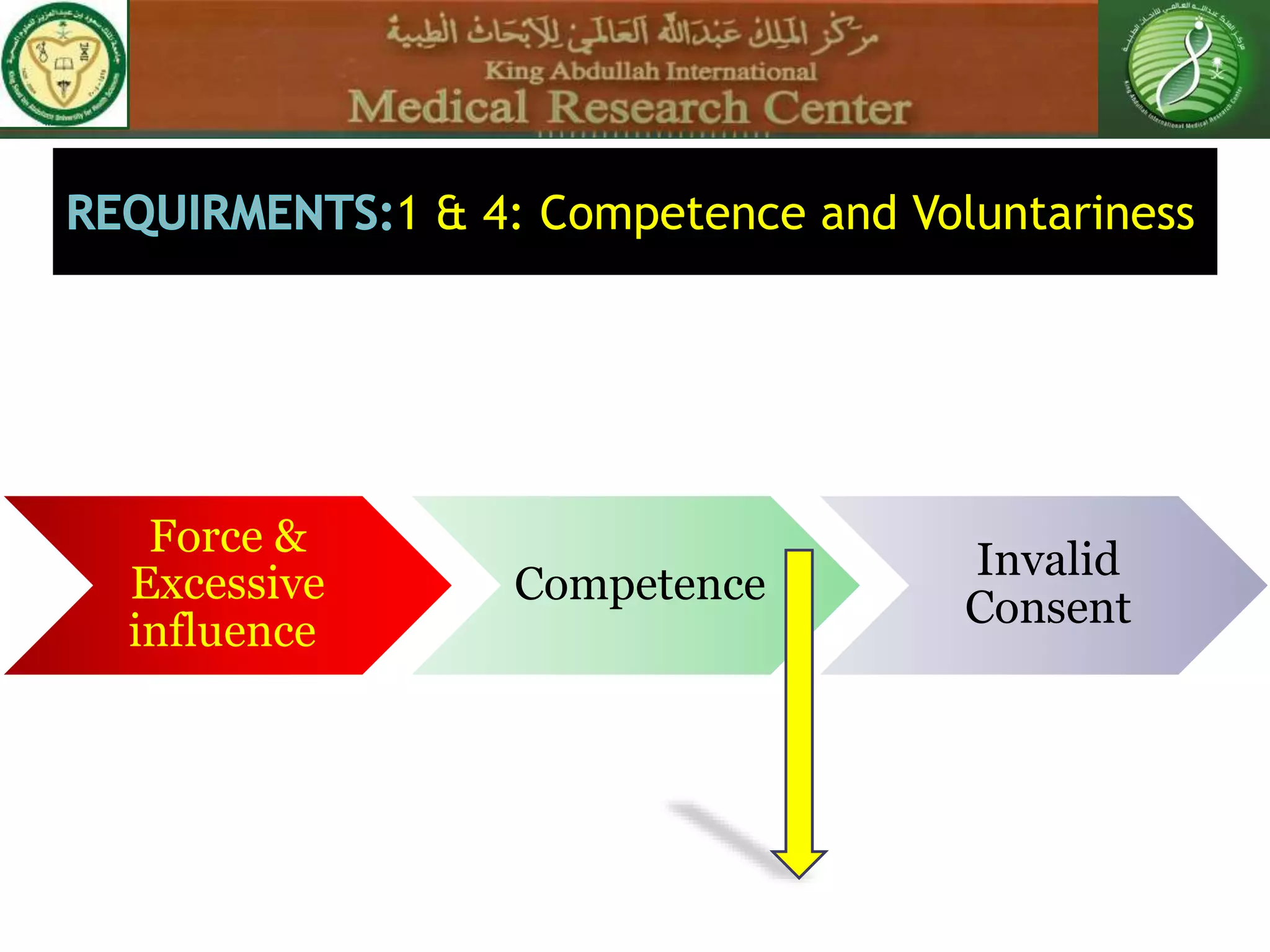
1 & 4: Competence and Voluntariness
Competence = the ability to perform a certain task.
The task at hand is to make a decision that reflects your values and assessment
of likely outcomes
Values
Assessment
Ability Task
Competence
Force &
Excessive
influence
Competence
Invalid
Consent
1 & 4: Competence and Voluntariness
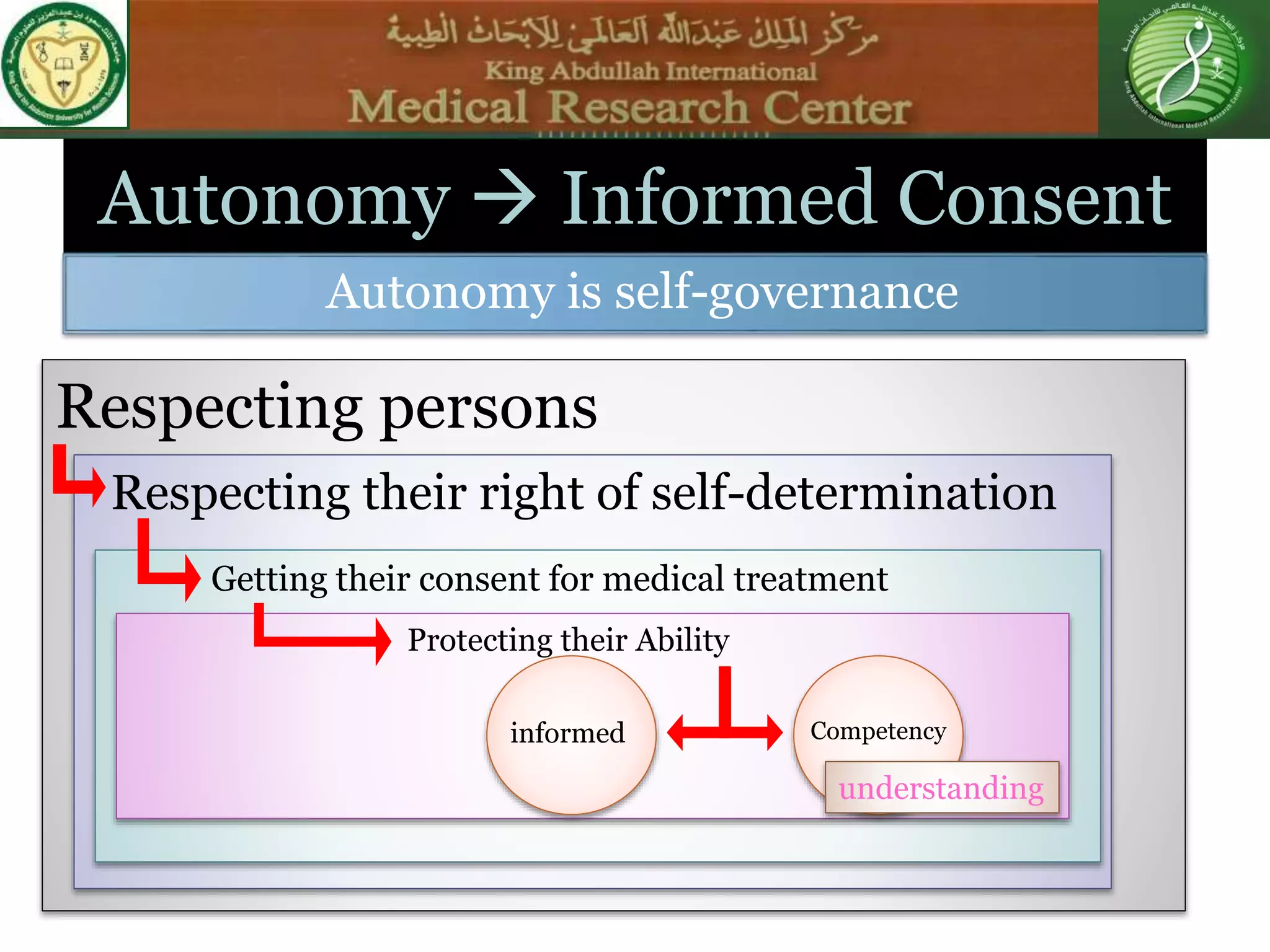
Respecting persons
Autonomy  Informed Consent
Autonomy is self-governance
Respecting their right of self-determination
Getting their consent for medical treatment
Protecting their Ability
Competencyinformed
understanding
Evaluating Decision-Making Capacity
Ability to understand
Ability to evaluate
Ability to communicate
Competence
? Proxy
Voluntary inpatient mental health services
Convulsive treatment
Psychosurgery
Abortion
Neglect of the patient through the omission of care primarily
intended to provide for the comfort of the patient
The research presents no greater than
minimal risk to the child
The permission of the child’s
parents or guardians
The assent of the
child
Children and Informed Consent
18
17
16
15
14
13
12
11
10
9
8
7
6
5
For children under 7 years of age, it is an
informal process
Children 7 – 11 years of age, assent is
verbally obtained and documented in the
research records
Minors 12 – 17 years of age, should be
given the opportunity to document their
assent on an IRB approved assent form
Assent
Consent
General guidelines of what information is required for informed
consent
The nature of the procedure
The risks of the procedure
The alternatives to the procedure
The expected benefits of the procedure
The probable outcome
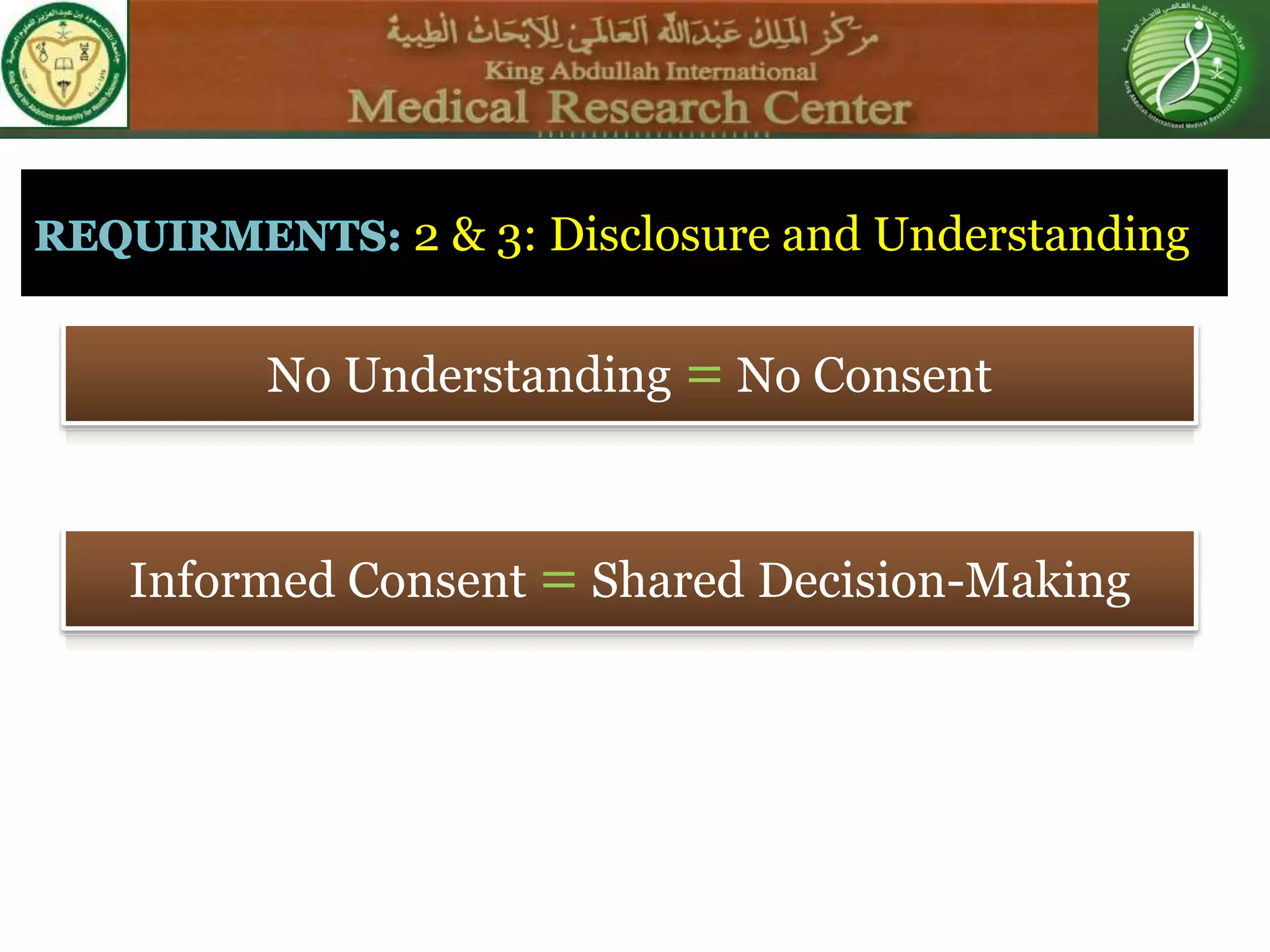
2 & 3: Disclosure and Understanding
No Understanding = No Consent
2 & 3: Disclosure and Understanding
Informed Consent = Shared Decision-Making
Elements of Informed Consent
Basic Elements
Benefits
Contact
Purposes Risks
Alternative Confidentiality Compensation
Voluntary
termination costs
be provided Number
Additional Elements
Unexpected
Risks
Consequences
of Withdrawal
BASIC Elements
The 8 Mandatory Elements of Informed Consent
A statement that the study involves research, an
explanation of the purposes of the research
Description
of the
procedures
Identification
of any
procedures
which are
experimental
Duration
A description of any reasonably
foreseeable risks or discomforts to the
subject.
Risks
&
Discomforts
The 8 Mandatory Elements of Informed Consent
A description of any benefits to the subject or to
others which may reasonably be expected from
the research.
Benefits
Self Other
s
The 8 Mandatory Elements of Informed Consent
A disclosure of appropriate alternative
procedures or courses of treatment, if any, that
might be advantageous to the subject.
Alternative
treatments
The 8 Mandatory Elements of Informed Consent
A statement describing the extent, if any, to
which confidentiality of records identifying the
subject will be maintained.
Confidentiality
The 8 Mandatory Elements of Informed Consent
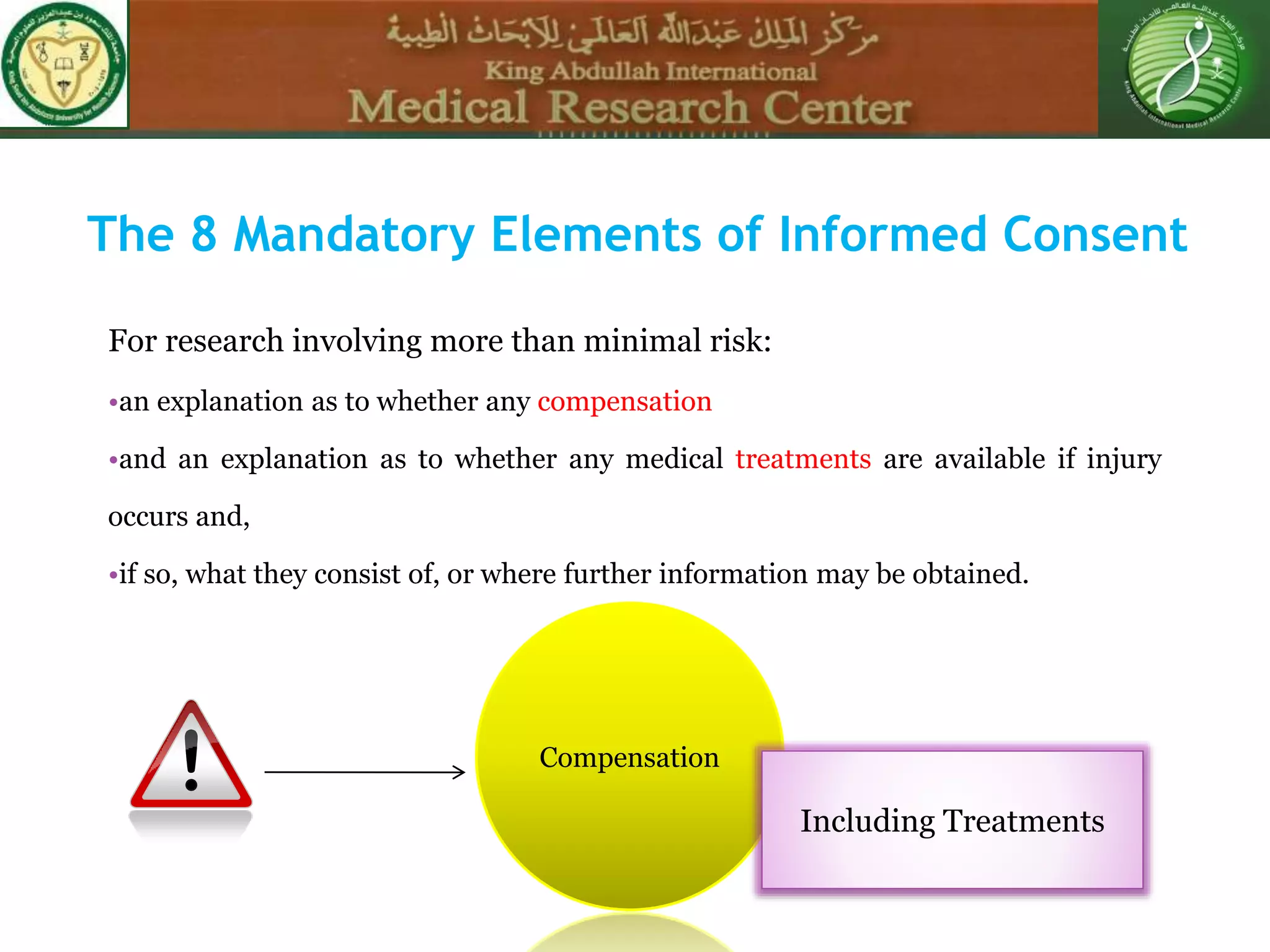
For research involving more than minimal risk:
•an explanation as to whether any compensation
•and an explanation as to whether any medical treatments are available if injury
occurs and,
•if so, what they consist of, or where further information may be obtained.
Compensation
Including Treatments
The 8 Mandatory Elements of Informed Consent
An explanation of whom to contact for answers to
pertinent questions about the research and research
subjects’ rights and whom to contact in the event of a
research-related injury to the subject.
Contacts
The 8 Mandatory Elements of Informed Consent
A statement that participation is voluntary, refusal to participate
will involve no penalty or loss of benefits to which the subject is
otherwise entitled, and the subject may discontinue participation at
any time without penalty or loss of benefits to which the subject is
otherwise entitled.
Voluntary
The 8 Mandatory Elements of Informed Consent
Additional Elements
When Appropriate
Additional Elements, When Appropriate
A statement that the particular treatment or
procedure may involve risks to the subject (or
embryo or fetus, if the subject is or may become
pregnant) which are currently unexpected.
Unexpected
Risks
Estimated circumstances under which the
subject’s participation may be terminated by the
investigator without regard to the subject’s
consent.
Termination
Additional Elements, When Appropriate
Any additional costs to the subject that may result from
participation in the research
Additional
costs
Additional Elements, When Appropriate
The consequences of a subject’s decision to withdraw from the
research and procedures for orderly termination of participation by
the subject
Consequences
of withdraw
Additional Elements, When Appropriate
A statement that significant new findings developed during the
course of the research which may relate to the subject’s willingness
to continue participation will be provided to the subject.
New findings
Additional Elements, When Appropriate
The approximate number of subjects involved in the study.
Number of
subjects
Additional Elements, When Appropriate

Informed consent: Definition & elements

  • 1.
  • 2.
    What is “Consent?” Definedas permission, approval, or assent Touching a person without consent constitutes a battery, and putting a person in fear of being touched without consent is assault.
  • 3.
    What is “INFORMEDConsent”? Consent given by the patient based on knowledge of the procedure to be performed, including its risks and benefits, as well as alternatives to the proposed treatment.
  • 4.
    Purpose of Consent RespectSubject’s Will .. Understand nature of research Be informed of purpose, risks, and benefits, and alternative therapies Make a Voluntary Decision about Participation
  • 5.
    “Informative” Informed Consent Whatyou need to know about informed consent. What you need to do to create an “informative” Informed Consent Form.
  • 6.
    Types of Consent Expressedconsent =either oral or written consent by the patient to undergo a specific procedure or treatment. Implied consent =inferred from the circumstances. It is rarely documented and is relied upon for care or treatment that is routine and does not involve significant risk.
  • 7.
    Types of Consent Expressedconsent =either oral or written consent by the patient to undergo a specific procedure or treatment. Implied consent =inferred from the circumstances. It is rarely documented and is relied upon for care or treatment that is routine and does not involve significant risk.
  • 8.
    Types of Consent Expressedconsent =either oral or written consent by the patient to undergo a specific procedure or treatment. Implied consent =inferred from the circumstances. It is rarely documented and is relied upon for care or treatment that is routine and does not involve significant risk.
  • 9.
  • 10.
  • 11.
  • 12.
  • 13.
  • 14.
  • 15.
  • 16.
    1 & 4:Competence and Voluntariness Competence = the ability to perform a certain task. The task at hand is to make a decision that reflects your values and assessment of likely outcomes Values Assessment Ability Task Competence
  • 17.
  • 18.
    Respecting persons Autonomy Informed Consent Autonomy is self-governance Respecting their right of self-determination Getting their consent for medical treatment Protecting their Ability Competencyinformed understanding
  • 19.
    Evaluating Decision-Making Capacity Abilityto understand Ability to evaluate Ability to communicate
  • 20.
    Competence ? Proxy Voluntary inpatientmental health services Convulsive treatment Psychosurgery Abortion Neglect of the patient through the omission of care primarily intended to provide for the comfort of the patient
  • 21.
    The research presentsno greater than minimal risk to the child The permission of the child’s parents or guardians The assent of the child
  • 22.
    Children and InformedConsent 18 17 16 15 14 13 12 11 10 9 8 7 6 5 For children under 7 years of age, it is an informal process Children 7 – 11 years of age, assent is verbally obtained and documented in the research records Minors 12 – 17 years of age, should be given the opportunity to document their assent on an IRB approved assent form Assent Consent
  • 23.
    General guidelines ofwhat information is required for informed consent The nature of the procedure The risks of the procedure The alternatives to the procedure The expected benefits of the procedure The probable outcome 2 & 3: Disclosure and Understanding
  • 24.
    No Understanding =No Consent 2 & 3: Disclosure and Understanding Informed Consent = Shared Decision-Making
  • 25.
  • 26.
    Basic Elements Benefits Contact Purposes Risks AlternativeConfidentiality Compensation Voluntary
  • 27.
    termination costs be providedNumber Additional Elements Unexpected Risks Consequences of Withdrawal
  • 28.
  • 29.
    The 8 MandatoryElements of Informed Consent A statement that the study involves research, an explanation of the purposes of the research Description of the procedures Identification of any procedures which are experimental Duration
  • 30.
    A description ofany reasonably foreseeable risks or discomforts to the subject. Risks & Discomforts The 8 Mandatory Elements of Informed Consent
  • 31.
    A description ofany benefits to the subject or to others which may reasonably be expected from the research. Benefits Self Other s The 8 Mandatory Elements of Informed Consent
  • 32.
    A disclosure ofappropriate alternative procedures or courses of treatment, if any, that might be advantageous to the subject. Alternative treatments The 8 Mandatory Elements of Informed Consent
  • 33.
    A statement describingthe extent, if any, to which confidentiality of records identifying the subject will be maintained. Confidentiality The 8 Mandatory Elements of Informed Consent
  • 34.
    For research involvingmore than minimal risk: •an explanation as to whether any compensation •and an explanation as to whether any medical treatments are available if injury occurs and, •if so, what they consist of, or where further information may be obtained. Compensation Including Treatments The 8 Mandatory Elements of Informed Consent
  • 35.
    An explanation ofwhom to contact for answers to pertinent questions about the research and research subjects’ rights and whom to contact in the event of a research-related injury to the subject. Contacts The 8 Mandatory Elements of Informed Consent
  • 36.
    A statement thatparticipation is voluntary, refusal to participate will involve no penalty or loss of benefits to which the subject is otherwise entitled, and the subject may discontinue participation at any time without penalty or loss of benefits to which the subject is otherwise entitled. Voluntary The 8 Mandatory Elements of Informed Consent
  • 37.
  • 38.
    Additional Elements, WhenAppropriate A statement that the particular treatment or procedure may involve risks to the subject (or embryo or fetus, if the subject is or may become pregnant) which are currently unexpected. Unexpected Risks
  • 39.
    Estimated circumstances underwhich the subject’s participation may be terminated by the investigator without regard to the subject’s consent. Termination Additional Elements, When Appropriate
  • 40.
    Any additional coststo the subject that may result from participation in the research Additional costs Additional Elements, When Appropriate
  • 41.
    The consequences ofa subject’s decision to withdraw from the research and procedures for orderly termination of participation by the subject Consequences of withdraw Additional Elements, When Appropriate
  • 42.
    A statement thatsignificant new findings developed during the course of the research which may relate to the subject’s willingness to continue participation will be provided to the subject. New findings Additional Elements, When Appropriate
  • 43.
    The approximate numberof subjects involved in the study. Number of subjects Additional Elements, When Appropriate