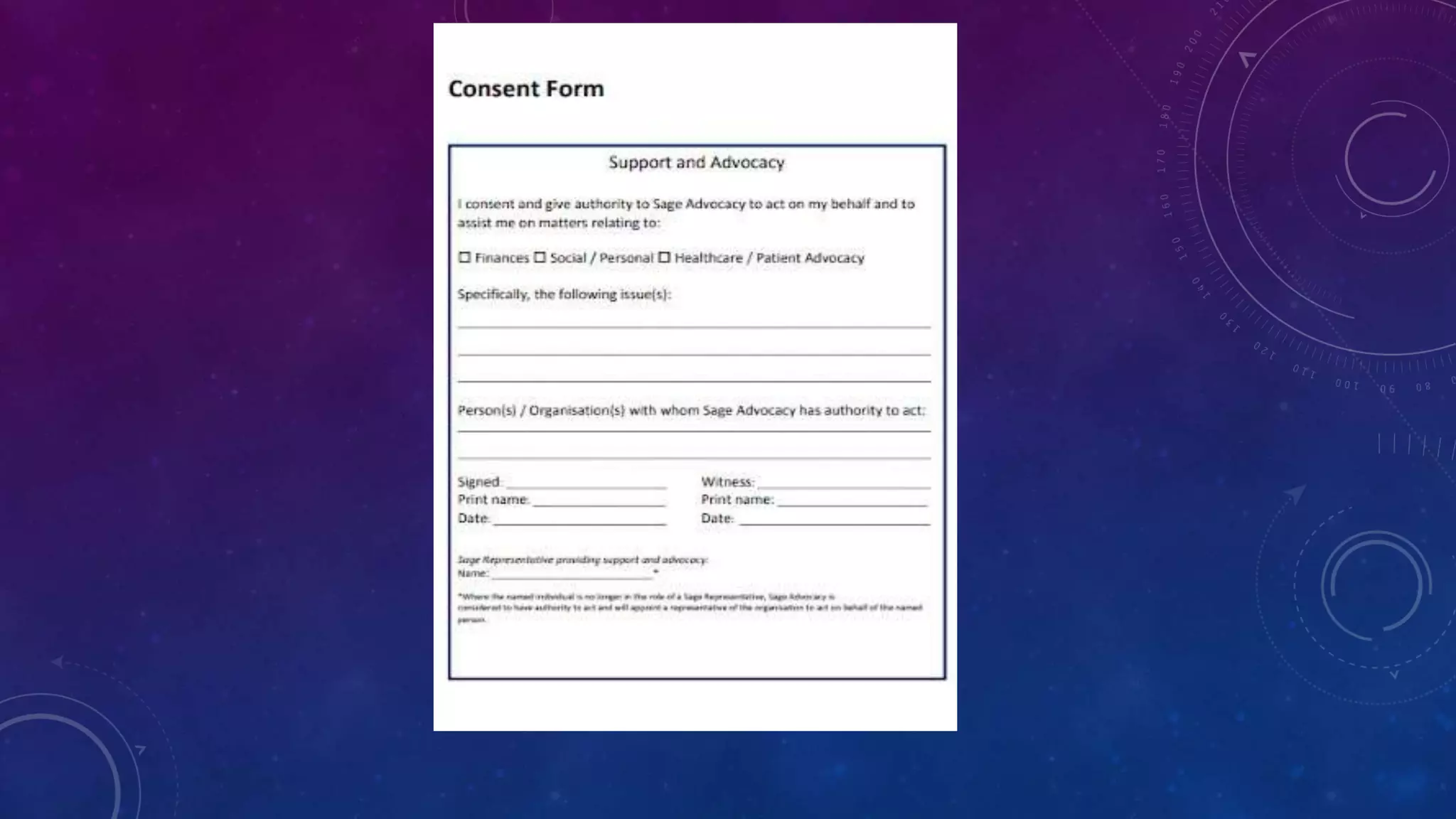
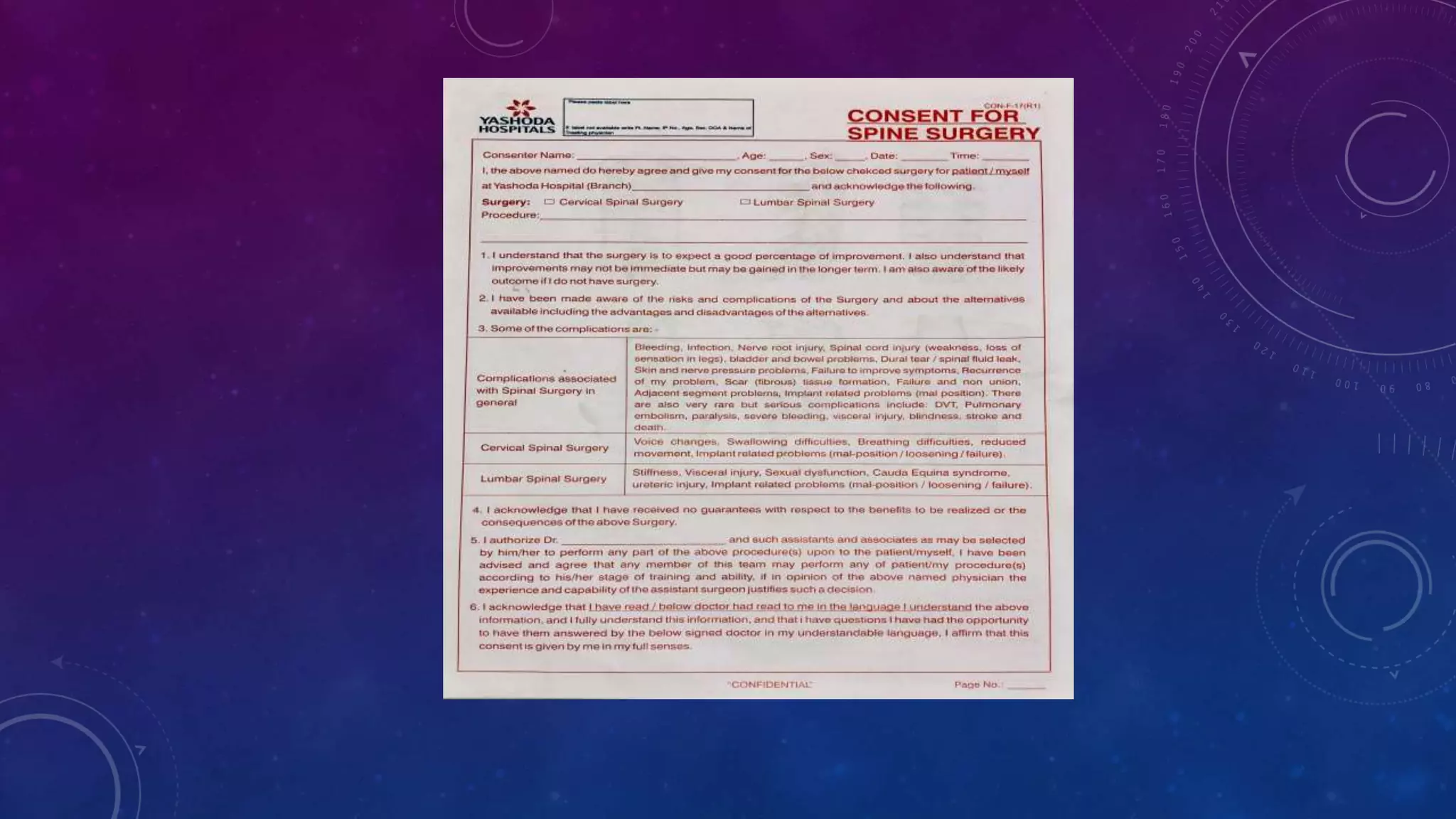
INFORMED CONSENT
SUBMITTED TO:- DR. AMANJOT
COMPILED BY:- VAISHALI
DEFINITION
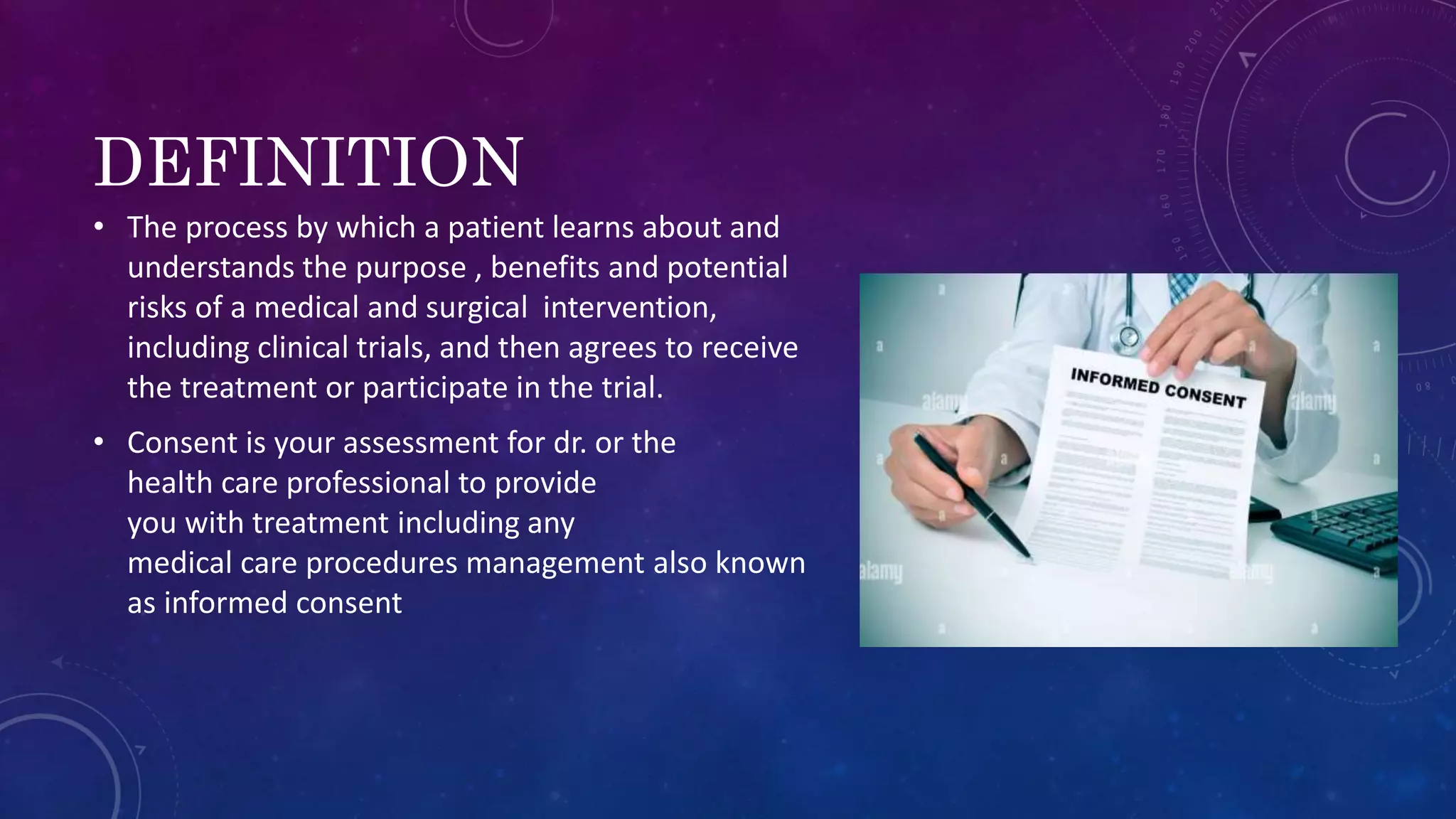
• The process by which a patient learns about and
understands the purpose , benefits and potential
risks of a medical and surgical intervention,
including clinical trials, and then agrees to receive
the treatment or participate in the trial.
• Consent is your assessment for dr. or the
health care professional to provide
you with treatment including any
medical care procedures management also known
as informed consent
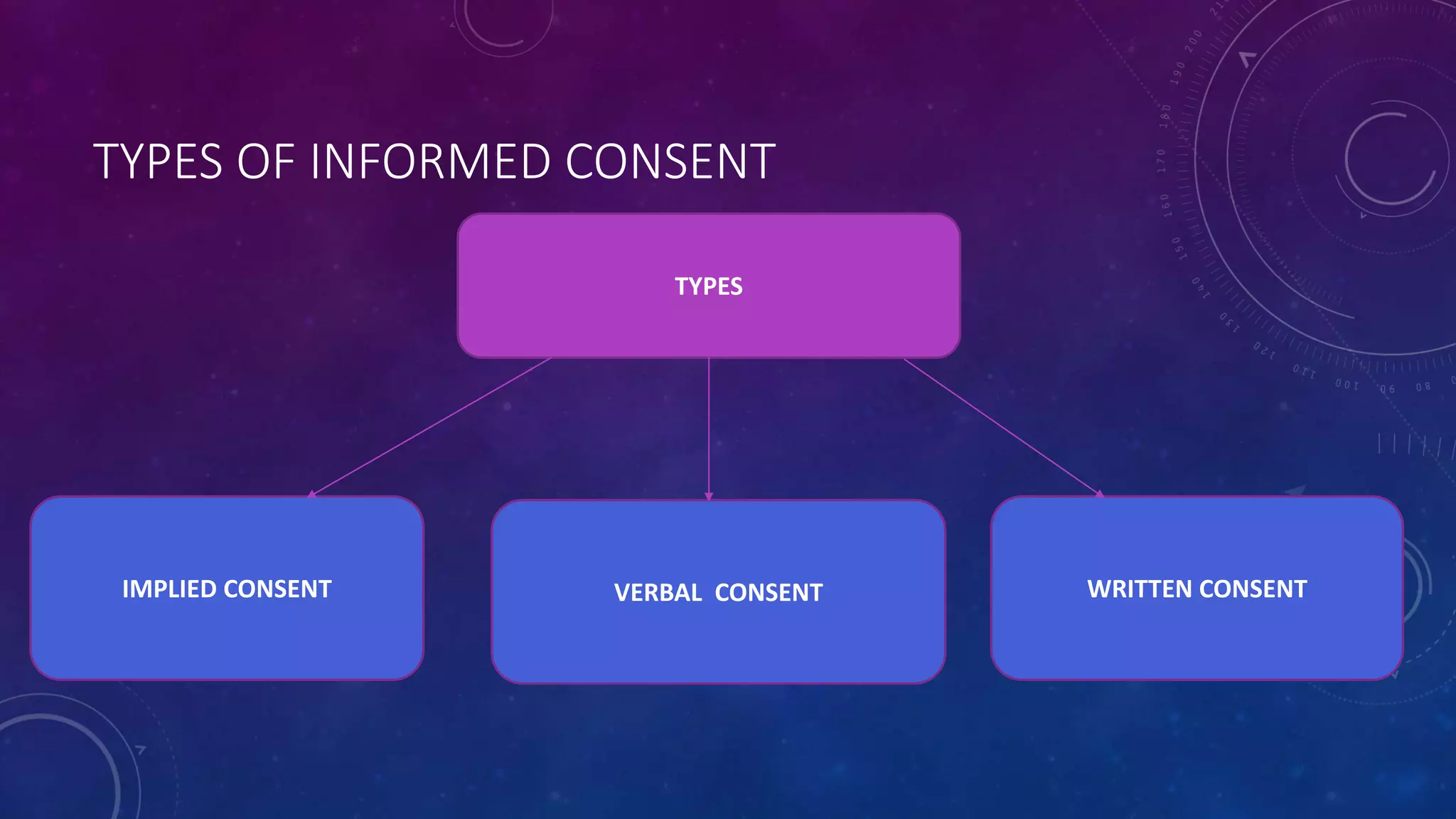
TYPES OF INFORMED CONSENT
TYPES
VERBAL CONSENT WRITTEN CONSENT
IMPLIED CONSENT
Informed Consent is basically of three types which are follow:
• IMPLIED CONSENT:- Implied consent refers to when a patient
passively cooperates in a process without discussion or formal consent. The
principles of good communication apply in these circumstances and health
professionals need to provide the patient with enough information to understand the
procedures and why it is being done. Implied consent does not need to be document
in the clinical record.
• VERBAL CONSENT: A verbal consent Is where a patient states their consent to
procedure verbally but does not sign any written form. This is adequate for routine
treatment such for diagnostic, procedures and prophylaxis, provided that full
records and documented.
• WRITTEN CONSENT: A written consent is necessary in case of extensive
intervention involving risks where anesthesia or sedation is used ,restorative
procedures, administering of medications with known high risks, and so on.
ELEMENTS OF INFORMED CONSENT
There are four types of elements:
1. Description of the Clinical problem, the proposed treatment, and alternatives
including no treatment.
2. Discussions of the risk and benefits of the proposed treatment with comparisons to
the risks and benefits of alternatives, and discussion of medical/clinical uncertainties
regarding the proposed treatment
3. Assessment of the patient’s understanding of the information provided by the medical
provider.
4. Solicitation of the patient’s preference and consent for treatment.
PROCESS OF INFORMED
CONSENT
• Inform Consent Process- the person must be given all information about treatment including.
• (a) Benefits and risk.
• (b) Reasonable alternative treatment.
• (c ) If treatment does not go ahead.
• Voluntary Consent process- The decision to consent or not to consent treatment must be
made by person . And must not be influence by pressure from medical staff, friends and
family members.
• Capacity Consent Process- Person must be capable of giving consent.
PRINCIPLES OF CONSENT
• There are four types of rules
• CLEAR – Consent is clear and understanding way
• ONGOING – You should have permission for every activity at every stage for consent
• COHERENT – Able to talk and express clear to understand
• VOLUNTARY – Consent should be given freely and willIngly.
PRINCIPLES OF INFORMED
CONSENT
• Consent to treatment is the principle that a person must give permission
before they receive any type of medical treatment , test or examination.
• This must be done on the basis as explained by consultant.
• Consent from a patient is needed regardless of the procedure.
• The principle of consent is an important part of the medical ethics and
the international human rights law.
WHO IS AUTHORISED FOR GIVING
CONSENT
• Any person of sound mind above the age of 18 years can legally give the consent. Whereas
the one who are below 18 years for them consent will be provided by the guardian/ parents.
• The doctor before performing any procedure must obtain patient's consent. No one can
consent on behalf of a competent adult.
• In some situations ,beside patient consent, it is desirable to take additional
consent of spouse.
• In sterilization procedures, according to the Ministry of Health and Family Welfare,
Government of India guidelines, consent of spouse is not required.
IMPORTANCE/SIGNIFICANCE OF
INFORMED CONSENT
• Creates a mutual trust between the patient and the physician by opening the important pathways
of communication .
• Helps patients to take greater measure of responsibility in the course of their treatment by having
more extensive knowledge to their condition and its impact on their personal life.
• The requirement of consent reflects ethical principle of patients/ participants autonomy.
• It saves both health care member and patients and participants legally in exceptional
circumstances, medical treatment must not be administered without obtaining patients valid
consent.
• Lack of capacity to consent to the treatment there mental health under 1983.
• Refusing treatment during medical treatment condition.
WHEN IS INFORMED CONSENT REQUIRED?
• Radiation or chemotherapy treatment for cancer.
• Dental procedures.
• Ethical obligation, promote autonomy, provide information, avoid unethical from bias.
• Legal and ethical policy, state federal law, clients rights.
• Protect the patients legally simple consent again assault and battery in form of unwanted medical
intervention.
• Advance complex medical test like, (a) Endoscopy- look inside throat , stomach.
• (b) Needle biopsy of liver.
• Treatment
• Surgery
• Blood transfusion
• Specific procedure
• Dissemination of patient information. etc
WHEN IS INFORMED CONSENT NOT REQUIRED
• Emergency Department
In an emergency, if a person is unconscious and in danger of death or other serious outcomes
if medical care is not given right away, informed consent may not be required before treatment.
• Medico legal cases about by police consent is implied under sector 53 of criminal procedure
code, Hence can be examined.
• Lack of capacity to consent to the treatment for severe mental health condition.
• Immediate need an additional emergency procedure during operation.
• SEVERE MENTAL HEALTH CONDITION : eg bipolar disorder.
• RISK TO PUBLIC HEALTH- like Tb, rabies, cholera.
• Severely ill and living in unhygienic condition ( Nutritional assistance act 1948)
informed consent.pptx

informed consent.pptx

  • 1.
    INFORMED CONSENT SUBMITTED TO:-DR. AMANJOT COMPILED BY:- VAISHALI
  • 2.
    DEFINITION • The processby which a patient learns about and understands the purpose , benefits and potential risks of a medical and surgical intervention, including clinical trials, and then agrees to receive the treatment or participate in the trial. • Consent is your assessment for dr. or the health care professional to provide you with treatment including any medical care procedures management also known as informed consent
  • 3.
    TYPES OF INFORMEDCONSENT TYPES VERBAL CONSENT WRITTEN CONSENT IMPLIED CONSENT
  • 4.
    Informed Consent isbasically of three types which are follow: • IMPLIED CONSENT:- Implied consent refers to when a patient passively cooperates in a process without discussion or formal consent. The principles of good communication apply in these circumstances and health professionals need to provide the patient with enough information to understand the procedures and why it is being done. Implied consent does not need to be document in the clinical record. • VERBAL CONSENT: A verbal consent Is where a patient states their consent to procedure verbally but does not sign any written form. This is adequate for routine treatment such for diagnostic, procedures and prophylaxis, provided that full records and documented. • WRITTEN CONSENT: A written consent is necessary in case of extensive intervention involving risks where anesthesia or sedation is used ,restorative procedures, administering of medications with known high risks, and so on.
  • 5.
    ELEMENTS OF INFORMEDCONSENT There are four types of elements: 1. Description of the Clinical problem, the proposed treatment, and alternatives including no treatment. 2. Discussions of the risk and benefits of the proposed treatment with comparisons to the risks and benefits of alternatives, and discussion of medical/clinical uncertainties regarding the proposed treatment 3. Assessment of the patient’s understanding of the information provided by the medical provider. 4. Solicitation of the patient’s preference and consent for treatment.
  • 6.
    PROCESS OF INFORMED CONSENT •Inform Consent Process- the person must be given all information about treatment including. • (a) Benefits and risk. • (b) Reasonable alternative treatment. • (c ) If treatment does not go ahead. • Voluntary Consent process- The decision to consent or not to consent treatment must be made by person . And must not be influence by pressure from medical staff, friends and family members. • Capacity Consent Process- Person must be capable of giving consent.
  • 7.
    PRINCIPLES OF CONSENT •There are four types of rules • CLEAR – Consent is clear and understanding way • ONGOING – You should have permission for every activity at every stage for consent • COHERENT – Able to talk and express clear to understand • VOLUNTARY – Consent should be given freely and willIngly.
  • 8.
    PRINCIPLES OF INFORMED CONSENT •Consent to treatment is the principle that a person must give permission before they receive any type of medical treatment , test or examination. • This must be done on the basis as explained by consultant. • Consent from a patient is needed regardless of the procedure. • The principle of consent is an important part of the medical ethics and the international human rights law.
  • 9.
    WHO IS AUTHORISEDFOR GIVING CONSENT • Any person of sound mind above the age of 18 years can legally give the consent. Whereas the one who are below 18 years for them consent will be provided by the guardian/ parents. • The doctor before performing any procedure must obtain patient's consent. No one can consent on behalf of a competent adult. • In some situations ,beside patient consent, it is desirable to take additional consent of spouse. • In sterilization procedures, according to the Ministry of Health and Family Welfare, Government of India guidelines, consent of spouse is not required.
  • 10.
    IMPORTANCE/SIGNIFICANCE OF INFORMED CONSENT •Creates a mutual trust between the patient and the physician by opening the important pathways of communication . • Helps patients to take greater measure of responsibility in the course of their treatment by having more extensive knowledge to their condition and its impact on their personal life. • The requirement of consent reflects ethical principle of patients/ participants autonomy. • It saves both health care member and patients and participants legally in exceptional circumstances, medical treatment must not be administered without obtaining patients valid consent. • Lack of capacity to consent to the treatment there mental health under 1983. • Refusing treatment during medical treatment condition.
  • 11.
    WHEN IS INFORMEDCONSENT REQUIRED? • Radiation or chemotherapy treatment for cancer. • Dental procedures. • Ethical obligation, promote autonomy, provide information, avoid unethical from bias. • Legal and ethical policy, state federal law, clients rights. • Protect the patients legally simple consent again assault and battery in form of unwanted medical intervention. • Advance complex medical test like, (a) Endoscopy- look inside throat , stomach. • (b) Needle biopsy of liver. • Treatment • Surgery • Blood transfusion • Specific procedure • Dissemination of patient information. etc
  • 12.
    WHEN IS INFORMEDCONSENT NOT REQUIRED • Emergency Department In an emergency, if a person is unconscious and in danger of death or other serious outcomes if medical care is not given right away, informed consent may not be required before treatment. • Medico legal cases about by police consent is implied under sector 53 of criminal procedure code, Hence can be examined. • Lack of capacity to consent to the treatment for severe mental health condition. • Immediate need an additional emergency procedure during operation. • SEVERE MENTAL HEALTH CONDITION : eg bipolar disorder. • RISK TO PUBLIC HEALTH- like Tb, rabies, cholera. • Severely ill and living in unhygienic condition ( Nutritional assistance act 1948)